Hugging Face

Search documents
开源对机器人的价值,远超大模型时代的想象丨唐文斌深度对谈抱抱脸创始人
量子位· 2025-10-20 01:16
Core Viewpoint - The article discusses the challenges in current robotics research, particularly the gap between simulation and real-world application, and introduces RoboChallenge.ai as a solution to create a standardized, open, and reproducible evaluation platform for robotics [1][40][50]. Group 1: Current Challenges in Robotics - Many models perform well in simulations but fail in real-world scenarios, highlighting a significant pain point in robotics research [1][40]. - There is currently no unified, open, and reproducible benchmark system to fairly compare different methods, strategies, and models in the robotics field [42]. Group 2: Introduction of RoboChallenge.ai - RoboChallenge.ai is launched as an open, standardized platform for evaluating robotics models in real physical environments, allowing researchers to remotely test their models on real robots [5][50]. - The platform enables global researchers to submit models and conduct experiments remotely, bridging the gap between simulation and reality [50][52]. Group 3: Importance of Open Source in Robotics - Open source is crucial for advancements in robotics, as it allows for collaboration and the sharing of models, which can be adapted for various robots [12][21]. - The article emphasizes that open source models are essential for localizing operations within robots, enhancing safety and functionality [22][25]. Group 4: Evaluation Mechanisms and Community Involvement - The need for an independent evaluation mechanism in robotics is highlighted, as current assessments often lack fairness and reproducibility [34][36]. - The article discusses the potential for community involvement in data collection and model testing, which can enhance the diversity and robustness of robotic strategies [61][66]. Group 5: Future Directions and Expectations - The article anticipates that in three to five years, embodied intelligence research will evolve to enable robots to perform longer and more complex tasks [77]. - The goal of RoboChallenge.ai is to create a fair and open platform for evaluating various robotic models, contributing to the overall advancement of the field [76][78].

人类不能放弃写作
3 6 Ke· 2025-10-15 11:46
Group 1 - The article discusses the potential future of artificial intelligence (AI) in writing, envisioning a world where AI can produce high-quality, engaging, and accurate text without human intervention [1][7][8] - It raises concerns about the implications of AI on human creativity and writing styles, suggesting that while AI can assist, it may also dilute individual writing voices [9][11][12] - The article highlights the ongoing debate about AI's role in creative processes, questioning whether AI-generated works can be considered truly creative [7][8][9] Group 2 - The text emphasizes the importance of maintaining a balance between human and AI contributions in writing, advocating for a thoughtful approach to using AI tools [5][6][30] - It discusses the educational challenges posed by AI, particularly in terms of academic integrity and the potential for cheating among students [15][16][26] - The article mentions the need for guidelines and regulations regarding the use of AI in writing, suggesting that transparency and acknowledgment of AI contributions could be beneficial [36][37][38] Group 3 - The article explores the copyright implications of AI-generated content, questioning who owns the rights to works created by AI [22][23][24] - It discusses the potential impact of AI on various professions, particularly in writing, journalism, law, and translation, suggesting that while some jobs may be threatened, others may evolve [26][27][28] - The text concludes with a call for writers to remain vigilant and engaged in their craft, ensuring that their unique voices are not overshadowed by AI tools [39][40]
具身走向现实世界!RoboChallenge:从仿真到实体,全球首个大规模多任务真机任务基准
具身智能之心· 2025-10-15 11:03
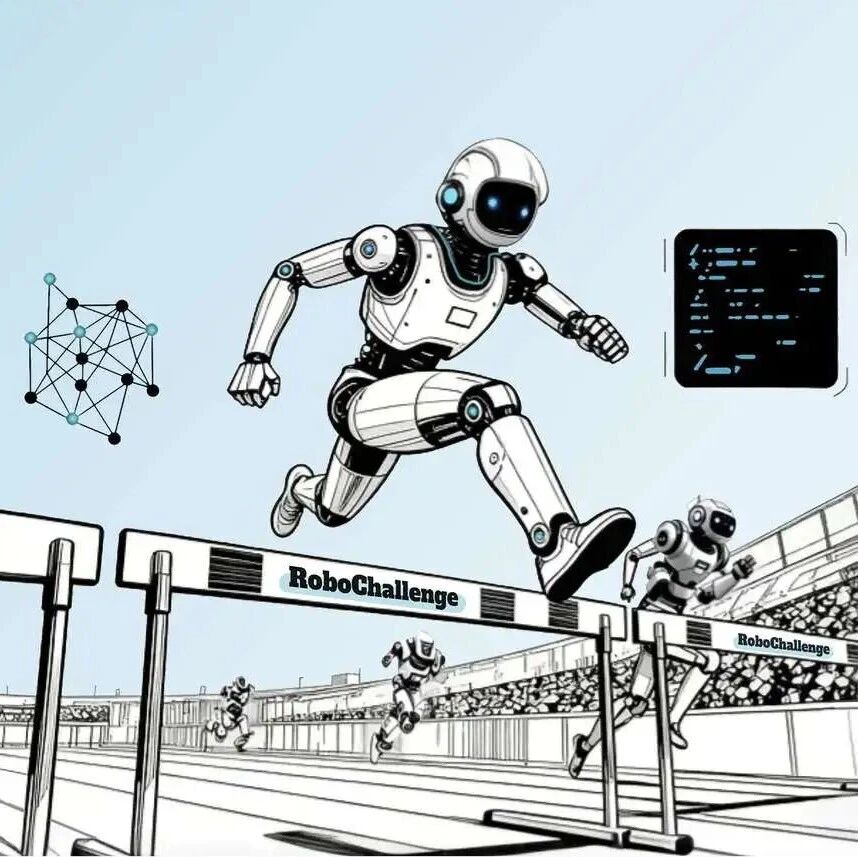
Core Insights - The article discusses the launch of RoboChallenge, a large-scale, multi-task benchmark testing platform for embodied intelligence, initiated by Dexmal and Hugging Face, aimed at addressing the lack of real machine testing in the field [5][41]. Group 1: Challenges in the Embodied Intelligence Field - The embodied intelligence sector has seen rapid advancements, but the absence of real machine testing and limitations of existing evaluation systems have become significant bottlenecks [3][4]. - Current mainstream benchmarks primarily rely on simulation environments, leading to issues where algorithms that perform well in simulations fail in real-world applications [4][10]. Group 2: Introduction of RoboChallenge - RoboChallenge is the first large-scale benchmark testing platform that allows real robots to perform tasks in a physical environment, providing a more reliable and comparable evaluation standard for visual language action models (VLAs) [5][10]. - The platform aims to overcome challenges related to performance validation in real environments, standardized testing conditions, and accessibility [5][10]. Group 3: Features of RoboChallenge - RoboChallenge features a "remote robot" paradigm, allowing users to interact with real machines without needing hardware, thus lowering the entry barrier for researchers and developers [15][19]. - The platform supports a wide range of tasks, with an initial benchmark set (Table30) comprising 30 diverse tasks designed to evaluate core capabilities of VLA models [12][26]. Group 4: Evaluation Mechanism - The evaluation mechanism combines end-to-end task success rates with process scoring, ensuring a rigorous and transparent assessment of models [16][20]. - RoboChallenge employs a "visual input matching" method to ensure consistency in testing conditions, reducing variability caused by human testers [23][25]. Group 5: Open and Collaborative Ecosystem - RoboChallenge promotes an open ecosystem by providing free access to evaluation services, publicly sharing task demonstration data, and ensuring transparency in results [34][41]. - The platform encourages collaboration among researchers, developers, and industry professionals, fostering innovation in the field of embodied intelligence [38][41]. Group 6: Future Directions - RoboChallenge plans to expand its capabilities by introducing more robot types and challenging tasks, aiming to enhance the evaluation of embodied intelligence in real-world scenarios [42].
具身智能迎来ImageNet时刻:RoboChallenge开放首个大规模真机基准测试集
机器之心· 2025-10-15 10:44
Core Insights - RoboChallenge is the world's first large-scale, multi-task benchmark testing platform for robots operating in real physical environments, aimed at providing reliable and comparable evaluation standards for visual-language-action models (VLAs) [1][4][7] - The platform addresses the lack of unified, open, and reproducible benchmark testing methods in the robotics field, enabling researchers to validate and compare robotic algorithms in a standardized environment [4][7] Group 1: Platform Features - RoboChallenge integrates multiple mainstream robots (UR5, Franka Panda, Aloha, ARX-5) to facilitate remote evaluation, providing a large-scale, standardized, and reproducible testing environment [7][14] - The platform employs a standardized API interface, allowing users to call tests without submitting Docker images or model files, thus enhancing accessibility [19] - It features a dual asynchronous control mechanism for precise synchronization of action commands and image acquisition, improving testing efficiency [19] Group 2: Evaluation Methodology - The benchmark testing method focuses on controlling human factors, ensuring visual consistency, validating model robustness, and designing protocols for different evaluation objectives [16] - RoboChallenge introduces a "visual inputs reproduction" method to ensure consistent initial states for each test, enhancing the reliability of evaluations [16] - The Table30 benchmark set includes 30 carefully designed everyday tasks, significantly more than typical industry evaluations, providing a reliable measure of algorithm performance across various scenarios [18][23] Group 3: Community Engagement - RoboChallenge operates on a fully open principle, offering free evaluation services to global researchers and ensuring transparency by publicly sharing task demonstration data and intermediate results [27] - The platform encourages community collaboration through challenges, workshops, and data sharing, promoting joint efforts to address core issues in embodied intelligence [27] Group 4: Future Directions - RoboChallenge aims to expand its capabilities by incorporating mobile robots and dexterous manipulators, enhancing cross-scenario task testing abilities [29] - Future evaluations will extend beyond visual-action coordination to include multi-modal perception and human-robot collaboration, with plans for more challenging benchmarks [29]
X @TechCrunch
TechCrunch· 2025-10-14 15:13
This is your chance to meet the minds building AI's future.The second day of AI Stage at Disrupt 2025 features @character_ai, @huggingface, @runwayml, @Tinder, @GoogleCloud, and more. It’s a stacked lineup tackling everything from autonomous vehicles and generative AI to national security and vibe coding.Check out the full lineup and head here to get your tickets to see them all October 27-29 in San Francisco: https://t.co/TrvBc8T2nn ...
承认自己开源不行?转型“美国DeepSeek”后,两个谷歌研究员的AI初创公司融到20亿美元,估值暴涨15倍
3 6 Ke· 2025-10-10 10:29
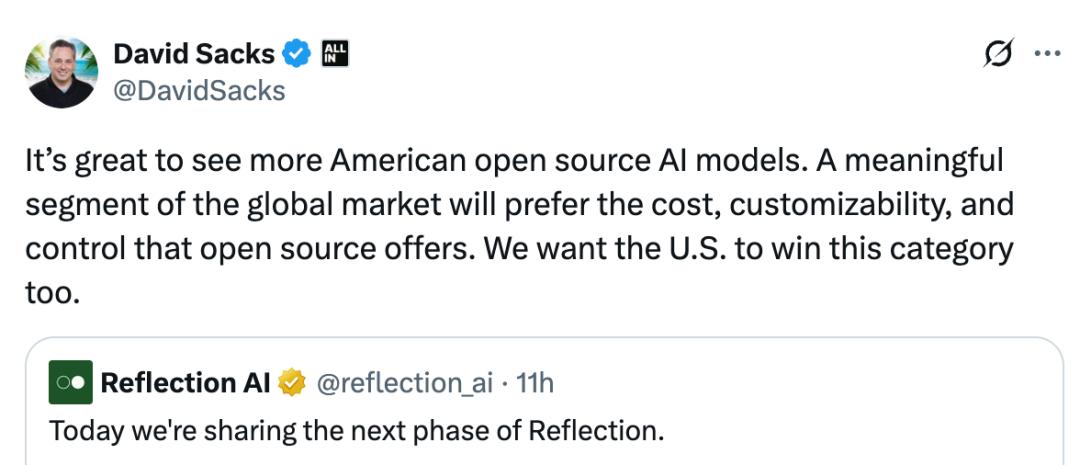
Core Insights - Reflection AI, founded by former Google DeepMind researchers, has raised $2 billion in its latest funding round, achieving a valuation of $8 billion, a 15-fold increase from $545 million just seven months ago [1] - The company aims to position itself as an open-source alternative to closed AI labs like OpenAI and Anthropic, focusing on building a thriving AI ecosystem in the U.S. [1][6] - Reflection AI's initial focus on autonomous programming agents is seen as a strategic entry point, with plans to expand into broader enterprise applications [3][4] Company Overview - Founded in March 2024 by Misha Laskin and Ioannis Antonoglou, both of whom have significant experience in AI development, including projects like DeepMind's Gemini and AlphaGo [2] - The company currently has a team of approximately 60 members, primarily AI researchers and engineers, and has secured computing resources to develop a cutting-edge language model [5][8] Funding and Investment - The latest funding round included prominent investors such as Nvidia, Citigroup, Sequoia Capital, and Eric Schmidt, highlighting the strong interest in the company's vision [1][4] - The funds will be used to enhance computing resources, with plans to launch a model trained on "trillions of tokens" by next year [5][8] Product Development - Reflection AI has launched a code understanding agent named Asimov, which has been well-received in blind tests against competitors [3] - The company plans to extend its capabilities beyond coding to areas like product management, marketing, and HR [4] Strategic Vision - The founders believe that the future of AI should not be monopolized by a few large labs, advocating for open models that can be widely accessed and utilized [6][7] - Reflection AI's approach includes offering model weights for public use while keeping training data and processes proprietary, balancing openness with commercial viability [7][8] Market Positioning - The company targets large enterprises that require control over AI models for cost optimization and customization, positioning itself as a viable alternative to existing solutions [8] - Reflection AI aims to establish itself as a leading player in the open-source AI space, responding to the growing demand for customizable and cost-effective AI solutions [6][7]

大疆起诉美国防部被驳回,大疆回应:失望,产品与军方无关;罗永浩回应声援小米:没有人情世故,说句公道话;蜜雪集团进军现打鲜啤市场
雷峰网· 2025-10-09 04:26
Group 1 - DJI's lawsuit against the U.S. Department of Defense was dismissed, expressing disappointment and asserting that its products are unrelated to military use [3][5] - DJI holds over 50% of the commercial drone market in the U.S. and claims to have lost business contracts due to being labeled a national security threat [3][5] - The U.S. Department of Defense included DJI in the "Chinese Military Companies List" in 2023, which DJI contests as illegal and misleading [5] Group 2 - Deli Group faced backlash for discrimination against a job applicant with a disability, leading to an apology from the CEO [7] - Kuaishou announced a restructuring of its local life services division, with Liu Xiao taking over leadership [11][12] - Xiaomi's 17 series has surpassed 1 million units sold, with the 17 Pro Max model breaking sales records [12] Group 3 - Chinese automakers captured a record 9.8% share of the hybrid vehicle market in Europe as of August [13] - BYD and other manufacturers are increasing their presence in the European electric vehicle market, with a focus on competitive pricing [13] - Lantu Automotive submitted an application for listing on the Hong Kong Stock Exchange, reporting nearly 19.4 billion yuan in revenue last year [15] Group 4 - Aima Technology announced the suspension of its Guangdong factory operations, shifting production capacity to Guangxi and Chongqing [16] - Mixue Group plans to acquire a 53% stake in Fulu Family for approximately 297 million yuan, entering the fresh beer market [17] Group 5 - OpenAI responded to Elon Musk's lawsuit, denying the need for any trade secrets and asserting the right to hire employees from xAI [23] - A notorious ransomware group claims to have breached Oracle's E-Business Suite, targeting executives for extortion [24] Group 6 - Apple has paused upgrades on its Vision Pro headset to focus on developing AI-powered smart glasses [25] - Judson Althoff has been appointed as the new CEO of Microsoft's commercial business, with Satya Nadella shifting focus to technology [28]




当AI大佬在小红书开讲:教育的AMA时刻已到来
Sou Hu Cai Jing· 2025-10-08 03:16
Core Insights - The article discusses the rising popularity of the Ask Me Anything (AMA) format on Xiaohongshu during the National Day holiday, highlighting its interactive nature compared to other platforms like Zhihu and Weibo [2][5] Group 1: AMA Format and Participants - The AMA format allows for a relaxed online dialogue where tech experts engage with curious users, covering a wide range of topics from futuristic concepts to personal growth challenges [5][6] - Notable participants include Liu Zhiyuan, a professor at Tsinghua University, Thomas Wolf, co-founder of Hugging Face, and the SOMA Robotics team, who discuss various aspects of technology, education, and research [6][7] Group 2: Educational Insights - Liu Zhiyuan emphasizes the importance of passion in research, advising students to seek guidance from mentors and to maintain a strong interest in their fields to overcome challenges [6][7] - Thomas Wolf shares a succinct yet impactful message about the significance of building meaningful projects, suggesting that education should empower learners to create rather than just acquire knowledge [9] Group 3: Future of Education - SOMA Robotics envisions an integrated platform combining low-barrier hardware, open-source tools, and community engagement, aiming to enable students and developers to transition from learning to creation [10][11] - The concept of Embodied AI is introduced, suggesting that AI should have physical presence and interaction capabilities, enhancing the educational experience by allowing students to engage with robots in real-world scenarios [11][12] - The article concludes with a vision of a collaborative educational environment where learning becomes a shared experience, encouraging active participation and co-creation among students and educators [12]

速递|前OpenAI员工创立Applied Compute以5亿美元估值融资,Lux Capital领投
Z Potentials· 2025-09-28 14:29
Core Insights - Investors are increasingly funding startups that focus on automating tasks using reinforcement learning (RL) technology, as developers rely more on this approach to optimize AI models [1][4] - Applied Compute, founded by three former OpenAI employees, is negotiating a new funding round at a valuation of $500 million, just three months after raising $100 million [1][2] Group 1: Company Overview - Applied Compute aims to assist software developers and enterprises in utilizing RL technology to create customized AI systems for specific sectors such as law and finance [2][3] - The company has previously raised $20 million from investors including Benchmark, Conviction, and Sequoia Capital [2] Group 2: Founders and Background - The founders, Rhythm Garg, Yash Patil, and Linden Li, are Stanford University alumni who worked on developing ChatGPT's reasoning model and other AI tools before joining OpenAI [3] - Other companies, such as Thinking Machines Lab, co-founded by former OpenAI CTO Mira Murati, are also planning to offer RL services to enterprises [3][4] Group 3: Market Trends and Technology - Reinforcement learning is becoming a key technology for AI developers, helping improve models by rewarding desired behaviors and penalizing others [4] - The potential for RL to automate tasks in various fields is significant, with expectations that the entire economy could evolve into a "reinforcement learning machine" [4]

从现有主流 RL 库来聊聊RL Infra架构演进
自动驾驶之心· 2025-09-25 23:33
Core Viewpoint - Reinforcement Learning (RL) is transitioning from a supportive technology to a core driver of model capabilities, focusing on multi-step, interactive agent training to achieve General Artificial Intelligence (AGI) [2][6]. Group 1: Modern RL Infrastructure Architecture - The core components of modern RL infrastructure include a Generator, which interacts with the environment to generate trajectories and calculate rewards, and a Trainer, which updates model parameters based on trajectory data [6][4]. - The generator-trainer architecture, combined with distributed coordination layers like Ray, forms the "gold standard" for RL systems [6][4]. Group 2: Primary Development - Primary Development frameworks serve as foundational frameworks for building RL training pipelines, providing core algorithm implementations and integration with underlying training/inference engines [8][7]. - TRL (Transformer Reinforcement Learning) is a user-friendly RL framework launched by Hugging Face, offering various algorithm supports [9][10]. - OpenRLHF, developed by a collaborative team including ByteDance and NetEase, aims to provide an efficient and scalable RLHF and Agentic RL framework [11][14]. - veRL, developed by Byte's Seed team, is one of the most comprehensive frameworks with extensive algorithm support [16][19]. - AReaL (Asynchronous Reinforcement Learning) is designed for large-scale, high-throughput RL training with a fully asynchronous architecture [20][21]. - NeMo-RL, launched by NVIDIA, integrates into its extensive NeMo ecosystem, focusing on production-level RL frameworks [24][28]. - ROLL, an Alibaba open-source framework, emphasizes asynchronous and Agentic capabilities for large-scale LLM RL [30][33]. - slime, developed by Tsinghua and Zhipu, is a lightweight framework focusing on seamless integration of SGLang with Megatron [34][36]. Group 3: Secondary Development - Secondary Development frameworks are built on primary frameworks, targeting specific downstream application scenarios like multi-modal, multi-agent, and GUI automation [44][3]. - Agentic RL frameworks, such as verl-agent, optimize for asynchronous rollout and training, addressing the core challenges of multi-round interactions with external environments [46][47]. - Multimodal RL frameworks, like VLM-R1 and EasyR1, focus on training visual-language reasoning models, addressing data processing and loss function design challenges [53][54]. - Multi-Agent RL frameworks, such as MARTI, integrate multi-agent reasoning and reinforcement learning for complex collaborative tasks [59][60]. Group 4: Summary and Trends - The RL infrastructure is evolving from a "workshop" model to a "standardized pipeline," with increasing modularity in framework design [65]. - Asynchronous architectures are becoming essential to address the computational asymmetry between rollout and training [66]. - The emergence of high-performance inference engines like vLLM and SGLang significantly accelerates the rollout process [66]. - The evolution from RLHF to Agentic RL reflects the growing complexity of tasks supported by new frameworks [66]. - Distributed training framework choices, such as Megatron-LM and DeepSpeed, are critical for large-scale model training [66]. - Scene-driven secondary development frameworks are addressing unique challenges in vertical domains [66]. - The importance of orchestrators for managing distributed components in RL systems is becoming widely recognized [66].