
Prada

Search documents
Iconic Luxury Retailer Saks Files for Bankruptcy amid Struggle with Merger Debt
Yahoo Finance· 2026-01-15 05:01
Core Viewpoint - Saks Global, the parent company of Saks Fifth Avenue, Neiman Marcus, and Bergdorf Goodman, has filed for Chapter 11 bankruptcy protection, securing $1.75 billion in financing to maintain operations while appointing a new CEO [1][2]. Group 1: Financial Challenges - Saks missed an interest payment in December 2024 related to its debt-fueled merger with Neiman Marcus, leading to a buildup of past-due bills from vendors and brands [2]. - The company has accumulated significant debt since the merger, resulting in vendors withholding stock, which has contributed to declining sales and sparse inventory [2][3]. Group 2: Market Context - Saks follows other department store brands like Barneys New York and Lord & Taylor in filing for bankruptcy, although the luxury sector as a whole is not necessarily collapsing [3]. - In 2024, over 8,000 retail stores closed, marking a 12% increase from the previous year, indicating broader challenges in the retail environment [3]. Group 3: Operational Strategy - Saks is evaluating its operational footprint, which includes 33 Saks stores, 70 Saks Off 5th stores, two Bergdorf Goodman locations, and 36 Neiman Marcus locations, suggesting potential downsizing [3]. - The merger intended to create a retail powerhouse may have instead burdened Saks with excessive liabilities [3]. Group 4: Competitive Landscape - Luxury retailers like Saks are facing heightened competition from online platforms and direct-to-consumer sales, with brands like Prada experiencing consistent sales growth [5]. - Bloomingdale's has successfully navigated the bankruptcy trend by enhancing its offerings and expanding its luxury goods inventory, contrasting with Saks' struggles [5].
2025年第53周:服装行业周度市场观察
艾瑞咨询· 2026-01-14 00:06
Industry Environment - The domestic mid-to-high-end women's clothing market is witnessing the emergence of new brands that attract high-net-worth customers through differentiated positioning and high-quality materials [2] - Brands like AWPROJECT and CHICJOC are expanding rapidly, with AWPROJECT focusing on urban women and CHICJOC implementing a "luxury alternative" strategy to achieve high repurchase rates [2] - International brands such as AnnAndelman are accelerating their presence in the Chinese market, leveraging unique designs and online-offline integration to drive market reshuffling [2] Outdoor Lifestyle Migration - Over 500 million participants are engaged in outdoor sports in China, with a shift in consumer logic towards multi-scenario adaptability, sustainability, and emotional value [3] - The outdoor apparel market is growing at an annual rate of 49%, with consumers prioritizing durability, environmental friendliness, and multifunctionality [3] - Future trends include the proliferation of smart equipment, community integration, and the "no-trace outdoor" concept, driving professional development in the industry [3] Fast Fashion Trends - The fast fashion industry is undergoing significant changes by 2025, characterized by three main trends: premiumization, acceleration, and technology-driven innovation [5] - International brands like Uniqlo and H&M are entering the high-end market through price increases and collaborations, while local brands are expanding overseas [5] - The integration of online and offline channels is deepening, with brands utilizing AI technology in design, warehousing, and marketing to enhance efficiency [5] Luxury Goods Market - The luxury goods sector is experiencing a "store opening wave," with brands like CHANEL and Louis Vuitton opening new stores in China, indicating signs of recovery [7] - The Asia-Pacific market, particularly China, is a key growth driver, while the Japanese market shows mixed performance due to currency and tourism impacts [7] - Brands are focusing on core markets and accelerating localization marketing to strengthen cultural resonance [7] Consumer Behavior Shifts - Consumers are increasingly prioritizing functionality and brand trust over mere trends, as evidenced by the popularity of high-value down jackets [4] - The success of Sam's Club's down jackets reflects a new rational consumption trend where consumers value core needs like warmth and cost-effectiveness [4] - The shift in women's shopping behavior towards men's and children's clothing highlights a growing demand for quality and practicality over traditional fashion norms [13] Jewelry Market Trends - The jewelry market is witnessing a resurgence of retro styles, with a focus on emotional resonance and personalized design appealing to younger consumers [14] - The global jewelry market is expected to grow, with the U.S. and U.K. projected annual growth rates of 1.78% and 3.35%, respectively [14] - The industry is transitioning from "material consumption" to "spiritual consumption," emphasizing the balance between craftsmanship and emotional needs [15] Brand Dynamics - The luxury e-commerce platform Mile has acquired the bankrupt fashion retailer Matches, aiming to reshape luxury retail with a new business model [24] - Scottish luxury cashmere brand Begg x Co is expanding into the Chinese market through a strategic partnership with Meizui, launching its official Tmall flagship store [25] - Sequoia China has acquired a controlling stake in the fashion brand Golden Goose, aiming to support its global expansion and strengthen its market position [26]



中信建投:高端消费复苏,买什么?
Xin Lang Cai Jing· 2026-01-13 01:42
Core Viewpoint - The high-end consumption sector in China is gradually recovering since Q3 2025, driven by the wealth effect from the stock market, with significant investment opportunities anticipated in 2026 [3][4][6]. Group 1: Recovery of High-End Consumption - The recovery of high-end consumption is validated by three key points: international luxury brands in the Asia-Pacific region have shown revenue growth since Q2 2025, high-end retail properties in China are entering a recovery phase, and the global luxury market has also begun to recover since Q3 2025 [4][16][19]. - The stock market's wealth effect has significantly contributed to the recovery of high-end consumption, with the total market capitalization of A-shares and Hong Kong stocks reaching 123 trillion yuan and 48 trillion HKD respectively by the end of 2025, an increase of 24.5 trillion yuan and 12.7 trillion HKD [12][14]. Group 2: Investment Opportunities in High-End Consumption - The recovery timing and intensity of different high-end consumption categories are influenced by four dimensions: the proportion of VIC (Very Important Customer) groups, the order of consumption following wealth increase, the elasticity of supply, and consumption trends [3][5][35]. - High-net-worth individuals are a primary source supporting high-end consumption, with approximately 300 million global high-end luxury consumers in 2024, where 2%-3% of core VIC users contribute over 40% of sales, a proportion that is continuously increasing [9][24]. - The luxury goods market is expected to see the fastest growth in categories such as luxury cruises, private jets, high-end dining, and personal luxury goods, with jewelry projected to perform best in 2025, growing by 4%-6% [5][28][29]. Group 3: Market Trends and Consumer Behavior - The luxury experience segment is expected to increase its share to 20% by 2025, with a compound annual growth rate of 4%, continuing to outperform the overall market [33]. - The recovery of high-end consumption is characterized by a shift from essential needs to optional purchases, with categories that have strong social and status-related demands recovering first, while those with high VIC customer proportions and favorable supply conditions are expected to sustain longer [39].


A Challenged Luxury Shoe Business Is Bracing for Major Impact Ahead of Probable Saks Global Bankruptcy
Yahoo Finance· 2026-01-09 22:34
Core Insights - A potential bankruptcy of Saks Global could significantly impact independent luxury shoe designers and fashion houses, with footwear accounting for 40% to 50% of their sales [1][2] - The impact on these companies may manifest in two ways: either through unpaid debts or unsold inventory due to shipping issues [2] - The luxury footwear market is facing challenges, including rising production costs, tariff concerns, and changing consumer behavior [3] Industry Overview - Saks Fifth Avenue carries a diverse range of designer brands, including Christian Louboutin, Manolo Blahnik, and Gucci, as well as sneakers from brands like Asics and Veja [4] - Many brands available at Saks are also sold at Neiman Marcus and Bergdorf Goodman, indicating a concentration of luxury retail channels [5] - Larger brands with broader distribution networks, such as Nordstrom and Bloomingdale's, are likely to withstand the impact better than smaller brands with limited retail accounts [6] Market Conditions - The luxury consumer market has seen a slowdown in purchases due to economic uncertainty, stock market volatility, and inflationary pressures [7] - Concerns have arisen regarding the integration of Neiman Marcus Group into Saks following its $2.7 billion acquisition, which may affect operational stability [6]
百年骗局终结!中国县城击穿全球市场,820万降到9.9,珠宝巨头破产
Sou Hu Cai Jing· 2026-01-07 05:17
Group 1: Diamond Market Trends - A recent viral video highlighted a woman's disappointment in selling her diamond ring, originally purchased for over 36,000 yuan, for only 400 to 500 yuan, indicating a significant drop in second-hand diamond prices [1] - The price of natural diamonds has been declining, with an annual decrease of approximately 10% from 2022 to the present [1] - Numerous similar complaints have emerged, with individuals reporting that rings bought for 14,000 yuan can now only be sold for 200 yuan, and several thousand yuan rings fetching less than 1,000 yuan [1] Group 2: Rise of Synthetic Diamonds - The rise of China's synthetic diamond industry has disrupted the high-price market for rare gemstones, prompting the American Gem Society to publicly criticize synthetic stones for "disturbing the market" [3] - China's advancements in technology have enabled large-scale production of high-quality lab-grown diamonds at a fraction of the cost of natural diamonds, with prices being about one-tenth [8] - The city of Zhecheng in Henan has become the world's largest production center for lab-grown diamonds, producing over 3 million carats annually and capturing nearly 45% of the global market share [8] Group 3: Marketing and Perception of Diamonds - The high prices of diamonds have historically been maintained through marketing myths rather than actual scarcity, with the discovery of large diamond deposits in South Africa in the 1880s leading to increased supply [5][7] - Major international companies have monopolized over 90% of the diamond supply, creating an illusion of scarcity through marketing strategies that link diamonds to love and commitment [7] Group 4: Impact on Global Jewelry Market - The emergence of affordable synthetic diamonds has led to a decline in sales for traditional diamond companies like De Beers, which has seen a continuous drop in revenue and has had to adapt by launching its own lab-grown diamond brand [12] - Luxury brands, including Prada, have begun to incorporate lab-grown diamonds into their collections, offering products at prices significantly lower than natural diamonds [12] - The rapid growth of the artificial gemstone industry in Guangxi and the lab-grown diamond sector in Henan is challenging the status of natural gemstones as symbols of status and is eroding their market share [15]

Uniqlo and Coach are opening cafes — joining longtime coffee players Ralph Lauren and Capital One. Here's why it's become a retail trend
CNBC· 2026-01-06 16:00
Core Insights - Retailers are increasingly integrating cafes into their stores to enhance customer experience and engagement, leveraging the concept of the "Experience Economy" [1][9] Group 1: Retail Trends - Post-pandemic, brands like Uniqlo are expanding their cafe concepts, with Uniqlo opening its first coffee bar in the U.S. in March, aiming to attract more customers [2][3] - Luxury brands such as LVMH have opened cafes in collaboration with Michelin-starred chefs, including locations for Dior, Louis Vuitton, and Tiffany [4] - Coach has seen significant sales growth, reporting double to triple-digit increases in stores with cafes, and has opened multiple locations internationally [5][6] Group 2: Brand Strategies - The cafes serve to create a sense of belonging and cultural immersion, particularly for brands like Uniqlo, which aims to spread Japanese culture through its offerings [3] - Capital One and Ralph Lauren have also entered the cafe space, with Capital One operating 65 cafes and Ralph Lauren over 40 globally, both planning further expansions [8] - Companies are focusing on unique designs and experiences to differentiate their cafes, as noted by industry experts [10] Group 3: Customer Engagement - The integration of cafes is seen as a way to enhance the shopping experience, with Uniqlo emphasizing customer service and convenience [13] - The cafes are not just profit centers but also serve to increase brand awareness and customer loyalty, as highlighted by Capital One's approach [11][12]


Behind glam luxury brands Michael Kors and Jimmy Choo lurks a troubled holding company losing millions
Yahoo Finance· 2026-01-02 09:13
Core Insights - Capri is struggling significantly, with a reported loss of $1.18 billion in fiscal 2025 and a 21% revenue decline from $5.6 billion to $4.4 billion over the past two fiscal years [2] - The company is facing intense competition from Tapestry, particularly its Coach brand, which has seen substantial revenue growth [1][19] - Capri's transformation plan has failed to resonate with consumers, leading to a decline in brand perception and sales [15][16] Financial Performance - Capri's revenues fell from $5.6 billion in fiscal 2025 to $4.4 billion, marking a 21% decrease [2] - The Michael Kors brand, which constitutes nearly 70% of Capri's revenues, experienced a sales drop of $864 million since 2023 [2] - Versace's revenue declined from $1.1 billion in fiscal 2023 to $821 million in fiscal 2025 [13] Strategic Moves - Capri announced the sale of Versace to Prada for $1.375 billion, a significant loss for the company [2] - The company aims to stabilize its business by using proceeds from the Versace sale to repay debt and strengthen its balance sheet [14] - Capri plans to target $4 billion in revenue from Michael Kors and $800 million from Jimmy Choo in the future [22] Market Context - The luxury market is experiencing its first contraction in 15 years, with a 2% decline, as consumers shift towards experiential indulgence rather than conspicuous consumption [12] - The number of luxury customers decreased from 400 million in 2022 to approximately 340 million in 2025 [12] Brand Strategy - Capri is refocusing on its core brands, Michael Kors and Jimmy Choo, and plans to renovate 50% of its retail spaces over the next three years [21] - A new marketing campaign, "Hotel Stories," aims to enhance brand perception and connect with consumers [21] - The company is also emphasizing a "renewed focus" on Jimmy Choo, targeting growth in accessories and casual footwear [22]
2026年男装关键词:海外杂志反复提到的 5 条趋势线
Sou Hu Cai Jing· 2026-01-01 09:38
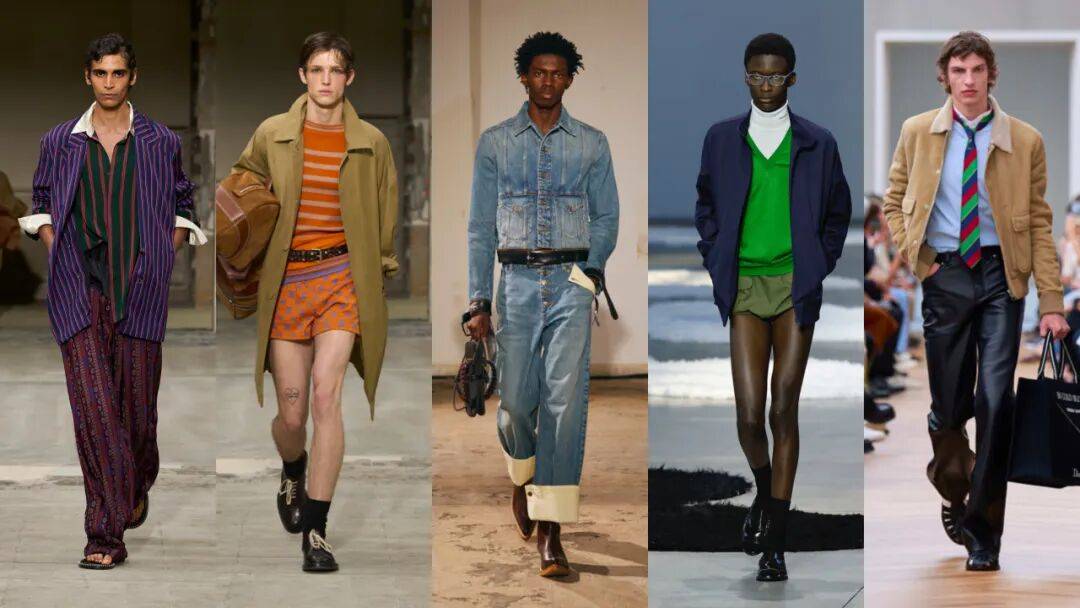
Core Insights - The article outlines five key trends for the Spring/Summer 2026 fashion season, emphasizing a continuation and evolution of past styles rather than the emergence of entirely new concepts [2][5]. Trend Analysis - **Shorter Bottoms**: The trend is moving towards shorter bottoms, particularly "mini shorts," which are becoming more accepted in men's fashion as exposure increases [5][7][8]. - **Relaxed Silhouettes**: There is a noticeable shift towards softer, more relaxed fits, often described as "sleepwear-core," indicating a preference for comfort without resorting to overly oversized styles [11][15]. - **Textural Interest**: The use of embroidery and other tactile materials is gaining prominence, with a focus on craftsmanship and vintage aesthetics in menswear [16][18]. - **Neck Accessories**: The resurgence of neck accessories like ties and scarves is noted, with brands incorporating these elements to enhance the overall look and feel of outfits [21][23]. - **Open Footwear**: The trend towards open footwear, particularly flip-flops, is becoming more prevalent, with brands integrating them into more sophisticated looks [26][28]. Additional Observations - **Color Trends**: Bright colors such as neon yellow and pink are highlighted, but softer, neutral tones may be more practical for everyday wear [32][35]. - **Denim Styles**: The article discusses the complexities of wearing full denim outfits, suggesting that mixing denim pieces may be a more effective approach [36][40].

奢侈品市场复苏,消费价值观重塑
2 1 Shi Ji Jing Ji Bao Dao· 2025-12-30 23:14
Group 1 - The luxury goods market is showing signs of moving towards a new balance after experiencing structural adjustments, with total sales remaining stable at approximately €1.44 trillion, and projected growth to €2.2 trillion to €2.7 trillion by 2035 [1][2] - The Greater China region is viewed as the core engine driving the recovery of luxury brands like LVMH and Burberry, with significant improvements in their performance since Q3 2025 [2][3] - Consumer demand is shifting towards personalized, diversified, high-quality, and cost-effective products, indicating a change in purchasing logic among younger generations [1][3] Group 2 - The luxury goods market is gradually recovering from post-pandemic consumption fatigue, with major luxury groups reporting positive trends in the Greater China market, leading to reduced revenue declines or positive growth [2][3] - Nearly half of luxury consumers believe that brand prices are inflated and are unwilling to pay for frequently increasing prices, indicating a shift towards value and experience over brand logos [3][4] - Discount channels are experiencing significant sales growth, with platforms like Vipshop reporting a 30% year-on-year increase in luxury goods sales from January to September [3][4] Group 3 - Trust issues regarding discounted luxury goods are prevalent, as consumers question the reliability of purchasing from discount channels [4][5] - The establishment of a third-party inspection agency, such as China Inspection, is crucial for building consumer trust in discounted luxury products, as it provides authoritative verification [5][6] - The luxury market is entering a more complex and healthier phase, balancing brand aspiration with the need for a trust system and pricing pathways to meet increasingly discerning consumer demands [5][6]
奢侈品工艺质量问题报告增多
Xin Lang Cai Jing· 2025-12-29 15:50
Core Viewpoint - The increase in reports regarding quality issues in high-end brands has been noted, with Prada claiming these are isolated cases, while Hermès emphasizes its rarity and handcrafted model to support its pricing power [1][2]. Group 1: Company Responses - Prada has stated that the reported quality issues are individual cases and not reflective of the brand as a whole [1][2]. - Hermès maintains that its unique positioning and handcrafted production methods justify its pricing strategy, reinforcing its brand value despite the reported issues [1][2].