皮具箱包

Search documents
海外看中国:高端消费复苏启示录-华泰证券
Sou Hu Cai Jing· 2026-02-26 09:25
Group 1 - The high-end consumption market in China shows initial signs of recovery in 2025, characterized by rational recovery and structural differentiation, with the domestic personal luxury goods market's year-on-year decline narrowing to 3%-5% [1][21] - The market recovery follows a "J-shaped" pattern, with sales expected to turn positive in Q4 2025, showing a year-on-year growth of 1%-3% [1][21] - The recovery is driven by multiple factors, including a significant narrowing of the price gap between domestic and international luxury goods to around 12%, and the implementation of consumption-promoting policies [1][8] Group 2 - Consumer preferences are shifting from "material possession" to "experience first," with high-end service consumption, such as luxury hotels and health care, showing strong performance [1][31] - The luxury goods sector is experiencing a K-shaped differentiation, with beauty and personal care products growing by 4%-7%, while categories like leather goods and watches are declining by 8%-11% and 14%-17%, respectively [1][34] - The high-net-worth population is increasingly concentrated in eastern regions, with business owners now making up 54% of this demographic, becoming a core consumer force [2][9] Group 3 - The recovery in high-end consumption is attributed to a combination of factors, including consumer confidence restoration, policy support, and the adaptation of foreign brands to local market needs [1][8] - The average spending on luxury goods is expected to decrease slightly by about 4%, reflecting a more cautious consumer sentiment [28] - The high-end service sector, particularly in health and wellness, is projected to see increased spending, with intentions to spend on travel and health rising significantly among high-net-worth individuals [43][44]





海外看中国:高端消费复苏启示录
HTSC· 2026-02-24 09:18
Investment Rating - The report maintains an "Overweight" rating for the consumer discretionary sector [2] Core Insights - The high-end consumption market in China is showing signs of recovery, with a notable shift from material possession to experience-oriented consumption. The luxury goods market is expected to grow significantly, with a projected market size of approximately 360 billion RMB in 2025, reflecting a decline of only 3-5% compared to previous years [4][12] - The recovery is driven by multiple factors, including consumer confidence restoration, policy support, and narrowing price differentials between domestic and international luxury goods [5][19] - Local brands are expected to gain market share due to their understanding of consumer preferences and the emphasis on value-for-money products [6] Summary by Sections Market Overview - The luxury goods market in China is experiencing a structural recovery, with a significant reduction in the decline rate to 3-5% in 2025, compared to a decline of 17-19% in 2024. The market still holds over 50% growth compared to 2019 levels, indicating long-term resilience [12][19] - The recovery is characterized by a J-shaped pattern, with demand expected to improve in the second half of 2025 due to enhanced consumer confidence and wealth effects [12][19] Category Observations - The shift in consumer focus from material goods to experiential services is evident, with high-end service sectors like luxury hotels and travel showing robust growth. In contrast, traditional luxury goods such as watches and leather goods are under pressure, with declines of 14-17% and 8-11% respectively [4][21] - Beauty and personal care products are leading the recovery, with a projected growth of 4-7% in 2025, while apparel and accessories are experiencing declines of 5-8% [21][26] Consumer Behavior - High-net-worth individuals are expected to maintain cautious spending, with an anticipated decrease in average luxury spending from 146,800 RMB to 141,500 RMB in 2025, reflecting a shift towards value-driven purchases [20][24] - The report highlights a growing preference for experiential spending, with significant increases in planned expenditures for health and wellness, travel, and entertainment among high-net-worth individuals [30][31] Investment Recommendations - The report suggests focusing on three main investment themes: high-quality domestic brands with strong value propositions, emotional consumption brands, and service leaders that leverage unique Chinese experiences [6][30] - Specific companies recommended for investment include brands like Old Puhuang, Mao Ge Ping, Lin Qing Xuan, and An Ta Sports, which are well-positioned to benefit from the ongoing market dynamics [6][30]
2025年中国个人奢侈品市场:在“价值回归、认知升级”的时代重塑方向、稳步复苏
BAIN· 2026-02-01 06:28
Investment Rating - The report indicates a cautious recovery in the Chinese personal luxury goods market, with an overall decline expected to narrow to 3%-5% in 2025 [9][11]. Core Insights - The Chinese luxury goods market is gradually recovering, but consumers remain cautious, leading to a decline in non-essential spending. There is a growing preference for high-value luxury items that combine quality, uniqueness, and practicality [8][10]. - The market is witnessing a shift towards experiential luxury consumption, particularly in travel and health, as consumers favor emotional and sensory satisfaction over physical goods [8]. - Brands focusing on affordable luxury and ultra-high-end segments are gaining market share by providing "real value" to affluent young consumers and ultra-high-net-worth individuals [8][10]. - The share of overseas luxury consumption has decreased compared to 2024, driven by a weaker RMB and ongoing domestic promotions, which encourage luxury spending to return to mainland China [8][10]. Summary by Sections Market Overview - The Chinese personal luxury goods market is projected to shrink by 3%-5% in 2025, with signs of recovery in the third quarter. Different categories show varied performance, with beauty and personal care recovering, while watches continue to face pressure [10][11]. - The second-hand luxury market is growing robustly, with an expected increase of 15%-20%, although it still represents a small portion of the overall market [10][36]. Consumer Behavior - Consumers are becoming more discerning, leading to a cautious approach in luxury purchases. The market is transitioning into a slow growth phase, with expectations for continued recovery into 2026 [10][49]. - The report identifies three main consumer segments driving market dynamics: high-end consumers, middle-aged middle-income consumers, and a new generation of luxury seekers [28]. Category Performance - Beauty and personal care categories are showing strong recovery, with growth rates of 4%-7%. In contrast, the leather goods category is expected to decline by 8%-11% due to insufficient innovation and rising prices [18][20]. - Jewelry is expected to see a reduced decline of 0%-5%, while the watch category is under significant pressure, with an anticipated decline of 14%-17% [20]. Second-Hand Market - The second-hand luxury market is expected to grow significantly, driven by increased supply and changing consumer behavior towards value and sustainability [35][36]. - The second-hand market is primarily concentrated in leather goods and watches, with leather goods accounting for 50%-55% of the market [40]. Local Brand Competitiveness - Chinese local luxury brands are emerging as significant competitors by integrating innovative designs with local culture, thus attracting consumer attention [45]. - These brands are leveraging a deeper understanding of local consumer preferences to create unique product aesthetics and marketing strategies [45][48]. Future Outlook - The luxury market is expected to continue facing volatility and uncertainty in 2026, but there are signs of sustained recovery, supported by domestic policy and geopolitical factors [49][50]. - The second-hand luxury market's low penetration rate compared to global averages indicates substantial growth potential [49].
贝恩:2026年中国个人奢侈品市场将适度增长
Guo Ji Jin Rong Bao· 2026-01-29 15:16
Core Insights - The 2025 China Personal Luxury Goods Report by Bain & Company indicates a contraction of 3% to 5% in the mainland personal luxury goods market, showing a significant easing compared to the sharp decline in 2024 [1] - The report highlights a shift in consumer behavior towards high-cost performance products that balance quality, uniqueness, and practicality, with a preference for experiential consumption such as travel and health [1] - The report notes that the high-value customer (VIC) group remains the core driver of the luxury goods market, while younger potential consumers are entering the luxury market with a more cautious and delayed approach [1] Market Performance - Different luxury categories show varied performance: beauty and personal care products are recovering with a growth of 4% to 7%, while apparel is declining by 5% to 8%, leather goods by 8% to 11%, watches by 14% to 17%, and jewelry is expected to decline by 0% to 5% compared to 2024 [1] Consumption Trends - The share of overseas luxury goods consumption has significantly decreased in 2025, with 65% of luxury consumption occurring in mainland China and 35% abroad, indicating an increase in consumption return [2] - Mainland consumers' enthusiasm for outbound travel has not diminished their willingness to purchase luxury goods domestically, aided by reduced price gaps between mainland and major overseas markets [2] - The rise of local Chinese luxury brands, particularly in beauty and personal luxury categories, is emphasized, with these brands leveraging culturally relevant product designs and competitive pricing strategies [2] Competitive Advantages - Local brands are building differentiated advantages through a deeper understanding of local consumer preferences, implementing a "China-first" customer outreach strategy, and enhancing access to local quality resources and materials to establish price advantages [3] - Despite ongoing market volatility and uncertainty, Bain forecasts moderate growth for the Chinese personal luxury goods market in 2026, supported by the expanding middle-income group and improving consumer confidence [3]
贝恩:2025年中国奢侈品消费回流程度有所增加
Bei Ke Cai Jing· 2026-01-29 14:29
Core Insights - The 2025 China personal luxury goods market is projected to contract by 3% to 5%, showing a significant easing compared to the sharp decline in 2024 [1] - 65% of luxury consumption is expected to occur within mainland China, with 35% taking place overseas, indicating an increase in consumption return [1] - The market is beginning to stabilize, with early signs of recovery noted in the second half of 2025, although consumer confidence still needs improvement [1] Luxury Goods Performance - The beauty and personal care category is expected to perform the best, recovering growth to 4% to 7% [1] - The apparel category is projected to decline by 5% to 8%, while leather goods and bags are expected to decrease by 8% to 11% due to price increases and lack of innovation [1] - The watch category faces severe pressure, with an anticipated decline of 14% to 17%, as consumers become more rational in their purchasing decisions [1] - The jewelry category is expected to see a smaller decline of 0% to 5%, benefiting from considerations of value retention and rising gold prices [1] Resale Market Trends - The resale market for luxury goods in China is projected to grow by 15% to 20% in 2025, although its penetration remains low at under 10% [2] - This growth is attributed to increased supply of second-hand goods, higher consumer acceptance, especially among younger price-sensitive consumers, and the widespread use of live-streaming platforms [2] - The resale market is becoming an essential part of the luxury ecosystem in China, reflecting a shift in consumer attitudes and market maturity [2] Rise of Local Brands - Local Chinese luxury brands are continuing to rise, particularly in beauty and skincare, leveraging culturally relevant product designs and competitive pricing supported by local supply chains [2] Future Outlook - Despite ongoing volatility and uncertainty, moderate growth is expected in the Chinese personal luxury goods market by 2026, maintaining its foundational role in the global luxury market [3] - The growth will depend heavily on specific product categories and brands, driven by the expanding middle-income group, improved consumer confidence, and favorable policies [3]
中信建投:高端消费复苏,买什么?
Xin Lang Cai Jing· 2026-01-13 01:42
Core Viewpoint - The high-end consumption sector in China is gradually recovering since Q3 2025, driven by the wealth effect from the stock market, with significant investment opportunities anticipated in 2026 [3][4][6]. Group 1: Recovery of High-End Consumption - The recovery of high-end consumption is validated by three key points: international luxury brands in the Asia-Pacific region have shown revenue growth since Q2 2025, high-end retail properties in China are entering a recovery phase, and the global luxury market has also begun to recover since Q3 2025 [4][16][19]. - The stock market's wealth effect has significantly contributed to the recovery of high-end consumption, with the total market capitalization of A-shares and Hong Kong stocks reaching 123 trillion yuan and 48 trillion HKD respectively by the end of 2025, an increase of 24.5 trillion yuan and 12.7 trillion HKD [12][14]. Group 2: Investment Opportunities in High-End Consumption - The recovery timing and intensity of different high-end consumption categories are influenced by four dimensions: the proportion of VIC (Very Important Customer) groups, the order of consumption following wealth increase, the elasticity of supply, and consumption trends [3][5][35]. - High-net-worth individuals are a primary source supporting high-end consumption, with approximately 300 million global high-end luxury consumers in 2024, where 2%-3% of core VIC users contribute over 40% of sales, a proportion that is continuously increasing [9][24]. - The luxury goods market is expected to see the fastest growth in categories such as luxury cruises, private jets, high-end dining, and personal luxury goods, with jewelry projected to perform best in 2025, growing by 4%-6% [5][28][29]. Group 3: Market Trends and Consumer Behavior - The luxury experience segment is expected to increase its share to 20% by 2025, with a compound annual growth rate of 4%, continuing to outperform the overall market [33]. - The recovery of high-end consumption is characterized by a shift from essential needs to optional purchases, with categories that have strong social and status-related demands recovering first, while those with high VIC customer proportions and favorable supply conditions are expected to sustain longer [39].

中国皮具箱包博物馆暨狮岭皮具品牌优选店正式揭牌
Xin Lang Cai Jing· 2025-12-25 07:43
Core Viewpoint - The establishment of the China Leather Luggage Museum and the "Lion Ridge Leather" brand selection store marks a significant transition for Lion Ridge from "scale expansion" to "quality enhancement and brand leadership" in the leather goods industry [1]. Group 1: Museum - The newly opened China Leather Luggage Museum serves as a cultural landmark, showcasing the history of the luggage industry and the local heritage of Lion Ridge, which has evolved from producing 300 bags 50 years ago to over 700 million bags annually [2]. - The museum features multiple exhibition areas, including a history zone, craftsmanship zone, designer area, and Lion Ridge honor zone, displaying nearly 300 valuable artifacts and providing an immersive experience for visitors [2]. Group 2: Brand Selection Store - The "Lion Ridge Leather" brand selection store aims to reshape the reputation of local manufacturing and achieve "dual empowerment" between regional and individual brands [3]. - The store features nearly 20 local brands, with all products undergoing strict quality selection by the China Inspection and Quarantine Company, ensuring consumer confidence in product quality [3]. Group 3: Future Vision - The dual launch of the museum and selection store is seen as a critical first step in establishing a new development framework based on industry and brand, with plans for the government to enhance the business environment and support brand cultivation [4]. - The goal is to create a model for traditional manufacturing transformation and upgrade, aiming for Lion Ridge to become a globally recognized center for leather design [4].
旅游购物“两不误” 广东推介第二批“乐购小镇”
Nan Fang Ri Bao Wang Luo Ban· 2025-12-22 07:46
Core Insights - Guangdong's "Le Gou Town" initiative aims to promote local consumption and tourism by highlighting unique regional products and experiences [1][2] - The initiative includes eight towns, each specializing in different sectors such as beauty, automotive, and fashion, enhancing their appeal to consumers [1][2] Group 1: Town Features - Guangzhou's Minquan Street is noted for its extensive professional markets, with 57 operational markets covering six categories including beauty and fashion [1] - Shenzhen's Zhongying Street offers a unique shopping experience with cross-border e-commerce and duty-free shopping, targeting both local and Hong Kong consumers [1] - Dongguan's Liaobu Town is recognized as a national automotive consumption hub, with annual funding of 5 million for consumer promotion activities [2] Group 2: Economic Impact - The "Le Gou Town" initiative is part of the "Yue Enjoy Warm Winter, Le You Guangdong" consumption season, aimed at enhancing local economic development [2] - Liaobu's automotive cultural festival has generated over 1.1 billion in consumer spending over five events, showcasing the town's economic impact [2] - The initiative seeks to create a positive cycle of consumption and tourism, contributing to high-quality local economic growth [2]
广东发布34个“乐购小镇”,背后有何深意?
Nan Fang Du Shi Bao· 2025-12-12 12:44
Core Viewpoint - Guangdong Province has announced the list of "Shopping Towns" for 2025, highlighting 34 selected towns that focus on enhancing consumer value through the integration of industry, culture, and tourism [1][3]. Group 1: Selection of Towns - A total of 34 towns were selected, including 12 industrial towns, 6 agricultural towns, and 16 commercial towns, focusing on various consumer goods such as electronics, toys, clothing, and food [3]. - Notable towns include Guangzhou's "Tea Town," Shenzhen's "Electronic Town," and Foshan's "Home Art Town," showcasing the diversity of Guangdong's industrial clusters [1][3]. Group 2: Industry and Cultural Integration - The initiative aims to upgrade consumer experiences from single product purchases to a combination of products, culture, and experiences, creating a new consumption ecosystem in Guangdong [1]. - The integration of agriculture, culture, commerce, and tourism is emphasized, with towns like Foshan's "Home Art Town" transforming into immersive shopping destinations [10]. Group 3: Consumer Experience Enhancements - The "Guangdong Shopping Map" has been upgraded to version 2.0, featuring new functionalities such as "trade-in" store markings and clearer subsidy information for nearly 30,000 participating stores [12]. - The map aims to enhance consumer navigation and experience, linking coupon distribution with store visits, and is accessible through major payment platforms [12].

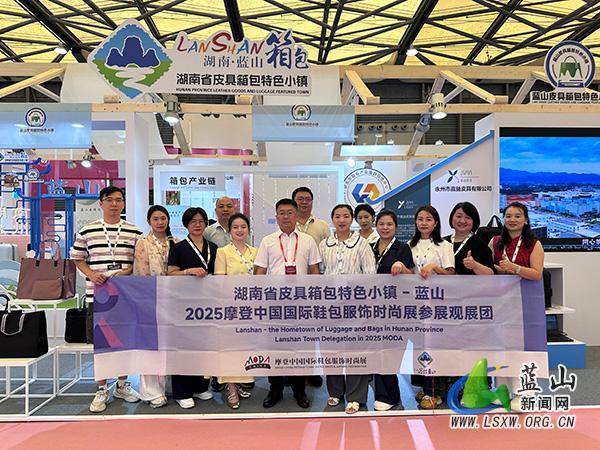
蓝山县皮具箱包亮相上海国际展 政企合力抢滩全球市场
Sou Hu Cai Jing· 2025-09-05 08:40
Core Viewpoint - The "Modern China" International Footwear, Bag, and Apparel Fashion Exhibition held in Shanghai aims to promote the development of the leather and bag industry in Lushan County, facilitating the "going out" strategy for local enterprises and expanding their domestic and international markets [2][3]. Group 1: Exhibition Overview - The exhibition lasted for three days, themed "Leading Trends, Building Brand Value," featuring 11 exhibition areas with products including footwear, bags, leather clothing, and other leather and fur products [3]. - The event serves as a high-end business cooperation, brand display, and information exchange platform for international and domestic brand enterprises, regional specialties, and independent designers [3]. Group 2: Participation and Outcomes - Lushan County showcased several companies, including Xiangjiangyuan Leather City, Qixiu Technology, and Jiayi Leather, attracting numerous domestic and international buyers [5]. - The exhibition received over 800 inquiries on the first day, with more than 20 potential clients establishing initial cooperation intentions with the participating enterprises [5]. Group 3: Industry Development - Lushan County has established over 170 "one main, one special" enterprises, with 41 being above-scale, achieving nearly 10 billion yuan in output value in 2024 [2]. - The county's leather and bag industry has transitioned from "manufacturing" to "intelligent manufacturing" and from "OEM" to "own brand" through continuous technological investment and original brand development [5].