华兰生物

Search documents
再次易主,国药系能制服派林生物这匹悍马吗?
Guo Ji Jin Rong Bao· 2025-06-19 07:39
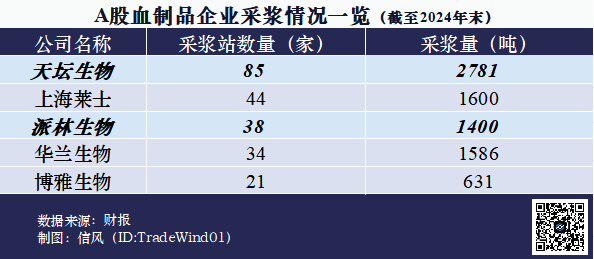
Core Viewpoint - The blood products industry is experiencing significant consolidation, highlighted by China National Pharmaceutical Group's acquisition of a 21.03% stake in Palin Bio for 4.6 billion yuan, which is a high premium acquisition that will reshape the industry landscape [1][5]. Company Summary - China National Pharmaceutical Group's acquisition will increase its control over the blood products market, consolidating its position as the leading player with a total of 154 plasma stations across its subsidiaries, including Tian Tan Biological and Wei Guang Biological [6][9]. - Palin Bio has undergone multiple ownership changes, with its history marked by internal conflicts that have hindered its growth. The company has changed hands six times, with the latest acquisition by China National Pharmaceutical Group marking a potential end to its tumultuous ownership history [3][4]. Industry Summary - The blood products industry is characterized by a high degree of concentration, with major players like Tian Tan Biological, Shanghai Laishi, and Palin Bio dominating the market. The industry is moving towards an oligopolistic structure, with the number of companies decreasing significantly over the years [8][11]. - The global blood products market is projected to exceed $50 billion in 2024 and reach over $90 billion by 2030, indicating substantial growth potential driven by increasing demand for blood products due to aging populations and the need for critical medical supplies [8][10]. - China's blood products market is expected to grow significantly, with projections of reaching 60 billion yuan in 2024 and 95 billion yuan by 2030. The industry faces challenges such as limited raw material supply and strict regulations on blood plasma collection [11][12].

中国血王之战
Hua Er Jie Jian Wen· 2025-06-12 06:50
Core Viewpoint - The control of blood product company Palin Bio (000403.SZ) has been transferred to China National Pharmaceutical Group (Sinopharm), which may lead to the integration of Palin Bio and Tian Tan Bio (600161.SH), potentially reshaping the competitive landscape in the blood product industry [1][5][9]. Group 1: Company Control and Financials - On June 10, Palin Bio announced that its controlling shareholder, Qiongcheng Shengbang Yinghao Investment Partnership, plans to transfer its entire 21.03% stake to China National Biotechnology Co., Ltd. [1] - The transaction is valued at 38.44 billion yuan, with a share price of 24.96 yuan, representing a 47% premium over the closing price of 16.96 yuan on June 6 [3]. - The estimated price-to-earnings ratio for this transaction is close to 32 times, based on a projected net profit of 7.45 billion yuan for 2024 [3][4]. Group 2: Industry Competition and Market Position - The integration of Tian Tan Bio and Palin Bio could lead to a combined revenue of approximately 86.87 billion yuan, surpassing Shanghai Lai Shi's (002252.SZ) projected revenue of 81.76 billion yuan for 2024 [7][15]. - If the integration occurs, the combined entity would control at least 123 plasma collection stations and have a total plasma collection volume of 4,181 tons, significantly increasing market share to nearly 30% [7][16]. - The blood product industry is experiencing consolidation due to limited new entrants since 2001, with companies increasingly acquiring others to expand market share [16][17]. Group 3: Challenges and Future Outlook - The integration process may face challenges, particularly regarding the internal conflicts within Palin Bio, especially with its second-largest shareholder, Harbin Tongzhi Cheng Technology Development Co., Ltd. [10][11][14]. - The future of the blood product industry may depend on how effectively China National Pharmaceutical Group can manage these internal dynamics while pursuing further consolidation [9][14]. - The industry is also exploring innovative solutions to reduce reliance on human plasma, with several companies making progress in developing recombinant products [21][22].


派林生物易主:国药系拟再收千吨级血企竞逐百亿市场
2 1 Shi Ji Jing Ji Bao Dao· 2025-06-11 06:18
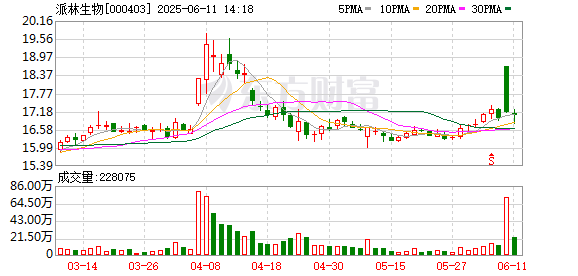
Core Viewpoint - The control of Palin Biotech (000403.SZ) is set to change hands as its major shareholder, Shengbang Yinghao, has signed a framework agreement with China Biotech to transfer 21.03% of its shares, potentially enhancing China Biotech's position in the blood products industry [2][3] Company Summary - The transaction will be completed in cash, but there are risks associated with the due diligence process and the uncertainty of finalizing the agreement [2] - If the deal is successful, the controlling shareholder will shift from the Shaanxi Provincial Government's State-owned Assets Supervision and Administration Commission to China National Pharmaceutical Group (Sinopharm) [2] - Following the acquisition, Sinopharm will strengthen its presence in the blood products sector, joining its existing holdings in Tian Tan Biological (600161.SH) and Weigao Biotech (002880.SZ) [2] - In 2024, the combined plasma collection volume of these three companies is projected to reach 4,743 tons, significantly surpassing competitors like Shanghai Raist (002252.SZ) and Hualan Biological (002007.SZ) [2] Industry Summary - The change in ownership of Palin Biotech may reshape its future development and could lead to a reconfiguration of competition within the blood products industry [3] - The market response has been lukewarm, with Palin Biotech's stock showing minimal fluctuations following the announcement [3] - The blood products industry in China is expected to undergo consolidation, driven by government policies and the need for industry growth, favoring companies with strong plasma collection resources and R&D capabilities [3][7] - The global blood products industry has seen a significant reduction in the number of major players, with the top five companies controlling 80%-85% of the market share [7] - In China, the number of operational blood product companies is under 30, with strict regulations on the establishment of new plasma collection stations [8] - The industry is projected to grow, with the blood products market expected to reach 600 billion yuan in 2024 and 780 billion yuan by 2027, reflecting a compound annual growth rate of 11.6% from 2022 to 2027 [10]
华兰生物: 2024年年度权益分派实施公告
Zheng Quan Zhi Xing· 2025-06-10 09:09
购注销 2023 年限制性股票激励计划部分限制性股票 1,324,260 股,公司总股本 由 1,828,780,926 股减至 1,827,456,666 股,因本次利润分配的股本基数以扣除 公司回购注销的股权激励限售股份数量 1,324,260 股后的 1,827,456,666 股为基 数,本次分配比例不变,公司按照分配比例不变的原则对分配总额进行调整,总 计分配 365,491,333.20 元。 是一致的。 二、权益分派方案 本公司2024年年度权益分派方案为:以公司现有总股本1,827,456,666股为 基数,向全体股东每10股派2.00元人民币现金(含税;扣税后,通过深股通持有 股份的香港市场投资者、境外机构(含QFII、RQFII)以及持有首发前限售股的 个人和证券投资基金每10股派1.80元;持有首发后限售股、股权激励限售股及无 限售流通股的个人股息红利税实行差别化税率征收,本公司暂不扣缴个人所得税, 待个人转让股票时,根据其持股期限计算应纳税【注】;持有首发后限售股、股 权激励限售股及无限售流通股的证券投资基金所涉红利税,对香港投资者持有基 金份额部分按10%征收,对内地投资者持有基金份 ...

华兰生物(002007) - 2024年年度权益分派实施公告
2025-06-10 09:00
2024年年度权益分派实施公告 本公司及董事会全体成员保证信息披露的内容真实、准确和完整,没有虚假 记载、误导性陈述或重大遗漏。 华兰生物工程股份有限公司2024年年度权益分派方案已获2025年4月25日召 开的2024年度股东大会审议通过,现将权益分派事宜公告如下: 证券代码:002007 证券简称:华兰生物 公告编号:2025-020 华兰生物工程股份有限公司 一、股东大会审议通过利润分配方案的情况 1、公司于 2025 年 4 月 25 日召开的 2024 年度股东大会审议通过了《关于 2024 年度利润分配的议案》,公司 2024 年度利润分配方案为:以总股本 1,828,780,926 股为基数, 向全体股东每 10 股派现金股利 2 元(含税),总计 分配 365,756,185.20 元;除上述现金分红外,本次分配公司不送红股,不实施 资本公积金转增股本。若在董事会决议公告之日起至实施权益分派股权登记日期 间,公司总股本由于股权激励注销原因而发生变化的,公司将按照分配比例不变 的原则对分配总额进行调整。 2、自上述利润分配方案披露至实施期间,公司于 2025 年 5 月 19 日完成回 购注销 ...
派林生物易主敲定中国生物 血制品集中度提升再下一城
Hua Er Jie Jian Wen· 2025-06-09 15:15
Core Viewpoint - The acquisition of a controlling stake in Pailin Biological by China National Pharmaceutical Group signifies a significant shift in ownership and control within the blood products industry in China, with implications for market competition and consolidation strategies [2][3]. Group 1: Acquisition Details - Pailin Biological's controlling shareholder, Shengbang Yinghao Investment Partnership, plans to transfer its entire 21.03% stake to China National Pharmaceutical for a total cash consideration of 3.844 billion yuan [1][3]. - The transaction values Pailin Biological at 24.96 yuan per share, representing a 47% premium over its closing price of 16.96 yuan on June 6 [3]. - The estimated price-to-earnings (P/E) ratio for this transaction is approximately 32 times, based on Pailin's projected net profit of 745 million yuan for 2024 [3]. Group 2: Industry Context - The valuation of Pailin Biological is notably higher than that of several other A-share blood product companies, which have P/E ratios around 25 times, with only Boya Bio reaching 36 times [4]. - The scarcity of blood products in China, due to regulatory restrictions on new production facilities since 2001, underpins the rationale for China National Pharmaceutical's substantial investment [5]. Group 3: Competitive Landscape - Following the acquisition, Tian Tan Biological, another player in the blood products sector, will face increased competition as both companies operate in the same industry [6]. - There are expectations that China National Pharmaceutical may integrate Pailin Biological into Tian Tan Biological, enhancing operational efficiency and market share [8]. - If the integration occurs, the combined entity would control at least 123 plasma collection stations, with a total collection volume exceeding 4,000 tons, significantly outpacing competitors like Shanghai Raist and Hualan Biological [8][9].

重磅指数大调整:医药股被频繁调出,“最靓的仔”失宠?
Bei Ke Cai Jing· 2025-06-05 05:55
/ R X ► the works of the state of the control of the country of 图/IC 指数样本定期调整,白云山、华熙生物等被调出 日前,上交所与中证指数有限公司宣布,将调整上证50、科创50、沪深300、中证500等指数样本,调整方案将于6月13日收市后生效。同期,深交所及其全 资子公司深圳证券信息有限公司宣布,将对深证成指、创业板指、深证100等指数实施样本定期调整,调整方案将于6月16日正式实施。 据了解,多数指数样本每半年调整一次,调整实施时间分别为每年6月和12月的第二个星期五的下一交易日。在定期调整时,会根据样本空间内股票的市 值、流动性等指标重新筛选成分股,将不符合要求的股票调出指数,同时选取符合条件的其他股票调入指数。 贝壳财经记者梳理发现,此次样本调整涉及多只医药生物股。比如,上证180指数更换18只样本,其中,白云山、益丰药房、华熙生物等个股被调出。沪深 300指数更换7只样本,华兰生物被调出。 中证500指数更换的50只样本中,亿帆医药、安科生物、三星医疗、九洲药业、金域医学、百克生物、荣昌生物等多只生物医药相关个股被调出,百济神 州、康 ...

未知机构:国泰海通医药热门领域重磅交易再起继续推荐创新药板块端午节期-20250603
未知机构· 2025-06-03 01:45
Summary of Conference Call Records Industry Overview - The focus is on the innovative drug sector, particularly in the context of recent significant transactions and developments in the PD(L)1*VEGF and GLP1 fields [1][2]. Key Points and Arguments PD(L)1*VEGF Dual Antibody Developments - 康方生物 and Summit announced top-line data from the global clinical trial HARMONI for Ivosidenib targeting 2L EGFRm, indicating: - The PD(L)1*VEGF dual antibody shows certain effectiveness in the post-EGFRm mutation line, although the median follow-up time is short, necessitating longer follow-up for evaluation [1] - The HARMONI study validates the consistency of clinical results between China and the U.S. [1] - The FDA stated that statistically significant overall survival benefits are necessary to support the submission for market approval, which will influence Summit's timeline for BLA submission [1] - The primary focus remains on the first-line global clinical results for Ivosidenib [1] Collaboration and Licensing Opportunities - BMS and BNTX are collaborating on the development of PD(L)1*VEGF dual antibodies, with BMS committing to: - An upfront payment of $1.5 billion, $2 billion in non-contingent annual payments, potential milestone payments of $7.6 billion, and a 50:50 cost/profit sharing arrangement [2] - The continuous licensing of PD(L)1*VEGF assets reflects MNCs' optimism regarding these types of drugs, suggesting potential for identifying advantageous subpopulations for clinical benefits [2] - Other companies such as ROG and ABBV are also expected to have demand for similar assets, with domestic firms like 荣昌生物, 宜明昂科, 华海药业, 华兰生物, and 神州细胞 making strategic moves in this area [2] GLP1/GIP Dual Agonist Transactions - Regeneron and Hansoh Pharmaceutical reached a deal for the GLP1/GIP dual agonist, with Regeneron paying an upfront fee of $80 million, $1.93 billion in milestones, and a double-digit sales share [2] - The past year has seen ABBV, REGN, and JNJ entering the diabetes and weight loss market, expanding competition against existing players like LLY, NVO, MSD, ROG, and AZN [2] - The ongoing interest from MNCs in the weight loss sector is expected to lead to a resurgence of new drug developments, particularly following data releases from conferences like ADA [2] Recommended Companies - The following companies are recommended for attention: - 恒瑞医药, 华东医药, 联邦制药, 歌礼制药, 来凯医药 [3] Market Trends - There is optimism regarding the Chinese innovative drug sector due to ongoing licensing activities, which are expected to drive a bullish market trend [4] - MNCs have reiterated their interest in Chinese assets during recent earnings calls, reflecting a strong demand for domestic innovative drugs and low policy sensitivity [4] - The continuous licensing of Chinese innovative drugs is anticipated to lead to a revaluation of overseas valuations [4] - Recommended stocks for Pharma revaluation include 恒瑞医药, 华东医药, 三生制药, 联邦制药, 中国生物制药, 石药集团/新诺威, 先声药业, 康哲药业, 科伦药业; for Biotech global competitiveness: 益方生物, 泽璟制药, 一品红, 百利天恒, 科伦博泰生物, 贝达药业, 信达生物, 百济神州, 再鼎医药, 和黄医药 [4]



【股评】6月将会是A股市场在新背景下升起
Sou Hu Cai Jing· 2025-06-02 12:01
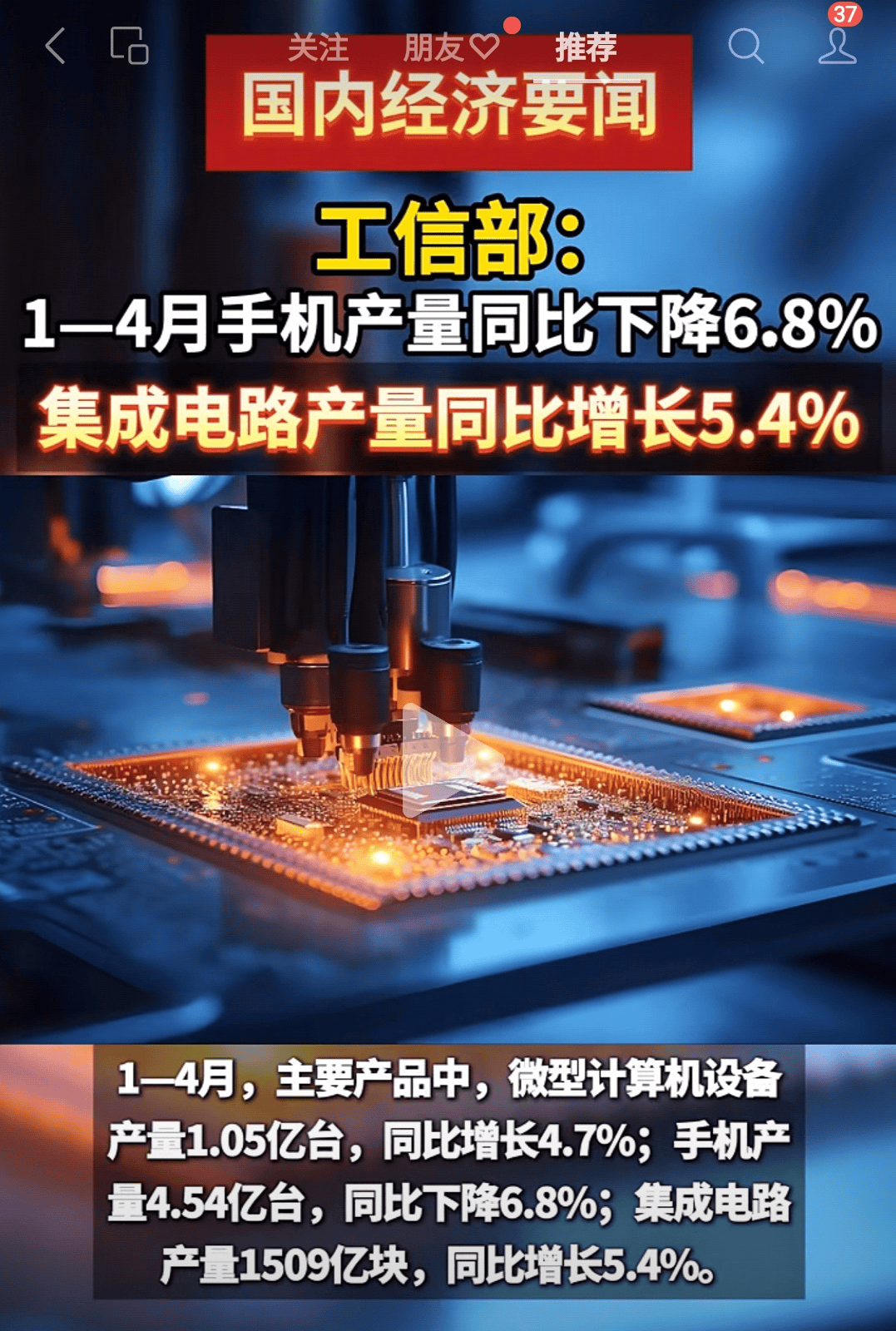
Group 1 - The Ministry of Industry and Information Technology reported that the integrated circuit production increased by 5.4% year-on-year from January to April [1] - The National Bureau of Statistics indicated that the official manufacturing PMI rose to 49.5 in May, while the non-manufacturing sector continued to expand, and both import and export indices showed improvement [3] - The Hong Kong government officially published the Stablecoin Regulation, marking its enactment as law [5] Group 2 - The top ten stocks in A-shares for May showed significant gains, with the strongest stock, Zhongyou Technology, increasing by 157.28% [7][9] - A total of 7 stocks were replaced in the CSI 300 index, with 50 stocks in the CSI 500 index, and 100 stocks in the CSI 1000 index, effective from June 16 [20][21] - The commentary suggests that the adjustment of index samples will lead to new capital fluctuations in the market, indicating a potential bull market for A-shares in the upcoming months [22]

生物疫苗ETF(159657)收涨近1%,11款新药同日获批成市场“强心剂”
Xin Lang Cai Jing· 2025-05-30 08:56
Core Viewpoint - The biopharmaceutical and vaccine sector is experiencing growth driven by new drug approvals and increasing demand for vaccines, particularly in the context of an aging population and rising health awareness in China [2][3]. Group 1: Market Performance - As of May 30, 2025, the National Vaccine and Biotechnology Index (980015) increased by 0.44%, with notable gains from companies such as Jinbo Biotechnology (5.61%), Fosun Pharma (5.23%), and Zhaoyan New Drug (5.12%) [1]. - The Biopharmaceutical ETF (159657) rose by 0.64%, with the latest price at 0.63 yuan [2]. Group 2: New Drug Approvals - On May 29, the National Medical Products Administration released approvals for 11 new drugs, covering areas such as oncology and metabolic diseases, involving several domestic pharmaceutical companies [2]. - The approval of new drugs is expected to contribute positively to the performance of related companies [3]. Group 3: Industry Growth Potential - The demand for shingles vaccines is projected to grow significantly, with the Chinese market expanding from 0 in 2015 to 600 million yuan in 2021, and expected to reach 10.8 billion yuan by 2025 [2]. - Globally, the market for shingles vaccines is also expanding, with low vaccination rates in many countries indicating substantial future growth potential [2]. - Domestic vaccines are emerging, with two out of four globally approved shingles vaccines already available in China, suggesting increased market options and further industry development [2]. Group 4: Index Composition - The National Vaccine and Biotechnology Index (980015) consists of 50 companies involved in the biotechnology sector, reflecting the overall performance of quality listed companies in the industry [3]. - As of April 30, 2025, the top ten weighted stocks in the index include Fosun Pharma, Changchun High-tech, and Wantai Biological Pharmacy, collectively accounting for 63.18% of the index [3].