
南方电网

Search documents
2025年电力行业可靠性高质量发展暨电力可靠性管理40周年主题论坛成功举办
Zhong Guo Jing Ji Wang· 2025-10-22 03:50
Core Viewpoint - The forum on high-quality development of power reliability management in China marks the 40th anniversary of the country's efforts in this field, highlighting significant achievements and future directions for enhancing power reliability management [1][2]. Group 1: Achievements in Power Reliability Management - Over the past 40 years, China's power reliability management has evolved significantly, with the average unplanned outages for main coal-fired units decreasing from 6.22 times in 1985 to 0.6 times in 2024 [2]. - The average annual power outage time per user has reduced from 94.55 hours in 1991 to 6.71 hours in 2024, with the national average power supply reliability reaching 99.924% [2]. - The availability coefficient of 220 kV and above transformers remains high, and the energy availability rate of direct current systems has been maintained above 95.6% over the past five years, surpassing international standards [2]. Group 2: Future Directions and Goals - The China Electricity Council (CEC) aims to strengthen its role as a think tank, enhance the innovation of power reliability management measures, and improve the quality control of statistical work and professional talent training [2]. - Emphasis will be placed on building a new reliability management framework that adapts to the new power system, driven by reform and innovation, and focusing on data application and quality [4]. - The conference served as a platform for sharing experiences and insights on energy security, emergency response, and power system reliability, contributing to the high-quality development of the energy sector [5]. Group 3: Key Participants and Contributions - The forum featured speeches from key figures, including Yang Kun, Lu Junling, and Wang Yonggan, who reflected on the historical journey and future aspirations of power reliability management in China [2][3]. - Reports from various experts highlighted the foundational role of power reliability management in ensuring stable electricity supply and safety in production [3][4]. - The event included the announcement of awards for exemplary cases in power reliability management and the release of benchmark units for generator reliability for 2024 [5].
匠心立鼎,诚信通达 信通电子与您共赴2025年世界投资者周
Quan Jing Wang· 2025-10-21 06:28
Core Insights - The 2025 World Investor Week focuses on investor education and protection, with themes including "Technology and Digital Finance," "Artificial Intelligence (AI)," and "Fraud Prevention" [1] - Shandong Xintong Electronics Co., Ltd. emphasizes investor value and aims to discuss investment opportunities in the context of new productivity with its technological strength and transparent governance [1] Group 1: Company Overview - Shandong Xintong Electronics is a leading provider of IoT solutions in China, focusing on the power and communication sectors [1] - The company leverages "IoT + Edge Computing + AI + Big Data" as its core competitive advantage, establishing a solid barrier in the smart operation track [1] - Xintong Electronics actively participates in the digital transformation of the domestic power and communication industries, emphasizing technological innovation and continuous R&D breakthroughs [1] Group 2: Investor Engagement and Protection - The company adheres to the principles of "Transparency, Compliance, and Win-Win," regularly holding online performance briefings to address investor concerns and explain business strategies [2] - Xintong Electronics emphasizes the importance of investor awareness regarding potential risks associated with technology and digital finance, particularly for new investors [3] - The company encourages investors to conduct due diligence and make informed decisions, advocating for rational and long-term investment strategies [3] Group 3: Risk Awareness and Compliance - Investors are advised to be cautious of unlicensed entities and individuals promoting illegal securities and futures activities under the guise of "financial influencers" or "AI technology" [3] - The company highlights the need for small and medium investors to enhance their risk awareness and to be vigilant against fraudulent practices [3] - Xintong Electronics believes that core technology and compliant governance are essential for achieving long-term mutual benefits for the company and its investors [3]
金融践行“两山”理念 星展银行(中国)洪诚明:低碳转型已成企业国际化“必修课”
Zhong Guo Jing Ying Bao· 2025-10-21 05:06
中经记者 郝亚娟 夏欣 上海 北京报道 2025年是"绿水青山就是金山银山"理念提出二十周年。作为"五篇大文章"之一,绿色金融正成为银行业 创新的重点方向。 近日,中国人民银行发布2025年二季度金融机构贷款投向统计报告显示,我国绿色贷款增加较多。数据 显示,截至2025年二季度末,本外币绿色贷款余额42.39万亿元,比年初增长14.4%。 全国温室气体自愿减排交易市场(CCER)重启对银行意味着哪些机遇?如何看待转型金融的前景? 《中国经营报》记者专访了星展银行(中国)副行长(待核准)、企业及机构银行部主管洪诚明。 探索低碳转型新路径 《中国经营报》:在推进绿色金融的过程中,银行如何在可持续发展目标与自身盈利需求之间实现平 衡?目前贵行重点支持的绿色金融领域有哪些? 作为亚洲领先的金融机构,我们独具优势,能助力全球跨国企业实现其在亚洲业务的低碳转型。同时, 对于志在"走出去"的中国企业,我们也能为其全球化战略提供坚实的可持续发展支持。近年来,我们进 一步深化了与企业客户的合作,积极支持其向低碳商业模式转型。截至2024年年底,星展银行已承诺提 供890亿新元的可持续融资(扣除还款后净额)。星展银行重点布局绿 ...
中国充电联盟:1-9月全国充电基础设施增量为524.5万个,同比上升84.9%
Zhi Tong Cai Jing· 2025-10-21 03:30
Core Insights - The China Charging Alliance reported a significant increase in electric vehicle charging infrastructure in September 2025, with a total of 5.245 million new charging points added, representing an 84.9% year-on-year growth [1][3] - The total number of electric vehicle charging points in China reached 18.063 million by the end of September 2025, marking a 54.5% increase compared to the previous year [1] Charging Infrastructure Overview - Public charging facilities accounted for 897,000 new installations, a 48.9% increase year-on-year, while private charging facilities saw an increase of 4.348 million, up 94.6% [1] - The total number of public charging points reached 4.476 million, with a year-on-year growth of 40.0%, and the total rated power of public charging stations was 199 million kilowatts, averaging 44.36 kilowatts per station [1][2] - Private charging facilities totaled 13.587 million, reflecting a 60.0% year-on-year increase, with a total installed capacity of 120 million kilovolt-amperes [1] Regional Distribution - The top 10 regions for public charging infrastructure construction, including Guangdong, Zhejiang, and Jiangsu, accounted for 66.6% of the total [2] - The majority of charging electricity consumption is concentrated in provinces such as Guangdong, Jiangsu, and Hebei, primarily serving buses and passenger vehicles [2] Operational Insights - As of September 2025, the top 15 charging operators managed a total of 84.2% of the charging points, with the leading operator, Telai Electric, operating 842,000 charging points [2] - The total charging electricity in September 2025 was approximately 7.68 billion kilowatt-hours, a 52.4% year-on-year increase but a decrease of 420 million kilowatt-hours from the previous month [2] Comparison with Electric Vehicle Sales - In the first nine months of 2025, the number of new charging points added was 5.245 million, while domestic sales of new energy vehicles reached 9.47 million, indicating a charging point to vehicle ratio of 1:1.8, which suggests that charging infrastructure is keeping pace with the rapid growth of electric vehicles [3]
电网“破墙”!两大电网首次跨区现货交易,全国统一电力大市场启幕
Sou Hu Cai Jing· 2025-10-20 14:20
Core Insights - The article highlights a significant milestone in China's electricity market reform, marked by the first cross-regional electricity trading between the State Grid and Southern Grid, enabling efficient power flow across regions [2][10]. Group 1: Market Dynamics - The transition from a segmented regional electricity system to a unified market allows for more efficient allocation of resources, addressing the long-standing issue of regional power imbalances [3][5]. - The recent electricity demand surge in Zhejiang, driven by high temperatures, necessitated urgent support from Southern Grid, showcasing the need for flexible and responsive electricity supply mechanisms [3][9]. Group 2: Trading Mechanism - The innovative use of spot trading instead of traditional planned dispatch allows for real-time demand aggregation and precise electricity delivery, enhancing market efficiency [4][8]. - The spot price for electricity in Zhejiang reached 0.8 yuan/kWh, reflecting a 20% increase over the benchmark price, while the price in Guangdong was only 0.5 yuan/kWh, demonstrating the effectiveness of price signals in resource allocation [8]. Group 3: Policy and Infrastructure - The successful implementation of this trading mechanism is attributed to supportive policies and technological advancements, including the operationalization of the Yunxiao DC transmission line, which facilitates real-time data exchange [6][7]. - The establishment of a unified electricity market is part of a broader strategy to achieve energy transition goals, with a target to build a comprehensive market system by 2030 [6][10]. Group 4: Long-term Implications - The unified market not only addresses immediate supply challenges but also promotes long-term energy transition by enabling greater participation of renewable energy sources and reducing reliance on coal [9][10]. - The increase in cross-regional spot trading of clean energy, which accounted for 41% of total transactions in the first nine months of 2023, indicates a growing trend towards sustainable energy consumption [9].

新能源行业周报:六氟磷酸锂景气度超预期,光伏供给侧改革持续推进-20251018
Guohai Securities· 2025-10-18 14:42
Investment Rating - The industry investment rating is "Recommended" (maintained) [1] Core Views - The lithium hexafluorophosphate market is experiencing unexpected prosperity, and the supply-side reform in the photovoltaic sector is continuously advancing [1] - The report highlights significant improvements in the supply-demand dynamics of the lithium hexafluorophosphate market, with prices rising sharply due to the end of the oversupply situation [8] - The photovoltaic industry is seeing a notable recovery, with the average external price of granular silicon increasing by 27.9% quarter-on-quarter, indicating a positive trend in the sector [5] Summary by Relevant Sections Photovoltaics - The photovoltaic sector is in a "de-involution" phase, with significant effects from supply-side reforms. The average external price of granular silicon reached 42.12 RMB/kg, up 27.9% from Q2, while cash costs decreased by 4.5% [5] - The price of silicon materials has stabilized around 50 RMB/kg, and there are expectations for new policies to further support the industry [5] - Companies to watch include GCL-Poly Energy, Tongwei Co., and high-efficiency battery technology firms such as BAK Power, Aiko Solar, and LONGi Green Energy [5] Wind Power - The offshore wind sector is entering a bidding peak, with significant projects being approved and orders being won by companies like Orient Cable and Zhongtian Technology [6] - The onshore wind market remains robust, with a high level of bidding activity and increasing average prices for wind turbines [7] Energy Storage - Hebei Province has released a list of independent energy storage pilot projects totaling 13.82 GW/47.03 GWh, indicating a push for diverse energy storage technologies [7] - The SNEC ES+2025 International Energy Storage Exhibition showcased advancements in large-scale energy storage systems [7] Lithium Battery - Companies in the lithium battery supply chain are advancing solid-state battery technologies, with significant deliveries of semi-solid batteries reported [7] - The price of lithium hexafluorophosphate has surged over 20% in less than a month, reflecting a substantial improvement in the supply-demand balance [8] Power Equipment - The State Grid's fixed asset investment increased by 8.1% year-on-year, with expectations for continued growth in power infrastructure [9] - The first cross-grid electricity spot trading between Southern and State Grid marks a significant step towards a unified electricity market in China [10]





绿电就近消纳的“经济账”:新价格机制如何重塑新能源赛道?
Nan Fang Du Shi Bao· 2025-10-17 13:43
Core Insights - The new pricing mechanism for renewable energy promotes local consumption and clarifies cost structures for project investors, potentially leading to increased investment in renewable energy projects [1][2][3] Group 1: Policy Changes - The new policy outlines that the stable supply guarantee fees for local consumption projects will include transmission and distribution prices as well as system operation fees [1] - The pricing structure shifts from a two-part system to a capacity-based fee, allowing for more equitable cost distribution among users [2] - The policy aims to address issues related to grid peak regulation and the cost of green electricity, promoting a self-balancing model for local consumption projects [2] Group 2: Economic Implications - The new pricing mechanism allows users to more accurately assess their electricity needs and encourages higher self-consumption rates, potentially increasing profitability [3] - Projects with high load rates and flexibility will receive more incentives, while those with low or unstable load rates may face increased costs, pushing the industry towards refined operations [3] - The optimization of renewable energy and storage collaboration can reduce the burden of capacity fees and enhance project economics [3] Group 3: Zero-Carbon Initiatives - Zero-carbon parks are identified as a significant opportunity for advancing direct supply and local consumption of green electricity [4][6] - The new regulations enhance the efficiency of project storage and promote self-balancing capabilities, particularly in regions with high renewable energy penetration [4] - The shift in storage from a policy-driven accessory to a valuable asset is expected to drive further investment in renewable energy projects [6] Group 4: Risk Management - Green electricity direct connection projects may face investment risks due to potential changes in load from enterprises, necessitating a shift to market-oriented projects [5] - The integration of projects with parks can improve risk resilience by allowing for load adjustments among multiple users [5]
探路全国“电力大超市” 跨省电力“闪送”请签收!
Zhong Guo Jing Ji Wang· 2025-10-17 05:47
Core Insights - The article highlights the initiation of a normalized cross-grid electricity trading mechanism in China, marking the first cross-grid spot trading between Southern Power Grid and State Grid, with 42.3 million kilowatt-hours of electricity sent to regions like Zhejiang and Shanghai [1][3]. Group 1: Market Transformation - China's electricity resource allocation is evolving from a fragmented model to a unified "electricity supermarket," allowing for better integration of resources such as green hydropower from Yunnan and nighttime wind power from Guangxi [1][3]. - The cumulative electricity market trading volume from January to August reached 43,442 billion kilowatt-hours, a year-on-year increase of 7.0%, with cross-provincial trading accounting for 10,294 billion kilowatt-hours, up 9.4% [3][7]. Group 2: Regulatory Framework - Recent reforms in China's electricity market have established a solid institutional foundation, including the breakthrough in the Energy Law and the revision of the Electricity Market Supervision Measures [3][4]. - The Southern Regional Electricity Market, which includes five provinces, has successfully initiated continuous settlement trials, breaking down provincial barriers and creating a unified spot market [4][5]. Group 3: Resource Optimization - The Southern Region's electricity market utilizes a competitive model that allows for dynamic pricing signals, optimizing resource allocation and enhancing the efficiency of electricity flow [4][9]. - The market's design enables the integration of various energy sources, allowing for a competitive environment where clean energy can be consumed more effectively [4][9]. Group 4: Seasonal Demand Management - During peak summer months, the market mechanism has effectively addressed electricity shortages caused by spatial and temporal mismatches, allowing for real-time resource allocation based on price signals [7][8]. - From January to August, the West-to-East electricity transmission reached 1,665 billion kilowatt-hours, a 4.1% increase year-on-year, with significant contributions from Yunnan and Guangdong [7][8]. Group 5: Renewable Energy Integration - The regional spot market has facilitated the absorption of renewable energy, with strategies like "price for volume" allowing for greater market flexibility and increased transmission of clean energy [9]. - The total electricity transmitted from the West to the East during the continuous settlement trial reached 698.1 billion kilowatt-hours, exceeding planned deliveries by 84.2 billion kilowatt-hours [9].
答卷十四五·央企惠民生|从赋能到共生,央企解锁乡村振兴新密码
Zhong Guo Zheng Quan Bao· 2025-10-17 02:25
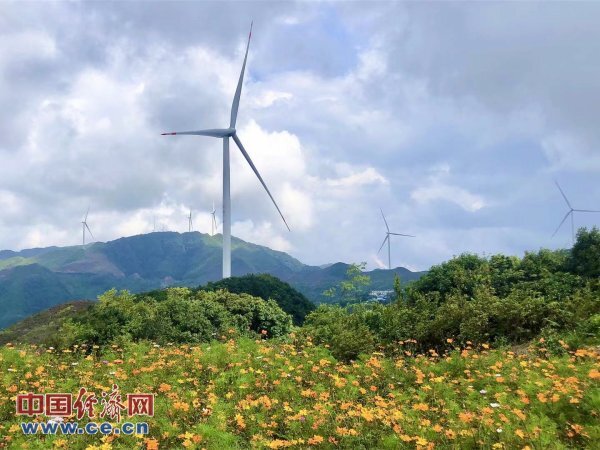
Core Insights - Central enterprises are actively participating in rural revitalization efforts across China, focusing on infrastructure, education, and agricultural development to enhance local economies and improve living standards [1][5][11] Group 1: Infrastructure and Energy Projects - The National Energy Group has implemented key projects in Qinghai, including photovoltaic power generation, education infrastructure, and industry revitalization, generating stable income for local communities [1] - The group has built 15 solar kindergartens in the region, contributing to the modernization of rural education [1] Group 2: Agricultural Development - The China Inspection and Certification Group has established a red date research institute in Xinjiang, enhancing the marketability of local red dates through traceability and quality assurance [2] - China National Chemical Corporation has invested 348 million yuan in modern agricultural initiatives across several provinces, resulting in an average annual increase in agricultural output of 8%-10% [3] Group 3: Employment and Economic Contributions - The China Communications Construction Group has created a village-level construction enterprise in Yunnan, generating contracts worth nearly 70 million yuan and providing employment for over 11,200 people [2] - China National Offshore Oil Corporation has developed an agricultural brand in Hainan, leading to a significant increase in local production and income [3] Group 4: Education Initiatives - China Coal has invested 14.5 million yuan in educational programs in Guizhou, achieving a 100% college admission rate for students in its specialized class [9][10] - The South Power Grid is establishing reading houses in rural areas, aiming to benefit approximately 510,000 students by 2025 [10] Group 5: Health and Well-being - The China National New Group has built a new medical facility in Hubei, significantly improving access to healthcare for local residents [8] - The facility has seen a total outpatient volume of 16,856 since its opening, reducing the financial burden of medical expenses for villagers [8]

从赋能到共生 央企解锁乡村振兴新密码
Zhong Guo Zheng Quan Bao· 2025-10-16 22:25
Core Viewpoint - Central enterprises in China are actively participating in rural revitalization efforts, leveraging their resources and expertise to improve local economies and infrastructure, thereby enhancing the quality of life for rural residents [1][2][3]. Group 1: Investment and Economic Development - The National Energy Group has implemented key projects in Qinghai, including photovoltaic power generation, education infrastructure, and industrial revitalization, generating stable income and improving local living standards [1]. - The China Inspection and Certification Group has established a red date research institute in Xinjiang, enhancing market recognition and traceability for local agricultural products, which significantly boosts local economies [2]. - Central enterprises have invested over 120 billion yuan in various assistance programs since the 14th Five-Year Plan, contributing to the economic development of 256 counties [3]. Group 2: Technological Innovation - Central enterprises are integrating advanced technologies into agricultural practices, such as AI and big data, to enhance production efficiency and product quality, leading to increased income for local farmers [4][5]. - The China Telecom-supported bio-fertilizer processing plant in Sichuan exemplifies the use of smart technology to optimize agricultural production, resulting in a threefold increase in product value [4]. Group 3: Education and Healthcare - The China Coal Group's "Rural Revitalization Class" in Guizhou has achieved a 100% college admission rate for its students, showcasing the impact of educational investment on local youth [7]. - The establishment of a new medical facility in Hubei by China Guoxin has significantly improved healthcare access for local residents, reducing their medical expenses [6]. Group 4: Community Engagement and Social Responsibility - Central enterprises are focusing on community engagement through various initiatives, such as building schools and healthcare facilities, which contribute to the overall development of rural areas [8][9]. - The South Power Grid's "Nanwang Zhixing Book House" initiative aims to enhance educational resources in rural areas, benefiting approximately 510,000 students by 2025 [8].