
石药集团

Search documents
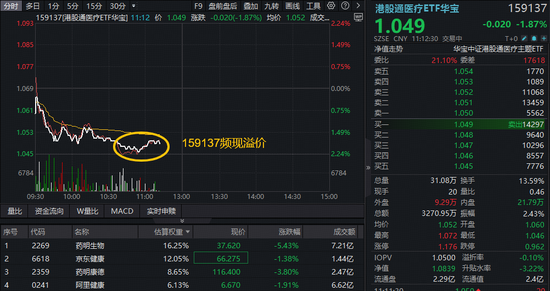
港股医药再调整,港股通医疗ETF(159137)、港股通创新药ETF(520880)跌2%!低吸时机到了?场内持续溢价!
Xin Lang Cai Jing· 2026-01-19 03:25
Core Viewpoint - The Hong Kong stock market is experiencing a broad adjustment, with the Hang Seng Index down nearly 1%, particularly affecting the healthcare sector, which is seeing declines in major pharmaceutical stocks and ETFs [1][10]. Group 1: Market Performance - The Hong Kong healthcare sector opened lower and continued to decline, with the Hong Kong Stock Connect Medical ETF (Huabao, 159137) dropping by 2%, and major stocks like WuXi Biologics falling over 5% [1][10]. - The Hong Kong Stock Connect Innovative Drug ETF (520880), which exclusively tracks innovative drugs, fell by over 2%, with leading stocks such as BeiGene and CanSino Biologics also declining by more than 2% [3][10]. - The trading volume for the Hong Kong Stock Connect Innovative Drug ETF exceeded 200 million yuan, indicating strong buying interest despite the price drop [12]. Group 2: Regulatory and Market Insights - The National Medical Products Administration of China announced that 76 innovative drugs are expected to be approved by 2025, positioning China as a global leader in this area, with the total transaction value for overseas licensing of innovative drugs expected to exceed 130 billion USD [14]. - Analysts believe that the Chinese innovative drug sector is entering a phase of simultaneous benefits from "going global, technology, and policy," leading to a revaluation of innovative drug stocks [15]. Group 3: ETF Characteristics - The Hong Kong Stock Connect Innovative Drug ETF (520880) and its associated funds passively track the Hang Seng Stock Connect Innovative Drug Select Index, which has three unique advantages: it is purely focused on innovative drugs, has a high concentration of leading companies, and effectively manages risks associated with less liquid stocks [5][6][16]. - The top ten stocks in the ETF account for over 73% of its weight, highlighting the dominance of leading companies in the innovative drug sector [17].

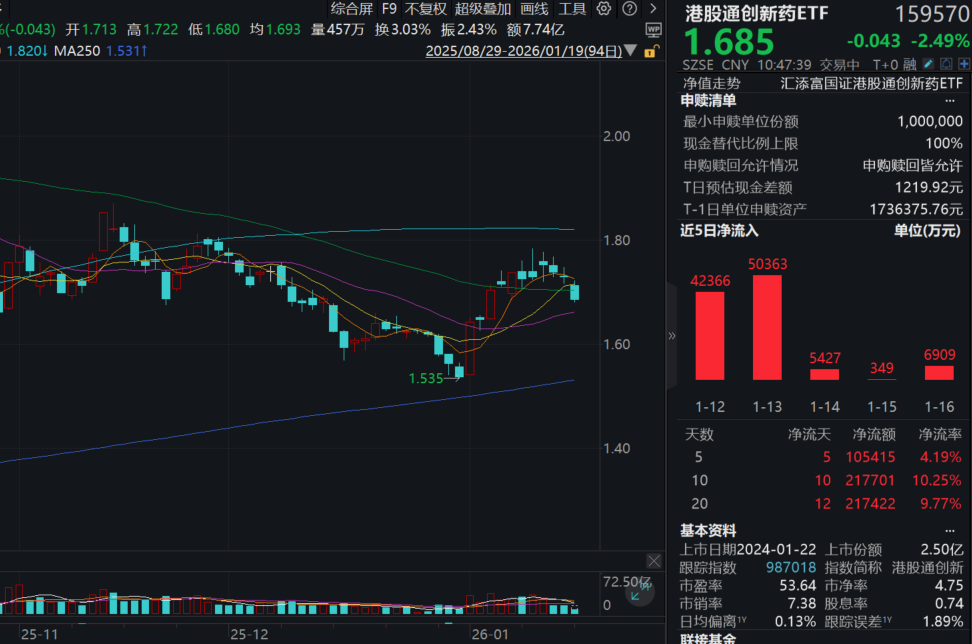
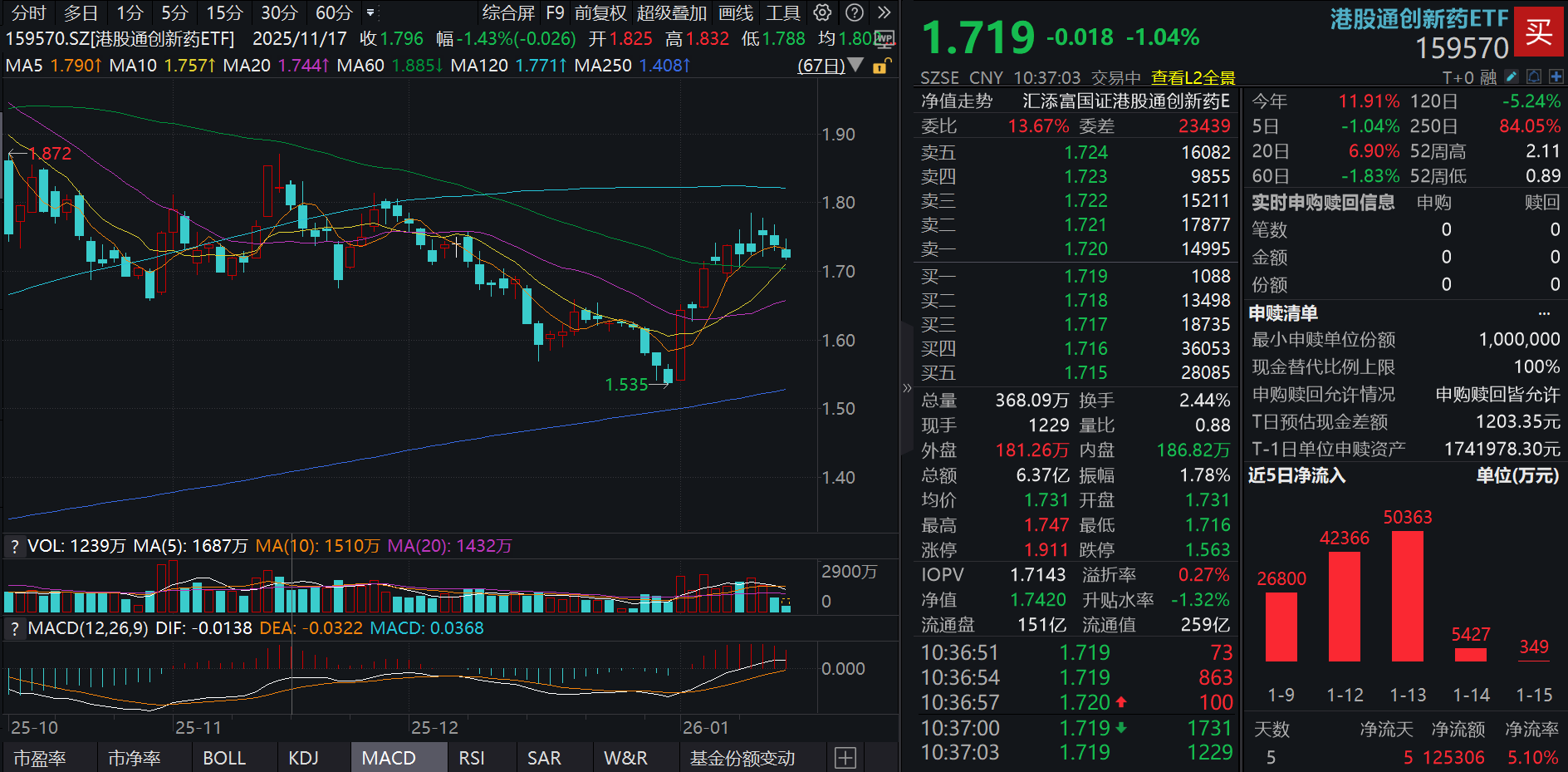
JPM大会落幕,中国创新药再成全球焦点!港股通创新药ETF(159570)深度回调2.5%,资金快速涌入,近5日狂揽超10亿元!
Xin Lang Cai Jing· 2026-01-19 03:13
Group 1 - The Hong Kong Innovation Drug ETF (159570) has experienced a 2.5% decline for three consecutive days, with a trading volume exceeding 800 million yuan, and has attracted over 1 billion yuan in the last five days [1][3] - As of January 16, the latest scale of the Hong Kong Innovation Drug ETF (159570) has surpassed 26.2 billion yuan, leading its peers in the same category [1] - The majority of the weighted stocks in the ETF's index have shown negative performance, with notable declines including Kelun-Bio down over 5%, Innovent Biologics and Hansoh Pharmaceutical down over 4%, and others down over 3% [3][4] Group 2 - The 44th JPMorgan Healthcare Conference took place from January 12 to 15, featuring several Chinese innovative pharmaceutical companies, including WuXi AppTec and BeiGene, among others [5] - Huatai Securities noted that the JPM conference and the upcoming annual report cycle in February could serve as catalysts for the market, which is currently at a relative bottom, with expectations for new highs in the innovative drug sector [5] - Zhongtai Securities highlighted multiple catalysts in the pharmaceutical sector, including significant data disclosures from multinational corporations and various business development deals, indicating a positive outlook for the innovative drug industry [5][6] Group 3 - The 2026 JPMorgan Conference is expected to showcase Chinese innovative drugs as a global highlight, with over 20 Chinese pharmaceutical companies participating [7] - Companies like HengRui are projected to see a 25%+ growth in innovative drug revenue by 2026, with several key drugs and indications expected to be approved in the next two years [7] - Notable developments include RC148's licensing deal worth up to 5.6 billion USD between Rongchang Bio and AbbVie, and various clinical trial advancements from companies like Summit Therapeutics and Eifang Bio [8]
石药集团主导景峰医药重整计划
Jing Ji Guan Cha Wang· 2026-01-16 13:20
Core Viewpoint - The restructuring plan of Hunan pharmaceutical company *ST Jingfeng has made significant progress, with a total investment of approximately 2.061 billion yuan from Shijiazhuang Pharmaceutical Group and 18 other participants, marking a substantial increase from the original plan of 648 million yuan [2]. Group 1: Restructuring and Investment - The restructuring plan involves the transfer of 879,774,351 shares to new investors, which is seen as a positive signal for the company [2]. - The new investor list includes representatives from Changde City State-owned Capital and existing shareholders like China Great Wall Asset Management, along with several new financial investors [2]. - The total consideration for the shares has increased significantly, indicating strong market confidence in the company's future [2]. Group 2: Management Changes - Cai Lei, son of the actual controller Cai Dongchen, has been appointed to key management positions, including Vice Chairman, Executive Director, and CEO, marking a significant generational shift in leadership [3]. - Cai Lei has a strong academic background and has held various roles within the company, focusing on overseas R&D and sales [3]. - The management transition is viewed as a step towards Cai Lei gradually taking over the management functions of the group [3]. Group 3: Business Focus and Strategy - Jingfeng Pharmaceutical focuses on popular treatment areas such as cardiovascular diseases, orthopedic pain, and oncology, with key products including heart and brain calming capsules and sodium hyaluronate injections [4]. - The restructuring plan aims to consolidate existing product advantages while enhancing marketing and new product development, including expanding production capacity and advancing oncology product research [4]. - The company plans to leverage Changde City's resources and policies in the biopharmaceutical sector to foster a second growth curve, focusing on synthetic biology and innovative drug-device integration [4]. Group 4: Market Position and Future Outlook - The Cai Dongchen family and Shijiazhuang Pharmaceutical Group face the challenge of gaining market recognition during the restructuring process [5]. - Shijiazhuang Pharmaceutical Group's market capitalization has risen to approximately 110 billion yuan since 2025, reflecting positive market sentiment [5]. - The future role of Jingfeng Pharmaceutical within the Shijiazhuang system remains to be seen, especially in light of the challenges faced by the innovative drug sector [6].


石药二代蔡磊接棒后“首战”:重整景峰医药
Jing Ji Guan Cha Wang· 2026-01-16 12:35
Core Viewpoint - The leadership transition at CSPC Pharmaceutical Group (石药集团) to Cai Lei coincides with the significant restructuring of Jingfeng Pharmaceutical (景峰医药), which is seen as a critical test for the new management [1][2]. Group 1: Restructuring of Jingfeng Pharmaceutical - CSPC, as the lead investor, along with 18 other investors, will acquire a total of 879,774,351 shares of Jingfeng Pharmaceutical for approximately 2.061 billion yuan, a substantial increase from the previously planned 648 million yuan [1]. - The restructuring plan includes a focus on existing advantageous products, enhancing marketing capabilities, and innovating new products, particularly in cardiovascular, orthopedic pain, and oncology sectors [3]. - The restructuring will leverage the support from Changde City for the biopharmaceutical industry, aiming to cultivate biopharmaceuticals as a second growth curve for the company [3]. Group 2: Leadership Changes - Cai Lei, the son of the company's actual controller, has recently been appointed as CEO, marking a significant step in the management transition within the company [2]. - Cai Lei has a strong academic background and extensive experience within the company, having held various leadership roles prior to his current position [2]. - The previous CEO, Zhang Cuilong, who served for a short period, has stepped down but will remain as an executive director [2]. Group 3: Market Performance and Future Outlook - Since the beginning of 2025, CSPC's overall market value has surged to approximately 110 billion yuan, driven by a series of asset injections and business development transactions [3]. - Newnow (新诺威), as an innovative drug capital platform under CSPC, has also seen its market value rise to 55 billion yuan [3]. - Newnow has projected a significant loss for the 2025 fiscal year, indicating challenges in traditional business areas while the role of Jingfeng Pharmaceutical in CSPC's future remains to be seen [4].
“减肥神药”,价格大跳水
3 6 Ke· 2026-01-16 10:00
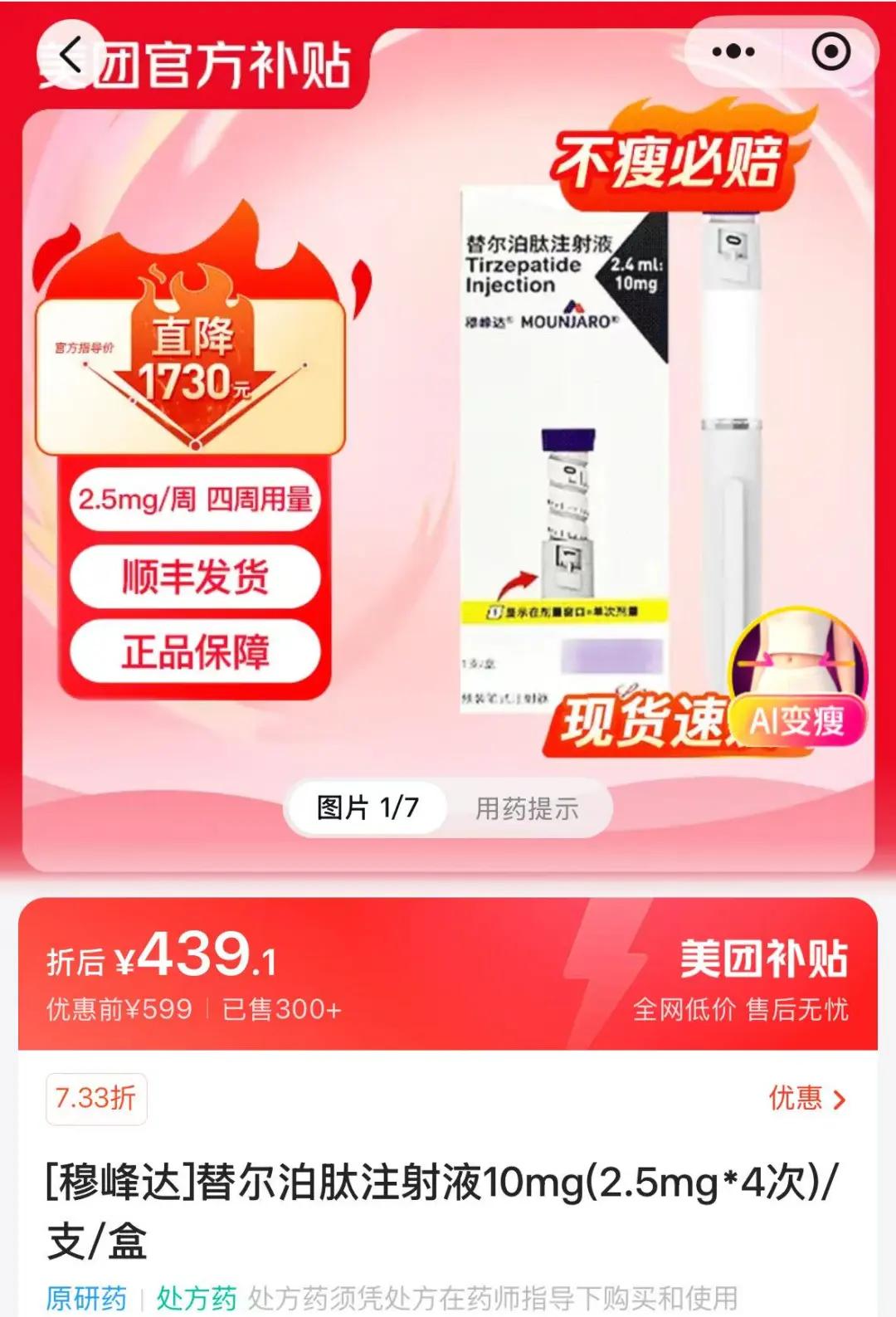
Core Insights - The recent price reductions of GLP-1 drugs, particularly Novo Nordisk's semaglutide (brand name: Ozempic) and Eli Lilly's dual-target drug tirzepatide (brand name: Mounjaro), have garnered significant attention due to their popularity as weight loss medications [1] Pricing Adjustments - Novo Nordisk's semaglutide injection prices have been significantly reduced, with the 2.27mg/mL×3mL specification dropping from 1893.67 yuan to 987.48 yuan, and the 3.2mg/mL×3mL specification from 2463 yuan to 1284.36 yuan, representing nearly a 50% decrease [2] - The price of Mounjaro has also been adjusted, with various specifications seeing reductions of approximately 80%, such as the 10mg specification dropping from 1758 yuan to 324.12 yuan [3] Cost Savings for Patients - Prior to the price reduction, patients using Mounjaro for weight loss would incur costs exceeding 13,000 yuan over 16 weeks, but post-reduction, this cost has decreased to around 2,500 yuan, resulting in savings of over 10,000 yuan [3] E-commerce Price Trends - E-commerce platforms are also reflecting price reductions, with Mounjaro priced at 439 yuan for the 10mg specification on Meituan's platform, attributed to official subsidies [4][6] Future Market Dynamics - The anticipated expiration of Novo Nordisk's patent for semaglutide in 2026 is expected to lead to an influx of generic drugs and increased competition, potentially driving prices lower [8] - The production costs of GLP-1 drugs may align with those of insulin, suggesting that future pricing could be competitive, although the final pricing will depend on various market factors [9]
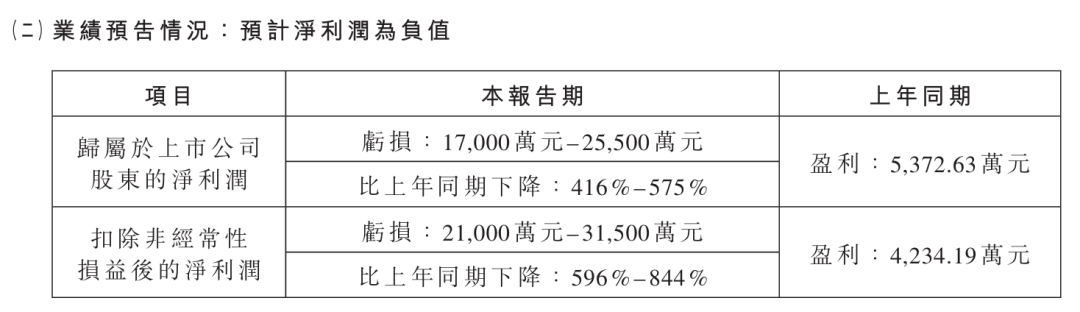
石药创新制药:2025年亏损1.70-2.55亿元,研发费用10亿元
Xin Lang Cai Jing· 2026-01-16 04:22
Core Viewpoint - The company Shiyao Group's subsidiary, Shiyao Innovation Pharmaceutical, forecasts a significant net loss for 2025, with expected losses ranging from 170 million to 255 million yuan, marking a decline of 416% to 575% compared to the previous year [1][4]. Financial Performance Summary - The net profit attributable to shareholders is projected to be a loss of 170 million to 255 million yuan, compared to a profit of 53.73 million yuan in the same period last year, representing a decline of 416% to 575% [2][5]. - The net profit after deducting non-recurring gains and losses is expected to be a loss of 210 million to 315 million yuan, down from a profit of 42.34 million yuan in the previous year, indicating a decline of 596% to 844% [2][5]. Reasons for Performance Changes - The company has made significant progress with multiple research and development (R&D) products, leading to increased R&D expenses. The total R&D expenditure is expected to reach approximately 1 billion yuan, reflecting a substantial increase year-on-year [3][5]. - The acquisition of an additional 29% minority stake in the subsidiary, Jushi Bio, has increased its ownership to 80%. Jushi Bio is currently not profitable due to high R&D investments, and the increased stake has amplified its impact on the consolidated financial statements [6]. - The company's functional raw materials business has experienced a decline in profit due to reduced gross margins on caffeine products, despite efforts to increase sales [7].
中国创新药企闪耀JPM大会,哪些新药值得关注?港股通创新药ETF(159570)跌逾1%,资金快速涌入,近5日“吸金”超12亿元!
Xin Lang Cai Jing· 2026-01-16 02:54
Group 1 - The core viewpoint of the news highlights the performance and trends of the Hong Kong innovative drug sector, particularly focusing on the Hong Kong Stock Connect Innovative Drug ETF (159570), which has seen significant capital inflow and is leading in scale among similar funds [1][2] - The 44th JPMorgan Healthcare Conference showcased several Chinese innovative pharmaceutical companies, emphasizing trends in gene and cell therapy, as well as AI in medicine, indicating a shift from "assets being bought" to "global value" for Chinese innovations [1][2] - The innovative drug sector is expected to reach new highs due to various catalysts, including the significant valuation gap between China and the US, ongoing business development (BD) transactions, and low current allocation of pharmaceutical theme funds in the market [2] Group 2 - Major stocks within the Hong Kong Stock Connect Innovative Drug ETF mostly experienced declines, with notable drops exceeding 1% for companies like BeiGene, China Biologic Products, and others, while CSPC Pharmaceutical showed a slight increase [2][3] - Key innovative drugs presented at the JPMorgan Conference include BeiGene's CDK4 products and the first BCL2 inhibitor approved in China, which highlights the competitive landscape and advancements in treatment options for various cancers [5][6] - The collaboration between Rongchang Biopharmaceutical and AbbVie on the PD-1/VEGF dual antibody RC148 is a significant development, with potential milestone payments and royalties, showcasing the growing internationalization of Chinese innovative drugs [9][10]
智通港股通资金流向统计(T+2)|1月16日
智通财经网· 2026-01-15 23:34
Group 1 - The top three companies with net inflows of southbound funds are Alibaba-W (09988) with 1.05 billion, Tencent Holdings (00700) with 752 million, and Pop Mart (09992) with 678 million [1] - The top three companies with net outflows of southbound funds are SMIC (00981) with -836 million, China Mobile (00941) with -729 million, and Meituan-W (03690) with -378 million [1] - In terms of net inflow ratios, Jiangsu Ninghu Expressway (00177) leads with 53.75%, followed by Cheung Kong Infrastructure Group (01038) at 52.00%, and Mao Geping (01318) at 48.07% [1] Group 2 - The top ten companies by net inflow include Alibaba-W (09988) with 1.05 billion and a closing price of 159.90 (+3.63%), Tencent Holdings (00700) with 752 million and a closing price of 627.50 (+0.72%), and Pop Mart (09992) with 678 million and a closing price of 191.30 (-2.89%) [2] - The top ten companies by net outflow include SMIC (00981) with -836 million and a closing price of 74.45 (-1.13%), China Mobile (00941) with -729 million and a closing price of 80.95 (-0.25%), and Meituan-W (03690) with -378 million and a closing price of 104.90 (-0.10%) [2] - The top three companies by net inflow ratio also include Baiaosaitu-B (02315) at 46.69% and Wei Long Delicious (09985) at 45.51% [3] Group 3 - The top three companies by net outflow ratio include Southern Hong Kong Stock Connect (03432) at -100.00%, E Fund Hang Seng ESG (03039) at -93.75%, and Country Garden Services (06098) at -58.59% [3] - The data reflects the net inflow and outflow trends in the Hong Kong stock market, indicating investor sentiment towards specific companies [1][2][3]






锐康迪退出中国市场,罕见病患者陷“断供”危机
Guo Ji Jin Rong Bao· 2026-01-15 14:01
Group 1 - Recordati's subsidiary in China, Ruikangdi, has officially exited the Chinese market, ceasing the supply of three rare disease drugs, which may disrupt treatment for patients [1][2] - The drug with the most significant impact from the exit is the innovative drug Shireza, which has no domestic generic alternatives, potentially leaving Cushing's syndrome patients without medication [1][2] - Approximately 40,000 to 50,000 patients in China suffer from Cushing's syndrome, with only about 3,000 requiring drug treatment [1] Group 2 - Ruikangdi, a small enterprise focused on rare diseases, is a subsidiary of Recordati, which operates in around 150 countries and has been involved in the rare disease sector since 1990 [2] - The direct reason for the market exit was a failure in health insurance negotiations, as two of its drugs did not make it into the 2025 health insurance directory [2] - The challenges faced by rare disease drug companies in China include high investment costs with low returns, as the development cost for a single orphan drug is approximately 260 million yuan, while the rare disease drug market in China accounts for only 3% of the global market [3] Group 3 - The Chinese rare disease patient population exceeds 20 million, with over 200,000 new patients added each year [3] - The industry is facing insufficient health insurance coverage, with 83% of rare disease drugs having annual treatment costs exceeding 300,000 yuan, and only 50% being included in health insurance [3] - Policy initiatives are being explored to address these challenges, such as the Boao Lecheng Pilot Zone allowing expedited approval for unapproved drugs and encouraging local innovation in the rare disease sector [3]
石药集团(01093):石药创新预计2025年度归母净亏损1.7亿元–2.55亿元
智通财经网· 2026-01-15 11:49
Group 1 - The core viewpoint of the article indicates that Shiyao Group's subsidiary, Shiyao Innovation, is expected to report a net loss attributable to shareholders of 170 million to 255 million yuan for the fiscal year 2025, compared to a profit of 53.7263 million yuan in the previous year [1] - The expected net loss after deducting non-recurring gains and losses is projected to be between 210 million and 315 million yuan, with the previous year's profit being 42.3419 million yuan [1] - The increase in research and development (R&D) expenses to approximately 1 billion yuan, a significant year-on-year increase, is a major factor affecting the current period's profit [1] Group 2 - In early November 2025, Shiyao Innovation completed the acquisition of an additional 29% minority stake in its subsidiary, Jushi Biotech, raising its ownership to 80% [2] - Due to significant investments in the research pipeline, Jushi Biotech is currently not profitable, and the increased ownership will amplify its impact on the consolidated financial statements of the company [2] - The company is actively consolidating its advantage in the functional raw materials business, particularly in caffeine products, although the gross margin and profitability of these products have slightly declined compared to the same period last year due to market factors [2]