Opendoor Technologies Inc.

Search documents
Opendoor Q2营收超预期 调整后EBITDA利润转正
Ge Long Hui A P P· 2025-08-06 13:25
Core Insights - Opendoor Technologies reported a 4% year-over-year revenue increase to $1.6 billion, surpassing analyst expectations of $1.5 billion [1] - The company narrowed its loss per share to $0.04 from $0.13 in the same period last year [1] - For the first time in three years, Opendoor achieved an adjusted EBITDA profit of $23 million [1] Financial Performance - Revenue for Q2 reached $1.6 billion, a 4% increase compared to the previous year [1] - The loss per share improved to $0.04, compared to a loss of $0.13 in the prior year [1] - Adjusted EBITDA profit was recorded at $23 million, marking a significant milestone for the company [1] Future Outlook - The company expects Q3 revenue to be between $800 million and $875 million, which is below the analyst average estimate of $1.2 billion [1] - CFO Selim Freiha indicated that the real estate market has further deteriorated in recent quarters [1] - The ongoing high mortgage rates are cited as a key factor suppressing buyer demand, leading to lower liquidation rates and record-high delistings of properties [1]

Super Micro Computer Posts Downbeat Q4 Results, Joins Personalis, Snap And Other Big Stocks Moving Lower In Wednesday's Pre-Market Session
Benzinga· 2025-08-06 12:11
Group 1 - U.S. stock futures are higher, with Dow futures gaining around 100 points [1] - Super Micro Computer, Inc. reported fourth-quarter net sales of $5.76 billion, an increase from $4.6 billion in the third quarter and $5.4 billion in the same quarter last year [2] - Super Micro's net sales missed the Street consensus estimate of $5.88 billion, and earnings per share were $0.41, below the consensus estimate of $0.44 [2] Group 2 - Super Micro Computer shares fell 16.3% to $47.90 in pre-market trading following the earnings report [2] - LifeMD, Inc. saw a decline of 28.8% to $8.43 in pre-market trading after reporting worse-than-expected second-quarter EPS and sales [4] - Personalis, Inc. declined 26.1% to $4.17 in pre-market trading after missing second-quarter revenue and cutting FY25 sales guidance [4] - Evolus, Inc. fell 25.5% to $6.63 in pre-market trading after missing second-quarter estimates and lowering FY25 sales guidance [4] - Opendoor Technologies Inc. declined 18.5% to $2.05 in pre-market trading due to weak third-quarter sales guidance [4] - Digital Turbine, Inc. fell 18.2% to $4.45 in pre-market trading after reporting a first-quarter EPS miss [4] - Snap Inc. shares dropped 17.1% to $7.79 in pre-market trading following its second-quarter financial results [4] - Day One Biopharmaceuticals, Inc. fell 14.2% to $5.90 in pre-market trading after reporting worse-than-expected quarterly revenue [4] - Trivago NV – ADR declined 13.3% to $4.20 in pre-market trading after its quarterly results [4] - Hackett Group Inc. fell 13.3% to $19.75 in pre-market trading after issuing a weak third-quarter forecast [4] - Paysign Inc. dropped 11.5% to $6.30 in pre-market trading after reporting Q2 EPS below estimates [4] - The Mosaic Company fell 4.7% to $33.99 in pre-market trading following weak quarterly earnings [4]




市场情绪亮红灯,美股多头再添一忧
智通财经网· 2025-08-06 11:44
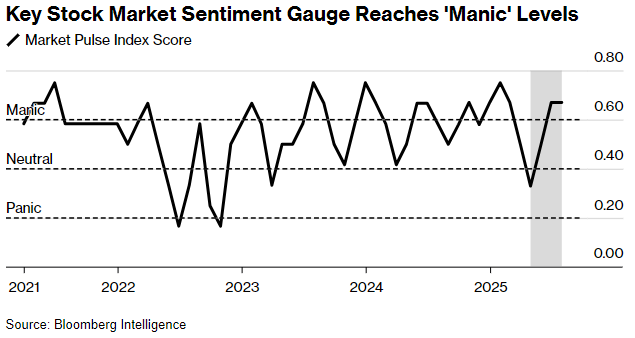
Core Viewpoint - The strong rebound in the U.S. stock market may soon cool down, raising concerns among bulls as the Bloomberg Intelligence Market Pulse Index indicates that investor sentiment may be overheated [1][4]. Group 1: Market Sentiment and Indicators - The Bloomberg Intelligence Market Pulse Index reached the "euphoria" zone last month, suggesting that investor sentiment is at a high level, which historically leads to weaker returns in the following three months [1][4]. - The S&P 500 index rebounded nearly 30% from its April low, despite signs of weakness in the U.S. economy and labor market [1]. - The index recorded a value of 0.6 in July, remaining in the "euphoria" zone for the second consecutive month, which historically correlates with lower average returns for the Russell 3000 index in the following three months [4][5]. Group 2: Historical Context and Predictions - Historical data shows that when the Market Pulse Index enters the "euphoria" zone, the average return for the Russell 3000 index over the next three months is only 2.9%, while it can reach 9% when in the "panic" zone [4]. - Analysts from Morgan Stanley and Evercore predict potential market corrections of 10% and 15%, respectively, indicating a consensus on the likelihood of a downturn [4][5]. - Seasonal factors are also a concern, as August and September are historically the worst-performing months for the S&P 500 index [4]. Group 3: Investor Behavior and Market Dynamics - The recent surge in the Market Pulse Index is partly attributed to a resurgence in meme stocks, with retail investors flocking to speculative stocks like Opendoor Technologies and Kohl's [5]. - The Market Pulse Index is based on six indicators, including price breadth and high-yield bond spreads, with a reading of 0.7 in July indicating extreme risk appetite [6]. - Continuous readings above 0.6 typically suggest mean reversion in the stock market, with small-cap stocks expected to underperform large-cap stocks in the following months [7].
X @Bloomberg
Bloomberg· 2025-08-05 20:22
Opendoor CEO Carrie Wheeler is seizing the company’s meme stock moment to reshape its future https://t.co/v3MHp2EEl6 ...
美股散户投机泡沫重现?这次可能有所不同
美股IPO· 2025-08-01 23:51
Core Viewpoint - The current speculative activity in the market is primarily focused on small-cap and low-priced stocks, with minimal impact on major indices like the S&P 500, contrasting with the 2021 meme stock frenzy led by GameStop and AMC [1][3]. Group 1: Speculative Activity - The most notable feature of the market in July was the intense pursuit of low-priced stocks, with the median increase of the lowest-priced decile of stocks reaching 16% by July 23, significantly outpacing the 1.4% increase of the highest-priced stocks [5]. - This investment logic, based on stock price rather than company fundamentals, is viewed as absurd by institutional investors, as companies can easily alter their stock prices through stock splits without affecting shareholder proportions or profit sharing [5]. - Many retail investors either do not understand or choose to ignore this fundamental principle, leading to a situation where their strategies worked during the trading frenzy in July, but when the speculation reversed at the end of the month, the cheapest stocks experienced the largest declines, averaging 6% [6]. Group 2: Capital Allocation Concerns - Excessive speculation may lead to improper capital allocation, as evidenced by the 2021 meme stock craze where companies like GameStop and AMC issued billions in new shares at inflated prices, only to see their stock prices plummet afterward [8]. - Historical warnings from economists, such as Keynes, highlight the risks of capital flowing to the wrong companies during speculative bubbles, which could harm growth and employment, a concern that remains relevant today [8]. Group 3: Market Impact and Sentiment - The current speculative activities have a relatively limited impact on the broader market, as there are no low-priced stocks within the S&P 500, and cheaper stocks among large companies did not show significant performance patterns in July [9]. - Investor sentiment, while more positive than at the beginning of the year, has not reached excessive optimism levels, and futures traders are less bullish compared to 2021 [10]. - Retail investors may have contributed to the rise of the S&P 500 index since April through buying on dips, but their influence in July was relatively limited, with the new meme stocks representing a public manifestation of summer speculation among private traders [11].
美股散户投机泡沫重现?这次可能有所不同
Hua Er Jie Jian Wen· 2025-08-01 12:01
Group 1 - The resurgence of meme stocks has ignited retail investor speculation in July, raising concerns about market bubbles, but analysts believe the spillover effects on the overall market are relatively limited [1] - Current speculative activities are primarily focused on small-cap and low-priced stocks, with minimal impact on major indices like the S&P 500, unlike the meme stock frenzy of 2021 led by GameStop and AMC [1][3] - Historical experiences indicate that such speculative bubbles typically do not affect the broader market significantly when they burst [3] Group 2 - July's market was characterized by a frenzy for low-priced stocks, with the bottom decile of stocks seeing a median price increase of 16% by July 23, compared to just 1.4% for the highest-priced stocks [2] - The investment logic based on stock price rather than company fundamentals is viewed as absurd by institutional investors, as companies can easily alter stock prices through stock splits without affecting shareholder equity [2] - Retail investors either do not understand or choose to ignore the fundamental principles, leading to significant price drops in the cheapest stocks when the speculative trend reversed at the end of July, with declines reaching 6% [2] Group 3 - Concerns about capital misallocation arise from excessive speculation, with the 2021 meme stock craze serving as a clear example of this issue [3] - The current speculative activities are limited in scope, with no low-priced stocks present in the S&P 500, and cheaper stocks among large companies showing no significant performance patterns in July [3] - Historical patterns indicate that the bursting of bubbles in sectors like green stocks, SPACs, and loss-making tech stocks in 2021 had minimal impact on the broader market [3] Group 4 - Investor sentiment has become more rational, with current levels of optimism not reaching excessive heights, as indicated by surveys from the American Association of Individual Investors and Investors Intelligence [4] - Analysts estimate that retail investors may have contributed to the rise of the S&P 500 index since April, but their influence in July was relatively limited [4] - The new wave of meme stocks, referred to as DORK stocks, represents a public manifestation of private trader speculation during the summer, with limited spillover effects on the rest of the market [4]
Caution: Massive stock market short squeeze underway
Finbold· 2025-07-30 15:37
Group 1 - A significant short squeeze is occurring in U.S. equity markets, indicated by a surge in speculative buying and options data [1][8] - The five-day moving average of net call volumes for the most shorted stocks reached approximately 4.2 million contracts, marking the second-highest level ever recorded [1][4] - Call volume for heavily shorted U.S. stocks has quadrupled in recent weeks, reflecting a rush by short sellers to cover positions as prices increase [4][5] Group 2 - The current spike in call volume approaches the euphoric highs seen during the 2021 meme stock mania, particularly reminiscent of the GameStop rally [2][5] - The broader market is also experiencing increased call activity, with the five-day moving average of net call volumes for all other stocks doubling to around 10 million contracts, the highest level in four years [4][5] - Retail traders have contributed to sudden rallies in stocks like Krispy Kreme, GoPro, and Opendoor, driven by renewed interest in speculative investments [6] Group 3 - Investor optimism is at a peak, with margin debt on the NYSE reaching an all-time high, surpassing levels seen during the tech bubble [8] - Despite the optimism, there are signs of strain as the latest meme stock rally has quickly fizzled and Bitcoin has retreated from recent highs [8]

How Kohl's Kicked Off Another Meme Stock Frenzy
CNBC· 2025-07-29 16:05
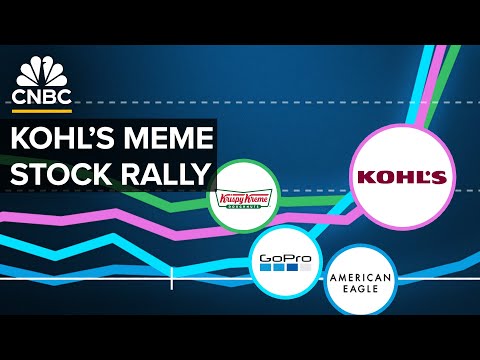
Meme Stock Phenomenon - Meme stocks experience volatile price swings unrelated to business fundamentals, often involving heavily shorted, cheap stocks [4] - Retail investors leverage social media to drive up stock prices, challenging institutional investors [3][8] - GameStop's surge, fueled by Reddit users, demonstrated the potential for massive gains and losses, impacting hedge funds [9][10] - Kohl's, like other recognizable brands, became a target for meme stock activity due to its household name and high short interest [11][12] Kohl's Business Performance - Kohl's stock experienced a 100% surge due to meme stock activity, despite underlying business performance being just "okay" [1] - From July 2021 to July 2025, Kohl's stock price decreased by approximately 85% [17] - Between 2019 and 2024, beauty and accessory sales increased by 38% due to the Sephora partnership, but overall sales decreased by 18.5%, and excluding beauty, sales decreased by around 26% [19] - Kohl's has lost 1.3 million customers over five years to competitors [17] Risks and Outlook - Short selling involves borrowing and selling stock, hoping to buy it back at a lower price, but losses can be exponential if the price rises [5][6] - Wild stock swings can distract from Kohl's need to focus on day-to-day operations [21] - While not in immediate danger of bankruptcy, Kohl's faces challenges and needs to experiment with different strategies under an interim CEO [18][19][20] - Predicting the next meme stock is difficult, but companies with household names and high short interest are potential candidates [14][16]

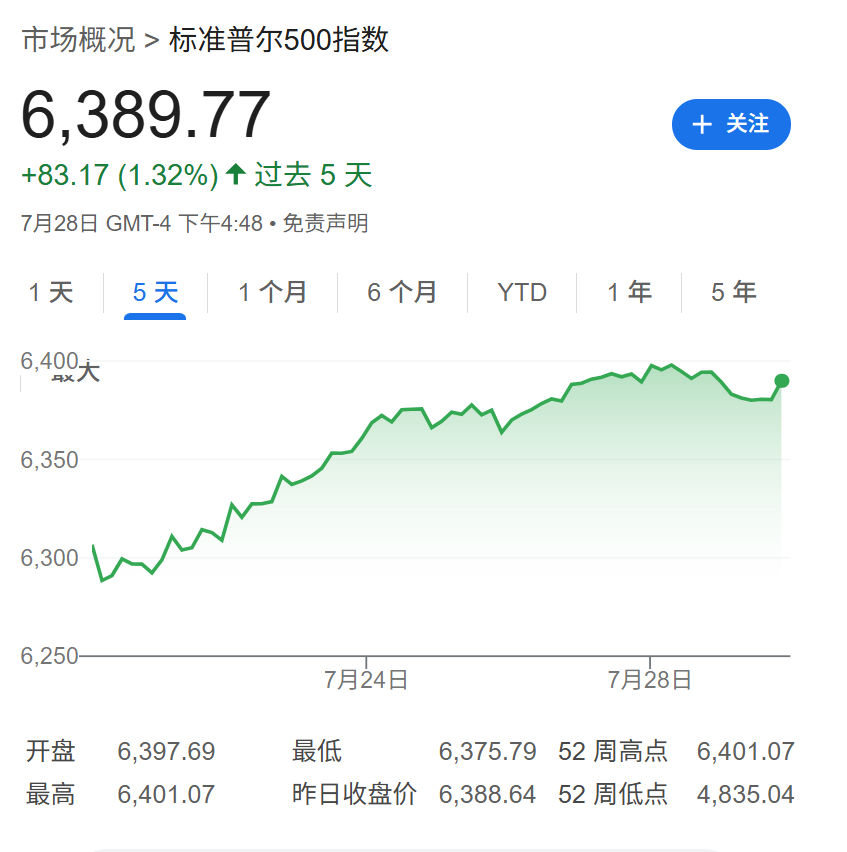
华尔街坚定看涨:AI与盈利支撑走势 美股短线回调即买入机会
Hua Er Jie Jian Wen· 2025-07-29 13:20
华尔街策略师在美股估值攀升之际坚持看涨立场,认为任何近期回调都将创造买入机会。尽管市场出现 过度乐观迹象,来自汇丰、摩根士丹利和瑞银的策略师仍维持长期看涨观点。 瑞银宏观股票策略负责人Aaron Nordvik将其观点描述为"战术性谨慎,但结构性看涨",理由是强劲的AI 长期趋势和放松监管前景。摩根士丹利首席美国股票策略师Michael Wilson预计标普500指数明年最高可 达7200点,较周一收盘水平上涨约13%。 策略师们认为,强劲的企业盈利和经济数据、关税政策日趋明朗以及人工智能推动力将推动股市在明年 继续上涨。这一长期看涨前景值得关注,因为投资者正面临未来几天一系列可能影响市场的事件。 美联储利率决定、四只"Mag7"股票财报以及大量经济数据即将公布。这些因素组合将在未来数周内塑 造市场走向。 逢跌买入?结构性利好支撑长期前景 Wilson警告存在近期回调风险,但同时表达长期乐观态度。他认为市场本季度容易出现5%至10%的回 调,因关税将影响企业资产负债表。 不过Wilson认为任何下跌都将是短暂的,并表示在此情况下会积极买入。他预计标普500指数明年最高 可达7200点,较周一收盘水平上涨约13 ...
华尔街坚定看涨:AI与盈利支撑走势,美股短线回调即买入机会
Hua Er Jie Jian Wen· 2025-07-29 12:40
华尔街策略师在美股估值攀升之际坚持看涨立场,认为任何近期回调都将创造买入机会。尽管市场出现过度乐观迹象, 来自汇丰、摩根士丹利和瑞银的策略师仍维持长期看涨观点。 瑞银宏观股票策略负责人Aaron Nordvik将其观点描述为"战术性谨慎,但结构性看涨",理由是强劲的AI长期趋势和放松 监管前景。摩根士丹利首席美国股票策略师Michael Wilson预计标普500指数明年最高可达7200点,较周一收盘水平上涨 约13%。 策略师们认为,强劲的企业盈利和经济数据、关税政策日趋明朗以及人工智能推动力将推动股市在明年继续上涨。这一 长期看涨前景值得关注,因为投资者正面临未来几天一系列可能影响市场的事件。 美联储利率决定、四只"Mag7"股票财报以及大量经济数据即将公布。这些因素组合将在未来数周内塑造市场走向。 标普500指数自4月8日低点以来已上涨28%,引发市场泡沫担忧。该指数截至周一已连续六个交易日创收盘新高,如果周 二再创新高,将创下2021年来最长连续纪录。 这使得美国股市基准指数目前按未来12个月盈利计算的市盈率约为22倍,与2月份短期峰值时的水平相当。上周投机股 Opendoor Technologie ...