中兴通讯

Search documents
“碳硅”融合激活发展潜能 内蒙古加速构建数字产业“新生态”
Zhong Guo Jin Rong Xin Xi Wang· 2026-01-29 00:19
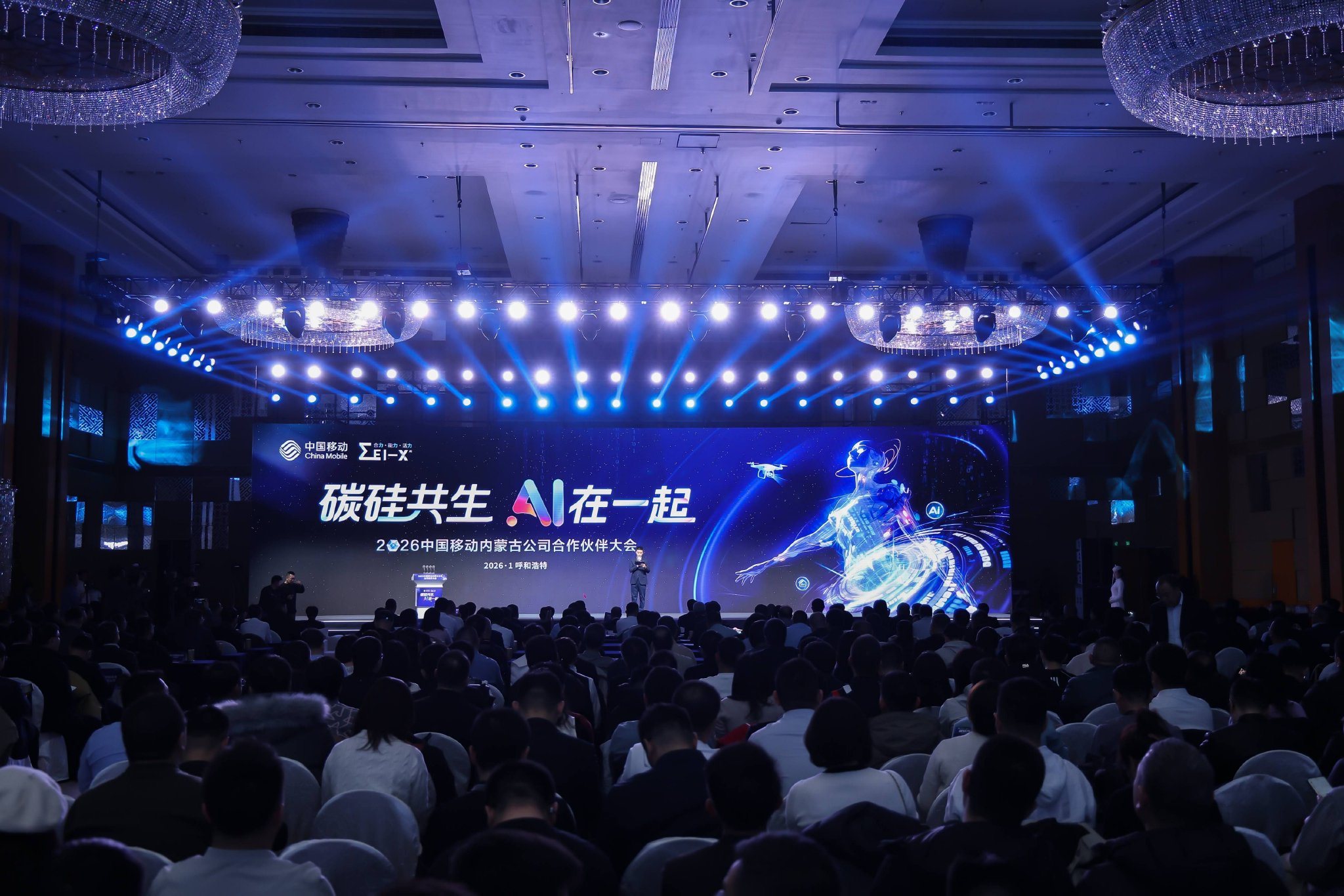
Core Insights - The conference titled "Carbon-Silicon Symbiosis AI Together - 2026 China Mobile Inner Mongolia Company Partner Conference" was held in Hohhot, showcasing how Inner Mongolia leverages "AI + computing power" for industrial upgrades [1] - China Mobile Inner Mongolia Company (referred to as "Inner Mongolia Mobile") unveiled a new computing power strategy and ecosystem plan, highlighting its role as a key builder of regional digital infrastructure and its market influence as an industry leader [1] Infrastructure Upgrade: From "Energy Export" to "Computing Power Hub" - Inner Mongolia, rich in wind and solar resources, is transitioning from being an energy exporter to a computing power hub, focusing on efficiently converting "watts" into "bits" [4] - Inner Mongolia Mobile launched the "Integrated Computing Network: AIDC" strategy, marking a transformation of the region's network infrastructure from a "communication channel" to an "intelligent computing hub" [4] - This strategic layout aligns with the market demand for "East Data West Computing," providing a solid physical foundation for Inner Mongolia to undertake nationwide computing power scheduling [4] Technology Scene Implementation: AI Empowerment and Industry Innovation - The conference demonstrated how advanced technologies interact with Inner Mongolia's unique geographical and industrial contexts [5] - Inner Mongolia Mobile showcased its technological capabilities in vertical industries, exemplified by the successful deployment of a 5G-A network and AI edge computing at the Hulunbuir International Low-Altitude Equipment Cold Weather Testing Center [5] - The company provided a replicable "digital toolbox" for local enterprises, enabling them to achieve intelligent transformation at lower costs and faster speeds [5] Business Ecosystem Reconstruction: Three Alliances for Collaboration and Benefits - Inner Mongolia Mobile initiated three industry alliances: "Digital Inner Mongolia Alliance," "Intelligent Computing Engine for Future Services," and "Data Integration for Smart Enterprises," signaling its transition from a service provider to an open ecosystem builder [6] - The launch of the "Mobile Smart Enterprise" brand and a new rights and interests cooperation model allows Inner Mongolia Mobile to share its channel touchpoints, traffic resources, and technological capabilities with partners [8] - This initiative aims to address the challenges faced by small and medium-sized enterprises in digital transformation, fostering a green, intelligent, and diverse industrial ecosystem in Inner Mongolia [8]


首个万亿GDP地市辖区诞生 “小块头”何来“大能量”?
Ren Min Ri Bao· 2026-01-28 22:24
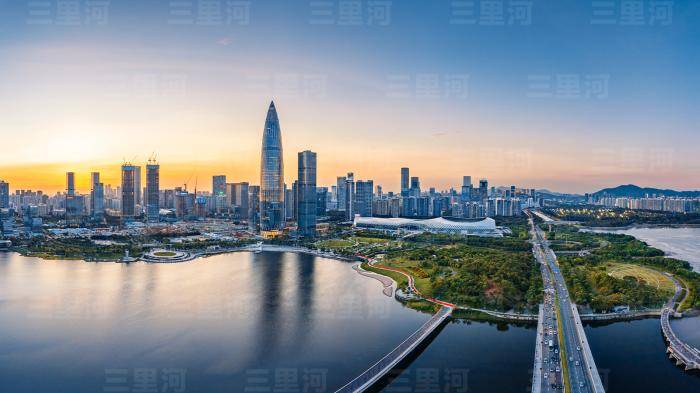
深圳南山区,"晋升"全国首个万亿元GDP地市辖区! 1月27日,深圳市南山区八届人大六次会议传出消息:2025年,南山区预计实现地区生产总值(GDP)超 万亿元,成为我国首个GDP破万亿元的地市辖区。 以南山区为参照,让我们摊开地图,观察中国的区域经济——江苏的昆山、江阴,浙江的义乌、柯桥作 为县域经济的代表撑起了经济大省的发展底气。观察这一个个"强区",不难找到因地制宜做好经济工作 的"金钥匙":聚焦产业高度、增厚创新密度、加大研发强度,以科技创新突破资源的瓶颈和限制,一个 个"小块头"就能释放"大能量",汇聚成中国发展持久而磅礴的动能。 (文章来源:人民日报) 创新主体的密度。创新生态的"热带雨林",是南山区持续领跑的"智力"引擎。腾讯、大疆、中兴,一家 家科技型企业勇立潮头;63.7万个市场主体,上市公司218家,上市公司密度位居全国第一;国家级制 造业单项冠军、专精特新"小巨人"企业总量稳居深圳市首位……在南山区,创新不是少数企业的"独角 戏",而是大中小企业的"大合唱"。 研发投入的强度。2025年,南山区每万人发明专利拥有量超860件,约为全国的22.9倍;PCT国际专利 申请量累计达2.5万件, ...
AI入口争夺战:巨头加码技术底座建设
Mei Ri Jing Ji Xin Wen· 2026-01-28 14:24
Core Insights - The competition for AI entry points among major internet giants like Alibaba, ByteDance, and Tencent is intensifying, with each company adopting distinct strategies [2][10] - Alibaba has launched its flagship reasoning model Qwen3-Max-Thinking, which significantly enhances the native agent capabilities of its Qwen app, aiming to become a leading AI assistant [1][3] - ByteDance has introduced the Doubao Model 1.8, which focuses on multi-modal understanding and improved agent capabilities, enhancing its applications in various scenarios [5][6] - Tencent is taking a decentralized approach, emphasizing user-defined AI interactions and prioritizing enterprise productivity over consumer-focused AI entry points [7][8] Alibaba's Strategy - Alibaba's Qwen3-Max-Thinking model boasts over one trillion parameters and has achieved state-of-the-art performance in 19 benchmark tests, showcasing its advanced reasoning and agent capabilities [3][4] - The Qwen app has integrated over 400 AI functionalities, making it the first AI assistant capable of handling complex real-life tasks [4] - The model's ability to think and use tools like a professional enhances user experience, allowing for more intelligent and fluid interactions [3][4] ByteDance's Approach - ByteDance's Doubao Model 1.8 is optimized for multi-modal agent scenarios, improving its ability to follow complex instructions and execute tasks effectively [5][6] - The collaboration with ZTE on the Nubia M153 AI phone aims to validate the feasibility of "end-side large models + system-level agents" [6] Tencent's Position - Tencent's strategy focuses on a decentralized AI ecosystem, allowing users to define when and how to engage with AI, which contrasts with the centralized approaches of Alibaba and ByteDance [7][8] - Tencent's AI applications, such as the "Yuanbao" social AI feature, are designed to enhance user engagement while maintaining a focus on enterprise solutions [8][9] Industry Trends - The evolution of agent capabilities is seen as a critical factor in the AI landscape, with potential to create new application scenarios and software forms [9][10] - The competition is shifting from a focus on technology alone to a differentiation in operational models and compliance with safety standards [10]

江苏首个人工智能发展局 在南京揭牌
Shang Hai Zheng Quan Bao· 2026-01-28 13:30
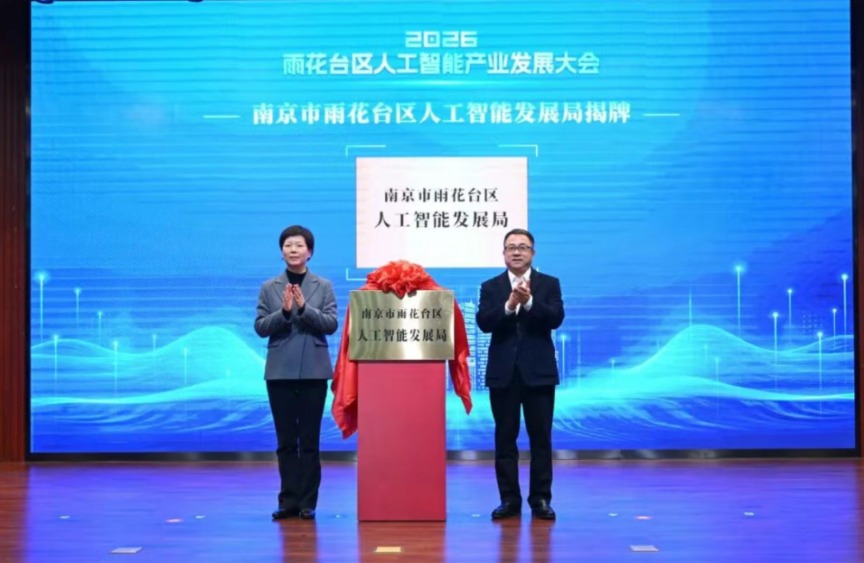
日前,南京宣布软件和信息服务业成为该市首个万亿级产业。作为南京软件产业的核心承载区,拥有中国软件谷的南京市 雨花台区贡献了3500亿元产值,占南京市约35%、江苏省近20%。 站上"万亿"后,南京软件产业把下一站目标锚定在"人工智能+"赛道上。1月27日,在南京市雨花台区召开的人工智能产业 发展大会上,雨花台区人工智能发展局揭牌成立。这是江苏首家列入政府机构序列、配备专门行政编制的区级人工智能主 管部门,走在了全国前列。 优化生态:设立"AI资源超市" 发放"算力券""模型券" 从"给优惠"转向"营生态",雨花台区新的一年还精心构建起软件产业与人工智能+相结合的全链条服务体系。该区人工智能 发展局成立之初就开展资源整合和普惠机制,设立"AI资源超市",创造普惠算力与合规数据供给;设计"算力券""模型 券",降低人工智能训练和推理成本;成立场景公司,计划全年开放场景不少于30个,推动AI进一步走向可用、好用。 揭牌现场 体制护航:突出优势 深耕"人工智能+"赛道 "在这片仅占南京2%的土地上,活跃着4900多家软件企业、37万软件从业人员。"1月27日的揭牌仪式上,南京市雨花台区 委书记、中国(南京)软件谷党工 ...
AI助力,我国手机行业攀高向优
Xin Hua She· 2026-01-28 12:48
Core Insights - The Chinese smartphone market is projected to exceed 1 trillion yuan in 2025, driven by the trade-in policy for consumer goods and advancements in technology such as AI and foldable screens [1] Group 1: Market Performance - In 2025, Honor's smartphone shipments surpassed 71 million units, marking a 9% year-on-year increase [2] - From January to November 2025, the domestic smartphone shipment reached 282 million units, a 0.9% increase year-on-year, with 5G smartphones accounting for 244 million units, up 1.3% [2] - The number of new smartphone models launched in the domestic market reached 474, reflecting a 14.5% increase year-on-year [2] Group 2: Innovation and Technology - Huawei launched the industry's first wide-foldable smartphone, the Huawei Pura X, which combines the features of an e-reader and a foldable device [3] - The foldable smartphone market is expected to see shipments of 9.47 million units in 2025, a 3.3% increase [4] - Companies are focusing on differentiating factors such as satellite communication, design, battery technology, and camera capabilities to enhance product competitiveness [4] Group 3: AI Integration - AI is reshaping user experience, with new AI smartphones like the Doubao AI phone from ByteDance and ZTE expected to drive a new wave of innovation [5] - The integration of AI in smartphones is becoming a key focus for manufacturers, with advancements in systems like Huawei's HarmonyOS and Honor's Magic8 Pro [6] - By 2025, AI smartphone shipments in China are projected to exceed 118 million units, capturing 40.7% of the overall market [7] Group 4: Market Trends and Challenges - The Chinese smartphone market is entering a critical adjustment phase in 2026, characterized by total pressure and structural differentiation [8] - The high-end market is expected to expand due to innovation, while the low-end market may shrink due to price sensitivity [8] - By 2026, the market share for smartphones priced above $600 is projected to reach 35.9%, a 5.4 percentage point increase year-on-year [8] Group 5: Consumer Behavior - Emotional consumption is reshaping purchasing logic, with design and brand emotional connections becoming as important as technical performance [10] - Manufacturers are expected to invest more in differentiated designs and collaborations to meet consumer emotional value needs [10]
市场最前沿丨AI助力,我国手机行业攀高向优
Xin Hua Wang· 2026-01-28 12:28
Core Viewpoint - The Chinese smartphone industry is expected to reach a market size of over 1 trillion yuan by 2025, driven by the trade-in policy for consumer goods and advancements in AI and foldable screen technology [1]. Group 1: Market Growth and Product Innovation - In 2025, smartphone shipments in China are projected to exceed 71 million units, marking a 9% year-on-year increase [2]. - The domestic smartphone market saw a shipment of 282 million units in the first 11 months of 2025, reflecting a 0.9% year-on-year growth, with 5G smartphones accounting for 244 million units, a 1.3% increase [3]. - The number of new smartphone models launched in China reached 474, representing a 14.5% year-on-year growth [3]. Group 2: Competitive Landscape and Technological Advancements - Innovation is crucial for smartphone manufacturers to differentiate themselves in a saturated market, with Huawei launching the first wide foldable phone, the Huawei Pura X, in March 2025 [4]. - The foldable smartphone market in China is expected to see shipments reach 9.47 million units in 2025, a 3.3% increase [5]. - Key areas of differentiation include satellite communication, design, battery technology, and camera capabilities, with various brands introducing advanced features such as eSIM support and self-developed chips [6]. Group 3: AI Integration and User Experience - AI is transforming user experience, with features that allow smartphones to assist in navigation and shopping [7]. - Major manufacturers are integrating AI into their systems, with Huawei upgrading its HarmonyOS and Honor enhancing its products with AI capabilities [8]. - The AI smartphone market in China is projected to reach over 118 million units by 2025, capturing 40.7% of the overall market [10]. Group 4: Market Adjustments and Future Projections - The Chinese smartphone market is entering a critical adjustment phase in 2026, with expected declines in overall shipments due to rising component costs [11]. - The high-end smartphone market is anticipated to expand, while the low-end market may shrink, indicating a shift towards a more diversified market structure [11]. - AI smartphones are expected to become mainstream by 2026, with projected shipments of 147 million units, a 31.6% increase, representing 53% of the overall market [12]. Group 5: Consumer Behavior and Emotional Value - Emotional consumption is reshaping purchasing logic, with design and brand connection becoming as important as technical performance [13].
市场最前沿|AI助力,我国手机行业攀高向优
Xin Hua She· 2026-01-28 12:27
Core Insights - The Chinese smartphone market is projected to exceed 1 trillion yuan by 2025, driven by the trade-in policy for consumer goods and advancements in AI and foldable screen technology [1] - The market is shifting from incremental competition to stock competition as smartphone penetration exceeds 80% and the average replacement cycle lengthens [1] Group 1: Market Performance - In the first 11 months of 2025, the domestic smartphone shipment reached 282 million units, a year-on-year increase of 0.9%, with 5G smartphones accounting for 244 million units, up 1.3% [1] - Honor's smartphone shipments surpassed 71 million units in 2025, marking a 9% year-on-year growth [1] - The number of new smartphone models launched in the domestic market reached 474, reflecting a 14.5% increase [1] Group 2: Innovation and Technology - Huawei launched the industry's first wide foldable smartphone, the Huawei Pura X, which combines the reading experience of an e-book with the convenience of a foldable device [2] - The foldable smartphone market in China is expected to reach 9.47 million units by 2025, growing by 3.3% [2] - Companies like OPPO, vivo, and Xiaomi are enhancing product capabilities with innovations such as eSIM support, semi-solid state battery technology, and self-developed chips [2] Group 3: AI Integration - AI is becoming a core capability in smartphones, with features like route planning and price comparison being automated [3] - By 2025, AI smartphone shipments are expected to exceed 118 million units, capturing 40.7% of the overall market [3] - The integration of AI is seen as a transformative force, with companies like ByteDance and ZTE collaborating to create AI smartphones that enhance user experience [3] Group 4: Market Trends and Future Outlook - The Chinese smartphone market is entering a phase of adjustment characterized by total pressure and structural differentiation, with a forecasted decline in overall shipment volume due to rising component costs [4][5] - The high-end smartphone market is expected to expand, while the low-end market will shrink, indicating a shift towards a more diversified market structure [4] - By 2026, the market share for smartphones priced above $600 is projected to reach 35.9%, while the share for those below $200 is expected to decrease by 4.3% [5] - Emotional consumption is reshaping purchasing logic, with design and brand connection becoming as important as technical performance [5]
超节点:光、液冷、供电、芯片的全面升级
KAIYUAN SECURITIES· 2026-01-28 11:15
Investment Rating - The industry investment rating is maintained as "Positive" [2] Core Insights - The report emphasizes the transition to the "SuperNode" era in computing infrastructure, driven by the increasing computational demands of AI models, which are evolving from pre-training to multi-faceted scaling [14][17] - The SuperNode architecture relies on enhanced interconnectivity, integrating multiple computing chips into a logical "super GPU/ASIC" to overcome the limitations of traditional single-server setups [39] - The report identifies three main investment themes: "Network End + AIDC + Computing End" and four key sectors: "Optical + Liquid Cooling + Power Supply + Chips" [7] Summary by Sections 1. Transition to SuperNode Era - The evolution of AI models necessitates a shift in computational infrastructure, with demands for higher performance and efficiency [14] - The report highlights the rapid growth in model parameters and training data, indicating a need for advanced computational clusters [14] 2. SuperNode Architecture - SuperNode clusters are defined as large-scale GPU/ASIC systems that expand from thousands to millions of computational units, utilizing both Scale Up and Scale Out strategies [17] - The architecture includes components such as computing nodes, switch trays, and power supply units, which are essential for the operation of SuperNode systems [80] 3. Upgrades in Key Components - The report notes that the increasing penetration of SuperNode servers will drive demand for high-power supplies, liquid cooling systems, and optical communication technologies [5][80] - Specific companies are highlighted as beneficiaries in the sectors of optical modules, liquid cooling, server power supplies, and exchange chips [7] 4. Domestic SuperNode Development - The report discusses the progress of domestic SuperNode solutions, particularly Huawei's Atlas 900 A3 and Atlas 960, which are designed to enhance the performance of domestic AI clusters [6][112] - The performance of domestic chips is shown to improve significantly when deployed in SuperNode configurations, effectively compensating for individual chip limitations [112]






兴图新科:核心视频高压缩技术可在画质无损前提下实现90%存储容量缩减
Zheng Quan Ri Bao Zhi Sheng· 2026-01-28 10:41
(编辑 王雪儿) 证券日报网讯 1月28日,兴图新科在互动平台回答投资者提问时表示,公司核心视频高压缩技术可在画 质无损前提下实现90%存储容量缩减,相关超存引擎产品序列可在不更换现有系统、设备和不增加硬盘 的情况下,实现4-10倍近无损压缩,综合存储成本降低50%以上,可有效对冲存储设备涨价压力。具体 产品包括超存引擎(32路-1500路)、DPU零载加速卡和超存智算一体机等。公司联合长江计算、神州 数码、中国移动、中国电信打造存储解决方案和产品,可广泛适配华为、中兴、长江计算、超聚变、同 泰怡、攀升等品牌服务器。 ...

深圳南山跨越万亿关 创新驱动展新篇
Sou Hu Cai Jing· 2026-01-28 10:29
Core Insights - Shenzhen's Nanshan District is set to become the first district in China to surpass a GDP of 1 trillion yuan by 2025, marking a significant milestone in the country's urban economic landscape [1][3] - The economic density of Nanshan has reached an impressive 54 billion yuan per square kilometer, with a per capita GDP exceeding 540,000 yuan, showcasing its economic output comparable to that of a nation [3][4] Economic Growth - Nanshan's GDP has grown from 652.7 billion yuan at the end of the 13th Five-Year Plan to over 1 trillion yuan in just five years, achieving an average annual growth rate of over 5.8% [3][4] - The district has successfully crossed multiple GDP thresholds (700 billion, 800 billion, 900 billion, and 1 trillion yuan) during this period, demonstrating resilience and vitality in its economic structure [3][4] Innovation and Industry - Nanshan has transformed from low-end manufacturing to high-end intelligent manufacturing, becoming a key center for technological innovation and industrial manufacturing in the Guangdong-Hong Kong-Macau Greater Bay Area [4] - The district is home to 218 publicly listed companies and over 5,500 national high-tech enterprises, with significant contributions from industry leaders like Huawei, Tencent, DJI, and others [4] Innovation Ecosystem - By 2025, Nanshan is expected to have over 860 invention patents per 10,000 people, approximately 22.9 times the national average, indicating a robust innovation output [4] - The district has established a comprehensive innovation ecosystem that includes basic research, technological breakthroughs, industrialization of results, financial support for technology, and talent development [4] Strategic Importance - Nanshan benefits from its strategic location adjacent to Hong Kong, the policy advantages of being in a special economic zone, and a long-standing industrial foundation, making it a unique case in regional economic development [5] - The district's development model emphasizes innovation-driven growth, industrial upgrading, reform and opening-up, and an optimized business environment, which can serve as a reference for other regions [5]