
乐聚机器人

Search documents
松延动力机器人卖爆,创始人姜哲源:商业化才能活下去
3 6 Ke· 2025-05-14 09:18
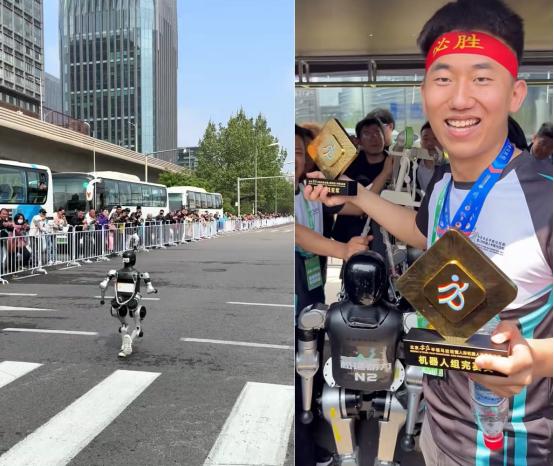
Core Insights - The article highlights the success of the humanoid robot N2 developed by Songyan Power, which finished second in a marathon, showcasing its capabilities and stability [1][2][8] - The company is accelerating its commercialization efforts, having announced over 1,000 pre-orders for the N2 robot and outlining clear business goals [2][8] - The founder, Jiang Zheyuan, emphasizes the importance of navigating market challenges and the need for a dual focus on development and commercialization in the humanoid robot sector [10][11] Company Overview - Songyan Power was founded in September 2023 by Jiang Zheyuan, a Tsinghua University graduate, who left his PhD program to pursue entrepreneurship [3][4] - The team consists of around 70 members, with expertise in hardware, algorithms, and motion control, primarily from prestigious institutions like Tsinghua University and the Chinese Academy of Sciences [5] - The company has successfully developed multiple robot series, including the N series and E series, and has received significant funding from various investment institutions [5] Product Details - The N2 robot features 18 degrees of freedom, a peak torque of 150 N.m, and a walking speed of up to 3.2 m/s, making it suitable for educational and exhibition purposes [11][15] - Another product, the bionic robot "Xiao Nuo," is designed with a female appearance and has 54 degrees of freedom for natural expressions, catering to diverse user needs [13][15] Market Dynamics - The humanoid robot market is experiencing rapid growth, with a projected market size of approximately 27.6 billion yuan in 2024, expected to reach 750 billion yuan by 2029, reflecting a compound annual growth rate of 93.6% [18] - Despite the market's potential, challenges remain, including technological hurdles and rising manufacturing costs, which require companies to adapt their strategies [18] - The article notes a recent surge in demand for humanoid robots, with companies like Songyan Power and others reporting significant order backlogs [16][18]


6280家展商、超12万件文化展品 第二十一届文博会下周启幕
2 1 Shi Ji Jing Ji Bao Dao· 2025-05-14 09:10
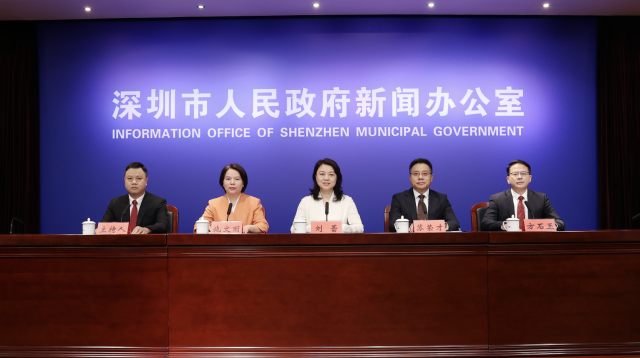
Core Viewpoint - The 21st China (Shenzhen) International Cultural Industries Fair (CICIF) will take place from May 22 to 26, showcasing over 120,000 cultural products and more than 4,000 cultural industry investment and financing projects, highlighting the integration of culture and technology through a new AI exhibition area [1][2][3]. Group 1: Event Overview - The event will feature 6,280 participating organizations, an increase of 265 from the previous year, with 3,300 offline exhibitors and 2,980 online exhibitors [2][3]. - The fair will include participation from all 31 provinces, autonomous regions, and municipalities in China, as well as 65 countries and regions globally, with 305 overseas exhibitors [1][2]. - The main venue is set at the Shenzhen International Convention and Exhibition Center, with 52 sub-venues across the city [2]. Group 2: Highlights of the Fair - The fair will introduce an AI exhibition area with over 60 renowned companies, including UBTECH and Yuanxiang, showcasing cutting-edge AI products [4][5]. - More than 120 new product launches will occur during the event, featuring significant innovations such as the first domestically certified manned drone by Heyi Aviation [4][5]. - The main exhibition area for cultural products has expanded from over 1,300 square meters to 3,000 square meters, attracting over 100 institutions and enterprises [5]. Group 3: Economic Impact - The cumulative transaction volume of the fair has exceeded 3 trillion yuan, with over 4.5 million cultural industry enterprises served [6]. - In 2024, Shenzhen's cultural and related industries are projected to have 3,754 enterprises with a revenue of 1,287.5 billion yuan, accounting for 51.5% of the province's total [6]. - The fair has successfully linked over 70,000 cultural investment and financing projects throughout its history [6].
“5大新气象”,透视第21届文博会新看点
2 1 Shi Ji Jing Ji Bao Dao· 2025-05-14 05:21
Core Viewpoint - The 21st China (Shenzhen) International Cultural Industries Fair showcases significant innovations and international participation, highlighting the evolving landscape of cultural industries in China. Group 1: Market Trends - The fair attracted over 300 leading brand enterprises from both domestic and international markets, with more than 60 first-time exhibitors, including notable names like the Da Vinci International Cultural Art Center and the production company of "Black Myth: Wukong" [5]. - The main exhibition area expanded from over 1,300 square meters in the previous year to 3,000 square meters, featuring over 100 institutions and enterprises from across the country, showcasing a diverse range of cultural products [5]. Group 2: Technological Innovations - A new artificial intelligence exhibition area was established, featuring over 60 top AI companies and emerging enterprises, showcasing innovative technology through immersive experiences and interactive performances [5]. - Several global product launches were highlighted, including iFlytek's multilingual transparent screen and Shenzhen Yunzhou Digital's domestic first conversational large model [5]. Group 3: International Participation - The fair saw a record number of exhibitors from "Belt and Road" countries, with 50 out of 65 participating countries and regions coming from this initiative, including Italy, Poland, and Brazil [6]. - The international collaboration network expanded from over 60 to more than 70 organizations, covering nearly 100 countries and regions, with a diverse array of exhibits, including renowned cultural brands from Egypt and high-end jewelry from Sweden [6].
“开源鸿蒙之城”生态新高地:全国首家省级开源鸿蒙制造业创新中心落户深圳前海
Sou Hu Wang· 2025-05-14 04:43
Core Insights - The establishment of the Guangdong Open Harmony Intelligent IoT Innovation Center marks a new phase in the development of the open-source Harmony ecosystem in China [1] - The center will focus on the OpenHarmony operating system, emphasizing core technologies such as real-time computing and AI, and aims to develop the M-Robots OS, a distributed heterogeneous multi-machine collaborative robot operating system [1][2] - M-Robots OS is the first operating system based on open-source Harmony, which aims to enhance collaboration among various types of robots and facilitate intelligent interaction with humans and the environment [2] Group 1 - The Guangdong Open Harmony Intelligent IoT Innovation Center is the first provincial-level open-source Harmony manufacturing innovation center in China, led by Shenzhen Kaihong Digital Industry Development Co., Ltd. and Shenzhen Zhongsoft International Technology Service Co., Ltd. [1] - M-Robots OS was officially released in April this year and represents a new stage in China's robot operating systems, focusing on multi-machine collaboration and collective intelligence [1][2] - The system has been validated in industrial robotic arms and collaborative robots, with plans for commercial testing on industrial production lines by 2025 in collaboration with partners in Guangdong [2] Group 2 - The center will adopt an "open-source community" model to iteratively advance the system, with a 2.0 version expected by the end of 2025 and a complete development ecosystem within three years [2] - The establishment of the center is expected to accelerate the gathering of upstream and downstream enterprises in the open-source Harmony ecosystem, creating an innovative hub and industrial cluster for open-source Harmony application software [3]
“人形机器人”高端闭门会在京举行 共探具身智能发展新征程
Xin Jing Bao· 2025-05-13 15:12
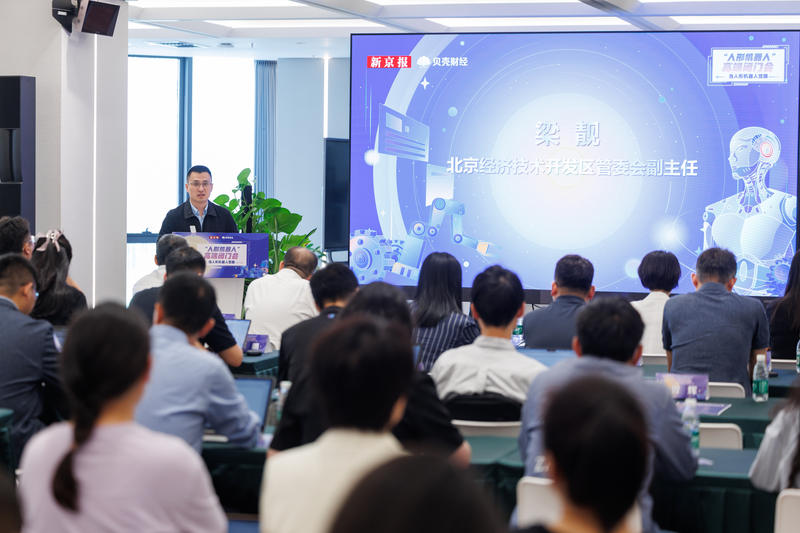
Group 1 - The humanoid robot industry is at a critical development juncture, with 2025 expected to be the year of mass production for humanoid robots, driven by rapid advancements in artificial intelligence and diverse application scenarios [2][3][5] - The Beijing Economic-Technological Development Area has established a robust industrial foundation, with over 300 companies in the humanoid robot ecosystem and a market scale exceeding 100 billion yuan, accounting for 50% of Beijing's robot industry [5][6] - The establishment of a comprehensive standard system for humanoid robots is essential for the healthy development of the industry, covering the entire technology chain from perception to decision-making and execution [13][15] Group 2 - The recent "Human-Robot Co-Running" half marathon has generated significant interest and serves as a platform for social engagement and investment in the humanoid robot sector [1][7] - Experts emphasize the importance of collaboration across disciplines and sectors to overcome technical challenges and foster innovation in humanoid robotics [6][16] - The humanoid robot sports event is seen as a crucial opportunity for showcasing advancements in embodied intelligence and driving commercialization in various application scenarios [12][16]
“鸿蒙之城”再进击:全国首家省级开源鸿蒙制造业创新中心,落户深圳前海
2 1 Shi Ji Jing Ji Bao Dao· 2025-05-13 08:41
Core Viewpoint - The establishment of the Guangdong Open Harmony Intelligent IoT Innovation Center marks a significant step in advancing the Open Harmony ecosystem and addressing challenges in the robotics industry through the introduction of the M-Robots OS, a distributed heterogeneous multi-machine collaborative robot operating system [1][2]. Group 1: Innovation Center Establishment - The Guangdong Open Harmony Intelligent IoT Innovation Center is the first provincial-level Open Harmony manufacturing innovation center in China, officially unveiled on May 13 [1]. - The center is led by Shenzhen Kaihong Digital Industry Development Co., Ltd. and Shenzhen Zhongsoft International Technology Service Co., Ltd. [1]. Group 2: M-Robots OS Development - M-Robots OS is the first distributed heterogeneous multi-machine collaborative robot operating system based on Open Harmony, officially released in April [1][2]. - The system aims to unify standards for efficient collaboration among various types of robots and enhance intelligent interaction between robots and their environments [2]. - Industrial applications of M-Robots OS are expected to undergo commercial testing by 2025 in collaboration with partners in Guangdong [2]. Group 3: Ecosystem Expansion - The Open Harmony ecosystem has over 70 community co-construction units and has launched various products, with over 1 billion devices equipped, facilitating advancements in multiple sectors including energy, finance, and healthcare [2]. - The establishment of the innovation center in Shenzhen is expected to attract more enterprises within the Open Harmony ecosystem, further developing the application software ecosystem [3].
2025福布斯中国人工智能科技企业TOP50评选结果出炉 7家深企上榜AI产业50强
Guang Zhou Ri Bao· 2025-05-12 19:32
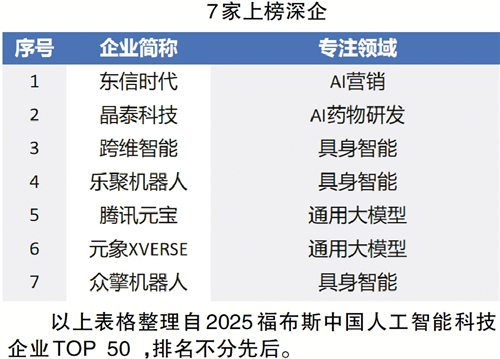
Core Insights - The 2025 Forbes China AI Technology Companies TOP 50 list highlights influential companies in the AI sector, with Beijing, Shanghai, and Shenzhen leading in representation [1] - Shenzhen has 7 companies on the list, showcasing its strength in various AI fields including large models, robotics, AI pharmaceuticals, and smart marketing [2] Group 1: Shenzhen's AI Companies - Tencent Yuanbao, as Tencent's flagship AI product, excels in cross-domain understanding and natural language processing, setting a benchmark for large model commercialization [2] - Zhongqing Robotics, a star in general AI, has rapidly developed its products, including the SA01 and SE01 robots, with plans to deliver 1,000 units by 2025 [2] - Leju Robotics, established in 2016, focuses on humanoid robots and has showcased its "Kua Fu" robot at international events [3] - Kua Wei Intelligent, founded in 2021, specializes in embodied intelligence technology and has achieved commercial application at scale [3] - Jing Tai Technology, founded by MIT physicists, combines quantum computing and AI for pharmaceutical and materials science solutions [3] - Dongxin Times, a veteran in MarTech, has built a nationwide smart marketing service network, demonstrating AI's commercial potential [3] - Yuanxiang XVERSE, a unicorn in AI and the metaverse, merges AI with 3D technology for virtual reality interactions [4] Group 2: Shenzhen's AI Industry Growth - Shenzhen's AI industry generated a total output value of 301.2 billion yuan in 2023, marking a 21.1% year-on-year growth [5] - The city hosts over 2,600 AI companies, 6 AI unicorns, and 34 publicly listed robotics companies, indicating significant industry clustering [5] - The Shenzhen government plans to open 100 application scenarios for AI and robotics companies by 2025, enhancing the city's commercial application of AI technology [5] - The "Shenzhen Action Plan for Accelerating the Development of AI Pioneer City (2025-2026)" aims for over 3,000 AI companies and an annual growth rate exceeding 20% by 2026 [5] Group 3: Guangdong's AI Industry - Guangdong province leads with 9 companies on the list, showcasing its comprehensive strength in the national AI industry [6] - The AI ecosystem in Guangdong is supported by Shenzhen, Guangzhou, and Foshan, indicating a diverse industrial landscape [6] - With increasing policy support and innovation, Guangdong's AI industry is entering a phase of high-quality development [6][7]
王兴兴放话“人形机器人订单爆了” 受制于产能 行业总体出货量谨慎乐观
Xin Lang Cai Jing· 2025-05-12 12:07
Group 1 - The humanoid robot industry is experiencing a surge, with component manufacturers reaping early benefits from the market boom [1][2] - Companies like Tuosida and Wuzhou Xinchun have seen their stock prices soar, with several stocks hitting the daily limit [1] - Wang Xingxing mentioned that humanoid robot companies, including Yushu, are in a strong growth phase, with many firms overwhelmed by orders [1][2] Group 2 - Major players in the humanoid robot market, such as Zhiyuan Robotics and Leju Robotics, are leading in shipment volumes, with Zhiyuan planning to maintain thousands of units in shipments this year [2] - Fourier Robotics aims to deliver over 10,000 robots by Q1 2025, with a target of 300 biped humanoid robots [2] - Fourier has partnered with Shanghai International Medical Center to establish a rehabilitation demonstration base for humanoid robots [2] Group 3 - Huawei and Ubtech signed a comprehensive cooperation agreement to innovate in humanoid robots, focusing on product development and application scenarios [3] - Ubtech has secured a contract for large-scale humanoid robots, marking a significant step in the industrial application of humanoid robots [3] Group 4 - Despite the growth, industry experts express caution regarding the current shipment situation due to limited production capacity and the stability of components [4] - Many humanoid robot companies are struggling to meet real customer value demands, hindering the formation of a commercial closed loop [4] Group 5 - The concept of embodied intelligence is gaining traction, with a focus on integrating AI with physical space, presenting potential breakthroughs in various applications [4][5] - The development of humanoid robots is limited by challenges in motion control and the need for enhanced capabilities in unstructured environments [5]
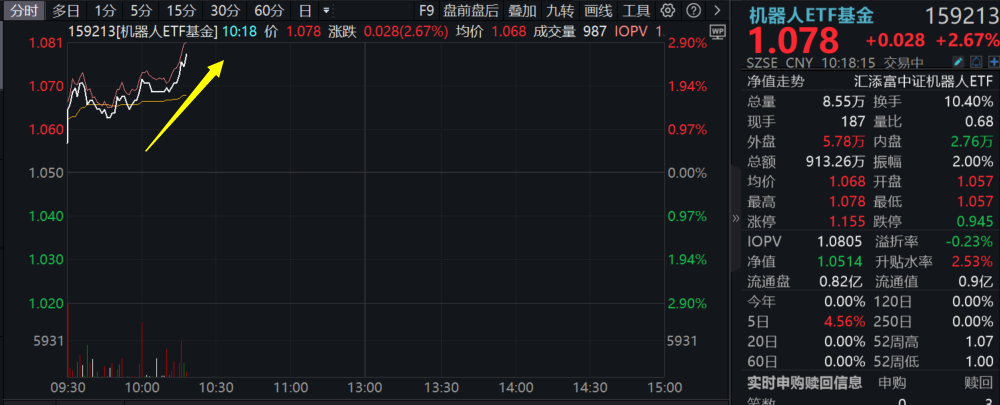
人形机器人企业爆单!宇树机器人最新发声,机器人ETF基金(159213)再度飙涨超2%,全球资管巨头唱多人形机器人!
Xin Lang Cai Jing· 2025-05-12 03:17
Core Viewpoint - The humanoid robot market is experiencing significant growth, driven by favorable government policies and increasing demand across various sectors, with projections indicating a potential market size of over 15 trillion yuan by 2025 [4][9]. Group 1: Market Performance - The A-share market showed an upward trend on May 12, with the robot sector rebounding, particularly the Robot ETF fund (159213), which opened high and rose by 2.67% [1]. - Major components of the Robot ETF fund saw substantial gains, with companies like Tuosida reaching a 20% limit up, and others like Koli'er and Xinjie Electric also experiencing significant increases [3]. Group 2: Industry Advantages - The humanoid robot industry in China benefits from strong policy support, with various national and local initiatives aimed at fostering development, including the inclusion of robots in key work reports and the establishment of industry funds [5][6]. - China's competitive edge in the humanoid robot market is highlighted by its leading position in patent applications, with 5,925 patents filed from 2020 to 2024, significantly outpacing other countries [4][5]. Group 3: Production and Supply Chain - The domestic robot industry is witnessing a rise in localization, with the domestic production rate of key components increasing from 17.5% in 2015 to 35.7% in 2022, indicating a trend towards cost reduction and efficiency [7]. - Major companies are preparing for mass production of humanoid robots, with 2025 expected to be a pivotal year for the industry, as several manufacturers are on the brink of entering small-scale production [7][8]. Group 4: Application Scenarios - The demand for robots is driven by manufacturing upgrades and demographic changes, with the global aging population creating a pressing need for robotic solutions to address labor shortages [9]. - The potential market for humanoid robots is projected to exceed 1 billion units, corresponding to a market space of over 15 trillion yuan, as the industry prepares for widespread adoption across industrial, commercial, and domestic applications [9].
具身智能行业研究:宁波华翔与智元签订合作协议,吉利拟收购极氪推进整合
SINOLINK SECURITIES· 2025-05-11 12:23
Investment Rating - The report rates the automotive sector as the strongest industrial trend, particularly focusing on the ROBO+ sector, which includes intelligent driving and humanoid robots [4]. Core Insights - The intelligent driving system of Li Auto has undergone a comprehensive upgrade, enhancing the precision and range of its LiDAR technology, allowing detection up to 200 meters [1][9]. - Geely plans to acquire all shares of Zeekr, aiming for business integration and enhanced group synergy [1][10]. - The collaboration between Pony.ai and Uber aims to launch Robotaxi services in the Middle East, marking a significant step in the commercialization of autonomous driving technology [1][11]. - The report emphasizes that the ROBO+ sector will reshape the entire automotive supply chain, with significant growth expected in high-level autonomous driving and humanoid robots [4][41]. Summary by Sections Intelligent Driving - Li Auto's AD Pro model has upgraded its driving chip from Horizon J5 to J6M, incorporating Hesai's ATL LiDAR, which features a custom intelligent zoom function for enhanced detection capabilities [1][9]. - Geely's acquisition of Zeekr will lead to a complete merger, enhancing operational efficiency within the group [1][10]. - Pony.ai's partnership with Uber will facilitate the launch of Robotaxi services, with plans to expand into more international markets [1][11]. - The report highlights the expected explosive growth in the supply chain for chips, LiDAR, and optical components due to the rising penetration of high-level autonomous driving [4][41]. Robotics - Lenovo has introduced the "Lenovo Enjoy No. 1" robot, which is the first silicon-based employee equipped with multi-modal perception and decision-making capabilities [2][22]. - The collaboration between Ningbo Huaxiang and partners aims to enhance robot assembly and supply chain integration across six key areas [2][36]. - The establishment of Hefei Xinghui Sensor Technology by Zhongding Co. focuses on the production of six-dimensional force sensors, enhancing the humanoid robot sector [3][37]. - The report suggests that the robotics industry is transitioning from a focus on major players to a more diversified landscape, with significant opportunities for growth in 2025 [4][44]. Investment Recommendations - The report identifies ROBO+ as the strongest industrial trend in the automotive sector, with intelligent driving and humanoid robots being the key areas of focus [4][41]. - It recommends monitoring leading companies in the chip, LiDAR, and sensor cleaning sectors, as well as automotive manufacturers with strong competitive advantages [4][43].