吉利汽车

Search documents
未知机构:GS市场驱动因素区域市场今日再度震荡除中国外亚洲市场普遍走弱-20260313
未知机构· 2026-03-13 02:40
GS-市场驱动因素 区域市场今日再度震荡,除中国外亚洲市场普遍走弱。 中国虽年内表现落后于韩国等市场,但仍展现出相对韧性;值得注意的是,自2月下旬以来,中国市场仅小幅下 跌。 然而,区域趋势显示,随着早盘情绪消退、欧洲市场开盘,各指数正收窄上午的跌幅。 香港股市跟随区域整体疲软走势,但防御性的煤炭股和高股息股表现相对坚挺,而多数主题板块承压,其中生物 科技、中国国防和香港地 GS-市场驱动因素 区域市场今日再度震荡,除中国外亚洲市场普遍走弱。 中国虽年内表现落后于韩国等市场,但仍展现出相对韧性;值得注意的是,自2月下旬以来,中国市场仅小幅下 跌。 然而,区域趋势显示,随着早盘情绪消退、欧洲市场开盘,各指数正收窄上午的跌幅。 香港股市跟随区域整体疲软走势,但防御性的煤炭股和高股息股表现相对坚挺,而多数主题板块承压,其中生物 科技、中国国防和香港地产股领跌。 消息面上,亚洲特定催化剂仍是焦点,主要集中在特朗普即将访华、汽车销售和消费疲软迹象,以及围绕OpenAI 和DuClaw等具身智能主题的监管和情绪发展,这些因素均促使投资者采取谨慎立场。 区域市场综述 – 澳大利亚:S&P/ASX指数下跌1.3%,几乎回吐了 ...
2月汽车销量:新能源批发72万辆、同比-13%、环比-16%
数说新能源· 2026-03-13 01:27
Core Insights - The article discusses the current state of the new energy vehicle (NEV) market in China, highlighting sales figures, inventory levels, and pricing trends. Group 1: Sales Data - Wholesale sales of passenger cars in February reached 1.52 million units, representing a year-on-year decline of 15% and a month-on-month decline of 23% [2] - Retail sales are estimated at approximately 1.12 million units, showing a year-on-year decrease of 13% and a month-on-month decrease of 26% [3] - In the NEV segment, wholesale sales totaled 720,000 units, down 13% year-on-year and 16% month-on-month, with a penetration rate of 48%, which is an increase of 1 percentage point year-on-year and 4 percentage points month-on-month [5] Group 2: Inventory and Exports - Exports for the month amounted to 560,000 units, reflecting a year-on-year increase of 51% and a month-on-month decrease of 5%, leading to a net inventory reduction of approximately 150,000 units [4] - The total inventory is estimated to be around 3.4 million units, with a historical seasonal increase of about 50,000 units [4] Group 3: Pricing Trends - In early March, the industry discount rate increased to 9.3%, which is a decrease of 0.6 percentage points year-on-year and an increase of 0.1 percentage points month-on-month [4]


吉利受邀参加英伟达2026 GTC大会 将围绕 “AI + 车” 进行成果分享
Xin Hua Cai Jing· 2026-03-13 01:22
Group 1 - Geely Auto Group's CTO, Li Chuanhai, will attend NVIDIA's 2026 GTC conference and share insights on AI and smart vehicles on March 18 (Beijing time) [1] - The participation in the NVIDIA 2026 GTC conference indicates potential expansion of existing collaboration between Geely and NVIDIA [1] - The collaboration may focus on areas such as intelligent assisted driving, AI cockpit, embodied intelligence, chip supply coordination, and ecosystem co-construction [1]


6年能量密度仅提升5%,比亚迪能否靠第二代刀片电池翻身?
Xin Lang Cai Jing· 2026-03-13 01:15
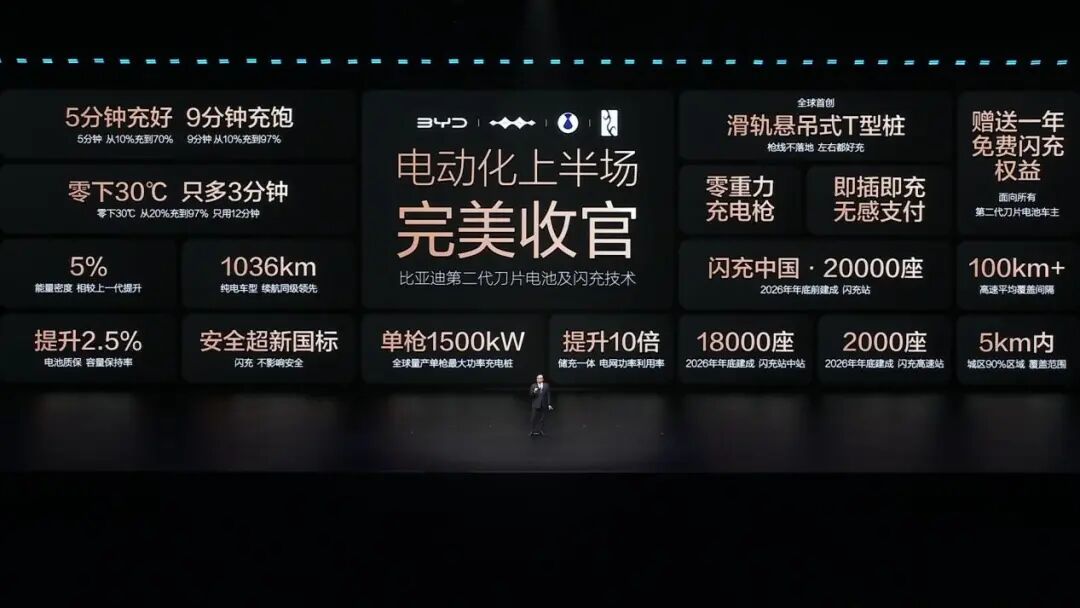
Core Viewpoint - BYD's second-generation blade battery has been launched, but its energy density improvement of only 5% over six years raises concerns about its ability to maintain a competitive edge in the electric vehicle market [1][12]. Group 1: Battery Technology - The first-generation blade battery from BYD was a significant innovation, enhancing consumer confidence in electric vehicles and establishing BYD as a leader in the industry [1]. - The second-generation blade battery's energy density increase is minimal, averaging less than 1% per year over six years, which may not be sufficient to regain market leadership [1][12]. - Traditional lithium batteries have reached a density ceiling of 140-180 Wh/kg, limiting advancements in energy density for major players like BYD and CATL [3][13]. Group 2: Flash Charging Technology - BYD's second-generation blade battery supports flash charging, allowing for 70% charge in 5 minutes and 97% in 9 minutes, even in low temperatures [4][13]. - The flash charging technology is seen as a potential game-changer, especially compared to the battery swap model promoted by competitors like NIO [4][13]. - BYD plans to build 20,000 flash charging stations by 2026, which is a significant commitment but still limited compared to the existing infrastructure of over 30 million home charging points [6][15]. Group 3: Market Challenges - Despite the technological advancements, BYD faces challenges in reversing its declining sales, with recent figures showing a drop from peak monthly sales of 510,000 to around 190,000 [1][12]. - The limited number of models compatible with the second-generation blade battery may hinder the widespread adoption of flash charging technology [7][15]. - The current charging infrastructure's low utilization rates pose a challenge for BYD's vision of making electric vehicle charging as fast as refueling gasoline cars [6][15]. Group 4: Future Outlook - BYD's CEO indicated that the second-generation blade battery and flash charging represent the culmination of the first phase of electric vehicle technology, suggesting a need for new innovations to address future challenges [19][20]. - Solid-state batteries are anticipated to be the next major advancement, with BYD planning to start mass production around 2027, which could significantly enhance energy density and safety [19][20]. - The company aims to leverage flash charging as a transitional technology while preparing for the introduction of solid-state batteries in the coming years [20][22].

3月车Fans行情:海豚非智驾版优惠3万+,帕萨特380落地16万
车fans· 2026-03-13 00:29
Group 1 - The article discusses the current market conditions for car purchases, emphasizing the shift from new cars to second-hand vehicles due to limited options and high prices in the new car market [2][3] - It highlights the value of second-hand cars, particularly Japanese and German models, which are now more affordable due to the reduction of subsidies in the new car market [2] - The article recommends specific models across various price ranges, focusing on their practicality and value for money [3][11][20] Group 2 - For the budget range of 2万 to 5万, the article suggests considering second-hand cars as new options are limited and often not practical [2] - In the 5万 to 8万 range, it recommends models like 星愿, 海豚非智驾, 长安Q05, and 缤越L, noting their strong sales and reliability [3][5][8][9] - The 8万 to 11万 range features recommendations for hybrid models like 秦L DMI and 海豹06 DMI, but also suggests alternatives like 哈弗大狗 and 吉利博越L for their unique appeal and practicality [11][12][15][16] Group 3 - In the 12万 to 15万 range, the article leans towards pure electric and gasoline models, recommending vehicles like 钛3 and 海狮06EV for their reliability and value [20][23] - It emphasizes the importance of brand perception in the car market, illustrating how the image of a vehicle can influence consumer choices [24] - For the 15万 to 20万 range, the article highlights the 钛7 for its balanced features and strong sales performance, while also mentioning alternatives like 宋U ltra and 君越 for their value [29][39] Group 4 - In the 20万 to 30万 range, the article suggests considering both electric and gasoline models, including the Model Y and BBA vehicles, encouraging consumers to make choices based on personal preference rather than minor details [42] - It notes that the XC60 is currently priced attractively while maintaining a premium image, appealing to consumers looking for value [42]
“我的两艘船在波斯湾飘着”
汽车商业评论· 2026-03-12 23:05
Core Viewpoint - The article discusses the impact of the recent military conflict between the US, Israel, and Iran on the Chinese automotive export market, particularly focusing on the disruptions faced by Chinese car manufacturers in the Middle East due to the conflict [3][4][21]. Group 1: Impact on Automotive Exports - The UAE, as a significant market for Chinese automotive exports, imported 567,000 vehicles from China last year, making it the third-largest destination for Chinese car exports [4][19]. - The conflict has led to a halt in operations for Chinese automotive dealers in Dubai, with many switching to remote work, severely affecting sales [4][9]. - A large number of vehicles en route to the Middle East are facing delivery delays due to shipping disruptions, with shipping companies either halting operations or imposing high war risk surcharges [4][10][12]. Group 2: Shipping and Logistics Challenges - The blockade of the Strait of Hormuz by Iran has created significant logistical challenges, as it is a crucial route for shipping vehicles to the Middle East [10][22]. - Shipping costs have surged, with the price to transport a vehicle to Europe increasing from approximately $1,500 to over $3,000 due to rerouting around the Cape of Good Hope [21]. - The blockade has also affected the supply chain for essential automotive components, with potential increases in raw material costs by 15% to 25% if the situation persists [22][23]. Group 3: Market Reactions and Future Outlook - Companies like Geely have shifted focus from the Middle East to markets like Canada, which recently opened up for Chinese electric vehicle exports [5][4]. - The conflict has prompted some Chinese automakers to announce price increases for their vehicles due to rising costs of raw materials and logistics [24]. - Analysts predict that the geopolitical tensions will have long-lasting effects on the automotive supply chain, similar to past disruptions caused by geopolitical events [30][31].

资讯日报:IEA 同意释放创纪录储备油-20260312
Guoxin Securities Hongkong· 2026-03-12 13:53
Market Overview - The Hang Seng Index closed at 25,899, down 0.24% for the day, but up 1.05% year-to-date[3] - The S&P 500 index closed at 6,781, down 0.08% for the day, and down 1.02% year-to-date[3] - The Nikkei 225 index rose 1.43% to close at 54,248, with a year-to-date increase of 9.31%[3] Energy Sector Insights - The International Energy Agency (IEA) announced the release of 400 million barrels of oil reserves, marking the largest strategic reserve release in history[9] - WTI crude oil futures rose over 4% to $87.25 per barrel, while Brent crude oil futures increased by 4.8% to $91.98 per barrel[9] - Coal stocks saw significant gains, with Huayli Resources up over 28% and Yancoal Australia up over 8% due to ongoing Middle East tensions affecting energy valuations[9] Automotive and Technology Stocks - NIO's stock surged over 14% after reporting a projected quarterly profit of 1.25 billion yuan and a revenue increase of 75.9% year-on-year[9] - Nvidia shares rose 0.68%, while major tech stocks like Apple and Microsoft saw slight declines of 0.01% and 0.22%, respectively[10] Market Risks and Concerns - The ongoing Middle East conflict remains a significant uncertainty, with analysts noting the hardline positions of both sides, complicating potential resolutions[9] - Safety risk warnings regarding AI applications have led to a reevaluation of valuations, with MINIMAX-WP and other stocks experiencing declines of over 6%[9]
招银国际焦点股份-20260312
Zhao Yin Guo Ji· 2026-03-12 12:07
Investment Rating - The report assigns a "Buy" rating to multiple companies, indicating a potential upside in their stock prices over the next 12 months [5][13]. Core Insights - The report highlights a basket of 26 stocks with an average return of -3.0%, which underperformed the MSCI China Index by 0.8 percentage points [10]. - Among the 26 stocks, 11 outperformed the benchmark, suggesting selective opportunities within the basket [10]. Summary by Relevant Sections Company Ratings - Companies such as Geely Automobile, Luckin Coffee, and Tencent are rated "Buy" with target prices indicating significant upside potential ranging from 38% to 109% [5]. - Specific target prices include: - Geely Automobile: 18.00 HKD (current price: 8.61 HKD) [5] - Luckin Coffee: 129.83 HKD (current price: 67.95 HKD) [5] - Tencent: 760.00 HKD (current price: 551.00 HKD) [5] Market Performance - The average market capitalization of the highlighted companies ranges from 1.3 billion to 641.3 billion, with varying average daily trading volumes [5]. - The report notes that the price-to-earnings (P/E) ratios for FY24A and FY25E show a wide range, indicating differing growth expectations across sectors [5]. Analyst Coverage - The report includes insights from multiple analysts, indicating a collaborative approach to stock evaluation [5].



多行业联合人工智能3月报:AI创造性破坏重构产业生态-20260312
Huachuang Securities· 2026-03-12 11:15
Strategy - The report emphasizes that AI's "creative destruction" may reshape the industrial ecosystem, with varying impacts across different sectors based on the evolution of AI technology and the nature of industry business models [6][12][15] - The report identifies four types of impacts from AI: cost substitution, direct impact on labor-intensive services, efficiency improvements in information transmission, and the creation of new supply and demand through disruptive innovation [15][16] Electronics - The rise of Agentic AI is expected to drive a rapid increase in token demand, with a potential shift towards a physical AI era, leading to higher AI computing power requirements [6][12] - The PCB industry is projected to maintain high growth due to its heavy asset nature, with capacity release and product structure optimization driving non-linear performance improvements for companies [6][12] Computer - The intersection of policy and industry changes marks a new phase for AI development, with significant initiatives from government bodies aimed at enhancing data circulation and market value [7][12] Media - The report notes a wave of model updates from both domestic and international players, highlighting the potential for revolutionary impacts on the content industry [8][12] Humanoid Robots - The industry is entering an acceleration phase, with a focus on tracking product iterations and mass production progress from leading manufacturers like Tesla and Xiaomi [8][12] - The report suggests prioritizing investments in components and equipment related to the robotics supply chain, as well as opportunities arising from new technologies [8][12] Automotive - The L3 and L4 national standards have opened for public consultation, indicating a rapid advancement in high-level autonomous driving policies [8][12] - The report anticipates that the company Suton will achieve profitability by Q4 2025, with significant growth in robot lidar sales [8][12] Investment Recommendations - The report provides a selection of recommended stocks, including upstream computing power foundations like Huadian Co., Shenzhen Circuit, and Horizon Robotics, as well as downstream applications such as Geely Automobile and Perfect World [9][12]
“越跌越买”!港股年内已回购逾200亿港元
证券时报· 2026-03-12 10:41
在港股市场调整之际,一些港股上市公司在回购行为方面呈现出"越跌越买"的特征。 港股市场年内已回购逾200亿港元 尽管年内港股市场跌宕起伏,波动不小,但港股市场上市公司仍保持了较高的股份回购热情。 Wind数据显示,2026年以来,港股市场回购金额合计已超过200亿港元,涉及逾130家上市公司。 从单家港股上市公司的回购金额来看,依然呈现行业龙头公司领衔的局面, 其中腾讯控股、小米集团、中通快递、吉利汽车、舜宇光学科技年内回购金 额均已超过10亿港元 。这里面,腾讯控股回购金额遥遥领先,年内累计回购金额超过60亿港元;小米集团年内累计回购金额则超过40亿港元。 另外, 包括潮玩行业龙头泡泡玛特、餐饮行业龙头百胜中国等在内的10多家港股上市公司年内回购金额超过1亿港元 ,回购金额规模居于市场前列。 从回购股份数量来看,包括小米集团-W、吉利汽车、首程控股、医渡科技、捷利交易宝、九毛九在内的逾20家港股上市公司年内回购股数量超过1000万 股。 不少公司回购行为呈"越跌越买"特征 近期受到全球资金面变化、中东局势紧张等多种因素的冲击,港股市场出现一定调整,但不少公司仍保持连续回购股份态势,一些公司的回购行为甚至呈 ...