
上美股份

Search documents
不止欧莱雅系“吃香”,美妆人才大战进入「无界」时代
FBeauty未来迹· 2025-10-12 08:16
Core Insights - The global beauty industry is experiencing a significant shift in personnel changes, moving from simple organizational restructuring to a deeper strategic integration through cross-industry and cross-regional appointments, aiming for a comprehensive reconstruction of research and development paradigms, experience output, business boundaries, and organizational ecosystems [2][4][6]. Group 1: R&D Paradigm Breakthrough - Estee Lauder appointed former PepsiCo Chief Scientist René Lammers as Executive Vice President and Chief Research and Innovation Officer, marking a significant shift towards a fast-to-market innovation model [8][10]. - Lammers' background in fast-moving consumer goods (FMCG) emphasizes efficiency and data-driven processes, which are crucial for traditional luxury beauty brands like Estee Lauder to overcome innovation bottlenecks [10][11]. Group 2: Ecosystem Linkage - Up Beauty appointed Dr. Karl Lintner, a pioneer in peptide beauty technology, as its Chief Scientific Advisor, marking the company's first such position [12][14]. - Lintner's role will focus on providing forward-looking planning for global peptide technology and facilitating connections with top international research institutions, representing a new path for local companies to acquire cutting-edge technology [15]. Group 3: Globalization of Chinese Market Experience - L'Oreal's personnel adjustments reflect a trend of exporting "Chinese market experience" globally, with Alexis Perakis-Valat, former CEO of L'Oreal China, appointed as CEO of L'Oreal USA [17][19]. - This strategic move aims to leverage Perakis-Valat's experience in agile digital marketing and complex multi-channel operations to address growth challenges in mature markets like North America [21]. Group 4: Strategic Expansion and Focus - Beiersdorf established a new position for President of "Derma & Health Care," integrating several brands to enhance strategic leadership in skin and health care, blurring the lines between beauty and health industries [23][24]. - In contrast, Coty is focusing on strategic contraction by integrating its high-end beauty and mass fragrance businesses to concentrate on its core strengths, aiming for sustainable profit growth [25][28]. Group 5: External Leadership Injection - LG Household & Health Care appointed Lee Sun-joo as CEO, a rare move in the Korean corporate landscape, to address stagnant domestic growth and enhance global market presence [31]. - Proya has built a diverse executive team with backgrounds in various industries to strengthen its brand and global competitiveness, indicating a shift towards a more systematic capability construction [37]. Group 6: Industry Trends - The personnel changes in Q3 2025 highlight a core trend in the beauty industry: competition has evolved from internal optimization to a boundary-less capability war, with the lines between beauty, technology, health, and new consumption increasingly blurred [38].



双11大促:抖音京东同日抢跑,优惠规则做减法:商贸零售行业跟踪报告
Huachuang Securities· 2025-10-12 07:44
Investment Rating - The industry investment rating is "Recommended," indicating an expected increase in the industry index exceeding the benchmark index by more than 5% in the next 3-6 months [16]. Core Insights - The report highlights three main investment themes: 1) New products in the medical beauty sector, emphasizing the importance of product lifecycle and the potential of rare new products for growth and stability. Companies to watch include Qihuang Pharmaceutical and Lepu Medical [3]. 2) The rise of operational agencies, particularly those leveraging AI technology, with a focus on companies like Yiwang Yichuang and Qingmu Technology [3]. 3) The cosmetics sector, recommending attention to companies such as Shiseido, Maogeping, and Proya, which have strong brand matrices and growth potential [4]. Summary by Sections Industry Basic Data - The total number of stocks in the industry is 104, with a total market value of 948.33 billion and a circulating market value of 885.12 billion [6]. Key Company Earnings Forecasts and Valuations - Proya: - EPS forecast for 2025E: 4.6, 2026E: 5.1, 2027E: 5.6 - PE ratios: 2025E: 17.5, 2026E: 15.9, 2027E: 14.5 - PB ratio: 4.7 - Rating: Recommended [5] - Juzi Biological: - EPS forecast for 2025E: 2.3, 2026E: 2.8, 2027E: 3.4 - PE ratios: 2025E: 20.9, 2026E: 17.4, 2027E: 14.3 - PB ratio: 6.5 - Rating: Recommended [5] - Maogeping: - EPS forecast for 2025E: 2.4, 2026E: 3.1, 2027E: 4.0 - PE ratios: 2025E: 37.4, 2026E: 29.1, 2027E: 23.0 - PB ratio: 9.7 - Rating: Strongly Recommended [5]. Relative Index Performance - The absolute performance over 1 month is -4.9%, 6 months is +10.4%, and 12 months is +32.4%. The relative performance shows a decline of -8.7% over 1 month, -13.2% over 6 months, and an increase of +16.9% over 12 months [7]. Upcoming Promotions - The report discusses the upcoming Double 11 promotions, highlighting changes in discount strategies across platforms like Tmall, Douyin, and JD, with Tmall extending its promotional period to 31 days and implementing a direct discount strategy [9].
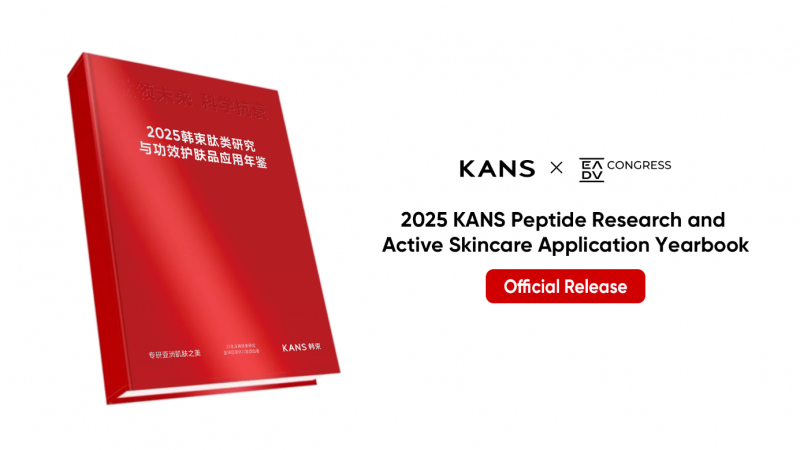
韩束发布多肽红宝书:以22年科研沉淀,立国货抗衰标杆
Sou Hu Wang· 2025-10-12 02:27
Core Insights - The 34th European Academy of Dermatology and Venereology (EADV 2025) concluded successfully in Paris, where the Chinese beauty brand, Shangmei Co., made a significant debut by releasing the "2025 KANSU Peptide Research and Efficacy Skincare Application Yearbook" [1] - This publication, which encapsulates 22 years of research on peptides by KANSU, was also showcased at the 2025 China Fragrance and Cosmetic Industry Annual Conference and Expo (CAME), highlighting China's innovative contributions to anti-aging solutions [1] Group 1 - The "KANSU Peptide Yearbook" is edited by renowned dermatology experts, showcasing the brand's deep commitment to peptide research and establishing its credibility in the field [3] - The yearbook serves as a practical guide for consumers and a testament to the brand's long-term commitment to scientific development in the industry [6] - It outlines a comprehensive framework that combines global perspectives with local insights, detailing over 50 years of peptide technology evolution [6] Group 2 - The yearbook presents significant market transformation results, with the "Red Waist 2.0" series showing a 38.57% reduction in cheek wrinkle length and a 33.83% increase in skin hydration [7] - The KANSU X Peptide Super Frequency Cream demonstrated a 27.59% increase in collagen and a 30.57% improvement in elastin after 28 days of testing, setting new industry benchmarks [7] - These quantifiable results address the industry's challenge of measuring anti-aging effects, providing consumers with clear efficacy references [7] Group 3 - The yearbook emphasizes the importance of long-term research investment in building core competitiveness in the anti-aging sector, reflecting on the industry's short-termism [10] - It documents KANSU's journey from initiating peptide research in 2003 to achieving significant milestones in innovation and application [11] - The yearbook's authority stems from KANSU's unique research accumulation and international recognition, showcasing a robust peptide research system [11] Group 4 - Karl Lintner, a pioneer in peptide technology, praised KANSU's application of cyclic peptides, affirming its contributions to foundational research and product development [13] - The dual launch at EADV and CAME signifies KANSU's strategic positioning to engage globally while remaining rooted in China [13] - The yearbook sets future goals for KANSU to leverage AI and computational biology in advancing peptide research, marking a transition from "Made in China" to "Intelligent Manufacturing in China" [13]
4家消费公司拿到新钱;自然堂推进上市进程;SHEIN将在法国开设首批实体店|创投大视野
36氪未来消费· 2025-10-11 13:33
Group 1: Financing Activities - Natural堂 completed a financing round of 300 million RMB, with a total investment of approximately 4.42 billion RMB from L'Oréal and 加华资本, leading to a valuation exceeding 7 billion RMB [4][13] - 灵境AI announced a new round of angel+ financing amounting to several tens of millions RMB, aimed at expanding AI animation production and creator ecosystem [6][7] - 乐享科技 secured 200 million RMB in angel++ financing, marking its third round in nine months, with total angel financing nearing 500 million RMB [8][10] - 星河动力, a commercial rocket developer, raised 2.4 billion RMB in D round financing, focusing on low-cost rocket launches [11] Group 2: Market Developments - Natural堂 submitted its prospectus for an IPO on the Hong Kong Stock Exchange, with plans to enhance DTC capabilities and expand its brand portfolio [5][16] - 蜜雪集团 acquired 鲜啤福鹿家, aiming to enter the fresh beer market, with 鲜啤福鹿家 being the leading brand in fresh beer chain stores in China [17][18] - SHEIN plans to open its first physical store in France, aiming to combine e-commerce and physical retail advantages amid changing import tax policies [19] - 字节跳动 initiated its Double Eleven promotion, reporting significant sales growth, with a 75% increase in participating merchants and an 800% rise in brands exceeding 100 million RMB in sales [20] Group 3: Consumer Trends - During the National Day and Mid-Autumn Festival holiday, the average spending per customer increased by 14.6%, with the post-95 generation being the largest group of travelers [33] - The film box office during the National Day holiday surpassed 1.8 billion RMB, with several films exceeding 100 million RMB in box office revenue [38] - The user base for micro-short dramas in China reached 696 million, indicating rapid growth in this entertainment segment [36][37] Group 4: Brand Collaborations and Marketing - 喜茶 launched a new series of products, incorporating traditional flavors and innovative ingredients to attract consumers [23][24] - 奈雪的茶 collaborated with the popular domestic animation IP "罗小黑" to launch new products, leveraging the popularity of the IP for marketing [25][27] - 霸王茶姬 signed tennis player 郑钦文 as its global brand ambassador, aiming to enhance its international brand image [28]

自然堂冲击IPO,“单腿走路”能走多远?
Zhong Guo Ji Jin Bao· 2025-10-11 07:53
Core Viewpoint - CHANDO has submitted its IPO application to the Hong Kong Stock Exchange, facing multiple challenges including high revenue dependence on its main brand and fluctuating net profits [1][5][6]. Company Overview - CHANDO is the third-largest domestic cosmetics group in China based on retail revenue projections for 2024, with a valuation exceeding 7.1 billion RMB after a recent investment from L'Oréal [5][6]. - The company has five major brands, with CHANDO accounting for over 94% of its revenue, peaking at 95.9% in 2023 [11][12]. Financial Performance - In the first half of 2025, CHANDO reported revenue of 2.448 billion RMB, with a total revenue growth from 42.92 billion RMB in 2022 to 46.01 billion RMB in 2024, reflecting a compound annual growth rate of only 3.5% [8][9]. - The net profit fluctuated significantly, reaching 3.02 billion RMB in 2023 but dropping by 37.1% to 1.9 billion RMB in 2024, before recovering to 1.91 billion RMB in the first half of 2025 [8][9]. Market Position - CHANDO ranks sixth among domestic beauty companies, with competitors like Pechoin and Shanghai Jahwa achieving significantly higher revenues [6][7]. - The company's gross margin has improved from 66.5% in 2022 to 70.1% in the first half of 2025, but it still lags behind industry leaders [9]. Marketing and Sales Strategy - CHANDO's sales and marketing expenses reached 27.17 billion RMB in 2024, accounting for 59% of its revenue, which is 14.3 times its net profit for the year [15]. - The company has a high reliance on online sales, with online revenue constituting 68.8% of total revenue in the first half of 2025, primarily from direct online sales [16]. Challenges - The heavy reliance on the CHANDO brand and skincare products limits the company's ability to adapt to market risks and explore new growth opportunities [13]. - The increasing competition in the e-commerce space and rising customer acquisition costs may further pressure the company's profit margins [16].
自然堂冲击IPO,“单腿走路”能走多远?
中国基金报· 2025-10-11 07:44
Core Viewpoint - CHANDO has submitted its IPO application to the Hong Kong Stock Exchange, facing multiple challenges including high reliance on its main brand and fluctuating net profits [2][5]. Group 1: Company Overview - CHANDO is the third largest domestic cosmetics group in China based on retail sales projected for 2024, with a valuation exceeding 7.1 billion RMB after a recent investment from L'Oréal [5]. - The company has five major brands covering skincare, makeup, and personal care, with the main brand CHANDO contributing over 94% of total revenue [11][12]. Group 2: Financial Performance - CHANDO's revenue growth has been stable but slow, with a compound annual growth rate of only 3.5% from 2022 to 2024, lagging behind industry leaders [8][9]. - In 2023, the company's net profit peaked at 302 million RMB but dropped by 37.1% to 190 million RMB in 2024, with a slight recovery to 191 million RMB in the first half of 2025 [9]. Group 3: Market Position and Competition - In the first half of 2025, CHANDO's revenue was 2.448 billion RMB, significantly lower than competitors like Pechoin, which achieved 5.362 billion RMB [8][9]. - The company's reliance on a single brand and product category may weaken its ability to adapt to market fluctuations, especially in a diversifying beauty market [13]. Group 4: Marketing and R&D Expenditure - CHANDO's sales and marketing expenses reached 2.717 billion RMB in 2024, accounting for 59% of total revenue, which is 14.3 times its net profit for the year [14]. - The company's R&D investment has been relatively low, totaling only 348 million RMB from 2022 to the first half of 2025, with a decreasing R&D expense ratio compared to industry peers [14]. Group 5: Online Sales Strategy - The company has a high dependency on online sales, with online revenue accounting for 68.8% of total income in the first half of 2025, primarily from direct online sales [14][15]. - The increasing competition in e-commerce and rising customer acquisition costs may further pressure the company's profit margins [15].

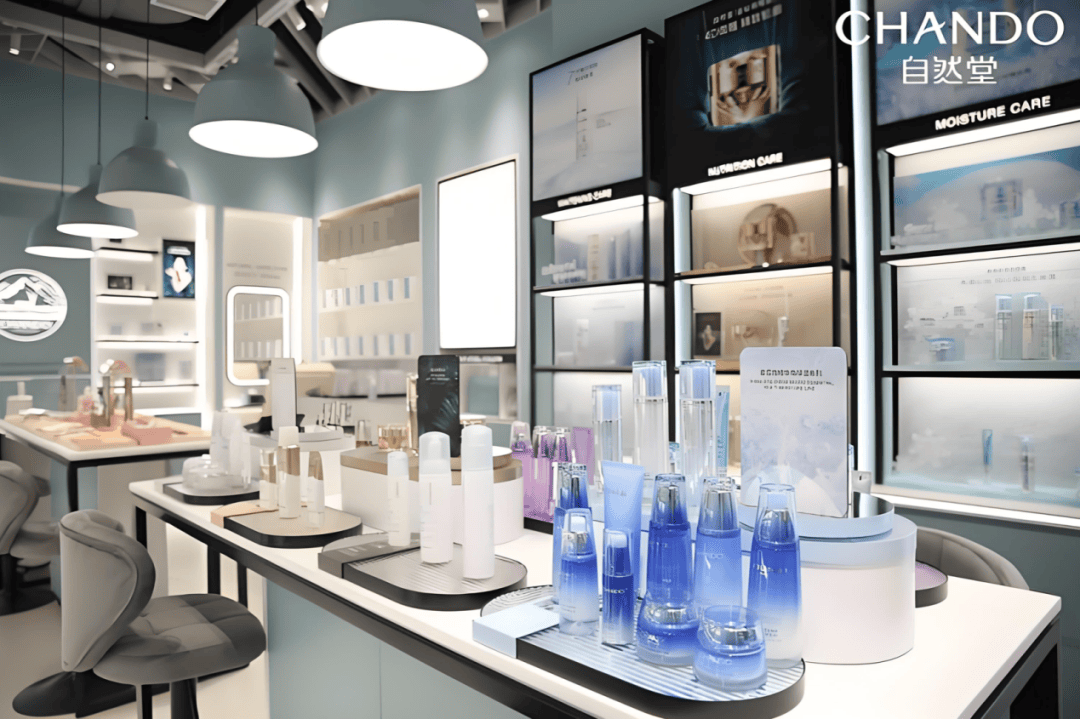
自然堂启动港股IPO,国货“老大哥”搬来了国际救兵
Sou Hu Cai Jing· 2025-10-11 06:22
Core Insights - The article discusses the IPO of Chando, a leading Chinese beauty brand, which marks a significant step in its capital journey after over 20 years in the market [1] - Chando has evolved from a channel-focused brand to one that aims for digital and refined management, seeking to establish a strong foothold in the competitive beauty market [6][12] Group 1: Company History and Development - Chando was founded in 2001, capitalizing on the gap in the Chinese cosmetics market, particularly in the CS channel [2] - The brand quickly became a leader in the CS channel, achieving significant growth and establishing itself as a benchmark for domestic products [2][3] - By 2010, Chando had successfully entered over 2,600 supermarkets, solidifying its position as a "national brand benchmark" [3] Group 2: Financial Performance - Chando's revenue has shown steady growth, with projected revenues of 42.92 billion, 44.42 billion, and 46.01 billion CNY from 2022 to 2024, and 24.48 billion CNY in the first half of 2025, reflecting a 6.4% year-on-year increase [6][7] - Despite a gross margin increase from 66.5% in 2022 to 70.1% in the first half of 2025, its net profit has fluctuated, with figures of 1.39 billion, 3.02 billion, and 1.90 billion CNY from 2022 to 2024 [7] - Chando's compound annual growth rate from 2022 to 2025 is only 3.5%, which is below the industry average, indicating challenges in maintaining competitive growth [7][10] Group 3: Market Position and Challenges - Chando's reliance on a single brand for over 94% of its revenue poses risks, especially as competitors leverage multi-brand strategies to capture diverse consumer segments [10] - The company has faced challenges in balancing marketing and R&D investments, with marketing expenses significantly outpacing R&D spending [10][11] - The competitive landscape is intensifying, with other brands achieving higher growth rates, highlighting Chando's need for strategic adjustments [7][10] Group 4: Future Prospects and Strategic Moves - The recent IPO and investment from L'Oréal are seen as pivotal for Chando, providing opportunities to enhance DTC capabilities, expand brand offerings, and increase R&D investments [11][12] - L'Oréal's involvement is expected to bolster Chando's product development and international expansion efforts, potentially leading to a more resilient brand ecosystem [11][12] - The company aims to address its growth uncertainties by diversifying its brand portfolio and improving its R&D focus, which are critical for long-term competitiveness [12]
昆药集团:通过与国内头部化妆品企业的跨界合作,助推青蒿产业链发展
Cai Jing Wang· 2025-10-11 04:22
近日,昆药集团在互动平台向投资者表示,和上美集团的合作,公司既是合作产品核心原料的供应商, 也是合作产品渠道的共建者。安敏优系列的核心成分青蒿油AN+由昆药研发、生产和提供,公司希望 通过与国内头部化妆品企业的跨界合作,将天然植物成分与现代科技有效融合,助推青蒿产业链发展。 该合作通过资源共享与优势互补,有望为公司带来包括投资收益、品牌赋能等多方面的积极效应,进一 步拓展公司在大健康板块的业务边界与盈利能力。 据悉,安敏优青蒿护肤系列功效护肤产品是昆药集团敏感肌微生态的护肤品牌,该品牌于2022年首发上 市。2020年,昆药集团便与上海上美公司开展合作。2025年上半年,昆药集团实现营收33.51亿元,同 比下降11.68%;实现归母净利润1.98亿元,同比下降26.88%。 ...

单一品牌依赖成隐忧 自然堂赴港上市寻破局
Zhong Guo Jing Ying Bao· 2025-10-10 21:34
Core Viewpoint - Natural堂 has officially submitted its IPO application to list on the Hong Kong stock market, aiming to capitalize on the favorable market conditions and competitive pressures from other domestic beauty brands [1][2]. Group 1: IPO and Market Position - Natural堂 is the third-largest domestic cosmetics group in China and the second-largest domestic cosmetics brand based on retail sales projected for 2024 [2]. - The company has seen a significant increase in its online sales channel, with the proportion rising from 59.7% in 2022 to 68.8% in the first half of 2025 [5]. - The CEO, Zheng Chunying, and her family control approximately 87.82% of the voting rights, which may limit the influence of minority shareholders [3]. Group 2: Financial Performance - Natural堂's revenue for 2022, 2023, and 2024 is projected to be 42.92 billion, 44.42 billion, and 46.01 billion respectively, with net profits of 1.39 billion, 3.02 billion, and 1.90 billion [4]. - The company's gross profit margin has improved from 66.5% in 2022 to 70.1% in the first half of 2025, but its net profit margin remains relatively low at 7.8% [6]. - Compared to competitors like Perleya and Shuangmei, which have seen significant revenue and profit growth, Natural堂's growth has been modest, with revenue growth rates of only 3.48% and 3.58% in 2023 and 2024 respectively [4][6]. Group 3: Brand Strategy and Challenges - Natural堂 operates five main cosmetic brands, with the flagship brand contributing over 94% of total revenue, indicating a lack of diversification [5][6]. - The company has not successfully developed new growth brands, unlike competitors who have launched successful new lines, which poses a challenge for future growth [6]. - The conservative management style of the founder may have contributed to the slower growth and lower profitability compared to more aggressive competitors [4][6].
美妆产品推新框架
2025-10-09 14:47
Summary of the Conference Call on the Beauty Product Innovation Framework Industry Overview - The discussion centers around the beauty industry, specifically focusing on the innovation framework for beauty products and the competitive dynamics within the sector [1][2]. Core Points and Arguments 1. **Organizational Capability**: Organizational ability is identified as the core of competitive strength in the beauty industry. Companies that prioritize consumer insights and maintain high operational efficiency are more likely to succeed [1][2][7]. 2. **Consumer Insights**: Understanding consumer needs and providing differentiated solutions is crucial for product success. This is particularly important in the beauty sector, where demand is often artificially created [2][5]. 3. **Marketing and Channel Strategy**: Strong marketing departments are essential for brand strategy, product development, and marketing planning. Companies like Procter & Gamble and L'Oréal exemplify effective marketing strategies that integrate consumer needs into their overall approach [2][5][8]. 4. **Data Feedback Mechanism**: Effective data collection and feedback mechanisms enhance the success rate of new product launches. Companies should integrate data from various departments to support innovation decisions [3][5]. 5. **Product Iteration and Innovation**: Continuous product improvement is vital for market performance. For instance, the Ruby Cream achieved significant sales growth during the Double Eleven shopping festival due to iterative enhancements in its formulation and texture [6][18]. 6. **Short-term Sales Drivers**: In the short term, channel and marketing strategies have the most significant impact on product sales. As channel advantages diminish, refined operations become increasingly important [8][9]. 7. **Brand Building in Content E-commerce**: The shift to content-driven e-commerce necessitates a focus on influencer marketing. Brands must evaluate their ability to select and structure influencer partnerships effectively [10][11]. 8. **KOL Matrix**: Establishing an effective Key Opinion Leader (KOL) matrix is crucial for enhancing brand influence. This involves identifying rising influencers and ensuring a balanced representation across different tiers of influencers [11][13]. 9. **Content Capability**: The ability to create engaging content that resonates with target consumers is essential for attracting and converting sales. Brands must align their content with consumer profiles and current trends [14][15]. 10. **Sustained Investment in Innovation**: Continuous investment in innovative products is necessary for long-term success. For example, the early C and late A series from Proya saw sales growth due to sustained marketing efforts [16][17]. 11. **Competitive Dimensions in Skincare**: The skincare market is primarily competitive in terms of price, category, and efficacy. Successful products must excel in all three dimensions to meet diverse consumer needs [18][19]. 12. **Types of Innovation**: Innovation in the beauty industry can be categorized into form innovation and sensory experience innovation. Form innovation attracts consumers through packaging changes, while sensory experience innovation enhances user satisfaction [20][21]. 13. **Efficacy Innovation**: Efficacy-driven innovation is critical for brand competitiveness. This includes innovations in active ingredients and new mechanisms for skincare benefits, such as anti-aging solutions [22][23]. Other Important Insights - Companies with a background in professional channels or raw materials tend to succeed more easily due to their resource accumulation and credibility [15]. - The competitive landscape varies significantly across different price segments, with the 200-300 RMB range being particularly competitive, while the 0-100 RMB segment remains relatively untapped [19]. - Brands can leverage successful high-value products to extend their product lines, thereby increasing market reach and sales [24].