华熙生物

Search documents
“医美茅”跌落 简军如何续写爱美客千亿传奇?
2 1 Shi Ji Jing Ji Bao Dao· 2025-11-21 03:28
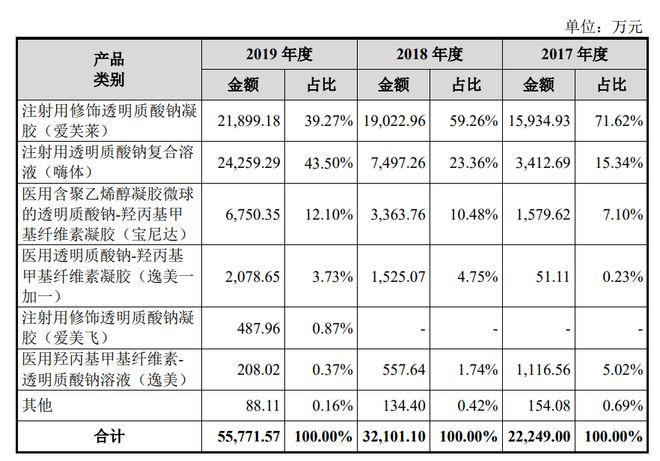
Core Viewpoint - Aimeike, once a leading player in the medical beauty industry, is facing significant challenges with declining performance and ongoing disputes over product agency rights, prompting a recent board reshuffle to address these issues [1][2][6]. Company Overview - Aimeike's actual controller, Jian Jun, was re-elected as chairman, while the management team remains stable, with Li Dongmei being promoted to a key role amid the company's current challenges [1][2]. - The company has seen a drastic decline in stock price and market capitalization, dropping from a peak of over 150 billion yuan to around 45 billion yuan [2][6]. Financial Performance - In the first half of 2025, Aimeike reported a revenue of 5.66 billion yuan and a net profit of 3.04 billion yuan, marking declines of 21.27% and 34.61% year-on-year, respectively [2][6]. - The company experienced its first negative growth in 2025, with revenue and net profit both declining over 20% [6][7]. Product Development and Market Position - Aimeike's growth has been closely tied to its innovative product development, with key products like "HiTi" and "Luhua Tianzi" driving significant revenue [3][5]. - The company has expanded its product matrix, with "HiTi" achieving a revenue share increase from 15.34% in 2017 to 43.5% in 2019 [4]. Competitive Landscape - The medical beauty industry is undergoing rapid changes, with increased competition leading to a dilution of Aimeike's product advantages, particularly for "HiTi" and "Luhua Tianzi" [7][8]. - New entrants in the market have intensified competition, with the number of approved "童颜针" products increasing to seven, further squeezing Aimeike's growth potential [8][9]. Strategic Initiatives - Aimeike is diversifying its product offerings, including the launch of new products like "Kela" and expanding into biopharmaceuticals and chemical drugs [9][10]. - The company has also pursued acquisitions, such as the purchase of a majority stake in REGEN, to enhance its product portfolio and market competitiveness [10][11]. Legal and Regulatory Challenges - Aimeike is embroiled in a significant dispute over the agency rights for its product "AestheFill," which could impact its market performance and brand partnerships [11][12]. - The ongoing arbitration with Jiangsu Wuzhong over the exclusive distribution rights of "AestheFill" highlights the complexities of brand ownership and distribution in the medical beauty sector [12][15].



研判2025!中国弹性蛋白行业结构分类,产业链及市场规模分析:皮肤弹性基石与抗衰新势力,行业成高潜力热点[图]
Chan Ye Xin Xi Wang· 2025-11-21 01:56
内容概况:弹性蛋白(Elastin)广泛存在于哺乳动物结缔组织,和胶原蛋白同为皮肤的重要组成部分, 胶原蛋白提供支撑作用,而弹性蛋白提供延展性与回弹性。2024年,中国弹性蛋白行业市场规模约为 6.27亿元,同比增长3.81%。其前体原弹性蛋白(tropoelastin)胞内合成后分泌到胞外,经酶催化交联 成为高度不溶的弹性蛋白网络,使弹性蛋白分子能够任意卷曲,具有高弹性。在应用领域,弹性蛋白通 常与胶原蛋白、透明质酸等成分复配作为护肤品成分以达到综合抗老化效果。其良好的生物相容性和弹 性能使其成为理想的生物医用材料,包括人工血管、创伤敷料、药物递送、伤口修复等多个方面。近年 来弹性蛋白主要用于补剂、化妆品、生物医药等领域,逐渐成为新的热点产品。 相关上市企业:丸美生物(603983) 二、行业产业链 相关企业:内蒙古伊利实业集团股份有限公司、山东得利斯食品股份有限公司、黑龙江宾西牛业有限公 司、温氏食品集团股份有限公司、牧原食品股份有限公司、新希望六和股份有限公司、北京大北农科技 集团股份有限公司、上海药明康德新药开发有限公司、深圳华大基因股份有限公司、苏州泓迅生物科技 股份有限公司、梅花生物科技集团股份有 ...


93家械企!COA2025大盘点,机器人、影像、材料都在进化
思宇MedTech· 2025-11-20 11:01
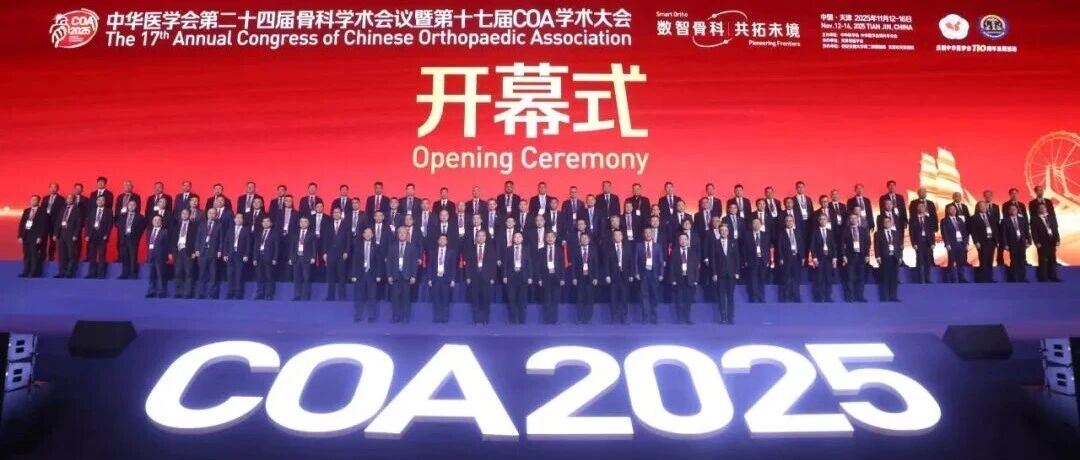
Core Insights - The 24th Chinese Orthopaedic Association (COA) conference showcased significant advancements in orthopedic technology, emphasizing the integration of robotics, navigation, imaging, and biomaterials under the theme "Digital Intelligence in Orthopedics" [2] - The conference attracted 20,188 registered participants and received 37,222 submissions, indicating a strong interest in orthopedic innovations [2] Group 1: Robotics and Navigation Systems - Surgical robots and navigation systems are expanding across various orthopedic fields, moving beyond joint surgeries to include spine, trauma, and sports medicine, focusing on precision and standardization [4] - Companies like Stryker, Tianzhihang, and others are presenting comprehensive orthopedic platforms that integrate imaging, navigation, and robotic arms, forming a closed-loop system for enhanced surgical outcomes [4] - The Trinity system by Tuo Dao Medical demonstrates a unified platform for rapid switching between surgical procedures, showcasing advancements in AI planning and real-time navigation [19] Group 2: Biomaterials and Bone Repair - The competition in bone repair and biomaterials is intensifying, with companies offering innovative solutions such as absorbable screws and 3D-printed bioceramics, focusing on osteogenic activity and infection resistance [4] - Smartbone and other manufacturers are introducing advanced materials that not only fill defects but also promote bone regeneration and integration [4] Group 3: Domestic Innovations - Domestic companies are accelerating the development of high-end joint prosthetics and key materials, with a focus on integrating materials, prosthetic design, and manufacturing processes [4] - The collaboration between local firms and international companies is shifting from product showcases to establishing standards and ecosystems, enhancing the overall orthopedic landscape [4] Group 4: Key Product Launches - Stryker highlighted its latest products, including the Mako robotic system, which integrates multiple surgical techniques for hip and knee replacements, enhancing precision and efficiency [5][7] - Rosenboht signed a strategic partnership with the Chinese University of Hong Kong to advance intelligent surgical technologies, aiming for more precise and minimally invasive orthopedic procedures [12][14] - The launch of the "Panshi Self-Pressing 3D Partition Bone Trabecular Biological Knee Prosthesis" by Jiashite Medical showcases advancements in mechanical stability and biological fixation [40][42] Group 5: Technological Integration - Companies are increasingly focusing on integrating AI and imaging technologies to enhance surgical precision and safety, as seen in the solutions presented by Meiya Optical and other firms [46][50] - The introduction of AR navigation systems by Linyan Medical represents a significant technological advancement, improving the visibility and accuracy of spinal surgeries [53][55] Group 6: Comprehensive Solutions - The conference highlighted the importance of comprehensive solutions that encompass preoperative planning, intraoperative guidance, and postoperative evaluation, as demonstrated by various exhibitors [4][60] - Companies like Weigao and others are showcasing integrated solutions that leverage digital technologies to enhance the entire orthopedic treatment process [100][102]


医疗美容板块11月20日跌2.32%,爱美客领跌,主力资金净流出1.04亿元
Zheng Xing Xing Ye Ri Bao· 2025-11-20 09:16
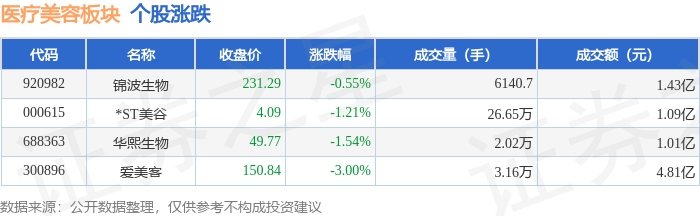
证券之星消息,11月20日医疗美容板块较上一交易日下跌2.32%,爱美客领跌。当日上证指数报收于 3931.05,下跌0.4%。深证成指报收于12980.82,下跌0.76%。医疗美容板块个股涨跌见下表: | 代码 | 名称 | 收盘价 | 涨跌幅 | 成交量(手) | 成交额(元) | | | --- | --- | --- | --- | --- | --- | --- | | 920982 | 锦波生物 | 231.29 | -0.55% | 6140.7 | | 1.43 Z | | 000615 | *ST美谷 | 4.09 | -1.21% | 26.65万 | | 1.09亿 | | 688363 | 华熙生物 | 49.77 | -1.54% | 2.02万 | | 1.01亿 | | 300896 | 爱美客 | 150.84 | -3.00% | 3.16万 | | 4.81亿 | 从资金流向上来看,当日医疗美容板块主力资金净流出1.04亿元,游资资金净流入1721.0万元,散户资金 净流入8685.88万元。医疗美容板块个股资金流向见下表: | 代码 | 名称 | 主力净流入 (元) | ...
华恒生物IPO:净利润连年走低毛利率已腰斩 供需格局反转产能过剩或仍将加剧
Xin Lang Zheng Quan· 2025-11-20 08:59
Core Viewpoint - Huaheng Biological has submitted a listing application to the Hong Kong Stock Exchange for an "A+H" dual listing, with Huatai International as the sole sponsor. The company specializes in the research, production, and sales of bio-based products, holding the largest global market share for L-alanine and L-valine as of 2024. However, it faces significant challenges including declining product prices, sharply reduced profit margins, and intensified industry competition [1][2]. Financial Performance - From 2022 to 2024, Huaheng Biological's revenue is projected to grow from 1.419 billion to 2.178 billion yuan, indicating a strong growth trend. However, net profit is expected to drop from 319 million yuan in 2022 to 185 million yuan in 2024, reflecting a year-on-year decline of 58.67%. In the first three quarters of 2025, revenue reached 2.194 billion yuan, a year-on-year increase of 42.53%, but net profit still fell by 5.1% to 159 million yuan [2][3]. - The company's gross margin has significantly decreased from 40.4% in 2023 to 24.8% in 2024, and further down to 23.5% in the first three quarters of 2025, nearly halving from its peak [2][3]. Product Pricing and Market Dynamics - The decline in profitability is attributed to a comprehensive drop in market prices across nearly all product lines. For instance, the average price of amino acid products has fallen from 18,900 yuan per ton in 2022 to 15,000 yuan per ton in the first half of 2025, a decrease of over 20%. Specifically, the price of L-alanine dropped from 35,000 yuan per ton at the beginning of 2025 to 20,000 yuan per ton by mid-year, a decline of approximately 42.86% [3][4]. Supply and Demand Changes - The market's supply-demand dynamics have shifted significantly, with many sub-markets transitioning from high growth to stagnation. For example, the compound annual growth rate for valine is expected to drop from 60.2% (2020-2024) to 8.6% (2024-2030) and further to 3.4% (2030-2035). The inositol market is projected to experience nearly stagnant growth during the same period [4][5]. - The oversupply situation is exacerbated by rapid capacity expansion driven by high previous profits, alongside a slowdown in downstream demand due to macroeconomic factors. This has led to increased price competition [4][5]. Industry Competition and Strategic Shifts - Other companies in the industry are also expanding capacity, with significant new production planned for L-valine by competitors such as Yipin Biological and Jinhai Biological, which will further intensify competition [5][6]. - In response to the fierce competition in its core business, Huaheng Biological is attempting to pivot towards high-value beauty and personal care ingredients. However, this transition faces challenges due to the importance of patent barriers, brand effects, and channel control, areas where the company currently lacks strength [6][7].

华熙生物回应旗下德玛润品牌关闭线上渠道
Xin Lang Cai Jing· 2025-11-20 03:37
Core Viewpoint - Huaxi Biological's Demarun brand has been reported to close its Tmall flagship store and other online channels, which is part of the company's strategy to focus on its core business and major brand layout to enhance overall operational efficiency and resource allocation [1] Group 1 - The adjustment of Demarun's online channels is aimed at improving operational efficiency and resource allocation [1] - Future planning for the Demarun brand will be coordinated based on market and business development conditions [1] - The company emphasizes that all business operations are normal and that brand strategy adjustments are aimed at long-term healthy development [1]

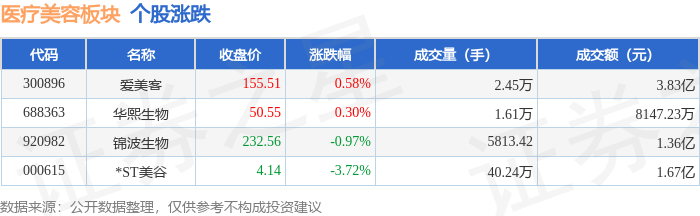
医疗美容板块11月19日涨0.23%,爱美客领涨,主力资金净流入194.42万元
Zheng Xing Xing Ye Ri Bao· 2025-11-19 08:58
Core Insights - The medical beauty sector experienced a slight increase of 0.23% on November 19, with Ai Meike leading the gains [1] - The Shanghai Composite Index closed at 3946.74, up 0.18%, while the Shenzhen Component Index closed at 13080.09, unchanged [1] Sector Performance - Ai Meike (300896) closed at 155.51, up 0.58% with a trading volume of 24,500 and a transaction value of 3.83 billion [1] - Huaxi Biological (688363) closed at 50.55, up 0.30% with a trading volume of 16,100 and a transaction value of 81.47 million [1] - Jinbo Biological (920982) closed at 232.56, down 0.97% with a trading volume of 5,813.42 and a transaction value of 136 million [1] - *ST Meigu (000615) closed at 4.14, down 3.72% with a trading volume of 402,400 and a transaction value of 1.671 billion [1] Capital Flow - The medical beauty sector saw a net inflow of 1.9441 million from institutional investors, while retail investors experienced a net outflow of 12.0117 million [1] - Detailed capital flow for individual stocks shows Ai Meike with a net inflow of 26.5772 million from institutional investors, while *ST Meigu had a significant net outflow of 24.8225 million [2]

华熙生物(688363):公司披露全新特定序列PDRN专利技术 Q3利润延续正增趋势
Xin Lang Cai Jing· 2025-11-19 08:34
Group 1 - The core viewpoint of the article is that Huaxi Biological has disclosed a new patent technology for specific sequence PDRN, which is a significant advancement in the field of synthetic biology [1] - The newly patented product features a specific sequence PDRN that is 100% similar to the human genome, ensuring stability and controllability in molecular weight and product quality [1] - This achievement marks a breakthrough over previous methods that relied on animal extraction and microbial fermentation, providing a more stable raw material source and significantly improved purity [1] Group 2 - In Q3 2025, the company continued to maintain profit growth, with a revenue of 3.163 billion, down 18.36%, and a net profit attributable to shareholders of 252 million, down 30.29% [2] - The Q3 revenue was 903 million, down 15.16%, but the net profit attributable to shareholders increased by 55.63% to 32 million, indicating a positive trend following a profitability turning point in Q2 [2] - The gross profit margin in Q3 was 69.91%, down 2.47 percentage points, while the sales expense ratio decreased to 34.26%, the lowest in five years, due to optimized brand communication and channel structure [2]
免费领取!《2025中国合成生物制造产业发展白皮书》
synbio新材料· 2025-11-19 07:03
Core Viewpoint - The article emphasizes the rising importance of biomanufacturing as a strategic and innovative field that disrupts traditional production methods, presenting it as a new growth point for optimizing industrial structure and transforming economic models. The release of the "2025 China Synthetic Biomanufacturing Industry Development White Paper" highlights the current state, trends, and challenges of the biomanufacturing industry in China [1]. Group 1: Current State and Trends - The white paper outlines the development status and trends of biomanufacturing, analyzing the global landscape and key platform facilities [5]. - It compares the biomanufacturing sectors of China and the United States, identifying competitive advantages and areas for improvement [5]. - Future development trends in biomanufacturing are discussed, indicating a shift towards more integrated and sustainable practices [5]. Group 2: Policy Landscape - The report details major policies affecting biomanufacturing in both domestic and international contexts, providing insights into regulatory frameworks that shape the industry [5]. - It highlights the importance of supportive policies for fostering innovation and growth in the biomanufacturing sector [5]. Group 3: Industry Map and Applications - The white paper presents a comprehensive map of the Chinese biomanufacturing industry, identifying key players and their roles [5]. - It analyzes the biomanufacturing industry chain and key application areas, including pharmaceuticals, food, personal care, agriculture, chemicals, materials, and energy [5]. Group 4: Key Enterprises and Investment Landscape - The report identifies ten leading enterprises in the Chinese biomanufacturing sector, showcasing their contributions and market positions [6]. - It summarizes the strategic directions of 15 listed companies in synthetic biology, highlighting their investment and development strategies [6]. - The investment landscape for synthetic biology in China is examined, providing data on funding trends and opportunities [6]. Group 5: Challenges and Recommendations - The white paper discusses the challenges faced by the biomanufacturing industry in China, including technological, regulatory, and market barriers [6]. - It offers targeted policy recommendations to address these challenges and promote sustainable growth in the biomanufacturing sector [6].
“颜”值经济新篇章:2025年中国美妆市场行业报告
Sou Hu Cai Jing· 2025-11-19 06:37
Core Viewpoint - The Chinese economy has shown resilient growth, with GDP reaching 101.5 trillion yuan and a year-on-year increase of 5.2%. The beauty industry, as a key component of the "aesthetic economy," is reshaping consumer patterns, reflecting a structural shift in consumption from material to emotional needs [1][8][18]. Group 1: Economic Context - The beauty industry is a significant driver of the "aesthetic economy," indicating a transition in consumer spending from material goods to experiences and emotional fulfillment [1][8]. - China's cosmetic retail sales have grown from 204.94 billion yuan in 2015 to an expected 435.65 billion yuan in 2024, with a compound annual growth rate of approximately 10.5% [1][18]. - The market has maintained a scale exceeding one trillion yuan for two consecutive years, solidifying its position as the largest cosmetic consumption market globally [1][42]. Group 2: Industry Development - The beauty industry has evolved through various phases, including market reactivation, foreign investment, and a channel revolution driven by e-commerce and content platforms [1][8]. - The "14th Five-Year Plan" has prioritized the cosmetics industry, with multiple regulatory and innovation support policies set to be implemented by 2025, promoting lifecycle management and core technology innovation [1][26]. Group 3: Consumer Trends - The retail performance of cosmetics has shown a mixed trend, with significant sales peaks during promotional events, but also a decline in consumer confidence reflected in a consumer confidence index of 87.9 in June [19][23]. - The market is experiencing a shift towards high-quality, cost-effective products, with consumers increasingly favoring products priced between 300 to 500 yuan [60][61]. Group 4: Regulatory Environment - The regulatory framework for the cosmetics industry is transitioning from traditional post-market oversight to a more comprehensive lifecycle management approach, enhancing safety and quality standards [26][30]. - New policies are being introduced to encourage innovation in raw materials and support the development of high-end domestic brands, reflecting a commitment to high-quality industry growth [29][30]. Group 5: Market Structure - The Chinese beauty market is characterized by a high entry and exit rate for brands, with a significant number of new entrants relying on marketing and social media for rapid growth [50][51]. - The market structure shows a concentration of companies in economically developed regions, particularly Guangdong, which houses the largest number of beauty enterprises [47][48].