华安证券

Search documents
证券板块11月27日涨0%,西部证券领涨,主力资金净流出3.58亿元
Zheng Xing Xing Ye Ri Bao· 2025-11-27 09:07
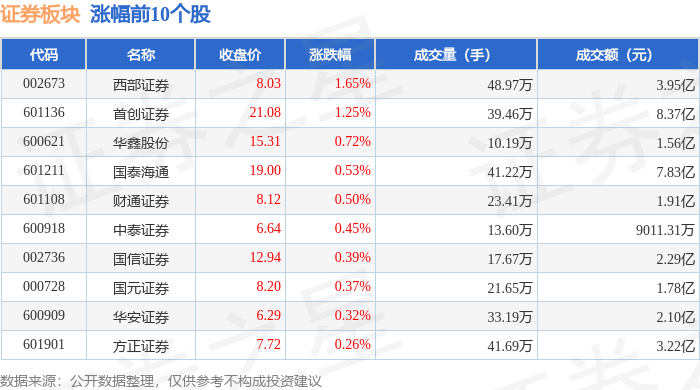
Market Overview - On November 27, the securities sector experienced a slight increase of 0.0%, with Western Securities leading the gains. The Shanghai Composite Index closed at 3875.26, up by 0.29%, while the Shenzhen Component Index closed at 12875.19, down by 0.25% [1]. Individual Stock Performance - Western Securities (002673) closed at 8.03, with a rise of 1.65% and a trading volume of 489,700 shares [1]. - First Capital Securities (601136) closed at 21.08, up by 1.25% with a trading volume of 394,600 shares [1]. - Huaxin Co. (600621) closed at 15.31, increasing by 0.72% with a trading volume of 101,900 shares [1]. - Other notable performers include: - Dream Travel (601211) at 19.00, up 0.53% [1] - Caitong Securities (601108) at 8.12, up 0.50% [1] - Zhongtai Securities (600918) at 6.64, up 0.45% [1]. Fund Flow Analysis - The securities sector saw a net outflow of 358 million yuan from institutional investors, while retail investors contributed a net inflow of 527 million yuan [2]. - Notable net inflows from retail investors were observed in: - CITIC Securities (600030) with a net inflow of 29.61 million yuan [3] - Western Securities (002673) with a net inflow of 17.21 million yuan [3]. - Conversely, significant net outflows were recorded for: - CITIC Securities (600030) with a net outflow of 60.64 million yuan from institutional investors [3] - Huaxin Co. (600909) with a net outflow of 6.32 million yuan from retail investors [3].




碳酸锂供需“新叙事”:真的能涨到15万元/吨吗?
Jing Ji Guan Cha Wang· 2025-11-27 07:45
Core Viewpoint - The demand for lithium, driven by the energy storage and power battery sectors, is expected to reach 2 million tons of lithium carbonate equivalent by 2026, with supply and demand reaching a balance [1]. Group 1: Market Dynamics - The price of lithium carbonate futures surged significantly, with the main contract LC2601 rising by 4.47% on November 25 and reaching a peak of 99,880 yuan/ton on November 26, marking a 19.26% increase in November [1][2]. - The lithium carbonate market has experienced an unexpected strong performance during the traditional off-season, attributed to improved expectations from leading companies, supportive policies, and structural changes in domestic and international trade [2][3]. Group 2: Demand Drivers - The demand for lithium carbonate is primarily driven by the power battery and energy storage sectors, with the latter showing unexpected growth due to several factors, including declining photovoltaic component prices and supportive government policies [6][7]. - The energy storage sector's performance has exceeded market expectations, with a significant increase in demand driven by the economic viability of storage projects and the low penetration rate of energy storage [7][8]. Group 3: Supply Constraints - The supply side is facing challenges, particularly in major lithium production areas like Jiangxi, where environmental regulations and unstable power supply have reduced operational rates [8][9]. - The overall inventory of lithium carbonate has decreased significantly, indicating a tightening supply situation, with registered warehouse receipts dropping from 42,400 contracts in early October to 27,100 contracts by November 26 [9][10]. Group 4: Price Projections - Market participants are speculating on potential price increases, with some forecasts suggesting that if demand growth exceeds 30%, prices could reach 150,000 to 200,000 yuan/ton [10][11]. - However, a balanced supply-demand scenario may lead to a slight oversupply by 2025, with prices likely stabilizing between 70,000 and 100,000 yuan/ton under normal conditions [11][12].


南方精工实控人方拟套现约2.4亿 本月刚完成1.4亿定增
Zhong Guo Jing Ji Wang· 2025-11-27 07:28
中国经济网北京11月27日讯南方精工(002553)(002553.SZ)昨日晚间披露《关于公司控股股东、实际 控制人的一致行动人减持公司股份的预披露公告》。 根据公告,浙江银万私募基金管理有限公司—银万全盈30号私募证券投资基金和史建仲计划自减持预披 露公告之日起15个交易日后的三个月内(2025年12月19日至2026年3月18日)以集中竞价及大宗交易方式 合计减持公司股份不超过8,957,230股,即不超过公司总股本的2.54%。 其中,浙江银万私募基金管理有限公司—银万全盈30号私募证券投资基金拟通过集中竞价或者大宗交易 的方式减持公司股份6,957,230股,为不超过总股本1.97%;史建仲通过集中竞价或者大宗交易拟减持公 司股份总数量不超过2,000,000股,为不超过总股本0.57%。 按上一交易日公司收盘价27.18元计算,上述股东拟减持套现合计约243,457,511.4元。 2025年三季度报告显示,公司控股股东、实际控制人为史建伟、史娟华与史维,史建伟为公司董事长, 史娟华系史建伟的妻子,史维系史建伟的女儿。史建仲为史建伟的弟弟。 2021年12月30日,浙江银万私募基金管理有限公司-银 ...

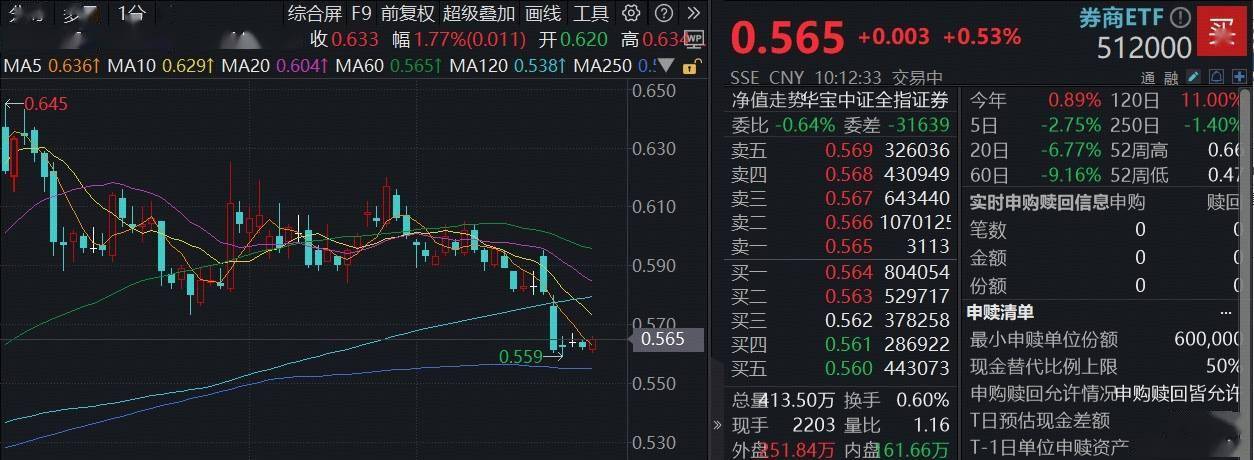
ETF盘中资讯|券商滞涨逻辑深化,顶流券商ETF(512000)近5日吸金超7亿元,领跑同类!机构:券商当前具备较高的配置吸引力
Sou Hu Cai Jing· 2025-11-27 02:39
Core Viewpoint - The brokerage sector is showing signs of recovery, with significant inflows into brokerage ETFs, indicating strong demand for a rebound in this sector [3][6]. Group 1: Market Performance - On November 27, the overall market showed positive movement, with the brokerage sector experiencing fluctuations but closing in the green, particularly the brokerage ETF (512000) which rose by 0.53% [1]. - Year-to-date, the CSI All Share Securities Company Index has seen a decline of 0.32%, ranking 29th out of 32 in comparison to other industries, indicating a lag behind the broader market indices which have increased by 15.46%, 22.69%, and 39.19% respectively [3]. Group 2: Investment Opportunities - The brokerage sector is characterized as a "bull market amplifier," with high beta elasticity, suggesting that it typically outperforms during market upswings [3]. - Citic Securities highlights that brokerages not only benefit from market recovery but also possess unique alpha growth potential due to successful transformations and improved profit quality [3]. - There has been a significant inflow of capital into brokerage ETFs, with the brokerage ETF (512000) seeing a net inflow of 744 million yuan over the past five days, the highest among 14 brokerage ETFs [3]. Group 3: Fund Performance - The brokerage ETF (512000) and its linked funds are designed to passively track the CSI All Share Securities Company Index, encompassing 49 listed brokerage stocks, making it an efficient investment tool for both large and small brokerages [5]. - As of November 6, the brokerage ETF (512000) reached a historical fund size of over 40 billion yuan, with an average daily trading volume exceeding 1 billion yuan, positioning it as a leading ETF in terms of scale and liquidity in the A-share market [6].
弘业期货外盘价格下调,到船预期减量
Hong Ye Qi Huo· 2025-11-26 10:09
Report Industry Investment Rating - Not mentioned in the report Core Viewpoints - The log spot price is running weakly, and the prices of multiple specifications of logs in major ports have generally been lowered by 10 - 30 yuan/cubic meter. The futures price has also declined, and the market is expected to oscillate at a low level in the medium and long term. The supply side has high inventory and high arrival volume, which puts pressure on prices, but the arrival volume has decreased recently, and the supply - side pressure has been improved. The demand side is weak, and the downstream actual demand is less than expected, and the real estate industry has not shown substantial benefits [2][3][5] Summary by Directory 1. Log Industry Data - Spot and Futures - On the spot side, the prices of medium - A radiata pine logs in Rizhao Port and Taicang Port have declined compared with the previous period. The freight rate of imported coniferous log bulk carriers (New Zealand to China) in late November 2025 was flat compared with the beginning of November. As of November 24, the FOB price range of New Zealand 4 - meter medium - A radiata pine was 112 - 119 US dollars/JAS cubic meter. On the futures side, as of November 25, the log main contract 2601 closed at 764.5 yuan/cubic meter and continued to decline [2] 2. Log Industry Data - Supply - From November 15 - 21, 2025, the total departure and shipment of logs from New Zealand ports were 14 ships with 510,000 cubic meters, a week - on - week increase of 7 ships and 220,000 cubic meters. Among them, 9 ships with 320,000 cubic meters were directly sent to China, a week - on - week increase of 3 ships and 80,000 cubic meters. The arrival volume has decreased since this week, and the seasonal decline in New Zealand's shipments has occurred in the long term. From November 24 - 30, 2025, the expected arrival of New Zealand logs at 13 ports in China is 6 ships, a week - on - week decrease of 7 ships (54%); the total arrival volume is about 217,000 cubic meters, a week - on - week decrease of 201,000 cubic meters (48%). In October 2025, China's total import volume of coniferous logs was about 1.9078 million cubic meters, a month - on - month decrease of 4.67% and a year - on - year decrease of 7.14%. From January to October 2025, the total import volume of coniferous logs was about 19.9238 million cubic meters, a year - on - year decrease of 8.04% [2] 3. Log Industry Data - Inventory - As of November 21, the total inventory of domestic coniferous logs was 20,000 cubic meters, an increase of 20,000 cubic meters compared with last week; the radiata pine inventory was 2.51 million cubic meters, an increase of 80,000 cubic meters; the North American timber inventory was 80,000 cubic meters, a decrease of 10,000 cubic meters; the spruce/fir inventory was 210,000 cubic meters, the same as last week. The high arrival volume has continuously pressured the port log inventory and spot prices. Although the inventory is high, the decrease in arrival volume in mid - November has created initial conditions for inventory reduction. The pattern of strong supply and weak demand continues, and high inventory suppresses prices [3] 4. Log Industry Data - Demand - From November 17 - 23, the average daily outbound volume of coniferous logs at 13 ports in 7 provinces in China was 64,400 cubic meters, a decrease of 1.83% compared with last week. Among them, the average daily outbound volume of coniferous logs at Shandong ports was 35,900 cubic meters, a decrease of 2.18% compared with last week; the average daily outbound volume of coniferous logs at Jiangsu ports was 23,600 cubic meters, a decrease of 3.28% compared with last week. The continuous high arrival pressure and the suppression of downstream demand by seasonal factors have increased the sales pressure of traders, and they have generally reduced prices for promotion [3] 5. Log Industry Data - Recent News and Outlook (Tariffs and Imports/Exports) - China's imported radiata pine shows obvious resource concentration, and the proportion from New Zealand has further increased. The anti - involution policy has had a certain indirect boost. The Sino - US Geneva Joint Statement in May will be beneficial to wood product exports, and the suspension of 24% reciprocal tariffs and counter - tariffs for 90 days in July has been extended. The EU will impose higher anti - dumping duties on Chinese hardwood plywood, and Mexico has made an affirmative preliminary anti - dumping ruling on Chinese cardboard. The General Administration of Customs has decided to abolish the notice on suspending the import of US logs. The freight cost in Russia has increased by up to 50%, and the wood price has increased by 11% - 14% [4] 6. Log Industry Data - Recent News and Outlook (Trading and Delivery) - Since its listing for one year, the trading and holding volume of log futures and options has steadily increased. The total trading volume of the two is about 7.87 million lots, with a trading amount of about 464 billion yuan, an average daily trading volume of about 32,400 lots, and an average daily holding volume of about 53,400 lots. The LG2507 and LG2509 contracts have completed a total of 1,412 lots of delivery, equivalent to about 127,100 cubic meters of log spot, with a total cargo value of about 104 million yuan [5] 7. Log Industry Data - Recent News and Outlook (Downstream and Building Materials/Real Estate) - In September 2025, the sales volume of large - scale building materials and home furnishing stores nationwide was 130.838 billion yuan, a month - on - month increase of 23.84% and a year - on - year decrease of 8.02%. As of November 4, the capital availability rate of sample construction sites was 59.82%, a week - on - week increase of 0.12 percentage points. The real estate data shows a downward trend, and the log demand side is still weak [5] 8. Strategy and Suggestions - The 2509 contract declined continuously in the off - season of the second quarter and rose significantly from July to August. The 2511 contract rose first and then fell rapidly before the delivery month. The 2601 contract first oscillated strongly and then declined rapidly and oscillated at a low level. The downstream actual demand is less than expected, and there is no substantial benefit from tariffs and real estate. The near - month contract maintains a low level after entering the delivery month, and the far - month contract may enter the delivery with a discount structure again. The high arrival pressure of logs has been realized, and the supply - side pressure of the current fundamentals has been improved [6]
最低仅获配39股!摩尔线程网下初配结果出炉
Sou Hu Cai Jing· 2025-11-26 04:42
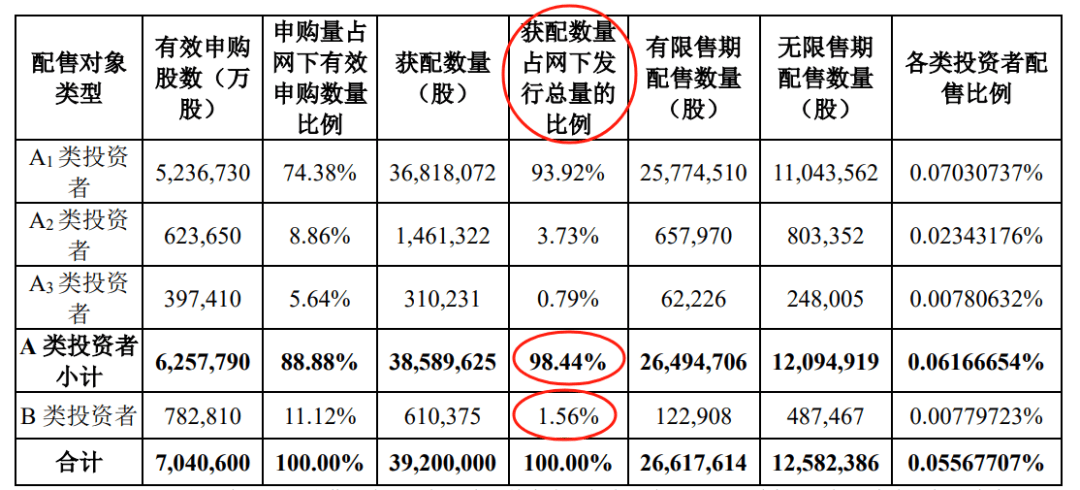
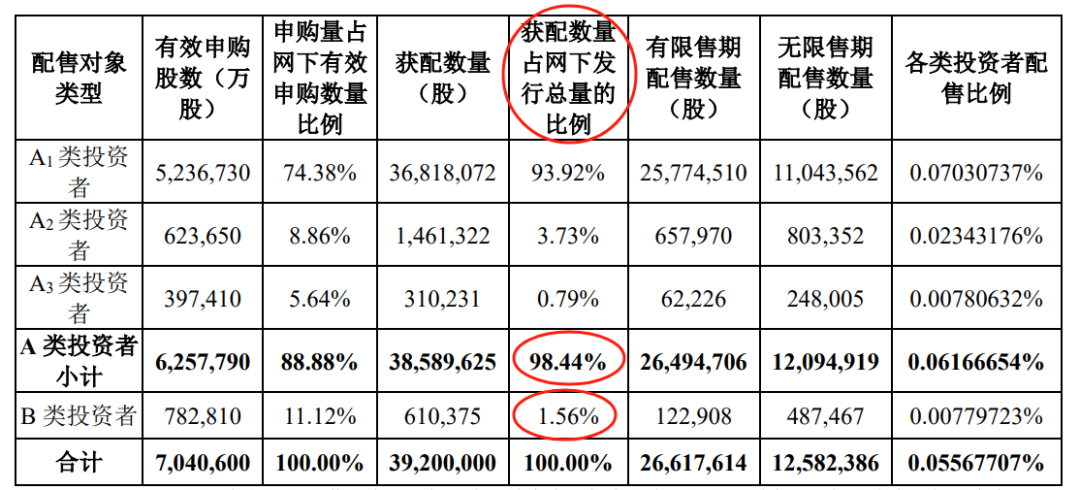
Core Viewpoint - The allocation results of offline subscription for Moer Thread indicate a significant shift in the distribution of shares, with A-class investors receiving 98.44% of the allocation and B-class investors only 1.56%, reflecting changes in the issuance and underwriting system for the Sci-Tech Innovation Board [1][3][9] Group 1: Allocation Results - A-class investors, which include public funds, social security funds, pension funds, and qualified foreign investors, received 98.44% of the shares allocated, while B-class investors received only 1.56% [1][3] - The specific allocation numbers show that some B-class investors received as few as 39 shares, highlighting the disparity in allocation [1] - Previous new stocks on the Sci-Tech Innovation Board also exhibited similar trends, with B-class investors typically receiving less than 5% of the allocation [4][5] Group 2: Subscription Rules - The reduction in B-class investor allocation is attributed to adjustments in the offline subscription rules, which now implement a new subscription method called "agreed lock-up" [7] - Under the agreed lock-up method, different lock-up periods and ratios are set for various investor classes, with A-class investors having the option to choose higher lock-up tiers [7][8] - For instance, the lock-up tiers for Moer Thread were set at three levels, with the first tier requiring a 9-month lock-up and a 70% lock-up ratio, while B-class investors could only subscribe at the lowest tier [7] Group 3: Impact on Investment Returns - The disparity in allocation ratios has led to a significant decrease in the share of B-class investors, which may affect their potential returns from new stock subscriptions [9] - Research indicates that the average return contribution from new stocks for A-class investors is significantly higher than for B-class investors, with A1-class investors potentially seeing returns of 0.116% compared to 0.014% for B-class investors [12] - The adjustments in the subscription rules aim to favor long-term investors, thereby increasing the allocation for those with a commitment to holding shares [11]
最低仅获配39股!摩尔线程网下初配结果出炉
证券时报· 2025-11-26 04:24
Core Viewpoint - The offline subscription for new shares is undergoing a significant change, with a marked reduction in the allocation for B-class investors compared to A-class investors, primarily due to the new subscription rules implemented for the Sci-Tech Innovation Board [2][8]. Summary by Sections Allocation Results - On November 25, the preliminary allocation results for Moer Thread showed that A-class investors received 98.44% of the shares, while B-class investors received only 1.56%. Some B-class investors received as few as 39 shares [2][4]. Investor Categories - A-class investors include public funds, social security funds, pension funds, bank wealth management products, insurance funds, and qualified foreign investors. B-class investors consist of private equity, securities asset management, and proprietary trading [2]. Subscription Rules - The new subscription rules for the Sci-Tech Innovation Board involve a "contractual lock-up" method, where different lock-up periods and ratios are set for various investor categories. A-class investors can choose from multiple lock-up tiers, while B-class investors are limited to the lowest tier [8][9]. Allocation Disparity - The allocation ratio for A-class investors is designed to be at least nine times that of B-class investors. For instance, the allocation ratio for A1-class investors was 0.07%, while for B-class investors, it was 0.0078%, indicating a significant disparity [9][10]. Historical Context - In previous subscriptions for Sci-Tech Innovation Board stocks, the allocation ratios between A and B-class investors were relatively close. However, recent changes have led to a substantial tilt towards A-class investors, with B-class allocations dropping below 5% in many cases [10][11]. Impact on Returns - The new rules are expected to affect the potential returns for B-class investors. For example, under the new allocation method, the average return contribution for A1-class investors is estimated at 0.116%, while B-class investors see a contribution of only 0.014% [12].

最低仅获配39股!摩尔线程打新出炉 B类投资者几乎被“忽视”
Zheng Quan Shi Bao Wang· 2025-11-25 23:59
Core Viewpoint - The offline subscription for new shares in the Sci-Tech Innovation Board is experiencing a significant shift, with A-class investors receiving a dominant share of allocations compared to B-class investors due to new subscription rules [1][5][6]. Group 1: Allocation Results - A-class investors received 98.44% of the allocation, while B-class investors only received 1.56% in the recent subscription by Moer Thread [2][3]. - The allocation for B-class investors was notably low, with some receiving as few as 39 shares [1]. - Previous new shares in the Sci-Tech Innovation Board also showed a similar trend, with B-class allocations generally below 5% [3][4]. Group 2: Subscription Rules - The new subscription rules implemented for the Sci-Tech Innovation Board involve a "contractual lock-up" method, which sets different lock-up periods and ratios for A-class and B-class investors [5][6]. - A-class investors can choose from multiple lock-up tiers, while B-class investors are restricted to the lowest tier [5]. - The allocation ratios are designed to favor A-class investors significantly, with A1-class investors' allocation being at least nine times that of B-class investors [6]. Group 3: Impact on Investment Returns - The new rules are expected to impact the potential returns for B-class investors, as the disparity in allocation ratios may reduce their profitability from new share subscriptions [6][7]. - Research indicates that under the new allocation method, A1-class investors could see a return contribution of approximately 0.116% per new share, while B-class investors might only see a return contribution of 0.014% [8].
最低仅获配39股!摩尔线程打新出炉,B类投资者几乎被“忽视”
券商中国· 2025-11-25 23:22
Core Viewpoint - The offline subscription for new shares in the Sci-Tech Innovation Board is experiencing a significant shift, with A-class investors receiving a dominant allocation compared to B-class investors due to new subscription rules [1][5][9]. Group 1: Allocation Results - A-class investors received 98.44% of the allocation, while B-class investors only received 1.56% in the recent subscription by Moer Thread [2][3]. - The allocation for A-class investors in other recent Sci-Tech Innovation Board subscriptions also showed a similar trend, with A-class allocations ranging from 94.66% to 97.48% [3][4]. Group 2: Subscription Rules - The reduction in B-class investor allocations is attributed to the adjustment of offline subscription rules, which now implement a "contractual lock-up" method [5][6]. - The new rules allow A-class investors to choose from different lock-up periods and ratios, significantly favoring them over B-class investors [6][9]. Group 3: Impact on Investors - The disparity in allocation ratios has raised concerns about the potential impact on the returns for B-class investors, such as private equity firms [8]. - Research indicates that under the new subscription rules, the average return contribution for A-class investors is significantly higher than that for B-class investors, with A1 class potentially contributing 0.116% compared to B-class's 0.014% [9].

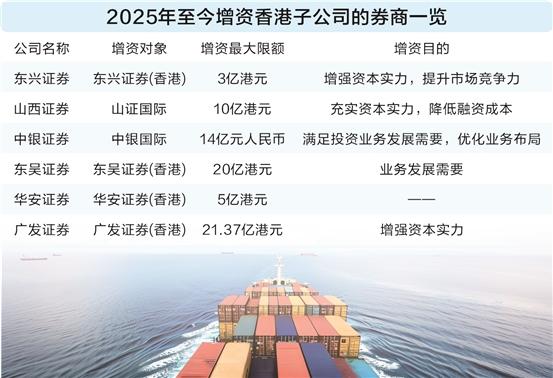
中资券商频频“输血”海外子公司 专家建议三管齐下夯实国际化根基
Zheng Quan Shi Bao· 2025-11-25 18:32
Core Viewpoint - The announcement by Huatai Securities highlights the increasing trend of Chinese securities firms providing capital support to their overseas subsidiaries, driven by the demand for cross-border investment banking and wealth management services [2][4][8] Group 1: Capital Support Trends - Huatai International Finance Co., a wholly-owned subsidiary, issued a total of $230 million in medium-term notes, backed by Huatai International [2] - Chinese securities firms have significantly increased their capital support for overseas subsidiaries this year, utilizing methods such as capital increases and guarantees for bond financing and bank loans [2][4] - Notable firms like Dongxing Securities, Shanxi Securities, and others have announced capital increases for their Hong Kong subsidiaries, with amounts reaching up to 2.137 billion HKD [4][5] Group 2: Business Expansion Drivers - The demand for capital is primarily driven by the expansion of cross-border businesses and high capital-consuming operations, particularly in the OTC derivatives sector [7][8] - OTC derivatives are highlighted as a key profit source for international investment banks, necessitating sufficient capital to cover risk exposures [7] - The increasing demand for cross-border asset management and the trend of Chinese companies listing in Hong Kong are contributing to the growth of investment opportunities for Chinese securities firms [8] Group 3: Challenges in Capital Supplementation - Despite the push for capital supplementation, challenges remain, including restrictions on cross-border capital injection and difficulties in overseas financing [9][10] - The current foreign exchange management system presents obstacles for Chinese securities firms in conducting cross-border transactions, leading to liquidity risks [10] - Experts suggest a multi-faceted approach involving regulatory policy optimization, group coordination, and subsidiary transformation to address these challenges [10][11]