
宝钢股份

Search documents
“航贸链”加快覆盖上海辐射长三角
Jie Fang Ri Bao· 2025-12-25 09:22
Core Viewpoint - The "Shipping Trade Blockchain Network" (航贸链) is being developed to enhance the efficiency and transparency of bulk commodity trade in the Yangtze River Delta, aiming for a trade scale exceeding 10 trillion yuan annually [1][2]. Group 1: Industry Overview - The Yangtze River Delta accounts for over one-third of China's import and export trade, with key commodities like crude oil, iron ore, and non-ferrous metals playing a crucial role in national resource security and supply chain stability [1]. - Traditional bulk commodity trade faces challenges such as lack of transparency in physical information, difficulties in verifying paper documents, and isolated data systems, which hinder efficiency and scale [2]. Group 2: Technological Advancements - The introduction of blockchain technology is transforming the industry by enabling traceable data and multi-party business collaboration, shifting from reliance on enterprise credit to "physical credit" based on the status and ownership of goods [2]. - The "Shipping Trade Blockchain Network" supports Shanghai's digital reform in bulk commodity trade, with significant progress in areas such as warehouse receipt registration, trading, financing, and invoicing, involving multiple stakeholders including storage institutions, registration platforms, exchanges, banks, and tax authorities [2].
访沙特阿美执行副总裁阿什拉夫·加扎维
Xin Hua Wang· 2025-12-25 08:51
"中国是重要的长期战略合作伙伴" ——访沙特阿美执行副总裁阿什拉夫·加扎维 加扎维指出,亚洲市场对沙特阿美长期战略和规划至关重要,公司在亚洲的投资与合作涵盖传统能源、下游业务、技术创新及低碳解决方案 等领域。未来,沙特阿美将继续寻找合作机会,为公司及其亚洲合作伙伴创造更多价值。(罗晨 王海洲) 责任编辑:闫弘旭 沙特阿拉伯国家石油公司(沙特阿美公司)战略与企业发展执行副总裁阿什拉夫·加扎维近日接受新华社记者专访时表示,中国是沙特阿美极 其重要的市场和长期战略合作伙伴,公司对中国经济发展前景持积极乐观态度。 12月17日,在沙特阿拉伯宰赫兰,沙特阿拉伯国家石油公司(沙特阿美公司)战略与企业发展执行副总 裁阿什拉夫·加扎维接受新华社记者采访并留影。新华社记者王海洲摄 沙特阿美和中国伙伴的合作已超过30年。加扎维说,中国对沙特阿美而言不仅是重要的原油出口市场,更是在多层面的关键合作伙伴,"我们 在沙特境外的液体转化学品业务的大部分投资都是与中国的合作伙伴共同推进的"。 他说,公司与中国的合作已延伸至制造业、供应链、科技创新和风险投资等多个领域。"我们正与中国宝山钢铁股份有限公司合作,推动钢板 在沙特的本地化制造。同 ...

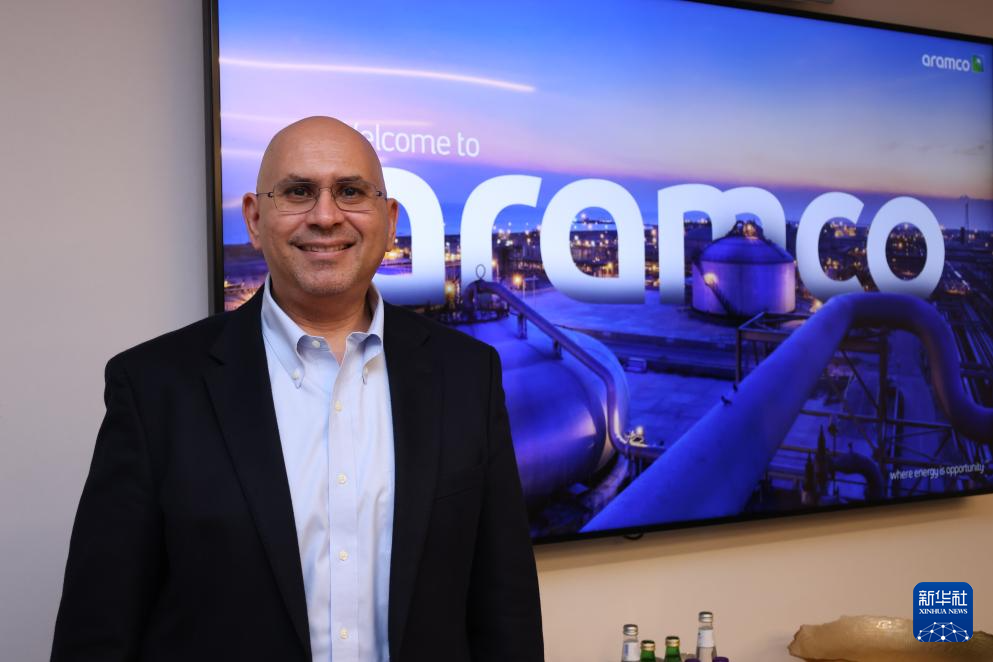
沙特阿美执行副总裁阿什拉夫·加扎维:“中国是重要的长期战略合作伙伴”
Xin Hua She· 2025-12-25 05:32
原标题:专访|"中国是重要的长期战略合作伙伴"——访沙特阿美执行副总裁阿什拉夫·加扎维 新华财经利雅得12月25日电(记者罗晨王海洲) 沙特阿拉伯国家石油公司(沙特阿美公司)战略与企 业发展执行副总裁阿什拉夫·加扎维近日接受新华社记者专访时表示,中国是沙特阿美极其重要的市场 和长期战略合作伙伴,公司对中国经济发展前景持积极乐观态度。 沙特阿美和中国伙伴的合作已超过30年。加扎维说,中国对沙特阿美而言不仅是重要的原油出口市场, 更是在多层面的关键合作伙伴,"我们在沙特境外的液体转化学品业务的大部分投资都是与中国的合作 伙伴共同推进的"。 加扎维指出,亚洲市场对沙特阿美长期战略和规划至关重要,公司在亚洲的投资与合作涵盖传统能源、 下游业务、技术创新及低碳解决方案等领域。未来,沙特阿美将继续寻找合作机会,为公司及其亚洲合 作伙伴创造更多价值。 他说,公司与中国的合作已延伸至制造业、供应链、科技创新和风险投资等多个领域。"我们正与中国 宝山钢铁股份有限公司合作,推动钢板在沙特的本地化制造。同时,中国合作伙伴在公司全球供应链采 购中占据重要比重。" (文章来源:新华社) 加扎维介绍,沙特阿美在中国设有两个海外研发团队, ...
钢铁行业 2026 年度投资策略:中流击水,奋楫者进
Changjiang Securities· 2025-12-25 05:13
Core Insights - The steel industry is expected to recover in 2025 after three years of decline, driven by improvements in cost and supply sides [4][7][16] - The majority of profits in the black industrial chain are captured by iron ore, with profit shares of 72% for iron ore, 6% for coking coal, and 22% for steel [4][7] - The West Manganese project is seen as a potential solution to redirect profits back to the domestic steel industry [4][7] Profitability - In Q4 2025, prices for rebar, hot-rolled, iron ore, and coking coal decreased by 7.1%, 6.0%, 1.0%, and 12.5% year-on-year, respectively, with coking coal showing a significant price drop [7][18] - The decline in coking coal prices has alleviated cost pressures for steel companies, leading to a rebound in profitability [18][21] - The overall profit for the steel industry is expected to improve as demand stabilizes and costs decrease [7][21] Supply - The actual crude steel production in 2025 is expected to remain flat year-on-year, despite improved profitability encouraging production [20][21] - The supply side has not yet contracted as expected, with administrative production limits still pending implementation [16][20] - The discrepancy in production statistics indicates that crude steel output may be underestimated due to reporting practices [21][23] Demand - Steel inventory has been successfully reduced to low levels, indicating a stabilization in apparent consumption [26][27] - The demand structure shows a decline in rebar consumption by 5.4%, while hot-rolled and cold-rolled products saw increases of 1.2% and 1.5%, respectively [30][31] - Strong external demand, particularly in machinery and equipment exports, is expected to support steel demand [31][40] Outlook for 2026 - Steel demand is anticipated to remain stable, supported by infrastructure and manufacturing investments as outlined in the 14th Five-Year Plan [42][46] - The decline in new housing starts is expected to moderate, reducing the negative impact on steel demand from the real estate sector [46][48] - Global monetary and fiscal policies are expected to become more accommodative, further supporting steel demand through improved economic conditions [48][49] Policy and Regulation - The introduction of export license management for certain steel products aims to curb low-end exports and improve market stability [51][52] - The focus on "graded management" policies is expected to lead to a reduction in outdated production capacity, benefiting compliant and high-quality steel producers [52]


专访丨“中国是重要的长期战略合作伙伴”——访沙特阿美执行副总裁阿什拉夫·加扎维
Xin Hua Wang· 2025-12-25 02:33
新华社利雅得12月25日电 专访|"中国是重要的长期战略合作伙伴"——访沙特阿美执行副总裁阿 什拉夫·加扎维 加扎维介绍,沙特阿美在中国设有两个海外研发团队,公司在亚洲规模最大的风险投资团队也在中 国。 新华社记者罗晨 王海洲 沙特阿拉伯国家石油公司(沙特阿美公司)战略与企业发展执行副总裁阿什拉夫·加扎维近日接受 新华社记者专访时表示,中国是沙特阿美极其重要的市场和长期战略合作伙伴,公司对中国经济发展前 景持积极乐观态度。 沙特阿美和中国伙伴的合作已超过30年。加扎维说,中国对沙特阿美而言不仅是重要的原油出口市 场,更是在多层面的关键合作伙伴,"我们在沙特境外的液体转化学品业务的大部分投资都是与中国的 合作伙伴共同推进的"。 他说,公司与中国的合作已延伸至制造业、供应链、科技创新和风险投资等多个领域。"我们正与 中国宝山钢铁股份有限公司合作,推动钢板在沙特的本地化制造。同时,中国合作伙伴在公司全球供应 链采购中占据重要比重。" 他说,人工智能如今已广泛应用于沙特阿美的核心业务,公司正积极开展人工智能领域国际合作, 期待与中国等技术领先国家共同开发人工智能领域的前沿技术。 加扎维指出,亚洲市场对沙特阿美长期战略 ...
“航贸链”加快覆盖上海辐射长三角 大宗商品可信数据流通体系助力区域贸易 向年规模超10万亿元目标迈进
Jie Fang Ri Bao· 2025-12-25 01:36
Core Viewpoint - The introduction of blockchain technology is fundamentally transforming the bulk commodity trade in the Yangtze River Delta, enhancing efficiency and transparency in operations [1][2]. Group 1: Industry Overview - A group of large oil tankers is efficiently transferring oil products at Ningbo, Zhejiang, utilizing dedicated pipelines and advanced blockchain technology for order verification and registration [1]. - The Yangtze River Delta accounts for over one-third of China's total import and export trade, with key commodities like crude oil, iron ore, and non-ferrous metals playing a crucial role in national resource security and supply chain stability [1]. Group 2: Technological Impact - Blockchain technology is shifting the commodity trade from reliance on corporate credit to "physical credit" based on the status and ownership of goods, enabling full traceability and multi-party collaboration [2]. - The "航贸链" (Shipping Trade Chain) is facilitating the digital transformation of bulk commodity trade in Shanghai, with various stakeholders including storage institutions, registration platforms, exchanges, banks, and tax authorities achieving trusted collaboration [2].

为中国式现代化建设贡献更大力量——习近平总书记重要指示激励中央企业砥砺前行、奋发有为
Ren Min Ri Bao· 2025-12-25 00:41
Group 1 - General Secretary Xi Jinping emphasized the importance of central enterprises in serving the Party and the country's work, promoting high-quality economic and social development, and contributing to the modernization of China [1][2] - Central enterprises are encouraged to focus on their main responsibilities and continuously optimize the layout of state-owned economy to enhance core functions and competitiveness [2][3] - The State-owned Assets Supervision and Administration Commission (SASAC) plans to implement the "14th Five-Year Plan" for central enterprises, aiming for a comprehensive optimization of the state-owned economy [2] Group 2 - Companies like China Southern Power Grid and China Huaneng Group are committed to fulfilling their economic, political, and social responsibilities while ensuring energy supply and supporting national energy security [2][3] - China Railway Engineering Corporation is focused on integrating into national strategies and promoting the transformation and upgrading of the construction industry [3] - The aviation and energy sectors, represented by China Aviation Industry Corporation and China Dongfang Electric Corporation, are prioritizing technological innovation and deep integration of technology and industry [4] Group 3 - The need for further reform and improvement of the modern enterprise system with Chinese characteristics is highlighted, aiming to build world-class enterprises [6][7] - China Energy Construction Group is focusing on reform to stimulate corporate vitality and enhance operational efficiency [6] - China Changan Automobile Group is committed to transforming into a smart low-carbon travel technology company, aiming for global competitiveness [7]


为中国式现代化建设贡献更大力量
Ren Min Ri Bao· 2025-12-24 22:32
Group 1 - General Secretary Xi Jinping emphasized the importance of central enterprises in serving the Party and the country's work, contributing to high-quality economic and social development, and fulfilling social responsibilities for the modernization of China [1] - Central enterprises are urged to focus on their main responsibilities and continuously optimize the layout of state-owned economy to enhance core functions and competitiveness [2] - China Southern Power Grid is committed to fulfilling economic, political, and social responsibilities while ensuring electricity supply for over 270 million people [2] - China Huaneng Group aims to maintain energy security and innovate in energy technology to better support the modernization process [2] - China Railway Engineering Group is focused on integrating into national strategies and promoting the transformation and upgrading of the construction industry [3] Group 2 - Xi Jinping called for strengthening key core technology research and promoting deep integration of technological and industrial innovation [4] - China Aviation Industry Corporation is focusing on independent innovation and advanced manufacturing to enhance capabilities and stabilize growth [4] - China Baowu Steel Group has achieved significant milestones in low-carbon products and aims to strengthen its steel business while integrating technology and industry [4] Group 3 - Xi Jinping highlighted the need for further reform to establish a modern enterprise system and improve corporate governance structures to build world-class enterprises [5] - China Energy Construction Group is committed to deepening reforms to enhance corporate vitality and improve management efficiency [6] - China CRRC Corporation is accelerating the application of new high-speed train technologies to enhance its global competitiveness [6] - China Changan Automobile is focused on transforming into a smart low-carbon mobility technology company while adhering to the Party's directives [6] Group 4 - The China Enterprise Confederation is working to optimize evaluation indicators and expand the range of evaluated enterprises to support central enterprises in building world-class status [7]


百万吨级!我国首条,全线贯通
中国能源报· 2025-12-24 12:04
Core Viewpoint - The establishment of China's first million-ton near-zero carbon steel production line in Zhanjiang marks a significant breakthrough in the green and low-carbon development of the steel industry [1][3]. Group 1: Technological Advancements - The production line utilizes advanced hydrogen metallurgy and electric smelting technology, replacing traditional coke with hydrogen, which significantly reduces carbon emissions [3]. - The core hydrogen-based vertical furnace achieves a metalization rate that meets expected targets, while efficient green electric furnace facilities enhance energy utilization [3]. Group 2: Environmental Impact - Compared to traditional processes, this production line can reduce carbon emissions by 50% to 80% [3]. - The million-ton near-zero carbon steel production line is expected to reduce carbon emissions by over 314,000 tons annually, equivalent to creating 2,000 square kilometers of forest [5]. Group 3: Industry Implications - This hydrogen-based steelmaking technology disrupts the traditional high-energy consumption and high-pollution smelting processes, making steel production increasingly green and low-carbon [3]. - The project serves as a demonstration for low-carbon transformation in steel enterprises and contributes to the high-quality development of the steel industry [5].
从困境到破局:中国钢铁行业如何争夺铁矿石定价权?
Lian He Zi Xin· 2025-12-24 11:33
Investment Rating - The report does not explicitly provide an investment rating for the steel industry, but it discusses the challenges and strategies for improving pricing power in the iron ore market, indicating a focus on long-term strategic improvements rather than immediate investment recommendations [2]. Core Insights - China, as the world's largest steel producer, faces significant challenges in iron ore pricing power due to high dependence on foreign resources, lack of pricing authority, and profit margins being squeezed by mining giants. The country is pursuing a multi-faceted strategy to reclaim pricing power through national consolidation, diversified supply chains, and a new pricing mechanism based on the Renminbi and Chinese indices [2][4][29]. Summary by Sections 1. The Triple Constraints of Iron Ore Pricing Power - China's crude steel production is projected to reach approximately 1.005 billion tons in 2024, accounting for 53% of global output, yet the industry is constrained by high foreign dependence, lack of pricing power, and squeezed profits [4]. - The domestic iron ore resources are insufficient, with an average grade of only 34.5%, significantly lower than the global average of 44%, leading to high extraction costs ranging from 300 to 900 RMB per ton compared to 15 to 25 USD per ton for major Australian miners [5][6]. 2. Structural Constraints: "Oligopoly Sellers" vs. "Dispersed Buyers" - The global iron ore supply is dominated by a few major companies, while China's demand is fragmented among many smaller firms, resulting in a lack of bargaining power for Chinese steel producers [9][10]. - The top four mining companies control about 75% of the global seaborne iron ore trade, maintaining significant cost advantages and monopolistic control over high-quality resources [9]. 3. Profit Constraints: Price Volatility and Profit Imbalance - The lack of pricing power has led to severe profit squeezes for Chinese steel companies, with iron ore prices experiencing extreme fluctuations, peaking at 230 USD per ton in 2021 before dropping to 90 USD per ton [11][13]. - In 2024, the total profit for China's steel industry is expected to be 30.057 billion RMB (approximately 4.2 billion USD), a 67.86% decline year-on-year, while the four major mining companies are projected to achieve a combined net profit of 41.37 billion USD, highlighting the profit distribution imbalance [14]. 4. Iron Ore Pricing Mechanism and Core Issues - The global iron ore trade has traditionally followed the Platts index pricing and USD settlement, which has been criticized for its lack of transparency and susceptibility to manipulation [15][16]. - The reliance on USD for settlements exposes Chinese steel companies to exchange rate risks and high foreign exchange costs, with an estimated demand of approximately 135.377 billion USD for foreign exchange in 2024 [16]. 5. Strategies for Breaking the Pricing Power Deadlock - China is working on a multi-dimensional strategy to enhance its bargaining power through national consolidation, diversified supply channels, and financial innovations [17]. - The establishment of the China Mineral Resources Group aims to unify procurement negotiations, enhancing the bargaining power of Chinese steel companies [18][19]. - Efforts to diversify supply sources include increasing imports from non-traditional iron ore countries and enhancing the share of overseas equity mines [20][22]. 6. Reshaping the Value Chain: Building a Chinese Pricing System - China is moving towards a new pricing system based on Renminbi settlements and the development of a domestic iron ore price index, with the Beijing Iron Ore Trading Center launching the "North Iron Index" to reflect local supply and demand [25]. - The proportion of Renminbi settlements in iron ore trade is expected to rise significantly, with a target of 25% by 2025 [25]. 7. Future Outlook - The enhancement of pricing power is anticipated to lead to significant cost optimization for the Chinese steel industry, potentially reducing steel production costs by 336 RMB per ton [26][27]. - Despite the progress, challenges remain, including the entrenched dominance of the USD in long-term contracts and the need for the new pricing index to gain international acceptance [28][29].