
中国星网

Search documents
招商证券:商业航天能源系统将快速增长并迎来升级迭代 晶硅与钙钛矿开始光伏发电试用
智通财经网· 2026-01-21 06:34
Core Viewpoint - The commercial aerospace sector is entering a rapid development phase, with low Earth orbit (LEO) satellites becoming a focal point of competition between the US and China, leading to significant growth in supporting energy systems and potential upgrades in technology [2]. Group 1: Commercial Aerospace Development - The US leads the world in the number of operational spacecraft, with China closely following. LEO satellites, due to their low latency and wide coverage, have become a key focus globally, with nearly 70% of satellites in orbit being LEOs. Both countries plan to deploy tens of thousands of satellites to secure scarce frequency and orbital resources [2]. - Both the US and China are encouraging deep participation of commercial capital in the aerospace sector through policies such as establishing funds, simplifying approvals, and opening infrastructure [2]. - Leading companies like SpaceX, Amazon, and China's Xingwang are accelerating the deployment of satellite constellations and expanding into new business areas such as space data centers and in-orbit computing [2]. Group 2: Satellite Power Systems - Satellite power systems, which ensure stable power supply throughout the satellite's lifecycle, consist of solar power generation, lithium battery storage, and power management modules. These systems face unique challenges in space, including strong radiation, extreme temperature variations (over 300°C), and low Earth orbit atomic oxygen erosion [3]. - The cost of satellite power systems accounts for about 20% of the total satellite cost, with nearly two-thirds of that attributed to solar power generation. Reducing costs in this area is a significant industry demand [4]. Group 3: Technological Advancements in Photovoltaics - The current mainstream choice for LEO satellites is gallium arsenide batteries, known for their radiation resistance and thermal performance. Future applications may include two-junction solutions that reduce germanium usage [4]. - P-type PERC silicon products are already in use overseas, while P-type HJT solutions are in testing or trial phases. Perovskite-silicon tandem batteries are also undergoing testing, with the potential to become important or even mainstream solutions in the future [4]. Group 4: High-Performance Batteries and Power Systems - Satellite batteries require high energy density, reliability, and cycle performance, while power modules must withstand radiation, manage extreme heat, and feature efficient DC-DC architectures, indicating high technical barriers [5]. - Key participants in these high-barrier segments are expected to achieve significant profit returns in the future [5]. Group 5: Investment Recommendations - Companies related to photovoltaic power generation include Junda Co., Dike Co., Dongfang Risheng, Maiwei Co., Aotwei, Shanghai Port Bay, Ruihua Tai, and Jingsheng Mechanical [6]. - Companies involved in batteries and power systems include Xinle Energy, Yiwei Lithium Energy, and Weilan Lithium Core [7].

光伏系列报告:商业航天能源系统将快速增长并迎来升级迭代
CMS· 2026-01-21 05:02
Investment Rating - The report provides investment recommendations for several companies, including strong buy ratings for 帝科股份 (Dike Co., Ltd.) and 亿纬锂能 (EVE Energy Co., Ltd.) [2][3] Core Insights - The commercial aerospace sector is experiencing rapid growth, particularly in low Earth orbit (LEO) satellites, which are becoming a focal point of competition between the US and China. This growth is expected to drive advancements in energy systems that support these satellites [1][7] - The satellite power systems are critical for ensuring stable power supply throughout the satellite's lifecycle, consisting of solar power generation, energy storage, and power management modules. These systems face unique challenges in space, such as high radiation and extreme temperature variations [1][31] - The report highlights the ongoing evolution of photovoltaic (PV) technology, with P-type PERC and perovskite-silicon tandem cells being tested for potential use in space applications. The cost reduction in solar power generation is a significant industry demand [1][36] - High-performance batteries and power systems are identified as high-barrier, high-return segments within the satellite energy systems, with stringent requirements for energy density, reliability, and cycle performance [1][49] Industry Overview - The global aerospace industry is projected to reach a value of $415 billion by 2024, with the number of operational satellites increasing to 11,605, representing a year-on-year growth of 17.81%. The US leads with 8,813 satellites, accounting for 75.9% of the global share [12][13] - The commercial satellite sector is expected to maintain over 70% of the global aerospace market share, with the satellite market projected to grow to $4,808 billion by 2025 and $5,114.9 billion by 2026, reflecting a compound annual growth rate of 6.38% [13][19] - The report emphasizes the importance of government policies in both the US and China that are accelerating the development of the commercial aerospace sector, including funding initiatives and regulatory simplifications [1][27] Company Analysis - Key companies mentioned in the report include: - 帝科股份 (Dike Co., Ltd.) - Strong buy rating, with a market cap of 13.2 billion and projected EPS of 2.48 for 2024 [3] - 亿纬锂能 (EVE Energy Co., Ltd.) - Strong buy rating, with a market cap of 136.9 billion and projected EPS of 1.96 for 2024 [3] - 新雷能 (Newray Energy) - Hold rating, with a market cap of 16.5 billion and projected EPS of -0.92 for 2024 [3] - The report also lists several other companies in the photovoltaic and battery sectors that are positioned to benefit from the growth in commercial aerospace [2][3]
商业航天产业趋势已来,关注太空光伏新技术方向
Caixin Securities· 2026-01-20 07:32
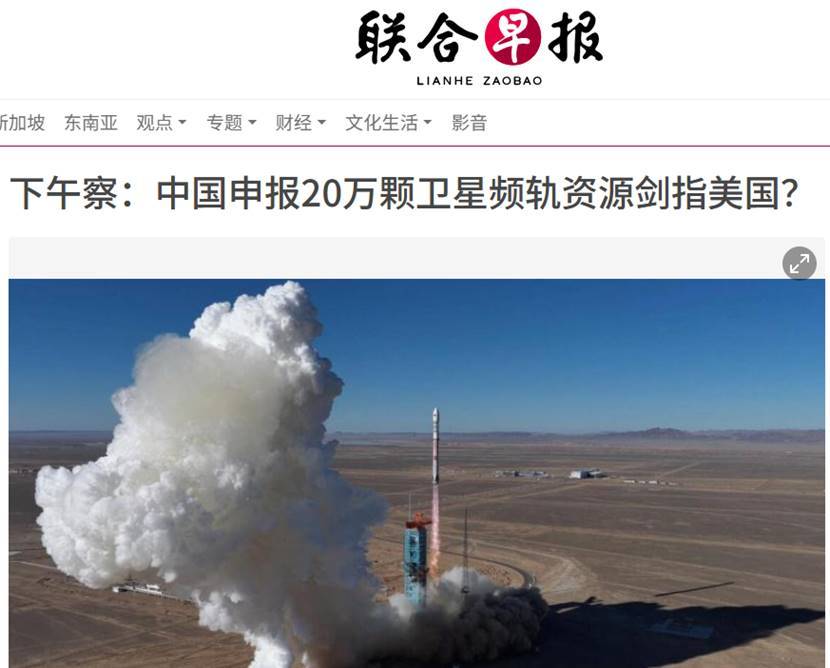
Investment Rating - The industry investment rating is "In line with the market" and the rating has been maintained [2][8]. Core Insights - The report highlights that the profitability pressure in the photovoltaic equipment sector remains significant, but there are signs of operational improvement [3][8]. - The commercial aerospace industry is experiencing a trend that is expected to benefit space photovoltaic technologies, driven by increased satellite launches and technological advancements [5][7]. - The report emphasizes the potential for new photovoltaic technologies, such as HJT and perovskite solar cells, to gain traction in the commercial aerospace sector [8]. Summary by Sections - **Industry Performance**: The photovoltaic equipment sector has shown a 12.22% increase over 1 month, 14.66% over 3 months, and 44.01% over 12 months, outperforming the CSI 300 index [6]. - **Commercial Aerospace Developments**: China has submitted applications for 203,000 satellites, marking the largest frequency and orbital resource application to date, which is expected to activate the entire satellite manufacturing, launching, and operation industry chain [7]. - **Investment Recommendations**: The report suggests focusing on equipment manufacturers, material suppliers, and producers with strong technological reserves in the context of accelerating commercialization in the aerospace industry [8].
卫星互联网低轨星座建设按下“快进键”!航空航天ETF天弘(159241)标的指数高开涨超1%,近10日“吸金”1.88亿元
Xin Lang Cai Jing· 2026-01-20 02:06
Core Insights - The aerospace ETF Tianhong (159241) has seen significant trading activity, with a transaction volume of 14.3063 million yuan and a net inflow of 21.3113 million yuan as of January 19, 2026, indicating strong investor interest in the sector [1][2] - The index it tracks, the Guozheng Aerospace Industry Index (CN5082), has risen by 1.26%, with notable gains from constituent stocks such as Hangfa Technology (up 10.00%) and Hangya Technology (up 9.00%) [1] - The ETF focuses on segments like aerospace equipment, domestic large aircraft, low-altitude economy, and military information technology, making it a highly concentrated investment vehicle in the defense industry [1] Product Highlights - The aerospace ETF Tianhong (159241) offers a one-click investment solution in aerospace-related stocks, with 99% of its underlying index belonging to the defense and military sector, providing higher purity and investment value compared to other military-related indices [1] Key Events - On January 19, 2026, China successfully launched 19 low-orbit satellites for satellite internet using the Long March 12 rocket, marking the fifth launch of this rocket and contributing to China's goal of having 400 satellites in orbit by 2027 [2][3] - This launch is part of a broader trend in satellite internet technology, which is expected to see widespread application across various industries, with a focus on direct connections to consumer and vehicle endpoints, as well as advancements in satellite IoT and space computing capabilities [3]

中国星网累计发射卫星超150颗,目标是2027年实现400颗卫星在轨运行
Huan Qiu Wang· 2026-01-20 00:54
Group 1 - The space infrastructure construction is accelerating, with significant growth in satellite broadband and mobile direct-to-satellite markets [1] - Galaxy Space has developed mobile direct-to-satellite technology comparable to Starlink, including antennas, onboard base stations, and solar wings [1] - On January 19, 2026, China successfully launched 19 low-orbit satellites for satellite internet using the Long March 12 rocket, marking a successful mission [1] Group 2 - China has launched over 300 satellites in 2022, achieving a record high of 92 launches, indicating a robust growth in satellite deployment [4] - There is a strategic shift in China's space policy, with a focus on building a "strong space nation" as part of the 14th Five-Year Plan, moving from experimental exploration to ecological cultivation [4] - China's satellite capabilities still lag behind the US in terms of scale, technology, and commercialization, but the country is proactively securing frequency orbits at the ITU level [4]
中国星网低轨19组卫星成功发射 卫星研制方系银河航天
Guo Ji Jin Rong Bao· 2026-01-19 17:27
Core Insights - Satellite mass production has become a key capability for the development of new space infrastructure [2][3] - The China Star Network, responsible for the first giant satellite internet project in China, aims to establish a global integrated communication system with a target of 400 satellites in orbit by 2027 [2] Group 1: Company Overview - Galaxy Space, founded in 2018, is a leading private satellite internet company in China and the first unicorn in the commercial space sector [3] - The company focuses on the independent research and low-cost mass production of communication payloads, core components, and satellite platforms [3] Group 2: Technological Advancements - The recent satellite group developed by Galaxy Space incorporates several core technologies, including phased array, millimeter-wave antennas, and integrated electronics, showcasing industry-leading technical levels and cost advantages [3] - The company has achieved a fully digital process for satellite production, implementing automated testing, intelligent assembly, and optimized launch procedures to significantly enhance production efficiency [3] Group 3: Recent Developments - On January 19, 2024, Galaxy Space successfully launched a group of 19 low-orbit satellites, marking its second batch of satellites for space infrastructure construction [2] - The company’s satellite factory has established a complete industrial ecosystem from component development to satellite integration testing, continuously improving batch production efficiency and shortening development cycles [3]
中国星网低轨19组卫星成功发射,卫星研制方系银河航天
Guo Ji Jin Rong Bao· 2026-01-19 14:00
Group 1 - Satellite mass production has become a key capability for the development of new space infrastructure [1][2] - The China Star Network, responsible for building and operating the satellite internet constellation, aims to achieve 400 satellites in orbit by 2027 [1] - The recent launch involved 19 low-orbit satellites, marking the second batch of satellites developed by Galaxy Space for space infrastructure [1] Group 2 - Galaxy Space has developed core technology products including phased array, millimeter-wave antennas, and integrated electronics, placing it at the forefront of the industry with cost advantages [2] - The company has implemented a fully digital process for satellite production, enhancing efficiency through automated testing and intelligent assembly [2] - As China's first unicorn in the commercial space sector, Galaxy Space focuses on the independent research and low-cost mass production of communication payloads and satellite platforms [2]
谁,来到了雄安?
Xin Lang Cai Jing· 2026-01-17 07:28
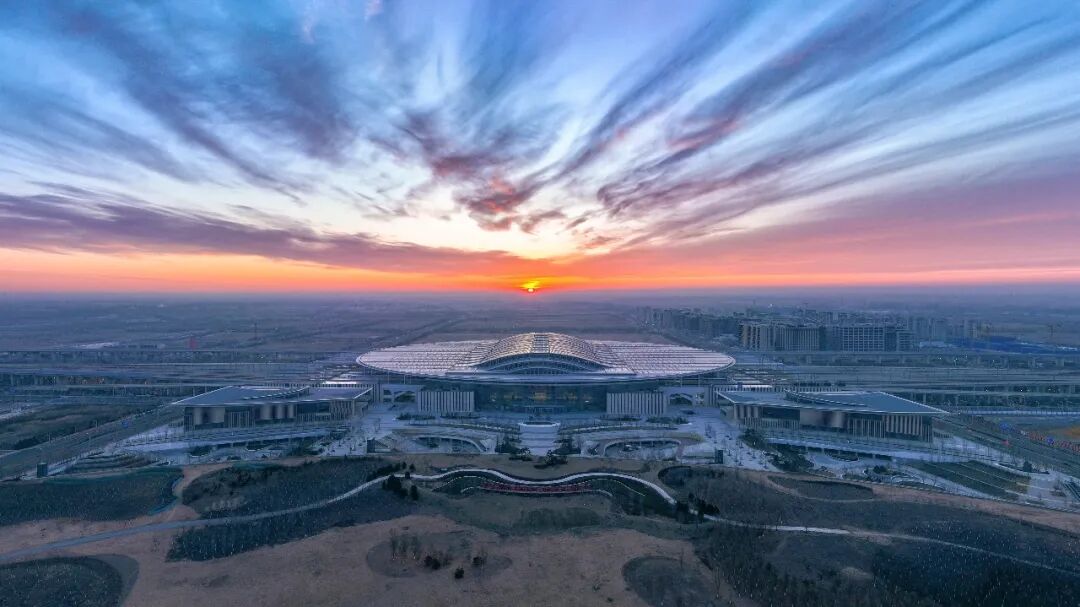
Core Perspective - Xiong'an New Area is evolving from a blueprint to a reality, attracting talent and fostering innovation, which is essential for its development as a modern city [1][4][10]. Group 1: Development Progress - Since its establishment in 2017, Xiong'an New Area has seen significant progress, with over 400 central enterprises setting up various institutions [6]. - The area is undergoing large-scale construction of educational institutions, including campuses for four major universities [6]. - The implementation of 278 "co-city" administrative services has enhanced the integration of Xiong'an with Beijing [8]. Group 2: Innovation and Technology - Xiong'an is home to over 200 companies in fields such as aerospace, artificial intelligence, and digital technology, establishing a "national-level" innovation platform [13]. - The presence of modern research and production facilities, including metal 3D printers and smart robots, signifies a leap from concept to industrialization [11]. - The first satellite, "Xiong'an No. 1," is undergoing pre-launch tests, highlighting the area's focus on high-tech development [13]. Group 3: Urban Living and Environment - The development of residential areas and amenities, such as schools and shops, is creating a vibrant community atmosphere [8]. - The design of parks and green spaces reflects a commitment to ecological sustainability and enhancing the quality of life for residents [16][18]. - The integration of nature within the urban landscape promotes a harmonious coexistence between people and the environment [18][20]. Group 4: Community and Culture - The stories of individuals returning to Xiong'an to pursue their dreams illustrate the area's appeal and potential for personal and professional growth [3][10]. - Cultural projects, such as the construction of classical gardens, aim to preserve and promote Chinese heritage [15]. - The community's engagement in the development process fosters a sense of ownership and pride among residents [15][22].
“未来产业”主题系列报告(二):商业航天:跨越“卡门线”
Western Securities· 2026-01-16 08:07
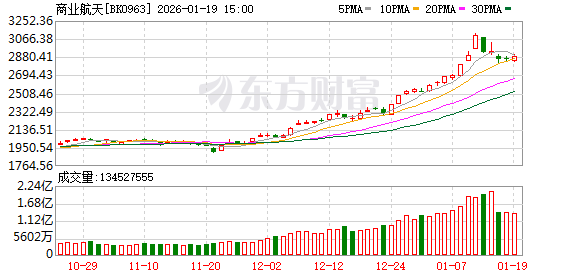
Core Conclusions - The "singularity" of commercial aerospace is approaching, with a transition from "single satellite testing" to "constellation networking" underway. China's satellite deployment completion is currently around 1%, indicating significant room for growth in the coming years as rocket recovery and reusability technologies are mastered [1][9][10] - Commercial aerospace is a high-growth and scarce sector, with the successful launch of the "Zhuque-3" rocket, which has a capacity of 21.3 tons (non-recoverable), setting a strong foundation for mass satellite launches. The cost of commercial rocket launches in China is expected to decrease rapidly, further enhancing market potential [2][17][18] - The commercial aerospace sector is likely to evolve into a mainline market, with the second wave of market growth not being the endpoint. The satellite industry index has increased nearly 105% in a short period, indicating strong investor interest and potential for further growth as rocket recovery technologies mature [3][27][28] Group 1: The Singularity of Commercial Aerospace - Global commercial aerospace is at a critical stage, moving towards "constellation networking" with strict timelines set by the International Telecommunication Union (ITU) for satellite frequency and orbital resource applications [1][9] - China's satellite constellation construction is lagging, with significant room for improvement in launch frequency and completion rates. The largest constellation, SpaceX's Starlink, has a completion rate of approximately 18.9%, while China's major constellations are at about 1% [10][11] Group 2: High-Growth Potential - The bottleneck in China's commercial aerospace development is insufficient rocket capacity, leading to high satellite launch costs. However, the successful launch of the "Zhuque-3" rocket marks a significant breakthrough, with a theoretical capacity to launch multiple satellites simultaneously [17][18] - The market space for satellite launches is substantial, with an estimated annual demand for approximately 4,000 satellites based on the lifespan of existing constellations [2][17] Group 3: Transition to Mainline Market - The commercial aerospace sector is expected to transition from a thematic market to a mainline market as rocket recovery technologies mature. The current market dynamics suggest that the sector is in the middle of a long-term upward trend [3][27][31] - The performance of leading companies in the sector indicates that while there has been significant growth, there is still potential for further increases compared to other sectors like low-altitude economy and new energy vehicles [3][27] Group 4: Focus on Rocket Manufacturing and Satellite Services - The commercial aerospace market is expected to follow a clear sequence of development, with rocket manufacturing leading the charge, followed by satellite payloads and platforms. The downstream application and service market still lack clear business models, indicating room for growth [4][33][34] - As satellite launches increase, the need for operational and service capabilities will become critical, making satellite operations and services a key area of focus for future investment [4][33][34] Group 5: Industry Chain and Related Stocks - A comprehensive industry chain map for commercial aerospace has been developed, highlighting key players and stocks for investor reference. This includes segments such as rocket manufacturing, satellite payloads, platforms, testing, and operations [41][42]
武汉凡谷:目前公司未直接与中国星网进行业务往来
Zheng Quan Ri Bao Wang· 2026-01-16 07:47
Core Viewpoint - Wuhan Fangu (002194) has stated that it currently does not have direct business dealings with China Star Network, and the contracts related to its high-power microwave filters are minor and do not significantly impact the company's current performance [1] Group 1 - The company produces high-power microwave filters that are sold to downstream module manufacturers [1] - These filters are applied in low Earth orbit satellites [1] - The contract amounts related to these products are currently small and do not have a major effect on the company's performance [1]
