
南方电网

Search documents
更好发挥央国企扩投资作用,国常会锚定新兴产业等重点领域
Di Yi Cai Jing· 2026-02-08 13:07
Core Viewpoint - Central state-owned enterprises (SOEs) are increasingly focusing on effective investment to stabilize economic growth and enhance development momentum, with specific targets and measures being established for investment expansion [1][2]. Group 1: Investment Policies and Measures - The State Council, led by Premier Li Qiang, has emphasized the importance of effective investment policies, particularly in infrastructure, urban renewal, public services, and emerging industries, to support long-term development and competitive advantages [1]. - The National Development and Reform Commission (NDRC) has organized the early release of a list of key projects and central budget investment plans for 2026, with a funding scale of approximately 295 billion yuan [6][7]. - The government is focusing on enhancing investment efficiency and promoting both physical and human capital, with a significant portion of projects directly benefiting people [7][8]. Group 2: Role of Central SOEs - Central SOEs are recognized as a crucial force in stabilizing investment, with recent meetings highlighting the need for increased investment in key areas to support national economic goals [2][3]. - The National Grid plans to invest 4 trillion yuan in fixed assets during the 14th Five-Year Plan period, marking a 40% increase compared to the previous plan [2]. - The average annual growth rate of investment in emerging industries by central SOEs has exceeded 20% during the 14th Five-Year Plan, with a projected investment of 2.5 trillion yuan in strategic emerging industries by 2025 [3]. Group 3: Emerging Industries and Future Investments - The establishment of a special fund for strategic emerging industries, initiated by the State-owned Assets Supervision and Administration Commission (SASAC), aims to support sectors such as artificial intelligence, aerospace, and quantum technology, with an initial scale of 51 billion yuan [4]. - Central SOEs are expected to optimize the layout of state-owned economies by accelerating the transformation of traditional industries while increasing investments in emerging sectors like commercial aerospace and renewable energy [3][5]. - The National Investment Fund has focused on strategic emerging industries, with cumulative investments exceeding 200 billion yuan, indicating a strong commitment to future-oriented sectors [3].
中电联预计26年用电增速5%-6%,2月代理购电价整体下行
GOLDEN SUN SECURITIES· 2026-02-08 11:35
Investment Rating - The report maintains an "Accumulate" rating for the industry [2] Core Insights - The China Electricity Council forecasts a 5%-6% growth in electricity consumption for 2026, with a significant decline in proxy electricity prices in February [5][12] - Over 80% of provinces and cities reported a year-on-year decrease in proxy electricity prices in February, with Jiangsu, Inner Mongolia, and Liaoning experiencing the largest declines of 29.3%, 25.6%, and 23.1% respectively [5][14] - The report anticipates that by the end of 2026, the installed capacity of solar power will exceed that of coal power for the first time, with renewable energy sources accounting for half of the total installed capacity [5][14] Summary by Sections Industry Outlook - The report predicts that by 2026, the total installed capacity of renewable energy will reach half of the total installed capacity, with solar power surpassing coal power for the first time [5][14] - The total electricity consumption in China is expected to be between 10.9 and 11 trillion kilowatt-hours, reflecting a year-on-year growth of 5%-6% [5][14] Investment Trends - In January 2026, the State Grid completed fixed asset investments of 30.8 billion yuan, a year-on-year increase of 35.1% [6][14] - The Southern Power Grid plans to invest over 24 billion yuan in the first quarter of 2026, marking a year-on-year increase of over 20% [7][14] Proxy Electricity Prices - The report highlights that proxy electricity prices have generally decreased, with significant drops in various regions, indicating a more favorable supply-side environment [5][14] Key Companies and Recommendations - The report suggests focusing on high-dividend coal-fired power leaders and companies with stable electricity prices and integrated coal power operations, such as Huaneng International and Huadian International [8][14] - It also recommends monitoring companies in the wind and solar sectors, including Xintian Green Energy and Longyuan Power [8][14]





【招银研究|行业点评】国网投资规划超预期,“主配微”协同带来金融服务机遇——国家电网“十五五”投资规划点评
招商银行研究· 2026-02-06 11:27
Investment Overview - The State Grid has announced a fixed asset investment plan of 4 trillion yuan for the "14th Five-Year Plan" period, representing a significant increase of 40% compared to the "13th Five-Year Plan" period, which exceeds previous market expectations of a 10%-20% growth [1][4] - The total investment from the three major grid companies during the "14th Five-Year Plan" period is expected to reach around 5 trillion yuan, with the State Grid's investment alone projected at 4 trillion yuan [1][4] Investment Drivers - The increase in investment is driven by the mismatch in growth rates between source-side and grid-side investments, alongside the rigid demand for the continuous construction of a new power system [1][8] - During the "13th Five-Year Plan" period, the average annual growth rate of source-side investment was 22.7%, significantly outpacing the 6.8% growth rate of grid-side investment, leading to bottlenecks in cross-regional transmission capacity and local consumption space [1][8] Investment Structure Changes - The investment structure for the "14th Five-Year Plan" has shifted from focusing primarily on the high-voltage backbone network to a collaborative development of the main grid, distribution network, and smart microgrid [1][8] - The investment in the main grid is expected to account for about 30% of the total investment, with an estimated amount of 1.2 trillion yuan, aimed at enhancing cross-regional transmission capabilities by over 30% compared to the end of the "13th Five-Year Plan" [1][10] Distribution Network Investment - The investment in the distribution network is projected to reach around 2 trillion yuan, accounting for approximately 50% of the total investment during the "14th Five-Year Plan," marking a 33% increase from the previous period [1][11] - The construction of the distribution network will cover urban, rural, and remote areas, enhancing flexibility and capacity to accommodate distributed renewable energy and meet the needs of 35 million charging facilities [1][11] Smart Microgrid and Digitalization - Investment in digitalization and smart microgrids is expected to account for 15%-20% of the total investment, with a clear focus on the development of smart microgrids for the first time [1][13] - The new grid platform will require continuous investment in digital infrastructure to support high levels of renewable energy integration and power electronics, with initiatives like the "Artificial Intelligence+" program being implemented [1][14]

电网“十五五”五万亿浪潮中,威胜信息锚定“算电融合”新引擎
Xin Lang Cai Jing· 2026-02-06 11:20
Core Insights - The "14th Five-Year Plan" of the State Grid has set a fixed asset investment target of 4 trillion yuan, a 40% increase from the previous plan, establishing a new baseline for China's energy landscape [21] - The Southern Power Grid plans to invest 180 billion yuan by 2026, marking a record high for five consecutive years, with an estimated total investment of 1 trillion yuan during the "14th Five-Year Plan" [21] - The combined investment of 5 trillion yuan from these two major grid companies will directly stimulate the development of the entire smart grid industry chain, focusing on solving the "last mile" challenges such as distribution networks, microgrids, and new energy storage [21][22] Company Positioning - Weishen Information, a leader in the energy IoT sector, is strategically positioned to benefit from this industrial transformation, evolving from a mere equipment supplier to a provider of integrated solutions in the "computing and electricity fusion" era [21][22] - The company has consistently achieved revenue and net profit growth since its listing, maintaining a return on equity (ROE) above 20% and a total shareholder return (TSR) rate also exceeding 20% [22] Strategic Upgrades - The core change in Weishen Information's strategy is the transition from providing IoT connectivity to offering integrated services that encompass perception, computation, and decision-making [23] - The company has introduced a "full-spectrum surgical solution" to address the "last mile" issues in the power grid, including a representative product, the "Sensing and Computing Fusion SoC Chip," which integrates multi-dimensional sensing, high-speed communication, and edge computing capabilities [25][26] Market Opportunities - Weishen Information is targeting the AI computing infrastructure market, addressing energy consumption challenges in data centers, with a projected market size of 500 billion yuan based on customized solutions for 100,000 user scenarios [27][30] - The company is also expanding its reach into the "integrated space" by leveraging satellite remote sensing and communication solutions, thus extending IoT coverage to marine and remote areas [30] Global Expansion - The overseas market has become a significant growth driver for Weishen Information, with foreign revenue reaching 421 million yuan in 2024, a year-on-year increase of 85.4% [31] - The company is transitioning from a product export model to a comprehensive approach that includes solutions, localized services, and ecosystem collaboration [31][34] Conclusion - Weishen Information is positioned as an essential "digital enabler" in the construction of new power systems, with its value likely to be reassessed as it navigates the 5 trillion yuan investment wave directed at the "last mile" of the power grid [35]

南网储能:公司与南网能源同属南方电网旗下控股上市公司
Zheng Quan Ri Bao Zhi Sheng· 2026-02-05 12:12
Core Viewpoint - The company, Nanwang Energy Storage, is actively developing virtual power plant technology and has established a platform that integrates with power trading platforms in Guangzhou and Shenzhen, although its impact on revenue is currently minimal [1] Group 1: Company Overview - Nanwang Energy Storage is a subsidiary of the Southern Power Grid and focuses on pumped storage, new energy storage, and peak-shaving hydropower [1] - The company has obtained qualifications as a virtual power plant operator [1] Group 2: Business Development - The virtual power plant business is still in its early stages and has a limited effect on the company's revenue [1] - The company has completed the integration of its virtual power plant platform with local power trading platforms [1]

突破4500亿!同比增长3.87倍
Zhong Guo Dian Li Bao· 2026-02-05 11:38
Core Insights - The annual green electricity and green certificate trading volume in the southern region is expected to exceed 450 billion kilowatt-hours by 2025, representing a year-on-year increase of 387% and surpassing the total of the previous four years combined [1] - The green certificate trading market is projected to reach 407 million certificates, accounting for approximately 60% of the national trading volume [1] - The number of registered entities in the green certificate market is anticipated to grow by 1034% to 84,000, covering 34 provincial-level administrative regions across the country [1] Group 1: Market Dynamics - High-energy-consuming, export-oriented, and high-tech enterprises are the main consumers of green certificates, with manufacturing accounting for 50% and the electricity, heat, gas, and water production and supply industry for 23% [2] - The awareness of residential green electricity consumption is increasing, with nearly 1.57 million green certificates purchased by residents in 2025, marking a 33% year-on-year growth [2] - The total installed capacity of renewable energy in the southern power grid is expected to exceed 260 million kilowatts, maintaining its position as the largest power source, with non-fossil energy accounting for 66% of installed capacity and 55% of electricity generation [2] Group 2: Market Reforms and Innovations - As market reforms deepen, renewable energy entities are fully integrated into the trading system, with 1,149 renewable energy trading units participating in the southern electricity spot market [3] - The first five virtual power plants officially participated in the southern electricity spot trading on December 29, 2025, enhancing the market pathways for distributed renewable energy [3] - Future plans include further deepening the green electricity and green certificate market reforms, improving mechanisms for renewable energy participation, and expanding cross-regional trading collaboration [3]

中国软件技术发展洞察和趋势预测研究报告2026
极客邦科技· 2026-02-05 07:26
Investment Rating - The report does not explicitly state an investment rating for the industry Core Insights - The artificial intelligence (AI) sector continues to dominate investment, accounting for 88.1% of total financing in the technology field in 2025, an increase of 5.3 percentage points from 2024 [21] - The humanoid robot sector has emerged as a significant area of investment, capturing 16.8% of the total technology financing [28] - The report highlights the rapid evolution of AI technologies, particularly in reasoning models and multimodal models, which are reshaping the landscape of AI applications [36][38] Summary by Sections 2025 Technology Market Review - In 2025, the technology sector saw a total financing of 738.4 billion yuan across 644 events, with AI leading the way [21] - Key developments included the rise of humanoid robots and advancements in AI models, such as the release of various reasoning models by major companies [19][36] 2026 Technology Trend Outlook - The report anticipates continued growth in AI and humanoid robotics, with significant investments expected in these areas [28] - The integration of AI into various applications is expected to accelerate, driven by advancements in multimodal models and reasoning capabilities [36][38] Financing Events and Trends - The AI sector experienced 212 financing events exceeding 100 million yuan, representing 88.7% of all such events in the technology field [29] - The report notes a shift towards more substantial financing rounds, with seed and A rounds making up 67.7% of total financing events [31] Key Companies and Innovations - Notable companies in the AI sector include Zhiyuan AI, Minimax, and Yuzhi Technology, which have raised significant funds in recent rounds [32] - The report highlights the emergence of new technologies and models, such as DeepSeek and various multimodal models, which are expected to drive future growth [36][38]
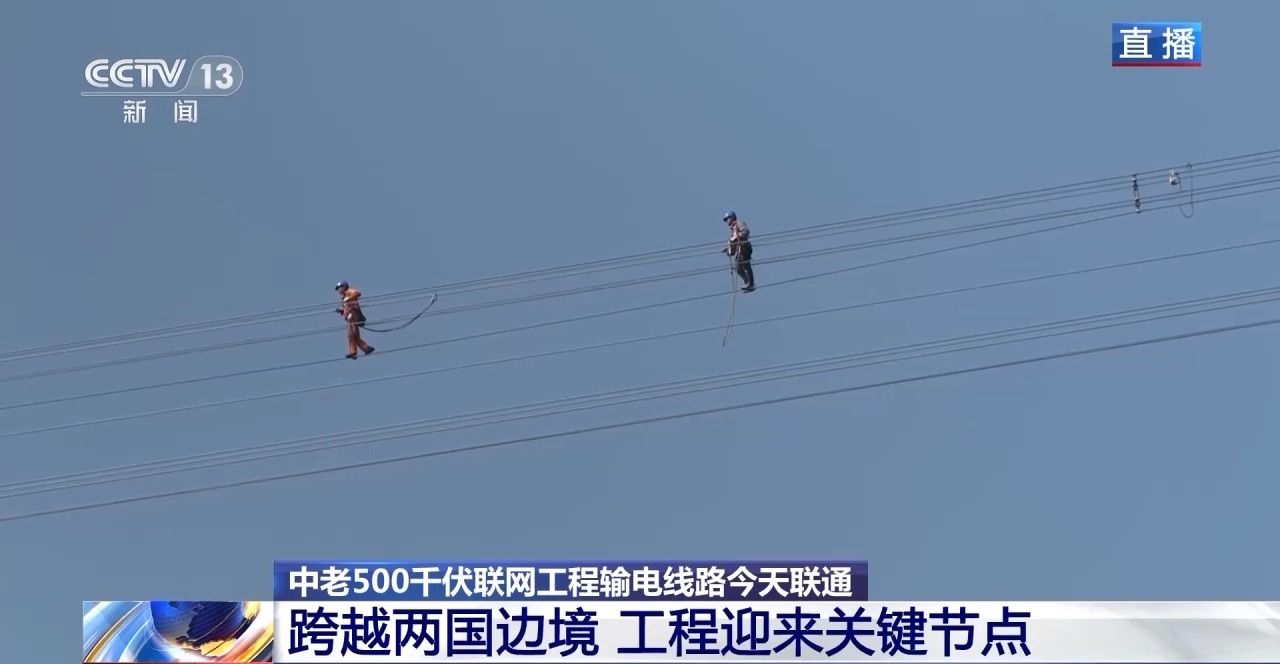
视频丨中老500千伏联网工程输电线路今天联通 每年可以输送30亿度清洁电能
Yang Shi Xin Wen Ke Hu Duan· 2026-02-05 06:29
今天(5日)上午,中老500千伏联网工程输电线路跨越两国边境正式联通,标志着这项重大工程取得阶段性进展。 0:00 总台记者 李腾飞:在云南最南边中老边境的磨憨,一项中老重大标志性工程的建设正在火热进行。这座高60米左右的铁塔,就是输电线路进入中国后连接 的首座铁塔。 在这座铁塔的南边,是进入老挝后的第一座铁塔。两座铁塔隔空相望,塔尖的直线距离大概是391米。输电线路联通,就是要完成这两座塔之间的"云端"连 接。 这次工程的关键作业场地就在空中,施工主要有三根主线,每一根主线都包含了6根导线,其中的两根主线已经完成,工作人员正在安装间隔棒。正在冲刺 的就是最后一组,地面牵引机正在通过钢绳,不断将导线从老挝方向牵引过来,随着导线连接成功,标志着线路已经顺利连接,工程节点圆满完成。 后续,再经过紧线作业、附件安装等,中老500千伏联网工程就将建成投运。 跨越雨林的绿色"电力丝路" 作为共建"一带一路"重要能源合作项目,中老500千伏电力联网工程从中国西双版纳延伸至老挝乌多姆塞,大部分工程要穿越野生亚洲象的栖息地。跨越雨 林建设一条输电线路会遇到哪些难题,又是怎么解决的呢?跟随记者到建设现场去看一看。 0:00 中 ...
能源早新闻丨吊装成功!
中国能源报· 2026-02-04 22:32
Group 1: Energy Sector Developments - The total income of central enterprise leaders in the energy sector is composed of annual salary and term incentive income, with the latter being distributed every three years. The companies involved include major players like China National Petroleum Corporation and State Grid Corporation of China [2] - China’s crude oil production reached a historical high of 216 million tons, while natural gas production (including coal-derived gas) was 2,638 billion cubic meters, marking a continuous increase of over 10 billion cubic meters for nine consecutive years [3] - Sinopec reported advancements in the industrial application of medium and deep geothermal resources, successfully replacing traditional gas heating with heat extracted from 3,200 meters underground [6] Group 2: Infrastructure and Technological Advancements - Beijing has achieved full coverage of supercharging stations across its highway service areas, with 42 supercharging stations built and 530 charging piles installed, resulting in a 26% ratio of charging spaces to small car parking spaces [4] - The Jiangxi Provincial Development and Reform Commission announced a public list of proposed zero-carbon parks, including 15 parks such as Nanchang High-tech Industrial Development Zone and Jiujiang Economic and Technological Development Zone [4] Group 3: Nuclear Energy Developments - The installation of the inner dome of the Unit 3 of Zhangzhou Nuclear Power, utilizing China's self-developed third-generation nuclear technology "Hualong One," has been successfully completed, marking a transition from construction to equipment installation [3]

用电量增长彰显综合实力
Zhong Guo Dian Li Bao· 2026-02-03 06:40
2025年我国全社会用电量突破10万亿千瓦时,这不仅是全球能源电力发展的全新里程碑,更是我国经济 社会蓬勃发展的生动缩影,彰显着我国发展的强劲韧性与磅礴力量。 用电增长映照发展活力 同建设,以及抽水蓄能、新型储能建设。南方电网计划2026年固定资产投资保持在高位的1800亿元,且 未来将持续增长,重点推进柔性直流、配电网改造、数智化微电网以及车网互动等工程。巨大的基础设 施投资规模,既彰显了我国推动能源电力绿色转型的坚定决心,也为统筹能源安全、绿色转型与经济发 展提供了坚实支撑,让我国在实现低碳发展的同时,持续保障经济社会发展的用电需求。 第一类以欧洲、日本为代表,陷入经济增长乏力与用电量下滑的螺旋困境。如德国在俄乌冲突后能源价 格飙升,制造业出口竞争力下滑,投资不振和产业外迁导致2022年至2024年连续两年GDP负增长,2024 年用电量较2021年下滑近8.7%。日本情况稍好但也有限,经济增速长期徘徊在1%以下,用电需求持续 萎缩,年度用电量从2011年的1.1万亿千瓦时降至2024年的0.9万亿千瓦时。背后原因在于,这些国家仍 依赖过去的成功路径,新兴产业发展滞后,同时能源政策受制于地缘政治,电力系统 ...