德方纳米

Search documents
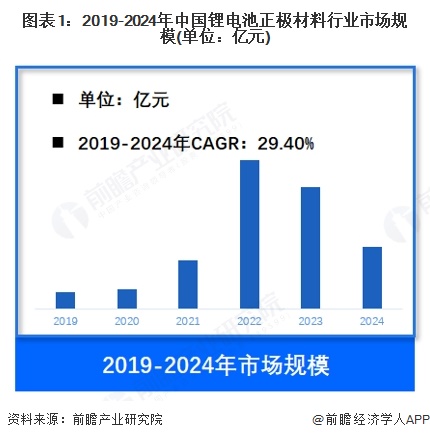
【锂电池正极材料】行业市场规模:2024年中国锂电池正极材料行业市场规模约2000亿元 磷酸铁锂市场占比约74%
Qian Zhan Wang· 2026-01-27 04:11
Core Insights - The Chinese lithium battery cathode material industry is projected to reach a market size of approximately 200 billion yuan in 2024, with a compound annual growth rate (CAGR) of 29.40% over the past five years [1][3] Industry Overview - Lithium-ion batteries utilize lithium ions as conductive ions, moving between the anode and cathode to convert chemical energy into electrical energy [1] - The cathode materials include ternary materials, lithium iron phosphate (LFP), lithium cobalt oxide, and lithium manganese oxide, with LFP and ternary materials being the largest segments in 2024, accounting for 74% and 20% of the market, respectively [2][3] Competitive Landscape - The industry is dominated by leading companies such as Hunan YN, Rongbai Technology, and Defang Nano, focusing on technological iteration, capacity expansion, and cost control [4] - Hunan YN is the leader in LFP with a market share exceeding 30% and a capacity of 726,000 tons, serving major clients like CATL and BYD [6] - Rongbai Technology leads in high-nickel ternary materials with a capacity of 300,000 tons, catering to top international battery manufacturers [6] - Defang Nano is recognized for its LFP technology, with a capacity of 300,000 tons and a focus on high energy density and fast-charging performance [6] - Other notable players include Huayou Cobalt, focusing on integrated resource layouts, and Dingsheng Technology, specializing in high-end ternary materials [6]



德方纳米(300769) - 关于对外担保的进展公告
2026-01-26 10:32
证券代码:300769 证券简称:德方纳米 公告编号:2026-002 深圳市德方纳米科技股份有限公司 关于对外担保的进展公告 本公司及董事会全体成员保证信息披露的内容真实、准确和完整,没有虚假 记载、误导性陈述或重大遗漏。 一、 对外担保概述 深圳市德方纳米科技股份有限公司(以下简称"公司")于2025年4月25日 召开第四届董事会第十七次会议,并于2025年5月19日召开2024年年度股东大会, 会议分别审议通过了《关于向金融机构申请综合授信额度的议案》《关于对外担 保额度预计的议案》,公司及合并报表范围的子公司(含授权期限内新设立或纳 入合并范围的全资子公司、控股子公司)拟向银行、融资租赁公司等金融机构申 请综合授信额度,总额度合计不超过人民币1,500,000.00万元(不包含低风险业 务额度),最终额度以金融机构实际审批的授信额度为准,授信品种包括但不限 于本外币借款、银行承兑汇票、信用证、保函等,各金融机构实际授信额度可在 总额度范围内调剂。公司拟为合并报表范围的子公司向业务相关方(包括但不限 于银行、融资租赁公司等金融机构及其他业务合作方)申请综合授信额度(包括 但不限于本外币借款、银行承兑汇票 ...
2025年磷酸锰铁锂市场盘点:产量2.85万吨,激增206.5%
鑫椤锂电· 2026-01-26 08:03
Core Viewpoint - The article highlights the significant growth potential of manganese iron phosphate production, projecting a production increase from 28,500 tons in 2025 to over 500,000 tons by 2030, driven by advancements in electric vehicle technology and increasing demand in various sectors [2][5]. Group 1: Production Growth - The production of manganese iron phosphate is expected to reach 28,500 tons in 2025, representing a year-on-year growth of 206.5% [2]. - By 2026, production is anticipated to rise to 70,000 tons, and by 2030, it is projected to exceed 500,000 tons [2]. Group 2: Key Drivers of Growth - The price increase of cobalt raw materials has led to a surge in the prices of ternary cathode materials, enhancing the price competitiveness of manganese iron phosphate [5]. - Trade frictions have prompted significant stocking and export actions in overseas digital markets, resulting in increased shipments of manganese iron phosphate [5]. - Technological improvements, such as element doping and carbon coating, have addressed issues related to manganese leaching, low conductivity, low packing density, and low specific capacity [5]. Group 3: End-Use Applications - In the power sector, Guoxuan High-Tech's "Qicheng Second Generation Cell" achieves an energy density of 240 Wh/kg and supports 5C fast charging, allowing a 60 kWh battery to charge to 80% in just 12 minutes [6]. - In the two- and three-wheeled electric vehicle market, Star Power has successfully industrialized manganese iron phosphate batteries, with major domestic brands using these batteries in 70% of their products, achieving over 10 million units sold globally [6]. - In consumer electronics, Henan Hengyi Lithium Energy's new battery, utilizing manganese iron phosphate and nano-silicon carbon, boasts double the capacity, a 30% increase in lifespan, and improved charging efficiency [6]. Group 4: Competitive Landscape - Leading companies in the manganese iron phosphate sector include Hanchuang Nano, Rongbai Science and Technology, Times Rui Xiang, Defang Nano, and Zhiliang New Materials [7]. - Hanchuang Nano has a stable production line of 15,000 tons and is accelerating a 30,000-ton expansion project [8]. - Rongbai Science and Technology has seen its manganese iron phosphate product shipments in the first half of 2025 exceed the total for 2024, with a 103% year-on-year increase in Q3 2025 [8]. - Times Rui Xiang's 20,000-ton manganese iron phosphate project was completed and began production in April 2025, achieving industry-leading performance [8].

化工新材料产业周报:台积电加大先进封装投资,2025年中国电力储能装机同增54%-20260125
Guohai Securities· 2026-01-25 08:44
Investment Rating - The industry investment rating is "Recommended" (maintained) [1] Core Viewpoints - The new materials sector is a crucial direction for the future development of the chemical industry, currently experiencing rapid growth in downstream demand. With policy support and technological breakthroughs, domestic new materials are expected to accelerate their long-term growth. The report emphasizes that "one generation of materials leads to one generation of industries," highlighting the foundational nature of the new materials industry as the material basis for other industries [4][15]. Summary by Relevant Sections 1. Electronic Information Sector - Focus areas include semiconductor materials, display materials, and 5G materials [5]. - Recent developments include TSMC's plan to increase investment in advanced packaging technology, aiming to upgrade existing InFO equipment and establish a new WMCM production line, with a target capacity of approximately 60,000 wafers per month by the end of 2026 [6][40]. 2. Aerospace Sector - Key materials of interest are PI films, precision ceramics, and carbon fibers [7]. - The successful launch of the Long March 12 rocket, which deployed 19 low-orbit satellites, demonstrates the capabilities of China's aerospace technology [8][50]. 3. New Energy Sector - Focus areas include photovoltaics, lithium-ion batteries, proton exchange membranes, and hydrogen storage materials [9]. - By the end of 2025, China's power storage capacity is projected to reach 213.3 GW, a year-on-year increase of 54%, with new energy storage accounting for over two-thirds of this capacity [10]. 4. Biotechnology Sector - Key areas include synthetic biology and scientific services [11]. - Significant advancements in agricultural biotechnology were reported, including breakthroughs in crop genetic improvement and the development of new wheat varieties [12]. 5. Energy Conservation and Environmental Protection Sector - Focus areas include adsorption resins, membrane materials, and biodegradable plastics [13]. - The government has initiated projects to support equipment upgrades across various sectors, with a total investment exceeding 460 billion yuan [14]. 6. Key Companies and Profit Forecasts - The report highlights several key companies with their respective stock prices and earnings per share (EPS) forecasts for 2023 to 2025, indicating a generally positive outlook for the new materials sector [16].

出货量刚过3万吨,磷酸锰铁锂迎数十倍扩产潮
高工锂电· 2026-01-24 07:50
Core Viewpoint - The LMFP (Lithium Manganese Iron Phosphate) market is poised for explosive growth in 2025, with a projected shipment increase of 275% year-on-year, despite current production capacity exceeding actual demand. The expansion efforts by leading companies indicate a strong belief in the material's potential [2][11]. Group 1: Market Dynamics and Growth - In 2025, the domestic LMFP shipment volume is expected to exceed 30,000 tons, marking a significant increase from previous years, driven by technological advancements and performance improvements [2][11]. - Major companies like Hunan YN and others are investing heavily in LMFP production, with plans to significantly increase capacity, indicating confidence in future demand [1][10]. - The LMFP market is projected to reach 80,000 tons by 2026, with expectations of further growth to 500,000 tons by 2030, translating to a market size exceeding 20 billion yuan [11][14]. Group 2: Technological Advancements - Companies have made significant breakthroughs in LMFP technology, addressing previous performance limitations such as low density and poor cycle life, which have historically hindered its adoption [4][5]. - Innovations like the second-generation LMFP battery from Guoxuan High-Tech have improved energy density and charging capabilities, enhancing the battery's appeal for electric vehicles [5][6]. - The introduction of new manufacturing processes, such as solid-phase synthesis, has improved the material's conductivity and stability, further supporting its commercialization [5][6]. Group 3: Application and Market Penetration - LMFP batteries are now being utilized in various applications, including passenger and commercial vehicles, with significant adoption rates in the light vehicle sector [6][7]. - The low-temperature performance of LMFP batteries allows for broader application, particularly in colder climates, enhancing their competitiveness in the market [9][10]. - Companies like EVE Energy and Guoxuan High-Tech are successfully integrating LMFP materials into their product lines, indicating a shift towards more advanced battery technologies [7][9]. Group 4: Cost and Supply Chain Considerations - The cost advantages of LMFP, due to the abundance of manganese compared to nickel and cobalt, allow for a 10%-15% reduction in battery costs when mixed with high-nickel materials [10][15]. - The rapid expansion of LMFP production capabilities, with over 30 companies involved, is creating a competitive landscape that benefits downstream battery manufacturers [10][15]. - The supply chain for manganese is becoming increasingly critical, as demand for LMFP rises, necessitating strategic partnerships for resource acquisition [17].



锂矿股走强,赣锋锂业、金圆股份涨超4%
Ge Long Hui· 2026-01-23 03:40
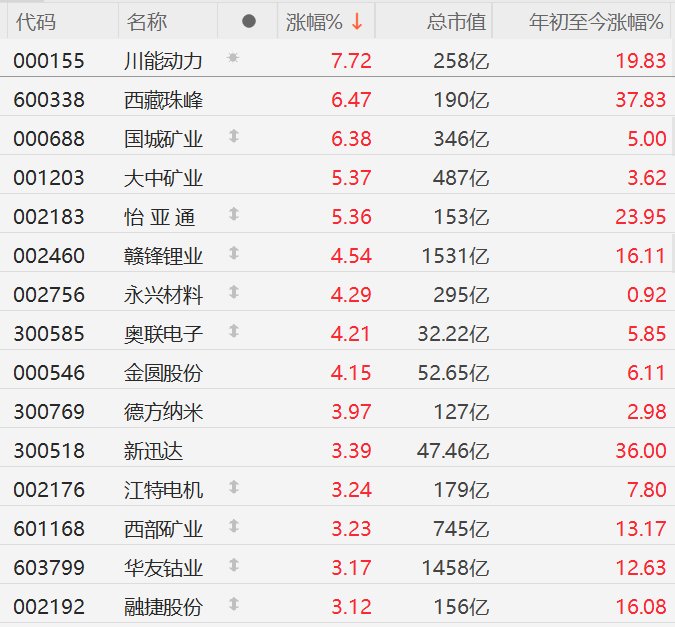
Group 1 - The A-share market saw a strong performance in lithium mining stocks, with notable gains from companies such as Chuaneng Power, which rose over 7%, and Tibet Summit and Guocheng Mining, which increased by over 6% [1] - The main contract for lithium carbonate surged by more than 5%, reaching a new high of 178,000 yuan per ton [1] Group 2 - Chuaneng Power's stock increased by 7.72%, with a total market capitalization of 25.8 billion yuan and a year-to-date increase of 19.83% [2] - Tibet Summit's stock rose by 6.47%, with a market cap of 19 billion yuan and a year-to-date increase of 37.83% [2] - Guocheng Mining's stock increased by 6.38%, with a market cap of 34.6 billion yuan and a year-to-date increase of 5.00% [2] - Other notable performers include Dazhong Mining (up 5.37%), Yiyaton (up 5.36%), and Ganfeng Lithium (up 4.54%) [2]


A股锂矿股走强,赣锋锂业、金圆股份涨超4%
Ge Long Hui A P P· 2026-01-23 03:33
Group 1 - The A-share market saw a strong performance in lithium mining stocks, with notable gains from companies such as Chuaneng Power, which rose over 7%, and Tibet Summit and Guocheng Mining, which increased by over 6% [1] - The main contract for lithium carbonate surged by over 5%, reaching a new high of 178,000 yuan per ton [1] Group 2 - Chuaneng Power's market capitalization is 25.8 billion yuan, with a year-to-date increase of 19.83% [2] - Tibet Summit has a market capitalization of 19 billion yuan and a year-to-date increase of 37.83% [2] - Guocheng Mining's market capitalization stands at 34.6 billion yuan, with a year-to-date increase of 5.00% [2] - Other companies like Dazhong Mining and Yiyaton also reported gains of over 5%, with market capitalizations of 48.7 billion yuan and 15.3 billion yuan respectively [2] - Ganfeng Lithium, with a market capitalization of 153.1 billion yuan, saw a year-to-date increase of 16.11% [2] - Yongxing Materials and Aolian Electronics reported increases of 4.29% and 4.21% respectively, with market capitalizations of 29.5 billion yuan and 3.22 billion yuan [2] - The overall trend indicates a positive momentum in the lithium sector, supported by the MACD golden cross signal [2]

SPIR:2026全球锂电池行业发展白皮书发布
起点锂电· 2026-01-23 02:44
Core Insights - The global lithium battery shipment in 2025 is projected to reach 2042.7 GWh, representing a year-on-year growth of 46.8%, with power batteries accounting for 62.2% of the demand structure [2] - By 2030, the global lithium battery shipment is expected to reach 5333.6 GWh, with a decreasing share of power batteries and an increasing trend in energy storage batteries [2] Group 1: EV Power Lithium Batteries - In 2025, global sales of new energy vehicles are expected to reach 24.04 million units, a year-on-year increase of 31.8%, driving the global EV power battery shipment to 1271 GWh, up 39.9% [3] - The market concentration for EV power batteries is increasing, with the top five companies accounting for 72% of the market share [10] Group 2: Energy Storage Lithium Batteries - The global energy storage battery shipment is projected to be 637 GWh in 2025, a year-on-year increase of 78.9%, primarily driven by markets in China, Europe, the Middle East, and Southeast Asia [3][14] - The market concentration for energy storage batteries is also rising, with the top five companies expected to hold 53.3% of the market share in 2025 [14] Group 3: Lightweight Power Lithium Batteries - The implementation of new national standards for electric bicycles in September 2025 is expected to stimulate demand, with global lightweight power battery shipments reaching 55.4 GWh, a year-on-year increase of 10.8% [4] Group 4: 3C Lithium Batteries - The global 3C lithium battery shipment is projected to be 70.8 GWh in 2025, with a year-on-year growth of 5.8%, driven by device replacements and hardware upgrades [4] - The 3C electronics sector is expected to maintain steady growth, with shipments projected to exceed 115.2 GWh by 2030, reflecting a compound annual growth rate of 10.2% over the next five years [4] Group 5: Battery Materials Market - In 2025, the global shipment of lithium battery cathode materials is expected to reach 479.8 million tons, a year-on-year increase of 48.5%, with lithium iron phosphate accounting for 78% of the total [21] - The global shipment of lithium battery anode materials is projected to be 272.3 million tons in 2025, with artificial graphite making up 89.3% of the total [27] Group 6: Electrolyte and Separator Markets - The global lithium battery electrolyte shipment is expected to reach 239.6 million tons in 2025, a year-on-year increase of 53% [29] - The global lithium battery separator shipment is projected to be 384.9 billion square meters in 2025, with a year-on-year growth of 48.6% [36] Group 7: Copper and Aluminum Foil Markets - The global lithium battery copper foil shipment is expected to reach 148.7 million tons in 2025, with a year-on-year growth of 49.1% [39] - The global lithium battery aluminum foil market is projected to reach 72.3 million tons in 2025, a year-on-year increase of 48.8% [43]

宁德时代竟锁定的产能,是全球产量三倍!容百科技,只是个马前卒!
Ge Long Hui· 2026-01-21 20:05
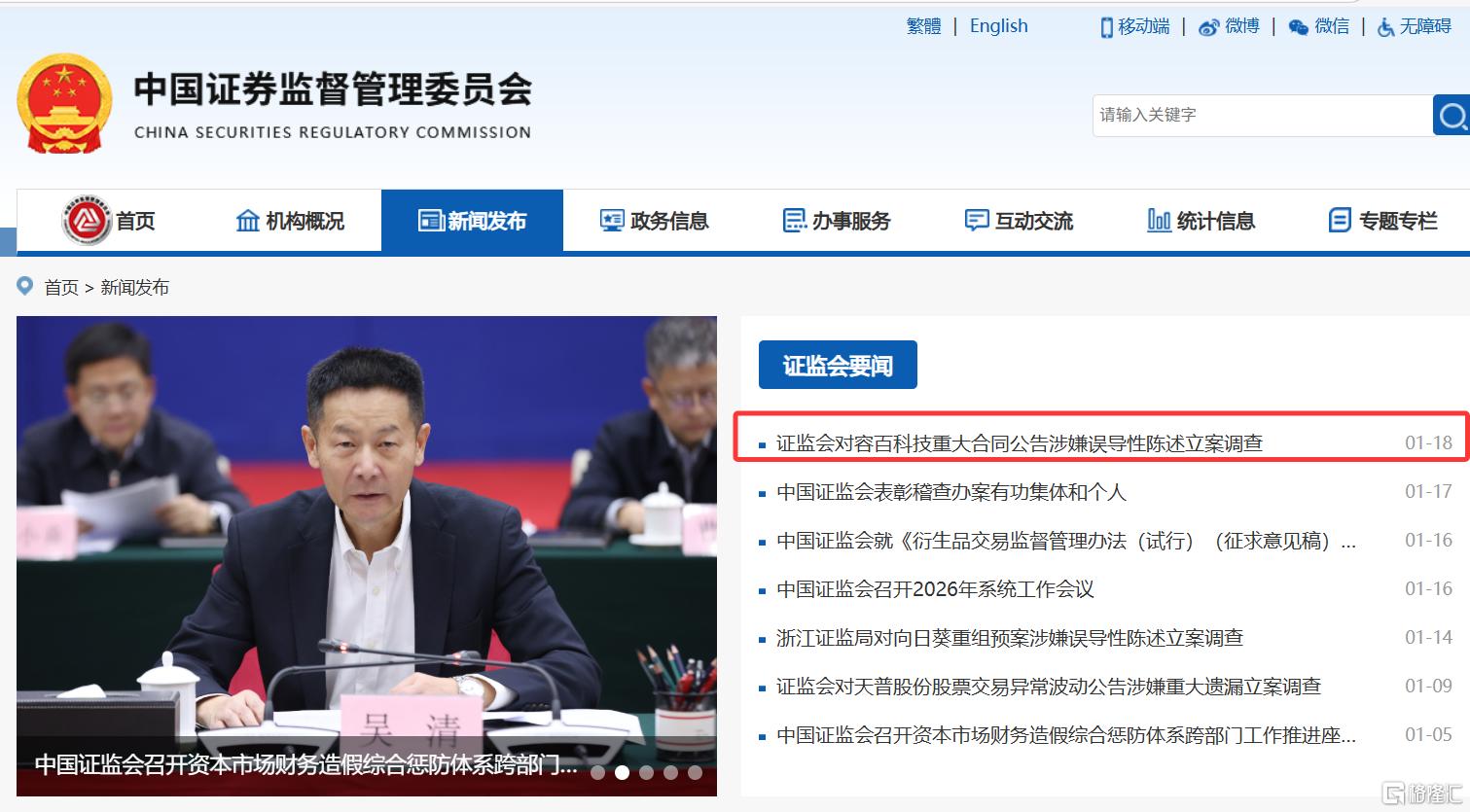
Core Viewpoint - The China Securities Regulatory Commission (CSRC) has initiated an investigation into Rongbai Technology for allegedly misleading statements in a major contract announcement, raising concerns about corporate governance and compliance within the company [1][3][4]. Group 1: Investigation and Corporate Response - On January 18, 2026, CSRC announced the investigation into Rongbai Technology following a contract announcement that was deemed misleading [1]. - Rongbai Technology's announcement of a 120 billion yuan contract was based on estimates, with actual sales dependent on future orders, leading to questions about the accuracy of the disclosure [3][4]. - The company stated that the announcement was prepared by the secretary of the board without the chairman's approval, implying a lack of oversight in the approval process [3][5]. Group 2: Governance Issues - The company's governance structure is under scrutiny, as the chairman is ultimately responsible for information disclosure, regardless of whether they directly approved the announcement [4][5]. - The failure to follow proper approval processes for significant announcements raises concerns about the effectiveness of internal controls and corporate governance at Rongbai Technology [5][6]. Group 3: Market Impact and Competitor Analysis - Following the investigation announcement, Rongbai Technology's stock fell by 11.16% after a trading halt, reflecting investor concerns about the company's ability to fulfill its contract obligations [8]. - Concurrently, CATL (Contemporary Amperex Technology Co., Limited) secured significant contracts with other suppliers, indicating a competitive landscape where Rongbai Technology's missteps could impact its market position [8][10]. - CATL has locked in substantial lithium iron phosphate (LFP) supply agreements, totaling approximately 737.31 million tons, which positions it strongly in the market [10][14]. Group 4: Future Market Dynamics - The ongoing investigation and governance issues at Rongbai Technology may lead to broader implications for the lithium battery supply chain, particularly as CATL continues to expand its market share and secure supply contracts [20][22]. - The industry is witnessing a "lock-in" trend for orders, with companies aggressively securing future supply, raising questions about potential overcapacity and market stability [22][23].
磷酸铁锂龙头单季净利暴涨500%!
起点锂电· 2026-01-21 11:13
Core Viewpoint - Hunan YN Energy (301358) is expected to see a significant increase in net profit for 2025, with projections ranging from 1.15 billion to 1.4 billion yuan, representing a year-on-year growth of 93.75% to 135.87% [2][3] Group 1: Financial Performance - The company anticipates a net profit attributable to shareholders of 1.15 billion to 1.4 billion yuan for 2025, marking a substantial increase compared to the previous year [2][3] - The net profit after deducting non-recurring gains and losses is projected to be between 1.1 billion and 1.35 billion yuan, also reflecting a significant year-on-year growth of 92.88% to 136.72% [2][3] - In the first three quarters of 2025, the company achieved a net profit of 645 million yuan, indicating that the fourth quarter's net profit could exceed the total of the first three quarters, with an estimated median of around 630 million yuan, representing a year-on-year increase of over 500% and a quarter-on-quarter increase of 85% [4] Group 2: Market Demand and Product Development - The rapid development of the new energy vehicle and energy storage markets has driven a surge in demand for lithium battery cathode materials, particularly phosphate materials, leading to a significant increase in sales for Hunan YN Energy [5][6] - The company's long-cycle phosphate lithium products are well-suited to meet the growing demand in the energy storage sector, resulting in a rapid increase in order volume [6] - The optimization of product structure, particularly in high-density and high-energy phosphate lithium, has led to supply shortages, further boosting demand [7][8] Group 3: Capacity Expansion and Utilization - Hunan YN Energy expects to achieve an annual shipment volume of nearly 1.1 million tons in 2025, representing a year-on-year increase of over 50%, with the fourth quarter alone projected to exceed 300,000 tons [9] - The company's capacity utilization rate was 116.82% in the first half of 2025, indicating accelerated capacity release and high operational levels [10] - By the end of September 2025, the company had completed 295,000 tons of phosphate cathode material capacity from its fundraising projects, with an additional 100,000 tons still under construction [13] Group 4: Raw Material Pricing and Cost Management - The price of lithium carbonate is expected to stabilize and rise in the second half of 2025, benefiting from the company's prior accumulation of low-cost raw materials, which will enhance fourth-quarter profits [14] - The company is participating in industry initiatives to curb excessive competition and promote reasonable pricing, with several leading firms announcing price increases for their products starting in December 2025 [14] - Hunan YN Energy is strategically located in low electricity cost regions and is extending upstream to achieve self-supply of key raw materials, thereby reducing procurement costs and enhancing cost advantages [16]