星恒电源

Search documents
星恒电源拿下小牛3GWh电摩锂电池订单
高工锂电· 2025-09-29 10:43
Core Insights - The article highlights the growth potential of the electric motorcycle (e-motorcycle) market driven by the increasing demand for lithium batteries, particularly with the introduction of the "Micro Knife" battery technology by Xingheng Power in collaboration with Niu Electric [2][5][9] Industry Overview - The e-motorcycle market is experiencing growth due to the relaxation of restrictions on electric motorcycles in various regions, leading to increased lithium battery demand. In the first half of this year, domestic e-motorcycle sales reached approximately 1.57 million units, with exports continuing to rise [2][8] - The new national standards for electric two-wheelers impose strict requirements on voltage and speed, which helps eliminate the chaos of battery modifications and ensures safety [8] Technological Developments - Xingheng Power's "Micro Knife" battery technology focuses on innovative structural design, integrating various high-energy materials to enhance safety, endurance, and performance. The battery offers multiple capacity options, including 30-60Ah and 90-100Ah configurations [5][6][7] - The "Micro Knife" battery has achieved breakthroughs in the production of single crystal manganese lithium materials, significantly improving material stability [6][7] Market Dynamics - The commuting segment dominates the e-motorcycle market, accounting for 90% of the total share. Lithium batteries are positioned as effective alternatives to traditional fuel vehicles [8] - The overseas e-motorcycle market is also expanding, with significant growth observed in regions like Vietnam, where new e-motorcycle sales surged by 99.2% year-on-year in the first half of this year [9]


换电市场打响两轮车“去铅酸”第一枪
高工锂电· 2025-09-29 10:43
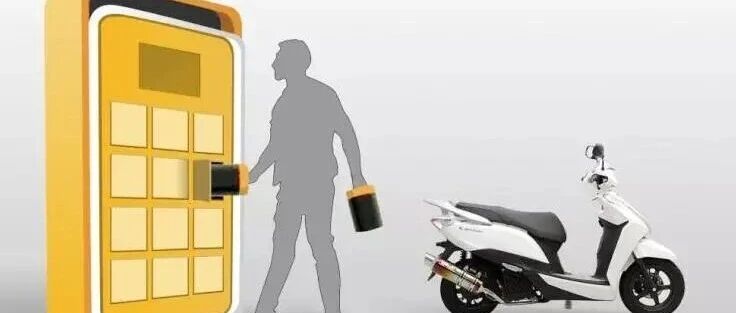
Core Viewpoint - The article discusses the rapid transition from lead-acid batteries to lithium batteries in the two-wheeler battery swapping market, driven by new regulations and consumer demand for better performance and efficiency [1][2]. Group 1: Market Dynamics - The implementation of the new national standard for electric bicycles has accelerated the shift towards lithium batteries, as they provide superior power experience and endurance compared to lead-acid batteries [1]. - The economic advantages of lithium batteries are highlighted, as they allow for a higher number of batteries to be stored in the same space compared to lead-acid batteries, which are heavier and require reinforced cabinets [2]. - The battery swapping market is characterized by strict regulations that mitigate risks associated with battery modifications, promoting the adoption of lithium batteries [2]. Group 2: Operational Efficiency - Lithium batteries support faster charging times (2-4 hours) compared to lead-acid batteries (6-8 hours), enhancing the turnover rate of battery swapping stations [2]. - The lifespan of lead-acid batteries (300-500 cycles) is significantly shorter, increasing operational costs for battery swapping operators [2]. - Battery swapping stations currently offer services for various voltage specifications (48V, 60V), catering to different user needs, particularly for delivery riders who require higher performance [2]. Group 3: Business Models - Two-wheeler battery swapping operators generate revenue through battery rental fees, swapping fees, and partnerships with vehicle manufacturers [4]. - The business model for consumer-facing services typically involves a deposit and monthly rental fee structure, while B2B services often charge franchise fees [4]. - Innovative pricing models, such as "pay for what you use," are being introduced to attract more users [5]. Group 4: Market Growth and Future Trends - The electric bicycle battery swapping market is projected to exceed 32.85 billion yuan by 2025, with a penetration rate expected to surpass 50% by 2026 [5]. - The transition to lithium batteries is anticipated to create a market worth hundreds of billions in the future [6]. - Sodium-ion batteries are emerging as an alternative, particularly in specific scenarios and regions, due to their fast charging and safety features [7][10].
锰基电池有望加速上车,破解成本高、里程焦虑等问题
Bei Jing Ri Bao Ke Hu Duan· 2025-09-28 12:42
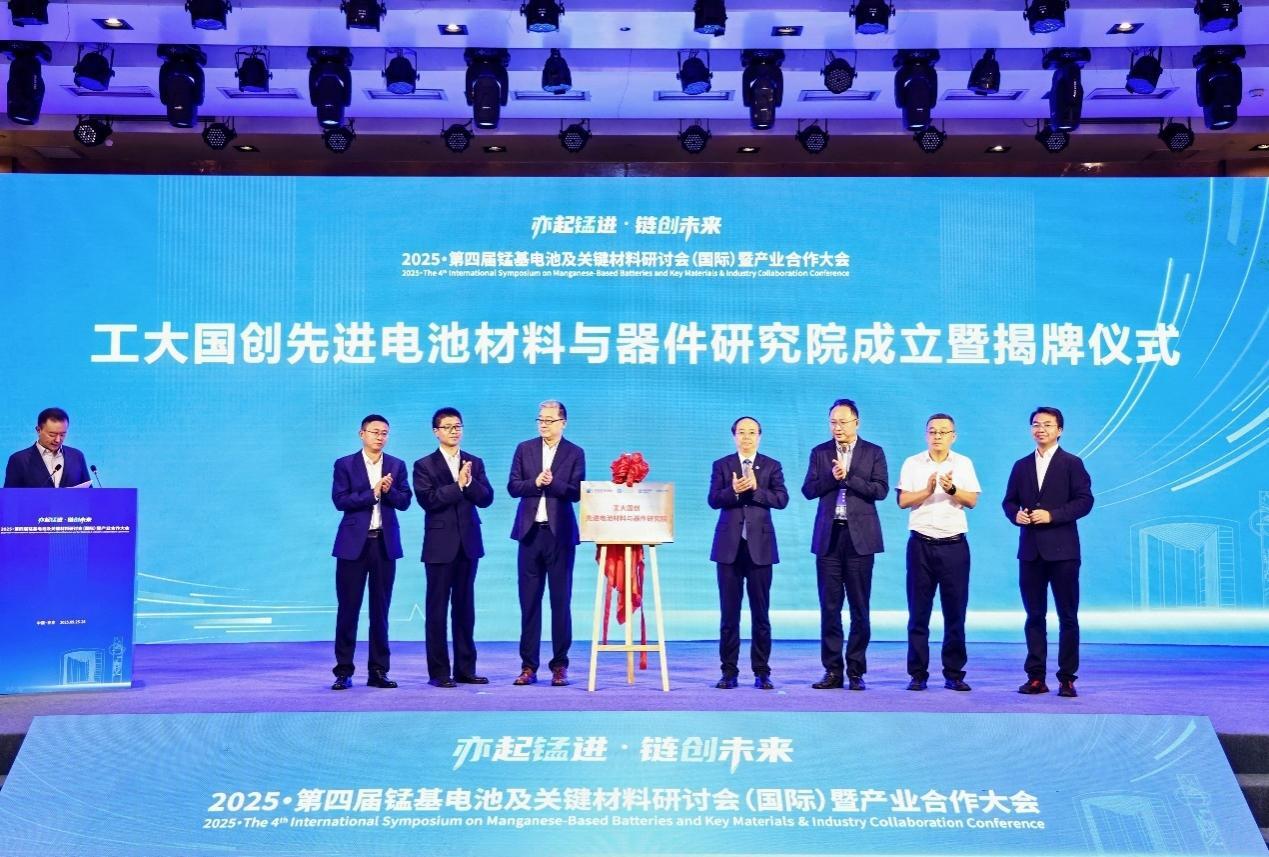
Core Viewpoint - A new technology route for manganese-based batteries is expected to address issues such as high costs, low energy density, and short range in traditional batteries for electric vehicles [1][3]. Group 1: Manganese-Based Battery Advantages - Manganese-based batteries offer high energy density, low cost, and environmental friendliness, making them a promising alternative to current battery technologies [3]. - The abundant availability of manganese compared to lithium, nickel, and cobalt enhances the feasibility of manganese-based batteries [3]. - Manganese-based batteries are projected to achieve energy densities significantly higher than widely used ternary lithium batteries and lithium iron phosphate batteries, potentially alleviating range anxiety and performance issues in low temperatures [3][5]. Group 2: Research Institute Establishment - The establishment of the Advanced Battery Materials and Devices Research Institute aims to accelerate the development of key materials and technologies in the manganese battery sector [1][5]. - The research institute will create a comprehensive innovation system encompassing basic research, pilot incubation, and industrial application [5]. - The institute will facilitate the high-quality transformation and rapid industrialization of original research outcomes from Beijing's higher education institutions and research institutes [5]. Group 3: Technological Breakthroughs - A research team from Beijing University of Technology has achieved key technological breakthroughs in lithium-rich manganese-based cathode materials, enhancing their application in automotive lithium batteries [5]. - The team has successfully scaled up the production of these materials, overcoming challenges related to structural stability and surface impurities, and established a production line with a capacity of 1,000 tons per year [5][6]. Group 4: Industry Collaboration - The research institute plans to collaborate with leading universities and industry players, including CATL and BYD, to form a manganese battery industry cluster [6]. - The initiative aims to create a closed-loop for the transformation of research results from material development to end-use applications, supporting emerging industries such as electric transportation and advanced energy storage [6][7]. - The conference highlighted significant advancements, including new technologies that enhance the performance of manganese-based batteries, such as the "three manganese synthesis" technology and "preparation technology" for lithium iron phosphate [6][7].
聚焦通勤电摩锂电化,星恒电源加大布局
高工锂电· 2025-09-24 09:06
Core Viewpoint - The article highlights the rapid electrification of motorcycles, particularly focusing on electric scooters in the commuting segment, which is becoming a dominant market trend as lithium battery technology matures [2][3][4]. Industry Trends - The global trend towards lithium battery electrification in motorcycles is evident, with electric scooters gaining traction in markets traditionally dominated by fuel-powered motorcycles [3][6]. - In China, the transition to electric two-wheelers is nearly complete, with electric bicycles and scooters becoming mainstream, while fuel motorcycles are shifting towards recreational use [3][4]. Market Dynamics - Commuting electric scooters account for 90% of the electric scooter market, directly competing with the popular 125CC fuel motorcycles, which are favored for their performance and economic viability [6][4]. - The demand for electric scooters is driven by their high energy density and cost-effectiveness, making them suitable for daily commuting needs [4][6]. Company Focus - Star恒电源 is positioned as a leading player in the electric scooter lithium battery market, focusing on providing safe, reliable, and cost-effective battery solutions tailored for commuting users [9][10]. - The company has achieved a significant market share in domestic, South Asian, and Southeast Asian markets, with plans to expand into Africa and South America [11]. Safety and Standards - The industry faces potential risks due to a focus on extreme performance parameters, which may compromise safety. The upcoming national standards for electric scooter lithium batteries are expected to enforce strict safety requirements [12][14]. - Star恒电源's strategy aligns with these regulatory developments, emphasizing safety and reliability in their product offerings [13][14]. Future Outlook - As national standards are implemented and market demands become clearer, companies like Star恒电源, with solid technical foundations and manufacturing capabilities, are likely to lead the industry consolidation and promote sustainable growth in motorcycle electrification [14].
每日速递|亿纬锂能打入小鹏MONA电池供应体系
高工锂电· 2025-09-18 11:01
Group 1: Industry Events - The 2025 High-Performance Lithium Battery Annual Conference will be held from November 18-20, 2025, at JW Marriott Hotel in Shenzhen [1] Group 2: Company Developments - Sichuan Yahua Industrial Group has confirmed the synthesis process for lithium sulfide and plans to establish a pilot line by 2026, with sample production expected by the end of this year [4] - EVE Energy has successfully entered the battery supply system for Xiaopeng's MONA model, providing traditional square batteries which offer better adaptability and lower development costs compared to BYD's blade batteries [5] - Greeenme has signed a strategic cooperation framework agreement with Lvtong Technology to focus on the recycling and utilization of new energy vehicles and power batteries, creating a closed-loop industrial chain [8] - Xingheng Power and Niu Electric have signed a strategic cooperation agreement for micro-blade electric motorcycle lithium batteries, with a collaboration scale of 3 GWh [9] - Tianqi Lithium has commenced the construction of a pilot project for 50 tons of lithium sulfide, utilizing new technology for rapid mass production [11] - Hebei Kuntian New Energy has launched its first phase of a silicon-carbon anode material production line, with plans for a second phase to reach an annual capacity of 5,000 tons [12][14] - Hailiang Co. has developed new copper foil products suitable for solid-state batteries, which are now ready for mass production [16] Group 3: International Developments - InoBat has received €53.8 million in subsidies and a €456,000 loan from the Spanish government to support the construction of a battery factory in Valladolid, with a total investment of approximately €712 million [17][19]





星恒&小牛签署微刀电摩锂电联合开发协议
鑫椤锂电· 2025-09-17 07:51
Core Viewpoint - The strategic partnership between Xingheng Power and Niu Electric aims to enhance the development of high-performance electric motorcycles through the joint research and development of the "Micro Blade Battery" technology, marking a significant step in the electric mobility sector [1][2][3]. Group 1: Strategic Cooperation - Xingheng Power and Niu Electric signed a strategic cooperation agreement for the Micro Blade Battery series, committing to a collaboration scale of 3GWh [1]. - The partnership focuses on technological innovation, product development, and supply chain collaboration to enhance user experience in electric mobility [1][2]. Group 2: Market Opportunity - The demand for high-performance electric motorcycles is increasing due to the rise of young consumers and stricter regulations in the electric vehicle sector [2]. - Niu Electric has established itself as a leading brand in the electric two-wheeler market, leveraging innovative design and smart technology [2]. Group 3: Technological Innovation - The "Micro Blade Technology" emphasizes a "thousand-blade architecture" and "high-conductivity core," utilizing advanced materials to improve battery safety, range, and performance [3]. - The Micro Blade Battery will offer various configurations, including 30-60Ah and 90-100Ah options, to meet the high demands of users [3]. Group 4: Leadership Statements - Niu Electric's CEO highlighted the collaboration's goal to enhance product experience and maintain a technological edge in the global smart mobility market [4]. - Xingheng Power's leadership emphasized the long-standing partnership and the expansion into the electric motorcycle sector, aiming for large-scale application of battery technology in smart urban mobility [4].

每日速递|宁德时代召开枧下窝矿复产会议
高工锂电· 2025-09-10 10:36
Battery - Ningde Times held a meeting to advance the resumption of the Jiangxiawo lithium mine, with progress on mining rights and permits faster than market expectations, indicating imminent resumption of operations [3] - Shenzhen Yaoshi Lithium Battery Technology Co., Ltd. signed a strategic cooperation agreement with MattVerse Limited to integrate AI technology into battery material research and development [4] - Xingheng Power signed a strategic cooperation agreement with JD Auto to launch high-quality, large-capacity lithium batteries, facilitating an easy upgrade from lead-acid to lithium batteries for consumers [5][6] - Solid Ion Energy Technology (Wuhan) Co., Ltd. commenced construction of its headquarters in Wuhan, aiming to create an integrated space for R&D, production lines, and operations [8] Materials - Dao Shi Technology signed an investment agreement for a 1,000-ton silicon-carbon anode project, which will enhance its solid-state battery material production capabilities [10] Equipment - Jing Shan Light Machine received a procurement order worth approximately RMB 1.005 billion from a leading lithium battery company for lithium battery production line equipment [12] - Foller Smart Green Energy signed a strategic cooperation agreement for a lithium battery production line project with a well-known Southeast Asian company [13] - Xianhui Technology and Qingtao Energy established a joint laboratory for advanced solid-state battery manufacturing processes to accelerate the commercialization of solid-state battery technology [15]

电动自行车新国标落地:价格受关注,将倒逼企业升级生产条件
Nan Fang Du Shi Bao· 2025-09-04 08:41
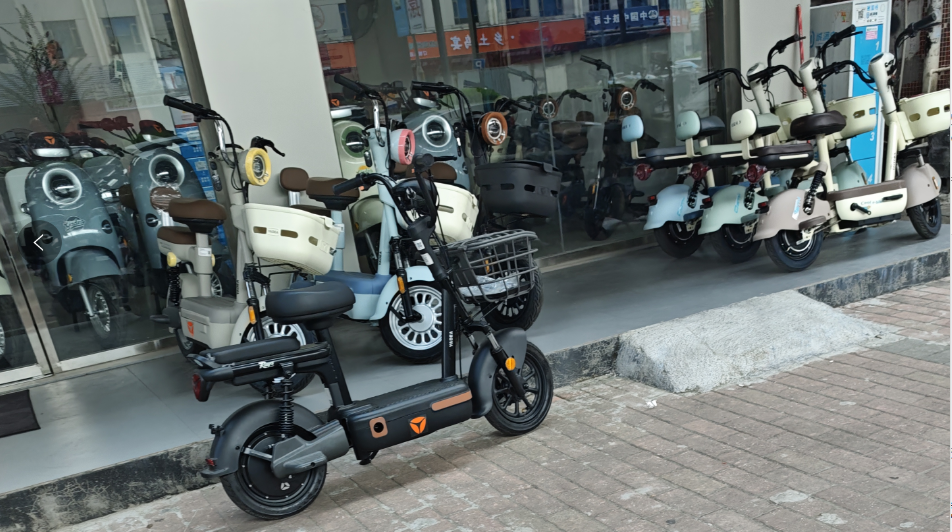
Core Viewpoint - The implementation of the new national standard for electric bicycles (GB 17761—2024) introduces higher safety requirements and opportunities for industry integration and technological upgrades, despite short-term challenges in pricing and design [1][23]. Industry Impact - The new standard requires a mandatory power cut-off mechanism and a "three-in-one" anti-tampering design for battery packs, controllers, and speed limiters, enhancing safety and reducing modification risks [1][21]. - The new regulations impose a hard limit on the total weight of plastic components in electric bicycles, which must not exceed 5.5% of the total vehicle weight, aiming to lower fire risks [1][21]. - The transition period allows for the sale of old standard vehicles until the end of 2025, but many companies are preparing to launch new standard models by November or December 2023 [17][23]. Consumer Insights - Consumers are primarily concerned about the pricing and safety features of new standard electric bicycles, with expectations that prices will start at around 3000 yuan, significantly higher than old standard models [4][9]. - The new models are expected to have a simpler design and may utilize materials like magnesium-aluminum alloy, which could further increase costs but enhance safety [13][21]. Company Strategies - Companies like Nine and Xiaoniu are focusing on technological innovation and strategic partnerships to enhance their product offerings and meet the new standards [18][19]. - Nine plans to gradually phase out old standard models and has established a comprehensive anti-tampering technology system to comply with the new regulations [17][19]. - Xiaoniu is investing in battery technology and smart features to align with the new safety and intelligence requirements, aiming to maintain a competitive edge in the market [18][19]. Market Dynamics - The new standard is expected to lead to a market reshuffle, with smaller companies that cannot meet the new production requirements likely to exit the market, thereby increasing market share for larger, more capable manufacturers [23]. - The increased costs associated with compliance, such as mandatory 4G and Beidou modules, will likely be passed on to consumers, affecting pricing strategies across the industry [23].
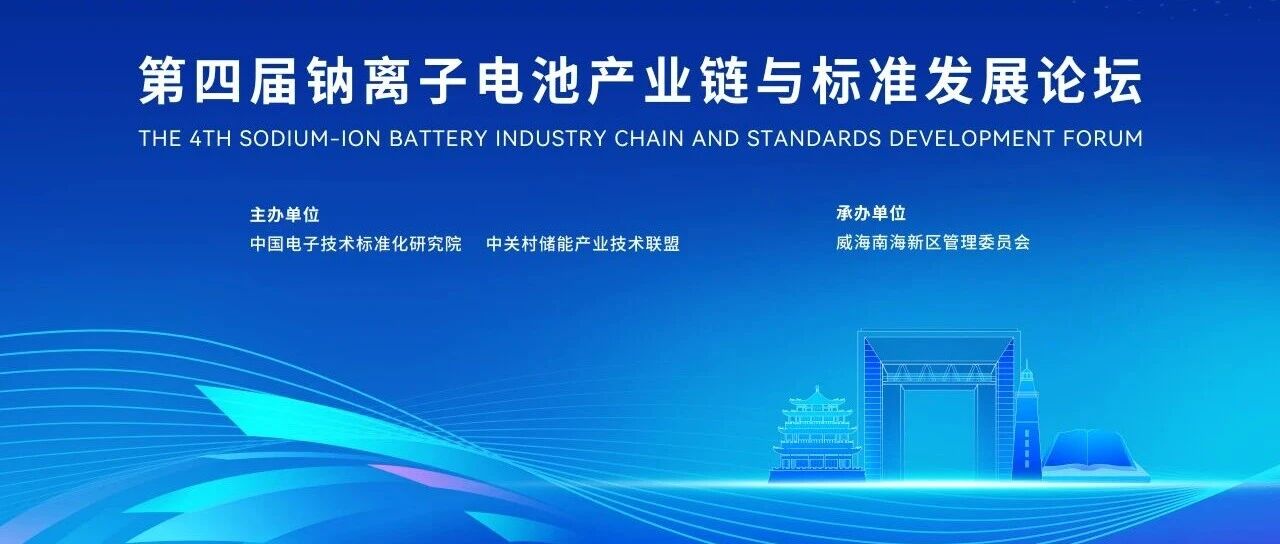
第四届钠离子电池产业链与标准发展论坛:聚焦产业化突破与标准建设,权威测评结果即将发布!
中关村储能产业技术联盟· 2025-09-02 09:12
Core Points - The Fourth Sodium-Ion Battery Industry Chain and Standard Development Forum will be held from September 24 to 26, 2025, in Weihai, Shandong Province, aiming to promote the industrialization and standardization of sodium-ion batteries [1][3][4] - The forum will include discussions on standards, policy seminars, keynote reports, authoritative evaluations, sub-forums on the industry chain/application end, and product exhibitions [2] Group 1: Event Details - The event is co-hosted by the China Electronics Standardization Institute and the Zhongguancun Energy Storage Industry Technology Alliance, with the Weihai Nanhai New District Management Committee as the organizer [3] - The forum will feature participation from government departments, research institutions, automotive manufacturers, and energy storage companies [4][7] - The venue for the forum is the Luyuan Jingshang Yi International Hotel in Weihai [4] Group 2: Agenda Highlights - The agenda includes a series of discussions on international standards for sodium-ion batteries, safety technical specifications, and a summary of the lithium-ion battery standard working group's activities [5][8] - Keynote reports will cover topics such as the development of sodium-ion battery materials, safety performance comparisons, and standardization progress [10][11] - The forum will also announce the sixth batch of sodium-ion battery evaluation passing units and the second batch of sodium-ion battery cycle life testing results [12][13] Group 3: Industry Context - The sodium-ion battery industry is rapidly advancing due to its advantages such as abundant resources, low cost, good temperature adaptability, and high safety [23] - Over 200 companies are currently involved in the sodium-ion battery industry chain, indicating significant growth and interest in this sector [23] - The forum aims to align with national policies promoting energy production and consumption revolution, focusing on the development of new energy storage technologies [22][23]
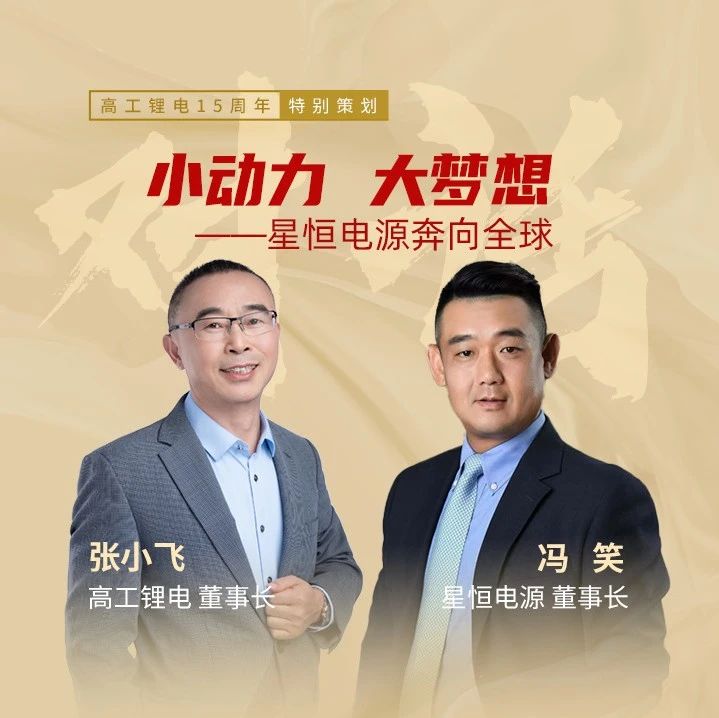
高工锂电15周年策划|飞哥对话冯笑:小动力大梦想 星恒电源奔向全球
高工锂电· 2025-08-28 10:25
Core Viewpoint - The article highlights the strategic determination and innovative approach of Xingheng Power, a pioneer in the lithium battery industry, which has successfully carved out a global presence in the "small power" sector while others focus on electric vehicles [1][4]. Group 1: Company Strategy and Vision - Xingheng Power aims to serve a potential customer base of 2 to 2.5 billion people over the next decade, focusing on regions like South Asia, Africa, and South America [1][13]. - The company emphasizes the importance of independent thinking and innovation, advocating for a diverse industry rather than homogeneous competition [1][19]. - The strategic focus is on lightweight vehicles, including two-wheelers and three-wheelers, as well as energy storage solutions, which are seen as critical areas for growth [6][10]. Group 2: Market Position and Achievements - Xingheng Power has achieved significant sales milestones, with a reported shipment of 33 million sets of lightweight vehicle batteries by the end of last year, with aspirations to reach 100 million sets in three years [10]. - The company has successfully penetrated international markets, with notable sales in Colombia, indicating a growing global footprint [14]. Group 3: Innovation and Product Development - The company’s product design is user-centric, focusing on standardization to enhance efficiency and reduce costs, which is crucial for meeting diverse market needs [10][19]. - The vision includes the future of batteries as assets rather than mere consumables, promoting the idea of battery banks and standardized products for various applications [8][19]. Group 4: Industry Perspective - The article discusses the broader implications of electrification, suggesting that electricity will become the most accessible and efficient energy source, impacting various sectors beyond just transportation [16][19]. - The narrative emphasizes the need for continuous innovation and adaptation in the battery industry, highlighting the importance of understanding market dynamics and consumer needs [19][21].