
武田

Search documents
多款救命药有望商保报销 保费怎么定是关键
经济观察报· 2025-08-16 13:32
Core Viewpoint - The article discusses the introduction of the commercial insurance innovative drug directory in China, which supplements the basic medical insurance directory and aims to include high-priced innovative drugs that provide significant clinical value and patient benefits [2][10]. Summary by Sections Introduction of the Commercial Insurance Innovative Drug Directory - The National Healthcare Security Administration announced a list of drugs that passed the initial review for the commercial insurance innovative drug directory, with a total of 121 drugs, over half of which are cancer or rare disease medications [2][5]. - The directory is expected to include high-priced drugs, such as CAR-T therapies costing over 1 million yuan per injection and gene therapies priced around 98,000 yuan per injection [2][4]. Drug Approval and Characteristics - To qualify for the commercial insurance innovative drug directory, drugs must either be newly approved from January 1, 2020, to June 30, 2025, or have indications included in the national rare disease directory by June 30, 2025 [5]. - Among the 121 drugs, 57 are imported, accounting for 47%, with notable entries from companies like Pfizer and Johnson & Johnson [5]. Focus on Cancer and Rare Diseases - The majority of drugs that passed the initial review are cancer treatments, with over 40 entries, followed by 35 for rare diseases [5][6]. - The article highlights the potential for the directory to alleviate payment challenges for rare disease medications, with companies actively submitting applications [6]. Pricing and Negotiation Challenges - The pricing negotiation process for drugs in the commercial insurance directory remains uncertain, as it involves collaboration between the National Healthcare Security Administration, commercial insurers, and pharmaceutical companies [12][13]. - The article notes that the commercial insurance directory may serve as a "double insurance" for companies, allowing them to apply for both the basic medical insurance and the commercial insurance directories simultaneously [9]. Future Considerations and Recommendations - The article suggests that the implementation of the commercial insurance innovative drug directory requires further exploration and refinement, with recommendations for pilot programs in specific insurance products [14]. - It emphasizes the need for insurance companies to develop reasonable pricing mechanisms and improve data integration with basic medical insurance to enhance their pricing strategies [13][14].


药盒里的潮汐进退:进口原研药高溢价神话崩塌与国产药逆袭
Hua Xia Shi Bao· 2025-08-12 11:07
Core Insights - The shift from imported original research drugs to domestic generics and innovative drugs is significant, with the market share of imported original cancer drugs in top-tier hospitals dropping from 68% in 2021 to 34% in 2024, while domestic generics and innovative drugs now account for 66% [1][5][10] - The decline of imported original drugs is attributed to aggressive pricing strategies by multinational pharmaceutical companies and the cost advantages of domestic generics [1][6][10] - Patients are increasingly accepting domestic drugs, with many reporting satisfactory treatment outcomes and reduced financial burdens [4][12] Industry Dynamics - Multinational pharmaceutical companies are accelerating localization efforts, expanding production bases, and upgrading R&D centers to balance cost and innovation [2][13] - The Chinese government's policies, including centralized drug procurement and price negotiations, are effectively reducing drug prices and reshaping the market landscape [10][16] - The acceptance of domestic drugs is growing among patients, driven by improved quality and increased awareness [5][12] Market Trends - The usage of imported original cancer drugs has significantly decreased, with one hospital reporting a drop from over 200 units per month to around 50 units, while the usage of domestic innovative drugs has more than doubled [4][5] - The market for imported original drugs is facing challenges, with a low bid success rate in centralized procurement, leading to many companies withdrawing from public hospital markets [6][10] - The trend of patients preferring cost-effective domestic drugs is supported by studies showing equivalent efficacy and safety compared to original drugs [12][16] Future Outlook - The pharmaceutical industry is expected to continue evolving, with multinational companies adapting their strategies to maintain market presence through innovation and collaboration with local firms [13][14] - The Chinese market is becoming increasingly competitive, with domestic companies focusing on differentiated innovation to capture market share [11][14] - Ongoing reforms in the healthcare system aim to ensure that patients have access to a wider range of affordable and high-quality medications [16]
特稿 | 药盒里的潮汐进退:进口原研药高溢价神话崩塌与国产药逆袭
Hua Xia Shi Bao· 2025-08-12 04:19
Core Viewpoint - The article highlights a significant shift in the pharmaceutical market in China, where the market share of imported original research cancer drugs in top-tier hospitals is projected to drop from 68% in 2021 to 34% in 2024, while the combined share of domestic generic and innovative drugs is expected to rise to 66% [5][10]. Group 1: Market Dynamics - The transition from imported original drugs to domestic alternatives reflects deeper changes in the pharmaceutical market, driven by cost advantages of domestic generics and innovations [1][6]. - In the first half of 2025, over 30 original research drugs from multinational companies are expected to withdraw from the market, including those from Takeda, Pfizer, and GlaxoSmithKline [1]. - The declining market share of imported drugs is attributed to multinational companies' pricing strategies and the competitive pricing of domestic generics [6][10]. Group 2: Patient Perspectives - Many patients are initially hesitant to switch from imported to domestic drugs due to concerns about efficacy and safety, as illustrated by the experiences of patients like Ms. Zhou and an elderly male patient [3][4]. - However, some patients have reported positive outcomes after switching to domestic drugs, noting both cost savings and effective treatment [4][12]. Group 3: Policy and Regulatory Environment - The article discusses the impact of national drug procurement policies, which have significantly reduced the market presence of imported original drugs, with a low winning rate of 3.7% in recent procurement rounds [6][10]. - The ongoing reforms in the healthcare payment system, including DRG and DIP models, are pushing hospitals to prioritize lower-cost drugs, further squeezing the space for imported original drugs [10][12]. Group 4: Industry Adjustments - Multinational pharmaceutical companies are adapting by localizing their operations, including expanding production bases and upgrading research centers in China [13][14]. - Companies like Sanofi and Roche are shifting their focus towards innovative drugs and adjusting their product portfolios in response to market changes [8][14]. Group 5: Future Outlook - The article emphasizes the need for a transparent and competitive market environment to foster the development of high-quality, reasonably priced drugs, whether domestic or imported [16]. - The ongoing evolution in the pharmaceutical landscape suggests that both multinational and domestic companies will continue to adapt their strategies to meet changing patient needs and regulatory requirements [9][16].
首药控股(688197):ALK-TKI双代布局,SY-707上市在即
Great Wall Glory Securities· 2025-06-19 01:19
Investment Rating - The report assigns an "Accumulate" rating to the company, marking its first coverage [3][8]. Core Insights - The company focuses on the NSCLC small molecule innovative drug sector, possessing both second and third generation ALK-TKIs, with significant advancements in its clinical pipeline [3][17]. - The commercial value of the second generation ALK-TKI is about to be realized, while the third generation ALK-TKI is progressing well in clinical trials [4][60]. - The company has multiple early-stage research projects that have achieved significant milestones, ensuring sustainable development [3][18]. Summary by Sections Section 1: Focus on NSCLC Small Molecule Innovative Drugs - The company specializes in the independent research and development of small molecule innovative drugs, with a pipeline that includes various tumor indications and urgent clinical needs [3][17]. - It is the first domestic company to have both second and third generation ALK-TKIs [3][17]. - As of the 2024 report, the company has 22 proprietary research pipelines, all classified as new drugs [17][18]. Section 2: Commercial Value of ALK-TKIs - The second generation ALK-TKI SY-707 is nearing commercialization, with its NDA accepted by NMPA [4][55]. - The third generation ALK-TKI SY-3505 is the fastest progressing domestic option, with ongoing key clinical trials [4][58]. - The ALK-TKI market in China is dominated by second generation products, which are expected to account for 67.33% of the market by 2024 [60]. Section 3: SY-5007 and RET-TKI Development - SY-5007 is a high-selectivity RET-TKI that is currently in phase III clinical trials, showing promising efficacy and safety [6][22]. - It is the only domestic selective RET-TKI that has entered phase III trials globally, providing a significant competitive edge [6][22]. Section 4: Financial Projections - The company is projected to generate revenues of 0.59 billion, 1.43 billion, and 2.87 billion RMB from 2025 to 2027, with net losses expected to decrease slightly over the same period [7][10]. - The total equity value of the company is estimated at 6.614 billion RMB based on DCF modeling [7][8].

特朗普签署“药品降价”行政令 知名投资人:对中国创新药企业的影响没那么悲观
Mei Ri Jing Ji Xin Wen· 2025-05-13 16:12
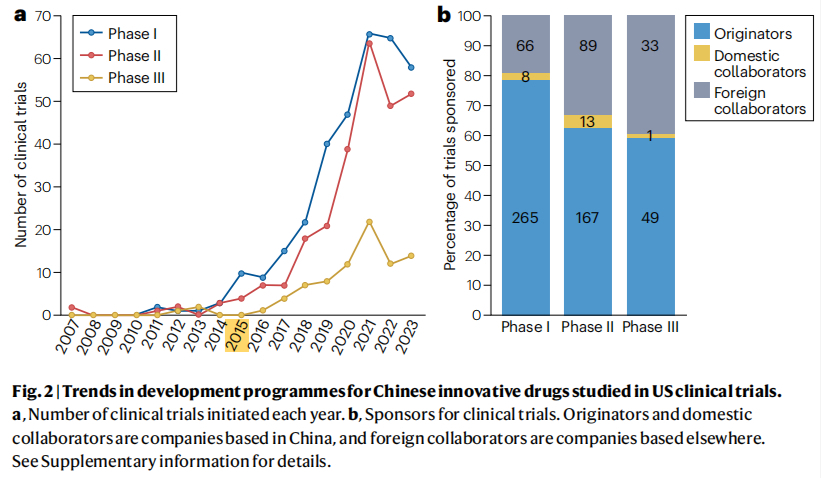
Group 1 - The core point of the news is the introduction of an executive order by President Trump aimed at lowering prescription drug prices in the U.S. through a "most-favored-nation pricing" model, aligning local drug prices with those in other developed countries [1][5] - Following the announcement, the domestic innovative drug sector in China experienced a significant market reaction, with related ETFs rising nearly 2% after an initial drop [1][5] - The executive order is perceived to favor generic drugs and biosimilars, potentially lowering entry barriers and increasing competition in the U.S. market [6][7] Group 2 - From 2007 to 2023, 350 innovative drugs from 177 Chinese pharmaceutical companies were studied in 691 clinical trials in the U.S., with 7 products approved for market [2][4] - Notable approved Chinese innovative drugs include BeiGene's BTK inhibitor, Legend Biotech's CAR-T therapy, and Junshi Biosciences' PD-1 inhibitor, with significant sales growth reported for these products in the U.S. market [4][5] - The impact of the drug pricing executive order on Chinese innovative drug companies is mixed; while some companies may face pressure on pricing, others may benefit from reduced competition in the generic drug space [7][8] Group 3 - Investment sentiment towards Chinese innovative drug companies remains cautiously optimistic, with some investors believing the impact of the pricing policy may not be as severe as anticipated [7][8] - The market share of U.S. sales is significant for many Chinese companies, with one leading company reporting a 107.5% year-on-year increase in sales for its core product in the U.S. [4][8] - The overall effect of the executive order on the pharmaceutical landscape is still uncertain, with companies advised to closely monitor developments [8][9]
亚盛医药-B:国内商业化表现稳健,全球化创新进入加速期-20250407
海通国际· 2025-04-07 12:23
Investment Rating - The report maintains an "Outperform" rating for Ascentage Pharma [2][21]. Core Insights - Ascentage Pharma achieved a revenue of RMB 980 million in 2024, representing a year-on-year growth of 343%, which includes a $100 million option payment from Takeda. The company reported a net loss of RMB 410 million, narrowing by 56.2% year-on-year [3][17]. - The domestic revenue performance of HQP1351 was strong, reaching RMB 240 million, with a significant increase in H2 revenue driven by improved penetration in pharmacies and hospitals [4][18]. - The company completed its U.S. IPO in 2025, raising RMB 967 million, which alleviated cash needs [3][20]. Financial Summary - Revenue projections for FY25-27 are RMB 5.7 billion, RMB 29.9 billion, and RMB 28.0 billion, respectively. Corresponding net profits are projected at RMB -8.4 billion, RMB 12.5 billion, and RMB 9.1 billion [8][21]. - The gross profit margin is expected to remain high, with estimates of 90.1% in FY25 and 98.1% in FY26 [8][14]. - The company’s cash and deposit balance was RMB 1.26 billion at the end of 2024, reflecting a 15.3% increase year-on-year [3][17]. R&D Progress - Ongoing Phase III trials include POLARIS-2 for pretreated CML-CP and POLARIS-3 for SDH-GIST, with plans to submit a Phase III application to the U.S. FDA for POLARIS-1 [5][23]. - The NDA for APG-2575 for R/R CLL/SLL has been accepted by the CDE, with multiple Phase III trials ongoing for various indications [5][23]. Valuation - The target price for Ascentage Pharma is set at HKD 53.1 per share, based on a risk-adjusted discounted cash flow (DCF) model with a WACC of 10.0% and a terminal growth rate of 3.0% [8][21].
港股概念追踪|恒瑞医药与默沙东达成许可协议 港股创新药“含金量”普遍提升(附概念股)
智通财经网· 2025-03-26 06:28
Core Viewpoint - The collaboration between Heng Rui Medicine and Merck marks a significant licensing agreement in the innovative drug sector, indicating a trend of increasing partnerships between multinational pharmaceutical companies and local biotech firms in China [1][2]. Group 1: Licensing Agreements - Heng Rui Medicine announced a licensing agreement with Merck for the oral small molecule project Lp(a), granting Merck exclusive rights to develop, produce, and commercialize the compound HRS-5346 outside Greater China [1]. - Merck will pay Heng Rui a $200 million upfront fee, with potential milestone payments related to development, regulatory, and commercialization reaching up to $1.77 billion [1]. - Heng Rui will also receive sales royalties based on the performance of HRS-5346 outside Greater China [1]. Group 2: Market Trends - There has been a notable increase in business development collaborations between multinational pharmaceutical companies and local innovative drug firms since the end of 2023, with several prominent projects emerging this year [1][2]. - The innovative drug sector in Hong Kong is experiencing a valuation expansion that may be stronger than that in A-shares, driven by higher R&D expenditure and overseas revenue proportions [3]. Group 3: Financial Performance - The overall net profit growth of the Hong Kong innovative drug sector has consistently outpaced that of A-shares since the first half of 2023, suggesting a favorable outlook for profitability [3]. - The sector is more sensitive to U.S. Treasury rates and benefits from overseas liquidity easing, which could enhance valuation levels [4]. - Companies in the Hong Kong innovative drug sector are perceived to have better cost-performance advantages, indicating greater potential for valuation elasticity [4]. Group 4: Company Developments - Heptares Therapeutics has entered a share subscription agreement with AstraZeneca, with a subscription price of $1.38 per share, representing a 37.2% premium over the closing price on the agreement date [6]. - Federal Pharmaceuticals has signed an exclusive licensing agreement with Novo Nordisk for UBT251, a triple agonist in early clinical development, with potential payments totaling up to $1.8 billion [7][8]. - Akeso reported a significant revenue increase of 4765.6% to approximately 156 million yuan, driven by a milestone collaboration agreement worth 900 million yuan [8]. - Hutchison China MediTech received conditional approval for its drug Tazemetostat in China, marking its first national regulatory approval [9]. - China Biologic Products announced positive interim results for its innovative drug Culmerciclib in a Phase III trial for breast cancer, with plans to submit a marketing application soon [10].

