
Kpler

Search documents
美国财政部长表示:“印度在乌克兰战争期间从俄罗斯石油中牟取暴利!”引发热议
Sou Hu Cai Jing· 2025-08-19 17:23
Group 1 - The U.S. Treasury Secretary Scott Bansenet accused India of profiting from cheap Russian oil imports during the Ukraine war, labeling it as "arbitrage" and unacceptable [2] - India has significantly increased its imports of Russian oil since the Ukraine war began, becoming the largest customer of Russia, importing 1.5 million barrels per day in July [2] - Former President Donald Trump ordered a 25% additional tariff on goods exported from India to the U.S. as a punishment for India's purchase of Russian oil, effective next week [2] Group 2 - Bob McNally, president of Rapidan Energy and former advisor to President George W. Bush, stated that India began large-scale purchases of Russian oil at the request of the Biden administration to prevent a spike in oil prices [3] - The Indian Ministry of External Affairs strongly opposed the U.S. tariff, calling it unfair and irrational, emphasizing that oil imports are based on market factors to ensure energy security for India's 1.4 billion population [3] - The Indian government indicated that it would take necessary measures to protect national interests in response to the U.S. decision to impose tariffs [3]

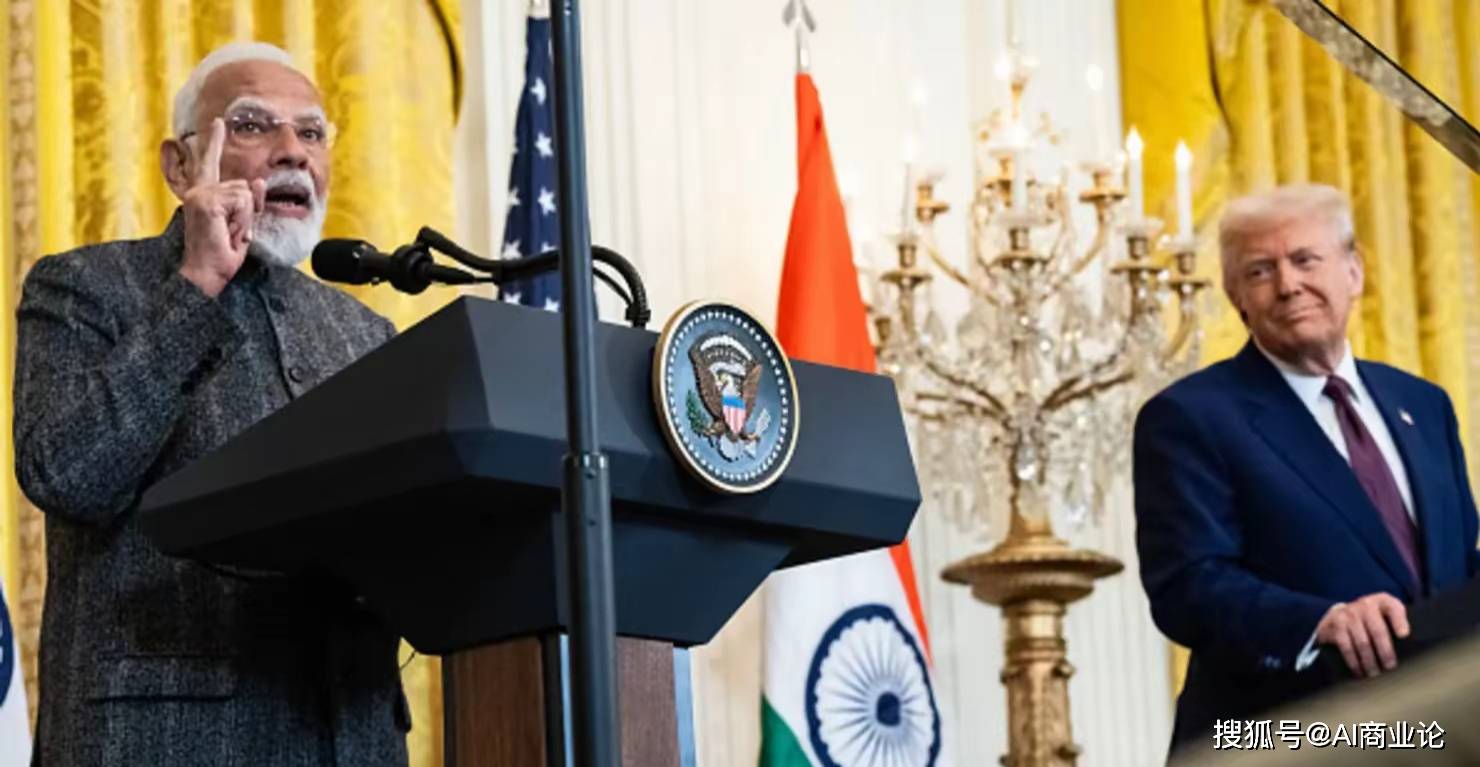
U.S. accuses India of profiteering from Russian oil
CNBC· 2025-08-19 13:25
Core Viewpoint - The U.S. Treasury Secretary has accused India of profiting from discounted Russian oil imports during the Ukraine war, labeling the practice as "arbitrage" and unacceptable [1]. Group 1: India's Oil Imports - India's imports of Russian oil have significantly increased since the full-scale invasion of Ukraine in February 2022, with India now being Russia's largest customer [2]. - In July, India imported 1.5 million barrels per day (bpd) of Russian oil, according to data from Kpler [2]. - Prior to the invasion, India's imports of Russian crude were minimal [2]. Group 2: Reselling Practices - India is refining the discounted Russian oil into gasoline and diesel and reselling these products to regions that have imposed sanctions on Russia, such as Europe [1]. - This practice has been characterized as "Indian arbitrage" by the U.S. Treasury Secretary, who claims it involves buying cheap Russian oil and reselling it at a profit [1].
从“关键伙伴”到头号靶子,为何特朗普眼中印度“光环”不再?
Sou Hu Cai Jing· 2025-08-18 12:37
Core Viewpoint - The deterioration of US-India relations under the Trump administration is marked by aggressive trade measures and geopolitical tensions, leading to a significant reassessment of India's strategic value to the US [1][5]. Trade Relations - The US has imposed tariffs as high as 50% on Indian goods, significantly exceeding tariffs on China, indicating a shift in trade dynamics [1][8]. - In 2024, India's exports to the US are projected to be around $87 billion, constituting approximately 18% of India's total exports, highlighting India's dependency on the US market [7]. Strategic Value - India's strategic value has been re-evaluated, with the Trump administration viewing it more as a transactional partner rather than a key ally in countering China [3][5]. - The lack of immediate returns from India in terms of strategic cooperation has led to a perception of India as a burden rather than an asset [3][5]. Economic Vulnerability - India's economic structure is heavily reliant on low-tech, labor-intensive exports, making it vulnerable to US trade policies, as these goods have many substitutes in the global market [7][8]. - The potential impact of the 50% tariff could lead to a 40%-50% reduction in Indian exports to the US, severely affecting sectors like textiles and jewelry [8]. Leadership Dynamics - The personal dynamics between Trump and Indian Prime Minister Modi have exacerbated tensions, with Modi's actions perceived as challenges to Trump's authority [10][12]. - In contrast, Pakistan's approach of aligning with Trump's narrative has resulted in a more favorable treatment from the US, highlighting the importance of personal rapport in international relations [11][12]. Conclusion - The combination of diminished strategic value, economic weaknesses, and imbalanced leadership interactions has left India in a precarious position, potentially transforming from a key partner to a target of US pressure [12].
美国7月原油出口跌至4年来低点
Zhong Guo Hua Gong Bao· 2025-08-15 04:23
中化新网讯 近日,美国数据分析公司Kpler的数据显示,美国7月原油出口量降至310万桶/日,为2021年 10月需求受新冠疫情冲击以来的最低水平。分析称,其大背景是美国国内供应下降以及亚洲和欧洲的买 家找到了更便宜的替代品。 美国能源信息署(EIA)的统计数据显示,7月原油平均出口量为320万桶/日,低于6月的360万桶/日。出口 量下降的原因是欧洲和美国基准原油期货价差缩小,导致跨大西洋运输原油的经济吸引力下降。 Kpler首席石油分析师马特·史密斯表示:"市场受经济趋势驱动,企业受利润驱动,因此企业将继续购买 对其而言最便宜、质量最好的原油。"Kpler的数据显示,7月份美国对亚洲的原油出口量为86.2万桶/ 日,为2019年1月以来的最低水平,并且远低于三个月平均水平的110万桶/日。 从买家来看,美国对中国的出口连续5个月为0。此外,去年作为美国原油第二大出口国的韩国几乎减 半,对印度的出口也下降了46%。对欧洲的出口从6月起减少14%,为160万桶/日。 ...
原油成品油早报-20250808
Yong An Qi Huo· 2025-08-08 02:20
Report Summary 1. Industry Investment Rating - No investment rating information is provided in the report. 2. Core Viewpoints - This week, oil prices rose and then fell, with the monthly spreads of the three major crude oil markets increasing. Trump's warning of secondary tariffs on Russia and the actual decline in Russian crude oil exports have intensified concerns about supply shortages, but even in the case of extreme sanctions, it will not change the oversupply pattern. The market favors a stronger near - term monthly spread and a wait - and - see attitude towards medium - term absolute prices. After OPEC decided to increase production in September, oil prices quickly declined. The absolute price of oil is expected to continue to fall after the statement of OPEC +, with some support in reality. It is expected to fall to $55 - 60 per barrel in the fourth quarter, and attention should be paid to the impact of US tariff policies on the global economy and the non - OPEC production schedule [5]. 3. Section Summaries 3.1 Daily News - Kpler reported that the discount on Russian crude oil export prices has widened due to the pressure from the US and the EU on Russian oil buyers, which has hit demand. Indian state - owned refineries are considering suspending imports of Russian oil, and private enterprises are also slowing down their purchases. The price of Urals crude oil is now more than $5 per barrel cheaper than the North Sea crude oil price index, compared with almost zero spread two weeks ago [3]. - Putin said that the UAE is one of the suitable places to meet with Trump, and he doesn't mind meeting Zelensky. After a refinery was attacked by drones, Russia plans to increase its oil exports to the West to nearly 2 million barrels per day in August [4]. 3.2 Regional Fundamentals - EIA reports showed that in the week ending August 1st, US crude oil exports increased by 620,000 barrels per day to 3.318 million barrels per day; domestic crude oil production decreased by 30,000 barrels to 13.284 million barrels per day; commercial crude oil inventories excluding strategic reserves decreased by 3.029 million barrels to 424 million barrels, a decrease of 0.71%; the four - week average supply of US crude oil products was 20.616 million barrels per day, a 1.61% increase compared to the same period last year; the Strategic Petroleum Reserve (SPR) inventory increased by 235,000 barrels to 403 million barrels, an increase of 0.06%; and the import of commercial crude oil excluding strategic reserves was 5.962 million barrels per day, a decrease of 174,000 barrels per day compared to the previous week [4]. - From July 25th - 31st, the operating rate of major refineries in China increased slightly, while that of Shandong local refineries remained basically unchanged. The output of Chinese refineries showed a decline in gasoline and an increase in diesel, and the inventory also showed a decline in gasoline and an increase in diesel. The comprehensive profit of major refineries rebounded month - on - month, while that of local refineries declined [4]. 3.3 Weekly Viewpoints - This week, oil prices first rose and then fell, and the monthly spreads of the three major crude oil markets increased. Trump's warning of secondary tariffs on Russia and the actual decline in Russian crude oil exports have intensified concerns about supply shortages, but extreme sanctions will not change the oversupply pattern. OPEC's decision to increase production in September led to a quick decline in oil prices, with Brent crude falling below the $70 per barrel mark [5]. - Macroscopically, Trump postponed the implementation of tariffs on goods from 67 trading partners by one week, and the poor July non - farm payrolls data led the market to bet on a September interest rate cut. Fundamentally, global oil inventories decreased slightly this week, higher than the same period last year by about 2%. US commercial inventories increased significantly, the number of oil rigs decreased again, gasoline inventories decreased while diesel inventories increased, ARA diesel inventories decreased, and Singapore diesel inventories increased slightly but were at a low level compared to the same period last year. Global refinery profits declined this week, and the refinery operating season is coming to an end. The main uncertainties lie in the intensity of US secondary sanctions on Russia. After the statement of OPEC +, the absolute price of oil is expected to continue to fall, with some support in reality, and is expected to fall to $55 - 60 per barrel in the fourth quarter [5].
Kpler:俄罗斯原油出口价格折扣扩大
Sou Hu Cai Jing· 2025-08-07 15:23
Core Insights - Russian oil exports to India are facing significant discounts due to pressure from the US and EU on Russian oil buyers, impacting demand [1] - Indian state-owned refiners are reportedly considering a complete halt on imports of Russian oil, while private companies are still extracting oil but at a slower pace [1] - The price of Urals crude oil is now over $5 cheaper per barrel compared to the North Sea crude price index, which had a price difference that was nearly zero two weeks ago [1]
巨额承诺 vs. 市场现实:欧盟7500亿能源采购难兑现?
智通财经网· 2025-07-28 12:28
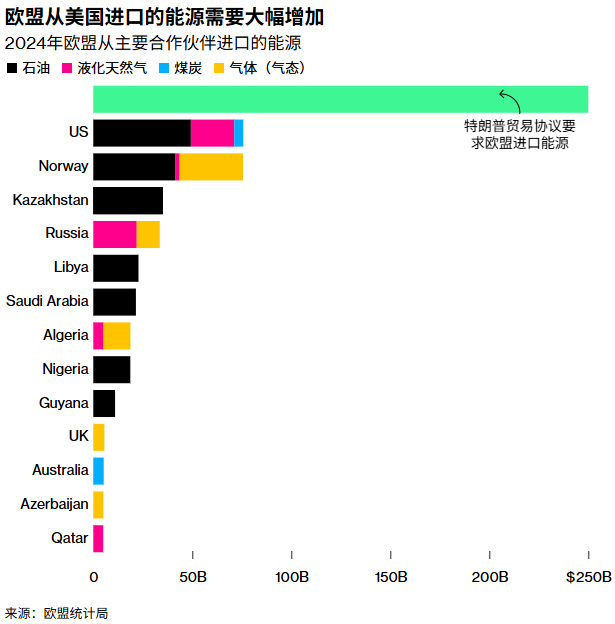
Group 1 - The EU has committed to importing $750 billion worth of energy from the US over three years, which is crucial for a trade agreement with President Trump, but actual implementation faces significant challenges [1] - The agreement requires the EU to purchase $250 billion worth of natural gas, oil, and nuclear technology annually, based on plans to reduce reliance on Russian fossil fuels and buy "more economically efficient" LNG from US producers [1][4] - Last year, the EU imported less than $80 billion in energy from the US, indicating a substantial gap between current imports and the ambitious targets set by the EU [1][2] Group 2 - The scale of the current agreement is much larger than previous commitments made during the 2022 energy crisis, where a short-term increase of 15 billion cubic meters of LNG was agreed upon [2] - Analysts suggest that the $750 billion target is overly ambitious and lacks clarity on which specific energy sources will be included, potentially requiring long-term negotiations based on the EU's future energy needs [4] - The US, as the largest LNG producer, is expected to release new capacities in the coming years, with the Trump administration focusing on securing new supply agreements with European buyers to facilitate project financing and job creation [5] Group 3 - The EU is currently the second-largest natural gas supplier to Europe, but competition with Asian customers remains a challenge for securing LNG supplies [8] - The EU's joint procurement platform has seen limited success, and specific transaction details are still unclear [5] - The nuclear energy sector may provide a breakthrough, with the EU planning to invest approximately €241 billion ($280 billion) in nuclear expansion to achieve its 2050 climate neutrality goals [10]
美国对俄新制裁带来原油涨价风险
日经中文网· 2025-07-16 03:16
特朗普表示将征收二级关税后,原油市场的反应有限。由于特朗普提出的税率低于美国联邦 议会此前审议的最高500%税率的制裁方案,而且设置了50天缓冲期,因此市场对供需收紧 的担忧暂时有所缓解。 不过,很多观点认为如果美国启动二级关税,出于供给方面的担忧,市场行情将面临上涨压 力。 欧洲调查公司Kpler的海上运输数据显示,2024年俄罗斯产原油的出口量为约345万桶/天。 相当于国际能源署(IEA)公布的全球石油供应量的3%。如果这些供应量全部无法交易,将 导致供需关系倾向于大幅供不应求。 特朗普转变了此前一味倾向于对话的对俄外交政策(Reuters) 特朗普指出如果到9月初俄乌仍无法停火,将对与俄罗斯进行贸易的第三国征收100%关税。 据悉俄罗斯原油的出口对象中,中国占47%,印度占38%。美国驻北约大使警告称,"是针对 印度和中国关税措施"…… 美国总统特朗普已转换为对俄罗斯加大施压力度的方针。如果到9月初俄乌仍无法停火,将对 与俄罗斯进行贸易的第三国(考虑到中国和印度)征收100%关税。如果中印将原油采购来源 地换成中东,可能会导致原油价格上涨,对全球经济带来沉重负担。 "我感觉大约达成了4次协议。但事态却 ...
加拿大产原油增加对亚洲出口,中国扩大采购
日经中文网· 2025-07-04 07:18
Core Viewpoint - The article highlights the significant increase in crude oil transportation from Canada's West Coast, particularly to China, indicating a diversification of oil procurement sources for China and a reduced reliance on the Middle East [1][3][4]. Group 1: Crude Oil Transportation Statistics - In March, crude oil transportation from Canada's West Coast reached 530,000 barrels per day, a tenfold increase year-on-year, marking the highest level since records began in 2013 [3]. - The majority of this transportation is for export, with a notable portion heading to China, which accounted for over 60% of the maritime transport volume by May 2025 [1][3]. - The transportation capacity from Alberta to the North American West Coast has been enhanced, allowing for an increase in crude oil transport capacity to 890,000 barrels per day, tripling the previous capacity [3]. Group 2: Market Dynamics and Implications - The increase in Canadian crude oil exports is attributed to improved transportation capabilities and a strategic shift in China's oil import policies, which have seen a decrease in reliance on the Middle East from an average of 47% (2019-2023) to 44% in 2024 [3][4]. - The diversification of oil sources is further supported by China's increasing imports from countries like Brazil, indicating a conscious effort to reduce dependence on Middle Eastern oil [4]. - Japan's imports of Canadian crude oil remain minimal, primarily due to the heavy nature of Canadian crude, which is less efficient for Japan's refining needs compared to lighter crude [4].

建信期货原油日报-20250703
Jian Xin Qi Huo· 2025-07-03 01:28
Group 1: General Information - Report date: July 3, 2025 [2] - Report type: Crude Oil Daily [1] Group 2: Market Review and Operational Suggestions - **Market performance**: WTI's opening price was $64.96, closing at $65.53, with a high of $65.98, a low of $64.67, a daily increase of 0.65%, and trading volume of 17.29 million lots; Brent's opening price was $66.58, closing at $67.28, with a high of $67.50, a low of $66.34, a daily increase of 0.81%, and trading volume of 27 million lots; SC's opening price was 503.1 yuan/barrel, closing at 498.2 yuan/barrel, with a high of 503.8 yuan/barrel, a low of 495.6 yuan/barrel, a daily increase of 0.24%, and trading volume of 13.75 million lots [6] - **Supply - demand analysis**: In the supply side, in the first month of OPEC's increased production, 8 member countries basically achieved the planned increase. There's a possibility of OPEC+ further increasing production. In the demand side, due to the suspension of China - US tariff disputes, crude oil demand expectations improved, but considering the supply growth in countries like Brazil and Guyana, the market will maintain a pattern of inventory accumulation in the second half of the year [7] - **Operational suggestion**: Oil prices are gradually returning to fundamental - driven, and in the short - term, they are expected to fluctuate. It's advisable to wait and see [7] Group 3: Industry News - Goldman Sachs believes that if OPEC+ decides to increase production on Sunday, the market may not have a significant reaction as market expectations have shifted towards this outcome [8] - Saudi Arabia's crude oil exports in June increased by 450,000 barrels per day month - on - month to 6.33 million barrels per day, reaching the highest level in over a year [8] - Kazakhstan's crude oil production in June increased by 7.5% month - on - month to 1.88 million barrels per day, hitting a historical high. Its first - half production increased by 13% year - on - year to 1.79 million barrels per day [8] Group 4: Data Overview - The report presents multiple data charts, including global high - frequency crude oil inventory, WTI and Brent fund positions, and various oil price charts [10][11][18]