
Nestle

Search documents
雀巢奶粉召回事件中的ARA是什么?婴幼儿配方奶粉中为什么加ARA?
Zhong Guo Jing Ji Wang· 2026-01-20 09:25
Group 1 - Nestlé has announced a precautionary recall of infant formula products due to quality issues with arachidonic acid (ARA) oil from a major supplier, although no related illness cases have been confirmed [1] - ARA is a long-chain polyunsaturated fatty acid that is important for brain development in infants and is commonly added to most infant formulas on the market [1] - The CEO of Nestlé, Philipp Navratil, has publicly apologized to consumers regarding the recall [1] Group 2 - According to national standards, ARA is classified as an "optional ingredient" in infant formula, with a maximum allowable content of 80 mg per 100 kcal [2] - The addition of ARA and DHA in infant formulas has become a market norm due to clinical evidence supporting their benefits for brain and nervous system development in infants [3] - The standards for nutrient addition in infant formula are continuously updated to ensure higher quality products, with the aim of promoting comprehensive growth and development in infants [3]

新加坡食品局在瑞士产的雀巢超级能恩1段和泰国产的多美滋Dulac 1段中检测出蜡样芽孢杆菌
Cai Jing Wang· 2026-01-19 06:39
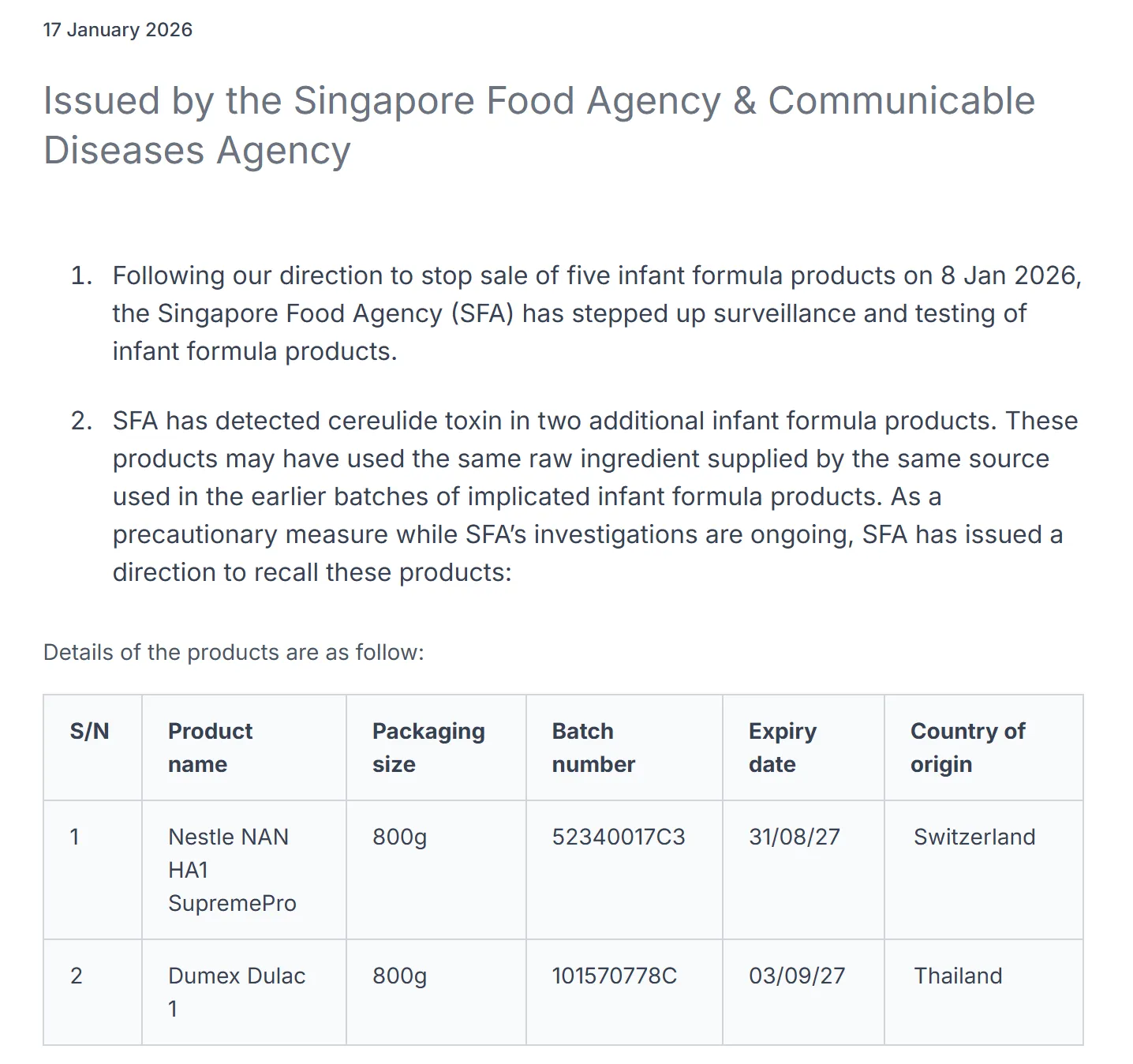
Core Viewpoint - The Singapore Ministry of Health has issued a recall for two infant formula products due to the detection of Bacillus cereus toxin, emphasizing the need for enhanced monitoring and testing of such products in the market [1][5]. Group 1: Product Recall Details - The recalled products include Nestle NAN HA1 SupremePro and Dumex Dulac 1, both in 800g packaging [1][3]. - The batch numbers for the recalled products are 52340017C3 and 101570778C, with expiry dates of August 31, 2027, and September 3, 2027, respectively [1][3]. Group 2: Regulatory Actions - The Singapore Food Agency (SFA) has intensified its supervision and testing of infant formula products following the recall [1]. - A local manufacturer, SMC Nutrition, has been ordered to halt the export of affected products that used the same contaminated ingredients [5]. Group 3: Health Implications - There has been one reported mild case of Bacillus cereus toxin poisoning linked to the consumption of contaminated products, with the patient having recovered [5]. - Symptoms of Bacillus cereus toxin poisoning may include nausea, vomiting, abdominal cramps, and diarrhea, typically manifesting within 30 minutes to 6 hours after consumption [5]. Group 4: Market Impact - The affected batch of imported infant formula accounts for less than 5% of the total infant formula supply in Singapore, indicating that it represents a small portion of the diverse market [5].

Consumer Staples ETFs: XLP Focuses on Domestic Stocks, While KXI Offers International Exposure
Yahoo Finance· 2026-01-17 20:03
Core Insights - The article compares two ETFs in the consumer staples sector: State Street Consumer Staples Select Sector SPDR ETF (XLP) and iShares Global Consumer Staples ETF (KXI), highlighting their differences in focus, cost, performance, and holdings [1][5]. Group 1: ETF Overview - XLP consists of 36 U.S. consumer defensive stocks, including major companies like Walmart, Costco, and Procter & Gamble, providing targeted exposure to established U.S. staples [2]. - KXI, with a portfolio of 96 companies, offers global exposure, with 59% in U.S. stocks, 29% in European stocks, and 7% in Asian stocks, featuring both U.S. giants and international leaders like Nestle and Unilever [3][7]. Group 2: Performance and Fees - XLP has a lower expense ratio of 0.08% and a higher dividend yield of 2.7%, compared to KXI's expense ratio of 0.39% and dividend yield of 2.3%, making it more appealing for income-focused investors [4][8]. - Over the last five years, XLP generated a total return of 36.2% (CAGR of 6.4%), outperforming KXI, which had a total return of 28.1% (CAGR of 5.1%), although both funds lagged behind the S&P 500's CAGR of 14.6% [8]. Group 3: Investment Considerations - XLP is recommended for investors seeking exposure to the U.S. consumer staples market due to its better performance, yield, and fees, while KXI offers regional diversification as its main advantage [9].


KXI vs. IYK: KXI Has More International Holdings, But IYK Has a Higher Dividend Yield
The Motley Fool· 2026-01-17 19:35
Core Insights - The iShares US Consumer Staples ETF (IYK) and iShares Global Consumer Staples ETF (KXI) cater to investors interested in the consumer staples sector, with IYK focusing on U.S. companies and KXI offering a broader global perspective [1][2] Group 1: Cost & Size - Both IYK and KXI have similar expense ratios, with IYK at 0.38% and KXI at 0.39% [3][4] - As of January 9, 2026, IYK has a one-year return of 6.2% and a dividend yield of 2.7%, while KXI has a one-year return of 11.2% and a dividend yield of 2.2% [3][10] - IYK has assets under management (AUM) of $1.2 billion, while KXI has AUM of $908.7 million [3][9] Group 2: Performance & Risk Comparison - Over the past five years, IYK has experienced a maximum drawdown of -15.04%, while KXI's maximum drawdown is -17.43% [5] - The growth of a $1,000 investment over five years is $1,139 for IYK and $1,136 for KXI, indicating similar performance [5] Group 3: Portfolio Composition - KXI holds 96 global equities, with major positions in Walmart, Costco, and Philip Morris, and is heavily weighted towards consumer defensive stocks [6] - IYK is concentrated on 54 U.S. holdings, with significant investments in Procter & Gamble, Coca-Cola, and also includes exposure to healthcare and basic materials [7][10] Group 4: Investor Implications - Income-oriented investors may prefer IYK due to its higher dividend yield, while those seeking international exposure may favor KXI for its broader global holdings [11]

梁惠玲会见雀巢大中华区董事长兼首席执行官马凯思一行
Sou Hu Cai Jing· 2026-01-17 01:57
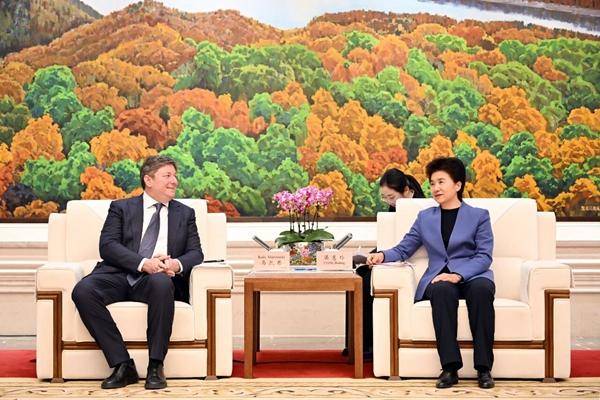
Core Viewpoint - The meeting between the Heilongjiang Provincial Governor Liang Huiling and Nestlé Greater China CEO Mark Schneider highlights the ongoing investment and collaboration between Nestlé and Heilongjiang, emphasizing the province's commitment to creating a favorable business environment for foreign investments [3][5]. Group 1: Investment and Business Environment - Heilongjiang is actively promoting high-quality development and expanding high-level openness to attract foreign investment, creating a favorable market environment for companies like Nestlé [3]. - Nestlé has been expanding its investment in Heilongjiang, with the Daqing factory being the first Nestlé factory in China, showing positive operational performance [3]. - The provincial government aims to enhance the business environment by implementing policies that align with national economic strategies, thereby attracting more foreign enterprises [3]. Group 2: Collaboration and Innovation - Nestlé is encouraged to leverage Heilongjiang's high-quality dairy resources to develop new product lines and technologies, transforming the Daqing factory into a high-end production base for formula milk and dairy products [3]. - There is a focus on strengthening collaboration between Nestlé and local research institutions and universities to foster innovation and expand industry-academia cooperation [3]. - The commitment to green manufacturing and carbon neutrality practices is emphasized, aiming for sustainable development within the dairy industry [5].
为奶粉召回事件道歉 雀巢集团CEO承诺透明处理并配合调查
Xi Niu Cai Jing· 2026-01-15 10:00
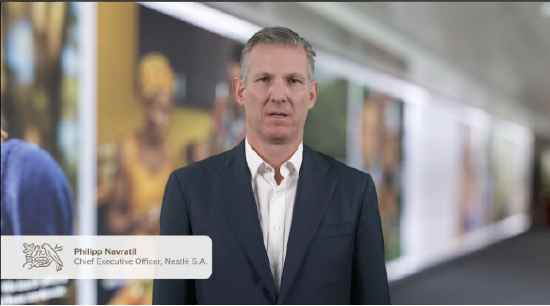
Group 1 - The CEO of Nestlé, Philippe Navratil, issued a public apology regarding a preventive recall due to raw material issues, promising transparency and cooperation with investigations [2] - The recall was initiated after the discovery of a quality issue with an ingredient, arachidonic acid (ARA), which tested positive for Bacillus cereus, a bacterium that can produce toxins leading to gastrointestinal symptoms [2] - The recall affects products sold in 31 countries, with reports indicating involvement in over 60 countries, including specific brands in the Chinese market [2] Group 2 - Nestlé assessed that the sales affected by the recall represent a very small percentage of the company's annual revenue, and it is not expected to have a significant impact on overall financials [3] - The company emphasized that rebuilding consumer trust will be a longer and more challenging process than financial recovery [3]
雀巢婴幼儿配方奶召回事件发酵 详解雀巢首席执行官505字致歉视频
Xin Lang Cai Jing· 2026-01-15 06:38
Core Viewpoint - Nestlé Group has faced a significant challenge due to a global recall of infant formula products, affecting 53 countries, and the new CEO Philipp Navratril has addressed the situation through a video statement, which led to a rebound in the company's stock price after a period of decline [1][17]. Group 1: Recall Details - The recall was initiated after the discovery of a quality issue with a specific ingredient used in some batches of infant formula, which was identified during an internal inspection on December 9 [5][21]. - The first recall occurred in Denmark on December 11, while Austria's health authorities also detected the same toxin in two batches of Nestlé products around the same time [5][21]. - The recall has been described as the largest in Nestlé's history, involving 10 factories and 800 products, although this has not been officially confirmed by the company [7][23]. Group 2: CEO's Response - CEO Philipp Navratril, who is the youngest in the company's history, expressed understanding of consumer concerns and emphasized the importance of product safety and quality in his video statement [3][19]. - He acknowledged the delay between the discovery of the toxin and the public recall, which has raised questions about transparency and the company's response time [5][21]. Group 3: Financial Impact - The recall is estimated to potentially cost Nestlé around 1.2 billion Swiss francs, but the company claims the impact on annual sales will be less than 0.5%, translating to approximately 1.3% of the projected sales for 2024, which is 914 billion Swiss francs [15][31]. - Following the release of the CEO's video, Nestlé's stock price saw a noticeable increase, indicating a positive market reaction to the company's handling of the crisis [1][31]. Group 4: Communication Variability - Nestlé's communication regarding the recall has varied by country, with different messaging in China, the UK, and Austria, highlighting the potential for confusion among consumers [12][28]. - The Austrian website provided the most detailed explanation regarding the presence of the toxin, while the Chinese and UK communications were less specific [12][28].
雀巢CEO深夜出镜道歉,损失到底是“0.5%”还是104亿?
Sou Hu Cai Jing· 2026-01-15 02:25
Core Viewpoint - A global recall of infant formula has led to a trust crisis for Nestlé, with the new CEO publicly apologizing and emphasizing food safety as a core value, yet revealing vulnerabilities in supply chain management [1][3]. Group 1: Recall Incident - The recall was triggered by a batch of oil containing ARA that may have been contaminated with Bacillus cereus toxin, causing alarm among parents worldwide [3]. - The recall list includes products like Nestlé NAN, BEBA, and Wyeth Illuma, with Nestlé claiming it is a "preventive measure" and reporting "zero confirmed cases," but parents' anxiety has escalated [5]. Group 2: Communication and Response - There are criticisms regarding the delayed global notification after the issue was discovered in December, with Nestlé stating it needed to coordinate with regulators, but this was perceived as a slow response in the age of rapid information dissemination [5][6]. - The CEO's video apology was seen as a rare move for Nestlé, but it was pre-recorded and lacked interactive engagement, leading to perceptions of it being a "one-way apology" [6]. Group 3: Supply Chain Vulnerabilities - The incident highlights the fragility of multinational supply chains, with the identity of the raw material supplier remaining undisclosed, raising concerns about the reliance on a few suppliers for high-end additives like ARA [6][8]. - Jefferies estimates the potential loss could reach 1.2 billion Swiss francs, significantly higher than Nestlé's own estimate of a 0.5% sales impact, particularly affecting the sensitive Chinese market [8]. Group 4: Future Implications - The CEO's commitment to "restore supply around the clock" is viewed as a gamble, with challenges in production line changes, supply chain audits, and rebuilding market confidence ahead [8][9]. - Nestlé is attempting to turn the crisis into an opportunity for quality upgrades by initiating a thorough review of suppliers, which could potentially attract cautious parents if executed transparently [9]. Group 5: Industry Landscape - The incident underscores a harsh reality in the infant formula industry where safety is paramount, and any lapse in raw material quality can lead to catastrophic consequences for brands [10]. - With regulatory bodies intensifying scrutiny, the infant formula sector may undergo significant cleansing, making the forthcoming quality control measures and supplier transparency critical for Nestlé's recovery [10][12].
波及31国!雀巢CEO就“奶粉召回事件”致歉
Guo Ji Jin Rong Bao· 2026-01-14 15:17
Core Viewpoint - Nestlé's CEO, Philipp Navratil, publicly apologized for a recent infant formula recall, emphasizing the company's commitment to food safety and consumer trust [6][11]. Group 1: Recall Details - The recall was initiated due to quality issues found in an ingredient supplied to a Nestlé factory in the Netherlands, which may contain a harmful toxin [7]. - The recall affects specific batches of infant formula sold in 31 countries, including brands like Nestlé BEBA and Wyeth [7][8]. - In China, 71 batches of infant formula are being recalled, including products sold through cross-border e-commerce [8]. Group 2: Regulatory Response - The Chinese government has expressed significant concern over the recall, urging Nestlé to take responsibility and protect consumer rights [9]. Group 3: Financial Impact - The recalled products account for less than 0.5% of Nestlé's total sales, indicating that the overall financial impact may not be substantial [12]. - However, Jefferies estimates potential sales losses of approximately 1.2 billion Swiss francs, representing about 1.3% of the company's annual sales [12]. Group 4: Market Context - Nestlé faces growth challenges, particularly in the Greater China region, where the infant nutrition segment is one of the few growth drivers [13]. - The competitive landscape in China's infant formula market is intensifying, with local brands increasing their market presence [13].
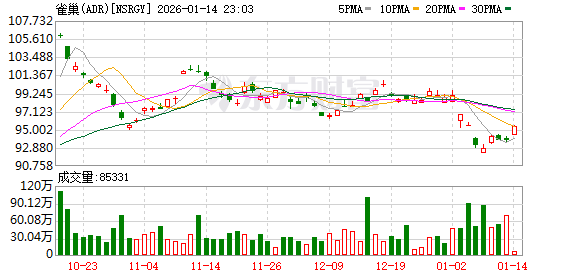
雀巢集团CEO就奶粉召回公开致歉
Cai Jing Wang· 2026-01-14 09:09
Core Viewpoint - Nestlé's CEO Philipp Navratil issued a public apology regarding a voluntary recall of infant formula due to quality concerns identified at a factory in the Netherlands [1] Group 1: Recall Details - In December 2025, Nestlé confirmed quality issues at a factory in the Netherlands, leading to a proactive voluntary recall across several European countries where the product was sold [1] - The food safety team investigated the issue and concluded that the problem originated from specific raw materials supplied by a vendor [1] - The company immediately ceased distribution of the affected products and initiated a preventive recall in early January in collaboration with local regulatory authorities [1] Group 2: Health Impact - CEO Navratil emphasized that there have been no confirmed cases of illness related to the affected products [1]