PUMA

Search documents
安踏体育(02020):事件点评:拟收购PUMA股权,持续深化多品牌全球化
Guolian Minsheng Securities· 2026-01-27 15:35
Investment Rating - The report maintains a "Buy" rating for Anta Sports (2020.HK) [2][8] Core Views - Anta Sports plans to acquire a 29.06% stake in PUMA for approximately €1.51 billion (about 12.28 billion RMB), representing a 62% premium over PUMA's previous closing price [8] - The acquisition aligns with Anta's strategy of "single focus, multi-brand, globalization," enhancing its brand matrix and global competitiveness [8] - PUMA's established brand presence and market positioning in various sports categories complement Anta's existing brands, potentially accelerating growth and resource synergy [8] - The acquisition is expected to be completed by the end of 2026, pending regulatory approvals, and will not affect Anta's annual dividend policy due to its strong cash position [8] Financial Forecasts - Revenue projections for Anta Sports are as follows: - 2024: 70.826 billion RMB - 2025: 78.479 billion RMB (growth rate of 10.8%) - 2026: 86.250 billion RMB (growth rate of 9.9%) - 2027: 94.396 billion RMB (growth rate of 9.4%) [2][9] - Net profit forecasts are: - 2024: 15.596 billion RMB - 2025: 13.139 billion RMB (decline of 15.8%) - 2026: 14.140 billion RMB (growth of 7.6%) - 2027: 15.846 billion RMB (growth of 12.1%) [2][9] - Earnings per share (EPS) estimates are: - 2024: 5.58 RMB - 2025: 4.70 RMB - 2026: 5.06 RMB - 2027: 5.67 RMB [2][9] - Price-to-earnings (P/E) ratios are projected at: - 2024: 13x - 2025: 15x - 2026: 14x - 2027: 12x [2][9] Market Positioning - PUMA is expected to rank third globally in sports brands with a 2.5% market share by 2024, following Nike and Adidas [8] - The acquisition is anticipated to enhance Anta's global strategy, leveraging PUMA's strengths in Europe, Latin America, and emerging markets [8]

安踏收购PUMA:一次非典型全球化落子
Hua Er Jie Jian Wen· 2026-01-27 14:12
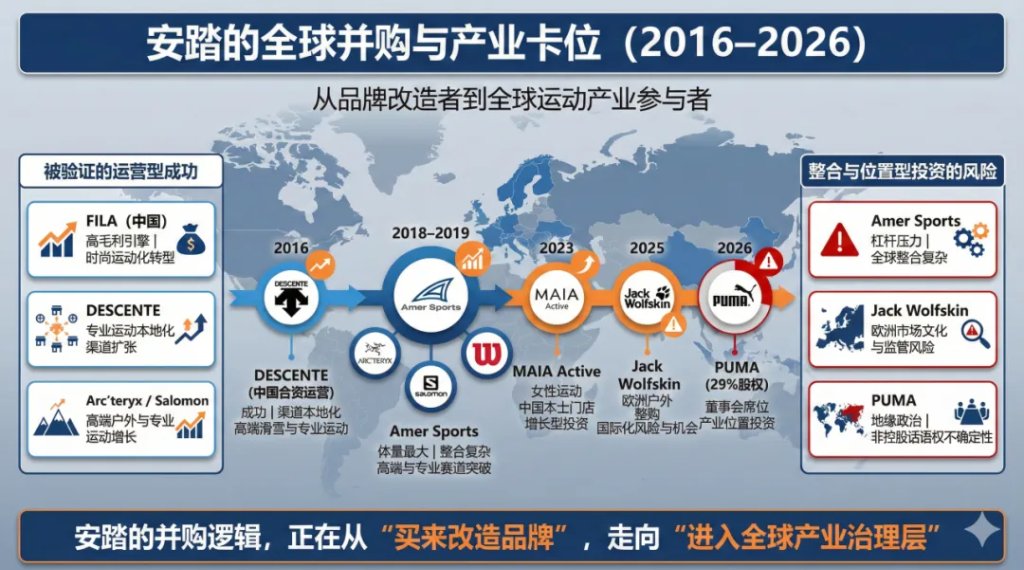
传闻落地,安踏正式出手,将PUMA近三成股权收入囊中。 安踏目前没有对PUMA发起全面要约收购的计划,充分尊重PUMA的管理文化,以及其作为德国上市公司的独立治理架构。 这与亚玛芬、狼爪并购时代形成了鲜明的反差,使安踏并购模式从以往"买来改造品牌"的整合,转向以资本为纽带、进入全球产业治理层的战略 协作。 丁世忠表示:"未来,双方将在高度共识的领域开展协作、实现优势互补,同时严格保持各自业务运营的独立性、纪律性与战略清晰,共同支持品 牌的复兴之路。" 此次安踏收购资金全部来源于集团内部现金储备,且特别强调不影响2025年的派息政策。 此次对PUMA的出手,究竟是安踏为"抄底优质资产"打出的一张安全牌,还是其全球化野心的又一次全新冲击? 非典型并购 1月27日,安踏宣布收购运动品牌彪马(PUMA SE)29.06%的股权,现金对价15亿欧元。 交易完成后,安踏将正式成为PUMA最大单一股东。 然而,与过往深度整合模式的关键不同在于,安踏此次采取了战略性财务投资的立场,并未进一步寻求运营控制权,仅计划寻求向监事会委派代 表。 安踏集团董事局主席丁世忠表示:安踏看重PUMA品牌蕴含的长期价值与潜力,并认为其近期股价 ...

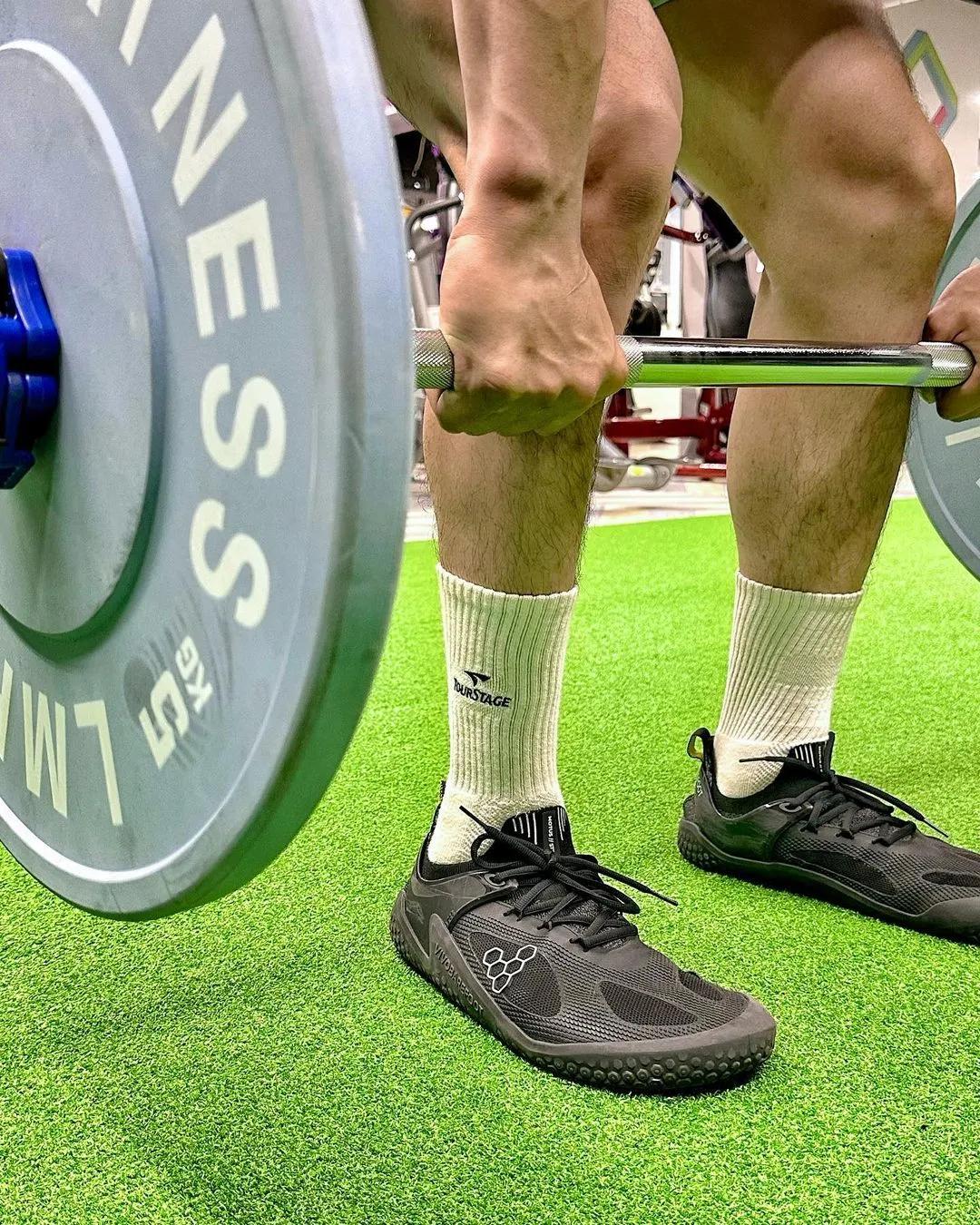
都市运动达人爱上赤足鞋,一种返璞归真的鞋
3 6 Ke· 2026-01-27 00:49
Core Insights - The popularity of barefoot shoes, a more advanced version of minimalist shoes, is on the rise among the middle class who embrace a minimalist lifestyle. These shoes offer a near-barefoot experience with ultra-thin soles and wide toe boxes, allowing for natural foot movement while providing protection [1][7]. Group 1: Market Trends - The barefoot shoe market is projected to reach nearly $800 million by 2031, reflecting a 40% growth from current levels, driven by brands like Vibram and Vivobarefoot [7]. - Social media platforms, particularly Xiaohongshu, have seen over 5,400 posts related to barefoot shoes, with more than 30,000 products available, indicating a strong consumer interest and engagement [3][29]. - The trend of minimalist footwear is becoming mainstream, with urban professionals adopting barefoot shoes for both casual and fitness activities, viewing them as comfortable yet stylish alternatives [7][9]. Group 2: Consumer Behavior - Many consumers report that once they try barefoot shoes, they find it hard to return to traditional footwear, highlighting a shift in consumer preferences towards more natural walking and running experiences [17]. - The rise of barefoot shoes is also linked to increasing awareness of foot health issues, with conditions like bunions and plantar fasciitis becoming more common, prompting consumers to seek footwear that promotes better foot health [5][24]. - Brands like Vivobarefoot have reported a 13% increase in sales volume and a 25% increase in revenue in 2023, indicating a positive growth trajectory for the barefoot shoe segment [27]. Group 3: Product Features and Innovations - Barefoot shoes typically have a sole thickness of 2-4mm, designed to enhance ground feel while providing necessary protection and stability [19][20]. - The materials used in barefoot shoes are evolving, with options like leather, wool, and waterproof materials being developed to cater to various outdoor activities while maintaining lightweight characteristics [20]. - The design philosophy of barefoot shoes emphasizes natural foot movement, with features that allow for toe splay and increased contact with the ground, which can enhance foot strength and overall stability [19][24].
产业链视角看为何本轮补库弱弹性?:波澜互错,洪峰未至
Changjiang Securities· 2026-01-22 06:20
Investment Rating - The report maintains a "Positive" investment rating for the textile, apparel, and luxury goods industry [9]. Core Insights - The current inventory replenishment cycle in the U.S. apparel industry is characterized by weak elasticity due to several factors, including K-shaped consumer spending, misalignment in brand recovery rhythms, and constraints faced by comprehensive sports brands [3][6]. - Despite the transition from inventory destocking to replenishment, the expected rebound in manufacturing performance and market response has not materialized as anticipated [6][19]. - The report forecasts limited replenishment elasticity in the near term, with potential improvements in terminal demand expected after the current interest rate cycle concludes [3][8]. Summary by Sections Introduction - The report discusses the weak momentum in the current manufacturing replenishment cycle, noting that the U.S. apparel industry has transitioned to a phase of active replenishment after reducing inventory to healthy levels since Q1 2023 [6][17]. Analysis of Weak Replenishment Cycle - **Macro Perspective**: U.S. consumer spending is experiencing K-shaped differentiation, where high-income households support overall consumption while lower-income households face suppressed purchasing power and willingness to spend [7][32]. - **Brand Perspective**: The misalignment in recovery rhythms among brands has diluted overall replenishment elasticity, with brands like Adidas and Deckers already undergoing several quarters of replenishment without strong retail catalysts [7][30]. - **Industry Perspective**: The growth potential in the sports category is diminishing due to factors such as slowing penetration rates, reduced technological innovation, and diminishing returns from direct-to-consumer (DTC) strategies [7][30]. Future Replenishment Elasticity Expectations - In the short term, historical inventory cycles suggest that mature brands may experience shorter replenishment periods, while growth-oriented brands could see longer cycles [8][19]. - The report indicates that after the current interest rate cycle, retail demand may improve, leading to a more resilient growth trajectory for top brands transitioning into replenishment phases [8][19]. - Recommended stocks include Crystal International and Shenzhou International, with a focus on companies like Wah Lee and Yue Yuen [8][19].

CARBIOS : half-year report on the liquidity contract entrusted to Natixis ODDO BHF and notice of suspension
Globenewswire· 2026-01-20 17:00
Core Insights - CARBIOS has suspended its liquidity contract with Natixis ODDO BHF as of January 19, 2026, due to satisfactory liquidity of its shares [2][3]. - As of December 31, 2025, the liquidity account held 12,989 shares and €198,347.09 [2]. - The liquidity contract was established in accordance with the French Financial Market Authority's regulations [3]. Company Overview - CARBIOS is a biotechnology company focused on developing biological solutions for plastics and textiles, aiming to prevent pollution and promote a circular economy [4]. - The company has two main technologies: PET biorecycling and PLA biodegradation, which are being scaled to industrial levels [4]. - CARBIOS collaborates with major brands in various industries, including Nestlé Waters, PepsiCo, and L'Oréal, to enhance product recyclability [4]. Trading Activity - During the semester, there were 3,209 buy-side executions totaling 509,491 shares traded for €4,740,354.18, while sell-side executions totaled 3,538 for 512,000 shares at €4,738,838.30 [6]. - The liquidity account showed a consistent trading volume, indicating active market participation [6].
Deckers Brands关闭旗下两个品牌,押注HOKA与UGG
Xin Lang Cai Jing· 2026-01-19 04:45
Core Viewpoint - Deckers Brands is restructuring its brand portfolio by focusing resources on its core brands, HOKA and UGG, while discontinuing independent operations of Koolaburra and AHNU by the end of the third quarter of fiscal year 2026 [1][4]. Brand Strategy - The company currently owns five main brands: UGG, HOKA, Teva, AHNU, and Koolaburra, with UGG and HOKA having higher brand recognition in the Chinese market [3]. - Koolaburra's exit from independent operations has been anticipated, with the company gradually ceasing operations since the third quarter of fiscal year 2025 [4]. - Deckers Brands has also sold its Sanuk brand, indicating a trend of brand portfolio simplification [4]. Management Changes - The restructuring may be linked to changes in the management structure, with a shift in focus from distribution channels to brand performance under the new COO [5]. - Stefano Caroti, the current CEO and COO, has a background in senior management roles at Nike and PUMA, which may influence the company's strategic direction [5]. Financial Performance - For fiscal year 2025, Deckers Brands reported net sales of $4.986 billion, a 16.3% increase, primarily driven by HOKA and UGG, despite declines in other brands [6]. - HOKA's growth rate has shown signs of slowing, with a 11.1% increase in net sales for the second quarter of fiscal year 2026, down from 34.7% in the previous year [6]. - UGG's sales are influenced by seasonal factors, with efforts to mitigate these through product line expansion [8]. Market Outlook - Despite strong performance in 2025, analysts express concerns about the sustainability of growth in 2026, with Piper Sandler downgrading the stock rating from "neutral" to "underweight" [9]. - The competitive landscape in the footwear and apparel industry remains intense, with increasing pressure on pricing and inventory management as more competitors enter the market [8].
贝恩资本收购Andar母公司:韩国“Lululemon”如何引爆亚洲运动消费赛道?
Xin Lang Cai Jing· 2026-01-14 05:48
Core Insights - Bain Capital announced the acquisition of EcoMarketing, the parent company of South Korean sportswear brand Andar, for 500 billion KRW (approximately 344 million USD), marking a significant move in the South Korean sportswear market and the global consumer investment landscape [1][9] - The acquisition will be executed in two phases: first, acquiring 43.66% of shares from the largest shareholder for 216.6 billion KRW (approximately 10 million RMB), followed by a tender offer for the remaining 56.4% at a price of 16,000 KRW per share, representing a 49.5% premium over the closing price prior to the transaction [1][9] Strategic Context - The acquisition reflects Bain Capital's investment logic and highlights structural changes in the global consumer market, betting on Andar's potential as the "Asian version of Lululemon" [2][10] - Since its founding in 2015, Andar has rapidly gained a user base in South Korea by offering products at a lower price point compared to Lululemon, with sales reaching 135.8 billion KRW (approximately 656 million RMB) in the first half of 2025, a historical high [2][11] - EcoMarketing's unique business model and growth potential are key values in the acquisition, having transitioned from an online advertising agency to a major player in sportswear after acquiring 75% of Andar in 2021 [2][11] Market Dynamics and Future Challenges - The acquisition is expected to significantly impact the Asian sports consumer market, providing Andar with resources for global expansion, as it has already established retail operations in Japan, Australia, and Singapore [4][13] - The competitive landscape in the Asian sportswear market is intensifying, with similar brands like MAIA ACTIVE being acquired, indicating a closing window for "Lululemon imitators" [5][13] - Bain Capital faces challenges in maximizing Andar's value amid a slowing global sports consumer market and balancing global expansion with local cultural relevance [14][15] - The transition to a private company may reduce short-term performance pressure but also limits access to public market financing and transparency, posing operational challenges for Bain Capital [14][15]
Rezolve Ai Guides to $350 Million 2026 Revenue and $500 Million ARR Exit Run Rate
Globenewswire· 2026-01-13 13:30
Core Insights - Rezolve Ai anticipates significant revenue growth, projecting at least $40 million for 2025 and approximately $350 million for 2026, which is nearly double market expectations of $170 million, indicating nearly 10× year-on-year growth [2][3] Revenue Guidance - For 2025, the company expects to exceed $40 million in revenue, surpassing current analyst consensus [2] - For 2026, the revenue guidance is set at approximately $350 million, indicating a substantial increase from the previous year [2] Annual Recurring Revenue (ARR) - Rezolve aims to exit 2026 with a minimum of $500 million in annual recurring revenue (ARR), translating to about $40 million in monthly revenue by December 2026 [3] Operating Performance - The company ended 2025 with approximately $209 million in ARR, achieving a record revenue of over $17 million in December, marking its first profitable month [4] - In 2025, Rezolve processed more than 51 billion API calls and reached over 340 million unique users globally, demonstrating its operational scale [4] Customer Base and Institutional Confidence - Rezolve's clientele includes major global brands such as Adidas, Gucci, and H&M, reflecting strong enterprise adoption [5] - The company secured significant repeat institutional investments, including a $50 million strategic investment and an additional $200 million commitment, indicating strong confidence in its execution and scalability [6] Strategic Partnerships - Throughout 2025, Rezolve strengthened partnerships with Microsoft and Google, focusing on integrating AI-driven commerce with next-generation payment infrastructure [7] Leadership Commentary - The CEO of Rezolve emphasized that 2025 marked a turning point for enterprise AI-driven commerce, highlighting the company's focus on execution and operational leverage as it moves into 2026 [8] Company Overview - Rezolve Ai is recognized as a leader in AI-powered solutions, specializing in enhancing customer engagement and operational efficiency [9] - The company operates with over 1,000 employees and has more than 650 enterprise customers across 24 global offices [10]

运动袜,才是健身穿搭的灵魂单品
3 6 Ke· 2026-01-12 01:03
Core Insights - The popularity of athletic socks is rising, driven by both aesthetic appeal and functional benefits, particularly in fitness contexts [5][14][24] Group 1: Market Trends - Athletic socks are gaining attention as essential fitness accessories, with social media platforms like Xiaohongshu and Douyin showcasing numerous reviews and styling tips [9][14] - The Chinese athletic sock market is projected to grow at a compound annual growth rate (CAGR) of 7.3% from 2021 to 2025 [14] - Brands like Stance have achieved significant sales milestones, with over 15 million pairs sold within four years of establishment, indicating a strong consumer interest in specialized sock products [5][11] Group 2: Product Features - Key functional attributes of athletic socks include moisture-wicking, comfort, and anti-slip properties, which are crucial for various sports activities [4][22] - Specialized socks, such as five-toe socks for yoga and Pilates, and thicker towel socks for badminton, are tailored to meet the specific needs of different sports [4][23] - Compression socks are also gaining traction for their ability to alleviate calf soreness during running and other outdoor activities [23] Group 3: Aesthetic Appeal - The trend of pairing athletic socks with leggings and other workout gear is becoming increasingly popular, with celebrities influencing styles that enhance visual appeal [16][18] - The resurgence of styles from the 1980s, such as wearing long socks over leggings, reflects a blend of nostalgia and modern fashion [16][18] - Consumers are increasingly using colorful and patterned socks as a way to express individuality in their athletic wear, with many owning multiple pairs to match their outfits [11][20]



韩国版lululemon被收购,瑜伽服创业风口已过
3 6 Ke· 2026-01-07 01:59
Core Insights - The entrepreneurial stories of brands resembling lululemon in different markets are diminishing, as evidenced by the acquisition of the Korean yoga apparel brand andar by Bain Capital, with an estimated valuation of around 2 billion RMB [1][5] - Similar to the case of MAIA ACTIVE, which was acquired by Anta Group, the trend indicates a closing window for new entrants in the yoga apparel market [1][12] Group 1: Market Dynamics - andar, founded in 2015, has surpassed MAIA ACTIVE in scale, with its parent company Eco Marketing reporting Q3 revenue of 117.8 billion KRW and operating profit of 15.5 billion KRW, marking a historical quarterly high [5][7] - The brand has successfully positioned itself with lower prices and designs tailored for Asian women, capitalizing on the growing fitness culture in Korea [7][9] - The entry of lululemon into the Korean market in 2024 has created a competitive landscape, as andar had already established its presence during the previous decade [7][9] Group 2: Challenges Faced by Brands - Both andar and MAIA ACTIVE face challenges despite their unique positioning, as they are caught in a competitive environment with high-end brands like lululemon and low-end "white label" yoga apparel [9][12] - MAIA ACTIVE's mid-range positioning has led to difficulties in scaling, as reliance on e-commerce has proven insufficient, necessitating the opening of physical stores, which brings additional costs and challenges [9][12] - The overall trend indicates that many emerging yoga apparel brands are struggling, with some like Outdoor Voices undergoing significant restructuring and others like Particle Fever facing sales pressures [12][14] Group 3: Industry Trends - The yoga apparel market is witnessing a head-to-head competition among international brands, with major players like Nike and Adidas expanding their yoga product lines [14][16] - The saturation of the yoga apparel market is prompting brands to explore new opportunities in outdoor and other athletic segments, as seen with brands like Outopia and JSC [17][19] - The narrative of "downstream" and "alternative" brands continues, but the premium brand value remains largely with international players, indicating a shift in the entrepreneurial landscape for domestic brands [19]