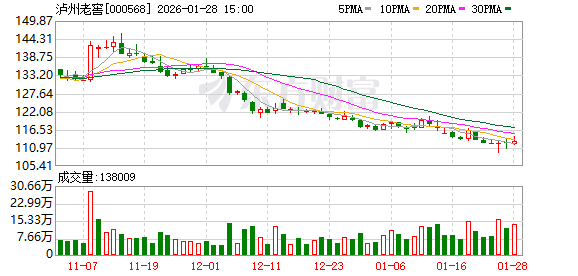
泸州老窖

Search documents
克明食品给股东“送面啦” A股“年会礼包”持续上新
Mei Ri Shang Bao· 2026-01-28 22:24
Core Viewpoint - The article discusses the innovative shareholder reward activities by listed companies, particularly focusing on Kemin Foods' initiative to provide physical gifts to shareholders as a supplement to traditional cash dividends [1][5]. Group 1: Kemin Foods' Shareholder Reward Activity - Kemin Foods announced a shareholder reward activity where shareholders holding between 7,000 to 12,000 shares can claim a free 600g gift box of "Chen Kemin Hand-Pulled Noodles" [1][2]. - Shareholders holding 12,000 shares or more can claim a larger 1.8kg gift box [2]. - The activity runs from January 28, 2026, to February 6, 2026, with unclaimed rewards considered forfeited [2]. Group 2: Market Response and Company Performance - Kemin Foods' stock price fluctuated, closing at 9.41 yuan per share, with a market capitalization of 3.135 billion yuan [3]. - The company reported a revenue of 3.195 billion yuan and a net profit of 124 million yuan for the first three quarters of 2025 [4]. Group 3: Industry Trends in Shareholder Rewards - The trend of physical rewards for shareholders is growing among A-share listed companies, with various companies offering different types of gift packages [5]. - Examples include companies providing red dates, rice dumplings, coffee, and wine as part of their shareholder reward programs [5]. - The introduction of physical gifts has led to short-term stock price increases for some companies, such as a 20% rise for a company after announcing a similar initiative [5][6]. Group 4: Comparison with Traditional Dividends - Experts suggest that physical rewards can be more cost-effective than cash dividends and can serve as a marketing tool to enhance brand visibility [6]. - The number of cash dividends among listed companies is also increasing, with a record cash dividend of 2.55 trillion yuan reported for 2025 [7].

基金满仓老登股血亏30%!自己买科技小登赚翻5000万!泰康基金经理神操作让基民破防了
Sou Hu Cai Jing· 2026-01-28 16:35
Core Viewpoint - The article highlights the stark contrast between the investment strategies employed by fund manager Gui Yueqiang for his clients and his personal investments, leading to significant losses for investors while he profits from technology stocks [2][8]. Group 1: Fund Performance and Strategy - Gui Yueqiang manages over 2 billion yuan in assets but has kept his funds heavily invested in traditional sectors like liquor and home appliances, resulting in a nearly 30% loss over five years for investors [2][6]. - The two funds managed by Gui, the Taikang Advantage Enterprise Mixed Fund and the Taikang Blue Chip Advantage One-Year Holding Stock Fund, have shown poor performance since their inception, with the former losing almost 30% and the latter also underperforming [2][3]. - Despite the potential to invest in a broader range of stocks, including tech giants like Tencent and Alibaba, Gui has chosen to focus on a narrow selection of traditional stocks, leading to stagnant performance [3][4]. Group 2: Personal Investments - Reports indicate that Gui has been heavily invested in technology stocks through his personal account, achieving a floating profit exceeding 50 million yuan, while his managed funds have remained stagnant [8][11]. - This discrepancy in investment strategy raises questions about the alignment of interests between the fund manager and the investors, as Gui's personal investments have thrived in a booming tech market while his clients have suffered losses [12][20]. Group 3: Investor Reaction and Regulatory Implications - Investors have expressed outrage in the fund's comment sections, feeling betrayed by Gui's dual strategy, which appears to prioritize his personal gains over their interests [18][20]. - The situation has prompted discussions about regulatory changes in the industry, with new rules potentially linking fund manager performance to their compensation, aiming to reduce the incentive for such divergent investment strategies [20][22].


泸州老窖:公司携手优质战略合作伙伴持续优化连锁新零售业态产品形象展示、营销活动管理
Zheng Quan Ri Bao· 2026-01-28 12:45
(文章来源:证券日报) 证券日报网讯 1月28日,泸州老窖在互动平台回答投资者提问时表示,为提升消费者的品牌感知和消费 体验,公司携手优质战略合作伙伴持续优化连锁新零售业态产品形象展示、营销活动管理,推动运营质 量升级,实现品牌与渠道协同发展。 ...

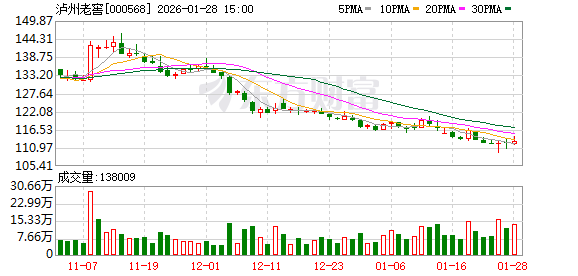
基金经理在科技上“狂飙”赚翻,所管基金却在旧蓝筹血亏
市值风云· 2026-01-28 10:13
Core Viewpoint - The article highlights a significant disparity between the performance of a fund manager's personal investments and the funds managed for investors, raising ethical concerns about the management practices at Taikang Fund [3][4][11]. Group 1: Fund Performance - Fund manager Gui Yueqiang has reportedly made a profit of 50 million yuan through personal investments in technology stocks, while the funds he manages have underperformed significantly, with the Taikang Blue Chip Advantage fund returning only 0.48% since its inception in August 2020 [4][5][7]. - The Taikang Blue Chip Advantage fund has consistently lagged behind its benchmark and the CSI 300 index, with a total return of -18% over the past three years and -18.72% over five years [6][8]. - Another fund managed by Gui, the Taikang Advantage Enterprise, has suffered a cumulative loss of over 30% since its establishment at the end of 2020, with a total scale of 634 million yuan [9][10]. Group 2: Ethical Concerns and Regulatory Issues - The article discusses the ethical dilemma of fund managers investing in different assets for personal accounts compared to public funds, which raises questions about their commitment to maximizing returns for investors [11][12]. - Regulations prohibit fund managers from using non-public information for personal gain, yet the article questions why Gui did not align his fund's investments with his personal insights into the technology sector [12][13]. - The article emphasizes the need for fund managers to demonstrate alignment with investor interests, suggesting that they should consider "co-investing" in their funds to create a stronger incentive for performance [12][17]. Group 3: Industry Practices and Management Fees - The article critiques the "guaranteed profit" model prevalent in the mutual fund industry, where management fees continue to be collected despite poor fund performance, highlighting that Taikang Blue Chip Advantage generated only 13.4 million yuan in profits while incurring 37.75 million yuan in management fees from 2020 to mid-2025 [16][17]. - The Taikang Advantage Enterprise fund reported a cumulative loss exceeding 800 million yuan while accruing over 96 million yuan in management fees during the same period, raising concerns about the sustainability of such a business model in a volatile market [17]. - The article concludes that investors should reassess their holdings in funds that have consistently underperformed and lack active management or personal investment from the fund managers [17].

【川股每日董秘问答】涉泸州老窖、四川双马、中密控股、金石亚药、厚普股份等公司
Xin Lang Cai Jing· 2026-01-28 10:12
Group 1: Company Performance and Revenue - Luzhou Laojiao's overseas revenue is approximately 186 million yuan, accounting for 0.60% of total revenue [1][14] - Sichuan Shuangma focuses on biomedicine and has established a portfolio of innovative drugs in various disease areas, with a strong global supply capability for peptide raw materials [2][15] - Sichuan Shuangma's peptide products are exported to countries including the USA, Brazil, India, and Spain, with a significant presence in the chronic disease treatment market [2][15] Group 2: Product Applications and Market Expansion - Sichuan Shuangma produces over a hundred types of beauty peptides, collaborating with leading global cosmetic brands to enhance product innovation [3][16] - Zhongmi Holdings has applied its high-speed mechanical seals in commercial aerospace, although this segment's revenue is relatively low compared to its traditional petrochemical market [4][17] - Zhongmi Holdings is monitoring the demand for sealing products in the large aircraft sector but has not identified significant market needs yet [5][18] Group 3: Technological Development and Future Prospects - Jinshi Yaya's vacuum coating technology is not currently applied in space photovoltaic equipment but the company is exploring potential collaborations in other fields [6][19] - Houpu Co. has experience in distributed energy projects in both natural gas and hydrogen applications [7][20] - Zhimin Da is developing a high-radiation-resistant computing platform for space applications, although this technology is still in the research phase [8][21] Group 4: Market Strategy and Competitive Position - Sichuan Jiuzhou has successfully entered the overseas market with its Wi-Fi routers, while focusing on domestic sales for its camera products [12][25] - Jiuzhou's subsidiary is actively pursuing opportunities in the low-altitude economy, with significant progress in technology and product development [12][25] - Kexin Mechanical and Electrical is concentrating on high-end process equipment in energy and chemical sectors, while exploring new growth points in intelligent manufacturing [10][24]


明日登记 泸州老窖分红20亿元
Shang Hai Zheng Quan Bao· 2026-01-28 09:31
1月29日,泸州老窖将迎来约20亿元中期分红的股权登记日,除权除息日为1月30日。根据公司2025年中 期分配方案,将以总股本14.72亿股为基数,向全体股东每10股派发现金红利13.58元(含税)。 这并非个案。近期,贵州茅台、五粮液已实施完成2025年中期分红方案。中国酒业独立评论人肖竹青认 为,这不仅能提振市场信心、稳定股价,也起到了行业龙头示范效应,带动更多绩优公司把利润分给投 资者。 年分红不低于85亿元 根据泸州老窖2025年4月发布《2024-2026年度股东分红回报规划》,2024-2026年度,公司每年度现金 分红总额占当年归属于上市公司股东净利润的比例分别不低于65%、70%、75%,且均不低于85亿元。 原则上公司每年度可以进行两次现金分红。 2024年,泸州老窖已实施两次分红:三季报分红每10股派发现金红利13.58元(含税),合计约20亿 元;年度分红每10股派45.92元(含税),合计67.59亿元。全年累计派发现金红利达87.59亿元。 在白酒行业深度调整的背景下,头部酒企密集大手笔分红,引发市场关注。 "茅五泸"分红规划亮眼 近年来,"茅五泸"等头部白酒企业相继公布分红规划。 ...


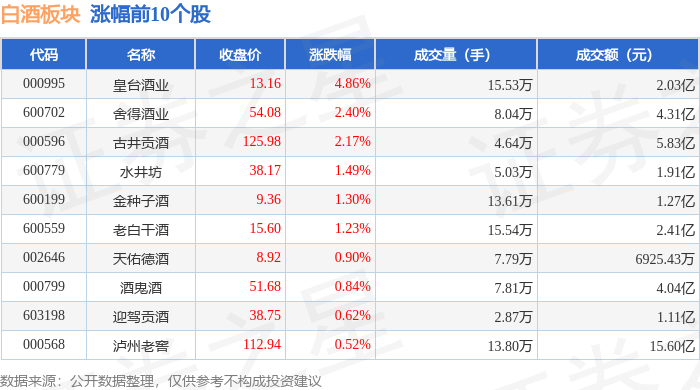
白酒板块1月28日跌0.79%,*ST岩石领跌,主力资金净流出12.38亿元
Zheng Xing Xing Ye Ri Bao· 2026-01-28 08:58
证券之星消息,1月28日白酒板块较上一交易日下跌0.79%,*ST岩石领跌。当日上证指数报收于 4151.24,上涨0.27%。深证成指报收于14342.9,上涨0.09%。白酒板块个股涨跌见下表: 从资金流向上来看,当日白酒板块主力资金净流出12.38亿元,游资资金净流入13.56亿元,散户资金净流 出1.18亿元。白酒板块个股资金流向见下表: | 代码 | 名称 | 主力净流入 (元) | 主力净占比 游资净流入 (元) | | 游资净占比 散户净流入(元) | | 散户净占比 | | --- | --- | --- | --- | --- | --- | --- | --- | | 000568 泸州老窖 | | 1.07 Z | 6.89% | -6686.18万 | -4.29% | -4056.45万 | -2.60% | | 600809 山西汾酒 | | 7464.03万 | 5.95% | 1.05亿 | 8.38% | -1.80亿 | -14.33% | | 000995 | 皇台酒业 | 2633.56万 | 12.95% | -253.88万 | -1.25% | -2379.67万 ...



为什么有的酒企能穿越周期持续增长,而你的却不能?丨争鸣
Sou Hu Cai Jing· 2026-01-28 08:16
Core Insights - Understanding the five stages of brand competition in the liquor industry is essential for companies aiming for long-term success, as it allows them to effectively allocate limited resources and maintain relevance in a changing market [2][3][4]. Group 1: Brand Competition Stages - The liquor industry's brand competition has evolved through five distinct stages, each representing a layer of capabilities that companies must develop to transition from survival to leadership [4][5]. - The five stages are: 1. Product Supremacy 2. Image Construction 3. Mindshare Occupation 4. User Relationship Competition 5. Value and Ecological Competition [5][6][7]. Group 2: Dynamic Matching of Brand and Revenue Stages - There is a dynamic relationship between brand development stages and revenue growth stages, where successful companies often have brand capabilities that are either ahead of or in sync with their revenue expansion [4][5]. - Companies that fail to align their brand capabilities with their growth stages risk falling into a "scale without profit" dilemma [4][5]. Group 3: Resource Allocation Models - A resource allocation model is proposed for different revenue stages, emphasizing the importance of focusing on product quality in the early stages and gradually shifting towards brand image and user relationships as companies grow [41][42][43]. - For companies with annual revenues below 50 million, 90% of resources should focus on product capabilities, while those with revenues between 10 billion and 50 billion should allocate 40% to product and 35% to user relationships [41][42]. Group 4: Theoretical Frameworks - The evolution of brand competition is supported by various marketing theories, including the Unique Selling Proposition (USP) theory, brand image theory, positioning theory, and brand loyalty theory, which provide frameworks for understanding consumer behavior and brand strategy [11][15][19][25]. - The current competitive landscape requires companies to build a brand ecosystem that resonates with consumers' values and social responsibilities, moving beyond mere profit motives [30][31][32]. Group 5: Strategic Implications - Companies must create a "brand capability configuration map" that aligns with their strategic goals and current market position, ensuring that resources are allocated effectively to navigate the complexities of competition [34][39]. - The transition from a product-focused approach to one that emphasizes brand mission and ecological systems is crucial for long-term sustainability and growth in the liquor industry [27][28][32].

澳网首席商务官科内利斯:愿不断深化与中国的联系
Huan Qiu Wang· 2026-01-28 06:52
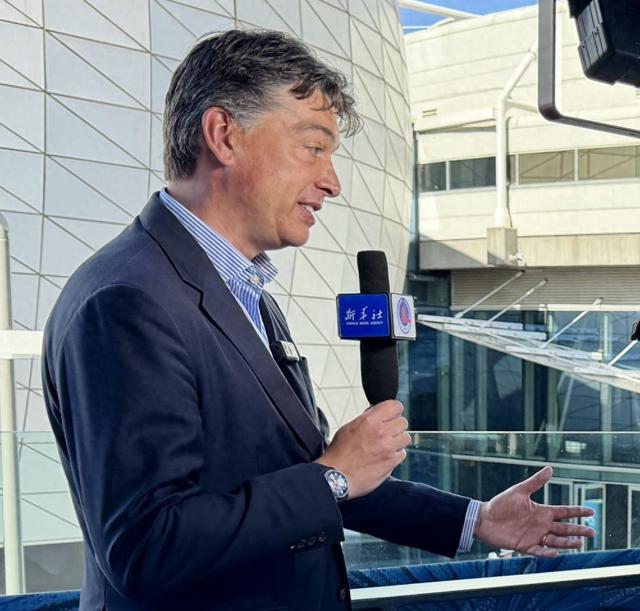
来源:新华网 新华社墨尔本1月27日电(记者徐海静 熊文苑)"我们是中国观看人数最多、最受喜爱的网球大满贯赛 事,我们一直在努力为中国球迷提供他们真正喜欢的内容。"澳大利亚网球公开赛(澳网)首席商务官 塞德里克·科内利斯27日在墨尔本公园接受新华社记者采访时如是说。 "在中国,我们的合作伙伴积极推广澳网品牌,推广网球运动。我们知道网球在中国发展迅猛。像泸州 老窖、海尔、瑞幸咖啡等合作伙伴都在中国各地组织了相关活动。"他说。 图为澳大 利亚网球公开赛(澳网)首席商务官塞德里克·科内利斯在接受新华社记者采访。新华社发(归清摄) 据介绍,澳网的电视及社交媒体观众总数中约有40%来自中国。科内利斯表示:"中国的澳网收视率与 澳大利亚不相上下,中国对我们来说是一个极其重要的市场。" 科内利斯表示,澳网在中国各社交媒体平台上共有600万粉丝,今年澳网在中国社交媒体上的曝光量已 经超过10亿次,"来自中国的收视数据非常强劲"。 澳网在中国设有全职团队,谈及原因,科内利斯说:"这个办公室让我们能真正与中国市场建立联系。 正因如此,我们各社交平台上的内容才能保持高质量。" 中国白酒品牌泸州老窖已在30多座城市举办面向业余选手的 ...
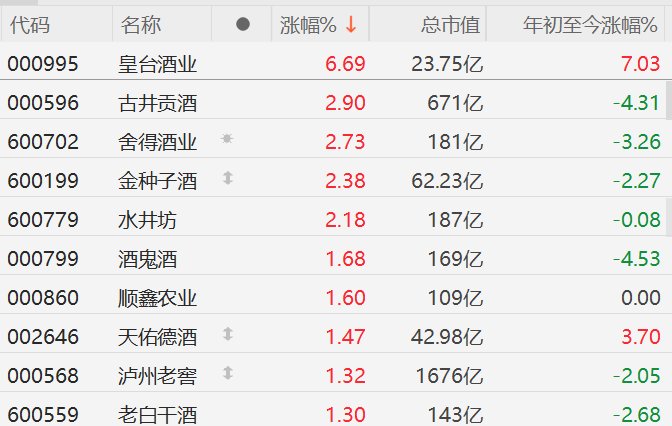
白酒股拉升,古井贡酒、舍得酒业涨超2%
Ge Long Hui A P P· 2026-01-28 06:04
Core Viewpoint - The A-share market has seen a rise in liquor stocks, with notable increases in several companies, indicating positive market sentiment in the sector [1]. Group 1: Stock Performance - Huangtai Liquor Industry (000995) increased by 6.69%, with a total market capitalization of 2.375 billion [2] - Gujing Gongjiu (000596) rose by 2.90%, with a market cap of 67.1 billion, but has a year-to-date decline of 4.31% [2] - Shede Liquor (600702) saw a 2.73% increase, with a market cap of 18.1 billion and a year-to-date decline of 3.26% [2] - Jinzongzi Liquor (600199) increased by 2.38%, with a market cap of 6.223 billion and a year-to-date decline of 2.27% [2] - Shuijingfang (600779) rose by 2.18%, with a market cap of 18.7 billion and a year-to-date change of -0.08% [2] - Jiugui Liquor (000799) increased by 1.68%, with a market cap of 16.9 billion and a year-to-date decline of 4.53% [2] - Shunxin Agriculture (000860) rose by 1.60%, with a market cap of 10.9 billion and no change year-to-date [2] - Tianyoude Liquor (002646) increased by 1.47%, with a market cap of 4.298 billion and a year-to-date increase of 3.70% [2] - Luzhou Laojiao (000568) saw a 1.32% increase, with a market cap of 167.6 billion and a year-to-date decline of 2.05% [2] - Laobaigan Liquor (600559) increased by 1.30%, with a market cap of 1.43 billion and a year-to-date decline of 2.68% [2] Group 2: Market Signals - The MACD golden cross signal has formed, indicating a positive trend for these stocks [1].