诺诚健华

Search documents
大涨194%,前三季"冠军基"出炉!重仓股曝光
Zheng Quan Shi Bao· 2025-10-22 15:33
Group 1: Fund Performance - The "Yongying Technology Smart Selection" fund achieved a remarkable 194% increase in the first three quarters, with its scale growing from 1.166 billion to 11.521 billion yuan, nearly a 9-fold increase in a single quarter [1][2] - The fund's top ten holdings included high-performing stocks in the optical module sector, contributing significantly to its net value, which saw a 99.74% increase in the third quarter [2][3] - The "Changcheng Pharmaceutical Industry Selection" fund also performed well, with a 102% increase in the same period, and its scale rising from 1.132 billion to 1.790 billion yuan [4][5] Group 2: Investment Focus - The fund manager of "Yongying Technology Smart Selection" emphasized the importance of the global cloud computing industry, noting significant price increases and a 100% quarter-on-quarter growth in token numbers [3][8] - The "Changcheng Pharmaceutical Industry Selection" fund manager expressed optimism about innovative drugs, highlighting a shift towards individual stock performance as the sector enters an "alpha" phase [5][7] - Both fund managers believe that despite recent adjustments, the technology and pharmaceutical sectors still have potential for future growth, requiring careful stock selection [6][7] Group 3: Market Trends and Outlook - The technology sector is expected to see continued investment, with AI computing power projected to rise significantly due to increased collaboration between chip manufacturers and model developers [7] - The optical communication and PCB industries are anticipated to experience a pivotal year in 2027, with new technologies expected to reach implementation stages [7] - The cloud computing sector is recognized for its long-term growth potential, but caution is advised regarding future performance predictions based on past results [8]
诺诚健华20251022
2025-10-22 14:56
Summary of the Conference Call for 诺诚健华 Company Overview - **Company**: 诺诚健华 (Nuo Cheng Jian Hua) - **Key Product**: 奥布替尼 (Aubutinib) Industry Insights - **Sales Growth**: Aubutinib's domestic sales are projected to reach 1 billion yuan in 2024, representing a year-on-year growth of 49%. In the first half of 2025, sales are expected to be 637 million yuan, with a growth rate exceeding 50%. The annual growth rate is anticipated to exceed 30% due to new indications and inclusion in medical insurance [2][4]. Core Developments - **New Indications**: The company is actively advancing Aubutinib's development in autoimmune indications, with the first IDP indication expected to be approved by 2027. The RB phase study for systemic lupus erythematosus (SLE) is expected to report RB7 data by the end of this year [2][5]. - **Clinical Trials**: A phase III clinical trial for BCL-2 inhibitors combined with Aubutinib for CLL/SLL has been approved. A registration trial for single-agent BTK inhibitors in previously treated MCL is ongoing, and FDA approval has been granted for BCL-2 inhibitors combined with azacitidine for AML and MDS [2][7]. Product Pipeline - **Solid Tumors**: The second-generation TRK inhibitor ICP723 for NTRK fusion gene advanced solid tumors has had its application accepted by CDE, with approval expected next year. The company is also expanding its ADC platform, focusing on B7H3 ADC products [2][8]. - **New Product Launch**: CT19 monoclonal antibody (Ming Nuo Kai) has been approved for use in combination with lenalidomide for relapsed refractory DLBCL, although its commercial contribution may be limited due to high pricing and being an imported drug [3][7]. Future Catalysts - **Upcoming Events**: Significant catalysts expected in the next six months to a year include the release of SLE RB7 data, BCL-2 data for AML treatment, and initial human data for ADC. In the first half of next year, data from multiple phase II and III trials for Tec Two JAK 1 (ICP 332) are anticipated, along with a planned submission for Aubutinib for ITP [2][9]. Additional Considerations - **Market Position**: Aubutinib is the second domestically produced and the fourth globally approved BTK inhibitor, which has seen rapid sales growth since its inclusion in medical insurance in 2021 [4]. - **Collaborations**: The company is collaborating with Zena for the development of multiple sclerosis treatments, which is significant for international cooperation and risk management [6]. This summary encapsulates the key points from the conference call, highlighting the company's growth trajectory, product pipeline, and future prospects in the pharmaceutical industry.

创新药风向突变?官宣114亿美元大单,股价却跳水丨港美股看台
Zheng Quan Shi Bao Wang· 2025-10-22 10:55
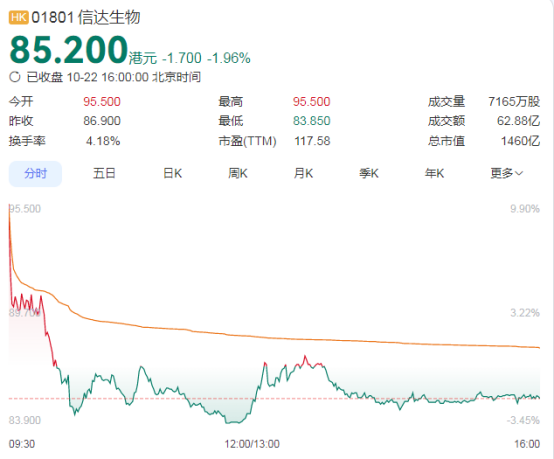
Core Viewpoint - The collaboration between Innovent Biologics and Takeda Pharmaceutical, valued at up to $11.4 billion, did not significantly impact Innovent's stock price despite the announcement [1][3][5]. Group 1: Collaboration Details - Innovent Biologics announced a global strategic partnership with Takeda Pharmaceutical to jointly develop cancer treatment drugs, with a total deal value potentially reaching $11.4 billion [1][3]. - The agreement includes an upfront payment of $1.2 billion, which consists of a $1 billion premium strategic equity investment, along with potential milestone payments [5]. - Innovent will retain the ambition to commercialize its products overseas, unlike many domestic innovative drug companies that typically relinquish commercialization rights [5]. Group 2: Drug Pipeline - The collaboration focuses on accelerating the global development of Innovent's next-generation IO (Immuno-Oncology) and ADC (Antibody-Drug Conjugate) therapies, including: 1. IBI363, a globally innovative PD-1/IL-2α-bias bispecific antibody fusion protein in Phase III clinical trials, showing strong anti-tumor activity [5]. 2. IBI343, a best-in-class CLDN18.2 ADC also in Phase III clinical trials [5]. 3. IBI3001, a globally innovative EGFR/B7H3 dual-target ADC in Phase I clinical trials [5]. Group 3: Market Reaction - Despite an initial surge of 9.9% at market open, Innovent's stock price fell by 1.96% to HKD 85.2 per share by market close, reflecting a broader trend of declining enthusiasm for innovative drug business development (BD) transactions [1][7]. - The recent trend shows a cooling off in the innovative drug BD market, with other companies experiencing similar stock price declines following major announcements [7][9].

创新药风向突变?官宣114亿美元大单,股价却跳水
Zheng Quan Shi Bao· 2025-10-22 10:43
Core Viewpoint - The collaboration between Innovent Biologics and Takeda Pharmaceutical, valued at up to $11.4 billion, did not significantly impact Innovent's stock price despite the announcement [1][3][5]. Group 1: Collaboration Details - Innovent Biologics announced a global strategic partnership with Takeda Pharmaceutical to jointly develop cancer treatment drugs, with a total deal value potentially reaching $11.4 billion [1][3]. - The agreement includes an upfront payment of $1.2 billion, which consists of a $1 billion premium strategic equity investment, along with milestone payments and sales revenue sharing [5]. - The collaboration aims to leverage both companies' strengths in accelerating the global development of Innovent's IO and ADC therapies, including IBI363, IBI343, and IBI3001 [5][6]. Group 2: Market Reaction - Following the announcement, Innovent's stock opened with a 9.9% increase but subsequently fell, closing down 1.96% at HKD 85.2 per share, with a total market capitalization of HKD 146 billion [1][7]. - This trend of stock price decline after significant partnership announcements is not isolated, as seen with other companies like Valiant and Eucure Biopharma, which also experienced similar stock movements post-announcement [7][9]. Group 3: Industry Context - The recent trend indicates a cooling off in the market for innovative drug business development (BD) transactions, with several companies experiencing stock price declines despite high-value deals [7][11]. - The Chinese pharmaceutical industry is transitioning towards innovation-driven growth, with a focus on international expansion and the development of new drugs, which is expected to continue influencing market dynamics [11][12].
创新药风向突变?官宣114亿美元大单,股价却跳水丨港美股看台
证券时报· 2025-10-22 10:40
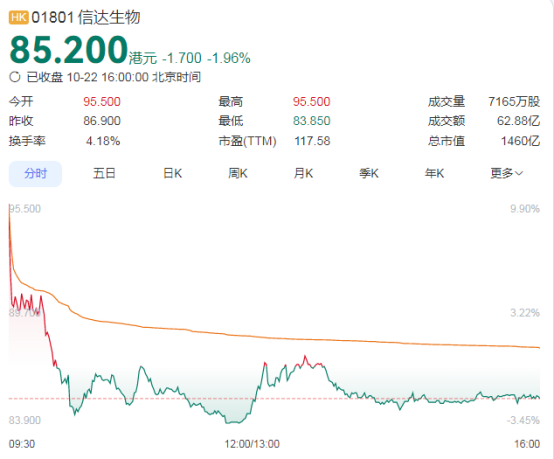
Core Viewpoint - The collaboration between Innovent Biologics and Takeda Pharmaceutical, valued at up to $11.4 billion, did not significantly impact Innovent's stock price despite initial gains [2][4][9]. Group 1: Collaboration Details - Innovent Biologics announced a global strategic partnership with Takeda Pharmaceutical to co-develop cancer therapies, with a total deal value potentially reaching $11.4 billion [2][4]. - The agreement includes an upfront payment of $1.2 billion (including $100 million for strategic equity investment) and potential milestone payments, along with sales revenue sharing [6]. - The collaboration focuses on three key drug candidates: IBI363, IBI343, and IBI3001, which are in various stages of clinical development [6]. Group 2: Market Reaction - Despite a 9.9% increase at the opening, Innovent's stock fell by 1.96% by the end of the trading day, closing at HKD 85.2 per share [2][9]. - This trend of initial stock price surges followed by declines has been observed in other recent biotech deals, indicating a cooling market for innovative drug business development (BD) transactions [8][10]. Group 3: Industry Context - The innovative drug BD market has seen a decline in transaction heat, with several companies experiencing similar stock price reactions post-announcement [8][10]. - Recent statistics show that from January 1 to October 17, 2025, there were 135 license-out transactions in China, totaling $4.976 billion in upfront payments and $102.996 billion in total deal value [15]. - Analysts suggest that the innovative drug sector is undergoing a transformation, with a focus on high-efficiency R&D and strong overseas collaboration as key drivers for future growth [16].

暴赚195%,猛加仓
Zhong Guo Ji Jin Bao· 2025-10-22 08:43
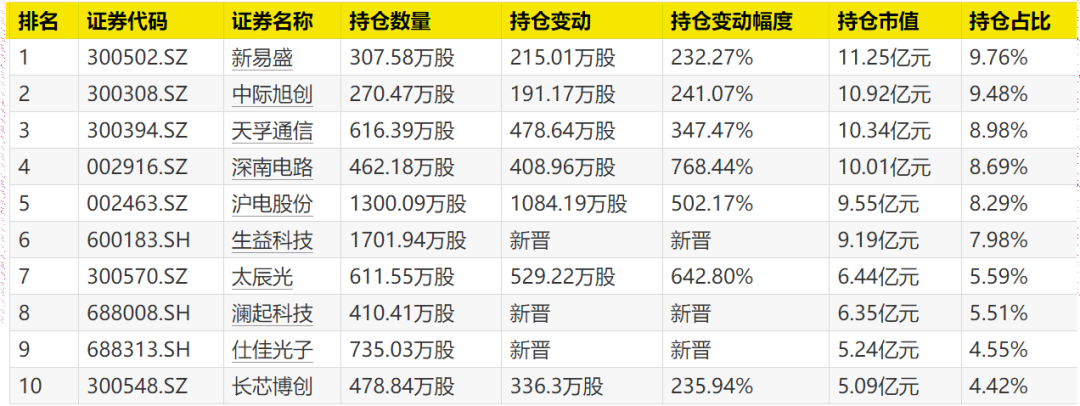
Group 1: Fund Performance and Holdings - The performance of the "Champion Fund" Yongying Technology Smart Selection has seen a remarkable increase, with a year-to-date return of nearly 195% and a net asset value growth of 234% since its inception [2][3][9] - The fund's scale surged nearly tenfold in the third quarter, growing from 1.166 billion to 11.521 billion yuan, with the number of shares increasing from 700 million to 3.466 billion [5][9] - The fund maintains a high stock position, with over 91% in equities, focusing heavily on the cloud computing sector [2][3] Group 2: Key Holdings in Cloud Computing - The top three holdings of Yongying Technology Smart Selection include Xinyi Technology, Zhongji Xuchuang, and Tianfu Communication, each with a market value exceeding 1 billion yuan [3][2] - Significant increases in holdings were observed for Huadian Co., Taicheng Light, and Tianfu Communication, with growth rates of 502.17%, 642.80%, and 347.47% respectively [3][2] Group 3: Longcheng Pharmaceutical Industry Selection - Longcheng Pharmaceutical Industry Selection has also performed well, achieving a return of 102.02% in the first three quarters, qualifying it as a "doubling fund" [7][9] - The fund's scale increased from 1.132 billion to 1.790 billion yuan in the third quarter, marking a growth of nearly 60% [9] - The fund's top three holdings include Innovent Biologics, 3SBio, and Hotgen Biotech, with each holding a market value exceeding 100 million yuan [8][7] Group 4: Investment Focus and Strategy - The investment strategy of Yongying Technology Smart Selection emphasizes the cloud computing industry, with a focus on optical communication and PCB sectors, anticipating significant technological advancements by 2027 [6][2] - Longcheng Pharmaceutical Industry Selection is shifting its focus towards clinical data, overseas licensing, and domestic sales, indicating a strategic pivot towards non-oncology sectors [9][7]




诺诚健华跌2.01%,成交额7490.69万元,主力资金净流出1292.02万元
Xin Lang Zheng Quan· 2025-10-22 03:12
Group 1 - The core viewpoint of the news is that Nocera Health has experienced a significant stock price increase of 90.39% year-to-date, but has recently faced declines in its stock price over various time frames [1][2] - As of October 22, Nocera Health's stock price was 23.38 CNY per share, with a market capitalization of 41.257 billion CNY [1] - The company has seen a net outflow of main funds amounting to 12.92 million CNY, with large orders showing a higher selling volume compared to buying [1] Group 2 - Nocera Health, established on November 3, 2015, focuses on the research, production, and commercialization of biopharmaceuticals, particularly in oncology and autoimmune diseases [2] - The company's revenue composition includes 87.67% from drug sales, 12.04% from technology licensing, and minimal contributions from testing and R&D services [2] - As of June 30, 2025, Nocera Health reported a revenue of 731 million CNY, reflecting a year-on-year growth of 74.26%, while the net profit attributable to shareholders was -30.09 million CNY, an increase of 88.51% year-on-year [2] Group 3 - As of June 30, 2025, the top ten circulating shareholders of Nocera Health include several mutual funds, with notable increases in holdings from certain funds [3] - The sixth-largest shareholder, China Europe Medical Health Mixed A, increased its holdings by 3.98 million shares [3] - New entrants among the top ten shareholders include E Fund Healthcare Industry Mixed A, which holds 9.19 million shares [3]
信达生物达成百亿美元合作,20cm标的科创创新药 ETF(589720)盘中领涨
Mei Ri Jing Ji Xin Wen· 2025-10-22 01:52
Group 1: Core Insights - Xinda Biopharma announced a global strategic collaboration with Takeda Pharmaceutical, with a total deal value of up to $11.4 billion, including an upfront payment of $1.2 billion [1][3][4] - The collaboration aims to accelerate the global development and commercialization of Xinda's next-generation immuno-oncology and antibody-drug conjugate therapies, covering three products: IBI363, IBI343, and IBI3001 [3][4] - Xinda will receive a total of up to $10.2 billion in potential development and sales milestone payments, in addition to sales revenue sharing for the candidates outside Greater China [3][4] Group 2: Market Impact - Following the announcement, the innovative drug ETF (589720) surged, reflecting a 20% increase in a single day, indicating strong market sentiment towards the collaboration [1][6] - The innovative drug sector has seen significant growth, with contract values exceeding $100 billion in the first nine months of the year, marking a 170% year-on-year increase [5] - The sector is expected to continue benefiting from favorable macroeconomic conditions, including potential interest rate cuts, which are seen as supportive for innovation-driven companies [5][7] Group 3: Future Outlook - The innovative drug industry is poised for substantial growth driven by international expansion, policy support, and the strengthening of R&D capabilities among Chinese companies [7] - Investors are encouraged to focus on the innovative drug ETF (589720), which tracks a representative index of high-growth biotech companies, as it has outperformed the Hang Seng Hong Kong Stock Connect Innovative Drug Index since the "924 market" [6][7] - The upcoming ESMO conference is expected to showcase a significant number of Chinese research projects, further highlighting the robust development of the innovative drug sector [5][7]

诺诚健华跌2.02%,成交额3810.49万元,主力资金净流出491.39万元
Xin Lang Cai Jing· 2025-10-21 02:16
Core Viewpoint - Nuo Cheng Jian Hua's stock price has seen a significant increase of 93.24% year-to-date, but has recently experienced a decline of 2.94% over the past five trading days and 20.66% over the past 60 days [2][3] Company Overview - Nuo Cheng Jian Hua, established on November 3, 2015, and listed on September 21, 2022, is based in Beijing and focuses on the research, production, and commercialization of biopharmaceuticals, particularly in oncology and autoimmune diseases [2] - The company's revenue composition includes 87.67% from drug sales, 12.04% from technology licensing, and 0.15% each from testing and research services [2] Financial Performance - For the first half of 2025, Nuo Cheng Jian Hua reported a revenue of 731 million yuan, representing a year-on-year growth of 74.26%, while the net profit attributable to shareholders was -30.09 million yuan, an increase of 88.51% year-on-year [3] Shareholder Information - As of June 30, 2025, the number of shareholders increased by 13.80% to 15,200, with an average of 0 circulating shares per person [3] - Notable institutional shareholders include China Europe Medical Health Mixed A and others, with changes in their holdings reflecting market dynamics [3]
医药生物行业双周报:重磅创新成果集中亮相2025ESMO大会-20251020
Great Wall Glory Securities· 2025-10-20 11:37
Investment Rating - The investment rating for the pharmaceutical and biotechnology industry is "Positive" and the rating has been maintained [1] Core Insights - The pharmaceutical and biotechnology industry index declined by 3.65% during the reporting period, ranking 21st among 31 primary industries, underperforming the CSI 300 index which fell by 2.73% [4][16] - The valuation of the pharmaceutical and biotechnology industry as of October 17, 2025, is a PE (TTM overall method, excluding negative values) of 30.08x, down from 31.23x in the previous period, indicating a downward trend and below the average [4][21] - Key sub-industries include vaccines (55.76x), hospitals (39.64x), and medical devices (38.84x), with the lowest valuation in pharmaceutical circulation (14.29x) [4][21] - The report highlights significant innovations presented at the 2025 ESMO conference, indicating a shift in global oncology drug development from "single-agent breakthroughs" to "combination therapy strategies" [6][8] - The newly released regulations by the State Council aim to standardize clinical research pathways, promoting innovation while ensuring safety [7][25][26] Industry Overview - The report notes that 26 listed companies in the pharmaceutical and biotechnology sector experienced a net reduction in shareholder holdings amounting to 501 million yuan, while 4 companies increased their holdings by 519 million yuan [4] - The report emphasizes the importance of monitoring third-quarter earnings to validate the fundamentals of companies, particularly those with innovative product launches and significant performance improvements [8] Important Industry News - The approval of the first domestic PDE4 inhibitor by He Mei Pharmaceutical marks a significant milestone in the industry [6][34] - The approval of a new indication for GSK's recombinant shingles vaccine expands its application to adults at increased risk due to immunodeficiency [6][36] - The U.S. Senate passed a revised version of the Biosecurity Act, which continues to impose restrictions on certain Chinese biotechnology companies [6][44] - The collaboration between Bai Li Tian Heng and BMS on the iza-bren project has reached a milestone, triggering a payment of 250 million USD [6][47] - The IPO of Xuan Zhu Biotechnology on the Hong Kong Stock Exchange saw a significant oversubscription and a substantial increase in share price during the dark trading period [6][49]