赛诺菲

Search documents
“一针千万”基因疗法获批 巨头争相布局,能否攻克医学难题?
2 1 Shi Ji Jing Ji Bao Dao· 2025-11-25 23:29
Core Insights - The approval of Itvisma by the FDA marks a significant advancement in gene therapy for spinal muscular atrophy (SMA), targeting patients aged two and older with specific genetic mutations [1][2] - Itvisma's wholesale price is set at $2.59 million, making it one of the most expensive drugs on the market, and it is the first gene therapy approved for a broader patient demographic [1][3] - The global gene therapy market is expected to grow at an annual rate of over 20% in the next 5-10 years, driven by technological advancements and regulatory clarity [2][8] Pricing and Market Dynamics - The pricing strategy for Itvisma is influenced by the high R&D costs associated with gene therapies, with Zolgensma's development costing $9.4 billion [3][4] - The market for SMA treatments is currently limited, with only three approved drugs, highlighting Itvisma's unique position as a gene therapy product [2][4] - The competitive landscape is evolving, with companies focusing on gene editing and delivery systems, which may lead to increased competition and innovation [2][10] Clinical Efficacy and Safety - Itvisma's approval is based on significant improvements in motor function observed in clinical trials, with consistent safety profiles reported [4][5] - The treatment aims to provide a one-time solution by delivering a functional SMN1 gene, potentially reducing the need for ongoing therapies [5][6] Market Potential and Competition - The gene therapy market is projected to reach $90.3 billion by 2024, with a compound annual growth rate of 27.6% expected through 2033 [8] - Major pharmaceutical companies are actively investing in gene therapy, as evidenced by significant acquisitions and partnerships in the sector [9][10] - Itvisma will compete directly with Spinraza, the first SMA treatment, which has undergone significant price adjustments to improve accessibility [6][7] Future Outlook - The success of Itvisma could pave the way for further advancements in gene therapy, particularly for rare diseases, while also raising questions about drug pricing and accessibility [12][13] - Ongoing challenges include high production costs and the need for innovative delivery systems to enhance the efficacy and safety of gene therapies [11][12]

Nurix Therapeutics to Participate in the Piper Sandler 37th Annual Healthcare Conference
Globenewswire· 2025-11-25 12:00
Core Insights - Nurix Therapeutics, Inc. is a clinical-stage biopharmaceutical company focused on targeted protein degradation medicines for oncology and autoimmune diseases [3] Company Overview - Nurix's pipeline includes degraders of Bruton's tyrosine kinase (BTK) and inhibitors of Casitas B-lineage lymphoma proto-oncogene B (CBL-B) [3] - The company is advancing multiple potentially first-in-class or best-in-class degraders and degrader antibody conjugates (DACs) in its preclinical pipeline [3] - Nurix has partnered with Gilead, Sanofi, and Pfizer for drug discovery, retaining options for co-development and profit sharing in the U.S. [3] - The company utilizes an AI-integrated discovery engine and has expertise in ligase to enhance its clinical advancements [3] Upcoming Events - Arthur T. Sands, M.D., Ph.D., and Hans van Houte will participate in a fireside chat at the Piper Sandler 37th Annual Healthcare Conference on December 3, 2025 [1] - The event will be webcast live and archived for 30 days [2]



“一针千万”基因疗法获批!巨头争相布局,能否攻克医学难题?
2 1 Shi Ji Jing Ji Bao Dao· 2025-11-25 07:22
Core Viewpoint - The approval of Itvisma, a gene therapy priced at approximately $2.59 million, marks a significant milestone in the gene therapy market, raising questions about the sustainability of high-priced treatments and their accessibility for patients [1][12]. Gene Therapy Market Overview - The global gene therapy market is at a turning point, expected to grow at an annual rate of over 20% in the next 5-10 years, driven by technological advancements, clearer regulatory pathways, and innovative payment models [2][11]. - The market size is projected to reach $90.3 billion by 2024, increasing to $115.2 billion by 2025, and potentially reaching $646.4 billion by 2033, with a compound annual growth rate of 27.6% [7]. Itvisma and Competitive Landscape - Itvisma is the first gene therapy approved for a broader patient population with spinal muscular atrophy (SMA), highlighting its rarity and the high barriers to entry in the market [2][4]. - Itvisma's approval is based on significant clinical trial results showing improvements in motor function, with a consistent safety profile [4][5]. - The competitive landscape includes Spinraza, another SMA treatment, which has seen significant price reductions in markets like China, indicating the potential for price adjustments in response to market dynamics [6][12]. Pricing and Economic Considerations - The pricing strategy for Itvisma reflects the high R&D costs associated with gene therapies, with Zolgensma's development costing $9.4 billion [3][4]. - The debate over the "reasonable" price range for gene therapies continues, with various estimates significantly lower than the actual market prices [3][4]. Accessibility and Payment Models - The high cost of gene therapies raises concerns about patient accessibility, prompting discussions on innovative payment models, such as installment payments linked to treatment outcomes [12][13]. - The need for regulatory frameworks to balance innovation incentives with drug accessibility remains a critical issue for the industry [11][12]. Future Outlook - The gene therapy sector is expected to expand beyond rare diseases into more common conditions, driven by advancements in gene editing technologies and increasing regulatory approvals [11][12]. - Companies are focusing on production scalability and cost control to make therapies more affordable, which is essential for broader market penetration [12][13].
Dupixent® (dupilumab) Approved as the First Targeted Medicine in the European Union (EU) in Over a Decade for Chronic Spontaneous Urticaria (CSU)
Globenewswire· 2025-11-25 06:00
Core Insights - The European Commission has approved Dupixent (dupilumab) for the treatment of moderate-to-severe chronic spontaneous urticaria (CSU) in patients aged 12 years and older who do not respond adequately to standard antihistamine treatment [1][4][11] - Dupixent is the first innovative treatment for CSU in over a decade, targeting IL-4 and IL-13, which are key drivers of type 2 inflammation [2][4] - The approval is based on data from two Phase 3 clinical trials showing significant reductions in itch and hives compared to placebo at 24 weeks [1][2][7] Group 1: Approval and Indications - Dupixent is now approved for use in patients with CSU who are naïve to anti-immunoglobulin E (IgE) therapy and have inadequate responses to histamine-1 antihistamines [1][4] - Approximately 270,000 adults and adolescents in the EU suffer from CSU that remains symptomatic despite standard treatment [1][6] Group 2: Clinical Trials and Efficacy - The LIBERTY-CUPID Phase 3 program included three studies assessing Dupixent as an add-on therapy to antihistamines, demonstrating significant efficacy in reducing urticaria activity and improving patient outcomes [2][7][8] - Study A and Study C involved 284 patients aged 12 years and older, while Study B included 108 patients, providing additional safety data [2][7] Group 3: Safety Profile - Safety results from the trials were consistent with Dupixent's known safety profile, with common adverse reactions including injection site reactions, conjunctivitis, and arthralgia [3][4] - Adverse events observed more frequently with Dupixent compared to placebo included injection site reactions, COVID-19, and hypertension [3][4] Group 4: Broader Context and Future Potential - Beyond the EU, Dupixent is also approved for CSU in the United States and Japan, indicating a growing acceptance of the treatment in various markets [4][11] - The Dupixent development program has been extensive, with over 60 clinical trials involving more than 10,000 patients across various chronic diseases driven by type 2 inflammation [15][16]




Press Release: Sanofi and Regeneron’s Dupixent approved as the first targeted medicine in the EU in over a decade for chronic spontaneous urticaria
Globenewswire· 2025-11-25 06:00
Core Insights - The European Commission has approved Dupixent (dupilumab) as the first targeted treatment for moderate-to-severe chronic spontaneous urticaria (CSU) in over a decade, providing a new option for patients aged 12 and older who have not responded adequately to antihistamines [1][4][5] Company Overview - Dupixent is developed jointly by Sanofi and Regeneron, targeting type 2 inflammation by inhibiting interleukin-4 (IL4) and interleukin-13 (IL13) pathways, which are key drivers of CSU [10][12] - The approval is based on the LIBERTY-CUPID phase 3 clinical studies, which demonstrated significant efficacy in reducing itch and hives compared to placebo [2][7][8] Clinical Study Findings - Two phase 3 studies (Study A and Study C) involved 284 patients aged 12 years and older, showing Dupixent significantly reduced urticaria activity and increased the percentage of patients achieving well-controlled disease at 24 weeks [2][7][8] - Study B provided additional safety data for patients who were inadequate responders or intolerant to anti-IgE therapy, confirming Dupixent's efficacy in this subgroup [2][3][7] Market Potential - Approximately 270,000 adults and adolescents in the EU suffer from CSU that remains symptomatic despite standard antihistamine treatment, indicating a significant market opportunity for Dupixent [5][6] - Dupixent is already approved for several chronic inflammatory diseases in over 60 countries, with more than 1.3 million patients treated globally [11][12]


Cell Research年度杰出论文奖出炉:西湖大学、复旦大学、温州医科大学论文获奖
生物世界· 2025-11-25 00:00
Core Viewpoint - The article discusses the recent announcement of the 2024 Annual Outstanding Paper Awards by Sanofi-Cell Research, highlighting three significant research papers published in Cell Research that have made notable contributions to their respective fields [2]. Group 1: Paper Summaries - The first paper titled "Hypoxia induces mitochondrial protein lactylation to limit oxidative phosphorylation" reveals that hypoxia-induced mitochondrial protein lactylation inhibits oxidative phosphorylation (OXPHOS). The study identifies AARS2 as a lactyltransferase that modifies PDHA1 and CPT2, reducing acetyl-CoA influx and suppressing OXPHOS. SIRT3 can reverse this lactylation, emphasizing the role of lactylation in mitochondrial function regulation [8][13]. - The second paper titled "40 Hz light flickering promotes sleep through cortical adenosine signaling" demonstrates that 40 Hz light flickering increases extracellular adenosine levels in the primary visual cortex via ENT2-mediated transport. The study shows that 30 minutes of 40 Hz light flickering enhances both non-rapid eye movement and rapid eye movement sleep in mice, suggesting a non-invasive strategy for treating insomnia [14][16]. - The third paper discusses a novel design strategy for D-type proteins that can stably target natural L-type proteins or peptides. This research achieves the precise design of enantiomeric protein complexes with high stereospecificity and target specificity, exhibiting significant thermal stability and proteolytic resistance. The findings provide a new platform for disease treatment and biotechnological applications [18].

创新药下一个风口浮现
3 6 Ke· 2025-11-24 23:19
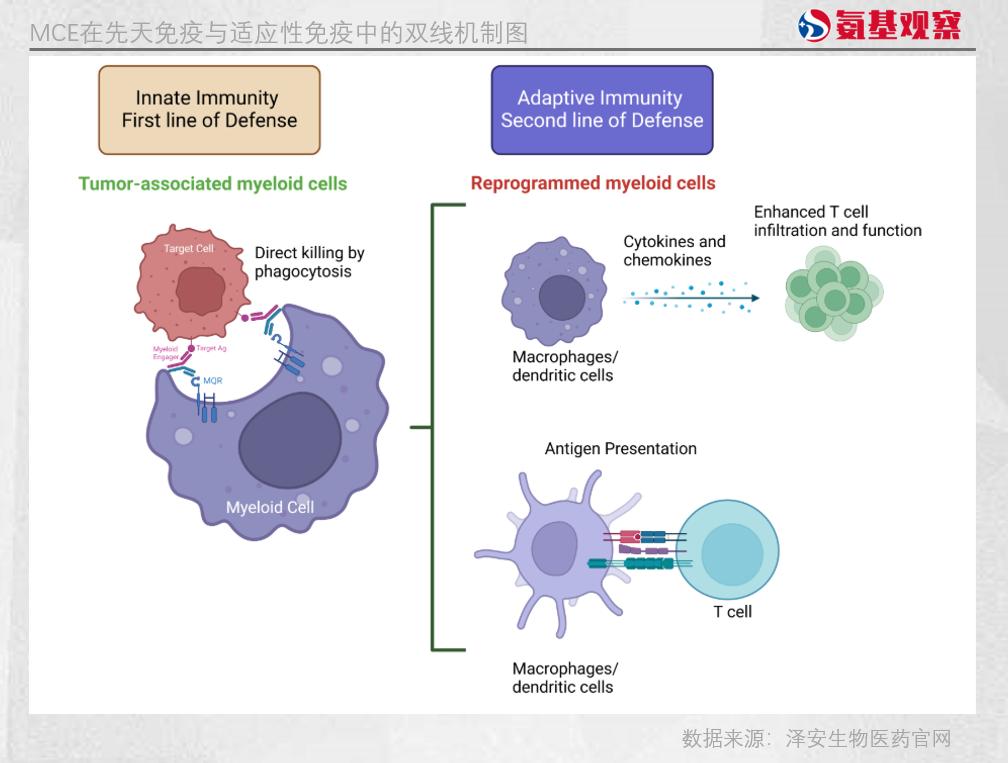
Core Insights - The MCE (myeloid cell engager) technology is rapidly gaining attention in the immunotherapy sector, with significant transactions indicating its strategic value among major pharmaceutical companies [1][4][6] - MCE's mechanism targets myeloid cells, potentially offering broader applications and reduced risks compared to TCE (T cell engager) therapies, which is a key factor in its appeal to large pharmaceutical firms [2][10] Group 1: Major Transactions and Collaborations - Novartis initiated interest in MCE by partnering with Dren Bio for $3 billion, aiming to develop a new class of bispecific antibodies using Dren's myeloid cell engager platform [4][5] - Sanofi followed by acquiring Dren Bio's promising CD20-targeting MCE, DR-0201, for an upfront payment of $600 million, with total milestone payments potentially reaching $1.9 billion [4][11] - GSK has also entered the MCE space by signing agreements for four MCE projects with Zealand Bio, integrating MCE into its broader ADC+IO Engager strategy [5][11] Group 2: Mechanism and Advantages of MCE - MCE operates through a "bind-activate-kill" mechanism, connecting myeloid cells with target cells, which enhances the immune response against tumors [7][10] - The targeting of tumor-associated myeloid cells (TAMCs) allows MCE to modulate the immune system more effectively, potentially overcoming limitations faced by TCE therapies in solid tumors [8][10] - MCE's ability to safely release pro-inflammatory factors reduces the risk of cytokine release syndrome (CRS), presenting a significant safety advantage over TCE [10][12] Group 3: Clinical Development and Future Potential - MCE is not merely a derivative of TCE but represents a new approach to harnessing innate immunity, with the potential to complement existing therapies like PD-1 and CAR-T [13][14] - The ongoing clinical trials and pipeline developments from companies like Dren Bio and Zeal Bio indicate a strong focus on both oncology and autoimmune diseases, showcasing MCE's versatility [11][14] - The growing interest from major pharmaceutical companies reflects the belief that MCE could fill critical gaps in the current immunotherapy landscape, leading to innovative treatment options [14]


Alnylam,下一个巨头?
Ge Long Hui· 2025-11-23 18:23
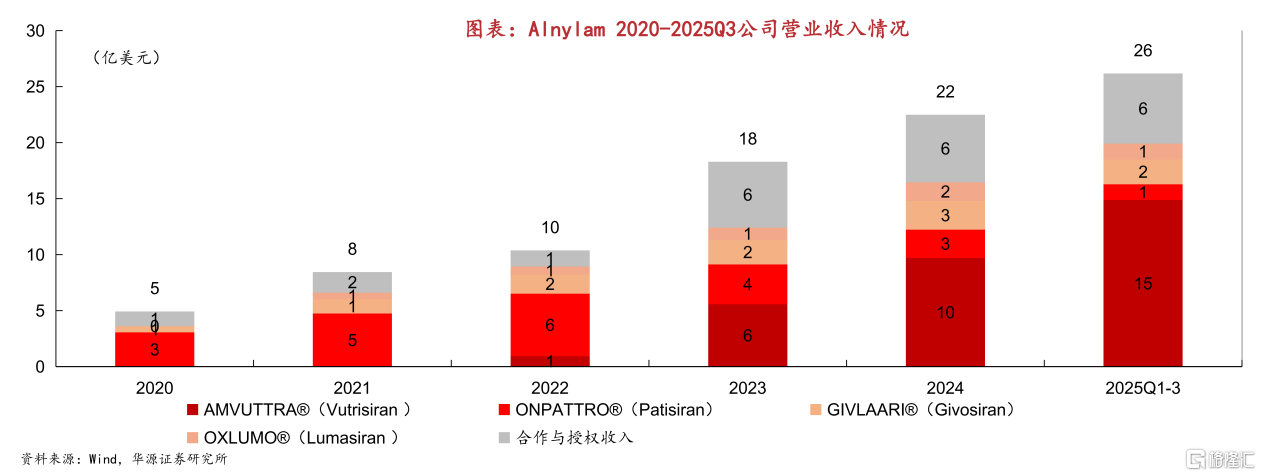
Core Viewpoint - Alnylam Pharmaceuticals has transformed from a biotech company to a pharmaceutical leader, achieving a market capitalization of approximately $611 billion and aiming for a $100 billion valuation, driven by strong revenue growth and a robust pipeline of RNAi therapies [1][2][21]. Financial Performance - Alnylam's total revenue for the first three quarters of 2025 reached $2.617 billion, with product net revenue of $1.992 billion, marking a 67% year-over-year increase [4]. - The TTR product line saw an 85% revenue growth to $1.628 billion, primarily driven by Amvuttra and Onpattro [4]. - Alnylam's total revenue projections for 2025 have been raised to $2.95-3.05 billion, with TTR product revenue guidance adjusted to $2.475-2.525 billion [4]. Product Pipeline and Collaborations - Alnylam has over 15 projects in its pipeline, focusing on rare diseases, cardiovascular, metabolic, and neurological conditions, with Cemdisiran and Elebsiran in late-stage clinical trials [8][14]. - Strategic collaborations with companies like Novartis and Regeneron have accelerated product development and diversified revenue streams [6][7]. Key Products and Market Potential - Leqvio, a long-acting lipid-lowering drug developed in partnership with Novartis, is expected to exceed $1 billion in sales for the first time in 2025 [16]. - Zilebesiran, a novel hypertension treatment, is anticipated to revolutionize blood pressure management with a convenient dosing schedule [16][21]. Future Outlook - Alnylam's dual revenue model of product sales and licensing agreements supports short-term profitability while its innovative pipeline offers significant long-term growth potential [21]. - The company is well-positioned to achieve its goal of a $100 billion market valuation as it continues to launch impactful therapies [21].
创新药周报20251123:首个APOC3 siRNA疗法获批上市用于治疗FCS-20251123
Huachuang Securities· 2025-11-23 13:50
Investment Rating - The report indicates a positive investment outlook for the innovative drug sector, particularly focusing on RNA-targeted therapies for metabolic diseases [5][6]. Core Insights - The approval of the first APOC3 siRNA therapy for treating Familial Chylomicronemia Syndrome (FCS) marks a significant milestone in the RNA-targeted therapy landscape, showcasing the potential of these therapies in managing lipid disorders [17][28]. - RNA-targeted therapies, including small interfering RNA (siRNA) and antisense oligonucleotides (ASOs), are being developed to effectively lower triglyceride levels and improve patient compliance due to reduced dosing frequency [5][10]. - The report highlights ongoing clinical trials and the promising results of therapies like volanesorsen and olezarsen, which have shown significant reductions in triglyceride levels and lower incidence of acute pancreatitis in patients with FCS [17][28][34]. Summary by Sections Section 1: Focus on Innovative Drugs - The report emphasizes the rapid advancements in RNA-targeted therapies for metabolic diseases, particularly in the context of lipid management [5][6]. - Key developments include the approval of siRNA therapies that target APOC3 mRNA, which is crucial for regulating triglyceride levels in patients with FCS [10][17]. Section 2: Clinical Developments - The report details various therapies in clinical stages, including volanesorsen and olezarsen, which have received FDA approval and demonstrated efficacy in lowering triglyceride levels significantly [17][28]. - Clinical trial results indicate that patients treated with these therapies experienced substantial reductions in triglyceride levels compared to placebo groups, with olezarsen showing a 43.5% reduction at six months [28][34]. Section 3: Market Dynamics - The report outlines the competitive landscape, noting that several companies are advancing their RNA-targeted therapies through clinical trials, with a focus on improving patient outcomes and safety profiles [33][34]. - The potential market for these therapies is substantial, given the prevalence of metabolic diseases and the need for effective treatment options [5][6].
36氪精选:维梧资本付山:长期看好港股新药资产,中国系统集成优势正爆发|36氪专访
日经中文网· 2025-11-22 00:34
Core Viewpoint - The article emphasizes the need to shift the focus in innovative drug investment from "people" to "assets," highlighting the importance of molecules, technologies, and pipelines with significant therapeutic potential and commercial value in the biopharmaceutical sector [5][6]. Group 1: Investment Strategy - Vivo Capital has adopted a new approach called the "accelerator" model, which involves selecting high-quality drug assets globally and establishing new companies (NewCo) to introduce them to China, leveraging China's integrated advantages in clinical trials and resource allocation [6][12]. - The firm has raised $740 million for its public market strategy and currently manages over $7.5 billion in assets, indicating a robust investment capacity [6][8]. - The traditional VC model in biopharmaceuticals is deemed ineffective, as it has led to resource misallocation and excessive reliance on capital markets, which can jeopardize drug development when IPO opportunities diminish [8][9]. Group 2: Market Dynamics - In the first half of 2025, China saw a total upfront payment of approximately $2.64 billion for innovative drug license-out transactions, surpassing the primary market financing total of about $1.62 billion [8]. - The article notes a significant gap between the investment in innovative drugs (approximately $200 billion over the past decade) and the projected annual sales of domestic innovative drugs in 2024 (around 60 billion RMB, or less than $10 billion) [9]. - The article highlights that the investment returns in sectors like food, pharmaceuticals, and aviation are often marginally negative due to their substantial social value, advising investors from non-biopharmaceutical sectors to be cautious [9]. Group 3: Asset Development and Evaluation - The asset development process involves a five-tier evaluation system, including assessments from the original technology company, Vivo Capital, the NewCo board, development partners, and potential buyers [13]. - The decision to advance or halt a project is influenced by both scientific data and dynamic market competition, ensuring efficient resource allocation [13]. - Vivo Capital's investment strategy has evolved through three iterations, culminating in the establishment of the "accelerator" model, which focuses on resource allocation around promising assets [13][19]. Group 4: Leadership and Team Dynamics - The selection of leadership for new ventures is critical, with a focus on finding "drivers" who possess international perspectives and resource integration capabilities rather than traditional founders [18]. - The article emphasizes the need for a collaborative approach among various talent types, including those who identify market needs, researchers, and business development professionals [15][16]. - The challenge lies in accurately assessing individuals' capabilities in a complex and high-barrier industry, where misalignment can lead to resource misallocation [16]. Group 5: Market Outlook - The article expresses optimism about the long-term prospects of the Hong Kong stock market for innovative drugs, despite a recent correction, citing improved asset quality compared to three years ago [20][21]. - Factors contributing to the positive outlook include regulatory alignment with international standards, the return of overseas experts, the rise of specialized service platforms, and substantial capital inflows [21][22]. - The article notes that global pharmaceutical companies currently have approximately $1.2 trillion in available funds, creating opportunities for domestic innovative drug companies to engage in business development transactions [23].