
春秋航空

Search documents
春秋航空(601021) - 春秋航空关于回购公司股份进展公告
2025-11-23 07:45
春秋航空股份有限公司(以下简称"公司")于 2025 年 8 月 27 日召开第五届 董事会第十二次会议,审议通过了《关于以集中竞价交易方式回购公司股份的议 案》,同意公司使用自有资金和自筹资金以集中竞价交易方式回购公司股份,回购 资金总额不低于人民币 30,000 万元(含),不超过人民币 50,000 万元(含),并 将回购股份全部用于员工持股计划,同时同意授权公司管理层全权办理本次回购股 份的相关事宜。因公司实施 2025 年半年度权益分派事宜,自 2025 年 10 月 17 日 (权益分派除权除息日)起,本次以集中竞价方式回购股份的价格上限由不超过人 民币 65 元/股(含)调整为不超过人民币 64.57 元/股(含)。详见公司于 2025 年 11 月 19 日披露的《春秋航空关于以集中竞价交易方式回购股份的回购报告书》 (公告编号:2025-064)。 截至 2025 年 11 月 21 日,公司通过上海证券交易所交易系统以集中竞价交易 方式已累计回购公司股份 71,800 股,占公司目前总股本的 0.0073%,使用资金总 额为人民币 3,998,942.00 元(不含交易佣金、过户费等交易费 ...

申万宏源交运一周天地汇:VLCC再创新高,俄油出口显著下滑,关注年度策略5年维度全球交运复盘
Shenwan Hongyuan Securities· 2025-11-22 13:26
Core Insights - The report highlights a significant increase in VLCC (Very Large Crude Carrier) freight rates, reaching a new high, driven by a notable decline in Russian oil exports, which has created additional demand for oil transportation from the Middle East to India and China [3][4] - The report suggests a positive outlook for the transportation sector, particularly in shipping and aviation, with recommendations for specific companies such as China Merchants Energy and COSCO Shipping Energy [3][4] - The report emphasizes the importance of monitoring seasonal trends in freight rates, particularly the potential for a "not-so-dull" off-season from December to February [3] Industry Overview - The transportation index has decreased by 5.00%, underperforming the CSI 300 index by 1.23 percentage points, with the express delivery sector showing the smallest decline at -2.75% and the public transport sector experiencing the largest drop at -9.35% [4][11] - The shipping sector has shown mixed performance, with the Baltic Dry Index increasing by 5.67% while the coastal dry bulk freight index fell by 3.47% [4][11] - The report notes that the average freight rate for VLCCs has risen by 5% week-on-week, reaching $126,371 per day, with the Middle East to Far East route hitting a new high of $138,144 per day [3][4] Shipping Sector Insights - The report indicates that the average freight rate for the fourth quarter is approaching $99,000 per day, marking it as one of the highest quarterly averages in history [3] - The decline in Russian oil exports has been significant, dropping from nearly 4 million barrels per day to around 3 million barrels per day, which has increased demand for oil from the Middle East [3][4] - The report also highlights the recovery of chartering activities following the Bahri conference, with shipowners beginning to control capacity due to tightening supply [3] Aviation Sector Insights - The report discusses the unprecedented challenges in the aircraft manufacturing supply chain, with an aging fleet expected to persist over the next 5-10 years, leading to constrained supply [3] - It anticipates a significant improvement in airline profitability as capacity is allocated to international routes, suggesting a potential golden era for airlines [3] - Recommendations include major airlines such as China Eastern Airlines and Spring Airlines, which are expected to benefit from these trends [3] Express Delivery Sector Insights - The express delivery industry is entering a new phase of competition, with three potential scenarios outlined: price recovery leading to utility-like profitability, continued competitive pressure, or higher-level consolidation [3] - Companies such as Shentong Express and YTO Express are highlighted as having strong potential due to their competitive advantages and market positioning [3] High Dividend Stocks in Transportation - The report lists high dividend yield stocks in the transportation sector, including Bohai Ferry with a yield of 8.08% and China Railway with a yield of 3.95% [21] - The focus on high dividend stocks is seen as a stable investment strategy amidst market fluctuations [21]





关闭、全部下架!“约50万张机票被取消”
Chang Jiang Ri Bao· 2025-11-22 09:48
Core Viewpoint - Chinese airlines are significantly adjusting their flight services to Japan due to recent provocative remarks from the Japanese Prime Minister, leading to a substantial reduction in flight availability and cancellations of bookings [1][23]. Flight Adjustments - China International Airlines will maintain 4 weekly flights from Beijing Capital to Sapporo New Chitose from December 9, 2025, to March 7, 2026, canceling the planned increase to 7 flights [1]. - Flights from Chongqing to Tokyo Narita will decrease from 7 to 4 weekly starting December 1, 2025, using the 737-800 aircraft [3]. - The Shanghai Pudong to Fukuoka route will reduce from 7 to 6 weekly flights from February 3 to March 24, 2026, with the cancellation of the 7th flight [3]. - The Shanghai Pudong to Osaka Kansai route will see a reduction from 21 to 16 weekly flights starting November 30, 2025 [4]. - China Eastern Airlines will close bookings for 6 out of 14 weekly flights from Beijing Daxing to Osaka Kansai starting December 1, 2025 [6]. Booking Cancellations - Approximately 500,000 tickets for travel to Japan have been canceled, reflecting a significant drop in Chinese tourist enthusiasm for Japan [23]. - The cancellation rate for flights from China to Japan reached 13.4%, the highest in the past five days, indicating a downward trend in passenger volume [23]. - Travel agencies report a surge in cancellations, with over 50% of bookings for trips to Japan being canceled [24]. Industry Impact - The current situation represents the largest scale of ticket cancellations seen since early 2020, although the overall impact on the domestic Chinese airline industry may be limited [23]. - The passenger load factor for flights from mainland China to Japan has dropped significantly, with a 12.3 percentage point decrease week-on-week [23].




中国航司大面积取消日本航班
财联社· 2025-11-22 07:29
Core Viewpoint - Chinese airlines are significantly adjusting their flight services to Japan due to recent provocative remarks from the Japanese Prime Minister, leading to the cancellation of many flight bookings [1]. Group 1: Flight Adjustments by Airlines - Air China will maintain 4 weekly flights from Beijing Capital to Sapporo New Chitose from December 9, 2025, to March 7, 2026, canceling the planned increase to 7 flights [2]. - Flights from Chongqing to Tokyo Narita will reduce from 7 to 4 weekly starting December 1, 2025, using the 737-800 aircraft [4]. - Shanghai Pudong to Fukuoka will see a reduction from 7 to 6 weekly flights from February 3 to March 24, 2026, using the A321 [4]. - Shanghai Pudong to Osaka Kansai will decrease from 21 to 16 weekly flights starting November 30, 2025, using the A321 [5]. - China Eastern Airlines will close bookings for 6 out of 14 weekly flights from Beijing Daxing to Osaka Kansai starting December 1, 2025 [7]. - Several other routes, including those from Chengdu, Nanchang, and Wuhan to Osaka Kansai, will also see reductions in flight frequency or closures of bookings [8][10][11]. Group 2: Impact on Other Airlines - Juneyao Airlines will close bookings for 1 out of 2 daily flights from Beijing Daxing to Osaka Kansai starting November 30, 2025 [14]. - Spring Airlines will close bookings for 1 weekly flight from Dalian to Fukuoka starting November 28, 2025 [20]. - Tianjin Airlines will reduce flights from Tianjin to Osaka Kansai, closing bookings for 4 out of 7 flights starting November 27, 2025 [26]. - Sichuan Airlines has canceled its planned resumption of flights from Chengdu to Sapporo New Chitose, which was set to operate 3 weekly flights starting January 2, 2026 [28]. Group 3: Overall Market Impact - The total number of flights on the Japan routes operated by Juneyao Airlines will be reduced to a maximum of 114 weekly flights (one-way), with approximately 24% of the flights currently not accepting bookings [19].

中国航司大面积取消日本航班
Xin Hua Ri Bao· 2025-11-22 07:05
Core Viewpoint - Chinese airlines are significantly adjusting their flight services to Japan due to recent provocative remarks from the Japanese Prime Minister, leading to a reduction in available flights and closed bookings for many routes [1]. Group 1: Airline Adjustments - China International Airlines has listed flight adjustment information on its Japan website [2]. - China Eastern Airlines and Juneyao Airlines have stopped accepting bookings for approximately 24% of their flights on the Japan routes, which could amount to a maximum of 114 flights per week [3]. - Spring Airlines has canceled planned increases in flight frequency on several routes, including reducing flights from Beijing to Osaka from 21 to 16 per week and from Shanghai to Fukuoka from 7 to 6 per week [4]. Group 2: Specific Route Changes - Various routes have seen specific changes, such as: - Beijing Daxing to Osaka Kansai: 6 out of 14 flights closed for booking starting December 1, 2025 [4]. - Chengdu Tianfu to Osaka Kansai: 4 flights closed for booking starting December 1, 2025 [4]. - Shanghai Pudong to Okinawa: The second daily flight is closed for booking starting December 20, 2025 [7]. - Other routes, such as Tianjin to Osaka Kansai, have seen 4 out of 7 flights closed for booking starting November 27, 2025 [8]. Group 3: Pricing Adjustments - The minimum fare for the Shanghai Pudong to Okinawa route has been adjusted to JPY 25,800 for most dates until February 23 [5]. - Current pricing for the daily flight from Shanghai Pudong to Okinawa shows a minimum fare of JPY 42,960 until December 3, 2025, decreasing to JPY 17,210 from February 24 to March 25, 2026 [7].

8亿债券被超额认购3倍,春秋航空靠什么成为“安全资产”?
中国基金报· 2025-11-22 03:30
【导读】在政策与市场的双重驱动下,春秋航空以创纪录低利率成功发债 中国基金报记者 郑俊婷 11 月初 , 春 秋 航空 2025 年面向专业投资者公开发行的科技创新公司债券(第一期) (以下简称 "25 春秋 K1" )在上交所成功发行。该债券规模为 8 亿元,期限三年,票面利 率为 1.98% ,超额认购倍数达 3.03 倍,创下交运领域民营企业同期限信用债最低利率,亦 为航空公司同期限公司债的最低发行利率。 作为一家中大型规模的民营航司, 春 秋航 空的公司债缘何受到市场热捧?在负债率同行业 最低的情况下,本次发债的初衷是什么?募集资金主要投向哪些业务板块?面对风险扰动, 倚重东北亚及东南亚市场的国际业务是否会进行战略调整? …… 带着这些问题,近日中国基 金报记者实地参与春秋航空媒体活动,并与公司董事、 CFO 、董事会秘书 陈 可深度对话。 春秋航空 上海总部 中国基金报记者郑俊婷摄 自成立以来, 春秋航空 定位于低成本航空业务模式,在细分领域吸引价格敏感型客户,被网 友戏称为 " 空中绿皮车 " 。凭借超强的成本控制能力和较高的运营效率,春秋航空成为疫情 后首家扭亏的航司。 时隔 9 年发债 效果超 ...

在政策与市场的双重驱动下,春秋航空以创纪录低利率成功发债
Zhong Guo Ji Jin Bao· 2025-11-22 03:28
Core Viewpoint - Spring Airlines successfully issued a record low-interest bond, reflecting strong market demand and investor confidence in the company as a "safe asset" [3][4]. Group 1: Bond Issuance - The bond, named "25 Spring K1," was issued at a scale of 800 million yuan with a three-year term and a coupon rate of 1.98%, achieving an oversubscription ratio of 3.03 times, marking the lowest rate for similar bonds in the transportation sector [2][3]. - The issuance was driven by three main considerations: preparing for future capital expenditures, responding to investor calls for increased leverage, and testing market acceptance of corporate bonds [3]. - The successful issuance is attributed not only to Spring Airlines' strong fundamentals but also to supportive policies and regulatory environments that have improved the market's acceptance of private enterprise bonds [3][4]. Group 2: Business Strategy and Innovation - Spring Airlines has positioned itself as a low-cost carrier, focusing on cost control and operational efficiency, which has allowed it to be the first airline to return to profitability post-pandemic [5]. - The company is committed to continuous cost optimization through technological innovation, with significant investments in R&D and digital transformation, including AI applications for operational efficiency [5][6]. - Future business strategies include expanding domestic operations, enhancing service to second and third-tier markets, and exploring international growth opportunities, particularly in Northeast and Southeast Asia [7][8]. Group 3: Corporate Culture and Competitive Advantage - Spring Airlines is known for its frugal corporate culture, which emphasizes cost-saving measures while maintaining competitive salaries that are 20% to 30% above industry averages [9][10]. - The company’s long-term financial policies are conservative, ensuring sufficient cash reserves to sustain operations even during downturns [10]. - The competitive advantages of Spring Airlines have been validated over its 20-year history, with a focus on the execution of its business model and corporate culture being key to its sustainability [12].

8亿债券被超额认购3倍,春秋航空靠什么成为“安全资产”?
Zhong Guo Ji Jin Bao· 2025-11-22 03:28
【导读】在政策与市场的双重驱动下,春秋航空以创纪录低利率成功发债 中国基金报记者 郑俊婷 11月初,春秋航空2025年面向专业投资者公开发行的科技创新公司债券(第一期)(以下简称"25春秋K1")在上交所成功发行。该债券规模为8亿元,期 限三年,票面利率为1.98%,超额认购倍数达3.03倍,创下交运领域民营企业同期限信用债最低利率,亦为航空公司同期限公司债的最低发行利率。 上海总部中国基金报记者郑俊婷摄 时隔9年发债效果超出预期 "25春秋K1"是春秋航空时隔9年再次发行公司债券。对于3倍的超额认购和较低的票面利率,陈可坦言超出预期。 作为一家中大型规模的民营航司,春秋航空的公司债缘何受到市场热捧?在负债率同行业最低的情况下,本次发债的初衷是什么?募集资金主要投向哪些 业务板块?面对风险扰动,倚重东北亚及东南亚市场的国际业务是否会进行战略调整?……带着这些问题,近日中国基金报记者实地参与春秋航空媒体活 动,并与公司董事、CFO、董事会秘书陈可深度对话。 据陈可介绍,之所以在当前时点发债,主要有三点考量。一是为未来的资本性开支做准备,如购买飞机和发动机等核心设备。二是在目前货币政策比较宽 松的环境下,回应投资 ...

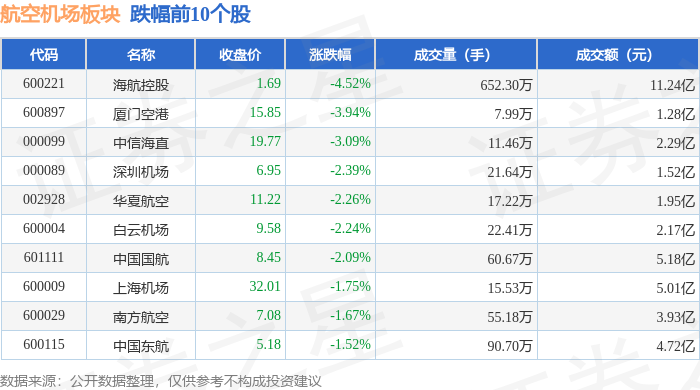
航空机场板块11月21日跌2.05%,海航控股领跌,主力资金净流出5.71亿元
Zheng Xing Xing Ye Ri Bao· 2025-11-21 09:33
Core Viewpoint - The aviation and airport sector experienced a decline of 2.05% on November 21, with Hainan Airlines leading the drop, while the Shanghai Composite Index fell by 2.45% and the Shenzhen Component Index decreased by 3.41% [1] Market Performance - The closing prices and percentage changes for key stocks in the aviation and airport sector are as follows: - Hainan Airlines: 1.69, -4.52% - Xiamen Airport: 15.85, -3.94% - CITIC Offshore Helicopter: 19.77, -3.09% - Shenzhen Airport: 6.95, -2.39% - China Southern Airlines: 7.08, -1.67% - China Eastern Airlines: 5.18, -1.52% [1] Capital Flow - The aviation and airport sector saw a net outflow of 571 million yuan from institutional investors, while retail investors contributed a net inflow of 430 million yuan [1] - The detailed capital flow for selected stocks indicates: - China Eastern Airlines: -55.71 million yuan from institutional investors, +34.46 million yuan from retail investors - Xiamen Airport: -19.70 million yuan from institutional investors, +25.76 million yuan from retail investors [2]

东兴证券晨报-20251121
Dongxing Securities· 2025-11-21 09:06
Core Insights - The report highlights a significant increase in electricity consumption in October, with a total of 857.2 billion kWh, representing a year-on-year growth of 10.4% [2] - The Chinese smartphone market experienced a notable recovery in October, with overall sales increasing by 8% year-on-year, driven by strong performances from brands like Apple and Xiaomi [5] - The airline industry showed positive trends in October, with an increase in passenger load factors and capacity deployment, indicating a favorable supply-demand relationship [7][8] Electricity Consumption - In October, the total electricity consumption reached 857.2 billion kWh, with the first industry consuming 12 billion kWh (up 13.2%), the second industry 568.8 billion kWh (up 6.2%), and the third industry 160.9 billion kWh (up 17.1%) [2] - Cumulative electricity consumption from January to October was 8,624.6 billion kWh, reflecting a year-on-year increase of 5.1% [2] Smartphone Market - The smartphone market in China saw a significant uptick in October, with Apple leading the market with a 37% year-on-year increase in sales, capturing a 25% market share [5] - Xiaomi ranked second for the first time in over a decade, with a 7% increase in sales, attributed to its diverse product offerings [5] - OPPO also contributed to market growth with a 19% increase in sales, while other brands like vivo and Honor experienced minor fluctuations [5] Airline Industry - Domestic airline capacity increased by approximately 3.6% year-on-year in October, with a corresponding rise in passenger load factors by about 1.8 percentage points [8] - International airline capacity saw a year-on-year increase of 14.3%, with a slight rise in load factors, indicating a healthy demand despite some overcapacity risks [9] - The report notes that the recent travel advisories may impact demand for certain international routes, particularly to Japan [10][11] Financial Sector - The report indicates a continued decline in social financing growth, with a year-on-year increase of 8.5% as of October, reflecting a slowdown in credit demand [14][15] - The total new RMB loans in October amounted to 220 billion, with a year-on-year decrease of 280 billion, highlighting a weak credit environment [16] - The M1 growth rate decreased to 6.2%, while M2 grew by 8.2%, indicating a trend towards "de-banking" in the financial sector [18]