
中科星图

Search documents
向天空要生产力! 低空经济万翼齐扬
Shang Hai Zheng Quan Bao· 2025-12-29 19:06
Core Viewpoint - The low-altitude economy in China is rapidly developing, transitioning from conceptual exploration to practical applications across various sectors, driven by policies and technological advancements in drones and eVTOLs [2][10]. Group 1: Industry Developments - China Post is piloting drone deliveries for agricultural products and medicines in 16 provinces, while Meituan has launched 65 drone routes in major cities, completing over 740,000 orders [1] - By the end of 2025, the Chinese market is expected to have approximately 3.5 million registered drones, 5,000 models, and 28,000 drone operators, with flight hours reaching 26.66 million [3] - The low-altitude market is witnessing a surge in orders, with companies like Yufeng Future securing 200 M1 series orders worth over 2 billion yuan at the 2025 China International Import Expo [4] Group 2: Infrastructure and Technology - Shanghai Telecom has established a digital infrastructure called "Zhiyun Shanghai" to support low-altitude economic development, enhancing delivery efficiency by nearly 50% for medical samples [5] - A comprehensive 5G-A low-altitude network has been deployed in Shanghai, enabling real-time airspace monitoring and communication for drones [6] - By the end of 2025, over 20 cities in China are expected to have established low-altitude takeoff and landing points, with Suzhou already having over 140 operational [7] Group 3: Investment and Financing - The low-altitude economy has seen 52 financing cases in the first half of 2025, with a total amount exceeding 1.7 billion yuan, indicating strong capital interest in eVTOL and drone systems [9] - Companies like Shike Technology and Wolant have successfully completed multiple rounds of financing, indicating a trend of cross-industry collaboration and investment in the low-altitude sector [9] Group 4: Future Outlook - The development of the low-altitude economy is expected to focus on safety, infrastructure, and technological integration, with projections indicating its contribution to GDP could rise from 0.3% to 1.2% by 2030 [10] - The year 2026 is anticipated to be a critical period for the establishment of low-altitude infrastructure and airspace management systems, paving the way for large-scale commercial operations of passenger eVTOLs [11]

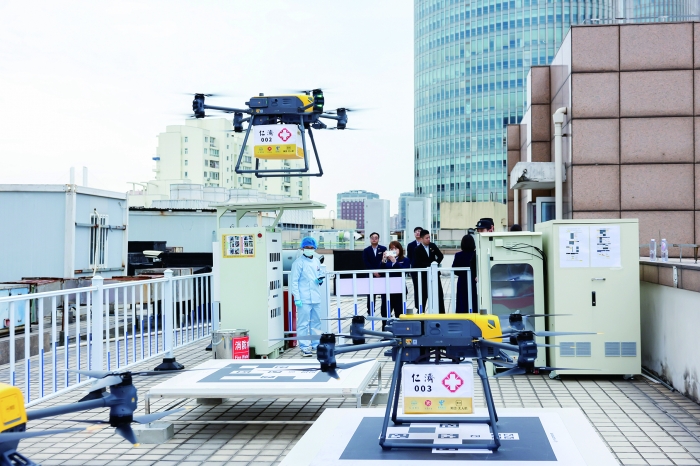
商业航天重点投资方向梳理
2025-12-29 15:51
Summary of Key Points from the Conference Call Industry Overview - The commercial aerospace sector in the U.S. has seen significant stock price increases due to policy and order catalysts, with companies like Seadoo Space and Rocket Lab experiencing substantial gains in December [1][3] - The Trump administration's space executive order and NASA's lunar plans have created opportunities for commercial aerospace firms, with a $3.5 billion contract from the U.S. Missile Defense Agency directly boosting Rocket Lab's stock [1][4] - Domestic advancements in commercial aerospace, such as Blue Arrow Aerospace and the Long March 12A rocket validating reusable technology, are expected to enhance market sentiment and lead to IPOs in the coming year [1][4] Core Insights and Arguments - SpaceX's valuation has reached $1.5 trillion, shifting its business model from rocket launches to global internet services via Starlink, with projected revenues of $27 billion by 2027 [1][6] - The establishment of a Commercial Aerospace Bureau by the National Space Administration indicates a promising outlook for the sector, potentially driving market activity throughout the year [1][9] - The communication hardware supply chain is a critical investment focus within commercial aerospace, with over 60% of SpaceX's revenue derived from communication services [1][12] Market Dynamics and Future Outlook - The recent surge in the Shanghai aerospace sector is attributed to a series of catalysts, including significant stock price increases for companies involved in U.S. defense contracts [3][4] - The successful entry of private rocket companies into orbit has reduced launch costs, facilitating satellite mass production and aligning with the U.S. model [1][16] - The anticipated IPOs of companies like Blue Arrow Aerospace in 2026 are expected to provide substantial funding and orders for the industry [1][5][17] Investment Opportunities - The commercial aerospace sector is compared to the computer industry, highlighting the potential for investment driven by policy and technological advancements [1][7] - Key investment targets include companies involved in satellite operations, communication hardware, and those developing advanced materials for solar cells, particularly perovskite solar cells [1][15][18] - Notable companies in the rocket sector include state-owned enterprises and leading private firms like Blue Arrow and Tianbing, with specific attention to their technological capabilities and market strategies [1][19] Additional Insights - The demand for photovoltaic materials in commercial aerospace is expected to rise, with perovskite solar cells being identified as ideal for space applications due to their lightweight and flexible properties [1][15] - The establishment of the fifth set of standards by the Shenzhen Stock Exchange for the Sci-Tech Innovation Board outlines specific listing requirements for commercial aerospace companies, indicating a structured approach to industry growth [1][17] - The future prospects for leading companies like China Satellite and HGT Communications are promising, with significant market potential in remote sensing and military communication sectors [1][20][22]
中国卫星涨停!航天ETF(159267)尾盘1分钟突然拉升,收盘涨5.15%
2 1 Shi Ji Jing Ji Bao Dao· 2025-12-29 09:24
Core Viewpoint - The commercial aerospace sector is experiencing significant growth opportunities, driven by policy support and technological advancements, particularly following the release of new IPO standards for commercial rocket companies on the Sci-Tech Innovation Board [1][2]. Group 1: Market Performance - The Aerospace ETF (159267) surged by 5.15% at the close on December 29, with a notable increase in trading volume, exceeding 20,000 lots in the last minute [1]. - Key stocks within the ETF, such as China Satellite, reached a historical high with a market capitalization surpassing 100 billion, marking a four-day consecutive rise [1]. - Other notable performers included Shenjian Co. with an eight-day consecutive rise, and Daye Co. and Luxin Investment with four consecutive rises [1]. Group 2: Policy and Regulatory Developments - The Shanghai Stock Exchange announced new guidelines for the listing of commercial rocket companies, allowing them to utilize the fifth set of IPO standards on the Sci-Tech Innovation Board, indicating strong governmental support for the commercial aerospace sector [1][2]. - This regulatory change is part of the broader "1+6" reform initiative aimed at fostering the commercialization of aerospace technologies [1]. Group 3: Industry Outlook - The commercial aerospace industry is poised for growth, with a focus on satellite manufacturing, ground equipment, and data processing, supported by technological advancements and favorable policies [1][2]. - Emerging fields such as space computing are expected to have long-term development potential, with companies likely to achieve breakthroughs in satellite internet and remote sensing applications as the commercialization of aerospace technology accelerates [1]. - The rocket and satellite industry chains are expected to benefit from accumulated technological expertise, with companies like Zhongke Xingtou and Aerospace Hongtu positioned to leverage their data processing capabilities for growth opportunities [2].

“制造强国”实干系列周报(12、28期)-20251229
Shenwan Hongyuan Securities· 2025-12-29 08:42
Group 1: Commercial Aerospace - The commercial rocket industry is entering a capital acceleration phase with new listing channels opening up[6] - Key targets include satellite payloads and platforms, with companies like Aerospace Electronics and Shanghai Hanhua highlighted[3] - The domestic low-orbit satellite constellation is in a critical phase of large-scale networking, with plans to launch 12,960 satellites by 2027 and 15,000 by 2030[19] Group 2: Liquid Cooling and AI - In liquid cooling, Invec is positioned as a core supplier in the AI computing supply chain, with significant orders expected to materialize by 2026[26] - The company has established itself in the core supply chain for NVIDIA, with high-value products set to increase performance significantly[29] Group 3: Photovoltaics - The report recommends focusing on low-position battery and component companies like JinkoSolar and Trina Solar due to rising silicon prices[46] - There is a push towards silver-free technology to reduce reliance on silver, with companies like LONGi Green Energy highlighted[46] Group 4: Consumer Electronics - Smartphone shipments remain high, with a strong demand for emerging smart devices like AR/MR/VR, driven by technological advancements[51] - The global AI glasses market is expected to see significant growth, with Meta projected to capture 70% of the market share[51] Group 5: Risks - Risks include intensified market competition, fluctuations in raw material prices, and potential impacts from economic cycles[63][64]
火山引擎官宣成为总台春晚独家AI云合作伙伴,AI人工智能ETF(512930)涨近1%
Xin Lang Cai Jing· 2025-12-29 05:46
Group 1 - The core viewpoint of the news highlights the significant growth and commercialization potential of AI applications in China, particularly with the announcement of Volcano Engine as the exclusive AI cloud partner for the 2026 Spring Festival Gala [1] - The Zhongzheng Artificial Intelligence Theme Index (930713) increased by 0.66%, with notable stock performances from companies such as Tuowei Information (up 9.80%) and Cambrian (up 5.86%) [1] - The AI ETF (512930) also saw an increase of 0.88%, indicating a positive market sentiment towards AI-related investments [1] Group 2 - The Zhongzheng Artificial Intelligence Theme Index comprises 50 listed companies that provide essential resources, technology, and application support for AI, reflecting the overall performance of AI-related securities [2] - As of November 28, 2025, the top ten weighted stocks in the index accounted for 63.92% of the total index weight, with companies like Zhongji Xuchuang and Hikvision among the leaders [2] - The AI ETF has various connection options for investors, including multiple classes of funds for different investment strategies [2]
通用航空ETF基金(561660)涨超1.7%,商业航天利好不断
Xin Lang Cai Jing· 2025-12-29 05:44
Core Viewpoint - The commercial aerospace sector is experiencing significant growth driven by supportive government policies and the recent establishment of clearer IPO guidelines for commercial rocket companies, which is expected to accelerate their market entry and boost related industries. Group 1: Market Performance - The Zhongzheng General Aviation Theme Index (931855) rose by 1.62% as of December 29, 2025, with notable increases in constituent stocks such as Guangwei Composites (300699) up 14.57%, Haige Communication (002465) up 10.04%, and Leike Defense (002413) up 9.97% [1] - The General Aviation ETF (561660) increased by 1.70%, marking its fourth consecutive rise, with the latest price reported at 1.2 yuan [1] Group 2: Policy Developments - In November 2025, the National Space Administration issued the "Action Plan for Promoting High-Quality and Safe Development of Commercial Aerospace (2025-2027)", which supports commercial entities in developing new technologies and products, and establishes a national commercial aerospace development fund [1] - The Shanghai Stock Exchange released specific guidelines for commercial rocket companies to access the Sci-Tech Innovation Board, which is expected to expedite the IPO process for leading private commercial rocket firms [2] Group 3: Industry Insights - The commercial rocket sector is identified as the "launch base" of commercial aerospace, with its industrialization expected to drive demand across satellite manufacturing, ground equipment, and space applications [2] - The Zhongzheng General Aviation Theme Index includes 50 listed companies involved in aviation materials, components, aircraft manufacturing, infrastructure, operations, and applications, reflecting the overall performance of the general aviation sector [2] - As of November 28, 2025, the top ten weighted stocks in the Zhongzheng General Aviation Theme Index accounted for 40.68% of the index, including companies like Aerospace Electronics (600879) and China Satellite Communications (601698) [2]





全球科技(计算机)行业周报:商业航天、6G成产业布局重点,政策技术驱动-20251229
Huaan Securities· 2025-12-29 03:07
Investment Rating - The industry investment rating is "Overweight" [1] Core Insights - The report highlights that commercial aerospace and 6G are key areas for industrial layout, driven by policy and technology [3][4] - A recent policy from Shanghai supports the construction of a world-class industrial cluster focusing on commercial aerospace and 6G, emphasizing application-based research and key technology breakthroughs [12][13] - The third Commercial Aerospace Development Conference indicated that the industry has entered a new phase of scale and commercialization, with a projected market size to achieve a leap forward [13] - The establishment of a 2 billion yuan fund for commercial aerospace and a talent training program to supply 1,000 skilled workers annually over the next 3-5 years were also announced [13][4] Summary by Sections 1. Industry Perspective - The report discusses the Shanghai policy aimed at supporting the G60 Science and Technology Corridor, focusing on commercial aerospace and 6G industries [12] - It emphasizes the need for collaboration among enterprises, academic institutions, and research organizations to drive innovation and technology development [12] 2. Market Performance Review - The computer industry index increased by 2.20% this week, outperforming the Shanghai Composite Index by 0.32 percentage points [15] - Year-to-date, the computer industry index has risen by 16.89%, ranking 14th among 31 industry indices [15][16] 3. Technology Software Industry News - The report covers various sectors including computing power, low-altitude economy, automotive intelligence, cybersecurity, data elements, and artificial intelligence, highlighting significant developments in each area [23][24][25][26][27][29][30] - For instance, the computing power sector in Yangzhou has reached a scale of 34,000 P, leading the province [23] - The automotive sector is seeing advancements in intelligent driving systems, with companies like Huawei and Audi launching new technologies [26] 4. Company Dynamics - The report mentions several companies involved in stock buybacks and incentive plans, indicating active corporate governance and management strategies [32]
低空司最新统计分类政策解读及行业后市展望
2025-12-29 01:04
Summary of Low Altitude Economy Conference Call Industry Overview - The low altitude economy is projected to experience a surge in business in 2024, with sales expected to match the total of the past decade, driven by government infrastructure investments and the construction of state-owned platform application devices, as well as a clearer understanding of low altitude economy and GDP data boundaries [1][2][3] Key Points and Arguments - **New Policy Framework**: The recent low altitude economy statistical classification policy clarifies the statistical scope of four major sectors: infrastructure (communications, navigation), hardware (general aviation aircraft, drones), operations, and services training, aligning with the "14th Five-Year Plan" and annual economic work conference expectations [1][2][3] - **Government Guidance**: The State Council issued documents in June and November to guide state-owned enterprises in low altitude economy development and classify air traffic control platforms at provincial and municipal levels, providing clear guidance for social capital inflow and avoiding redundant construction [1][3] - **Project Approval Process**: Low altitude economy projects must connect with local government departments, such as transportation or water resources, and report to national ministries. The proportion of special bonds or treasury bonds in infrastructure projects has significantly increased, with notable projects like Shandong's 4 billion yuan tender for flying vehicles [4][5] - **Investment Trends**: In Zhejiang Province, low altitude projects are encroaching on traditional infrastructure project shares, indicating a trend where local governments aim to maintain special bond shares through low altitude economy development, expected to improve steadily over the next 3-5 years [5][6] Challenges and Opportunities - **Local Government Challenges**: Local governments face challenges in funding sources, attracting capable enterprises, and coordinating resources across departments. Collaborative efforts with major tech companies like Alibaba and Tencent are being made to support data collection and business model innovation [7] - **Mature Applications**: The application of cargo drones is relatively mature, with significant commercial scenarios in logistics, agricultural protection, and inspections. The agricultural protection sector alone sees annual sales of about 200,000 drones, with a penetration rate nearing double digits [8][9] - **Cost Efficiency in Logistics**: Drones demonstrate significant cost efficiency in logistics, with examples showing reduced transportation costs and time savings in specific scenarios, such as using hydrogen-powered drones for frozen goods delivery [9][10] Industry Leaders and Innovations - **Prominent Companies**: Key players in the low altitude economy's information technology sector include military state-owned enterprises like Lai Si, China Electronics, and Aerospace Science and Industry, which are expected to become industry leaders [11][12] - **Regulatory Platform Development**: The construction of provincial and municipal regulatory platforms is progressing, with companies like Zhongke Xingtou and Zhongke Yuntu showing strong performance in supporting application scenarios [12][13] Future Outlook - **Investment Projections**: Expected investment amounts for low altitude special bonds range from 2 to 4 billion yuan in Hubei and over 5 billion in Guangdong, with ongoing efforts to promote project implementation [15] - **Infrastructure Needs**: The development of low altitude economy is hindered by lagging infrastructure, necessitating government investment and policy support to facilitate technology innovation and application promotion [22][23] - **Market Potential**: The low altitude economy is anticipated to see explosive growth in infrastructure projects from 2024 to 2027, leading to significant procurement of drones and related equipment [17][19] Conclusion - The low altitude economy is positioned for substantial growth, driven by government policies, technological advancements, and increasing market demand. However, challenges related to infrastructure and regulatory frameworks must be addressed to fully realize its potential.
商业航天后市研判及重点方向梳理
2025-12-29 01:04
机构对商业航天板块持战略看多态度,认为 2026 年 A 股龙头标的风险 收益比更高,尤其看好中科星图、海格通信和航天电子。 国内政策利好频出,上交所明确商业火箭企业适用科创板第五套上市标 准,加速商业航天产业发展,引发一二级市场广泛关注。 SpaceX 计划以 1.5 万亿美元估值 IPO,以及国内可回收商用运载火箭 发射成功,从不同层面打开行业远期空间,太空算力成为估值重要因素。 太空商业化将显著提升火箭运力和卫星制造数量,大幅扩大产业市场空 间,国内商业航天企业市场空间全面打开。 海外太空数据中心发展有两条路线:一是亚马逊和 Starlink 建设太空数 据中心作为地面延伸,二是 SpaceX 通过低轨卫星互联网实现通信计算 融合。 国内商业航天发展分三阶段:政府机要需求建设低轨宽带卫星星座、天 地结合系统实现商业自洽、解决工程问题降低火箭运营成本实现太空算 力产业安全。 投资者应关注 SpaceX 的 IPO 进程(预计最早 2026 年 3 月)和蓝箭航 天等企业在深交所第五套标准下的 IPO 节奏提速,以及 2026 年第二季 度首个商业航天企业 IPO。 商业航天后市研判及重点方向梳理 2025 ...
计算机行业周报:太空算力新基建:太阳翼-20251228
HUAXI Securities· 2025-12-28 08:01
Investment Rating - Industry Rating: Recommended [5] Core Insights - The flexible solar wing technology is crucial for large-scale satellite constellation construction, significantly reducing weight by 20%-40% and storage volume by over 60%, while expanding the deployment area by up to 1.5 times [2][12][24] - The space computing industry chain is experiencing rapid growth, with a projected compound annual growth rate of approximately 9% from 2024 to 2029, potentially exceeding $780 billion by 2029 [3][40] - The Chinese satellite internet constellation, with a planned deployment of approximately 13,000 satellites, aims to provide low-latency communication and high-resolution Earth observation services [2][21] Summary by Sections Flexible Solar Wings Supporting Large-Scale Constellation Construction - The successful launch of 17 low-orbit satellites by the Long March 8 rocket marks a significant milestone for China's satellite internet initiative, achieving a 100% success rate at the Hainan launch site [2][20] - The GW constellation, designed to operate in both high and low orbits, aims to enhance coverage efficiency and mitigate orbital competition, with a focus on low-latency communication [12][21] - China's advancements in flexible solar wings, including the world's first fully flexible solar wing satellite, demonstrate the country's leadership in this technology [2][14][31] Growth of the Space Computing Industry Chain - The space computing industry encompasses upstream satellite manufacturing, midstream operations, and downstream data services, creating a comprehensive ecosystem [3][15] - SpaceX's Starlink V3 satellites represent a significant leap in performance, enhancing global service capabilities and reducing costs through reusable technology [3][41][42] - The GW constellation is a national strategic initiative, with plans to deploy approximately 13,000 low-orbit satellites by 2035, enhancing China's competitive edge in the global space internet landscape [21][51] Investment Recommendations - Beneficiary companies in the rocket sector include Aerospace Power, Superjet, Western Materials, and others [4][19] - Companies involved in space computing include Shunhao Co., Junda Co., and others [7][19] - Satellite-related companies include Xicet Testing, Tianyin Electromechanical, and others [7][19]