恒瑞医药

Search documents
医药行业周报(26/1/19-26/1/23):服务价格立项指南出台,手术机器人行业有望加速发展-20260126
Hua Yuan Zheng Quan· 2026-01-26 02:03
Investment Rating - The investment rating for the pharmaceutical industry is "Positive" (maintained) [4] Core Insights - The report highlights the potential acceleration of the surgical robot industry following the release of the service pricing guidelines by the National Medical Insurance Administration, which clarifies the pricing structure for surgical robot services and consumables [3][18] - The report emphasizes the importance of innovation in the pharmaceutical sector, noting that the industry has completed a transition from old to new growth drivers, particularly in innovative drugs, which are expected to continue to perform well in 2026 [46][47] - The report suggests a focus on sectors such as innovative drugs, AI medical technology, and brain-computer interfaces, which are anticipated to see significant advancements in 2026 [46][48] Summary by Sections Market Performance - From January 19 to January 23, the pharmaceutical index decreased by 0.39%, with an excess return of 0.23% relative to the CSI 300 index. The market was relatively stable, with a notable increase of 1.26% on Friday, driven by themes like brain-computer interfaces and AI medical technology [5][27] - A total of 330 stocks rose while 137 fell during the week, with notable gainers including *ST Changyao (+70.37%) and Hualan Biological (+32.21%) [27][28] Surgical Robot Industry - The surgical robot market is expected to benefit from the new pricing guidelines, which will enhance the clinical application of surgical robots and promote a sustainable business model [3][18] - The domestic laparoscopic robot market is projected to grow significantly, with a compound annual growth rate (CAGR) of 29.3% from 2024 to 2030 [9][15] Investment Recommendations - The report recommends focusing on strong fundamentals and well-adjusted innovative drug stocks, including companies like Xinlitai, Zexing Pharmaceutical, and Hengrui Medicine, as well as medical technology firms like Yuyue Medical and Alibaba Health [5][49] - It also suggests monitoring companies involved in the export of CXO services and those with stable operations and low valuations that are expected to see fundamental changes in 2026 [5][46] Future Outlook - The report anticipates that the pharmaceutical industry will continue to improve marginally in 2026, driven by technological innovation and performance recovery in traditional sectors [46][47] - Key areas of focus include innovative drugs, AI medical technology, and the aging population's healthcare needs, which are expected to drive demand [46][48]


2026年中国心脑血管药物行业市场政策汇总、产业链图谱、市场规模、竞争格局及发展趋势分析:需求群体庞大[图]
Chan Ye Xin Xi Wang· 2026-01-26 01:40
Core Insights - The aging population in China is leading to an increase in cardiovascular diseases, with rising prevalence of chronic conditions such as hypertension and hyperlipidemia, driving demand for cardiovascular drugs [1][8] - There is a significant increase in health awareness among residents, leading to earlier screening and treatment of cardiovascular diseases, which expands the applicable population for cardiovascular medications [1][8] - The implementation of centralized drug procurement policies is causing a downward trend in drug prices, putting pressure on the overall market size, which is projected to decline to 954.1 billion yuan for traditional Chinese medicine and 1,415.8 billion yuan for chemical drugs by 2025 [1][8] Market Overview - Cardiovascular diseases encompass both cardiovascular and cerebrovascular diseases, primarily caused by conditions like hyperlipidemia, blood viscosity, atherosclerosis, and hypertension [2] - Cardiovascular drugs are classified into two main categories: cardiovascular system drugs and cerebrovascular system drugs, targeting various heart and brain-related conditions [2] Policy Environment - The pharmaceutical manufacturing industry, including cardiovascular drugs, is a key focus of national policy support, with various regulations aimed at correcting malpractices and promoting industry development [3][4] Industry Chain - The upstream of the cardiovascular drug industry includes chemical raw materials, traditional Chinese medicinal materials, and pharmaceutical packaging materials, while the midstream involves research, production, and registration processes [4][5] Demand Dynamics - Cardiovascular diseases are the leading cause of death in China, with hypertension cases expected to reach 370 million and coronary heart disease cases at 30 million by 2025, indicating a growing demand for cardiovascular medications [6][8] Competitive Landscape - The market has developed a dual competitive structure, with foreign companies dominating the chemical drug sector and local companies leading in traditional Chinese medicine, creating a competitive environment [10] - Notable domestic players include Shijiazhuang Pharmaceutical Group and Shandong Buchang Pharmaceutical, which have established strong market positions through unique products and effective distribution networks [10][11] Development Trends - The industry is shifting from reliance on generic drugs to innovation, focusing on high-value drug development, including targeted and biological drugs [12] - There is a growing integration of chronic disease management with digital tools, enhancing patient adherence and treatment precision [13] - Policy reforms are reshaping market dynamics, emphasizing high clinical value drugs and expanding the market for basic medications in primary healthcare [14] - The industry is moving towards a collaborative ecosystem, with increased internationalization efforts and participation in global clinical trials [15]




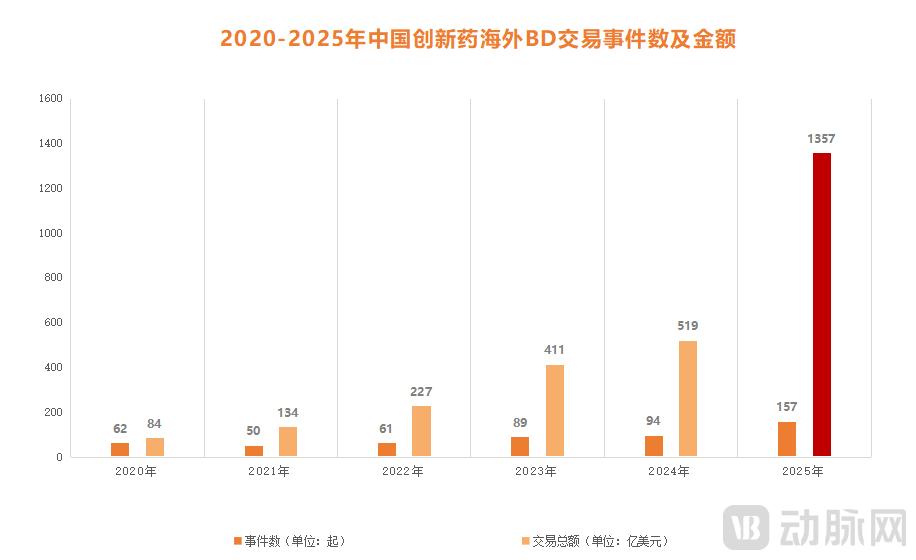
狂揽1357亿美元,谁是2025中国创新药出海“最贵”十单?
3 6 Ke· 2026-01-26 01:08
Core Insights - In 2025, China achieved a record high in overseas business development (BD) transactions for innovative drugs, with 157 deals totaling $135.655 billion, including an upfront payment of $7 billion [1][3][16] - The year 2025 marked a significant shift in the BD landscape, transitioning from a "1.0 era" of simple asset sales to a "2.0 era" characterized by deeper partnerships and higher value creation [5][16] Transaction Overview - The top three BD transactions in 2025 included a $13 billion deal between Qide Pharma and Biohaven & AimedBio, a $12.5 billion deal between Hengrui and GSK, and a $11.4 billion deal between Innovent Biologics and Takeda [2][11] - China accounted for 49% of the global total for BD transactions in 2025, surpassing the United States for the first time [2][11] Financial Metrics - The total upfront payments for BD transactions in China reached $7 billion in 2025, nearly doubling from $4.1 billion in 2024, with individual transaction upfront payment ratios increasing to approximately 5.2%-6.7% [7][16] - Milestone payments also saw significant activity, with at least 10 transactions triggering milestone payments in 2025, indicating a trend towards more structured financial agreements [9][16] Therapeutic Areas and Pipeline Stages - Oncology remained the primary focus of BD transactions, accounting for 51.4% of deals, although other areas such as immunology and metabolic diseases gained traction, rising to 34.1% [11][13] - The distribution of pipeline stages showed a shift towards later-stage projects, with 22% of transactions involving Phase III or marketed products, reflecting a preference for assets with established clinical data [13][16] Collaboration Models - The "Co-Co" model, which emphasizes joint development and commercialization, emerged as a new strategic direction in 2025, complementing traditional "License-out" and "NewCo" models [15][16] - This evolution in collaboration models indicates a trend towards deeper partnerships, allowing for shared risks and rewards, and enhancing the overall value proposition of BD transactions [15][16] Future Outlook - The demand for Chinese innovative drugs is expected to remain strong in 2026, driven by the approaching patent cliffs and increasing global competition, suggesting continued activity in BD transactions [21][22] - The industry is anticipated to further mature, focusing on quality and value in BD transactions, with an emphasis on long-term collaboration and mutual benefits [21][22]
2025年药品BD出海回顾:显著提速,关注双抗、ADC、GLP-1RA、小核酸等方向
Southwest Securities· 2026-01-26 00:45
Investment Rating - The report indicates a "Buy" rating for several companies within the pharmaceutical sector, including 恒瑞医药 (Hengrui Medicine), 百济神州-U (BeiGene), and others [22]. Core Insights - The pharmaceutical industry has seen a significant increase in BD (business development) activities, with Chinese pharmaceutical companies securing upfront payments exceeding $7.03 billion in 2025, marking a year-on-year growth of over 226.8% [15][20]. - The industry has a total market capitalization of approximately 544.85 billion yuan, with a TTM (trailing twelve months) P/E ratio of 38.5, significantly higher than the 14.1 P/E ratio of the CSI 300 index [3][6]. - The best-performing sub-sectors this week include offline pharmacies, hospitals, and medical R&D outsourcing, with year-to-date increases of 17.2%, 14.8%, and 10.7%, respectively [6][31]. Summary by Sections Industry Performance - The pharmaceutical index decreased by 0.39% this week, outperforming the CSI 300 index by 0.23 percentage points. Year-to-date, the pharmaceutical sector has risen by 6.66%, surpassing the CSI 300 index by 5.10 percentage points [6][24]. - The current valuation level (P/E-TTM) for the pharmaceutical industry stands at 30.31 times, with a premium of 65.36% over the entire A-share market [6][26]. Business Development Trends - In 2025, the domestic dual-antibody BD projects achieved upfront payments of $3.5 billion, a staggering increase of 414.7%, accounting for 49.8% of all BD upfront payments for the year [16]. - The ADC (Antibody-Drug Conjugates) sector has also seen substantial growth, with upfront payments reaching $1.63 billion, a 676.2% increase year-on-year [17]. - The GLP-1RA (Glucagon-Like Peptide-1 Receptor Agonists) segment reported upfront payments of $470 million, reflecting a 109.8% increase compared to 2024 [18]. Notable Collaborations - The report highlights significant collaborations, such as 舶望制药 (Bohua Pharmaceutical) partnering with Novartis to explore the potential of siRNA in hypertension treatment, securing an upfront payment of $160 million [19]. - The MNC (Multinational Corporation) procurement model remains dominant, with local companies securing $4.71 billion in upfront payments from MNCs, representing 67.0% of total BD upfront payments [20]. Recommended Companies - The report suggests a robust investment strategy focusing on companies like 恒瑞医药 (Hengrui Medicine), 百济神州-U (BeiGene), and others, which are expected to benefit from innovation and international expansion [20][21].
渤海证券研究所晨会纪要(2026.01.26)-20260126
BOHAI SECURITIES· 2026-01-26 00:28
Macro and Strategy Research - The US economy shows strong internal momentum with a 0.3% month-on-month increase in personal consumption expenditures adjusted for inflation in November 2025, marking the highest growth rate since the second half of 2025 [2] - In Europe, inflation dropped below 2% year-on-year in December 2025, indicating easing pressure, supported by labor costs and year-end consumption [3] - Domestic economic growth in China for 2025 is expected to meet targets despite a slowdown in the fourth quarter, with net exports providing structural support in early 2026 [3] Fixed Income Research - The bond market continues to show signs of recovery, with mid- to long-term bonds performing well, driven by a strong equity market and manageable bank liability pressures [5][7] - The issuance of special bonds increased significantly, with a total of 56 bonds issued, amounting to 619.1 billion yuan during the reporting period [7] - The overall bond market is characterized by a recovery trend, with the yield on 7-year government bonds declining the most [7] Industry Research - Nine departments in China have issued opinions to promote high-quality development in the pharmaceutical retail industry, indicating potential benefits for leading chain pharmacies and an expected operational turning point [10][12] - The SW pharmaceutical industry index shows a price-to-earnings ratio of 52.01, with a valuation premium of 266% relative to the CSI 300 index [11] - The report suggests focusing on investment opportunities in innovative drugs, CXO, and upstream life sciences, while also monitoring segments like small nucleic acids [12]
医药生物行业跟踪周报:mRNA疫苗龙头释放积极临床数据信号,建议关注悦康药业、康希诺等
Soochow Securities· 2026-01-26 00:24
Investment Rating - The report maintains a "Buy" rating for the pharmaceutical and biotechnology sector, specifically highlighting companies like Yuyuan Pharmaceutical and CanSino Biologics for their promising developments in mRNA vaccines [1]. Core Insights - The mRNA vaccine sector is experiencing a breakthrough, with mRNA technology leading the shift towards efficient and personalized immunotherapy. This technology offers three core competitive advantages: rapid production capabilities, enhanced safety profiles, and flexibility in antigen design, which supports personalized treatment approaches [1][4]. - The report identifies a favorable ranking of sub-industries, with innovative drugs, research services, and CXO services being prioritized for investment. High-yield sectors include traditional Chinese medicine and pharmacies [10][11]. - Specific companies are recommended for investment based on various therapeutic angles, including PD1 PLUS, ADC, and small nucleic acids, with notable mentions such as Innovent Biologics, CanSino Biologics, and Yuyuan Pharmaceutical [10][12][13]. Summary by Sections Market Performance - The A-share pharmaceutical index has shown a year-to-date increase of 6.66%, outperforming the CSI 300 index by 5.10%. The Hang Seng Biotechnology Index has also seen a 12.40% increase [4][9]. - Sub-sectors such as pharmaceutical commerce (+4.26%) and raw materials (+2.41%) have performed well, while bioproducts and chemical pharmaceuticals have faced declines [4][9]. Clinical Developments - Corcept Therapeutics has reported positive results from its Phase III trial for relacorilant, indicating survival benefits for patients with platinum-resistant ovarian cancer. Meanwhile, Maiwei Biologics has initiated its first patient dosing in the U.S. for its CDH17-ADC innovative drug [1][4]. Investment Recommendations - The report suggests a diversified investment approach across various therapeutic areas, including: - PD1 PLUS: Focus on companies like 3SBio and Innovent Biologics - ADC: Companies such as InnoCare Pharma and Kintor Pharmaceutical - Small nucleic acids: Recommendations include Frontier Biotechnologies and Yuyuan Pharmaceutical - Traditional Chinese medicine: Companies like Zhaoke Pharmaceutical and Fangsheng Pharmaceutical are highlighted [10][12][13]. Fund Holdings - The report notes a decrease in the proportion of public fund holdings in the pharmaceutical sector, with a total holding of 6.67% as of Q4 2025, down 1.46 percentage points from the previous quarter [17][18]. Company Performance - Specific companies have been highlighted for their market performance, with notable increases in stock prices for companies like *ST Changyao (+70.37%) and Hualan Biological (+32.21%) [9]. This comprehensive analysis provides insights into the current state and future potential of the pharmaceutical and biotechnology industry, emphasizing the importance of mRNA technology and strategic investment in key companies.


3万亿赛道的估值锚点,彻底变了
虎嗅APP· 2026-01-26 00:15
Core Viewpoint - The innovative drug sector experienced a significant surge in 2025, with multiple innovative drug ETFs seeing annual gains exceeding 50% and several companies doubling their stock prices. However, since September 2025, both A-shares and Hong Kong stocks in this sector have faced notable corrections, with some stocks nearly halving in value. The market is now focusing on the quality of business development (BD) transactions rather than just their existence [5][6][7]. Group 1: Market Trends and Reactions - In 2025, the innovative drug sector's market capitalization reached approximately 3 trillion yuan, driven by significant BD transactions [5]. - The market's initial enthusiasm for BD transactions has waned, as investors realize that these transactions often provide only temporary cash flow improvements rather than sustainable profitability [6][7]. - The focus has shifted from merely having BD transactions to assessing their quality, which is crucial for investment decisions in innovative drugs [8]. Group 2: High-Quality BD Transactions - High-quality BD transactions are characterized by three main anchors: the certainty of target value realization, the feasibility of milestone payments, and the strength of the partner company, particularly multinational pharmaceutical firms [10]. - An example of a successful BD transaction is the collaboration between Rongchang Biopharmaceutical and AbbVie, which led to a significant stock price increase due to the validated target of the drug involved [11][13]. - Conversely, a BD transaction involving Haikang Pharmaceutical and AirNexis did not yield positive market reactions due to the lower credibility of the partner and the insufficient cash component of the upfront payment [18][20][21]. Group 3: Company Performance and Investment Opportunities - Companies like Baijie and Hengrui have shown promising performance, with Baijie leading in innovative drug revenue and expected to turn profitable in 2025, while Hengrui has successfully transitioned to an innovative drug-focused business model [34][37]. - Hansoh Pharmaceutical has also achieved profitability, with a significant portion of its revenue coming from innovative drugs, indicating a successful transformation [40]. - Companies such as Xinda Biopharmaceutical and Sanofi have potential for future profitability, with Xinda expected to launch a promising product that could significantly impact its financials [43][48]. Group 4: Selection Criteria for Investment - The selection process for investment should involve identifying companies with a high proportion of innovative drug revenue (at least 50%), assessing their profitability, and evaluating the quality of their BD collaborations and global competitiveness of their pipelines [30][31]. - The analysis of the top 15 companies by innovative drug revenue shows that 13 have over 50% of their revenue from innovative drugs, highlighting a strong focus on innovation within the sector [32]. Group 5: Future Outlook - The innovative drug industry remains attractive, but the market's valuation criteria have evolved to prioritize the quality of BD transactions and the underlying performance of companies [58]. - Continuous monitoring of companies' clinical pipeline progress and BD transaction outcomes will be essential for assessing future market activity and investment potential [58].

医药生物行业跟踪周报:mRNA疫苗龙头释放积极临床数据信号,建议关注悦康药业、康希诺等-20260126
Soochow Securities· 2026-01-25 23:30
Investment Rating - The report maintains a "Buy" rating for the pharmaceutical and biotechnology industry, specifically highlighting companies such as Yuyuan Pharmaceutical and CanSino Biologics for potential investment opportunities [1]. Core Insights - The mRNA vaccine sector is experiencing significant advancements, with mRNA technology leading the shift towards efficient and personalized immunotherapy. This technology offers three main competitive advantages: rapid production capabilities, enhanced safety profiles, and flexibility in antigen design, which supports tailored treatments for cancer patients [1][4]. - The report identifies promising sub-sectors within the industry, ranking them as follows: innovative drugs, research services, CXO, traditional Chinese medicine, medical devices, and pharmacies. It suggests a focus on high-growth areas such as innovative drugs, particularly in small nucleic acid therapies, and high-dividend sectors like traditional Chinese medicine and pharmacies [10][11]. Summary by Sections Market Performance - The A-share pharmaceutical index has shown a year-to-date increase of 6.66%, outperforming the CSI 300 index by 5.10%. The Hang Seng Biotechnology Index has also seen a year-to-date rise of 12.40% [4][9]. - Notable performers in the market include *ST Changyao (+70.37%) and Hualan Biological (+32.21%) for the week, while the worst performers include Kain Technology (-13.83%) and Aidi Pharmaceutical (-13.70%) [9]. Clinical Developments - Corcept Therapeutics has reported positive results from its Phase III trial for relacorilant, which shows survival benefits for patients with platinum-resistant ovarian cancer. Additionally, Maiwei Biologics has initiated its first patient dosing in the U.S. for its CDH17-ADC innovative drug targeting advanced colorectal and gastrointestinal tumors [4]. Investment Recommendations - Specific companies to watch include: - From the PD1 PLUS perspective: 3SBio, Kanyin Biologics, Innovent Biologics, and Zai Lab [11]. - From the ADC perspective: InnoCare Pharma, Kelun-Biotech, and Baillie Gifford [11]. - From the small nucleic acid perspective: Frontier Biotechnologies, Fuyuan Pharmaceutical, and Yuyuan Pharmaceutical [11]. - From the self-immune perspective: Kangnuo Pharmaceutical, Yifang Biologics, and Yipinhong [11]. - From the innovative drug leaders: BeiGene and HengRui Medicine [11]. - From the CXO and upstream research services: WuXi AppTec, Haoyuan Pharmaceutical, and Aopumai [11]. - From the medical device sector: United Imaging Healthcare and Yuyue Medical [11].

QDII基金交出亮眼“成绩单”后市看好创新药和科技方向
Shang Hai Zheng Quan Bao· 2026-01-25 14:24
Group 1 - The QDII funds have shown impressive performance since 2025, with an average net value increase of 27.9%, particularly driven by funds heavily invested in Hong Kong innovative pharmaceuticals [2] - Notable funds such as Huatai-PB Korea Semiconductor ETF and E Fund Global Growth Select Mixed A have seen net value increases of 127.55% and 102.91% respectively, with several other funds also exceeding 80% growth [2] - The top holdings of these high-performing funds predominantly include Hong Kong innovative pharmaceutical stocks, with examples like Kelun-Botai Biotech and Innovent Biologics among the top five holdings of Huatai-PB Hong Kong Advantage Select Mixed A [2] Group 2 - The technology sector is also a key focus for many high-performing products, with E Fund Global Growth Select Mixed A holding major global tech stocks such as TSMC and Google-A among its top ten holdings [3] - Fund managers express optimism for the future of the innovative pharmaceutical and technology sectors, citing a recent phase of adjustment in the innovative drug industry as a temporary market sentiment issue rather than a fundamental change [4][5] - The innovative drug sector's valuation has become attractive, with expectations of upward potential, and the industry is anticipated to show resilience and technological attributes over the next 2 to 3 years [5] Group 3 - The pharmaceutical industry is expected to see positive changes in 2026, with contract development organizations (CXO) gaining confidence from solid data, and new technologies like artificial intelligence and brain-machine interfaces opening new application scenarios [5] - The semiconductor sector, particularly in storage, is projected to continue its cycle, with local market trends favoring leading storage manufacturers and potential IPOs supporting capacity expansion [6]


速递|GLP-1进入深水区,跨国药企开始系统性买中国
GLP1减重宝典· 2026-01-25 14:10
Core Viewpoint - The global GLP-1 market is shifting, with multinational pharmaceutical companies increasingly focusing on Chinese biopharmaceutical assets, a trend expected to peak in 2025 and be confirmed in early 2026 [5] Group 1: Market Dynamics - The competition in the weight loss and metabolic disease market is evolving from single product competition to a comprehensive contest involving multiple mechanisms, indications, and long-term medication [5] - Multinational pharmaceutical companies are experiencing anxiety regarding pipeline breadth and technological reserves, with China emerging as a key source for supplementing GLP-1 pipelines [5] - Over the past decade, the role of Chinese innovative drug companies has shifted from introducing overseas technology to exporting self-developed assets [5] Group 2: Asset Development - Chinese companies have accumulated a number of candidates in the GLP-1 field, particularly in dual-target, triple-target, and oral formulations, with several in Phase II and III [5] - These assets are characterized by preliminary validation of scientific pathways and identifiable clinical risks, making them valuable for multinational companies to quickly fill their pipelines through licensing or acquisition [5] Group 3: Transaction Highlights - Novo Nordisk made a significant move by securing rights to a triple-target agonist, UBT251, with a payment structure of $200 million upfront and up to $1.8 billion in milestone payments, reflecting a strategic choice to rebuild its next-generation weight loss product lineup [7] - Regeneron entered a licensing agreement with Hansoh Pharma worth over $2 billion for a GLP-1/GIP dual-target agonist in Phase III, aiming to strengthen its position in the metabolic disease field [7] - Pfizer, after terminating two late-stage oral GLP-1 candidates due to safety issues, acquired Metsera for nearly $10 billion and entered a licensing agreement with YaoPharma for an early-stage oral GLP-1 candidate, demonstrating a cautious approach to re-entering the oral weight loss drug market [7] Group 4: Strategic Implications - These transactions signal that multinational pharmaceutical companies are preparing for the second phase of competition in the GLP-1 market, focusing on efficacy limits, medication convenience, long-term safety, and combination therapy potential [8] - The shift indicates a structural adjustment in the global pharmaceutical industry, with China transitioning from merely a clinical trial and production base to a significant technology supplier in key therapeutic areas [8]