苏州银行

Search documents
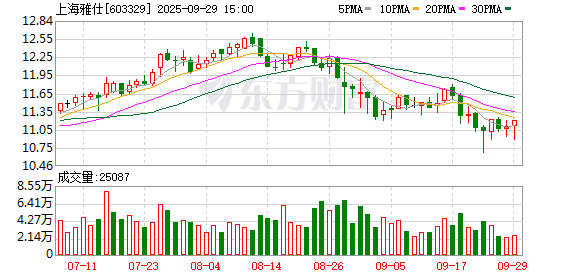
上海雅仕:关于为全资子公司提供担保的公告
Zheng Quan Ri Bao· 2025-09-29 11:21
Group 1 - The company announced that its wholly-owned subsidiary, Jiangsu Yashi Trading Co., Ltd., applied for a credit facility of RMB 50 million from Suzhou Bank, with a term from September 26, 2025, to September 25, 2026 [2] - The company provided a joint liability guarantee for the credit facility, with a maximum guarantee amount of RMB 50 million, valid for three years [2] - Jiangsu Yashi Trading Co., Ltd. also applied for a credit facility of RMB 80 million from Bank of Communications, with a term from September 24, 2025, to May 16, 2026 [2] Group 2 - The company provided a joint liability guarantee for the credit facility from Bank of Communications, with a maximum guarantee amount of RMB 80 million, valid for three years [2] - The wholly-owned subsidiary, Lianyungang Eurasia One Belt One Road Supply Chain Base Co., Ltd., plans to apply for a designated delivery warehouse for soda ash futures at Zhengzhou Commodity Exchange [2] - The company will issue a guarantee letter for Lianyungang Eurasia's performance obligations in the soda ash delivery business, with a maximum guarantee limit of RMB 180 million, valid for three years from the maturity of the main debt [2]


上市银行“十四五回望”之资负结构与息差变迁
CMS· 2025-09-28 15:09
Investment Rating - The report maintains a recommendation for the banking industry [3] Core Insights - The report provides a comprehensive analysis of the asset-liability structure and interest margin changes of 42 A-share listed banks during the "14th Five-Year Plan" period, highlighting a shift towards corporate loans on the asset side and a stronger retail focus on the liability side [12][14] - The asset-liability structure indicates a significant increase in the proportion of corporate loans, rising from 57.02% to 63.22% from the end of 2020 to mid-2025, while the proportion of demand deposits decreased from 41.94% to 30% [12][14] - The report notes a decline in both asset yield and interest margin, with the yield on interest-earning assets dropping from 4.43% to 3.32% and the net interest margin decreasing from 2.23% to 1.53% during the same period [14][15] Summary by Sections Overall Asset-Liability Structure and Interest Margin Changes - The asset-liability structure shows an increase in loan-to-earning asset ratio from 54.19% to 56.49%, with corporate loans making up a larger share of total loans [14][15] - The average yield on interest-earning assets decreased significantly, with the loan yield falling from 5.34% to 3.82% [15] - The net interest margin for listed banks remains higher than that of commercial banks, despite a decline [14][15] Changes in Each Banking Sector's Asset-Liability Structure and Interest Margin - City commercial banks experienced a more significant increase in the proportion of corporate loans, with their interest margin narrowing less compared to other banks [18] - The report highlights that the proportion of deposits in interest-bearing liabilities for state-owned banks decreased, while it increased for rural commercial banks [18] - The decline in interest-bearing liabilities' cost rate was most pronounced in city commercial banks, leading to a smaller reduction in their interest margin [18]





货币政策例会强调政策执行
Xiangcai Securities· 2025-09-28 13:06
Investment Rating - The industry rating is maintained at "Overweight" [6][31] Core Insights - The third quarter monetary policy meeting emphasized the execution of policies and the release of effects, acknowledging steady economic progress while focusing on insufficient domestic demand and low price levels [6][28] - The meeting highlighted the importance of ensuring that monetary policy measures effectively reach the real economy, with a focus on enhancing the transmission mechanism [6][29] - Support will be targeted towards key areas such as "small and micro enterprises" and "stabilizing foreign trade," with a flexible approach to incremental policy adjustments based on economic needs [6][29] - The banking sector is expected to see a relief in asset-side interest rate pressure, with a decline in deposit costs and narrowing interest margin drops, leading to relatively stable growth in bank performance [7][8] Summary by Sections Market Review - The banking index fell by 0.48% during the period from September 22 to September 26, 2025, underperforming the CSI 300 index by 1.55 percentage points [10] - The performance of major banks varied, with large banks, joint-stock banks, city commercial banks, and rural commercial banks showing slight declines [10] Industry and Company Dynamics - The third quarter monetary policy meeting acknowledged the need for effective execution of policies to support economic recovery, particularly in the context of weak credit demand [28][29] - Large banks are expected to play a crucial role in financing the real economy, with enhanced capital strength following previous capital injections [7][29] Investment Recommendations - The report suggests focusing on state-owned banks for their stable high dividend yield and potential valuation recovery opportunities for joint-stock and regional banks amid improving economic expectations [8][31] - Recommended banks include CITIC Bank, Jiangsu Bank, Chengdu Bank, Shanghai Rural Commercial Bank, Chongqing Rural Commercial Bank, Changshu Bank, and Suzhou Bank [8][31]
“双节”将至银行及理财子公司花式营销“抢闲钱”
Zheng Quan Ri Bao· 2025-09-28 07:11
Core Viewpoint - As the Mid-Autumn Festival and National Day "Golden Week" approach, banks and their wealth management subsidiaries are intensifying marketing activities focused on "holiday returns," aiming to attract idle funds from investors through various promotional strategies [1][2]. Group 1: Marketing Strategies - Multiple banks and wealth management companies are releasing holiday investment strategies via public platforms, encouraging investors to make early investments to secure returns during the holiday period [2][3]. - Products recommended are primarily low-risk and stable, including open-ended, closed-end, cash management, and products with holding period requirements, catering to different investor needs for liquidity and investment duration [2][3]. Group 2: Specific Product Offerings - ICBC Wealth Management has launched cash management and open-ended products, requiring purchases to be completed by September 29 to enjoy holiday returns from September 30 to October 8 [2]. - Other institutions like China Merchants Bank Wealth Management are promoting cash and short-term debt products, with specific deadlines for purchases to maximize holiday returns [2][3]. Group 3: Performance of Wealth Management Products - Some wealth management products from various banks have shown impressive historical performance, with annualized returns reaching up to 12% [4]. - For instance, ICBC Wealth Management offers a product with a risk level of R2, achieving a near one-month annualized return of 12.01% and a historical annualized return of 8.42% since inception [4]. Group 4: Investor Behavior and Market Trends - The pre-holiday period sees an influx of idle funds from bonuses and repayments, creating opportunities for banks to promote their products [3]. - Research indicates that investors should be aware of liquidity risks and market volatility when selecting products, as some may have restrictions on redemption and could be affected by market fluctuations [5][6].
固收深度报告20250927:从42家上市银行半年报解读银行债券投资“攻守道”





Soochow Securities· 2025-09-27 14:32
1. Report Industry Investment Rating No information about the report industry investment rating is provided in the given content. 2. Core Viewpoints of the Report - External environment factors such as interest rate fluctuations, bond supply - demand, and policy orientation jointly impact bond investment returns. In H1 2025, the bond investment of 42 listed banks showed certain characteristics in scale, structure, and profit and loss, but there are still challenges in maintaining stable returns in the future [1]. - The overall bond investment scale of 42 listed banks expanded steadily in H1 2025. There were differences in the investment structure among different types of banks, with state - owned banks and city commercial banks having stable growth in the bond allocation portfolio, while joint - stock banks and rural commercial banks increased their efforts in the bond trading portfolio. The bond investment portfolio generally presented a pattern of "stable foundation and flexible gain" [1]. - The coupon income of 42 listed banks was generally stable in H1 2025 but showed a slight year - on - year decline. The fair value change loss was significant, and the investment income increased. However, the bond investment of the banking industry still faces pressure to maintain stable returns [1]. 3. Summary According to the Table of Contents 3.1 42 Listed Banks' Bond Investment Volume - **Overall Bond Investment Scale: Steady Expansion**: In H1 2025, the total scale of the three types of bond - type financial assets of 42 listed banks showed a steady expansion trend. The growth of debt investment - type financial assets measured at amortized cost was relatively slow, while the growth of trading financial assets measured at fair value and included in current profits and losses was relatively large, indicating that banks increased the proportion of trading positions [9]. - **Differentiated Bond Investment Distribution Structures among Different Bank Types**: In H1 2025, state - owned banks and city commercial banks showed stable growth in the bond allocation portfolio, which may be related to their participation in the primary - market issuance of important national and regional bond varieties. Joint - stock banks and rural commercial banks slightly weakened their bond allocation power but significantly increased their efforts in the bond trading portfolio, showing a differentiated feature of "stable allocation by large banks and prominent trading flexibility by small and medium - sized banks" [13]. - **Bond Investment Allocation Tilted towards Government - Related Bonds**: In H1 2025, commercial banks increased their allocation of government - related bonds, with an average month - on - month increase of about 10% for state - owned banks, joint - stock banks, and city commercial banks, and a slightly smaller increase for rural commercial banks. The allocation of financial bonds and other bonds was differentiated. All banks held a relatively large scale of government - related bonds, followed by financial bonds and credit - related bonds [18]. - **Correlation between Financial Asset Types and Bond Variety Structures**: The banking industry maintained a stable growth of interest - rate bonds in the bond allocation portfolio and increased the allocation of credit bonds, while the allocation of financial bonds was relatively weak. In the bond trading portfolio, interest - rate bonds and financial bonds were the core varieties, with a more significant increase than credit bonds, showing a "stable foundation and flexible gain" pattern [22]. 3.2 42 Listed Banks' Bond Investment Profit and Loss - **Coupon Income: Generally Stable and Still the Main Source of Income**: In H1 2025, the total coupon income of 42 listed banks decreased slightly year - on - year. Although the scale of held - to - maturity bonds increased, the decline in the coupon rate of newly issued bonds led to a decrease in coupon income. In the future, coupon income is still expected to be the main source of bond investment income for commercial banks [26]. - **Fair Value Change Loss: Losses in the Trading Level**: In H1 2025, the total fair value change loss of 42 listed banks decreased significantly year - on - year, indicating that it was difficult to obtain capital gains through short - term trading in the volatile bond market, and there were floating losses in bond trading [28]. - **Investment Income: Growth in All Bank Types**: In H1 2025, the actual investment income of 42 listed banks in the bond field increased significantly year - on - year. Although the book value appreciation of bond - type trading financial assets and other debt investment - type financial assets was not as good as that of the previous year, banks could still increase their investment income by selling floating - profit old bonds and waiting for the maturity of high - coupon bonds [31]. 3.3 Attribution and Summary - **External Environment Driving Factors: Interest Rate Fluctuations, Bond Supply - Demand, and Policy Orientation Jointly Impact Bond Investment Returns**: In H1 2025, the "more adjustments and fewer opportunities" bond market environment led to a general decline in the prices of existing bonds, resulting in a significant year - on - year decline in the fair value change loss of listed banks' bond investment. The supply of national bonds, local government bonds, and policy - based financial bonds increased, but the coupon rate of newly issued bonds decreased, leading to a decline in coupon income. Regulatory policies indirectly affected bond investment performance [35]. - **Banking Industry's Bond Investment Pressure and Future Outlook** - Overall Income Shows a Positive Trend but There Are Still Hidden Concerns: In H1 2025, the actual bond investment income of 42 listed banks increased slightly year - on - year, but the coupon income faced downward pressure in the interest - rate downward cycle, and it was more difficult to obtain spread income through band trading. Since H2 2025, the "stock - strong and bond - weak" pattern has emerged, and the loss caused by fair value change will be more obvious [3]. - Different Bank Types Show Differentiated Performance, and State - owned Banks' Pressure Is Relatively Controllable: State - owned banks can maintain a certain profit - making ability in the low - interest - rate volatile bond market due to their advantages in bond allocation and trading portfolios. Joint - stock banks, city commercial banks, and rural commercial banks are more vulnerable, and they may increase their capital allocation in the equity market, commodity market, and related structured fixed - income products in the future [3].
双节”将至 银行及理财子公司花式营销“抢闲钱
Zheng Quan Ri Bao· 2025-09-26 22:43
Core Viewpoint - As the Mid-Autumn Festival and National Day "Golden Week" approach, banks and their wealth management subsidiaries are intensifying marketing activities focused on "holiday returns," aiming to attract idle funds from investors through various promotional strategies [1][2]. Group 1: Holiday Investment Strategies - Multiple banks and wealth management companies are releasing holiday investment plans via public platforms, encouraging investors to make early investments to secure returns during the holiday period [2][3]. - Recommended products primarily feature low-risk and stable styles, including open-ended, closed-end, cash management, and products with holding period requirements, catering to different investor needs for liquidity and investment duration [2][3]. Group 2: Specific Product Offerings - ICBC Wealth Management has launched cash management and open-ended products, requiring purchases to be completed by September 29 to enjoy returns from September 30 to October 8 [2]. - Other institutions, such as China Merchants Bank Wealth Management, are promoting cash and short-term debt products, allowing investors to enjoy extended holiday returns if purchased before specified deadlines [2][3]. Group 3: Performance of Wealth Management Products - Some wealth management products from various banks have shown impressive historical performance, with certain products achieving annualized returns of around 12% [4]. - For instance, ICBC Wealth Management offers a product with a risk level of R2 (medium-low risk) that has a recent annualized return of 12.01% over the past month and 8.42% since inception [4]. Group 4: Investor Considerations - Investors are advised to be aware of potential liquidity risks associated with certain products that may have redemption restrictions or lock-up periods, necessitating careful planning of cash flow needs during the holiday [5]. - Different investment strategies are suggested based on risk tolerance, with conservative investors encouraged to prioritize money market funds and fixed-income products for stable returns, while more aggressive investors may consider increasing equity exposure for higher potential returns [6].

“双节”将至 银行及理财子公司花式营销“抢闲钱”
Zheng Quan Ri Bao· 2025-09-26 15:52
Group 1 - As the Mid-Autumn Festival and National Day "Golden Week" approach, banks and their wealth management subsidiaries are intensifying marketing activities around "holiday returns" to attract idle funds from investors [1][2] - Various banks and wealth management companies are releasing holiday investment strategies through public platforms, emphasizing the need for investors to plan ahead and complete investments before the holiday [2][3] - Many institutions are offering low-risk, stable investment products, including cash management and short-term debt products, to cater to different investor needs regarding liquidity and investment duration [2][3] Group 2 - Some wealth management subsidiaries are launching high-yield products, with historical performance benchmarks reaching up to 12% for certain offerings [4] - For instance, ICBC Wealth Management has introduced a product with a risk level of R2 (medium-low risk) that has a recent annualized return of 12.01% over the past month [4] - Other banks, such as Ping An Wealth Management, are also showcasing competitive returns on their products, with annualized returns ranging from 5.09% to 5.98% [4]
多家银行下调存款利率!
Zheng Quan Shi Bao· 2025-09-26 09:11
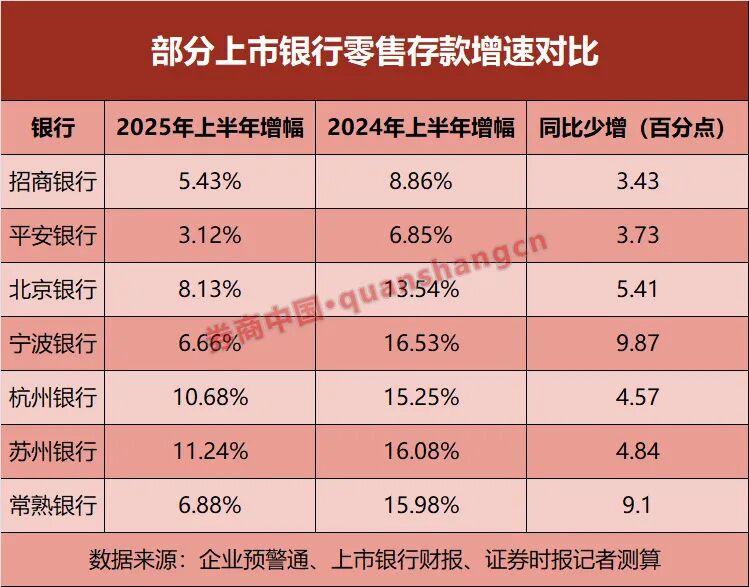
Group 1 - Local small and medium-sized banks are continuously lowering deposit interest rates, with some banks announcing reductions of up to 35 basis points [1][2] - The recent trend of lowering deposit rates is a response to the pressure on net interest margins and follows similar actions taken by larger national banks earlier this year [2][3] - Retail deposit outflows have been significant, prompting banks to focus on wealth management strategies to mitigate the negative impact of declining deposits [1][4] Group 2 - The downward pressure on deposit rates is expected to continue, and banks need to diversify their products and services to enhance competitiveness [3] - Retail deposit growth has slowed for several banks, indicating increased pressure on retail liabilities [5][6] - Specific banks, such as China Merchants Bank and Ping An Bank, have reported significant declines in retail deposit growth compared to the previous year [6][7] Group 3 - In response to declining retail deposits, banks are expanding their wealth management offerings, with a focus on cash management and investment products [8] - The recent bull market in capital markets has led to increased sales of equity funds and other investment products by banks [8] - The "fixed income plus" products are seen as a new avenue for banks to attract deposits in a low-interest-rate environment [8]
多家银行下调存款利率!
证券时报· 2025-09-26 09:09
Core Viewpoint - Since September, local small and medium-sized banks have been continuously lowering deposit interest rates to alleviate net interest margin pressure and follow the trend set by larger banks [1][4]. Summary by Sections Deposit Rate Adjustments - On September 25, several banks in Henan, including Luoyang Rural Commercial Bank, announced reductions in RMB deposit rates, with the highest cut reaching 35 basis points [2][4]. - The new rates for fixed-term deposits at Luoyang Rural Commercial Bank are now 0.75% for three months, 1.00% for six months, 1.30% for one year, and 1.35% for two years, reflecting a decrease of 15 basis points for the shorter terms and 35 basis points for the longer terms [4]. Retail Deposit Trends - There has been a noticeable outflow of retail deposits, with many customers opting for wealth management products that offer better returns compared to traditional deposits [2][6]. - Retail deposit growth has significantly slowed for several banks, with major banks like China Merchants Bank and Ping An Bank experiencing declines in growth rates compared to the previous year [8][9]. Wealth Management Strategies - In response to the decline in retail deposits, banks are focusing on expanding their wealth management services, with a notable increase in the sales of public fund products [10]. - The shift towards cash management products is driven by their relatively low risk and better returns compared to traditional fixed-term deposits [10]. Market Dynamics - The current low deposit rates have led many depositors to transfer their funds into various asset management products, indicating a shift in investment behavior among customers [7][10]. - The trend of "deposit migration" is becoming a significant factor for banks, with large state-owned banks emerging as key players in absorbing these funds [10].

“融聚十五载・智绘新征程”——苏州银行科创金融白皮书发布暨金融同业交流会成功举办
Hua Xia Shi Bao· 2025-09-26 06:45
Core Insights - The event "融聚十五载・智绘新征程" focused on the release of the Suzhou Bank Innovation Finance White Paper and aimed to enhance collaboration between financial institutions and technology innovation enterprises [1][4][6] Group 1: Event Overview - The event was attended by nearly 200 representatives from over 60 financial institutions, including banks, securities, insurance, and asset management companies [1] - Key figures such as Suzhou's Deputy Mayor Gu Haidong and Suzhou Bank's Chairman Cui Qingjun delivered speeches emphasizing the importance of financial support for technology innovation [4][6] Group 2: Financial Strategies and Initiatives - Suzhou Bank aims to deepen cooperation with financial institutions to create a collaborative environment that supports the development of technology innovation in Suzhou [6][8] - The bank has established a comprehensive "2+4+N" innovation finance system, which includes a dedicated committee and specialized centers for listed companies and mergers [18] Group 3: Financial Products and Services - The bank has developed the "苏心科创力" evaluation model to assess innovation capabilities of enterprises and has launched a series of financial support plans [18] - As of June 2025, Suzhou Bank has served over 13,000 technology innovation enterprises with a total credit amount exceeding 130 billion yuan, with loans to these enterprises accounting for over 20% of corporate loans [19] Group 4: Future Directions - Suzhou Bank plans to continue leveraging dual engines of "innovation + cross-border" and "livelihood + wealth" to enhance financial innovation and expand cooperation boundaries [21]