首都在线

Search documents
计算机、通信午盘加速调整,创业板人工智能ETF跌超3%
Mei Ri Jing Ji Xin Wen· 2025-06-10 05:48
(文章来源:每日经济新闻) 5月底以来,受益于英伟达业绩、外围扰动缓和等积极因素,AI方向快速反弹,5月28日-6月9日,创业 板人工智能ETF(159381)区间涨幅近10%。快速修复后,部分资金获利止盈,引发板块短期回调。长 期来看,AI仍旧是当前高景气度的方向,华泰证券表示,展望全球AI发展趋势,1)模型端新架构正逐 步探索,预训练ScalingLaw有望呈现新起点;2)算力端训练与推理共同推动算力需求持续上行,有望 开启新TAM,同时算力硬件设计进入新范式;3)应用端商业模式变革带来新范式,Agent在细分领域 率先落地带来新TAM。持续看好AI产业投资主线,看好全球AI应用进入业绩收获期。 资料显示,创业板人工智能ETF华夏(159381),跟踪创业板人工智能指数,选取创业板上市的AI主业 公司,日内涨跌幅限制为±20%。目前年管理费率为0.15%,托管费率为0.05%,场内综合费率在可比基 金中最低。行业分布上,光模块CPO概念股权重超26.6%。成分股包含新易盛、中际旭创、天孚通信、 北京君正、全志科技、光环新网、网宿科技、深信服等行业龙头公司。 6月10日,A股TMT科技板块整体回调,计算机、 ...

今日184只个股突破半年线
Zheng Quan Shi Bao Wang· 2025-06-09 04:29
Market Overview - The Shanghai Composite Index closed at 3393.26 points, above the six-month moving average, with a change of 0.23% [1] - The total trading volume of A-shares reached 838.618 billion yuan [1] Stocks Breaking Six-Month Moving Average - A total of 184 A-shares have surpassed the six-month moving average today [1] - Notable stocks with significant deviation rates include: - Qitian Technology: 11.69% deviation, closing price 14.38 yuan, with a daily increase of 20.03% and turnover rate of 15.50% [1] - Haochen Medical: 8.62% deviation, closing price 3.12 yuan, with a daily increase of 9.86% and turnover rate of 6.44% [1] - Jinyinhai: 7.58% deviation, closing price 21.00 yuan, with a daily increase of 9.66% and turnover rate of 6.43% [1] Additional Stocks with Deviation Rates - Other stocks with notable performance include: - Guangyun Technology: 7.45% deviation, closing price 14.13 yuan, with a daily increase of 9.20% and turnover rate of 4.78% [1] - Yaowang Technology: 5.93% deviation, closing price 7.12 yuan, with a daily increase of 7.88% and turnover rate of 13.64% [1] - Nuotai Biotech: 5.91% deviation, closing price 55.37 yuan, with a daily increase of 10.36% and turnover rate of 5.58% [1] Summary of Other Stocks - Additional stocks with lower deviation rates that have just crossed the six-month moving average include: - Guangdong Hongtu: just above the six-month line [1] - Xinhe Shares: just above the six-month line [1] - Songjing Shares: just above the six-month line [1]


公有云“内卷式”价格战升级 云计算市场迎来生死之战
Xi Niu Cai Jing· 2025-06-09 03:22
Core Viewpoint - The cloud computing industry is experiencing a significant price war initiated by major players like Alibaba Cloud, which has led to a reshaping of the market dynamics and poses challenges for smaller cloud providers [2][12][13] Group 1: Price War Dynamics - Alibaba Cloud has launched its largest price reduction ever, with core product prices dropping between 20% and 55%, affecting over 100 products and 500 specifications [2] - JD Cloud has responded with a commitment to undercut prices by an additional 10%, putting pressure on smaller competitors [2] - The price war is seen as a potential catalyst for industry restructuring, raising questions about its impact on innovation [2][13] Group 2: Financial Performance of Major Players - Alibaba Cloud reported a revenue of 106.37 billion yuan in 2024, a year-on-year increase of 37.78%, indicating a strategy of increasing public cloud penetration to dilute costs [2] - The utilization rate of Alibaba Cloud's core products has increased significantly, leading to substantial energy savings [2] - Despite revenue growth, profit margins are under pressure, with Industrial Fulian's cloud computing business showing a gross margin of only 4.99% [3][4] Group 3: Challenges for Smaller Cloud Providers - Smaller cloud providers are facing a "profit margin recovery" while experiencing revenue pressure, with companies like Kingsoft Cloud and Yuke Data showing mixed financial results [5] - Smaller firms are adopting strategies such as focusing on high-value areas like AI computing to survive in a competitive landscape [5][12] - The cash flow risks for smaller players are evident, with some reporting significant declines in revenue and negative cash flow [5] Group 4: Investment and Resource Allocation - Major players are extending the price war into the AI sector, with Alibaba Cloud's AI model prices dropping to the lowest in the industry [6][8] - Alibaba Cloud plans to invest 380 billion yuan in AI infrastructure over the next three years, while Tencent Cloud has a similar plan of 500 billion yuan [8] - The rapid growth in AI computing demand presents both opportunities and challenges for smaller firms, which struggle to keep pace with larger competitors [12] Group 5: Market Concentration and Future Outlook - The market concentration is increasing, with the top three players holding 71% of the cloud infrastructure market share, indicating a trend towards oligopoly [11] - The price war is accelerating market reshaping, with smaller firms' market share being further compressed [12] - The industry is at a crossroads, where innovation requires resource investment, and the ongoing price war is altering resource distribution [14][15] Group 6: Strategies for Survival - Smaller cloud providers need to focus on niche markets and strengthen their technological barriers to survive [17] - Embracing open ecosystems and avoiding direct competition with larger firms are essential strategies for smaller players [17] - Regulatory measures may be necessary to prevent larger firms from abusing their market dominance and to preserve innovation space for smaller companies [17]


算力租赁概念持续反弹 优刻得、青云科技涨超15%
news flash· 2025-06-06 03:08
算力租赁概念持续反弹 优刻得、青云科技涨超15% 智通财经6月6日电,算力租赁概念延续昨日反弹势头,优刻得、青云科技双双涨超15%,美利云触及涨 停,湖北广电、铜牛信息、并行科技、首都在线等快速跟涨。消息面上,工信部近日印发《算力互联互 通行动计划》,立足提高公共算力资源使用效率和服务水平,促进算力高质量发展,部署六方面16项重 点任务。 ...


全球AI共振,AIDC算力链信心回归
2025-06-06 02:37
Summary of AIDC Industry and Company Insights Industry Overview - The global AI computing power industry is experiencing a rebound, driven by increased capital expenditures from major companies like Meta, Microsoft, Google, and Amazon, which are expected to maintain growth in AI investments in 2026 [1][5] - The domestic AIDC industry has seen a recovery in demand, with companies like ByteDance and Alibaba showing signs of order fulfillment and project approvals exceeding expectations [1][6] Key Points and Arguments - **Capital Expenditure Trends**: Meta has raised its capital expenditure guidance for 2025, while Microsoft, Google, and Amazon are expected to continue their AI investments, indicating a positive outlook for the AIDC sector [5] - **Chip Supply Improvements**: The anticipated release of NVIDIA's B30/B40 chips is expected to alleviate previous supply shortages that delayed projects in the domestic AIDC industry [1][7] - **Market Demand**: The demand for high-performance chips such as H100, H200, and B200 is increasing, with companies like Runjian and Guanghuan Xinwang reporting busy operations and full order books [8] - **Investment Opportunities**: The AIDC industry is entering a phase of global resonance, presenting investment opportunities across various sectors, including data center construction, IT equipment, network devices, cloud computing platforms, and AI applications [4][12] Additional Important Insights - **Domestic Market Sentiment**: Despite previous pessimism, the domestic AIDC industry is showing optimism, with companies reporting full orders and recovering demand from major players [6] - **Technological Adaptation**: The adaptation of domestic computing power cards, such as those from Cambricon and Huawei, is progressing well, which is crucial for the industry's recovery [2][10] - **Long-term Outlook**: By 2026, the significant easing of chip supply constraints is expected to provide long-term benefits to the AIDC industry, enhancing overall market confidence [8][10] - **Commercialization of AI Applications**: The commercialization of AI applications is accelerating, with major companies pushing for monetization, although specific timelines remain uncertain [11] Investment Directions - Key investment areas identified include: 1. AIDC data center construction 2. Information technology equipment (domestic AI chips, AI servers) 3. Network devices (switches, optical modules) 4. Computing power leasing 5. Cloud computing platforms 6. AI applications 7. Satellite internet and 6G technologies [12]
11款创新药拿下多个“首款”,资本市场已沸腾
2 1 Shi Ji Jing Ji Bao Dao· 2025-05-30 11:51
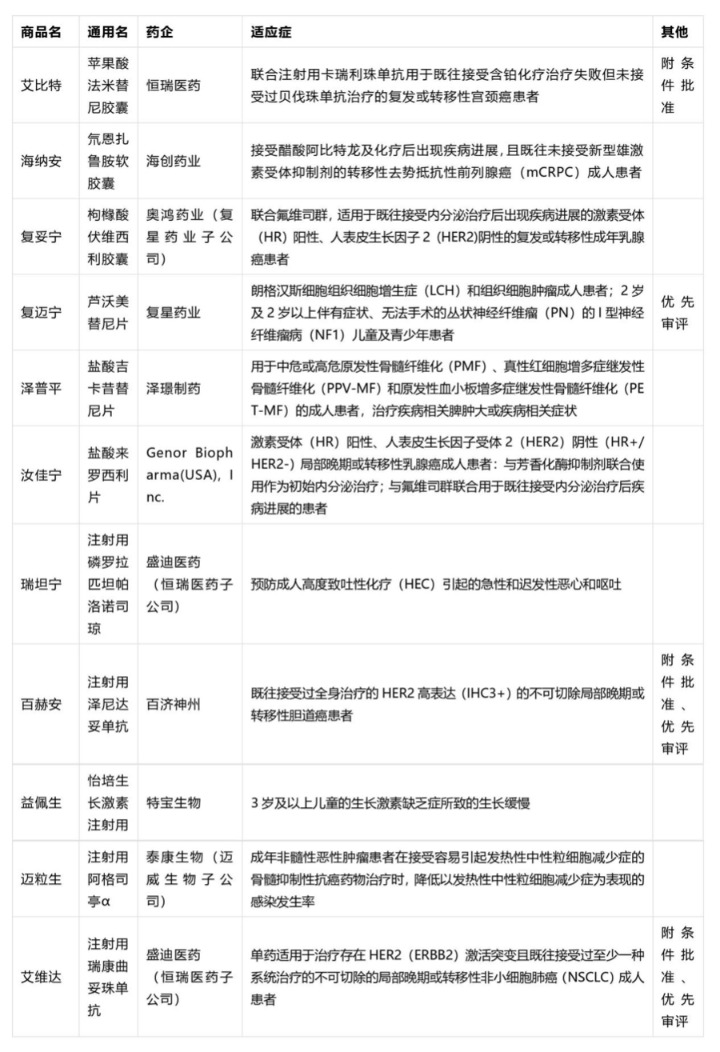
Core Insights - The National Medical Products Administration approved 11 innovative drugs recently, with 10 coming from listed companies, indicating a significant advancement in China's pharmaceutical sector [1][4] - The approval of these drugs marks a pivotal moment for the industry, as it transitions into a phase of realizing the results of extensive research and development efforts [7][8] Group 1: Drug Approvals and Innovations - Among the approved drugs, several are the first of their kind in China, including Bai Jie Shen Zhou's injection of Zhenida Monoclonal Antibody, which is the first HER2 dual-target drug approved for cholangiocarcinoma [4][5] - Heng Rui Pharmaceutical's Apixaban is a multi-target tyrosine kinase inhibitor approved for use in advanced solid tumors, showcasing innovative treatment mechanisms [4][5] - The approval of Zai Jing Pharmaceutical's Jikaxitinib marks the first domestic JAK inhibitor for treating myelofibrosis, providing new options for patients with rare blood cancers [5][6] Group 2: Market Trends and Investment Opportunities - The innovative drug sector has seen a strong market performance, with 53 stocks hitting the daily limit up, indicating heightened investor interest [2][7] - Analysts predict that 2025 will be a transformative year for the pharmaceutical industry, characterized by increased revenue, profitability, and valuation improvements [1][7] - The Hong Kong innovation drug index has seen significant capital inflow, with over 200 million yuan in net inflow over the past 20 trading days, reflecting strong market sentiment [2][8] Group 3: Challenges and Future Outlook - Despite the positive developments, the innovative drug industry faces challenges such as high uncertainty in commercialization and intense competition among similar products [7][8] - The industry is supported by favorable policies and the growth of commercial health insurance, which enhances the payment environment for innovative drugs [8]





AI算力从“堆硬件”走向“拼效率” 产业链企业合力破解算网融合协同难题
Zheng Quan Ri Bao Zhi Sheng· 2025-05-28 16:42
Core Insights - The rapid expansion of AI computing power in China is highlighted, with the current capacity reaching 3000P for training and 1000P for inference, and over 250 innovative solutions developed across various sectors [1] - The integration of computing power and network technology, referred to as "算网融合" (computing-network integration), is identified as a critical path for addressing the growing demand for AI computing resources and enhancing computational efficiency [3][6] - The Chinese intelligent computing power market is projected to grow significantly, with estimates indicating a market size of $25.9 billion by 2025, reflecting a 36.2% increase from 2024 [2] Industry Growth and Trends - The intelligent computing power scale in China is expected to reach 1037.3 EFLOPS by 2025, representing a 43% increase from 2024, and is projected to double by 2026 [2] - The compound annual growth rate (CAGR) for China's intelligent computing scale from 2023 to 2028 is forecasted at 46.2%, indicating a strong trend towards large and super-large intelligent computing centers [2] - The demand for AI models is driving a significant increase in computing power requirements, with current needs exceeding hardware supply by over 200 times [3] Technological Developments - Companies are focusing on transforming data centers into intelligent computing centers, emphasizing the need for efficient, green, and high-performance solutions [4][5] - Huawei is leveraging advanced technologies such as zero-loss networking and intelligent computing network scheduling to enhance computing resource utilization from 40% to 75% [5] - The integration of distributed computing architecture, low-latency networks, and virtualization technologies is essential for achieving high-quality development in computing power [6] Market Dynamics - The competition among enterprises for intelligent computing resources is intensifying, with a focus on optimizing computing infrastructure and enhancing service capabilities [5] - The shift from hardware-centric approaches to efficiency-driven models in AI computing is becoming evident, necessitating a demand-oriented and benefit-oriented approach in intelligent computing center construction [6]
首都在线: 关于公司募集资金专项账户部分资金被冻结的公告
Zheng Quan Zhi Xing· 2025-05-28 12:19
Core Viewpoint - Beijing Capital Online Technology Co., Ltd. has reported that a portion of its fundraising special account has been frozen by the Chaoyang District People's Court in Beijing due to a contractual dispute with Tianxiang Ruiyi Technology Co., Ltd. [1][2] Group 1: Financial Impact - The amount frozen in the special account is 6,224,699.02 yuan, which represents 1.82% of the net proceeds from the company's A-share issuance in 2022 and a negligible impact on the company's recent audited net assets [2] - The company asserts that the frozen funds will not significantly affect the implementation of its fundraising investment projects or its normal operations and management [2] Group 2: Legal Context - As of the announcement date, the case related to the asset preservation is in the pre-litigation mediation stage, and the company has not received any formal legal documents from the court regarding the case [2] - The freezing of funds is a result of Tianxiang Ruiyi's lawsuit and request for property preservation due to payment disputes between the two companies [1][2] Group 3: Company Response - The company plans to assert its legal rights and take necessary measures to protect the interests of the company and its shareholders, aiming to lift the bank account freeze as soon as possible [2] - The company will continue to monitor the situation and fulfill its information disclosure obligations based on subsequent developments [2]
首都在线(300846) - 关于公司募集资金专项账户部分资金被冻结的公告
2025-05-28 11:46
证券代码:300846 证券简称:首都在线 公告编号:2025-059 截至本公告披露日,公司尚未收到法院关于本次冻结公司银行账户的法律 文书、通知或其他信息。经公司初步自查了解,本次募集资金专项账户部分资 金被冻结系因公司与北京天翔睿翼科技有限公司(以下简称"天翔睿翼")之 间的合同纠纷。公司与天翔睿翼互为供应商和客户关系,双方在合同履行过程 中就各自应收款项支付问题存在争议,未能协商一致,公司已就天翔睿翼欠款 另案申请仲裁,而此次资金冻结是由于天翔睿翼向法院提起诉讼并申请财产保 全所导致,最终冻结公司资金 6,224,699.02 元。 截至本公告披露日,上述涉及财产保全的案件处于诉前调解阶段,公司尚 1 户名 开户银行 银行账号 截至 2025 年 5 月 27 日账户余额 (元) 账户性质 本次被冻结 金额(元) 北京首都在 线科技股份 有限公司 中国民生银 行股份有限 公司北京陶 然桥支行 644397265 311,002,440.96 募集资金 专项账户 6,224,699.02 一、本次部分募集资金专项账户的部分资金被冻结基本情况 未收到法院送达的上述案件相关的其他正式法律文书。 三、本次部分 ...
研判2025!中国数据跨境流通行业发展背景、相关政策及市场现状分析:数据跨境流通政策体系不断完善,需求日益增长[图]
Chan Ye Xin Xi Wang· 2025-05-26 01:30
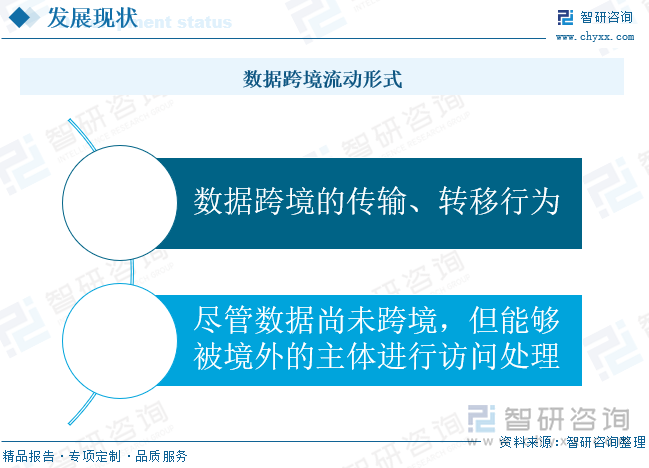
Core Viewpoint - The article emphasizes the importance of cross-border data flow as a critical component of global digital trade, highlighting China's role as a major player in this sector and the need for effective regulatory frameworks to ensure data security and personal information protection [1][19]. Group 1: Overview of Cross-Border Data Flow - Cross-border data flow refers to the transfer of personal information and data from one jurisdiction to another, encompassing both the physical transfer of data and access by foreign entities [2][14]. - The demand for cross-border data flow has surged due to the rapid growth of the digital economy, with global cross-border data flow reaching 99.7 million GBPS in 2022 and projected to exceed 180 million GBPS by 2024 [19]. Group 2: Regulatory Framework - China has established a comprehensive legal framework for cross-border data flow, including the Cybersecurity Law, Data Security Law, and Personal Information Protection Law, which set guidelines for data transfer and security assessments [14][16]. - The National Internet Information Office has introduced several regulations, including the Data Export Security Assessment Measures and the Standard Contract for Personal Information Export, to facilitate safe and orderly data flow [14][16]. Group 3: Market Dynamics - The digital trade sector in China is rapidly expanding, with digital service exports reaching 2.13 trillion yuan in the first three quarters of 2024, marking a 5.3% year-on-year increase [17]. - The data market transaction scale is expected to exceed 200 billion yuan in 2024, reflecting a growth of over 30% [10]. Group 4: Industry Development Background - Data is recognized as a key production factor in the digital economy, with global data production expected to grow from 39.9 ZB in 2018 to nearly 160 ZB by 2024 [4][8]. - The increasing importance of data has led to a focus on developing data resource utilization and marketization in China, with a projected data production volume of 41.06 ZB in 2024, a 25% increase year-on-year [8].