荣耀

Search documents
荣耀将于1月19日发布全新超薄旗舰荣耀Magic8 Pro Air
Xin Lang Cai Jing· 2026-01-11 06:52
Core Viewpoint - Honor is set to launch the new ultra-thin flagship Honor Magic8 Pro Air on January 19, featuring a thickness of only 6.1mm and a weight of 155g, while incorporating a large 5500mAh battery, surpassing competitors like Apple and Samsung [1] Group 1: Product Specifications - The Honor Magic8 Pro Air maintains high-end imaging capabilities with a large main camera, periscope telephoto, and ultra-wide-angle lenses, along with support for 3D ultrasonic screen fingerprint technology and the latest Dimensity 9500 flagship platform [1] - In comparison, the iPhone Air features only a single 48MP camera, while the Samsung Galaxy S25 Edge lacks a telephoto lens, offering only a main camera and ultra-wide-angle [1] Group 2: Design and Innovation - The industrial design of the Honor Magic8 Pro Air includes a horizontally arranged camera module, a one-piece cold-formed glass back, and a metal right-angle frame, available in multiple color options, enhancing both texture and recognition [1] - The President of Honor's terminal product line, Fang Fei, stated that the introduction of the Air series represents both an opportunity and a challenge for all brands, requiring not only courage but also sufficient technological accumulation to innovate systematically [1]
银河证券:主流消费品创新不断 可穿戴产品未来可期
智通财经网· 2026-01-11 06:41
Group 1 - The core viewpoint is that technological advancements are driving market demand, with continuous innovation in the consumer electronics industry, particularly in AI glasses and wearable devices [1][2] - AI glasses are evolving towards becoming potential smartphone replacements, enhancing user experience, with significant contributions from domestic manufacturers [2][4] - The 2026 International Consumer Electronics Show (CES) highlighted the integration of artificial intelligence with physical hardware, showcasing a variety of new wearable products [1][3] Group 2 - AI glasses are seeing advancements in communication independence and ecosystem openness, with manufacturers focusing on lightweight designs and specialized applications [2][3] - Notable product launches include the first eSIM smart glasses by Thunderbird and Rokid's AI glasses supporting multiple AI engines, addressing application ecosystem limitations [2] - Traditional consumer electronics companies are innovating hardware forms to create new demands and applications, aiming to shorten the extended replacement cycles of current consumer electronics [3][4] Group 3 - New types of wearable products, such as vibrating AI smart rings and camera-equipped headphones, are emerging, indicating a shift towards more integrated and sensory-rich devices [4] - The vibrating AI smart ring by Chasing is designed for active health monitoring and emotional management, while the AI camera headphones by Goer provide a direction for the evolution from auditory to audiovisual integration [4]
从“猎奇”到“信赖”:折叠屏手机用户发展洞察报告
艾瑞咨询· 2026-01-11 00:05
Core Insights - The global foldable smartphone market is experiencing continuous growth, particularly in China, driven by technological advancements and an improved supply chain, leading to product diversification [1] - China has emerged as the main growth engine for the global foldable smartphone market, with Huawei maintaining a significant market share [1][18] - User willingness to purchase foldable smartphones is increasing, with higher expectations for product functionality and experience [1] - The transition from niche to mainstream market for foldable smartphones is anticipated, with sustained demand growth and a focus on hardware optimization and software ecosystem development [1] Market Overview - The global smartphone market has entered a phase of stock competition since 2017, with annual shipment volumes declining by approximately 2.52%, projected to reach 1.22 billion units by 2024 [2] - The flat smartphone market has become saturated, prompting manufacturers to innovate product forms to explore the high-end market [5] Competitive Landscape - The foldable smartphone industry chain includes upstream raw material supply, midstream design and manufacturing, and downstream sales [7] - Chinese foldable smartphone manufacturers, such as Huawei and Samsung, are leading the industry chain with strong technological capabilities [7][8] User Behavior and Preferences - The majority of foldable smartphone users are male and female, with a higher preference among first-tier and new first-tier city users [20] - Users with higher education levels, particularly those with a bachelor's degree or above, show a greater preference for foldable smartphones [20] - The price range for most users of foldable smartphones is between 5,000 to 9,000 yuan, with Huawei being the most used brand [22] Purchase Motivations - The key reason for purchasing foldable smartphones is the stronger sense of technology and futurism, accounting for 44.7% of responses [24] - Users have a substantial budget for purchasing foldable smartphones, with 28.4% willing to spend between 8,000 to 10,000 yuan [24] Brand Recognition and Image - Huawei leads in brand recognition across various dimensions, including high-end perception, business style, and innovation [26][28] - User satisfaction is highest for Huawei, followed by Xiaomi and Samsung, indicating strong user approval [30] Future Trends - Over 90% of consumers are considering purchasing a foldable smartphone for their next device, focusing on reliability, battery life, and hardware specifications [41] - The foldable smartphone market is transitioning from a niche to a mainstream product, with 95.5% of consumers willing to switch to a foldable device in the future [47]


荣耀进军超薄手机,能否打过苹果华为?
Guan Cha Zhe Wang· 2026-01-10 04:08
Core Viewpoint - Honor is entering the ultra-thin smartphone market with the launch of the Magic8 Pro Air, marking its fourth "Air" model in the Chinese market, following competitors like Apple and Huawei [1][3]. Product Overview - The Magic8 Pro Air features a 6.31-inch display and is expected to weigh around 155 grams, making it lighter than both the iPhone Air (165 grams) and Huawei Mate70 Air (208 grams) [3][6]. - It is anticipated to be 6.1mm thick, slightly thicker than the iPhone Air (5.64mm) but thinner than the Mate70 Air (6.6mm) [3][6]. - The device will be powered by the MediaTek Dimensity 9500 processor, marking Honor's first use of a MediaTek flagship SoC since its independence [3][6]. Battery and Camera Specifications - The Magic8 Pro Air is expected to have a battery capacity of 5500mAh, significantly larger than the iPhone Air's 3149mAh [3][4]. - It will feature a triple-camera setup, including a 50MP main camera and an independent telephoto lens, along with potential IP68/69/69K water resistance and ultrasonic fingerprint recognition [3][6]. Pricing Strategy - The anticipated starting price for the Magic8 Pro Air is 4699 yuan, which is lower than the iPhone Air's 7999 yuan but higher than the Mate70 Air's 4199 yuan [6][9]. - The pricing strategy may face challenges due to competition from other flagship models in the same price range, including recent price cuts from Huawei and Xiaomi [6][9]. Market Position and Strategy - Honor's market share in China is projected to decline by 14.9% in 2024, with a 13.7% share, placing it fifth alongside OPPO [9]. - Despite challenges in the domestic market, Honor's global shipments are expected to exceed 71 million units in 2025, with a 47% increase in overseas sales [9]. - The company aims to differentiate itself in the competitive Chinese market and is focusing on a "machine sea strategy" to enhance its product offerings [9][10]. Future Directions - Honor plans to transition into a leading AI terminal ecosystem company by 2026, with initiatives including the production of Alpha mobile robots and strategic partnerships with major tech firms [10].

从联网设备到智能体终端,阿里云开启AI硬件的普惠元年
3 6 Ke· 2026-01-09 13:26
Core Insights - The CES 2026 event highlights the significant presence of Chinese companies, which account for one-quarter of all exhibitors, signaling a shift in AI hardware from novelty to independent intelligent agents [1][3] - Alibaba Cloud is playing a crucial role in this transformation, providing foundational support for hardware innovation without pursuing independent hardware development [4][13] - The evolution of AI hardware is marked by a transition from "functional intelligence" to "system-level intelligence," driven by advancements in underlying technologies and business models [5][6] Group 1: Industry Transformation - The AI hardware industry is entering a phase of explosive growth, moving away from "pseudo-intelligence" to devices capable of understanding complex human interactions [5][6] - The collaboration between cloud computing and edge computing is becoming the industry standard, with Alibaba Cloud offering tailored intelligence solutions for various hardware needs [7][8] - The integration of AI capabilities into hardware is redefining user interactions, allowing devices to respond to more abstract user requests and adapt to human habits [8][10] Group 2: Alibaba Cloud's Role - Alibaba Cloud is recognized as an "emerging leader" in key areas such as cloud infrastructure and model capabilities, positioning itself alongside top global AI companies [9] - The company emphasizes the importance of making technology accessible and affordable, ensuring that AI hardware becomes a common tool rather than an expensive luxury [4][24] - By providing extensive model capabilities, Alibaba Cloud enables over 150,000 hardware manufacturers to innovate without the need for substantial resources [27][28] Group 3: Market Dynamics - The market for AI consumer hardware is shifting towards a more discerning consumer base that values stability, experience, and real-world application [10][12] - Users are increasingly willing to pay for perceived value, with a notable rise in subscription models for AI functionalities, particularly in health-related applications [12][10] - The relationship between large tech companies and smaller manufacturers is evolving from competition to collaboration, fostering a more symbiotic ecosystem [24][28] Group 4: Product Innovations - New AI products, such as the Mooni M1 for children, demonstrate how AI can enhance user interaction by focusing on individual needs and preferences [14][16] - In the smartphone sector, companies like OPPO and Honor are integrating advanced AI capabilities to improve user experience and interaction [18][19] - The automotive industry is also seeing significant advancements, with AI systems transforming vehicle interfaces into intelligent hubs that understand and respond to user needs [19][21]

希荻微:公司智能视觉感知系列产品已导入vivo、荣耀等品牌客户的供应链体系
Zheng Quan Ri Bao Wang· 2026-01-09 13:20
Core Viewpoint - The company has successfully integrated its intelligent visual perception products into the supply chains of major brands, indicating strong market demand and potential for growth [1] Group 1: Product Offerings - The company's intelligent visual perception series products, including autofocus chips and optical image stabilization chips, are widely used in smartphones, learning tablets, handheld computers, and video conferencing devices [1] - The company has launched automotive-grade PMIC products that provide compact, low-noise, and high-efficiency power solutions for camera module components such as MCUs, SerDes, and image sensors [1] Group 2: Market Expansion - The company is actively expanding its downstream customer base, indicating a strategic focus on increasing market penetration and diversifying its client portfolio [1]

从联网设备到智能体终端,阿里云开启AI硬件的普惠元年
36氪· 2026-01-09 13:09
Core Viewpoint - The article emphasizes that AI hardware has evolved from being mere gimmicks to becoming independent intelligent entities, showcasing significant innovation from Chinese manufacturers at CES 2026 and the role of Alibaba Cloud in this transformation [3][6][19]. Group 1: AI Hardware Evolution - AI hardware has crossed the threshold from being toys to independent intelligent agents, indicating a major shift in the industry [3][6]. - The transition from "China manufacturing" to "China creation" is highlighted, with Alibaba Cloud playing a crucial role in providing the necessary technological support for hardware innovation [7][19]. - The year 2026 marks the beginning of a "species explosion" in AI hardware, driven by continuous technological advancements and a shift in business logic [9][10]. Group 2: Technological Advancements - AI hardware is undergoing a transformation from "functional intelligence" to "system-level intelligence," with the ability to understand complex environments [10][11]. - The collaboration between cloud computing and edge computing is becoming the industry standard, allowing for a balance between performance and power consumption [11][12]. - Alibaba Cloud's models, ranging from 0.5 billion to 480 billion parameters, provide tailored intelligence solutions for various hardware needs [11][12]. Group 3: Market Dynamics - The market for AI consumer hardware is shifting from an "enlightenment market" to a more mature one, where users demand stable performance and real-life value [13][14]. - Users are increasingly willing to pay for AI functionalities, particularly in health-related applications, indicating a significant change in consumer behavior [14][16]. - The evolution of payment models from one-time purchases to subscription services reflects a deeper integration of AI into everyday life [16]. Group 4: Role of Alibaba Cloud - Alibaba Cloud is positioned as a silent innovator, supporting over 150,000 hardware manufacturers without competing directly in the hardware market [19][34]. - The company’s approach fosters trust among manufacturers, allowing them to innovate collaboratively rather than defensively [19][34]. - By providing a robust AI infrastructure, Alibaba Cloud enables Chinese manufacturers to transition from low-margin assembly to high-value innovation [39][40]. Group 5: New Product Innovations - New AI products, such as the Mooni M1 for children, demonstrate how AI capabilities are integrated into hardware, enhancing user interaction [22][28]. - The collaboration with various companies has led to significant advancements in wearable technology and creative hardware, showcasing the versatility of AI applications [24][26]. - The smartphone industry is also experiencing a transformation, with enhanced interaction capabilities through AI, making devices more intuitive and responsive [29][30]. Group 6: Global Market Position - Chinese hardware is evolving from being a follower in the global tech landscape to becoming a leader in defining new standards [36][38]. - The collaboration between Alibaba Cloud and hardware manufacturers is reshaping the global value chain, allowing for a more competitive stance in the international market [39][40].

荣耀小游戏与《灵画师》双向赋能助增长
Zheng Quan Ri Bao Wang· 2026-01-09 10:41
Core Insights - The collaboration between Honor Mini Games and the traditional Chinese cultural-themed casual game "Linghuashi" exemplifies a shift from mere traffic distribution to a symbiotic relationship that enhances both platform technology and content quality [1][4] Group 1: Market Performance - "Linghuashi" has shown continuous market growth since its launch on Honor's developer service platform in April 2025, achieving a stable monthly revenue growth of 30% [2] - The game has attracted a million players who appreciate traditional Chinese aesthetics, benefiting from the Honor Far Sailing Plan and refined user operations [2][3] Group 2: User Acquisition and Retention - The Honor Far Sailing Plan provides special traffic support for early-access mini-games, helping "Linghuashi" quickly reach its target audience and accumulate initial players [2] - Collaborative efforts between Honor Mini Games and the "Linghuashi" team have led to a dual-cycle of user growth and value enhancement, with high-value users contributing approximately 40% of monthly revenue [3] Group 3: Ecosystem and Future Plans - The partnership has expanded beyond the Honor Mini Games center, leveraging the MagicOS ecosystem to create a multi-dimensional user reach across various high-frequency usage scenarios [3] - Honor Mini Games aims to continue expanding its MagicOS acquisition scenarios and enhance its operational capabilities, planning to increase incentives for top-tier games under the Honor Far Sailing Plan in 2026 [4]
CES大会闭幕,可穿戴产品热度不减
Yin He Zheng Quan· 2026-01-09 10:31
Investment Rating - The report maintains a "Recommended" rating for the electronic industry [1]. Core Insights - The 2026 International Consumer Electronics Show (CES) highlighted the ongoing popularity of wearable products, with a focus on the integration of artificial intelligence and hardware [3]. - AI glasses are evolving with features like independent communication and open ecosystems, enhancing user experience and potentially replacing smartphones [3]. - Innovations in mainstream consumer electronics include the introduction of a robot-shaped smartphone and satellite communication capabilities in consumer-grade devices, aimed at creating new demand and applications [3]. - New wearable products, such as AI smart rings and camera-integrated headphones, are emerging, indicating a shift towards more sensory and seamless user experiences [3]. - The report suggests that technological advancements will drive market demand, recommending attention to companies like GoerTek, Luxshare Precision, Lens Technology, and others [3].




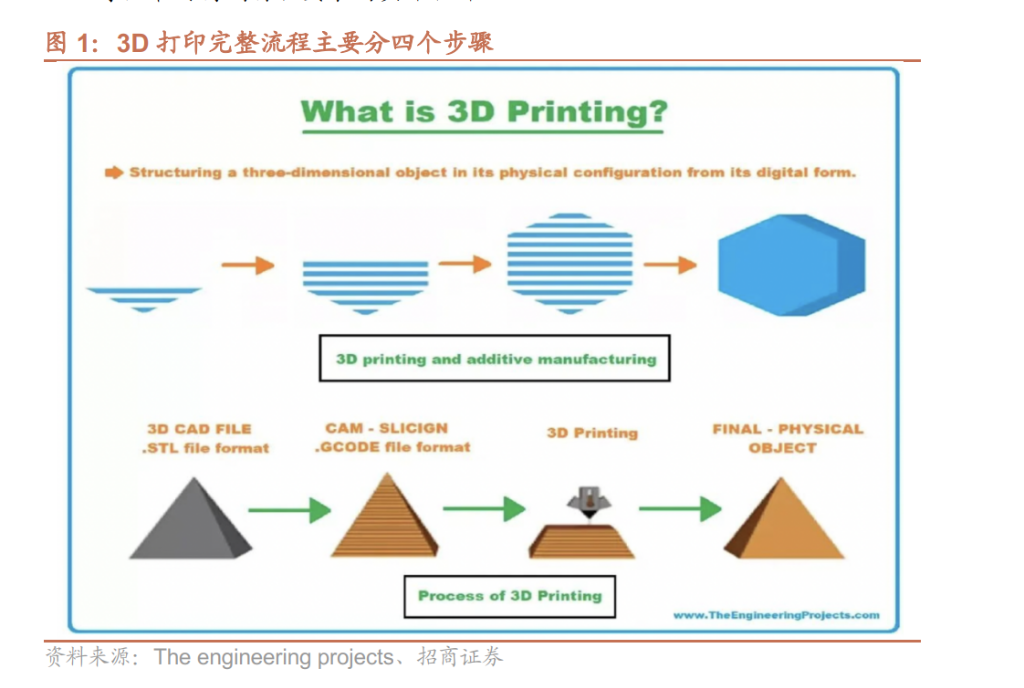
工业与消费需求共振,3D打印的“奇点”时刻到来?
Hua Er Jie Jian Wen· 2026-01-09 08:56
Core Insights - The additive manufacturing (3D printing) industry has transitioned from a technology hype cycle to a phase of technological maturity and cost reduction, marking a significant manufacturing revolution [1][3] Industry Overview - The global market size for additive manufacturing has reached $21.9 billion, with China experiencing a remarkable growth rate of 30%, projected to reach 70 billion yuan by 2025 [3] - The industry is moving from niche to mainstream, with industrial and consumer markets experiencing a rare resonance explosion [3] Technological Advantages - 3D printing offers core advantages over traditional subtractive and formative manufacturing, including "moldless" production and high material utilization rates exceeding 90%, leading to significant cost savings, especially for expensive materials like titanium alloys [4] Market Segmentation - The technology landscape is divided into two main camps: metal and non-metal. In the non-metal sector, FDM (Fused Deposition Modeling) dominates with a 61.6% global market share, while SLM (Selective Laser Melting) is the core technology in the metal sector, holding an 89.4% market share [7] Industrial Market Dynamics - The global industrial landscape is shifting towards a "Western dominance, Chinese rise" pattern, with China's market share increasing from 8.2% in 2009 to 11.5% in 2024. In the valuable metal 3D printing sector, Chinese company BLT has captured a 20% global market share, ranking second worldwide [9] Key Growth Drivers - Two core downstream sectors are driving industrial growth: 1. Commercial aerospace, where companies like SpaceX and domestic players are demonstrating significant reductions in engine component counts and manufacturing cycles [10] 2. Consumer electronics, with 2026 anticipated as a year of large-scale production for metal 3D printing, as major brands like Xiaomi and Apple enter the market [12] Consumer Market Landscape - The global consumer 3D printing market is projected to reach $4.1 billion by 2024, with the top four companies (CR4) in the market all being Chinese firms, holding a combined market share of 71.3% [13] - Companies like拓竹科技 are adopting a "3D printing farm" model, utilizing clusters of devices for flexible manufacturing, particularly in the trendy and cultural sectors [14] Technological Innovations - Innovations in algorithms and lidar technology are addressing printing speed and success rates, making devices more user-friendly. The establishment of a MakerWorld model community is creating a closed-loop ecosystem of "hardware + software + content" [16]