雷鸟眼镜

Search documents
TCL电子(1070.HK):索尼战略合作催化价值重估 业绩预告大超预期
Ge Long Hui· 2026-01-22 05:44
Group 1 - The core viewpoint is that the strategic cooperation between TCL Electronics and Sony is expected to catalyze a revaluation of TCL's value, alongside anticipated strong growth in 2025 and continued leadership in AI innovation through Thunderbird [1] - TCL and Sony have signed a Memorandum of Understanding (MOU) to establish a joint venture, with TCL holding 51% and Sony 49%, to take over Sony's home entertainment business, aiming for operational launch by April 2027 [1][2] - The joint venture will leverage Sony's high-quality imaging and audio technology, brand value, and operational experience, combined with TCL's advanced display technology and global scale advantages [2] Group 2 - TCL's forecast for 2025 indicates an adjusted net profit between HKD 2.33 billion and HKD 2.57 billion, representing a year-on-year growth of 45-60%, exceeding the upper limit of the equity incentive target [2] - The collaboration with Sony is expected to enhance TCL's revenue significantly, with estimates suggesting that Sony's television revenue could reach RMB 24.8 billion in 2024, contributing to an overall revenue exceeding RMB 30 billion [2] - The company anticipates that the integration of AI applications and the upcoming major sporting events will improve profitability and market share, particularly in overseas markets [3] Group 3 - TCL's investment in Thunderbird Innovation, which has a leading position in the AR glasses market, is expected to boost its valuation, with Thunderbird holding a 24% market share in Q3 2025 [3] - The company is positioned to benefit from the withdrawal of competitors in the LCD panel market, with expectations of price stability and increased market share through innovative MiniLED technology [3] - The strategic focus on high-end and global markets is driving product optimization and innovation, leading to improved efficiency and profitability [4]
从联网设备到智能体终端,阿里云开启AI硬件的普惠元年
3 6 Ke· 2026-01-09 13:26
Core Insights - The CES 2026 event highlights the significant presence of Chinese companies, which account for one-quarter of all exhibitors, signaling a shift in AI hardware from novelty to independent intelligent agents [1][3] - Alibaba Cloud is playing a crucial role in this transformation, providing foundational support for hardware innovation without pursuing independent hardware development [4][13] - The evolution of AI hardware is marked by a transition from "functional intelligence" to "system-level intelligence," driven by advancements in underlying technologies and business models [5][6] Group 1: Industry Transformation - The AI hardware industry is entering a phase of explosive growth, moving away from "pseudo-intelligence" to devices capable of understanding complex human interactions [5][6] - The collaboration between cloud computing and edge computing is becoming the industry standard, with Alibaba Cloud offering tailored intelligence solutions for various hardware needs [7][8] - The integration of AI capabilities into hardware is redefining user interactions, allowing devices to respond to more abstract user requests and adapt to human habits [8][10] Group 2: Alibaba Cloud's Role - Alibaba Cloud is recognized as an "emerging leader" in key areas such as cloud infrastructure and model capabilities, positioning itself alongside top global AI companies [9] - The company emphasizes the importance of making technology accessible and affordable, ensuring that AI hardware becomes a common tool rather than an expensive luxury [4][24] - By providing extensive model capabilities, Alibaba Cloud enables over 150,000 hardware manufacturers to innovate without the need for substantial resources [27][28] Group 3: Market Dynamics - The market for AI consumer hardware is shifting towards a more discerning consumer base that values stability, experience, and real-world application [10][12] - Users are increasingly willing to pay for perceived value, with a notable rise in subscription models for AI functionalities, particularly in health-related applications [12][10] - The relationship between large tech companies and smaller manufacturers is evolving from competition to collaboration, fostering a more symbiotic ecosystem [24][28] Group 4: Product Innovations - New AI products, such as the Mooni M1 for children, demonstrate how AI can enhance user interaction by focusing on individual needs and preferences [14][16] - In the smartphone sector, companies like OPPO and Honor are integrating advanced AI capabilities to improve user experience and interaction [18][19] - The automotive industry is also seeing significant advancements, with AI systems transforming vehicle interfaces into intelligent hubs that understand and respond to user needs [19][21]


从联网设备到智能体终端,阿里云开启AI硬件的普惠元年
36氪· 2026-01-09 13:09
Core Viewpoint - The article emphasizes that AI hardware has evolved from being mere gimmicks to becoming independent intelligent entities, showcasing significant innovation from Chinese manufacturers at CES 2026 and the role of Alibaba Cloud in this transformation [3][6][19]. Group 1: AI Hardware Evolution - AI hardware has crossed the threshold from being toys to independent intelligent agents, indicating a major shift in the industry [3][6]. - The transition from "China manufacturing" to "China creation" is highlighted, with Alibaba Cloud playing a crucial role in providing the necessary technological support for hardware innovation [7][19]. - The year 2026 marks the beginning of a "species explosion" in AI hardware, driven by continuous technological advancements and a shift in business logic [9][10]. Group 2: Technological Advancements - AI hardware is undergoing a transformation from "functional intelligence" to "system-level intelligence," with the ability to understand complex environments [10][11]. - The collaboration between cloud computing and edge computing is becoming the industry standard, allowing for a balance between performance and power consumption [11][12]. - Alibaba Cloud's models, ranging from 0.5 billion to 480 billion parameters, provide tailored intelligence solutions for various hardware needs [11][12]. Group 3: Market Dynamics - The market for AI consumer hardware is shifting from an "enlightenment market" to a more mature one, where users demand stable performance and real-life value [13][14]. - Users are increasingly willing to pay for AI functionalities, particularly in health-related applications, indicating a significant change in consumer behavior [14][16]. - The evolution of payment models from one-time purchases to subscription services reflects a deeper integration of AI into everyday life [16]. Group 4: Role of Alibaba Cloud - Alibaba Cloud is positioned as a silent innovator, supporting over 150,000 hardware manufacturers without competing directly in the hardware market [19][34]. - The company’s approach fosters trust among manufacturers, allowing them to innovate collaboratively rather than defensively [19][34]. - By providing a robust AI infrastructure, Alibaba Cloud enables Chinese manufacturers to transition from low-margin assembly to high-value innovation [39][40]. Group 5: New Product Innovations - New AI products, such as the Mooni M1 for children, demonstrate how AI capabilities are integrated into hardware, enhancing user interaction [22][28]. - The collaboration with various companies has led to significant advancements in wearable technology and creative hardware, showcasing the versatility of AI applications [24][26]. - The smartphone industry is also experiencing a transformation, with enhanced interaction capabilities through AI, making devices more intuitive and responsive [29][30]. Group 6: Global Market Position - Chinese hardware is evolving from being a follower in the global tech landscape to becoming a leader in defining new standards [36][38]. - The collaboration between Alibaba Cloud and hardware manufacturers is reshaping the global value chain, allowing for a more competitive stance in the international market [39][40].

真正的AI战场在产业
虎嗅APP· 2025-12-16 13:38
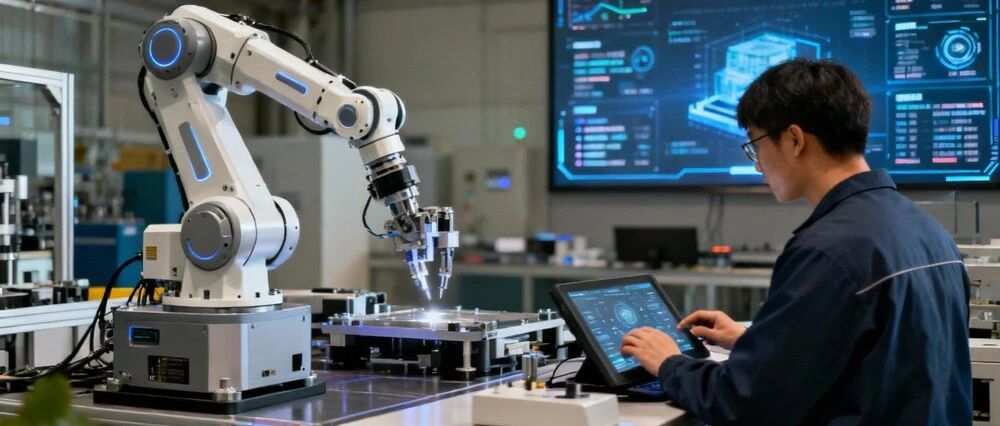
Core Insights - The AI industry is experiencing a unique state of high activity as it approaches 2025, with a surge in the release of large models and an emphasis on their enhanced capabilities [2][3] - Despite the technological advancements, the practical experience for users and enterprises is not as seamless as advertised, leading to concerns about the effectiveness of AI investments [4][5] - The true value of AI technology is expected to emerge from real-world applications rather than theoretical models, necessitating integration into industries with low tolerance for error and complex processes [6][7][8] Industry Dynamics - The AI sector is at a critical juncture where the competition based on model parameters is becoming unsustainable; the focus must shift to practical applications and industry-specific adaptations [12][18] - Advanced manufacturing, particularly represented by companies like TCL, is seen as a key area for AI implementation, where the stakes are high due to low tolerance for errors and intricate process chains [13][14][15] Company Case Study: TCL - TCL has invested significantly in R&D, with over 60 billion RMB projected from 2019 to 2024, establishing a robust foundation for AI applications across its diverse product lines [21][22] - The company has developed specialized AI models tailored to its manufacturing processes, such as the Xingzhi model for display technology and the Deep Blue model for photovoltaic applications, which address specific industry challenges [27][23] - TCL's approach emphasizes collaboration with ecosystem partners to create domain-specific models that integrate seamlessly into existing manufacturing processes, enhancing efficiency and reducing costs [23][24] Practical Applications and Outcomes - In the semiconductor display sector, TCL's collaboration with Alibaba Cloud has led to a model that improves defect diagnosis efficiency by approximately 20% and material development efficiency by 30% [31] - In the photovoltaic sector, AI has enabled operators to manage over 300 crystal growth furnaces, increasing efficiency and reducing operational costs by about 21% [34] - These advancements not only enhance B2B operations but also translate into improved consumer products, with TCL's innovations leading to higher market shares and better user experiences [41][43] Future Outlook - The ongoing evolution of large models will continue, but companies lacking real-world applications may struggle to remain relevant in the industry [45][49] - The integration of AI into manufacturing processes is expected to redefine operational efficiencies and user experiences, positioning AI as an essential infrastructure in the future [48][49]

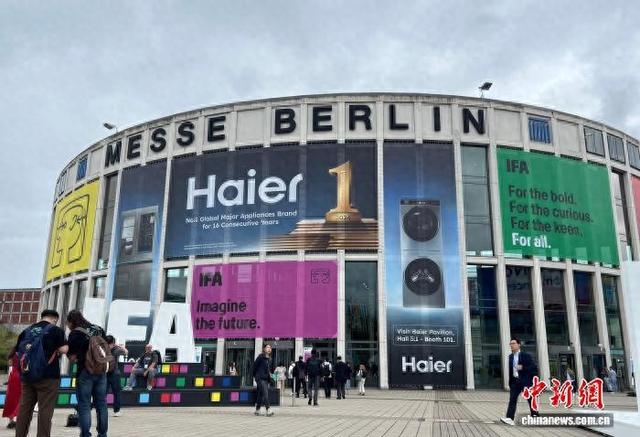
2025年柏林国际消费电子展开幕
Zhong Guo Xin Wen Wang· 2025-09-05 22:11
Core Insights - The 2025 IFA (Internationale Funkausstellung) opened on September 5 in Berlin, attracting approximately 1,900 exhibitors from around the world [1][3]. Industry Focus - This year's exhibition emphasizes themes such as IT, artificial intelligence, software and computing power, as well as sustainable solutions for home, travel, and lifestyle [3]. - IFA continues to serve as a significant platform for showcasing cutting-edge trends and innovations, particularly in core areas like home entertainment and appliances, smart home technology, gaming, fitness, and digital health [3]. Product Highlights - Innovative products displayed include smart ovens that indicate when pizza is ready, lights that automatically adjust brightness over time, and grills that match temperatures for different types of meat [3]. - A new "Beauty and Care" section was introduced to attract younger consumers, focusing on health-related themes [3]. Exhibitor Participation - Major companies such as Bosch and Siemens, along with leading Chinese firms like Hisense, TCL, and DJI, showcased their latest products and technological applications [5]. - Smaller enterprises also took the opportunity to present their unique innovations at the event [5]. Event Scale and Duration - The IFA is recognized as one of the largest and most comprehensive consumer electronics exhibitions globally, taking place from September 5 to September 9, 2025 [7].
经调整归母净利润增长62%,TCL电子各项业务全面开花
Zhi Tong Cai Jing· 2025-09-01 08:48
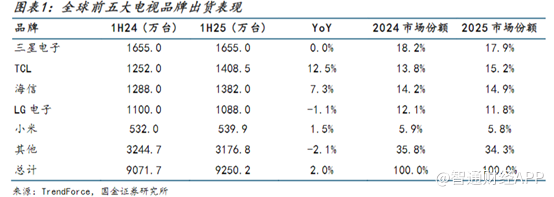
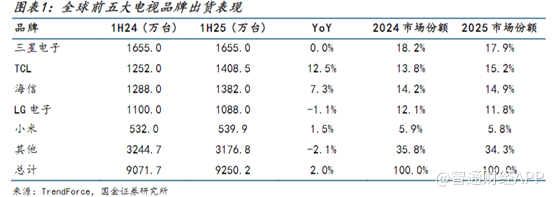
Core Viewpoint - TCL Electronics has achieved significant growth in a slowing global television market, driven by a mid-to-high-end product strategy and innovative business layout, resulting in impressive financial performance for investors [1]. Financial Performance - In the first half of 2025, TCL Electronics reported revenue of HKD 54.78 billion, a year-on-year increase of 20.4%, and adjusted net profit rose by 62.0% to HKD 1.06 billion [1]. - Overall expense ratio decreased by 1 percentage point to 11.5%, while cash and cash equivalents grew by 30.4% to HKD 11.44 billion [1]. Television Business - TCL's television business maintained strong growth, with a shipment growth rate of 12.5%, securing a 15.2% market share, up from 13.8% [2]. - The company's Mini LED television shipments surged by 176.1% to 1.37 million units, capturing a 28.7% market share, making TCL the global leader in Mini LED TV shipments [3]. - The average selling price of televisions exceeded HKD 2,100, reflecting a 1.7% year-on-year increase, and the gross margin for the television business improved by 0.5 percentage points to 15.9% [3]. Regional Performance - In the Chinese market, TCL's revenue reached HKD 8.72 billion, a 4.4% increase, with a gross margin improvement of 1.7 percentage points to 19.4% [4]. - In North America, TCL's Mini LED TV shipments grew by 349.6%, with a significant increase in average selling price by 12.6% [4]. - In Europe, TCL's television shipments rose by 13.3%, with a notable increase in large-size product sales [5]. Internet and Innovation Business - TCL's global internet business revenue reached HKD 1.46 billion, a 20.3% increase, with a gross margin of 54.4% [7]. - The innovation business revenue surged by 42.4% to HKD 19.88 billion, with solar energy business revenue reaching HKD 11.14 billion, a 111.3% increase [8]. - The company has established a strategic shift towards becoming a "smart energy solution provider," enhancing its business model to include revenue sharing and operational service fees [11]. Market Trends and Future Outlook - The consumer electronics market is experiencing a shift towards AR/XR and AI robotics, with TCL positioning itself in these high-growth areas [12]. - TCL's strategic partnerships and innovative product offerings are expected to drive future growth and maintain its competitive edge in the evolving market landscape [13]. - The company's diversified approach and strong financial metrics indicate a promising outlook for sustained profitability and shareholder value [14][15].
经调整归母净利润增长62%,TCL电子(01070)各项业务全面开花
智通财经网· 2025-09-01 08:42
Core Viewpoint - TCL Electronics has achieved significant growth in a slowing global TV market, driven by a mid-to-high-end product strategy and innovative business layout, resulting in a strong financial performance for investors [1] Financial Performance - In the first half of 2025, TCL Electronics reported revenue of HKD 54.78 billion, a year-on-year increase of 20.4%, and adjusted net profit rose 62.0% to HKD 1.06 billion [1] - Overall expense ratio decreased by 1 percentage point to 11.5%, while cash and cash equivalents grew by 30.4% to HKD 11.44 billion [1] TV Business Growth - TCL's TV business maintained a strong growth momentum, with a market share increase to 15.2%, up from 13.8% year-on-year, while leading the industry with a shipment growth rate of 12.5% [1][2] - The gross margin for the TV business improved by 0.5 percentage points to 15.9%, with revenue reaching HKD 28.35 billion, a 9.4% increase year-on-year [2] Regional Performance - In the Chinese market, TCL's revenue reached HKD 8.72 billion, growing 4.4% year-on-year, with a gross margin increase of 1.7 percentage points to 19.4% [3] - In North America, TCL's Mini LED TV shipments surged by 349.6%, with a significant increase in average selling price by 12.6% [3] - In Europe, TCL's TV shipments grew by 13.3%, with a notable increase in large-size product sales [4] Internet and Innovative Business - TCL's global internet business revenue reached HKD 1.46 billion, a 20.3% increase, with a gross margin of 54.4% [6] - The innovative business segment saw a revenue increase of 42.4% to HKD 19.88 billion, with solar energy business revenue soaring by 111.3% to HKD 11.14 billion [7] Market Trends and Strategic Positioning - The Mini LED technology is experiencing rapid growth, with TCL leading the global market with a shipment increase of 176.1% [2] - The company is focusing on ecological cooperation and refined operations in the competitive distributed solar market, enhancing channel stickiness and core capabilities [8][9] Future Outlook - TCL is positioning itself as a comprehensive energy service provider, transitioning from a single equipment sales model to a dual-driven model of energy revenue sharing and operational service fees [10] - The company is leveraging its strengths in AI and IoT to capture future market opportunities in the XR and AI robot sectors, with significant sales growth in these areas [11][12]