卫材

Search documents
卫材(ESALY.US)向FDA提交仑卡奈单抗皮下注射剂型的滚动补充生物制品许可申请
智通财经网· 2025-09-05 13:23
Core Viewpoint - Eisai and Biogen have initiated a rolling supplemental Biologics License Application (sBLA) to the FDA for the subcutaneous auto-injector formulation of Lecanemab (IQLIK) for early Alzheimer's disease patients, having received Fast Track designation from the FDA [1] Group 1: Product Development - The sBLA submission is based on an 18-month core study and a sub-study from the Phase 3 Clarity AD open-label extension study, evaluating the subcutaneous administration method across multiple dosage ranges [1] - If approved, the IQLIK 500mg subcutaneous dosing regimen (two 250mg injections) will provide an alternative to the current intravenous (IV) administration, allowing patients to receive treatment at home from initiation to maintenance [1] Group 2: Treatment Benefits - The subcutaneous formulation is expected to reduce the complexities associated with IV maintenance therapy, such as infusion preparation and nursing supervision, thereby simplifying the overall treatment process for Alzheimer's disease [1] - The injection time for the IQLIK auto-injector is approximately 15 seconds, enhancing convenience for patients and caregivers [1]
舶望制药与诺华深化合作;国内首款全人群四价流感亚单位疫苗获批
2 1 Shi Ji Jing Ji Bao Dao· 2025-09-04 23:45
Group 1: Industry Developments - Hainan Province is focusing on accelerating the development of the biopharmaceutical industry through enhanced government efficiency and strategic initiatives [1] - Jiangsu Zhonghui Yuantong Biotech's quadrivalent influenza subunit vaccine has received approval from NMPA, expanding its target population to include infants and the elderly [2] - Eisai and Biogen have submitted a rolling supplemental biologics license application for lecanemab to the FDA, aimed at early Alzheimer's disease patients [3] Group 2: Clinical Trials and Approvals - Lepu Medical's MWN105 injection has entered Phase II clinical trials, marking a significant step in its development [4] - Heng Rui Medicine has received approval for clinical trials of HRS-4729 injection, a novel peptide drug targeting multiple receptors [5] Group 3: Investment Activities - Sichuan Portong Medical plans to invest 150 million yuan in the Chengdu Rongchuang Fund, focusing on high-end medical devices and AI healthcare [7] - Shenzhen Mindray Technology has increased its stake in Huatai Medical to 25% through a block trade [8] - Best Idea International Limited has reduced its stake in Mengke Pharmaceutical to 8.91% due to financial needs [9] Group 4: Strategic Collaborations - Bewang Pharmaceutical and Novartis have deepened their collaboration to develop multiple cardiovascular products, including exclusive rights for certain drug candidates [10] Group 5: Product Launches - Illumina has launched Illumina Protein Prep, a product designed to enhance protein analysis in large-scale genomic studies [11] Group 6: Regulatory Actions - Sainuo Medical has received administrative regulatory measures from Tianjin Securities Regulatory Bureau due to inaccurate disclosures [12][13] Group 7: Mergers and Acquisitions - Aopu Mai is facing dissent regarding its 1.4 billion yuan acquisition plan for Chengli Bio, with concerns raised about its alignment with the company's strategic goals [14][15]


上半年创新药对外授权近660亿美元;司美格鲁肽最新数据出炉
2 1 Shi Ji Jing Ji Bao Dao· 2025-09-02 00:11
Policy Developments - The Deputy Director of the National Medical Products Administration (NMPA), Xu Jinghe, announced that the total amount of innovation drug licensing abroad reached nearly $66 billion in the first half of 2025 [1] - During the 14th Five-Year Plan period, 210 innovative drugs and 269 innovative medical devices were approved, showing a continuous growth trend [1] - The Chinese biopharmaceutical market has become the second largest globally, with approximately 30% of the world's innovative drugs under development [1] Industry Insights - With policy support and industry development, Chinese innovative pharmaceutical companies are expected to enhance their pricing power over biopharmaceutical technology achievements, moving from a major licensing country to a stronghold in innovative drug research and commercialization [2] Digital Medical Supplies - The first provincial bulk procurement project for digital medical supplies, "Cloud Film," was launched in Guizhou, covering public medical institutions providing radiological services [3] - The procurement cycle is set for two years, with a demand of 21.56 million instances in the first year [3] Drug Regulation Statistics - The NMPA reported that the overall pass rate for drug supervision and sampling exceeded 99% in 2024, with a non-compliance rate of 0.57% from 20,604 batches sampled [4] - The non-compliance rates for various drug categories were as follows: biological products 0%, chemical drugs 0.40%, traditional Chinese medicine 0.13%, and traditional Chinese medicine pieces 2.87% [4] Drug Approvals - The subcutaneous injection formulation of Lecanemab (LEQEMBI®) has been approved by the FDA for early Alzheimer's disease maintenance treatment, set to launch in the U.S. on October 6, 2025 [5] - The innovative drug 9MW3811 targeting IL-11 for pathological scars has received acceptance for a Phase II clinical trial application by the NMPA, expected to start by the end of 2025 [7] - The innovative drug SHR2554 (Zemaitos) has been conditionally approved for marketing in China for adult patients with relapsed or refractory peripheral T-cell lymphoma [8] Capital Market Activities - Pukang Bio submitted a listing application to the Hong Kong Stock Exchange, focusing on breakthrough therapies for cancer-related diseases and innovative drugs for viral and aging diseases [9] Major Industry Events - The STEER real-world study presented by Novo Nordisk showed that Semaglutide (Wegovy) provided a 57% greater reduction in cardiovascular risks compared to Tirzepatide in overweight or obese patients with cardiovascular disease [9] - JD Health and Eli Lilly China signed a strategic cooperation agreement to create an innovative one-stop chronic disease management solution for patients with obesity, diabetes, and alopecia [10] Public Sentiment - Micron Biotech announced the resignation of its Deputy General Manager, Zhang Libin, due to personal reasons, effective immediately upon delivery of the resignation report to the board [11]

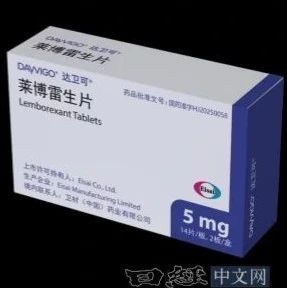
卫材在中国推出失眠症治疗药“达卫可”
日经中文网· 2025-08-19 02:31
Core Viewpoint - The article discusses the launch of Dayvigo, a drug developed by Eisai, in China for the treatment of insomnia, targeting the neuropeptide orexin associated with wakefulness [2][4]. Group 1: Product Launch and Approval - Dayvigo was officially launched in China on August 18, following its approval by the National Medical Products Administration (NMPA) in May [4]. - The drug is aimed at adult patients suffering from insomnia, a condition affecting approximately 15% of the adult population in China, translating to around 172.5 million individuals [4]. Group 2: Market Potential and Sales Forecast - Eisai anticipates that the sales of Dayvigo will increase by 8% year-on-year, reaching 58 billion yen in the fiscal year ending March 2026 [4]. - Dayvigo is positioned alongside other key products from Eisai, including the cancer drug Lenvima and the Alzheimer's treatment Leqembi [4].

多款救命药有望商保报销 保费怎么定是关键
经济观察报· 2025-08-16 13:32
Core Viewpoint - The article discusses the introduction of the commercial insurance innovative drug directory in China, which supplements the basic medical insurance directory and aims to include high-priced innovative drugs that provide significant clinical value and patient benefits [2][10]. Summary by Sections Introduction of the Commercial Insurance Innovative Drug Directory - The National Healthcare Security Administration announced a list of drugs that passed the initial review for the commercial insurance innovative drug directory, with a total of 121 drugs, over half of which are cancer or rare disease medications [2][5]. - The directory is expected to include high-priced drugs, such as CAR-T therapies costing over 1 million yuan per injection and gene therapies priced around 98,000 yuan per injection [2][4]. Drug Approval and Characteristics - To qualify for the commercial insurance innovative drug directory, drugs must either be newly approved from January 1, 2020, to June 30, 2025, or have indications included in the national rare disease directory by June 30, 2025 [5]. - Among the 121 drugs, 57 are imported, accounting for 47%, with notable entries from companies like Pfizer and Johnson & Johnson [5]. Focus on Cancer and Rare Diseases - The majority of drugs that passed the initial review are cancer treatments, with over 40 entries, followed by 35 for rare diseases [5][6]. - The article highlights the potential for the directory to alleviate payment challenges for rare disease medications, with companies actively submitting applications [6]. Pricing and Negotiation Challenges - The pricing negotiation process for drugs in the commercial insurance directory remains uncertain, as it involves collaboration between the National Healthcare Security Administration, commercial insurers, and pharmaceutical companies [12][13]. - The article notes that the commercial insurance directory may serve as a "double insurance" for companies, allowing them to apply for both the basic medical insurance and the commercial insurance directories simultaneously [9]. Future Considerations and Recommendations - The article suggests that the implementation of the commercial insurance innovative drug directory requires further exploration and refinement, with recommendations for pilot programs in specific insurance products [14]. - It emphasizes the need for insurance companies to develop reasonable pricing mechanisms and improve data integration with basic medical insurance to enhance their pricing strategies [13][14].

多款救命药有望商保报销 保费怎么定是关键
Jing Ji Guan Cha Wang· 2025-08-16 12:50
Core Insights - The National Healthcare Security Administration (NHSA) has released a list of drugs that passed the preliminary review for the commercial insurance innovative drug directory, which is a new supplement to the basic medical insurance directory aimed at covering high-priced drugs [2][3] - A total of 121 drugs have passed the initial review, with over half being cancer or rare disease medications, including several high-cost therapies [2][5] - The final commercial insurance innovative drug directory is expected to be published between October and November 2023, following expert evaluations and price negotiations [2][3] Summary by Category Drug Characteristics - The drugs included in the commercial insurance innovative drug directory are characterized by high innovation, significant clinical value, and substantial patient benefits, exceeding the basic insurance's "basic protection" scope [2] - Among the 121 drugs, 57 are imported, accounting for 47%, with notable entries from companies like Pfizer, Johnson & Johnson, and Merck [5] Pricing and Negotiation - The drugs will undergo price negotiations, which may lead to price reductions, but the extent of these reductions remains uncertain [9][10] - The commercial insurance innovative drug directory allows for simultaneous applications to both the basic medical insurance and the commercial insurance directories, providing a "double insurance" for companies [7] Market Dynamics - The directory includes a variety of drugs, including CAR-T therapies priced around 1 million yuan per injection, which have faced challenges in entering the basic medical insurance directory [6][9] - The directory's implementation may alleviate payment difficulties for rare disease medications, with companies actively submitting applications [6][8] Insurance Industry Considerations - The insurance industry faces challenges in pricing and market growth potential due to the voluntary nature of commercial insurance participation [9][11] - There is a need for better data integration between commercial insurance and basic medical insurance to enhance pricing strategies and product development [11]
绿谷“九期一”再注册受阻,AD药物“附条件批准”续证难题浮现
Hua Xia Shi Bao· 2025-08-15 12:29
Core Viewpoint - The approval process for the first domestically developed Alzheimer's drug, "Jiuyiqi" (Glycyrrhizin Sodium Capsules), has encountered significant setbacks, indicating challenges in the drug's re-registration and the broader difficulties in Alzheimer's drug development in China [1][7]. Approval Challenges - "Jiuyiqi" was conditionally approved in November 2019 for treating mild to moderate Alzheimer's disease, but its re-registration application has not been approved, as indicated by the absence of an approval number in the recent notification from the National Medical Products Administration (NMPA) [1][3]. - The NMPA requires companies to submit a new application for re-registration, and "Jiuyiqi" has faced scrutiny regarding its clinical trial data and the adequacy of its ongoing studies [2][3]. Industry Context - The drug's approval difficulties reflect a global challenge in Alzheimer's drug development, primarily due to the unclear pathogenic mechanisms of the disease and the complexities involved in clinical trials [7][8]. - The pricing of "Jiuyiqi" has made it a more accessible option for patients compared to imported alternatives, which can cost significantly more [7]. Controversies and Legal Issues - "Jiuyiqi" has been surrounded by controversy regarding its efficacy and the reliability of its clinical trials, leading to public debates and legal disputes among key figures in the scientific community [4][5]. - Despite the controversies, the drug was included in the national medical insurance directory, highlighting its perceived value in the market [6]. Future Prospects - The future of "Jiuyiqi" and its potential re-registration remains uncertain, as the company must provide additional data to support its application [7][8]. - The case of "Jiuyiqi" serves as a significant example in the history of original drug development in China, illustrating the complexities and challenges faced by pharmaceutical companies in the Alzheimer's treatment landscape [7][8].
从白癜风到阿尔茨海默病,免疫新药能否改写难治病命运?
2 1 Shi Ji Jing Ji Bao Dao· 2025-08-13 13:35
Core Insights - The article discusses the urgent need for effective treatments for immune skin diseases like vitiligo and rosacea, highlighting the lack of approved targeted therapies globally [1][2][3] - CKBA, an innovative drug derived from traditional Chinese medicine, is presented as a potential breakthrough in treating vitiligo, particularly for children aged 2 to 12 [5][6] - The article emphasizes the complexity of vitiligo's treatment landscape, with high recurrence rates and limited effective long-term therapies currently available [4][5] Group 1: Current Treatment Landscape - Vitiligo affects approximately 12 million children in China, with no approved new drugs for this demographic globally [2] - Current treatment options are limited to off-label use of corticosteroids and JAK inhibitors, with only 1.5% of ruxolitinib cream approved for patients over 12 in the U.S. [2][3] - The complexity of vitiligo's pathophysiology involves multiple targets and signaling pathways, complicating treatment efforts [2][3] Group 2: CKBA's Potential - CKBA is the first drug targeting T-cell fatty acid metabolism pathways, showing promising results in early clinical trials [3][5] - Initial Phase II trial results indicate that high-dose CKBA cream significantly improved vitiligo scores compared to placebo, with 36% of patients showing varying degrees of repigmentation [3][5] - If successful in Phase III trials, CKBA could become the first drug to provide both treatment and maintenance efficacy for vitiligo [5][6] Group 3: Broader Implications and Future Research - The article notes that CKBA may also have potential applications in treating other conditions, such as rosacea and Alzheimer's disease, indicating a broader therapeutic scope [7][9] - The research pipeline for Alzheimer's disease is expanding, with various drugs showing promise, including those targeting amyloid and tau proteins [8][9] - The exploration of immune-modulating drugs across different diseases highlights the potential for innovative treatments in previously challenging areas [9]
多款百万一针抗癌药,入围商保创新药目录初审名单
2 1 Shi Ji Jing Ji Bao Dao· 2025-08-13 07:24
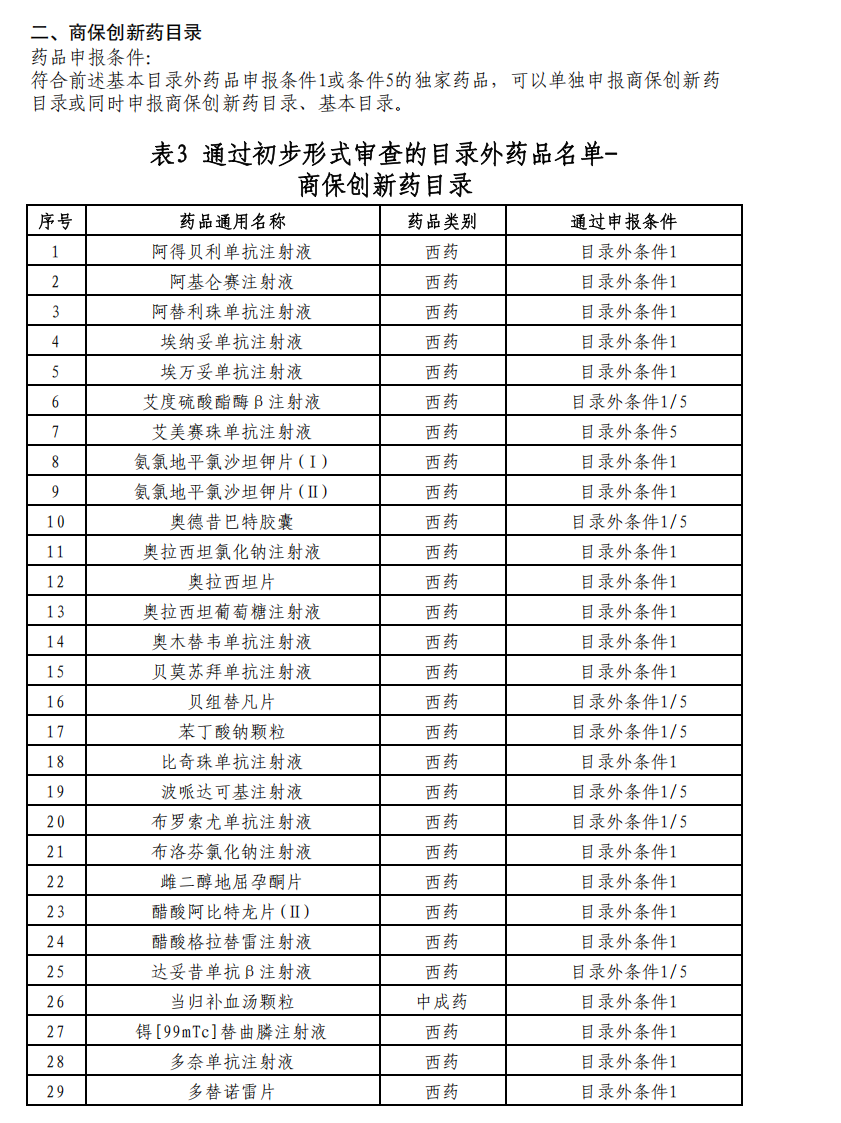
Core Insights - The National Healthcare Security Administration (NHSA) announced the preliminary review results for the 2025 National Basic Medical Insurance, Maternity Insurance, and Work Injury Insurance drug catalog, revealing 534 drugs passed the review, with 121 drugs included in the commercial insurance innovative drug catalog [1][2] - This year marks the first implementation of a "dual-track system" for the drug catalog, focusing on basic insurance for essential drugs and providing supplementary coverage for "exclusive new drugs" or "rare disease medications" through commercial insurance [1][2] - The number of drugs passing the preliminary review has significantly increased compared to last year, with the number of drug names outside the catalog rising from 249 in 2024 to 310 [1] Drug Categories and Highlights - Over 98% of the drugs in the announced list are Western medicines, with only two traditional Chinese medicines included [3] - CAR-T therapies, which are at the forefront of cancer treatment, have gained attention, with several priced over 1 million yuan per injection, including products from Fosun Kite, Kintor Pharmaceutical, and Reindeer Biologics [1][2] - Notable entries in the list include innovative drugs from domestic companies, such as Shanghai Xinnian Pharmaceutical's hemophilia B gene therapy and Hengrui Medicine's PD-1 monoclonal antibody [3] Review and Approval Process - Passing the preliminary review does not guarantee inclusion in the basic medical insurance or commercial insurance innovative drug catalog, as further expert evaluations and price negotiations are required [3] - Approximately 80 drug varieties passed the preliminary review for both the basic medical insurance and commercial insurance catalogs, indicating potential for simultaneous negotiations [3]
多款百万一针抗癌药,入围商保创新药目录初审名单
21世纪经济报道· 2025-08-13 07:18
Core Insights - The article discusses the announcement by the National Medical Insurance Administration regarding the preliminary review of 534 drugs for the 2025 National Basic Medical Insurance, Maternity Insurance, and Work Injury Insurance drug catalog, along with 121 drugs included in the commercial insurance innovative drug catalog [1][2]. Group 1: Drug Catalog Adjustments - The 2025 drug catalog adjustments implement a "dual-track system," focusing on basic insurance for essential drugs while providing supplementary coverage for "exclusive new drugs" or "rare disease medications" through the commercial insurance innovative drug catalog [1][2]. - A total of 718 applications were received for the basic medical insurance catalog, with 534 approved, while 141 applications were received for the commercial insurance innovative drug catalog, with 121 approved [1][2]. Group 2: CAR-T Therapies - CAR-T therapies, which are personalized cancer treatments, have gained attention due to their high costs, with prices exceeding 1 million yuan per injection for several products [1][2]. - The article highlights that CAR-T therapies are among the first specialty drugs to be included in commercial insurance coverage, with various regions like Jiangsu and Shanghai incorporating them into their insurance plans [2]. Group 3: Drug Composition and Approval Process - The approved drugs are predominantly Western medicines, with over 98% of the list, and only two traditional Chinese medicines included [3]. - The approval of drugs through preliminary review does not guarantee inclusion in the basic medical insurance or commercial insurance catalogs, as further expert evaluations and price negotiations are required [3]. Group 4: Pricing and Negotiation - Approximately 80 drug varieties passed the preliminary review for both the basic medical insurance and commercial insurance catalogs, indicating potential for simultaneous negotiations [3]. - Drugs that exceed the basic insurance pricing limits may still qualify for the next evaluation stage, but their final inclusion depends on successful negotiations [3].