
天合光能

Search documents
后退税时代,组件龙头谁在“裸泳”?
Xin Lang Cai Jing· 2026-01-15 14:09
Core Viewpoint - The photovoltaic industry is facing a critical turning point in 2026, with major companies like JA Solar, JinkoSolar, and Trina Solar forecasting significant losses for 2025, compounded by the cancellation of export tax rebates that previously supported their profits and operational cash flow [1][11]. Group 1: Financial Impact - The cancellation of export tax rebates is expected to severely impact cash flow for photovoltaic companies, which had relied on these rebates as a stable source of income [2][12]. - In the first three quarters of 2025, the total tax refunds for the four leading module manufacturers approached 10 billion yuan, while the top ten companies received over 20 billion yuan in tax refunds for the 2024 fiscal year [1][12]. - The sudden loss of this crucial cash flow source is likened to cutting off an external lifeline during a time of industry "blood loss," forcing companies to rely more on their operational cash generation capabilities [2][12]. Group 2: Cash Flow Analysis - A clear differentiation in cash flow status among photovoltaic companies has emerged, with some companies struggling significantly as the industry faces a downturn [3][13]. - The cash flow rankings of listed photovoltaic companies over the past five years show that Tongwei Co. leads with a total cash generation of 860 million yuan, while companies like LONGi Green Energy and Aiko Solar are also notable [4][14]. - The abrupt policy change regarding export tax rebates has had the most severe impact on companies with already thin profit margins, necessitating a restructuring of financial management strategies [4][14]. Group 3: Market Dynamics - In an effort to capitalize on the last window of opportunity, major module manufacturers are stockpiling inventory while also clearing existing stock, leading to market chaos with contract breaches and price hikes becoming common [5][15]. - Current market prices for photovoltaic modules show fluctuations, with companies like JinkoSolar and Trina Solar adjusting their prices upward, indicating a volatile market environment [7][17]. - Companies are urged to maintain their reputations while seizing opportunities for recovery, emphasizing the importance of balancing profit-seeking with brand integrity [7][17]. Group 4: Strategic Responses - Leading companies are adopting various strategies to survive the cash flow challenges, such as technological innovation and product differentiation [9][19]. - LONGi and Aiko are promoting BC battery technology to achieve higher premiums in overseas markets, while JA Solar is implementing a "three-pole management system" to reduce production costs [9][19]. - Trina Solar is collaborating with financial institutions to utilize accounts receivable for cash flow supplementation, and JinkoSolar is launching new TOPCon products to enhance market competitiveness [9][19].




光伏行业预亏警报大响,这些龙头连亏两年成定局
第一财经· 2026-01-15 13:23
Core Viewpoint - The photovoltaic industry is currently in a downward cycle, with major listed companies facing significant losses in their 2025 performance forecasts due to overcapacity, intense price competition, and a complex overseas trade environment [3][4]. Group 1: Industry Performance - Major photovoltaic companies such as Daqo New Energy, JinkoSolar, and Trina Solar have announced expected losses for 2025, indicating ongoing pressure in the industry [4][5]. - Daqo New Energy reported a net profit loss of 1.073 billion yuan for the first three quarters of the previous year, and the forecast indicates consecutive losses for 2024 and 2025 [5]. - JinkoSolar and Trina Solar are also expected to continue facing losses in 2025, with net profit losses of 3.92 billion yuan and 4.2 billion yuan respectively for the first three quarters of 2025 [6]. Group 2: Market Dynamics - The photovoltaic industry is experiencing a dual challenge of overcapacity and aggressive price wars, leading to compressed profit margins [11]. - The market is currently in a state of supply-demand imbalance, with the supply side undergoing significant reductions while demand growth remains uncertain [8][10]. - The recent rebound in polysilicon prices, which increased by over 50% from approximately 34,400 yuan/ton to 53,200 yuan/ton, has helped to narrow losses for Daqo New Energy [5]. Group 3: Future Outlook - Analysts predict that the photovoltaic industry will continue to face overcapacity issues and price wars in 2025, with a potential restructuring of supply and demand expected in 2026 [11]. - The implementation of export tax rebates for photovoltaic products may provide short-term support, but the actual demand impact remains limited [10]. - The rising costs of production due to high silver prices and polysilicon price increases are expected to continue pressuring the profitability of battery and module manufacturers [10][11].


光伏行业预亏警报大响,这些龙头连亏两年成定局
Di Yi Cai Jing· 2026-01-15 12:08
Core Viewpoint - The photovoltaic industry is currently experiencing a downturn, with major companies reporting significant losses due to overcapacity, intense price competition, and a complex overseas trade environment [1][2]. Group 1: Company Performance - Major photovoltaic companies such as Daqo New Energy, JinkoSolar, and Trina Solar have announced expected losses for 2025, indicating a prolonged period of financial strain [1][2]. - Daqo New Energy reported a net profit loss of 1.073 billion yuan for the first three quarters of the previous year, and it is expected to face consecutive losses in 2024 and 2025 [2]. - JinkoSolar and Trina Solar are projected to incur net losses of 3.92 billion yuan and 4.2 billion yuan respectively for the first three quarters of 2025, with no significant recovery expected in their annual performance [3]. Group 2: Market Dynamics - The photovoltaic industry is facing a dual challenge of overcapacity and price wars, leading to a significant decline in stock prices for leading companies [4]. - The market is currently in a state of supply-demand imbalance, with the supply side undergoing significant contraction while demand growth remains uncertain [4][6]. - The recent rebound in polysilicon prices, driven by production cuts, has helped narrow losses for some companies, but the overall demand remains weak [2][6]. Group 3: Future Outlook - Analysts predict that the overcapacity issue will persist into 2025, with ongoing price wars continuing to pressure profit margins [7]. - The implementation of export tax rebates may temporarily boost demand, but the long-term effects on the market remain uncertain [5][6]. - The industry is expected to undergo a transformation in 2026, with potential recovery in pricing and profitability as supply-demand dynamics are reshaped [7].
【安泰科】单晶硅片周评-上下游僵持博弈 硅片价格持稳运行(2026年1月15日)
中国有色金属工业协会硅业分会· 2026-01-15 09:56
Core Viewpoint - The silicon wafer prices remain stable this week, with downstream battery prices continuing to rise, indicating a mixed market sentiment influenced by various factors [1][2]. Group 1: Silicon Wafer Prices - The average transaction price for N-type G10L monocrystalline silicon wafers (182*183.75mm/130μm) is 1.31 yuan per piece, unchanged from last week [1]. - The average transaction price for N-type G12R monocrystalline silicon wafers (182*210mm/130μm) is 1.42 yuan per piece, also stable compared to the previous week [1]. - The average transaction price for N-type G12 monocrystalline silicon wafers (210*210mm/130μm) is 1.66 yuan per piece, remaining flat week-on-week [1]. Group 2: Market Dynamics - The silicon wafer market is experiencing weak demand, with no significant price fluctuations due to multiple factors, including rising silver prices and weak terminal installation demand [2]. - The operating rates of silicon wafer manufacturers have continued to decline, with major companies operating at 50% and 48%, while integrated companies operate between 50%-70% [2]. - The upstream silicon material prices remain firm, providing some cost support, but the overall market sentiment is characterized by a standoff between upstream and downstream players [2]. Group 3: Future Outlook - Future market conditions may improve due to export tax rebate policies, which are expected to enhance overseas demand in the first quarter [2]. - Despite potential improvements, the overall terminal installation demand remains weak, and battery manufacturers are pushing for lower silicon wafer prices, suggesting a continued weak market trend in the short term [2].
中国高端制造闪耀2026阿布扎比能源展,三大领军企业引领绿色能源出海
Sou Hu Cai Jing· 2026-01-15 09:52
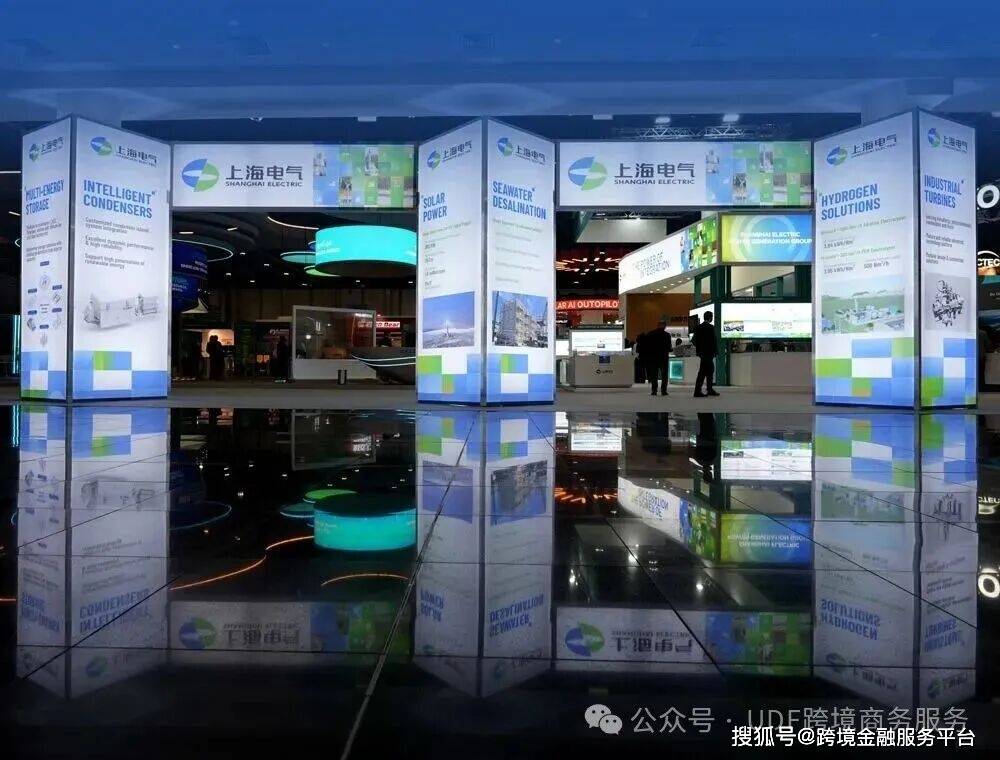
Group 1 - The 18th World Future Energy Summit (WFES 2026) was held in Abu Dhabi, attracting 424 exhibitors globally, with a strong presence from Chinese companies in the clean energy sector [1] - Shanghai Electric showcased its capabilities as a "zero-carbon comprehensive smart energy service provider," presenting integrated solutions for the Middle East market, including a 700MW solar thermal and 250MW photovoltaic project [3] - BYD Energy displayed its self-developed products, including the 2710Ah blade battery system and a 12.5GWh grid-side energy storage project, which is currently the largest in the world [5] Group 2 - China National Railway Group's subsidiary, CRRC Times Electric, presented its new energy solutions, including a modular 8.8MW solar-storage inverter designed for desert conditions and a green hydrogen power system [7] - Numerous other Chinese companies, such as LONGi Green Energy and Trina Solar, participated, showcasing a wide range of products and securing cooperation agreements with clients from Saudi Arabia, UAE, and Yemen [8] - The event highlighted a shift in Chinese renewable energy companies from exporting single products to providing integrated systems and local manufacturing, indicating a new phase in the industry [9]
光伏退税取消引发"抢货潮"!业内: 都在备货,个别厂家发货涨至8毛/W
Hua Xia Shi Bao· 2026-01-15 09:17
Core Viewpoint - The Ministry of Finance and the State Taxation Administration announced the cancellation of the export VAT rebate for photovoltaic products starting April 1, 2026, marking the end of a support policy that has been in place since 2013 [1][2]. Group 1: Policy Changes - The export VAT rebate for battery products will be reduced from 9% to 6% during a buffer period from April 1, 2026, to December 31, 2026, before being completely eliminated on January 1, 2027 [1]. - The cancellation of the export VAT rebate will affect four specific product categories, including silicon wafers and photovoltaic cells, impacting the entire supply chain from silicon to modules [2]. Group 2: Market Reactions - Following the announcement, there has been a surge in demand for low-priced photovoltaic modules, leading to price increases both domestically and internationally [4]. - The domestic module price has risen to 0.85-0.89 yuan/W, which is 20% higher than the current transaction price, indicating a strong market reaction to the policy change [4]. - Export prices for photovoltaic components in Europe have also shown an upward trend, with FOB prices reaching 9.8-11 euro cents [4]. Group 3: Industry Implications - The cancellation of the export VAT rebate is expected to drive up prices in the photovoltaic sector, potentially accelerating the elimination of low-cost competition and pushing companies towards higher value and better technology [7]. - The shift from a supply-demand logic to a cost-driven logic in the photovoltaic industry is evident, with rising raw material costs contributing to the price increases [5][6]. - Companies are adapting by adjusting production capacity based on orders, and there is an expectation of increased communication with overseas distributors regarding the new policy [7].


中金:宏观叙事下商业航天板块热度高 持续看好相关制造产业端落地催化
智通财经网· 2026-01-15 08:44
Group 1 - The commercial aerospace sector is experiencing heightened interest due to accelerated domestic policies and technological advancements, leading to short-term catalysts in commercial aerospace and space photovoltaics [1] - China has submitted an application for an additional 203,000 satellites to the International Telecommunication Union (ITU), indicating intensified competition for low Earth orbit satellite resources [1] - The long-term demand for space computing power is expected to expand as the global low Earth orbit constellation enters a phase of dense networking [1] Group 2 - JunDa Co., Ltd. has signed an investment agreement to acquire a 16.67% stake in Xingyi Xinneng for 30 million yuan, which will facilitate the establishment of a joint venture for the production of CPI films and their integration with crystalline silicon battery products [2] - The CPI film is anticipated to become one of the flexible packaging solutions for solar wings due to its high transparency, high-temperature resistance, and good mechanical strength [2] Group 3 - Other crystalline silicon manufacturers are also exploring applications for space perovskite, including JinkoSolar and Trina Solar, which are advancing their research and development in this area [3] - JinkoSolar has signed a strategic cooperation agreement with an AI and robotics platform to establish a joint venture for high-throughput perovskite tandem solar cell development [3] - Trina Solar has achieved a world record for the power output of a large-area perovskite/crystalline silicon tandem module, indicating significant advancements in technology [3]

锚定太空光伏,天合光能再刷世界纪录
中国能源报· 2026-01-15 08:05
Core Viewpoint - The article highlights the significant advancements in photovoltaic technology by Trina Solar, particularly in space photovoltaic applications, establishing new world records and positioning itself as a leader in the industry [1][5]. Group 1: Technological Advancements - Trina Solar's photovoltaic laboratory achieved a world record with a power output of 886 W for a 3.1㎡ perovskite/silicon tandem module [1]. - The laboratory has made breakthroughs in the efficiency of perovskite/P-type heterojunction (HJT) tandem cells, contributing to a total of 38 world records set by Trina Solar [1][6]. - The laboratory's HJT cells have reached a conversion efficiency of 27.08%, the highest in the industry, while the perovskite/silicon tandem cells have achieved efficiencies exceeding 35% [6]. Group 2: Market Potential and Strategic Positioning - The global space photovoltaic market is projected to reach a trillion-dollar scale by 2030, driven by the increasing demand for energy in space applications [3]. - Trina Solar is strategically positioned in the space photovoltaic sector, having conducted research on silicon solar cells in space environments for over a decade, which has provided valuable data and experience [5]. - The company has filed 698 patent applications in the perovskite and tandem cell fields, ranking first globally, and has secured exclusive patent licensing from Oxford PV in China, establishing a competitive advantage [8]. Group 3: Future Outlook - Trina Solar aims to continue its leadership in photovoltaic technology by focusing on a comprehensive technology matrix that includes various solar cell types, enabling customized green energy solutions for different applications [8]. - The company's chairman emphasized the commitment to advancing energy solutions for space data centers and ensuring energy security in the context of space computing [8].

天合储能再签拉美GWh级大单
鑫椤锂电· 2026-01-15 06:10
Group 1 - The core viewpoint of the article highlights Trina Storage's significant business progress in the Latin American market, having signed battery energy storage system (BESS) supply contracts with T-Power and YPF Luz, totaling a capacity of 1.203 GWh [1] - Prior to this, Trina Storage had already delivered a 1.2 GWh storage project in the Latin American region, indicating a strong foothold in the market [1] - The new collaboration includes projects in Chile (722 MWh) and Argentina (481 MWh), further solidifying Trina Storage's strategic position as a core supplier of large-scale storage solutions [1]
固态+锂电行情共振,科创新能源ETF(588830)涨超1.2%
Xin Lang Cai Jing· 2026-01-15 02:47
Group 1 - The meeting on January 13 emphasized enhancing the self-controllable capabilities of the industrial and supply chains, implementing a new round of high-quality development actions for key industrial chains, and accelerating breakthroughs in technologies such as all-solid-state batteries and advanced autonomous driving [1] - Major lithium battery manufacturers are starting large-scale equipment bidding, with some equipment manufacturers reporting hundreds of GWh in orders from leading companies. It is estimated that new lithium battery production capacity will exceed 1 TWh by 2026, with many equipment manufacturers expected to achieve record-high new orders [1] Group 2 - In the solid-state battery sector, the first national standard for solid-state batteries has entered the consultation phase, and a Finnish company, Donut Lab, announced the launch of the world's first all-solid-state battery at CES, ready for OEM mass production [2] - The new lithium battery cycle has begun, with the entire industry chain investing over 100 billion in capital expenditures. Major manufacturers are securing substantial orders for materials and new production capacity, with expectations of demand growth of "2 times in 3 years, 3 times in 5 years" [2] Group 3 - The Science and Technology Innovation Board New Energy Index (000692) has shown strong performance, with significant increases in stocks such as Shenghui Technology (up 10.19%), Xiamen Tungsten (up 5.64%), and others [2] - The index consists of 50 large-cap stocks from the photovoltaic, wind power, and new energy vehicle sectors, reflecting the overall performance of representative new energy companies in the market [3] - As of December 31, 2025, the top ten weighted stocks in the index account for 46.84% of the total, including companies like JinkoSolar, First Solar, and Trina Solar [3]