春秋航空

Search documents
中国航材与春秋航空签署战略合作协议 共筑高效航材保障体系
Zhong Guo Min Hang Wang· 2025-11-07 04:56
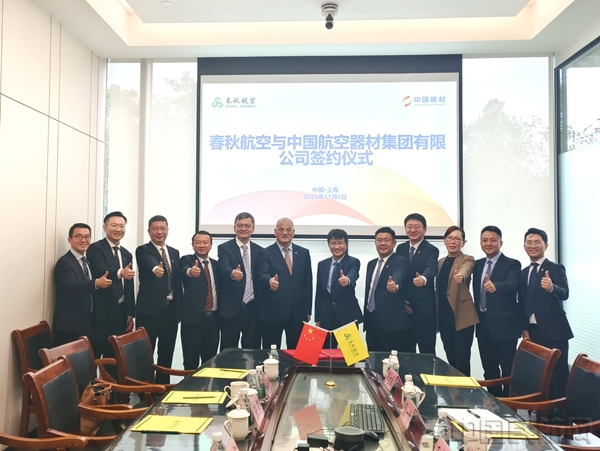
Core Viewpoint - The strategic cooperation agreement between China Aviation Supplies Group and Spring Airlines aims to enhance resource sharing and operational efficiency in the aviation materials sector [1][3]. Group 1: Strategic Cooperation - The signing ceremony took place in Shanghai, attended by key executives from both companies, including the chairman of China Aviation Supplies Group and the president of Spring Airlines [1]. - The agreement focuses on multiple areas such as material sharing, centralized procurement, smart aviation services, and maintenance support [3]. Group 2: Objectives and Future Directions - This collaboration is seen as a significant step towards innovating the aviation material support model and improving supply chain resilience and operational efficiency [5]. - During the signing, both parties engaged in practical discussions regarding the implementation of cooperation projects and future expansion directions, reaching several consensus points [5].


富国旅游ETF居跌幅榜第三,三季度份额增长近六成
Sou Hu Cai Jing· 2025-11-07 03:12
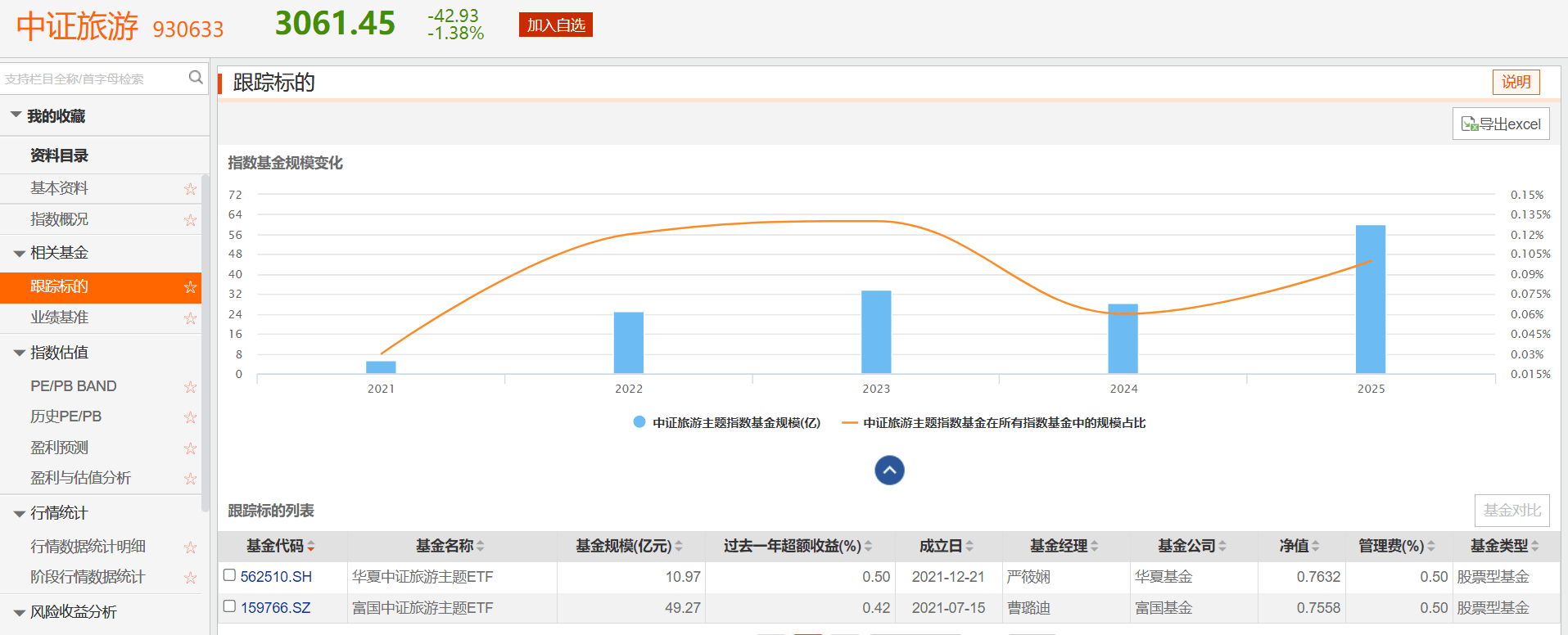
Core Viewpoint - The performance of the two ETFs tracking the China Tourism Index shows a significant difference in growth and market dynamics, with the FuGuo ETF leading in scale and liquidity, potentially benefiting from institutional and arbitrage investments [1][3]. Group 1: ETF Performance - On November 6, FuGuo China Tourism Theme ETF (159766) fell by 1.45%, while Huaxia China Tourism ETF (562510) decreased by 1.44%, both tracking the same index [1]. - For Q3 2025, FuGuo Tourism ETF's fund shares reached 6.86 billion, with a quarterly net increase of approximately 2.49 billion, representing a growth of about 57%, and a net asset value of 4.927 billion [1]. - Huaxia Tourism ETF ended the quarter with 1.51 billion shares, a net increase of 480 million, and a net value of 1.097 billion [1]. Group 2: Performance Comparison - In Q3, Huaxia Tourism ETF's net value grew by 6.35%, slightly outperforming the China Tourism Index's growth of 6.03%, with a positive deviation of about 0.32 percentage points [3]. - FuGuo Tourism ETF's growth was 6.18%, with a deviation of approximately 0.15 percentage points [3]. - Since its inception in 2021, FuGuo has experienced a cumulative decline of 28.20%, which is better than the index's decline of 29.24% [3]. Group 3: Market Dynamics - Both ETFs have identical top ten holdings, including major companies like China Duty Free, Shanghai Airport, and China Eastern Airlines, indicating a concentrated industry characteristic [3]. - The "head effect" in the ETF market is strengthening, where larger products attract more liquidity and institutional interest, potentially leading to a "Matthew effect" favoring larger funds like FuGuo [3].
11月7日投资提示:翻车
集思录· 2025-11-06 14:37
Group 1 - A new IPO subscription rule has led to wealthy individuals waking up early to compete for shares, indicating a highly competitive environment [1] - Several brokerage firms attempted to subscribe before 9:15 AM but faced challenges, highlighting the intense competition in the market [1] Group 2 - New Hope plans to establish a new rural development company in collaboration with two national-level funds [3] - Recent announcements regarding convertible bonds include the non-strong redemption of Fenggong Convertible Bond [4] - The North Exchange has new IPO listings, and several companies are in the process of subscription [3] Group 3 - Key data on convertible bonds includes various bonds with their current prices, redemption prices, last trading dates, and conversion values [6][8] - Specific convertible bonds such as Chunqiu Convertible Bond and Sheng24 Convertible Bond have been detailed with their respective financial metrics [6][8]

免税店概念下跌2.28%,主力资金净流出26股
Zheng Quan Shi Bao Wang· 2025-11-06 10:09
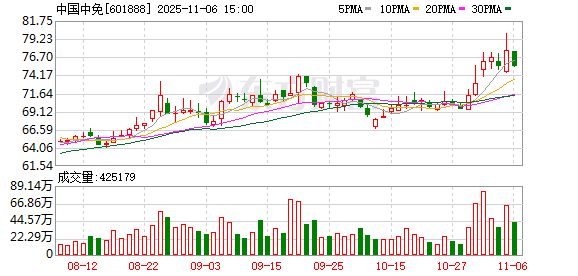
Group 1 - The duty-free store concept declined by 2.28%, ranking among the top declines in the concept sector, with major declines seen in companies like Hainan Development and China Duty Free Group [2][3] - Among the duty-free store concept stocks, four stocks saw price increases, with Tibet Summit rising by 2.12%, Spring Airlines by 0.47%, and Bailian Group by 0.34% [2][3] - The duty-free store sector experienced a net outflow of 1.68 billion yuan in capital, with 26 stocks seeing net outflows, and six stocks experiencing outflows exceeding 100 million yuan [3][4] Group 2 - The top net outflow stock was Hainan Development, with a net outflow of 328.29 million yuan, followed by China Duty Free Group with 310.99 million yuan and Caesar Travel with 228.99 million yuan [3][4] - Other companies in the duty-free store concept that faced significant capital outflows include Hainan Airport, Haikou Group, and Lingnan Holdings, with respective outflows of 133.28 million yuan, 115.68 million yuan, and 62.55 million yuan [4] - Conversely, the stocks with the highest net inflows included Tibet Summit, Rizhao Port, and Bailian Group, with inflows of 30.61 million yuan, 5.83 million yuan, and 5.41 million yuan respectively [3][4]




东兴证券:航空板块业绩有一定好转 短期关注Q4边际改善
智通财经网· 2025-11-06 09:07
Core Viewpoint - The aviation industry, particularly the three major airlines, has shown significant improvement in profitability and cash flow in Q3 2025 compared to the same period in 2024, driven by favorable oil prices and effective fare management [1][5]. Group 1: Financial Performance - In Q3 2025, the three major airlines reported a total net profit of 10.27 billion, an increase from 9.19 billion in Q3 2024 [1]. - For the first three quarters of 2025, the cumulative net profit of the three major airlines reached 4.47 billion, a significant improvement from a net loss of 0.68 billion in the same period last year [1]. - The operating net cash flow for Q3 2025 totaled 50.61 billion, significantly higher than 39.89 billion in Q3 2024, with a cumulative cash flow of 95.33 billion for the first three quarters, surpassing 83.98 billion in 2024 [1]. Group 2: Domestic Routes - The capacity growth for major airlines on domestic routes has been notably low, with year-on-year growth rates of 2.7%, 1.8%, and 1.6% for the months of July to September [2]. - The passenger load factor for major airlines in Q3 showed a lower year-on-year increase compared to Q1 and Q2, although there was a recovery in September [2]. - Airlines are prioritizing maintaining high load factors over increasing them further during peak seasons, as the revenue from fare increases is more beneficial [2]. Group 3: International Routes - The growth rate of capacity for international routes has significantly slowed, with a stable operational state being established [3]. - The recovery rate for flights to Thailand remains low, while routes to Japan and South Korea have shown higher recovery levels [3]. - The international passenger load factor has experienced reduced seasonal volatility compared to the previous year, indicating a gradual resolution of capacity surplus issues [3]. Group 4: Aircraft Introduction - The three major airlines are on track to meet their aircraft introduction plans, with 118 aircraft added in the first three quarters, accounting for 61% of the annual target [4]. - The actual number of aircraft retired by September was 47, which is 59% of the planned retirements for the year, indicating a balanced approach to fleet management [4]. - The net increase in aircraft for the three major airlines is expected to be around 4% for the year, reflecting a recovery from previous years' lower-than-planned introductions [4]. Group 5: Investment Outlook - The aviation sector has underperformed compared to the broader market since the beginning of 2025, but there are signs of recovery as the industry enters Q4 [5]. - The combination of improving fundamentals, low oil prices, and effective fare management is expected to enhance market expectations for Q4 [5]. - The three major airlines are positioned near historical average market valuations, with potential for significant margin improvement in Q4 compared to the previous year's substantial losses [5].


航空机场板块11月6日跌0.13%,海航控股领跌,主力资金净流出3.69亿元
Zheng Xing Xing Ye Ri Bao· 2025-11-06 08:51
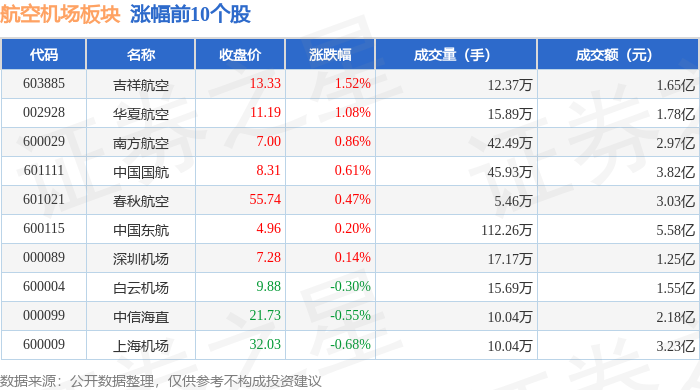
Core Insights - The aviation and airport sector experienced a slight decline of 0.13% on November 6, with HNA Holding leading the drop [1][2] - The Shanghai Composite Index closed at 4007.76, up 0.97%, while the Shenzhen Component Index closed at 13452.42, up 1.73% [1] Stock Performance - Key stocks in the aviation sector showed mixed results, with the following notable performances: - China Southern Airlines (7.00, +0.86%, 424,900 shares, 297 million CNY) - China Eastern Airlines (4.96, +0.20%, 1,122,600 shares, 558 million CNY) - HNA Holding (1.80, -3.74%, 10,532,800 shares, 1.918 billion CNY) [1][2] Capital Flow - The aviation and airport sector saw a net outflow of 369 million CNY from institutional investors, while retail investors contributed a net inflow of 200 million CNY [2][3] - The following stocks had significant capital flows: - China Southern Airlines: -32.63 million CNY from institutional investors, +3.14 million CNY from retail investors - HNA Holding: -38.95 million CNY from institutional investors, +12.38 million CNY from retail investors [3]





航空业三季报综述:客座率维持较高水平,燃油成本下降利好航司业绩
Dongxing Securities· 2025-11-06 07:20
Investment Rating - The report maintains a "Positive" investment rating for the transportation industry, indicating an expectation of performance that exceeds the market benchmark by more than 5% [2]. Core Insights - The airline sector has shown improvement since Q2 2025, with the three major airlines reporting a combined net profit of 10.27 billion yuan in Q3, up from 9.19 billion yuan in Q3 2024. For the first three quarters, the net profit totaled 4.47 billion yuan, a significant recovery from a loss of 680 million yuan in the same period last year [3][14]. - The operating cash flow for the three major airlines in Q3 reached 50.61 billion yuan, significantly higher than 39.89 billion yuan in the same quarter of 2024. Cumulatively, the cash flow for the first three quarters was 95.33 billion yuan, surpassing 83.98 billion yuan from the previous year [3][16]. - The improvement in airline performance is attributed to lower fuel costs and effective ticket pricing strategies, which have helped maintain high load factors despite a competitive environment [19][23]. Summary by Sections 1. Performance Overview - The airline sector's performance has improved, with high load factors and reduced fuel costs benefiting airline profitability. The three major airlines reported a combined net profit of 10.27 billion yuan in Q3 2025, an increase from 9.19 billion yuan in Q3 2024. For the first three quarters, the net profit was 4.47 billion yuan, a significant recovery from a loss of 680 million yuan in the previous year [3][14]. 2. Domestic Routes - Domestic airlines, particularly the major carriers, have shown restrained capacity growth during peak seasons, with growth rates of 2.7%, 1.8%, and 1.6% from July to September. The overall load factor for major airlines in Q3 saw a lower year-on-year increase compared to Q1 and Q2, although September showed a recovery [4][36]. 3. International Routes - The capacity growth for international routes has stabilized, with the recovery of routes to Japan and South Korea being more pronounced than to Thailand. The recovery rate for U.S. routes remains below 30%. The international operations of major airlines are gradually stabilizing, although some routes still face oversupply issues [5][42]. 4. Aircraft Introductions - The three major airlines are on track to meet their aircraft introduction plans, with 118 aircraft added in the first three quarters, representing 61% of the annual target. The net increase in fleet size is expected to be around 4%, higher than in the previous two years [6][60]. 5. Valuation Levels and Investment Recommendations - The airline sector has underperformed the market since the beginning of 2025, but there is an expectation of a rebound in Q4. The sector's fundamentals have gradually improved, supported by low oil prices and a reduction in price competition. The market is anticipated to focus on marginal improvements in Q4, with the potential for significant loss reduction compared to the previous year [7][71].

10月份超九成债基上涨 工银可转债债券涨4.15%
Zhong Guo Jing Ji Wang· 2025-11-05 23:08
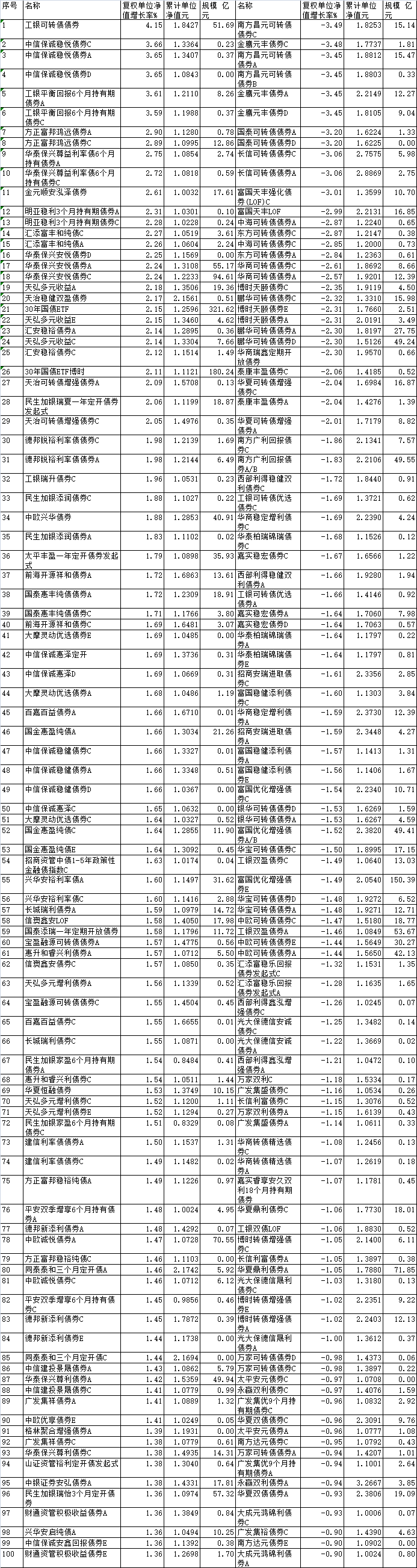
Core Insights - In October, 6837 out of 7419 comparable bond funds achieved positive performance, representing 92% of the total [1] - The top-performing fund, ICBC Convertible Bond Fund, recorded a return of 4.15%, the only fund to exceed 4% in October [1] - The fund's asset allocation includes 61% in bonds, with 80% of that in convertible bonds, and 37% in equities, primarily in undervalued airline and brokerage stocks [1] Fund Performance - ICBC Balanced Return 6-Month Holding Period Bond A and C rose by 3.61% and 3.59% respectively in October, with major holdings in government and financial bonds [2] - Other notable performers include CITIC Prudential Stable Bond C (3.66%), CITIC Prudential Stable Bond A (3.65%), and several others with returns ranging from 2.72% to 2.90% [2] - Conversely, 11 bond funds experienced declines exceeding 3%, with Jin Ying Yuan Feng Bond A and C falling by 3.45% and 3.48% respectively [2] Asset Allocation - Jin Ying Yuan Feng's bond assets account for nearly 80%, primarily in convertible bonds, with top holdings in various convertible bonds and stocks in technology and data sectors [3] - Other funds like Zhonghai Convertible Bond A and Dongfang Convertible Bond C also reported declines, with losses around 2.84% to 2.87% [3] Fund Management - The current manager of ICBC Convertible Bond Fund, Huang Shiyuan, has been with the firm since 2013 and has been managing the fund since September 2021 [1] - The management team for Dongfang Convertible Bond includes experienced professionals with backgrounds in fixed income research and investment management [3]
国际化更进一步!人民币,大消息
Zhong Guo Ji Jin Bao· 2025-11-05 22:33
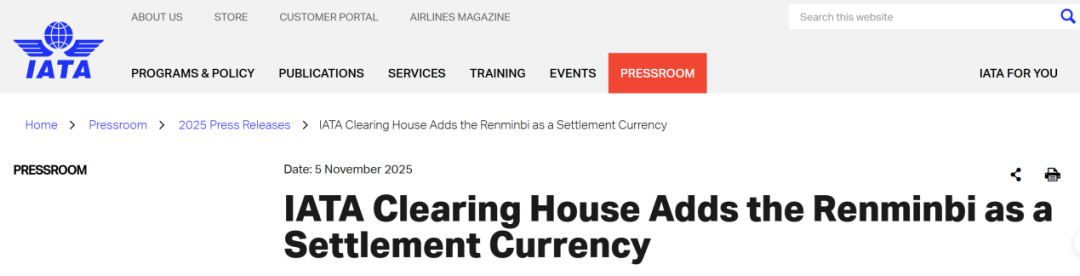
Core Points - The International Air Transport Association (IATA) announced the addition of the Chinese Yuan (RMB) as a settlement currency for its Clearing House (ICH), set to launch in December 2025 after a trial run [1][3] - This new option is expected to significantly benefit airlines operating in China by reducing exchange rate risks, simplifying local supplier access, and enhancing cost efficiency [3][4] Group 1: Industry Impact - The introduction of RMB settlement is seen as a positive development for the Chinese aviation industry, with major airlines like China Southern Airlines and Xiamen Airlines set to pilot the program in November 2025 [4] - The announcement led to a rise in airline stocks, with China Southern Airlines and China National Aviation Holdings seeing increases of nearly 2% and over 5% respectively [4][5] Group 2: Financial Services and Market Response - IATA's Clearing House currently supports seven currencies, and the addition of RMB aims to enhance financial services for member airlines without incurring extra costs [3][7] - The market response to the new RMB settlement option has been positive, indicating strong demand for improved financial services in the aviation sector [7] Group 3: RMB Internationalization - The People's Bank of China (PBOC) highlighted the steady rise of the RMB's international status, noting it is now the largest currency for China's foreign receipts and the second-largest for trade financing globally [7][8] - The PBOC has established 32 effective swap agreements with central banks across major economies, covering key regions globally, with a total scale of approximately 4.5 trillion RMB [7]
人民币,大消息!
中国基金报· 2025-11-05 15:11
Core Viewpoint - The International Air Transport Association (IATA) has announced the addition of the Chinese Yuan (RMB) as a settlement currency in its clearing house, marking a significant step forward for RMB internationalization [1][2]. Group 1: RMB as a Settlement Currency - The RMB settlement will be available starting December 2025, following a trial run, providing significant benefits to airlines operating in China by reducing exchange rate risks and simplifying local supplier access [2]. - China Southern Airlines and Xiamen Airlines will be the first to pilot the RMB settlement in November 2025 [4]. - The introduction of RMB settlement is seen as a positive development for the Chinese aviation industry, facilitating faster settlements and lowering costs associated with multiple currency exchanges [4][7]. Group 2: Market Reaction - Following the announcement, airline stocks experienced a notable increase, with Southern Airlines and China National Aviation rising nearly 2%, and Huaxia Airlines increasing over 5% [5]. - The aviation index showed a slight increase of 0.63%, reflecting positive market sentiment towards the new RMB settlement option [6]. Group 3: IATA Clearing House Operations - The IATA Clearing House currently supports seven currencies and provides efficient settlement services for 581 airlines and related enterprises, with a projected settlement amount of $63.8 billion in 2024, including 33 airlines operating in China [6]. - IATA's senior vice president emphasized that the addition of RMB settlement is a crucial step in meeting the demand for cost-effective financial services from member airlines [7]. Group 4: RMB Internationalization - The People's Bank of China (PBOC) highlighted the steady rise of the RMB's international status, noting it is now the largest settlement currency for China's foreign trade and the second-largest trade financing currency globally [8]. - The PBOC has signed 32 effective swap agreements with central banks from various countries, covering major economies across six continents, amounting to approximately 4.5 trillion RMB [8]. - Future plans include building a self-controlled cross-border payment system for RMB and enhancing the efficiency of cross-border RMB clearing services [9].