
国家电网

Search documents
藏粤直流工程启动,两大央企南方电网和国家电网合作建设,国企共赢ETF(159719)投资机会受关注
Sou Hu Cai Jing· 2025-09-23 06:48
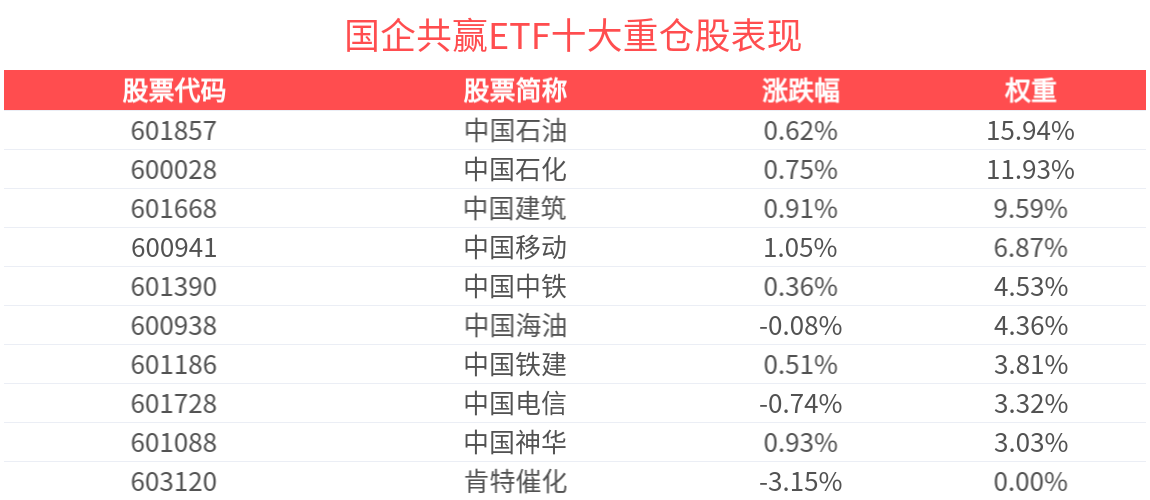
Group 1 - The core viewpoint of the news is the initiation of the construction of the "Tibet-Guangdong DC Project," which is the world's most advanced and largest clean energy direct current transmission project, with a total investment of approximately 53.2 billion yuan [1] - The project includes an additional investment of over 150 billion yuan for the supporting "water-wind-solar integrated" power generation base [1] - The project is a collaboration between two major state-owned enterprises, China Southern Power Grid and State Grid Corporation, which have jointly established the Guangdong Tibet-Guangdong DC Power Operation Co., Ltd. to manage the operation [1] Group 2 - As of September 22, 2025, the National Enterprise Win ETF (159719) has shown a cumulative increase of 2.05% over the past six months and a net value increase of 46.45% over the past three years, ranking 346 out of 1871 in the index stock fund category [2] - The ETF has a historical maximum monthly return of 14.61% since its inception, with the longest consecutive monthly increase lasting 7 months and a maximum increase of 24.70% [2] - The ETF closely tracks the FTSE China National Enterprises Open Win Index, which reflects the performance of Chinese state-owned enterprises listed in mainland China and Hong Kong, focusing on globalization and sustainable development [3]

两大央企合体,国运之战提速!2000亿超级工程正式启动
Sou Hu Cai Jing· 2025-09-23 02:48
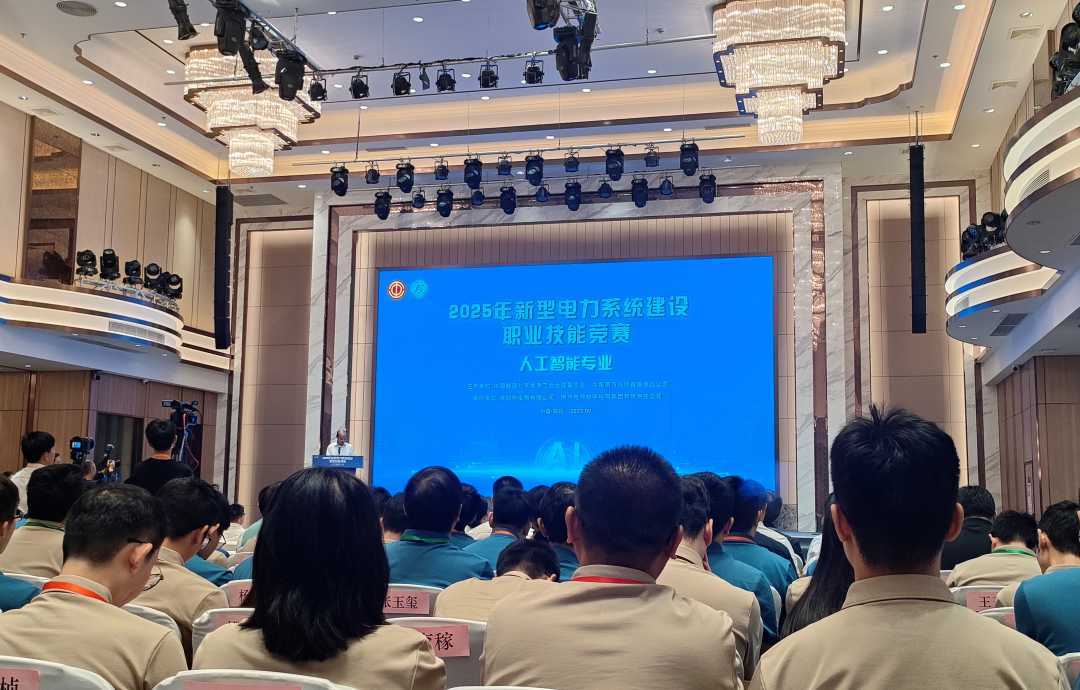
Core Viewpoint - The construction of the Tibet-Guangdong DC transmission project marks the initiation of the world's most advanced and largest clean energy direct current transmission project, with a total investment of approximately 53.2 billion yuan and an additional investment of over 150 billion yuan for supporting renewable energy bases [1] Group 1: Project Overview - The Tibet-Guangdong DC project is the first ultra-high voltage direct current transmission project that crosses China's three-tier geographical ladder, potentially serving as a benchmark for the western renewable energy industry [1] - The project will connect the largest energy consumption area, the Guangdong-Hong Kong-Macao Greater Bay Area, with Tibet, facilitating the transmission of over 43 billion kilowatt-hours of green electricity annually, which is equivalent to reducing coal consumption by approximately 12 million tons and cutting carbon dioxide emissions by about 33 million tons [7][1] Group 2: Renewable Energy Potential in Tibet - Tibet is recognized as China's largest province for green electricity potential, with a theoretical hydropower resource capacity of 20,136 MW, accounting for 29% of the national total, and a technical exploitable capacity of 11,000 MW, ranking second in the country [3] - The region has significant solar energy potential, with an average annual sunlight duration exceeding 1,500 hours, and certain areas around Lhasa reaching up to 3,400 hours [3] Group 3: Challenges and Solutions - The local energy consumption capacity in Tibet is low due to a small population of less than 4 million and limited industrial development, which hinders the utilization of its abundant energy resources [4] - The project will address technical and engineering challenges posed by the complex geographical conditions of China's three-tier terrain, including high altitudes and seismic zones [5][8] Group 4: Long-term Implications for AI Industry - The successful operation of the Tibet-Guangdong DC project is expected to significantly impact the AI industry in China, which is heavily reliant on stable and sufficient energy supply for data centers and supercomputing facilities [10][18] - The project will help alleviate the mismatch between energy supply and demand in eastern regions, where 70% of the data industry is concentrated, while western regions like Tibet have abundant renewable energy resources [16][18] Group 5: Future Development Strategies - The project will enable the development of a comprehensive clean energy strategy in Tibet, including the construction of large hydropower stations, solar power plants, and wind farms, while also extending the renewable energy industry chain [19][20][22] - Infrastructure improvements, such as transportation and communication networks, will be essential to support the energy development and attract related industries to the region [23][24]
新型电力系统建设人工智能职业技能竞赛在深圳举办
Sou Hu Cai Jing· 2025-09-22 12:56
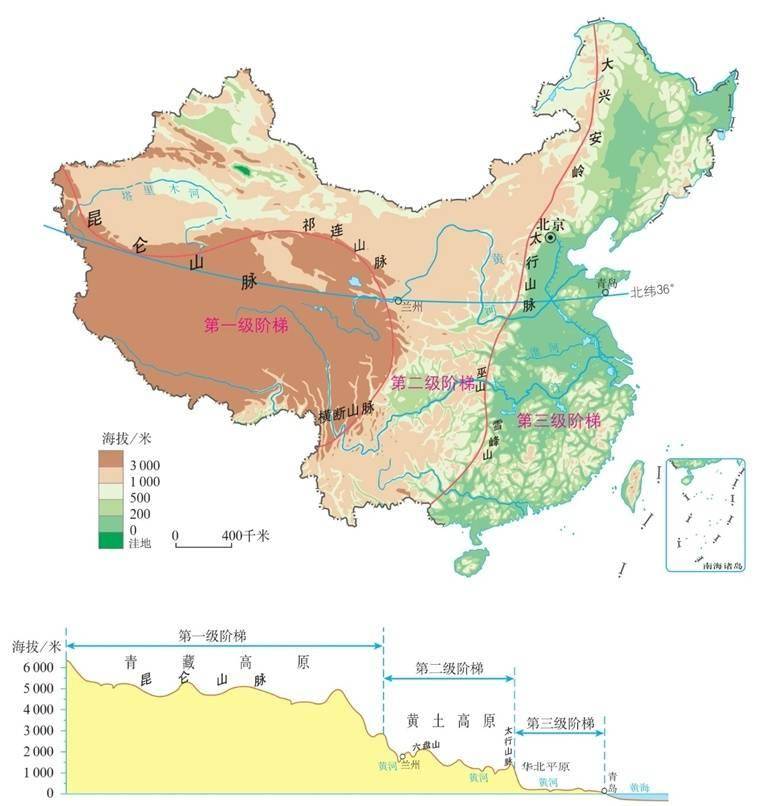
Group 1 - The 2025 New Power System Construction Vocational Skills Competition (Artificial Intelligence Specialty) was launched in Shenzhen, focusing on AI empowerment in the power industry [1][3] - The competition is co-hosted by the China Energy Chemical Geology Trade Union National Committee and China Southern Power Grid Co., Ltd., attracting 111 contestants from 37 teams across 13 major power companies [3][4] - The competition employs an innovative "industry-academia-research-application" integration model for problem design, emphasizing a combination of theory and practice in data analysis, model construction, and algorithm optimization [3][4] Group 2 - The competition features the first AI innovation platform in the power industry, developed by China Southern Power Grid, which integrates controllable computing chips and learning frameworks [3][4] - The event has established a "cloud training" ecosystem, providing online practical training for power system staff to enhance AI application skills [3][4] - China Southern Power Grid Shenzhen Power Supply Bureau has made significant advancements in AI technology application, including the launch of "digital employees" and the development of a comprehensive urban power grid model [4]

白云电器:中标国家电网9个分标项目,合计1.62亿元
Xin Lang Cai Jing· 2025-09-22 12:31
Group 1 - The company Baiyun Electric announced on September 22 that it, along with its subsidiary Guilin Power Capacitor, has been recommended as a winning candidate for nine sub-projects in the State Grid's 2025 procurement for the 60th batch, specifically for the fourth round of bidding for substation equipment (including cables) [1] - The total winning bid amount for these projects is 162 million yuan [1]

海兴电力:预中标约1.28亿元国家电网采购项目
Zheng Quan Shi Bao Wang· 2025-09-22 09:09
人民财讯9月22日电,海兴电力(603556)9月22日公告,国家电网9月19日公告了"国家电网有限公司 2025年第五十三批采购(营销项目第二次计量设备招标采购)推荐的中标候选人公示"。公司为该项目推 荐的中标候选人,预计中标总额约为1.28亿元。 ...

白云电器:中标合计1.62亿元国家电网2025年第六十批采购项目
Xin Lang Cai Jing· 2025-09-22 08:20
Core Viewpoint - The company, along with its subsidiary Guilin Capacitor, has won multiple bids in the State Grid's 2025 procurement project, indicating a significant business opportunity and potential revenue growth [1] Group 1: Bid Details - The company won a total of 9 sub-bids in the State Grid's 2025 sixth batch procurement project [1] - The total bid amount is 162 million yuan, which includes various electrical equipment such as switchgear, transformers, and capacitors [1] - These projects involve multiple provincial power companies, showcasing the company's reach and influence in the industry [1] Group 2: Financial Impact - The total bid amount represents 3.25% of the company's audited revenue for 2024 [1] - Although formal contracts have not yet been signed, successful execution of these contracts is expected to positively impact the company's operations and performance [1]
绿动中国五年路 能源答卷映初心——我国能源行业绘就降碳减污扩绿新图景
Zhong Guo Dian Li Bao· 2025-09-22 07:51
Group 1: Core Insights - China aims to peak carbon emissions before 2030 and achieve carbon neutrality by 2060, as announced by President Xi Jinping [1] - The country has built the world's largest and fastest-growing renewable energy system, with one-third of electricity consumption coming from green energy [1] Group 2: Energy Structure Transformation - China's energy structure is transitioning from coal-dominated to a diversified and cleaner model, with a multi-energy complementary system forming [3] - The share of coal-fired power generation capacity and output has decreased by 13.5 percentage points and 4.7 percentage points, respectively, over the past four years [3] Group 3: Renewable Energy Development - The share of renewable energy generation capacity has increased from 40% to around 60% in the past five years, with wind and solar power installations reaching unprecedented levels [4] - Significant advancements in power grid construction have been made, including the ±800 kV Hami-Chongqing HVDC project and the world's largest clean energy base transmission project [4] Group 4: Technological Innovation - Energy companies have focused on key areas to enhance core technology and equipment, achieving significant breakthroughs in self-developed technologies [6] - The installed capacity of new energy storage has grown nearly 30 times in five years, reaching approximately 95 million kilowatts [6] Group 5: Hydrogen Energy Development - The hydrogen energy industry is gradually maturing, with projects like the "electric-hydrogen coupling" bus system and green hydrogen production initiatives [7] - By 2024, China's hydrogen production and consumption scale is expected to exceed 36 million tons, leading the world [7] Group 6: Ecological and Energy Synergy - Energy companies are integrating energy development with ecological protection and rural revitalization, enhancing economic, environmental, and social benefits [9] - Projects like "photovoltaic + ecology" and clean heating initiatives have significantly improved local environments and community well-being [9] Group 7: Overall Progress - The energy sector has undergone a profound green transformation, demonstrating the principle that "lucid waters and lush mountains are invaluable assets" [10] - The commitment to continue advancing in the dual carbon era is evident, with a focus on innovation and practical actions [10]
电力现货市场建设迈入关键阶段
Jing Ji Ri Bao· 2025-09-20 22:33
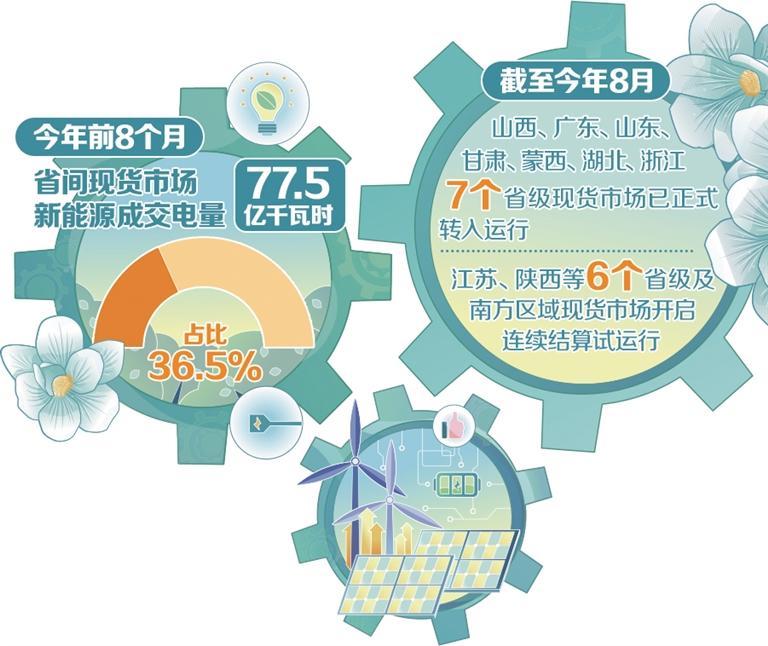
Core Insights - The construction of China's electricity spot market has entered a critical stage, with seven provincial-level markets officially operational as of August this year, and six others in trial runs, forming a basic framework of "unified market, two-level operation" [1] - The spot market serves as a core platform for electricity resource allocation and is crucial for ensuring energy security, with a trading system covering 26 provinces and over 6,000 power generation entities [1] - The spot market has begun to show its guiding role in the consumption of renewable energy, with inter-provincial market transactions of renewable energy reaching 7.75 billion kilowatt-hours, accounting for 36.5% of total transactions in the first eight months of this year [2] Group 1 - The rapid expansion of new energy installations and issues such as "abandoned light" during midday and supply pressure during peak hours indicate that the market mechanism needs further optimization to adapt to high proportions of renewable energy [1] - The inter-provincial spot market's maximum mutual assistance power reached 14.32 million kilowatts during peak summer electricity usage, effectively alleviating supply pressure in certain regions [1] - Zhejiang's spot market has successfully utilized market price signals to guide users in peak shaving, achieving a reduction of 3 million kilowatts and uncovering over 3.5 million kilowatts of user-side flexible adjustment capacity [2] Group 2 - The increasing share of renewable energy is profoundly changing the operational characteristics of the power system, with negative electricity prices becoming a common issue in regions with high renewable penetration [2] - It is suggested that the response to frequent negative electricity prices should be through mechanism optimization rather than administrative intervention, including controlling the pace of new energy installations and enhancing user-side flexibility [3] - A multi-layered system comprising "energy market + capacity market + ancillary services market" is proposed for future development, ensuring long-term supply capability and allowing flexible resources to gain reasonable returns [3]
前8个月省间现货市场新能源成交电量达77.5亿千瓦时—— 电力现货市场建设迈入关键阶段
Jing Ji Ri Bao· 2025-09-20 22:11
Core Insights - The construction of China's electricity spot market has entered a critical stage, with seven provincial-level markets officially operational as of August this year, and six others in trial runs, forming a basic framework of "unified market, dual-level operation" [1][2] Group 1: Market Development - The spot market serves as a core platform for electricity resource allocation and is crucial for ensuring energy security, with a trading system covering 26 provinces and over 6,000 power generation entities [1] - During the peak electricity usage this summer, the maximum inter-provincial mutual assistance power reached 14.32 million kilowatts, effectively alleviating supply pressure in local areas [1] Group 2: Renewable Energy Integration - The guiding role of the spot market for renewable energy consumption has begun to show results, with inter-provincial market transactions of renewable energy reaching 7.75 billion kilowatt-hours, accounting for 36.5% of total transactions in the first eight months of this year [2] - The operational practices in Zhejiang, the first provincial-level spot market in the Yangtze River Delta, have effectively utilized market price signals to guide users in peak shaving, achieving a reduction of 3 million kilowatts [2] Group 3: Market Mechanism Optimization - The seasonal and temporal characteristics of negative electricity prices in high renewable penetration areas indicate a need for mechanism optimization rather than administrative intervention, such as controlling the pace of renewable installations and enhancing user-side flexibility [2] - Future market structures should include a multi-layered system of energy markets, capacity markets, and ancillary service markets to ensure long-term supply capabilities and reasonable returns for flexible resources like pumped storage and energy storage [3]
美联新材(300586) - 2025年09月19日投资者关系活动记录表
2025-09-19 11:58
Group 1: Financial Performance and Market Position - The price of titanium dioxide has decreased while raw material costs, particularly sulfur, have increased significantly [2][3] - The gross profit margin for Meilian is only 11%, compared to over 20% for competitors Ningbo Color Masterbatch and Baolidi, indicating weaker profitability [2][3] - The company aims to enhance product competitiveness through the completion of the Dazhou project, which is expected to start trial production in September 2026 [3] Group 2: Project Developments and Strategic Partnerships - The Dazhou project benefits from local natural gas and sulfur resources, providing a cost advantage in titanium dioxide production [3] - The company has established a partnership with Starry Sodium Electric for a 10 billion yuan collaboration, focusing on sodium-ion battery projects [3][5] - The EX electronic materials have passed HBM stacking packaging verification, with applications primarily in overseas supply chains [4][6] Group 3: Production Capacity and Future Plans - The production capacity for EX electronic materials is currently 200 tons, with plans for expansion based on PCB industry developments [6][7] - The company is actively pursuing cost reduction and efficiency improvement strategies to enhance sales revenue in the second half of the year [6] - The new energy and polymer materials project in Xuanhan County is still under construction and has not yet generated trial production revenue [6][7] Group 4: Product Applications and Market Potential - The EX electronic materials are crucial for high-speed data transmission and are being applied in AI servers, communication fields, and semiconductor packaging [6] - The company’s Prussian blue cathode materials are progressing well, with plans for mass production and sales in the near future [6][7] - The EX materials have been successfully applied in NVIDIA's supply chain for AI servers [6][7]
