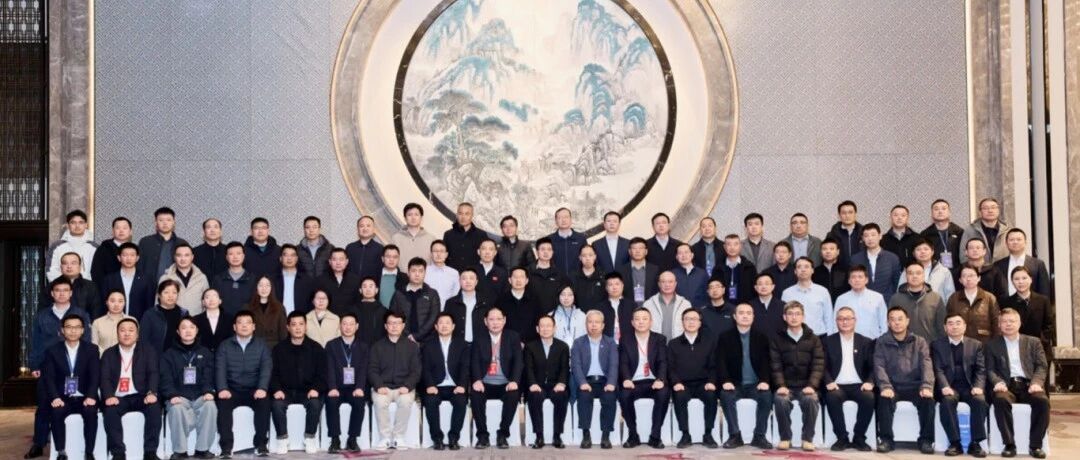
东风股份

Search documents
Dongfeng Motor Holds Global Partnership Summit to Accelerate New Energy Expansion
Businesswire· 2025-12-16 12:42
Group 1: Dongfeng's Global Expansion Strategy - Dongfeng launched the G Series high-end truck brand for overseas markets, emphasizing durability and cost efficiency through integration with global supply chains [1] - The company is investing in new energy and intelligent technologies, including a hydrogen fuel cell heavy-duty truck with a range exceeding 800 kilometers [1] - Dongfeng aims to deepen localized operations and strengthen its marketing system to accelerate the global expansion of its commercial vehicle business [1] Group 2: Passenger Vehicle Strategy - The 2026 Passenger Vehicle Global Partnership Summit highlighted Dongfeng's overseas passenger vehicle strategy and the global debut of ten thousand units of DONGFENG VIGO [2] - Self-owned brands like M-HERO and VOYAH showcased advanced technologies in new energy and intelligent mobility [2] - Dongfeng plans to build a comprehensive overseas value chain covering R&D, manufacturing, marketing, and services in collaboration with partners [2] Group 3: Collaboration and Recognition - At both summits, Dongfeng recognized outstanding overseas partners and shared successful market expansion experiences among dealer representatives [3] - Activities such as product showcases and factory tours provided insights into Dongfeng's technological capabilities and product performance [3] Group 4: Future Commitment - Looking ahead to 2026, Dongfeng reaffirmed its commitment to openness and collaboration with global partners to advance a greener and more intelligent automotive future [4]



商用车板块12月16日跌1.42%,金龙汽车领跌,主力资金净流出2.56亿元
Zheng Xing Xing Ye Ri Bao· 2025-12-16 09:09
Core Viewpoint - The commercial vehicle sector experienced a decline of 1.42% on December 16, with Jinlong Automobile leading the drop. The Shanghai Composite Index closed at 3824.81, down 1.11%, while the Shenzhen Component Index closed at 12914.67, down 1.51% [1]. Group 1: Market Performance - The commercial vehicle sector saw a net outflow of 256 million yuan from major funds, while retail investors contributed a net inflow of 132 million yuan [2][3]. - Key stocks in the commercial vehicle sector showed varied performance, with Foton Motor increasing by 1.46% to close at 2.78 yuan, while Jinlong Automobile fell by 6.45% to 16.10 yuan [1][2]. Group 2: Individual Stock Analysis - Foton Motor had a trading volume of 1.2982 million shares and a transaction value of 359 million yuan [1]. - Dongfeng Motor closed at 7.13 yuan, with a trading volume of 229,100 shares and a transaction value of 163 million yuan [1]. - Jinlong Automobile led the decline with a trading volume of 421,600 shares and a transaction value of 699 million yuan [2].


全球及中国汽车智能角模块行业研究及十五五规划分析报告
QYResearch· 2025-12-16 09:08
Core Viewpoint - The automotive smart corner module is a next-generation technology that integrates driving, braking, steering, and suspension systems into each wheel of the vehicle, enabling a fundamentally different driving experience. This technology is crucial for the intelligent upgrade of new energy vehicles and is expected to drive the automotive industry towards a new ecosystem characterized by "hardware modularization + software definition" as costs decrease and standardization accelerates [2]. Market Size and Trends - The global market size for automotive smart corner modules is projected to reach $49.63 million in 2024, with a compound annual growth rate (CAGR) of 17.16% from 2020 to 2025. By 2031, the market is expected to grow to $101.50 million, with a CAGR of 8.35% from 2025 to 2031 [4]. Industry Development Characteristics - The integration of electric motors, reducers, brake actuators, and sensors in smart corner modules allows for intelligent collaborative control of torque, braking force, and steering angle, providing a core execution basis for electric chassis and intelligent driving [8]. - High technical barriers exist in manufacturing and supply chain, requiring high-precision electromechanical coupling and complex thermal management, with leading companies primarily being Tier 1 manufacturers with chassis and intelligent control system expertise [8]. - Costs are decreasing while reliability is improving due to advancements in semiconductor integration, motor miniaturization, and electronic braking, creating conditions for large-scale production [8]. Favorable Factors for Industry Development - The global demand for new energy vehicles is steadily increasing, with a rising penetration rate and a shift towards electric and drive-by-wire systems, making smart corner modules essential components of intelligent electric chassis [10]. - The development of autonomous driving and intelligent chassis technologies is closely linked, with smart corner modules being key execution units for independent control of vehicle posture, torque distribution, braking, and steering, thus expanding their application space as the penetration of L3 and above autonomous driving increases [10]. - Government policies are increasingly supportive, promoting the development of key technologies for intelligent connected vehicles and modular electric drive systems, providing a favorable regulatory environment for the industrialization of smart corner modules [11]. Unfavorable Factors for Industry Development - The long verification cycle for safety and reliability of smart corner modules, which must meet ASIL-D standards, poses challenges for mass production due to strict testing requirements [13]. - The lack of unified industry standards and interface specifications among manufacturers hinders interoperability and collaboration within the supply chain, affecting large-scale manufacturing [13]. - Market acceptance of modular chassis architectures is still developing, with some manufacturers cautious about the long-term reliability and maintenance of smart corner modules, slowing the market adoption pace [13].
A股,大跌!
中国基金报· 2025-12-16 05:33
Market Overview - The A-share market experienced a collective decline on December 16, with the Shanghai Composite Index falling to 3820.85 points, down 1.22%, the Shenzhen Component Index down 1.88%, and the ChiNext Index down 2.35% [2][3] - The total trading volume in the Shanghai and Shenzhen markets was 1.12 trillion yuan, a decrease of 606 billion yuan compared to the previous trading day [4] Sector Performance - The smart driving sector saw significant gains, with multiple stocks in the automotive sector rising sharply. Notable stocks included Wanji Technology, which recorded a 20% increase, and several others achieving the daily limit of 10% [15][16] - Consumer sectors, including restaurant tourism and commercial retail, continued to rise, with several stocks hitting the daily limit. For instance, Yonghui Supermarket and Baida Group both recorded a 10% increase [9][10] - Conversely, the large technology sector experienced a downturn, while precious metals, communication equipment, and chemical sectors led the declines [4][5] Notable Stocks - In the smart driving sector, several companies such as North Car Blue Valley and Changan Automobile saw increases of over 5% [18][19] - The hospitality sector also showed strength, with Junting Hotel rising nearly 7% and other hotel stocks following suit [11][12] Regulatory News - On December 15, the Ministry of Industry and Information Technology announced the approval of the first batch of L3-level autonomous driving vehicles for trial operations in designated areas of Beijing and Chongqing [20]







“俄版谷歌”,正帮中国商人大赚
Di Yi Cai Jing Zi Xun· 2025-12-16 05:27
Group 1 - The rise of trade between China and Central Asian countries has created opportunities for Russian companies, particularly Yandex, to assist Chinese businesses in penetrating these markets [2][9] - Yandex, often referred to as the "Russian Google," is leveraging its strong position in the Central Asian Russian-speaking market to attract more Chinese clients [2][8] - The demand for Chinese products and services in Central Asia is increasing, with many Chinese companies exploring opportunities in countries like Kazakhstan and Uzbekistan [5][6] Group 2 - Kazakhstan serves as a strategic hub for Chinese companies under the Belt and Road Initiative, with a noticeable increase in Chinese advertisements and businesses in cities like Almaty [3][5] - The retail e-commerce market in Kazakhstan is experiencing significant growth, with a projected transaction volume of 1.45 trillion tenge in the first half of 2024, reflecting a 61% year-on-year increase [10] - Yandex Ads is actively targeting Chinese advertisers, with a reported 76% increase in the number of ads and a 192% increase in advertising spending in Kazakhstan by 2025 [10][11] Group 3 - The transition of traditional energy economies in Russia and Central Asia towards digital and renewable technologies presents new opportunities for Chinese companies, especially in the automotive sector [12][14] - Chinese automotive brands are gaining traction in Russia, with a 48% year-on-year increase in total vehicle sales expected in 2024, highlighting the growing acceptance of Chinese vehicles among Russian consumers [15] - Yandex is collaborating with Chinese automotive manufacturers to integrate its software into vehicles, enhancing their appeal in the Russian and Central Asian markets [15]

“俄版谷歌”,正帮中国商人大赚
第一财经· 2025-12-16 05:14
Core Viewpoint - The rise of trade between China and Central Asian countries has created opportunities for Russian companies, particularly Yandex, to assist Chinese enterprises in penetrating these previously overlooked markets [3]. Group 1: Market Opportunities - Kazakhstan serves as a strategic hub for Chinese companies under the Belt and Road Initiative, facilitating their entry into Central Asia [5]. - The increasing presence of Chinese brands in Kazakhstan, such as Huawei and BYD, indicates a growing interest and investment in the region [6]. - There has been a notable increase in Chinese business teams visiting Kazakhstan, leading to a surge in local hotel occupancy and business services [8]. - The demand for financial services in Central Asia is rising, with many Chinese companies seeking to expand their operations in these markets [8]. Group 2: Yandex's Role - Yandex, often referred to as the "Russian Google," is leveraging its market position to attract Chinese clients looking to enter the Central Asian market [11]. - Yandex Ads has been actively promoting its services to Chinese advertisers, highlighting the growth potential in Central Asia [13]. - The advertising expenditure by Chinese advertisers in Kazakhstan has seen significant growth, with a 76% increase in the number of ads and a 192% increase in spending [14]. Group 3: E-commerce Growth - Kazakhstan's retail e-commerce market is experiencing rapid growth, with a projected transaction volume of 1.45 trillion tenge in the first half of 2024, marking a 61% year-on-year increase [13]. - E-commerce's share of retail trade has risen to 16.6%, up by 5.1 percentage points from the previous year, indicating a shift towards online shopping [13]. Group 4: Automotive Sector Expansion - Chinese automotive brands are increasingly visible in Russia and Central Asia, with a significant rise in interest from local consumers [19]. - The sales of Chinese passenger cars in Russia are expected to grow by 48% in 2024, reaching 1.57 million units, driven by the popularity of plug-in hybrid vehicles [20]. - Yandex is collaborating with Chinese car manufacturers to integrate its software into vehicles, enhancing their appeal in the Russian and Central Asian markets [20].

发布16N旗舰级天然气发动机 康明斯打造天然气动力六边形战士
Zhong Guo Qi Che Bao Wang· 2025-12-16 02:18
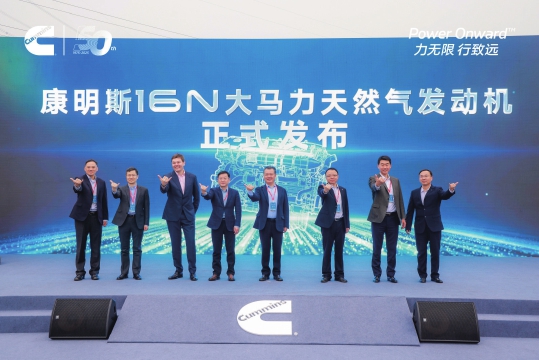
Core Insights - Cummins launched its new flagship natural gas engine, the 16N, at a logistics park in Chengdu, signaling a strategic focus on the southwestern and northwestern regions of China for high-power natural gas engine applications [2][3] - The development of the 16N engine is based on extensive data analysis from over 80,000 connected vehicles, highlighting the need for improved performance in challenging road conditions [3] Group 1: Product Features - The 16N engine boasts a maximum power of 720 horsepower (approximately 529 kW) and a torque of 3600 N·m, allowing for better efficiency and performance in logistics operations [3] - It is designed with six core capabilities: strong, efficient, reliable, intelligent, safe, and protective, all supported by robust technological innovations [4] - The engine features a newly designed turbocharger with a dual-channel structure to enhance boost efficiency and reliability under high-load conditions [4] Group 2: Efficiency and Reliability - The 16N engine incorporates a new strong swirl combustion system, achieving a 4% fuel efficiency improvement over the previous generation, with an overall potential fuel savings of 6% through integrated smart systems [5] - It has undergone over 40,000 hours of bench testing and 5 million kilometers of road validation, ensuring high reliability with components designed for a lifespan of over 1.2 million kilometers [5] Group 3: Safety and Maintenance - The engine includes advanced braking technology providing up to 400 kW of braking power and features a hydraulic automatic valve clearance adjustment for maintenance intervals of up to 300,000 kilometers [6] - A predictive maintenance system aims to transition from reactive to proactive service, enhancing operational efficiency and reducing downtime [6] Group 4: Real-World Testing - Prior to the official launch, Cummins conducted real-world testing in challenging environments, demonstrating the engine's strong performance and fuel efficiency under various conditions [7] - The engine's NVH (noise, vibration, and harshness) performance has significantly improved based on user feedback, addressing reliability issues in extreme cold conditions [8] Group 5: Customer Engagement - The launch event included the delivery of the first batch of 16N engines to key users, marking the beginning of a collaborative journey towards efficient green logistics [8]

汽车早餐 | 多家车企积极响应《汽车行业价格行为合规指南(征求意见稿)》;小鹏第三个海外本地化生产项目落地马来西亚
Zhong Guo Qi Che Bao Wang· 2025-12-16 01:33
Domestic News - The National Bureau of Statistics reported that from January to November, the added value of the automotive manufacturing industry grew by 11.8% [2] - In the same period, the production of automobiles increased by 10.8%, indicating a steady growth in new consumption [2] - The retail volume of new energy vehicles in the passenger car market maintained rapid growth during this timeframe [2] Industry Developments - The State Administration for Market Regulation announced a recall of 244,500 vehicles from seven automotive manufacturers in November 2025 [3] - The "Yue Car Southbound" reservation system began accepting bookings on December 15, 2025, for travel from December 23, 2025, to January 31, 2026 [4] - Shenyang plans to strengthen its automotive and parts industry, focusing on the full industrial chain of smart connected new energy vehicles [5] - Luoyang aims to accelerate the bearing industry in relation to new energy vehicles and other emerging sectors [6] International News - Renault is shutting down its car-sharing business and slowing down the construction of its electric vehicle charging network to focus on more profitable segments [7] - Volkswagen will cease vehicle production at its Dresden plant after December 16, marking the first closure of vehicle production in Germany since its establishment [9] - Mercedes-Benz India will raise car prices by up to 2% starting January due to rising raw material and logistics costs [10] Corporate News - Multiple automotive companies, including Jiangqi Group and Seres Group, are responding positively to the "Automotive Industry Pricing Behavior Compliance Guidelines" [11] - GAC's flying car GOVY AirCab has entered the airworthiness certification stage, with mass production expected in 2026 [12] - XPeng Motors has initiated its third localized production project in Malaysia, aiming for mass production by 2026 [13] - NIO has established 500 charging and battery swap stations in Shanghai, providing over 10,000 battery swap services daily [14] - CATL and Transfar Group signed a strategic cooperation agreement to enhance collaboration in green and sustainable industry ecosystems [15] - Dong'an Power and Beijing Automotive Manufacturing Factory signed a strategic cooperation agreement to establish a joint innovation laboratory [16] - Taotao Automotive's subsidiary plans to acquire 100% of Racka brand company for $15 million, expanding its brand portfolio [17]


东风股份:第七届董事会第二十次会议决议公告

Zheng Quan Ri Bao· 2025-12-15 12:45
Group 1 - The company announced the approval of three key proposals during the 20th meeting of the 7th Board of Directors, including adjustments to the expected daily related transactions for 2025 [2] - The company is undergoing an organizational restructuring as part of its strategic initiatives [2] - A change in the company's chief legal advisor has been approved, indicating a shift in legal strategy or governance [2]
2025首届汽车用钢供需座谈会召开
中汽协会数据· 2025-12-15 11:35
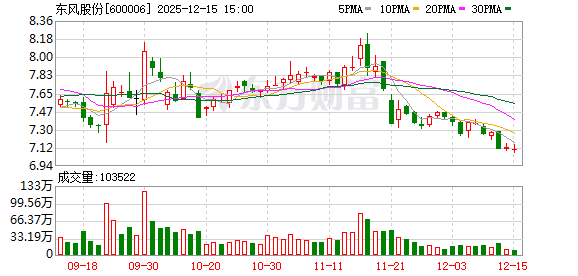
12月12日,由中国钢铁工业协会、中国汽车工业协会主办的2025首届汽车用钢供需座谈会在江苏 省无锡市召开。 会议现场 工信部原材料司钢铁处处长文刚出席会议。中国钢铁工业协会党委常委、副会长骆铁军,中国汽 车工业协会副秘书长陈士华出席会议并讲话。钢协副秘书长石洪卫主持会议。钢协副秘书长姜晓 东、赵金奎出席会议。来自行业协会、钢铁企业、汽车企业等领域的近百名代表出席会议。 文刚出席会议 以下文章来源于中国冶金报社 ,作者中国冶金报社 中国冶金报社 . 点击"关注"中国冶金报社微信公众号,每天为您提供钢铁行业权威的信息资讯,让您的阅读更便捷、更 专业! 官方网站:中国钢铁新闻网(www.csteelnews.com)。 骆铁军呼吁钢企响应国家反"内卷式"恶性竞争,维护行业利益和消费者利益,同时希望得到汽车 主机厂和汽车行业的认可与响应。 陈士华 陈士华在讲话中表示,汽车、钢铁行业是国民经济重要的产业,中国钢铁工业生产规模连续28年 位居全球第一,中国汽车工业产销规模连续16年位居全球第一。两个行业在全球的占有率也较 高,钢铁占比超过一半,汽车占比超过1/3。当前,汽车行业发展迅速,但也面临一些挑战,如内 需不足及 ...