
Neuralink

Search documents
盲人复明,马斯克Neuralink联创实现人工视觉里程碑
3 6 Ke· 2025-10-27 00:41
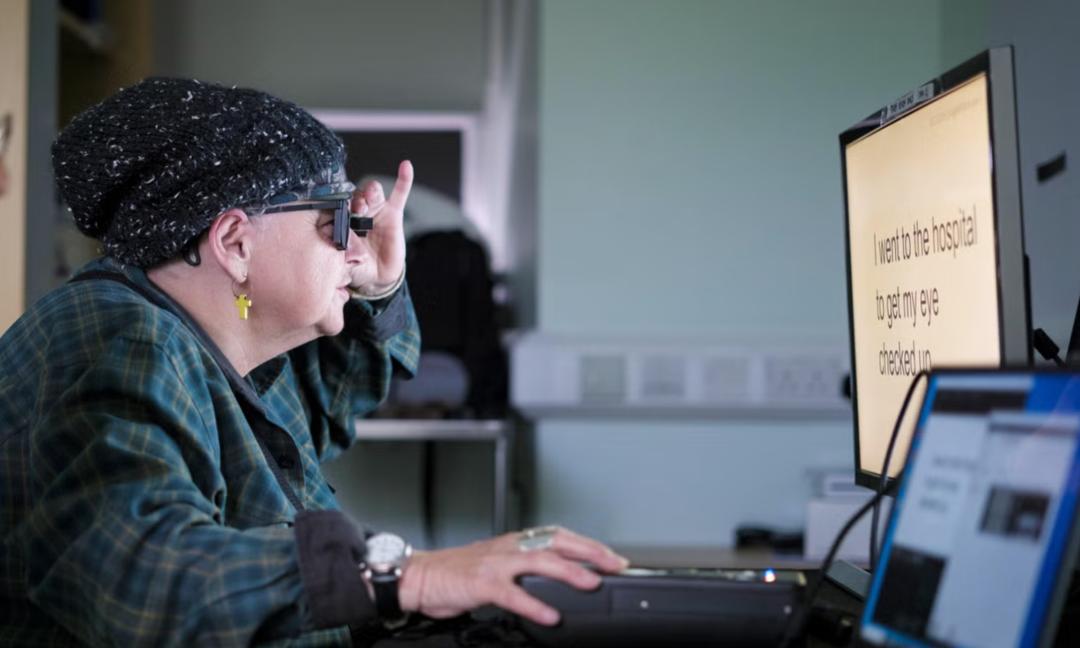
盲人复明,太了不起了。 这可能是2025年最低调但又最闪亮的科技进展了。 Nature最新刊登了新研究进展,人工视觉技术刚刚帮助一位70岁奶奶重获光明。 在失明之前,我是个狂热的书虫,我想把它找回来。 70岁的Sheila Irvine(希拉·欧文)最大的愿望是能够再次阅读,而就在最近她的愿望成真了。 原因来自于一项世界首创的人工视觉研究PRIMA。 其背后带队的还是当年和马斯克一起创办Neuralink的联合创始人,现在自己创业,做的还是视网膜植入物。 厚度只有一根头发丝大小,却能够让80%的患者视力得到显著改善,并且能够顺利阅读字母、数字和单词。 在参与实验之前,希拉是这样描述自己的: 我的眼睛就像有两个黑色的椎间盘,外面扭曲了。 故事的开始还要回到15年前,那是她第一次发现自己开车不受控制,一直在撞击人行道,当她走进医院后,她被确诊患有年龄相关性黄斑变性 (AMD)。 对此,论文主要作者Frank Holz表示: 该研究首次证明人工视觉可以恢复患者的功能性中央视力,为失明者带来了希望。 而对于患者本身及其家人,或许这将是人至暮年,一次宝贵的再次见面的机会: 失明15年,终于重获光明的她 这是一种老年人的 ...

X @Tesla Owners Silicon Valley
Tesla Owners Silicon Valley· 2025-10-26 20:10
Elon Musk“Grok will actually be able to understand the signals from Neuralink connecting to your brain at a very low level. This is what I call conceptual telepathy. You'll be able to convey a complex series of ideas uncompressed in their full form to someone else's mind, as opposed to reducing complex concepts down to a few sentences.” ...
奥特曼打造脑机接口初创挑战Neuralink,马斯克公开否定其技术思路
Sou Hu Cai Jing· 2025-10-26 08:39
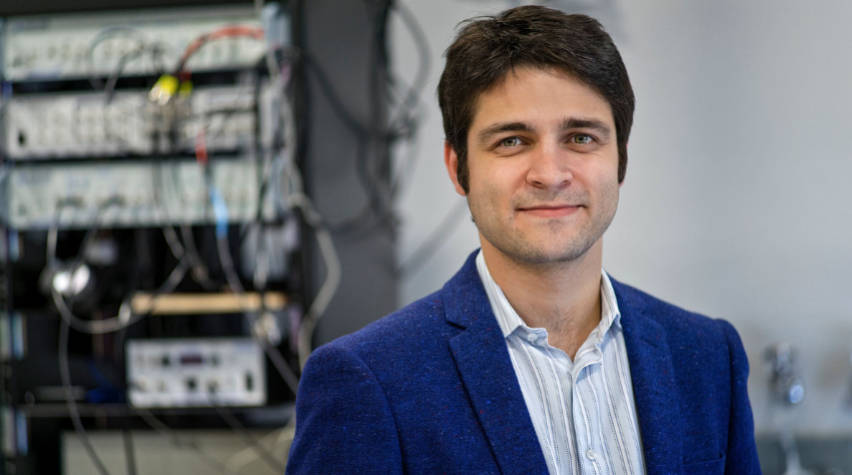
Core Insights - The article discusses the competition between Sam Altman, CEO of OpenAI, and Elon Musk in the brain-computer interface (BCI) sector, highlighting the recent developments at Merge Labs, a company co-founded by Altman [1][2][5]. Company Developments - Merge Labs has recruited Mikhail Shapiro, a prominent researcher from Caltech, known for his work in non-invasive brain imaging and gene therapy [1][5][7]. - Altman is expected to serve as the chairman of Merge Labs, while Shapiro is anticipated to play a key leadership role in the company [5]. - Merge Labs is reportedly in discussions for a $250 million funding round led by OpenAI, which would value the company at $850 million [5]. Technology Approach - Merge Labs aims to develop a non-invasive brain-computer interface using "gene therapy + ultrasound" methods, contrasting with Neuralink's invasive techniques [5][11]. - Shapiro's research focuses on using ultrasound to interact with the brain without the need for surgical procedures, which is a significant departure from Neuralink's approach [7][12]. Industry Context - The article outlines the ongoing debate between invasive and non-invasive BCI technologies, with the former posing higher risks and potential complications [12]. - Altman has publicly expressed his preference for non-invasive methods, indicating a strategic direction for Merge Labs that may influence the future of human-AI integration [5][12].
盲人复明!马斯克Neuralink联创实现人工视觉里程碑
量子位· 2025-10-26 04:01
Core Viewpoint - The article highlights a groundbreaking advancement in artificial vision technology, specifically the PRIMA retinal implant, which has successfully restored functional central vision in patients suffering from age-related macular degeneration (AMD) [2][10][24]. Group 1: Technology Overview - The PRIMA system is a world-first artificial vision research project that utilizes a retinal implant to restore vision by acting as a substitute for light-sensitive cells [6][25]. - The device is a small photovoltaic retinal implant (2mm x 2mm x 30μm) that works wirelessly, powered by light captured through special glasses equipped with a camera [27]. - The system has shown promising results, with 84% of participants recovering functional central vision and 80% achieving a significant improvement in visual acuity [30]. Group 2: Patient Experience - Sheila Irvine, a 70-year-old participant, regained her vision after 15 years of blindness due to AMD, fulfilling her lifelong desire to read again [5][11]. - Prior to the experiment, Sheila described her vision as severely impaired, likening her eyes to "two black discs" [11]. - After the surgery and rehabilitation, she was able to recognize small text, demonstrating the potential of the PRIMA system to significantly enhance quality of life for patients [15][30]. Group 3: Clinical Trials and Results - The clinical trial involved 38 patients across 17 clinical sites in five countries, with evaluations conducted at 6 and 12 months post-implantation [29]. - The results indicated an average improvement of 25.5 letters (approximately 5 lines) in visual acuity for participants [30]. - While some patients experienced temporary adverse reactions, 95% of these symptoms resolved within two months, and there was no significant decline in peripheral vision [32]. Group 4: Future Prospects - The PRIMA system is currently undergoing regulatory approval processes in Europe and the U.S., with plans for a commercial launch in the near future [35]. - Researchers are also developing next-generation implants and glasses to enhance visual performance, aiming for smaller pixels and color vision capabilities [38]. - The project is seen as a significant step towards making "artificial vision" a reality, akin to the advancements made with cochlear implants for hearing [49].

十五五”规划点名,十万亿级市场启幕,脑机接口升维“国家战略
Hua Xia Shi Bao· 2025-10-26 00:38
Group 1: Core Economic and Social Development Strategies - The "15th Five-Year Plan" emphasizes the construction of a modern industrial system, a strong domestic market, and coordinated regional development [1] - The plan aims to cultivate emerging and future industries, with a focus on sectors like quantum technology, bio-manufacturing, hydrogen energy, nuclear fusion, brain-machine interfaces, embodied intelligence, and 6G mobile communication [2][5] Group 2: Brain-Machine Interface (BMI) Industry Development - The BMI technology is recognized for its potential to transform economic structures and improve social welfare, with applications in medical rehabilitation and industrial manufacturing [2] - The "Implementation Opinions" issued in July 2025 will elevate the BMI industry to a national strategic level, aiming for breakthroughs in core technologies by 2027 and positioning the industry among the world's leaders by 2030 [3][5] - The BMI industry is projected to create a market scale in the hundreds of billions, generating numerous high-skilled jobs and enhancing China's competitive edge in global technology [5][6] Group 3: Policy and Market Support - The policy framework for BMI has evolved from local pilot projects to a comprehensive national strategy, fostering a collaborative environment among various government departments [3] - Local governments are responding rapidly, with initiatives like the establishment of specialized action plans and funding to support BMI innovation and development [3][4] - The integration of AI with BMI is expected to enhance the efficiency of brain signal decoding, leading to significant advancements in the industry [5][6] Group 4: Commercialization and Market Applications - Companies are exploring diverse business models in the BMI sector, including partnerships for clinical applications and consumer products, indicating a dual focus on B2B and B2C markets [6] - The BMI technology is anticipated to transition from niche applications to widespread use, aligning with China's goals for health and digital economy [6][7] - The current trajectory of BMI development in China highlights significant advancements in medical applications, particularly in areas like Parkinson's disease and mental health, supported by strong policy and market demand [6][7]
“十五五”规划点名,十万亿级市场启幕,脑机接口升维“国家战略”
Hua Xia Shi Bao· 2025-10-25 09:45
Core Viewpoint - The article discusses the comprehensive deployment of China's 15th Five-Year Plan, emphasizing the development of a modern industrial system, a strong domestic market, and coordinated regional development, with a particular focus on emerging industries like brain-machine interfaces [2][3][4]. Industry Development - The 15th Five-Year Plan aims to cultivate new pillar industries, with a focus on future industries such as quantum technology, bio-manufacturing, hydrogen energy, nuclear fusion, brain-machine interfaces, embodied intelligence, and 6G mobile communication [3][4]. - Brain-machine interface technology is highlighted for its potential to transform economic structures and improve societal welfare, enabling applications in medical rehabilitation, industrial manufacturing, and consumer electronics [3][4]. Policy Support - The brain-machine interface has been officially recognized as a future industry by the Ministry of Industry and Information Technology and other departments, marking its entry into national strategic planning [4][5]. - The "Implementation Opinions" released in July 2025 set clear goals for the brain-machine interface industry, aiming for breakthroughs in core technologies by 2027 and positioning the industry among the world's leaders by 2030 [4][5]. Market Potential - The brain-machine interface industry is projected to create a market scale in the hundreds of billions, generating numerous high-skilled job opportunities and establishing a new competitive advantage for China in global technology [6][7]. - The industry is expected to evolve towards more precise, safer, and more accessible technologies during the 15th Five-Year Plan, with significant advancements in hardware and software capabilities [6][7]. Commercial Applications - Companies are actively engaging in the brain-machine interface space, with various business models targeting both B2B and B2C markets, including medical rehabilitation and consumer electronics [7][8]. - Examples of commercial initiatives include partnerships for developing implantable systems, clinical transformation centers, and innovative products like brain-controlled games and smart mattresses [7][8]. Conclusion - The emphasis on brain-machine interfaces in the 15th Five-Year Plan signifies a shift from following to leading in this technology, aligning with China's development philosophy centered on improving human welfare [8].







Neuralink's President Shares 3-Year Plan/ Product Roadmap
Neura Pod – Neuralink· 2025-10-24 21:59
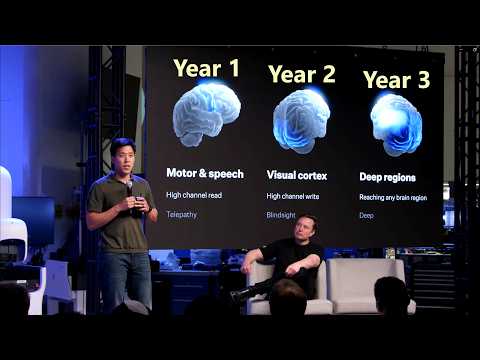
This is Neuralink's president DJ Su explaining the company's three-year plan and product roadmap. Remember, Neuralink is developing the most ambitious medical device in the world, a brain implant designed to help with almost any brain problem. So now just to step you through what the product evolution is going to look like in the next 3 years.Uh today what we have is 1,00 electrodes in the motor cortex, the part of the small part of the brain that you see in this animation called the hand knob area. Uh that ...
陈天桥砸百亿的赛道爆发,这家公司叫板马斯克
3 6 Ke· 2025-10-24 01:02
Core Insights - The year 2025 is anticipated to be a pivotal year for brain-computer interfaces (BCIs), with rapid advancements and significant capital influx into the sector [1][9] - The integration of AI and BCIs is seen as a potential game-changer, with both technologies expected to converge and enhance each other [9][32] Investment and Development - Brain Tiger Technology, founded by Tao Hu, received early angel investment of 30 million yuan from Chen Tianqiao, who has been a key supporter throughout its development [3][25] - The BCI industry has seen a compound annual growth rate of over 30% in financing events from 2018 to 2024, with 20 new financing events in Q3 2025 alone [9][29] Technological Advancements - Brain Tiger has developed a high-throughput, implantable flexible BCI that can decode both motor and language signals in real-time, making it the only company globally with this dual capability [4][6] - The company has conducted 53 short-term clinical trials and is set to initiate the world's first long-term clinical trial of a fully wireless, fully implanted, and fully functional flexible cortical BCI [9][14] Clinical Applications - BCIs are being utilized in clinical settings to assist disabled patients in controlling prosthetic limbs and enabling communication for those with speech impairments [4][6] - Recent trials have demonstrated the ability of BCIs to decode neural signals into coherent language, allowing patients to communicate thoughts without verbalizing [6][18] Market Landscape - The global BCI market was valued at $1.2 billion in 2019 and is projected to reach $2.48 billion by 2024, primarily driven by medical applications [23] - Major players in the industry, including OpenAI and Meta, are recognizing the potential of BCIs, leading to increased competition and investment [9][32] Future Vision - Tao Hu envisions BCIs evolving from merely restoring normal function to enhancing human capabilities beyond physical limits, aiming for a future where humans can possess AI-like abilities [9][32] - The long-term strategy for Brain Tiger includes three phases: commercializing research applications, obtaining medical device certifications, and building an ecosystem that connects BCIs with AI and other technologies [23][24]

脑机接口行业深度系列报告:十五五重点赛道,脑机接口有望迎来新机遇
Huafu Securities· 2025-10-23 05:18
Investment Rating - The report maintains an "Outperform" rating for the brain-computer interface (BCI) industry [1] Core Insights - The brain-computer interface industry is rapidly developing, enabling direct communication between the brain and external devices, with significant advancements in technology and market potential [2][3] - China holds multiple advantages in developing the BCI industry, including technological leadership in non-invasive interfaces, a growing industrial base, and increasing market demand driven by an aging population and industrial upgrades [22][18] - The BCI technology involves four core steps: neural signal acquisition, signal processing and feature extraction, decoding and machine learning, and feedback and control [27][24] - The BCI industry has a complete supply chain covering upstream (materials, chips, electrodes), midstream (signal acquisition and processing), and downstream (medical health, consumer life, industrial production) applications [58][71] Summary by Sections Industry Investment Rating - The report maintains an "Outperform" rating for the BCI industry [1] Industry Overview - The BCI technology allows for a new communication channel between the brain and external devices, with applications expanding due to advancements in neuroscience and artificial intelligence [2][3] - The global BCI market is projected to grow from approximately $2.62 billion in 2024 to $2.94 billion in 2025, and is expected to reach $12.4 billion by 2034 [2] Technological Development - BCI technology is evolving through three main paths: invasive, semi-invasive, and non-invasive methods, each with distinct advantages and applications [28][30] - Invasive interfaces provide the most precise neural signal acquisition but come with higher risks, while non-invasive interfaces are safer and more user-friendly [41][45] Market Applications - The BCI industry is witnessing rapid growth in various application scenarios, including medical rehabilitation, consumer electronics, and industrial production [58][71] - The medical health sector is currently the largest application area for BCI technology, accounting for approximately 47.62% of the market, with significant potential in rehabilitation and neurodiagnostics [71]
X @Tesla Owners Silicon Valley
Tesla Owners Silicon Valley· 2025-10-21 19:30
Back in college, Elon said: "I wanted to be involved in things that would change the world."Today:> SpaceX is making life multiplanetary> Tesla is leading the shift to sustainable energy> xAI is decoding the true nature of the universe> 𝕏 is restoring free speech on the internet> Neuralink is working to cure paralysis and blindness> The Boring Company is building high-speed tunnels to end traffic forever ...
