地平线

Search documents
余凯于十周年谈地平线2.0:不断向高而行,始终希望成为「机器人的微软」
IPO早知道· 2025-06-23 04:59
Core Viewpoint - Horizon Robotics aims to build a foundational platform that empowers various robotic applications, positioning itself as a leader in the robotics era, particularly in the automotive sector [4][10]. Group 1: Company Milestones - Horizon Robotics celebrated its 10th anniversary on June 1, marking its evolution from being the first Chinese company focused on deep neural network computing solutions to becoming the largest mass-production intelligent driving technology company in China [4]. - The company is set to officially list on the Hong Kong Stock Exchange on October 24, 2024, achieving the largest IPO for a Chinese tech company since 2022 and the fastest entry into the Hang Seng Tech Index [4]. - Horizon has been included in the FTSE Global Equity Index Series, effective June 20, 2024, enhancing its visibility to global investors [4]. Group 2: Market Position and Collaborations - Horizon has established partnerships with over 40 automotive manufacturers, including the top ten Chinese car companies, and has achieved over 8 million units of pre-installed production [12][14]. - The company holds a market share exceeding 40% in the Chinese OEM Advanced Driver Assistance Systems (ADAS) market for 2024, maintaining its position as the leading supplier of intelligent driving solutions [14]. - Horizon's technology is currently integrated into one out of every three intelligent vehicles in China, with expectations to surpass 10 million units shipped by the end of the year [12][14]. Group 3: Technological Innovations - Horizon Robotics has consistently focused on the integration of hardware and software, achieving over 1000 times improvement in computing performance over the past decade [23][25]. - The company has introduced significant advancements in its core algorithms, including the end-to-end autonomous driving model UniAD and the next-generation Vision Mamba model, which has gained recognition in the AI research community [24]. - Horizon emphasizes the importance of continuous technological breakthroughs to establish a long-term competitive advantage, with a commitment to high R&D investment, projected at approximately 5 billion yuan for 2024 [21][25]. Group 4: Future Vision - The long-term vision of Horizon Robotics, referred to as "Horizon 2.0," focuses on expanding into the general robotics field, with automotive applications being the initial focus [10][19]. - The company aims to leverage its technology to enhance automation capabilities in various sectors, including elder care, household service robots, agriculture, manufacturing, and logistics [10]. - Horizon's strategy includes deepening collaborations with a wide range of partners to drive advancements in intelligent driving and ensure safer, more efficient transportation solutions for everyone [19].

摩根士丹利:中国汽车芯片国产化的三大投资主题
摩根· 2025-06-23 02:30
Investment Rating - The investment rating for CR Micro (688396.SS) has been upgraded from Underweight to Equal-weight with a target price increase from Rmb28.10 to Rmb40.00 [3][5]. Core Insights - The report identifies three key investment themes in the Chinese automotive semiconductor sector: Power Discrete Devices, Advanced Driver Assistance Systems (ADAS), and Microcontrollers (MCU) [4][23]. - China's electric vehicle (EV) market is projected to grow significantly, with EV penetration expected to rise from 28% in 2024 to 42% by 2030, indicating a strong demand for automotive semiconductors [3][27]. - The report emphasizes the importance of localization in the semiconductor supply chain, noting that most global automotive chip companies are still in the early stages of implementing localization strategies in China [4][28]. Summary by Sections Investment Themes - The three key investment areas are: 1. **Power Discrete Devices**: Chinese companies have made solid progress in IGBT and SiC substrates, with opportunities in MOSFET and SiC devices [4][40]. 2. **ADAS**: The ADAS SoC market is expected to have the highest compound annual growth rate (CAGR), benefiting various suppliers including SoC vendors and peripheral chip manufacturers [4][24]. 3. **MCU**: The self-sufficiency rate for automotive MCUs is very low, at less than 5% in 2024, indicating significant growth potential for leading local companies [4][41]. Market Dynamics - China consumed 56% of the global electric vehicle production, and the report forecasts that the domestic automotive semiconductor market will continue to grow faster than global peers due to the increasing demand for EVs and government support for supply chain localization [3][27]. - The report highlights that the automotive semiconductor supply chain in Greater China currently accounts for less than 5% of the global supply, with a self-sufficiency rate of only 15% [37][38]. Company Ratings and Strategies - The report recommends specific companies for investment based on their positions in the identified themes: - **Power Semi**: Companies like Starpower (603290.SS), Yangjie Technology (300373.SZ), and SICC (688234.SS) are highlighted for their growth potential [5][23]. - **ADAS**: Companies such as Horizon Robotics (9660.HK) and Will Semiconductor (603501.SS) are noted for their strong positions in the ADAS market [5][23]. - **MCU**: GigaDevice (603986.SS) is recognized for its potential to benefit from localization trends [5][23]. Future Projections - The report anticipates that by 2027, the self-sufficiency rate for automotive chips in China will reach 28%, reflecting the ongoing efforts to enhance local production capabilities [16][53]. - The expected growth in the electric vehicle market is projected to triple by 2030, with significant implications for the semiconductor industry [33][34].


大摩闭门会:全球及中国机器人产业的现状与未来展望-纪要
2025-06-23 02:10
Summary of the Conference Call on the Global and Chinese Robotics Industry Industry Overview - The Chinese robotics market is growing at a compound annual growth rate (CAGR) of 17%, expected to reach a market size of $47 billion by 2024, with drones holding the largest share [1][2] - The market is projected to maintain a 23% annual growth rate over the next four years, reaching $110 billion by 2028 [1][2] Key Insights and Arguments - Technological advancements, particularly in AI, sensing algorithms, and mobile navigation, are crucial drivers of the robotics industry's growth [1][3] - The application of robots has significantly improved production efficiency and quality, with data from 2013 to 2017 showing an 11% increase in production efficiency and an 8% increase in total factor productivity [1][5] - China is the largest producer of robots globally, accounting for 55% of total production, with a component market estimated at $40 billion, growing at approximately 23% annually until 2028 [1][6] Market Dynamics - Service robots are benefiting from advancements in algorithms and AI, with drones and service robots expected to grow at rates exceeding 20% to 30% in the coming years [1][7][8] - The localization rate of robot components varies; for instance, the localization rate for reducers is low (around 50% or lower), while batteries are nearly 100% localized [1][9] Component Market and Demand - The demand for robot components is closely linked to the development of downstream robots, with different types of robots requiring specific components [1][10] - The evaluation of stocks in the robotics industry can be based on market space and localization rates, with key players including 汇川技术 (Inovance Technology), 美的 (Midea), and 科沃斯 (Ecovacs) [1][11][12] Company-Specific Developments - 汇川技术 has a significant advantage in the industrial sector, with plans to expand into collaborative and humanoid robots [1][13] - 美的, after acquiring KUKA, has seen its automation business generate revenue of 28.7 billion RMB in 2024, accounting for about 7% of total revenue, with expectations for high single-digit growth in 2025 [1][18][19] Future Outlook - The robotics industry is expected to continue evolving, with Midea's domestic market projected to see double-digit growth, while international markets may experience slower growth due to maturity [1][19] - Smaller solution companies like 石头科技 (Roborock) and 科沃斯 (Ecovacs) are also anticipated to play significant roles in the market's future [1][19]


6月23日电,汇丰给予地平线买进的初始评级,目标价10.20港元。
news flash· 2025-06-23 00:07
智通财经6月23日电,汇丰给予地平线买进的初始评级,目标价10.20港元。 ...
创投正迎来退出盛宴
母基金研究中心· 2025-06-22 08:49
Core Viewpoint - The Hong Kong stock market is experiencing unprecedented enthusiasm, with a significant increase in the number of companies going public and the amount of capital raised compared to previous years [1][5][9]. Group 1: Market Performance and Trends - In the first four months of 2025, 19 companies completed their IPOs in Hong Kong, raising 21.3 billion HKD, nearly three times the amount raised in the same period last year [1]. - As of May 20, 2025, 24 companies had listed on the Hong Kong main board, collectively raising over 60 billion HKD [1]. - The number of companies waiting to go public in Hong Kong has reached approximately 150 [1]. Group 2: Investment Institutions and Returns - Various venture capital firms are reaping substantial returns from the current IPO wave, particularly in the consumer sector, with notable companies like Pop Mart and Mixue Ice City backed by prominent investors [1][6]. - The market is seeing a trend where many entrepreneurial companies are choosing to list in Hong Kong due to slower listing processes in the A-share market and the need for financing [6][11]. Group 3: Notable IPOs and Valuations - Companies like Blukoo and Mixue Ice City have seen significant market valuations post-IPO, with Blukoo nearing 40 billion HKD and Mixue Ice City exceeding 200 billion HKD [2][4]. - Horizon Robotics, a tech company, saw its market value soar past 100 billion HKD shortly after its listing [2]. Group 4: Policy Changes and Market Attractiveness - The Hong Kong Stock Exchange has introduced new listing rules that allow unprofitable companies to go public, enhancing the appeal for tech startups [7][8]. - The introduction of the "Special Technology Company" listing mechanism aims to protect sensitive business information during the IPO process, further attracting tech firms [8]. Group 5: A+H Share Listings - A number of leading A-share companies, such as CATL and Heng Rui Medicine, are also pursuing dual listings in Hong Kong, with 45 A-share companies planning to list in Hong Kong as of April 30, 2025 [9][10]. Group 6: Future Outlook - The current IPO boom is expected to continue, with many companies in both consumer and hard tech sectors preparing for listings [11][12]. - The diversification of exit channels for venture capital and private equity firms is seen as a positive development, although the performance of ordinary companies in the IPO market may vary [16][17].

100+自动驾驶数据集,这5个你总得知道吧?
自动驾驶之心· 2025-06-22 01:35
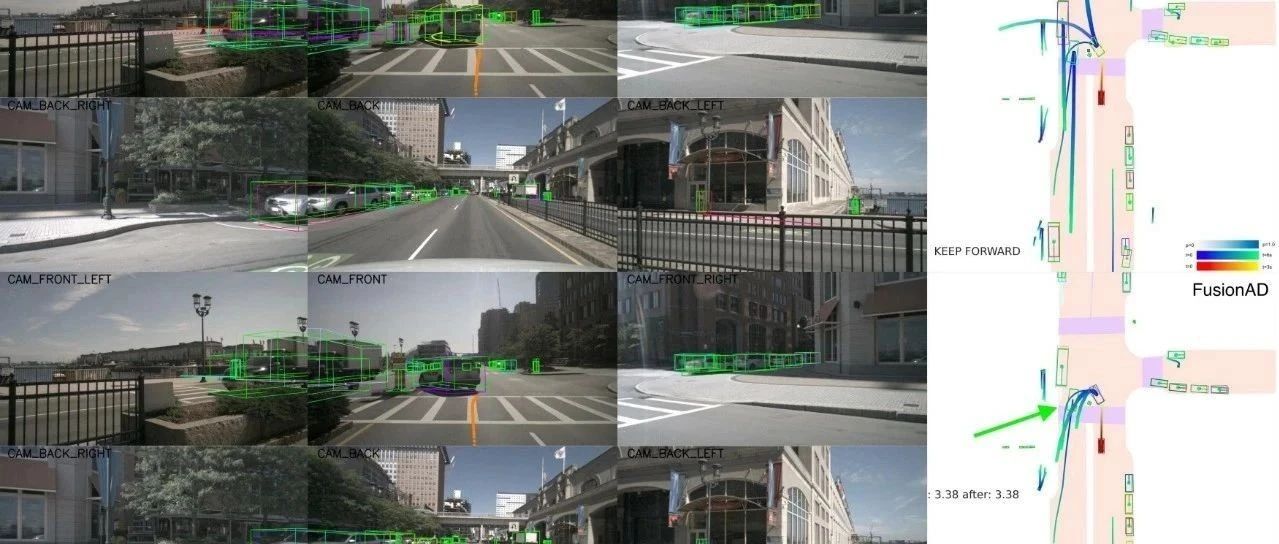
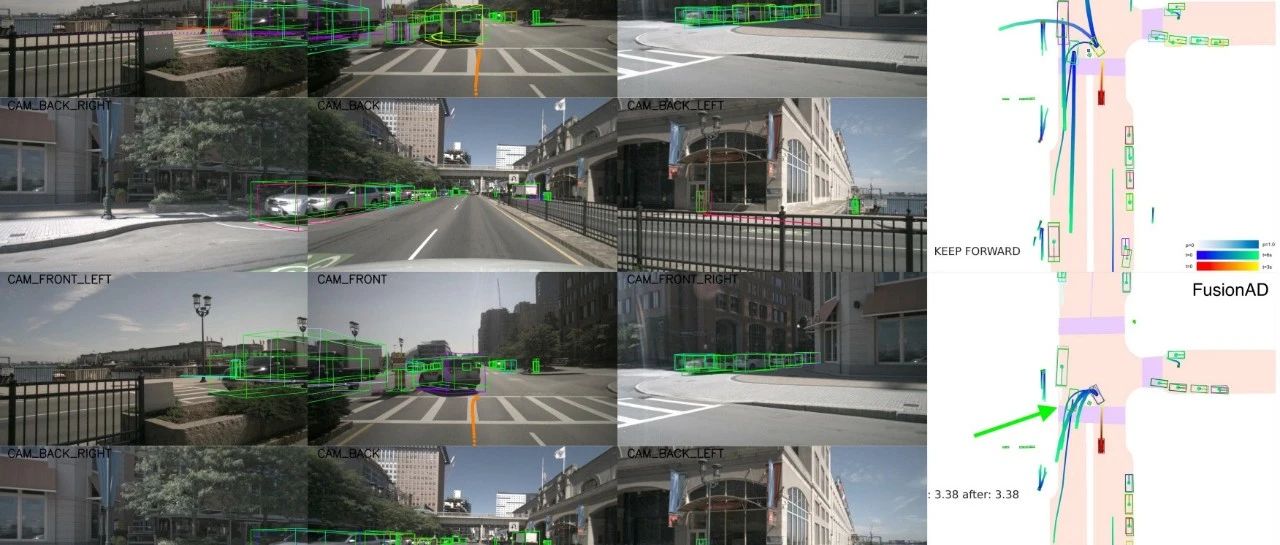
Core Viewpoint - The article emphasizes the growing importance of autonomous driving technology and highlights the availability of over 100 high-quality datasets for developers and researchers in the field. It introduces five key datasets that cover various tasks from perception to visual odometry, providing valuable resources for both beginners and experienced engineers [2]. Dataset Summaries 1. KITTI Dataset - The KITTI dataset is one of the most classic and widely used benchmark datasets in the autonomous driving field. It was collected in Karlsruhe, Germany, using high-precision sensors such as stereo color/gray cameras, Velodyne 3D LiDAR, and GPS/IMU. The dataset includes annotations for various perception tasks, including stereo vision, optical flow, visual odometry, and 3D object detection and tracking, making it a standard for evaluating vehicle vision algorithms [3]. 2. nuScenes Dataset - nuScenes is a large-scale multi-sensor dataset released by Motional, covering 1,000 continuous driving scenes in Boston and Singapore, totaling approximately 15 hours of data. It includes a full suite of sensors: six cameras, five millimeter-wave radars, one top-mounted LiDAR, and IMU/GPS. The dataset provides around 1.4 million high-resolution camera images and 390,000 LiDAR scans, annotated with 3D bounding boxes for 23 object categories, making it suitable for research on complex urban road scenarios [5][7]. 3. Waymo Open Dataset - The Waymo Open Dataset, released by Google Waymo, is one of the largest open data resources for autonomous driving. It consists of two main parts: a perception dataset with 2,030 scenes of high-resolution camera and LiDAR data, and a motion dataset with 103,354 vehicle trajectories and corresponding 3D map information. This extensive multi-sensor dataset covers various times, weather conditions, and urban environments, serving as a benchmark for target detection, tracking, and trajectory prediction research [10][12]. 4. PathTrack Dataset - PathTrack is a dataset focused on person tracking, containing over 15,000 trajectories across 720 sequences. It utilizes a re-trained existing person matching network, significantly reducing the classification error rate. The dataset is suitable for 2D/3D object detection, tracking, and trajectory prediction tasks [13][14][15]. 5. ApolloScape Dataset - ApolloScape, released by Baidu Apollo, is a massive autonomous driving dataset characterized by its large volume and high annotation accuracy. It reportedly exceeds similar datasets in size by over ten times, containing hundreds of thousands of high-resolution images with pixel-level semantic segmentation annotations. ApolloScape defines 26 different semantic categories and includes complex road scenarios, making it applicable for perception, map construction, and simulation training [17][19].
打造万人的自动驾驶黄埔军校,一个死磕技术的地方~
自动驾驶之心· 2025-06-20 14:06
Core Viewpoint - The article emphasizes the establishment of a comprehensive community for autonomous driving and embodied intelligence, aiming to gather industry professionals and facilitate rapid responses to challenges within the sector. The goal is to create a community of 10,000 members within three years, focusing on academic, product, and recruitment connections in the field [2][4]. Group 1: Community Development - The community aims to provide a platform for industry professionals to share the latest technological developments, engage in discussions, and access job opportunities [2][3]. - The initiative has already attracted notable figures from companies like Huawei and various leading researchers in the autonomous driving field [2]. - The community is designed to support newcomers by offering structured learning paths and resources to quickly build their technical knowledge [2]. Group 2: Knowledge Sharing and Resources - The "Autonomous Driving Heart Knowledge Planet" serves as a technical exchange platform, primarily for students and professionals looking to transition into the autonomous driving sector [4][11]. - The community has established connections with numerous companies for recruitment purposes, including well-known names like Xiaomi, NIO, and NVIDIA [4][11]. - Members have access to a wealth of resources, including over 5,000 pieces of content, live sessions with industry experts, and discounts on paid courses [14][18]. Group 3: Technological Focus Areas - The article outlines key technological areas to focus on by 2025, including visual large language models (VLM), end-to-end trajectory prediction, and 3D generative simulation techniques [6][10]. - The community has developed learning paths covering various subfields such as perception, mapping, and AI model deployment, ensuring comprehensive coverage of the autonomous driving technology stack [11][16]. - Regular live sessions will focus on cutting-edge topics like VLA, large models, and embodied intelligence, providing insights into practical applications and research advancements [19][18]. Group 4: Engagement and Interaction - The community encourages active participation, with weekly discussions and Q&A sessions to foster engagement among members [12][14]. - It aims to create a supportive environment for both beginners and advanced professionals, facilitating networking and collaboration opportunities [12][11]. - The platform is designed to be a dynamic space where members can freely ask questions and share knowledge, enhancing the overall learning experience [12][11].
2026届自动驾驶算法岗招聘,趋势变化有些大。。。
自动驾驶之心· 2025-06-19 10:47
点击下方 卡片 ,关注" 自动驾驶之心 "公众号 戳我-> 领取 自动驾驶近15个 方向 学习 路线 本篇文章针对26届自动驾驶和互联网求职同学,和大家一起聊聊今年招聘大趋势的边和和秋招的进程。欢迎大家 收藏转发~ 大趋势的变化 去年自动驾驶和互联网整体上都不太景气,诸多公司宣布裁员、倒闭。25届的很多同学都遭遇了校招滑铁卢。今 年业内不少公司都缓过来一口气,开始回复大规模招聘(小米、比亚迪、小鹏等等),预计26届的行情整体还是 可以的,有希望追平24届。 还有一点不同,提前批的效力在逐年减弱,甚至可以说名存实亡。除了顶级天才真的能拿到提前批的超级offer, 大部分同学基本上都是在七月底到十一月底这个阶段拿到秋招offer,十一月底到过年是秋招补录阶段。 对于大公司来说,暑期实习真的很重要。广义上的可转正暑期实习从2月底会持续到10月底,即使到了秋招的时 候,也都同步会有可转正实习的hc,因为大厂目前更倾向于招聘实习转正的人,第一是更有实际的工作基础,第 二当然也是更好压价,实习转正的薪酬一般都不会开的太高。 请大家一定充分认识到暑期实习的重要性,有条件的同学尽可能的争取到一份暑期实习,联系下毕业的学长学姐 ...
人物 | 贝瑞德:在中国,建新大众
Zhong Guo Qi Che Bao Wang· 2025-06-18 11:19
Core Insights - The article highlights Berndt's leadership at Volkswagen Group China, emphasizing the company's commitment to investing in China and adapting to the rapidly changing automotive landscape, particularly in electric vehicles [3][11]. Group 1: Leadership and Strategy - Berndt has been with Volkswagen for 32 years and has held various key positions, culminating in his role as Chairman and CEO of Volkswagen Group China since August 2022 [4][5]. - Under Berndt's leadership, Volkswagen China has adopted a "local for local" strategy to better meet the needs of Chinese customers and enhance business resilience [5][11]. - The establishment of the Volkswagen China Technology Company (VCTC) in April 2023, with an investment of approximately €1 billion, aims to streamline R&D and procurement processes, significantly reducing development cycles by about 30% [5][6]. Group 2: Market Position and Challenges - Volkswagen faces challenges in the Chinese market, including a slowdown in growth and increased competition from local brands, necessitating a rapid transformation towards electric and smart vehicles [4][5]. - The company plans to launch around 20 new energy vehicle models by 2027 and approximately 30 pure electric vehicles by 2030, reflecting its commitment to the electric vehicle market [9][11]. Group 3: Collaborations and Innovations - Volkswagen has formed strategic partnerships with companies like Xiaopeng Motors and CARIAD to develop advanced driving assistance and smart connectivity systems, indicating a collaborative approach to innovation [7][9]. - The company has also deepened cooperation with FAW Group and SAIC Group, focusing on both fuel and new energy vehicles, which is crucial for maintaining competitive advantages in the market [9][11]. Group 4: Future Outlook - Berndt emphasizes that investing in China is synonymous with investing in the future, as the Chinese automotive market is expected to transition to 80% new energy vehicles by 2030 [11][13]. - The company is positioned to leverage cash flow from its existing fuel vehicle business to fund new technology development, ensuring a balanced approach to investment and returns [13][14].

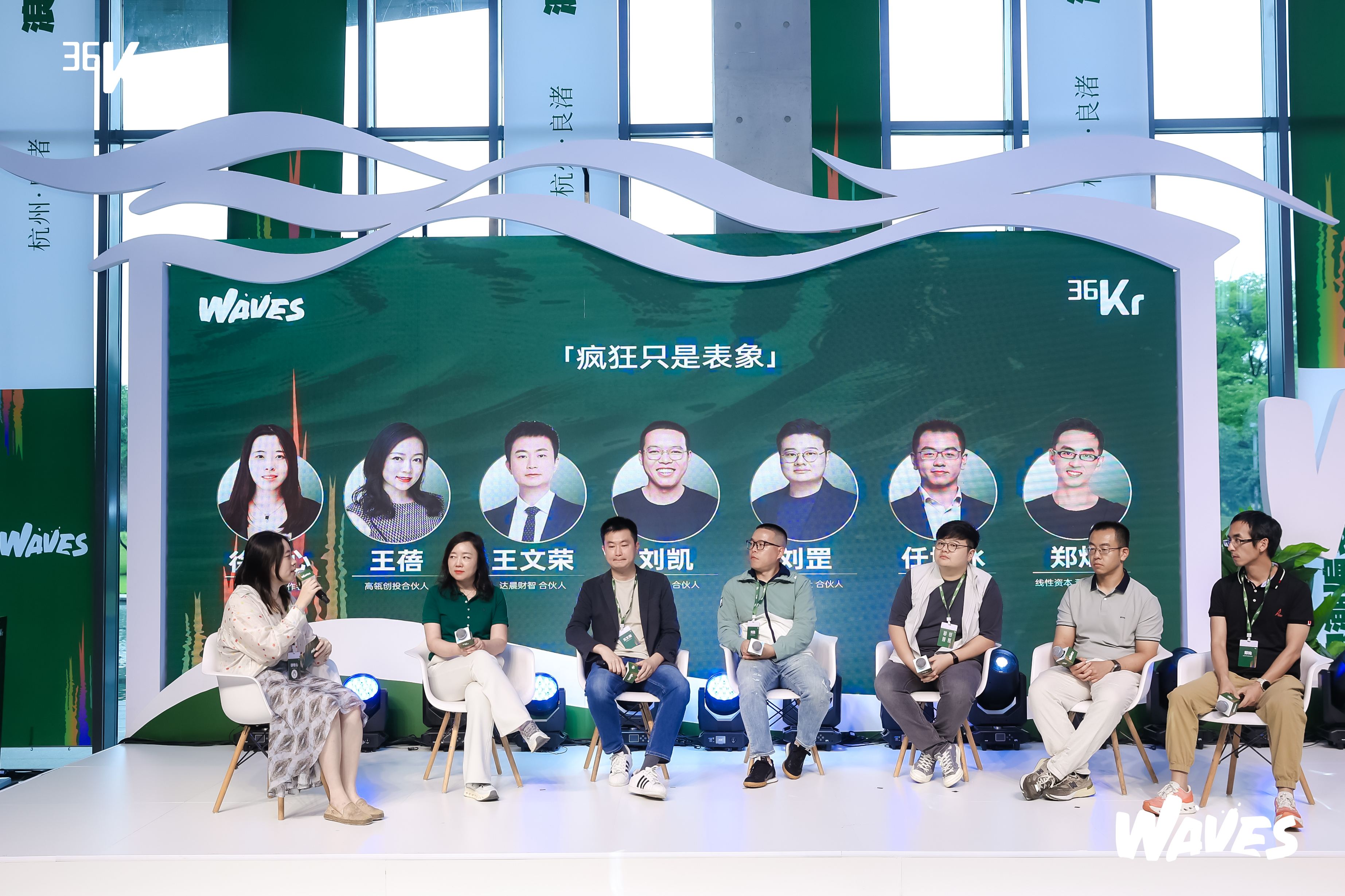
圆桌论坛:「疯狂只是表象」丨WAVES新浪潮2025
3 6 Ke· 2025-06-18 03:38
Core Insights - The Chinese venture capital market is at a turning point, characterized by a structural transformation and a focus on capturing opportunities amidst uncertainty [1] - The "WAVES New Era 2025" conference gathered top investors and innovators to discuss AI technology, globalization, and value reassessment [1] Investment Trends - Investors are increasingly focusing on early-stage investments in AI, with many firms actively participating in seed and angel rounds [4][5][6] - The emergence of younger founders and the rapid pace of technological change in AI are reshaping the investment landscape [9][10] Market Dynamics - The current AI startup environment is perceived as less crowded compared to previous tech waves, indicating potential for growth and innovation [33][35] - High valuations for AI startups are driven by competitive dynamics and the need for firms to position themselves within hot sectors [26][28] Investment Strategies - Investors emphasize the importance of understanding the unique backgrounds and capabilities of founders, particularly in the context of rapidly evolving technologies [14][16] - The traditional metrics for assessing product-market fit (PMF) are being reevaluated, with a shift towards more dynamic indicators that reflect the fast-paced nature of AI development [22][23] Future Outlook - The consensus among investors is that AI will continue to be a major driver of economic growth, suggesting that opportunities for startups will persist in the coming years [35] - Founders are encouraged to focus on practical execution and iterative development rather than getting caught up in long-term uncertainties [32][34]