
领益智造

Search documents
领益智造涨2.12%,成交额14.53亿元,主力资金净流出3695.00万元
Xin Lang Zheng Quan· 2025-11-06 05:25
Company Overview - Lingyi Technology, established on July 1, 1975, and listed on July 15, 2011, is located in Jiangmen City, Guangdong Province. The company specializes in the production and sales of new electronic components, mobile phone, and computer accessories. The main revenue composition is as follows: AI terminals 88.32%, others 6.68%, and automotive and low-altitude economy 5.01% [1][2]. Stock Performance - As of November 6, Lingyi Technology's stock price increased by 2.12%, reaching 14.93 CNY per share, with a trading volume of 1.453 billion CNY and a turnover rate of 1.37%. The total market capitalization is 109.079 billion CNY [1]. - Year-to-date, the stock price has risen by 87.56%, but it has seen a decline of 6.16% over the last five trading days and 13.00% over the last twenty days. Over the last sixty days, the stock price increased by 54.72% [1]. Financial Performance - For the period from January to September 2025, Lingyi Technology achieved a revenue of 37.590 billion CNY, representing a year-on-year growth of 19.39%. The net profit attributable to shareholders was 1.941 billion CNY, reflecting a year-on-year increase of 38.17% [2]. Shareholder Information - As of September 30, 2025, the number of shareholders increased to 539,100, up by 82.54%. The average circulating shares per person decreased by 43.07% to 13,300 shares [2]. - The company has distributed a total of 3.224 billion CNY in dividends since its A-share listing, with 1.512 billion CNY distributed in the last three years [3]. Institutional Holdings - As of September 30, 2025, the second-largest circulating shareholder is Hong Kong Central Clearing Limited, holding 174 million shares, an increase of 53.8917 million shares from the previous period. Other notable institutional shareholders include Huatai-PB CSI 300 ETF and E Fund CSI 300 ETF, with varying changes in their holdings [3].

人形机器人逼近产业化关口,谁在买?
3 6 Ke· 2025-11-05 12:11
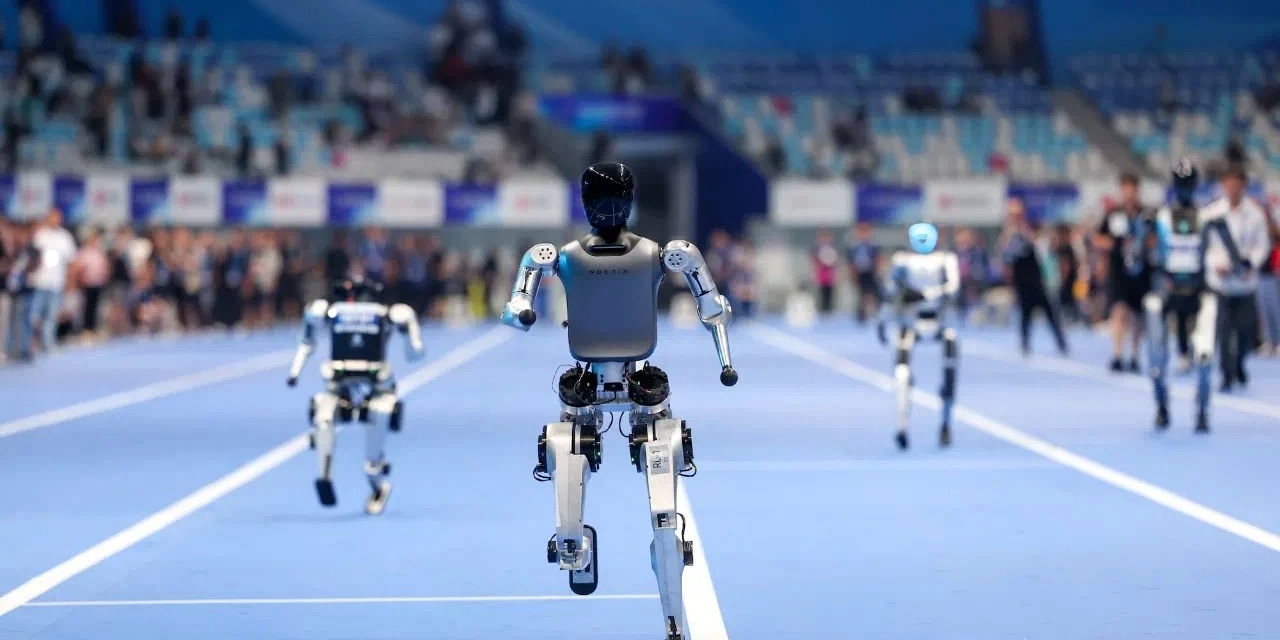
Core Viewpoint - The humanoid robot industry is transitioning from showcasing demos to securing substantial orders, marking a significant step towards industrialization with several companies achieving orders of over a thousand units, indicating a shift in focus towards real-world applications and sales [2][3][4]. Group 1: Market Dynamics - In the past two months, multiple companies have entered the "thousand-unit club," with eight firms reporting significant orders, reflecting a growing demand in the humanoid robot sector [2][3]. - The price range for humanoid robots varies, with educational and performance models priced between 20,000 to 100,000 yuan, while industrial models start at 200,000 yuan, suggesting that large orders often correspond to contracts worth hundreds of millions [3][4]. - The recent surge in orders is attributed to increased public awareness following high-profile appearances and the emergence of actual demand in sectors like manufacturing and education [3][4]. Group 2: Industrialization and Challenges - The shift to thousand-unit orders signifies a pivotal moment for the humanoid robot industry, moving from experimental models to real-world deployment, akin to the early days of electric vehicles [4][5]. - Key questions arise regarding the buyers and their intended applications, as the industry transitions from a focus on demos to a competitive landscape centered on delivery capabilities [5][6]. - Major clients in manufacturing and education are driving demand, with manufacturing firms facing challenges such as labor shortages and rising costs, making humanoid robots a viable solution for automation [6][7]. Group 3: Product Development and Feedback - Manufacturers are increasingly acting as "invisible product managers," providing feedback that drives product iterations and adaptations to meet diverse operational needs [10][12]. - Companies like Star Dust Intelligent are adjusting their product offerings based on client feedback, leading to modular solutions that enhance flexibility and adaptability in various industrial scenarios [10][12]. Group 4: Sales and Market Strategy - The sales landscape is evolving, with companies focusing on building robust sales teams and distribution networks to effectively market humanoid robots across different sectors [24][25]. - Competitive pricing strategies are emerging, with companies like Songyan Power introducing models priced below 10,000 yuan to explore new market segments and drive adoption [25][26]. - The industry is witnessing a shift towards a more sustainable business model, emphasizing delivery capabilities and customer satisfaction over merely securing large orders [18][21]. Group 5: Future Outlook - The humanoid robot industry is expected to accelerate in 2026, driven by ongoing projects and increased focus on delivery and customer engagement [27][28]. - Companies are also looking to expand their international presence, with expectations of significant revenue contributions from overseas markets in the near future [27].



经观头条|人形机器人站在产业化门口
Jing Ji Guan Cha Wang· 2025-11-05 11:38
Core Insights - The humanoid robot industry is transitioning from showcasing demos to focusing on actual orders, with several companies entering the "thousand-unit club" in recent months [3][4] - The surge in orders is attributed to increased public awareness and real demand in sectors like manufacturing and education, creating viable deployment scenarios [4][5] - The shift to "thousand-unit orders" marks a significant milestone in the industrialization of humanoid robots, indicating their movement from experimental models to real-world applications [5][6] Industry Demand - Major clients for humanoid robots are primarily from the manufacturing and education sectors, with manufacturing showing a more rigid demand due to labor shortages and rising costs [7][8] - The flexibility of humanoid robots allows for easier adaptation to changing production needs compared to traditional automation solutions [7][8] - Educational institutions are adopting humanoid robots through small pilot programs, focusing on their integration into teaching and learning environments [14][15] Sales and Delivery Challenges - The industry is experiencing a shift from securing orders to ensuring successful delivery, with companies facing challenges in product design and supply chain management [18][19] - Companies are increasingly focusing on building robust sales teams and distribution channels to effectively market humanoid robots [23][24] - Pricing strategies are evolving, with some companies introducing lower-priced models to stimulate demand and explore new market segments [24][25] Future Outlook - The humanoid robot industry is expected to accelerate in 2026, driven by ongoing projects and increased attention from potential investors [25][27] - Companies are also looking to expand their presence in international markets, with expectations of significant revenue contributions from overseas operations [25][27]
人形机器人逼近产业化关口,谁在买?
经济观察报· 2025-11-05 10:49
Core Insights - The humanoid robot industry is transitioning from showcasing demos to securing substantial orders, marking a significant step towards commercialization [3][4] - Recent months have seen multiple companies entering the "thousand-unit club," indicating a shift towards real sales and contracts worth billions [3][4] - The demand for humanoid robots is primarily driven by the manufacturing and education sectors, with specific needs emerging that robots can fulfill [6][11] Group 1: Market Dynamics - The recent surge in orders is attributed to increased public awareness and the emergence of practical applications in various industries [4][6] - Humanoid robots are no longer just prototypes; they are beginning to be deployed in real-world scenarios, similar to the early days of electric vehicles [4][6] - The industry is witnessing a shift from "demo-driven" sales to "delivery-driven" sales, altering the commercial logic of humanoid robots [4][27] Group 2: Customer Segments - Manufacturing clients are the largest orderers, driven by challenges such as labor shortages and rising costs, making robots a viable solution for repetitive tasks [6][10] - The education sector is adopting humanoid robots through small pilot programs, focusing on their adaptability for teaching and engagement [11][13] - Some orders are being placed by companies for promotional purposes, indicating a diverse range of applications for humanoid robots [13] Group 3: Delivery and Production Challenges - Successful delivery is becoming a critical measure of success, with companies needing to demonstrate their ability to fulfill orders [15][16] - Companies are facing challenges in production and supply chain management as order volumes increase, necessitating robust operational strategies [15][16] - The focus is shifting from merely securing orders to ensuring a complete delivery cycle, including customer engagement and cash flow management [16][17] Group 4: Pricing Strategies and Competition - Companies are exploring aggressive pricing strategies to capture new market segments, with some introducing robots at significantly lower price points [25][26] - The competition is intensifying, with firms investing in sales teams and channel development to effectively market humanoid robots [22][24] - Differentiation in product offerings is becoming essential, with companies developing various models to cater to different market needs [26] Group 5: Future Outlook - The humanoid robot industry is expected to accelerate in 2026, driven by ongoing projects and increased market attention [26][27] - Companies are also focusing on international markets, with plans to expand their distribution networks globally [26]

电子行业今日净流出资金46.16亿元,江波龙等27股净流出资金超亿元
Zheng Quan Shi Bao Wang· 2025-11-05 09:02
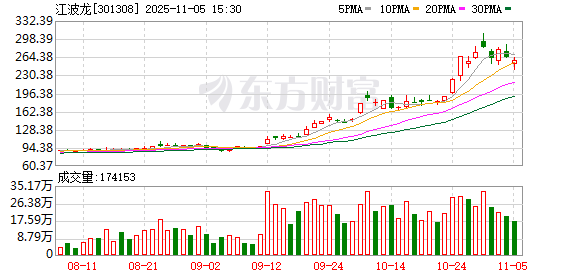
Market Overview - The Shanghai Composite Index rose by 0.23% on November 5, with 20 industries experiencing gains, led by the power equipment and coal industries, which increased by 3.40% and 1.39% respectively [2] - Conversely, the computer and non-bank financial sectors saw declines of 0.97% and 0.49% respectively, while the electronics industry fell by 0.19% [2] Capital Flow Analysis - The main capital flow showed a net outflow of 8.638 billion yuan across the two markets, with 11 industries experiencing net inflows [2] - The power equipment industry had the highest net inflow, totaling 14.608 billion yuan, while the coal industry saw a net inflow of 1.092 billion yuan [2] - In contrast, the computer industry faced the largest net outflow of 6.363 billion yuan, followed by the electronics industry with a net outflow of 4.616 billion yuan [2] Electronics Industry Performance - The electronics industry experienced a decline of 0.19%, with a total of 470 stocks in the sector; 219 stocks rose while 246 fell [3] - Among the stocks with significant net inflows, Shenghong Technology led with a net inflow of 446.76 million yuan, followed by Industrial Fulian and Luxshare Precision with inflows of 257.05 million yuan and 209.08 million yuan respectively [3] - The stocks with the highest net outflows included Jiangbolong, Lingyi Technology, and Huahong Semiconductor, with outflows of 348.84 million yuan, 295.08 million yuan, and 249.78 million yuan respectively [3][5] Notable Stocks in Electronics Sector - Top inflow stocks included: - Shenghong Technology: +1.32%, 3.48% turnover, 446.76 million yuan inflow [4] - Industrial Fulian: +2.38%, 0.84% turnover, 256.54 million yuan inflow [4] - Luxshare Precision: +0.73%, 1.54% turnover, 209.09 million yuan inflow [4] - Top outflow stocks included: - Jiangbolong: -1.81%, 6.35% turnover, -347.68 million yuan outflow [5] - Lingyi Technology: -1.48%, 2.24% turnover, -295.08 million yuan outflow [5] - Huahong Semiconductor: -2.58%, 5.24% turnover, -249.78 million yuan outflow [5]
中国女首富换人:医药女王登顶,果链大佬集体爆发
Xin Lang Cai Jing· 2025-11-05 05:27
女首富换人的同时,"硬科技"的女总裁们,也在集体爆发: 蓝思科技周群飞,55岁,财富1100亿,榜单第二。 文|allinone 沐风 编辑|时楠 中国的财富版图,正在被一群"女大佬"们重写。 近日,《2025胡润女企业家榜》发布,钟慧娟以1410亿的身价,干掉了碧桂园的杨惠妍、娃哈哈的宗馥 莉,首次坐上了"中国女首富"的宝座。 这位64岁的前化学老师,从丈夫手里接过一家初创药企,并干成了一个医药巨头。她和丈夫孙飘扬,更 创下了夫妻二人各自执掌一家千亿市值药企的商业奇迹。 立讯精密王来春,58岁,财富855亿,榜单第四。 领益智造曾芳勤,60岁,财富695亿,榜单第六。 这三个女人,撑起了中国消费电子供应链的半壁江山,而她们的故事更是惊人地相似...... "厂妹"逆袭成女BOSS 3位科技女总裁的起点,都在工厂流水线上。 故事要从上世纪80年代末说起。1988年,21岁的王来春,还是个初中毕业、在家务农的农村姑娘。她跑 到深圳,成了富士康在中国大陆招聘的第一批149名员工之一,一个最底层的"女工"。 几乎是同一时间,周群飞的人生按下了"快进键"。这个15岁就因家贫辍学,只身南下深圳的湖南"厂 妹",在流水线 ...
广东领益智造股份有限公司关于归还临时补充流动资金的募集资金的公告
Shang Hai Zheng Quan Bao· 2025-11-04 19:15
Core Points - The company approved the temporary use of idle raised funds to supplement working capital, not exceeding RMB 80 million, for a period not exceeding 12 months [1] - The company has utilized RMB 75 million of idle raised funds for temporary working capital and has returned the full amount to the designated account by November 4, 2025 [2] Summary by Sections - **Announcement of Fund Usage** - The company held board and supervisory meetings on December 6, 2024, to approve the temporary use of idle raised funds [1] - The company committed to returning the funds to the designated account before the due date [1] - **Compliance and Fund Management** - During the period of using idle raised funds, the company adhered to relevant laws and regulations, ensuring no impact on the normal investment plan [2] - The company notified its sponsor institution and representative about the return of the funds [2]
宇树科技,热管理技术路线分析&核心供应商
DT新材料· 2025-11-04 16:04
Core Viewpoint - The article discusses the advancements in liquid cooling technologies for robotics, highlighting the innovative solutions and competitive landscape within the industry, particularly focusing on the development of pump-less liquid cooling systems and their advantages over traditional methods [4][6][18]. Group 1: Innovations in Liquid Cooling Technology - Unitree Robotics has introduced the Unitree H2, a bionic humanoid robot that utilizes a self-developed high-power density joint module, which is supported by innovative pump-less liquid cooling technology for efficient heat dissipation [4][6]. - The pump-less liquid cooling technology employs the evaporation of volatile liquids to achieve cooling, significantly simplifying the structure and enhancing cooling efficiency compared to traditional systems [6]. - The article outlines the challenges faced by liquid cooling systems in robotics, including the need for compact design, precise dynamic thermal management, and material compatibility [18][19]. Group 2: Competitive Landscape of Liquid Cooling Suppliers - Leading companies such as Tenglong Co., Sanhua Intelligent Control, and Yinlun Co. are highlighted for their advancements in liquid cooling technologies, with specific applications in robotics and partnerships with major firms like Tesla and NVIDIA [11][12][13]. - Tenglong Co. has developed microchannel cooling technology that effectively addresses overheating issues in robotic joints, achieving a cooling power density of 800W/L [11]. - Sanhua Intelligent Control has transitioned from traditional appliance components to a multi-track leader in thermal management and robotics, with a gross margin of 45% for its custom liquid cooling modules [12]. Group 3: Challenges and Future Directions - The article emphasizes that the technical barriers for developing liquid cooling systems for robots are significantly higher than those for server cooling, due to the complex requirements of space adaptation and dynamic thermal management [18][19]. - Despite the challenges, the demand for effective cooling solutions in humanoid and specialized robots is driving many companies to accelerate their development efforts in this field [19]. - The industry is witnessing a trend where companies leverage their existing expertise in automotive thermal management and data center cooling to innovate in the robotics sector [19].

漫步者(002351):AI技术赋能耳机,海外渠道拓展打开增长空间
Guotou Securities· 2025-11-04 12:23
Investment Rating - The report assigns a "Buy-A" investment rating to the company, with a target price of 16.7 yuan per share [5][14]. Core Insights - The company is leveraging AI technology to enhance its headphone products and expand its overseas channels, which opens up growth opportunities. Despite a decline in revenue and net profit in Q3 2025, the company is seeing positive trends in domestic sales and product innovation [2][3][8]. - The company has a strong focus on R&D, with a research expense ratio of 6.98% and a year-on-year increase in R&D spending of 11.70%. This investment is translating into new product launches, such as the LolliClip AI, which features real-time multilingual voice translation [2][8]. - The global market for headphones is growing, with the company achieving a 14.30% year-on-year increase in export revenue in the first half of 2025, driven by enhanced overseas operations and e-commerce channel expansion [3][8]. Financial Summary - The company’s projected revenues for 2025, 2026, and 2027 are 32.23 billion yuan, 35.85 billion yuan, and 40.03 billion yuan, respectively, with corresponding net profits of 5.21 billion yuan, 5.92 billion yuan, and 6.58 billion yuan [8][11][14]. - The company’s revenue growth rates are expected to be 9.49% in 2025, 11.24% in 2026, and 11.68% in 2027, with a gross margin of approximately 40.86% to 40.91% during this period [11][12]. - The headphone segment is anticipated to generate revenues of 19.61 billion yuan, 21.27 billion yuan, and 23.19 billion yuan from 2025 to 2027, with stable gross margins of 40% [13][14]. Market Position and Competitive Advantage - The company is recognized as a leading brand in the audio industry, benefiting from the demand for AI-enabled and open-style headphones. Its comprehensive R&D team and strong brand recognition position it well to capitalize on the growth of the smart wearable device market [14][8]. - The company has established a full-spectrum product layout and global channel expansion strategy, which is seen as a core driver of its competitive advantage [2][3].

领益智造(002600) - 关于归还临时补充流动资金的募集资金的公告
2025-11-04 10:00
公司实际使用闲置募集资金 75,000 万元临时补充流动资金,公司在使用闲 置募集资金临时补充流动资金期间,严格遵守相关法律、法规和规范性文件的规 定,对资金进行了合理的安排与使用,没有影响募集资金投资计划的正常进行, 没有变相改变募集资金用途。 截至 2025 年 11 月 4 日,公司已将临时补充流动资金的 75,000 万元闲置募 集资金全部归还至募集资金专用账户,使用期限未超过自董事会审议通过之日起 十二个月,并将上述归还情况通知了公司保荐机构及保荐代表人。 特此公告。 广东领益智造股份有限公司董事会 二〇二五年十一月五日 证券代码:002600 证券简称:领益智造 公告编号:2025-184 广东领益智造股份有限公司 关于归还临时补充流动资金的募集资金的公告 本公司及董事会全体成员保证信息披露的内容真实、准确、完整,没有虚 假记载、误导性陈述或重大遗漏。 广东领益智造股份有限公司(以下简称"公司")于 2024 年 12 月 6 日召开第 六届董事会第九次会议和第六届监事会第八次会议,审议通过了《关于使用部分 闲置募集资金暂时补充流动资金的议案》,同意公司在确保不影响募集资金投资 项目建设进度的情况 ...