清陶能源

Search documents
30+企业公布固态电池新动态
DT新材料· 2025-09-11 16:04
Core Viewpoint - The solid-state battery sector is experiencing significant advancements and increased trading activity, with daily transaction volumes exceeding 100 billion since September. The industry is moving closer to commercialization, driven by technological breakthroughs and strong demand from various sectors such as electric vehicles and robotics [3][15]. Group 1: Automotive Companies - Automotive manufacturers are accelerating their solid-state battery development through testing, partnerships, and investments. Several models equipped with solid-state batteries are in the "real vehicle verification" stage [3]. - Weichai Power announced on September 10 that it is developing a 60Ah sulfide all-solid-state battery, aiming for low-cost sulfide solid electrolyte materials [3]. - Mercedes-Benz's EQS test vehicle achieved a groundbreaking range of 1342 kilometers, with battery cells supplied by Factorial Energy and developed in collaboration with the UK’s Bricksworth F1 Technology Center [4]. - Volkswagen launched its first solid-state battery test vehicle on September 8, based on the Ducati V21L MotoE racer, and plans to achieve mass production by 2030 [4]. Group 2: Battery Companies - Battery companies are diversifying their technological approaches, with multiple pathways such as sulfide, oxide, and polymer solid-state batteries being explored. Some companies have begun small-scale production and are rapidly establishing pilot and mass production lines [6]. - Ionic Energy started construction on a solid-state battery materials R&D and testing facility in Wuhan, which will include a 0.2GWh pilot line [6]. - Ganfeng Lithium reported advancements in solid-state battery R&D, achieving energy densities of 420Wh/kg and successfully passing safety tests [7]. Group 3: Materials and Equipment Companies - The success of solid-state batteries relies on advancements in materials and equipment. Recent breakthroughs in electrolyte, anode materials, and production equipment are paving the way for industrialization [11]. - Dao Technology signed an investment agreement for a 1000-ton silicon-carbon anode project, with plans to expand capacity [12]. - Titan Holdings announced the establishment of a subsidiary focused on solid-state battery electrolyte R&D and production [14]. Group 4: Industry Commercialization Timeline - The solid-state battery industry is still maturing, with significant challenges remaining before full commercialization. The year 2027 is highlighted as a critical point for validating the solid-state battery supply chain, with several companies aiming for small-scale production by then [15][16].

固态电池产业化持续推进,国内储能系统招标高增 | 投研报告
Zhong Guo Neng Yuan Wang· 2025-09-11 01:04
Group 1 - The domestic energy storage system bidding capacity reached 47.2 GWh in August 2025, showing a year-on-year increase of 2158% and a month-on-month increase of 1142%, with a cumulative bidding of 144.1 GWh in the first eight months of the year, reflecting a year-on-year growth of approximately 216% [1][3] - The solid-state battery industry is progressing with support from policies, material advancements, and production milestones, indicating a strong focus on related companies in the supply chain [2] - The AIDC power equipment sector is expected to benefit from increased capital expenditures, with significant investments reported by major companies like Alibaba and Tencent [3] Group 2 - Major electric grid equipment companies are experiencing steady growth, with expectations for increased deliveries in the second half of the year, driven by high demand for transformers and power supply equipment [4] - Wind power companies are seeing simultaneous increases in volume and profit, with both onshore and offshore projects expected to peak in deliveries in the latter half of the year [5] - Investment recommendations include monitoring the recovery of the electric grid equipment sector, the progress of offshore wind projects, the advancement of solid-state battery commercialization, and the expansion of AIDC power equipment demand [5]
每日速递|宁德时代召开枧下窝矿复产会议
高工锂电· 2025-09-10 10:36
Battery - Ningde Times held a meeting to advance the resumption of the Jiangxiawo lithium mine, with progress on mining rights and permits faster than market expectations, indicating imminent resumption of operations [3] - Shenzhen Yaoshi Lithium Battery Technology Co., Ltd. signed a strategic cooperation agreement with MattVerse Limited to integrate AI technology into battery material research and development [4] - Xingheng Power signed a strategic cooperation agreement with JD Auto to launch high-quality, large-capacity lithium batteries, facilitating an easy upgrade from lead-acid to lithium batteries for consumers [5][6] - Solid Ion Energy Technology (Wuhan) Co., Ltd. commenced construction of its headquarters in Wuhan, aiming to create an integrated space for R&D, production lines, and operations [8] Materials - Dao Shi Technology signed an investment agreement for a 1,000-ton silicon-carbon anode project, which will enhance its solid-state battery material production capabilities [10] Equipment - Jing Shan Light Machine received a procurement order worth approximately RMB 1.005 billion from a leading lithium battery company for lithium battery production line equipment [12] - Foller Smart Green Energy signed a strategic cooperation agreement for a lithium battery production line project with a well-known Southeast Asian company [13] - Xianhui Technology and Qingtao Energy established a joint laboratory for advanced solid-state battery manufacturing processes to accelerate the commercialization of solid-state battery technology [15]


电力设备新能源2025年9月投资策略:固态电池产业化持续推进,国内储能系统招标高增
Guoxin Securities· 2025-09-10 08:00
Group 1: Solid-State Battery Industry - The solid-state battery industrialization is progressing with support from policies, material advancements, and application developments. Key companies to watch include Xiamen Tungsten, Tianqi Lithium, and others in the supply chain [2][3] - Major developments include the mass production of semi-solid batteries by Zhuhai Guanyu and the upcoming solid-state battery projects by Yiyuan Lithium Energy and others [2] Group 2: Domestic Energy Storage Systems - The domestic energy storage system bidding capacity reached 47.2 GWh in August 2025, reflecting a year-on-year increase of 2158% and a month-on-month increase of 1142%. Cumulative bidding for the year reached 144.1 GWh, up approximately 216% year-on-year [3] - The high demand for energy storage systems indicates a strong need for new power systems in China, laying a foundation for stable market development in 2026-2027. Key companies include Sungrow Power, Yiyuan Lithium Energy, and others [3] Group 3: AIDC Power Equipment Sector - AIDC power equipment companies are expected to benefit from increased capital expenditures, with Alibaba reporting a capital expenditure of 38.7 billion yuan in Q2 2025, up 220% year-on-year [3][32] - The demand for data center construction remains strong, and companies like Jinpan Technology and New Special Electric are positioned to gain from this trend [3][32] Group 4: Power Grid Equipment Sector - Power grid equipment companies are experiencing steady growth, with major firms maintaining robust performance in the first half of 2025. A surge in high-voltage bidding is anticipated in the second half of the year [4][42] - Key companies to focus on include Guodian NARI, Siyi Electric, and others, as they expand their product offerings and international presence [4][42] Group 5: Wind Power Sector - Wind power companies are seeing simultaneous increases in volume and profit, with significant growth in both onshore and offshore projects expected in the latter half of 2025 [4][59] - Companies like Goldwind Technology and Dongfang Cable are recommended for investment as they are well-positioned to benefit from this growth [4][59] Group 6: Investment Recommendations - The report suggests monitoring the recovery of the power grid equipment sector, the progress of offshore wind projects, the advancement of solid-state battery industrialization, and the global demand for energy storage installations [4]



实探亿纬锂能固态电池基地:设备商驻场调试生产线
Mei Ri Jing Ji Xin Wen· 2025-09-07 12:21
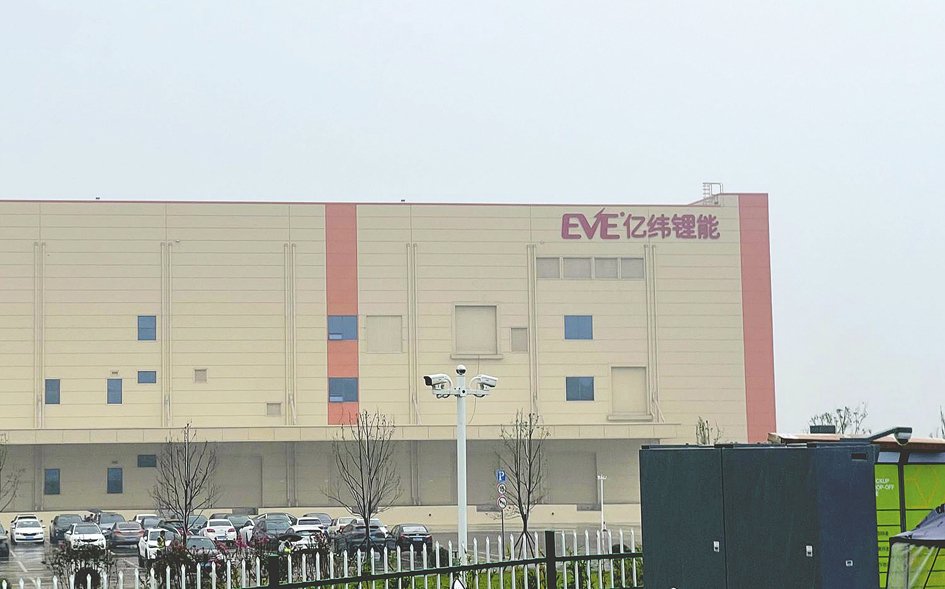
Core Viewpoint - The solid-state battery sector in China is experiencing significant growth, with leading companies like XianDao Intelligent and Yiwei Lithium Energy seeing substantial stock price increases, indicating strong market interest and potential for future production [1][3][4]. Company Developments - Yiwei Lithium Energy's solid-state battery production line in Chengdu has begun testing, with plans for mass production targeting 2027 [3][4]. - The Chengdu facility aims for an annual production capacity of nearly 500,000 cells, with the first phase expected to be completed by December 2025 [4]. - The "Longquan No. 2" solid-state battery produced has a high energy density of 300Wh/kg and is intended for advanced applications such as humanoid robots and AI [4][8]. Industry Context - The global solid-state battery industry faces challenges, particularly in the U.S. and Japan, where companies are struggling with production timelines and technical hurdles [9][11]. - Chinese companies are accelerating their efforts, with Yiwei Lithium Energy and other firms like CATL targeting small-scale production by 2027 [17][18]. - The Chinese government is actively supporting the development of solid-state batteries, aiming to establish several leading companies in the sector by 2027 [18]. Technical Challenges - The solid-state battery technology is recognized as complex, with issues such as the "solid-solid interface" and the production of lithium sulfide posing significant challenges [12][15]. - Despite advancements, the commercial viability of solid-state batteries remains uncertain, with ongoing research needed to address material and production challenges [12][15][16].

先惠技术斩获全球龙头匈牙利电池产线新订单!
起点锂电· 2025-09-06 10:56
Core Viewpoint - Xianhui Technology has successfully received a notification from a leading global battery company to build a battery production line project in Hungary, highlighting its strong technical capabilities and market reputation since entering the European market in 2017 [2]. Group 1: Company Performance - In the first half of 2025, Xianhui Technology achieved an operating revenue of 1.273 billion yuan and a net profit attributable to shareholders of 152 million yuan, representing a year-on-year growth of 17.44% [2]. - The net profit after deducting non-recurring gains and losses was 144 million yuan, with a year-on-year increase of 21.04% [2]. Group 2: Strategic Partnerships - Xianhui Technology has formed a strategic partnership with leading solid-state battery company Qingtai Energy, signing a joint research and development agreement for core equipment of all-solid-state batteries [2]. - In August 2025, both companies signed a comprehensive cooperation agreement to establish an "Advanced Process R&D Institution for Solid-State Batteries," focusing on addressing core industry challenges and promoting the industrialization of solid-state and semi-solid-state batteries [3]. Group 3: Market Opportunities - Europe is identified as a core market for new energy with significant potential and relatively low current development levels, prompting the company to continue expanding its business in this region [2]. - The company aims to leverage technological innovation to explore more growth opportunities in the European market [2].


中石化、沙特阿美,投了一位科学家
DT新材料· 2025-09-05 16:04
Core Viewpoint - The article highlights the strategic investment by Aramco Ventures in the solid-state battery unicorn, Zhongke Shenlan Huize New Energy, which focuses on polymer-based solid-state batteries with significant advancements in energy density and lifecycle [2]. Group 1: Company Overview - Zhongke Shenlan Huize New Energy, established in April 2022, specializes in polymer-based solid-state batteries and has launched its second-generation product with an energy density of 310–340 Wh/kg, supporting fast charging and high discharge rates [2]. - The company aims to achieve energy densities of 450 Wh/kg and 550 Wh/kg by 2023 and 2025, respectively, with a long-term goal of reaching 700 Wh/kg by 2030 [2]. - The first production line for polymer-based solid-state batteries is under equipment debugging and is expected to commence operations in 2025 [2]. Group 2: Technology and Market Position - Polymer-based solid-state batteries offer advantages in manufacturability, utilizing about 80% of existing lithium battery production equipment and avoiding precious metals, resulting in lower material costs [3]. - The flexibility of polymer materials addresses the solid-solid interface contact issue, a common bottleneck in solid-state battery technology [3]. Group 3: Industry Trends and Investment Landscape - The article notes a trend where scientists with core technologies are increasingly attracting capital, reflecting a shift in investment focus from ecological marketing to technology [4]. - Successful cases of scientists transitioning to entrepreneurship are rare, highlighting the challenges of bridging the gap from laboratory to market [5]. - Collaborations between scientists and established companies are suggested as a more viable path for many researchers, allowing them to focus on their expertise while leveraging professional management [6].


沧州明珠(002108.SZ):跟清陶能源有业务往来,但截至目前业务量较小
Ge Long Hui· 2025-09-05 07:21
Group 1 - The company, Cangzhou Mingzhu (002108.SZ), has business dealings with Qingtao Energy, but the current business volume is relatively small [1]

中金 | 固态电池系列报告一:锂电皇冠上的明珠,产业化浪潮将至
中金点睛· 2025-09-04 23:42
Core Viewpoint - Solid-state batteries are expected to become the next generation of lithium battery technology due to their high safety and energy density, with significant investment opportunities arising from technological breakthroughs and industrial transformation [2][4]. Group 1: Market Demand and Projections - The commercialization of solid-state batteries is accelerating due to policy support, market demand, and technological breakthroughs, with a projected global shipment of 808 GWh by 2030 [4][10]. - By 2030, the demand for semi-solid-state batteries is expected to exceed 650 GWh, with specific demands from power, energy storage, EVTOL, and consumer electronics at 466 GWh, 90 GWh, 60 GWh, and 36 GWh respectively [10]. - Full solid-state batteries are anticipated to achieve small-scale production by 2027 and commercial production by 2030, with a demand forecast of over 150 GWh [10]. Group 2: Material Innovations - The solid-state battery technology is converging towards the sulfide electrolyte route, which currently has high costs but significant cost reduction potential with scale [5][12]. - The long-term focus for anode materials is shifting towards lithium metal due to its high capacity and low electrode potential, with ongoing advancements in production methods [25][27]. - The cathode materials are expected to transition from high-nickel ternary materials to lithium-rich manganese-based materials, which offer high capacity and lower costs [23]. Group 3: Equipment and Manufacturing Processes - The value of equipment for solid-state batteries is significantly increasing due to the introduction of new processes and equipment in both the front and mid-stages of production [6][29]. - The front-end production requires dry electrode processes that are more compatible with sulfide electrolytes, enhancing production efficiency and reducing costs [30][32]. - The mid-stage production will replace winding with stacking processes, necessitating new equipment such as glue frame printing and isostatic pressing to ensure tight contact between solid electrolyte and electrodes [31][39]. Group 4: Competitive Landscape - Various companies are advancing their production capabilities for solid-state battery components, including sulfide and halide electrolytes, with significant investments in R&D and production lines [22][20]. - Companies like Ganfeng Lithium and Tianqi Lithium are focusing on lithium metal anodes, while others are developing advanced manufacturing techniques for solid-state batteries [27][26]. - The industry is witnessing a shift towards more efficient and cost-effective production methods, with several firms already implementing dry processing technologies [36][41].

下一个投资风口?固态电池核心材料解析与标的梳理(附报告下载与解读)
材料汇· 2025-09-04 16:01
Core Viewpoints - Solid-state batteries are no longer a distant future technology but are becoming a disruptive force in the energy landscape [2] - The report emphasizes that oxide and sulfide are the two most feasible technical routes for solid-state batteries, with composite aluminum foil being a key material to address core bottlenecks [7][14] - The industry is entering a golden window for commercialization, with 2027 being a critical milestone for solid-state battery production [16] Technical Route Assessment - **Oxide Route (Short to Medium Term Certainty)**: Achieved semi-solid state battery commercialization with energy density reaching 350Wh/kg, compatible with existing lithium battery production lines. The demand for oxide semi-solid state batteries is expected to reach 45GWh by 2027, corresponding to a market size of approximately 5.4 billion [9][36] - **Sulfide Route (Long-Term Potential)**: Known for ultra-high ionic conductivity (>10mS/cm), it faces challenges such as high costs (lithium sulfide prices at 3-5 million per ton), complex manufacturing processes, and interface stability issues. The market demand for sulfide solid-state batteries is projected to exceed 200 billion by 2030 [9][10] Key Material Opportunities - **Composite Aluminum Foil**: Utilizes a "metal-polymer-metal" sandwich structure to absorb volume expansion during charge/discharge, enhancing energy density by approximately 4.2%. Companies like Yinglian and Kecuan Technology have validated their products with leading clients [9][10] - **New Collectors**: Iron-based collectors and nickel-plated copper foil effectively address sulfide corrosion issues, offering a balance of safety and performance at a lower cost compared to stainless steel and pure nickel [10] Market Potential - The report forecasts that by 2030, the demand for solid-state batteries (including both power and consumer applications) will reach 150GWh, corresponding to a total market size of 229.2 billion. The market sizes for key materials are projected as follows: - Sulfide solid electrolyte: 178.4 billion - Composite aluminum foil: 48.5 billion - Oxide solid electrolyte: 9.9 billion [14][16] Policy Support - The government has allocated 6 billion yuan in special subsidies to support the R&D of solid-state batteries, accelerating the production timelines for major manufacturers from 2030 to 2026-2027 [5][36]