
芒果超媒

Search documents
大模型技术持续降价,AI应用或迎爆发期,“AI应用ETF”——线上消费ETF基金(159793)冲击4连涨
Xin Lang Cai Jing· 2025-08-19 02:02
Group 1 - The core viewpoint is that the cost of AI large models is significantly decreasing due to technological advancements, economies of scale, and market competition, which is expected to positively impact industry development and lead to an explosion in AI applications [1] - In China, the AI industry is thriving, with a notable number of generative AI patents; 27,000 out of 45,000 newly published generative AI patents in 2024 originated from China, accounting for 61.5% of the total [1] - The online consumption ETF fund is positioned as an AI application ETF, closely tracking the CSI Hong Kong-Shenzhen Online Consumption Theme Index, and is expected to benefit from the anticipated explosion in AI applications [1] Group 2 - The CSI Hong Kong-Shenzhen Online Consumption Theme Index selects 50 listed companies involved in online shopping, digital entertainment, online education, and telemedicine, reflecting the overall performance of online consumption theme stocks in the mainland and Hong Kong markets [2] - As of July 31, 2025, the top ten weighted stocks in the CSI Hong Kong-Shenzhen Online Consumption Theme Index include Tencent Holdings, Alibaba-W, Meituan-W, Kuaishou-W, JD Health, iFLYTEK, Bilibili-W, Tsinghua Tongfang, Giant Network, and Kunlun Wanwei, with these ten stocks accounting for 53.33% of the total weight [2]
盘前消息面0819|稀土价格再创新高、广电总局21 条放宽电视剧集数…
Xin Lang Cai Jing· 2025-08-19 01:27
Group 1: Non-ferrous Metals - In July, rare earth product exports reached a record high for the year at 6,422 tons, a month-on-month increase of 69%, with magnets being the dominant product [1] - The price of praseodymium and neodymium oxide exceeded 600,000 yuan per ton, and the rare earth index rose by 6% in a single day [1] - Supply constraints are expected due to increased uncertainty in Myanmar mineral imports and a closure of the U.S. mineral window, potentially reducing annual imports by 40,000 tons (10%) [1] - Domestic indicators continue to be strictly controlled, and the supply of scrap materials is unlikely to increase in the short term due to price inversions [1] - Demand for magnetic materials has rebounded, with exports in June reaching 3,000 tons, and major companies have robust overseas orders [1] - The traditional peak season for new energy vehicles, wind power, and variable frequency air conditioners is expected to drive inventory restocking, with prices likely to continue rising in Q3 [1] Group 2: Semiconductor/Chip Industry - The domestic localization rate for semiconductor equipment and materials is increasing, with Yangtze Memory Technologies and Changxin Memory's localization targets raised to 80% and 70%, respectively [2] - Huahong's acquisition of Huali's five factories is expected to increase annual revenue by 25% and net profit by 187%, with depreciation nearly complete, indicating room for revaluation [2] - Cambrian's 4 billion yuan private placement is expected to be completed within two months after approval, with domestic computing power gradually being "unlocked" as SMIC's processes advance [2] Group 3: AI Computing Chips - Haiguang Information is the only domestic company with both CPU and GPU capabilities, showing significant underlying synergy [3] - Jingjia Micro plans to take a controlling stake in Chengheng Micro, focusing on military drones and missiles while also developing software stacks for civilian clients [3] - Aibulu has increased its stake in Zhonghao Xinying to nearly 10%, with the latter's AI TPU performance exceeding NVIDIA's by 1.5 times, leading to a full transformation into AI chips [3] Group 4: Media and Broadcasting - The regulatory environment for the film and television industry has been significantly relaxed, allowing for the potential certification of backlog dramas [4] - The resumption of nationwide talent shows is marked by Mango Super Media's upcoming launch of "Voice of the Future," which aims to replicate the success of "Super Girl" [4] Group 5: Chemical Industry - The domestic market is at a critical point of restarting the inventory cycle, with U.S. durable goods inventory expected to return to positive year-on-year growth [5] - A reversal in overseas inventory cycles could lead to a demand explosion in certain sectors, with significant elasticity in chemical products [5] Group 6: Pharmaceuticals - Novo Nordisk's semaglutide has been approved in the U.S. for treating F2-F3 stage MASH, marking a significant milestone for GLP-1 drugs in the liver disease market [6] - This approval establishes GLP-1's foundational role in MASH treatment and highlights the potential for multi-target therapies, providing new valuation anchors for domestic companies with differentiated pipelines [6] Group 7: Optical Communication Switches - Lumentum and Coherent have reported revenue from OCS optical switches, indicating a shift from proprietary use by companies like Google to commercial viability [7] - This development validates OCS technology as a feasible next-generation data center network architecture, with upstream core component manufacturers expected to benefit first [7]
研判2025!中国视频剪辑软件行业产业链、市场规模、竞争格局、未来趋势:短视频行业的蓬勃发展,为视频剪辑软件带来广阔的需求量[图]
Chan Ye Xin Xi Wang· 2025-08-19 01:17
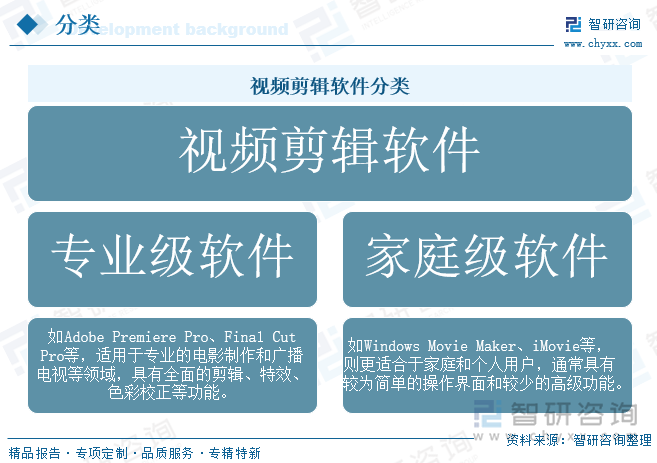
Core Viewpoint - The video editing software industry is experiencing explosive growth driven by the rapid development of the internet and digital media, with significant demand from both traditional film production companies and emerging short video platforms [1][14]. Industry Overview - Video editing software is categorized into professional and consumer-grade software, with professional software like Adobe Premiere Pro and Final Cut Pro used in film and broadcasting, while consumer-grade software like Windows Movie Maker and iMovie caters to personal users [3]. - The market size of China's video editing software industry was 22 billion yuan in 2019 and is projected to grow to 52 billion yuan by 2024, with a compound annual growth rate (CAGR) of 18.8% [1][14]. Market Dynamics - The short video industry in China reached a market size of over 300 billion yuan in 2023, with a projected growth to 345.17 billion yuan in 2024, reflecting an 8.6% year-on-year increase [12]. - The demand for video editing software is expected to continue expanding due to the rapid growth of short video and live streaming industries, as well as increasing user demand for high-quality video content [1][14]. Competitive Landscape - The video editing software market features a diverse competitive landscape with numerous products such as Jianying, Kuaishou, InShot, and others, each catering to different user needs [16]. - Companies are increasing R&D investments to enhance product quality and service levels in response to intensifying market competition [16]. Policy Environment - The Chinese government has implemented various policies to support the healthy development of the video editing software industry, including initiatives to promote the creation of popular micro-short dramas and enhance content quality [5][7]. Industry Trends - The industry is expected to see increased automation and intelligence in video editing software, driven by advancements in AI technologies such as facial recognition and object tracking [22]. - There will be a greater emphasis on cross-platform compatibility, allowing video editing software to operate seamlessly across different operating systems and devices [23]. - The industry is likely to diversify beyond traditional sectors like film and advertising into emerging fields such as gaming, animation, and education, creating broader market opportunities [25].





微短剧爆火,高增长潜力概念股出炉
Zheng Quan Shi Bao Wang· 2025-08-19 01:01
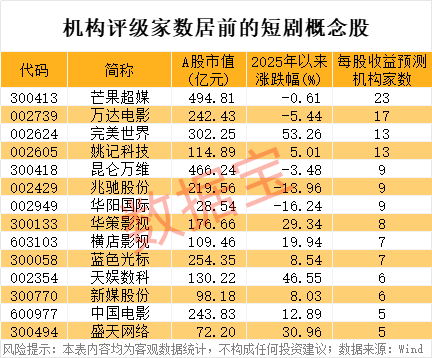
Group 1: Market Performance - The A-share market reached a transaction volume of 2.81 trillion yuan on August 18, marking a new high in nearly 10 months [1] - The Beizheng 50 Index surged by 6.79%, with a year-to-date increase of 51.92%, reaching a historical high [1][2] - Five stocks on the Beizheng Exchange hit the "30cm" limit up, with only five out of 271 stocks declining on the same day [2] Group 2: Industry Insights - The micro-short drama industry is expected to surpass a market size of 1 trillion yuan by 2027, with a projected market size of 505 billion yuan in 2024 [3][4] - The overseas short drama market is also growing, with the first quarter of 2025 seeing revenues exceeding 2.4 billion yuan, led by the US, Japan, and Southeast Asia [3][4] Group 3: Company Developments - A total of 50 A-share companies are involved in the short drama business, with several actively expanding their operations [5] - Companies like Mango Super Media have successfully released multiple short dramas overseas, achieving good broadcasting results [5] - The market capitalization of short drama concept stocks reached 634 billion yuan, with an average increase of 18.84% this year [5][6] Group 4: Institutional Attention - Fourteen short drama concept stocks received positive ratings from five or more institutions, with Mango Super Media receiving the highest number of ratings at 23 [6] - Only three stocks are expected to achieve a net profit growth rate exceeding 20% in the next two years, namely Perfect World, Wanda Film, and Tianyu Shuke [6]
“广电21条”:破40集上限、松绑古装剧,长剧要“翻身”了?
Hu Xiu· 2025-08-19 00:00
Core Viewpoint - The recent surge in the film and television sector is closely linked to the "21 Measures" issued by the National Radio and Television Administration (NRTA), which aims to revitalize the industry by addressing key pain points such as the limitation on the number of episodes and the scheduling of seasonal dramas [1][10][19]. Industry Impact - The NRTA's "21 Measures" include lifting the 40-episode cap, removing the one-year interval requirement for seasonal dramas, and relaxing restrictions on the broadcast ratio of historical dramas, which are expected to significantly benefit the industry [10][11][19]. - The measures have been described as a "timely rain" for the industry, which has faced challenges such as tightened procurement by platforms and a decline in both production and viewership [3][9][19]. Market Reaction - On August 18, the cultural media index rose by 3.11%, with net inflows exceeding 10.257 billion yuan, indicating strong market confidence in the sector following the announcement of the "21 Measures" [4][7]. - Several companies, including Huazhi Shumedia, Huace Film & TV, and Ciweng Media, saw their stock prices hit the daily limit, reflecting investor optimism [4][7]. Production and Content Creation - The industry is witnessing a resurgence in production activity, with multiple film crews accelerating their preparations for new projects, as indicated by increased restaurant bookings in production hubs like Hengdian [3][20]. - The measures are expected to encourage the development of high-quality IPs, allowing for continuous and high-quality content creation, which is crucial for revitalizing the long-form drama market [13][19]. Long-term Trends - The decline in the number of dramas produced has been alarming, with a drop from 429 dramas in 2014 to only 115 in 2024, a decrease of 73% [9][17]. - The rise of short dramas has created a competitive environment for long dramas, with platforms reallocating resources towards shorter formats [9][19]. Future Outlook - The "21 Measures" are anticipated to stimulate both supply and demand in the market, potentially leading to a more vibrant and profitable industry landscape [8][19]. - Companies are optimistic that the new policies will attract capital back into long-form dramas, which have been neglected in favor of shorter formats [18][19].


“广电21条”发布,影视股批量涨停,长剧要“翻身”了?
Mei Ri Jing Ji Xin Wen· 2025-08-18 23:34
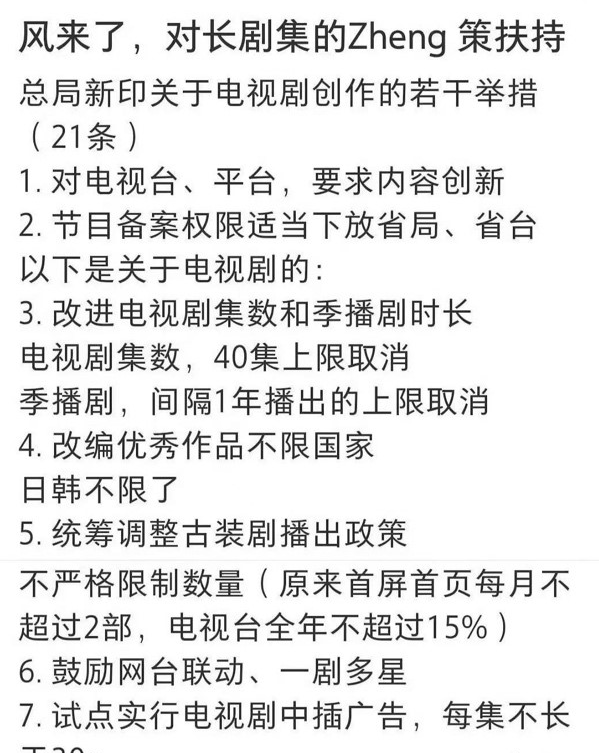
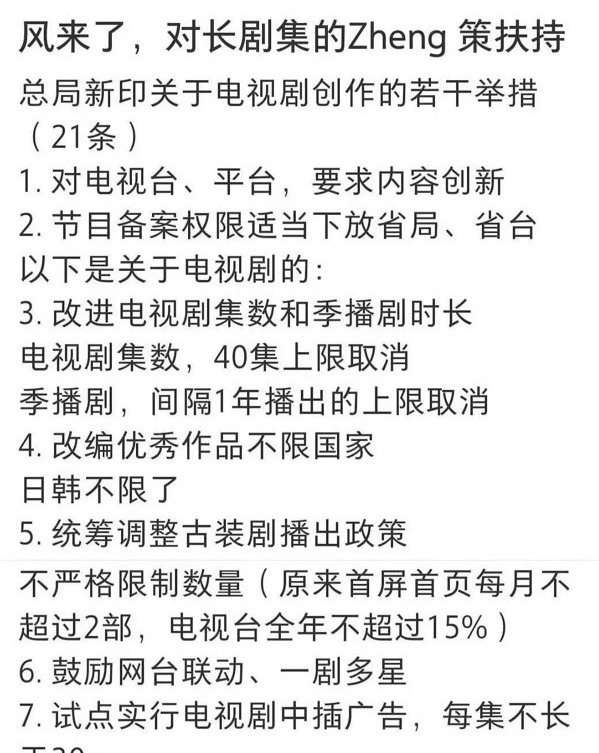
Core Viewpoint - The recent surge in the film and television sector is closely linked to the "21 Measures" issued by the National Radio and Television Administration, which aims to revitalize the industry by addressing key pain points such as the cap on episode counts and restrictions on seasonal broadcasts [1][5]. Group 1: Industry Response - On August 18, the film and television sector saw a significant stock price increase, with the cultural media index rising by 3.11% and a net capital inflow of over 10.257 billion [2][3]. - Major companies like Huazhi Shumedia, Huace Film & TV, and others experienced stock price surges, indicating a positive market reaction to the new policies [2][3]. - The industry has been facing challenges such as reduced production and audience loss, making the new policies a timely relief [1][3]. Group 2: Policy Implications - The "21 Measures" include lifting the 40-episode cap, removing seasonal broadcast intervals, and relaxing restrictions on historical dramas, which are expected to stimulate content creation and market activity [5][6]. - The measures are anticipated to benefit long-form drama production companies, allowing them to explore previously restricted themes [4][6]. - The policies aim to enhance the creative space for producers while providing consumers with more choices, thus stimulating market demand [3][6]. Group 3: Market Dynamics - The television industry has seen a decline in production, with the number of dramas receiving distribution licenses dropping from 429 in 2014 to just 115 in 2024, a decrease of 73% [3][8]. - The rise of micro-dramas has intensified competition for long-form dramas, with micro-drama users reaching 666 million in 2024, reflecting a 14.8% growth [4][8]. - The new policies are expected to encourage a shift back to long-form content, as production companies are now more inclined to invest in high-quality IPs [6][8]. Group 4: Future Outlook - The industry anticipates a revival, with many production teams accelerating their project launches in response to the new policies [9]. - The measures are seen as a catalyst for attracting capital back into the long-form drama sector, which has been struggling with reduced investment [8][9]. - Overall, the "21 Measures" are viewed as a significant step towards revitalizing the film and television industry, fostering a healthier and more dynamic market environment [8][9].

“广电21条”松绑集数、古装剧等限制,影视股批量涨停
Mei Ri Jing Ji Xin Wen· 2025-08-18 22:30
Core Viewpoint - The recent surge in the film and television sector is closely linked to the "21 Measures" issued by the National Radio and Television Administration, which aims to revitalize the industry by addressing key pain points such as the cap on episode counts and restrictions on seasonal broadcasts [1][3][6]. Industry Impact - The "21 Measures" include lifting the 40-episode cap, removing the one-year interval requirement for seasonal dramas, and relaxing the broadcasting ratio for historical dramas, which are expected to significantly benefit long-form drama production companies [8][10]. - The measures have been described as a "timely rain" for the industry, which has faced challenges such as tightened procurement by platforms and a decline in both production and viewership [3][6][11]. Market Response - On August 18, the cultural media index rose by 3.11%, with net inflows exceeding 10.257 billion, indicating strong market confidence in the sector following the announcement of the "21 Measures" [4][6]. - Major companies such as Huazhi Shumedia, Huace Film & TV, and Ciweng Media saw their stock prices hit the daily limit, reflecting investor optimism [4][6]. Production Trends - The industry has been experiencing a decline in production, with the number of dramas receiving distribution licenses dropping from 429 in 2014 to just 115 in 2024, a staggering 73% decrease [6][11]. - The rise of micro-dramas has further squeezed the space for long-form dramas, with micro-drama users reaching 662 million in 2024, growing at a rate of 14.8% [7][11]. Future Outlook - The "21 Measures" are expected to stimulate both supply and demand in the market, allowing for more creative freedom and a broader selection for consumers, which could lead to a revival of the long-form drama market [6][10]. - Industry insiders anticipate that the measures will encourage the production of high-quality content and attract capital back into the long-form drama sector, which has been neglected in favor of shorter formats [10][11].
“广电21条”:破40集上限、松绑古装剧!影视股批量涨停,长剧要“翻身”了,“我们在加速开机”
Mei Ri Jing Ji Xin Wen· 2025-08-18 17:25
Core Viewpoint - The recent surge in the film and television sector is closely linked to the "21 Measures" issued by the National Radio and Television Administration (NRTA), which aims to revitalize the industry by addressing key pain points such as the 40-episode limit and restrictions on seasonal dramas [1][4][10]. Group 1: Industry Impact - The NRTA's "21 Measures" include lifting the 40-episode cap, removing the one-year interval requirement for seasonal dramas, and relaxing the broadcast ratio for historical dramas, which are expected to significantly benefit the industry [1][10]. - The film and television industry has faced multiple challenges, including tightened procurement by platforms and a decline in production, leading to a situation where short dramas are squeezing the space for long dramas [4][8]. - The measures are seen as a "timely rain" for the industry, with many production companies accelerating their project preparations in response to the positive news [4][12]. Group 2: Market Response - On August 18, the cultural media index rose by 3.11%, with a net inflow of over 10.2 billion yuan into the film and television sector, indicating strong market confidence following the announcement [5][8]. - Major stocks in the sector, including Huazhi Shumedia (300426.SZ) and Huace Film & TV (300133.SZ), experienced significant gains, with several stocks hitting the daily limit [5][8]. - The NRTA's measures are expected to stimulate both supply and demand sides of the market, enhancing creative space and consumer choice [8][12]. Group 3: Future Prospects - The adjustments in policy are anticipated to lead to a resurgence in long dramas, particularly benefiting companies focused on high-quality IP development [9][12]. - The industry has seen a significant decline in production, with the number of dramas receiving distribution licenses dropping from 429 in 2014 to just 115 in 2024, a decrease of 73% [8][13]. - The measures are expected to attract capital back into the long drama sector, which has been overshadowed by the rise of short dramas, thus potentially reversing the current downward trend in production [12][13].
破40集上限、松绑古装剧!影视股批量涨停,长剧盼来翻身仗?业内人士透露:正在加速开机
Mei Ri Jing Ji Xin Wen· 2025-08-18 16:22
Core Viewpoint - The recent surge in the film and television sector is closely linked to the "21 Measures" issued by the National Radio and Television Administration (NRTA), which aims to revitalize the industry by addressing key pain points such as the cap on episode counts and restrictions on seasonal broadcasts [1][3][8]. Industry Impact - The NRTA's "21 Measures" include lifting the 40-episode cap, removing the one-year interval requirement for seasonal dramas, and relaxing restrictions on the broadcast ratio of historical dramas, which are expected to significantly benefit the industry [1][8]. - Following the announcement, the film and television stocks experienced a collective surge, with the cultural media index rising by 3.11% and a net inflow of over 10.257 billion yuan into the sector [4][6]. Market Dynamics - The industry has faced challenges such as tightened procurement by platforms, increased restrictions on episode counts, and capital withdrawal, leading to a decline in both production and viewership [3][7]. - The introduction of the "21 Measures" is seen as a timely intervention, with industry insiders expressing optimism about the potential for increased production and creative freedom [3][9]. Company Opportunities - Companies like Baidu Qiancheng and Huanrui Century are expected to be among the first to benefit from the new policies, allowing them to explore previously restricted themes and formats [7][9]. - The measures are anticipated to stimulate the production of high-quality long dramas, which have been under pressure from the rise of short dramas [7][9]. Future Outlook - The NRTA's initiatives are viewed as a means to rejuvenate the long drama market, with expectations of increased investment and production activity in the coming months [9][14]. - Industry experts believe that the adjustments will lead to a more favorable environment for high-quality IP development, potentially reversing the trend of declining production numbers [9][14].
影视游戏AIIP投资逻辑再梳理
2025-08-18 15:10
影视游戏 AIIP 投资逻辑再梳理 20250818 摘要 影视行业与新消费模式深度融合,通过 IP 影视化满足用户精神需求,短 剧崛起尤为显著,市场规模已超 500 亿元,并成功出海,长视频平台和 广电系统积极推动其精品化,为行业带来新机遇。 文旅结合是 IP 商业化的有效途径,《繁花》带动上海黄河路旅游即为典 型案例。政策支持题材多样化和创新,生成式 AI 技术降低制作成本,提 高效率,助力小型团队创作高质量内容。 AI 技术在影视行业应用显著,降本提效,促进内容多样化和创新,吸引 年轻用户,推动微短剧、精品化内容及 IP 与文旅结合,拓展潮玩、卡牌 等周边市场,为行业带来更多商业变现机会。 游戏行业正经历供需共振下的新一轮景气周期,受情绪消费刚需驱动, 新品供给不断释放。二次元女性向游戏、放置养成类游戏及 SLG 加休闲 类游戏受年轻和女性用户追捧,预计高景气周期将延续。 端游市场自去年以来持续回暖,高景气度显著,如腾讯《三角洲行动》 和网易《梦幻西游》表现突出,拉动线下网吧电竞酒店流量回升,并促 使新游加大广告投放,为相关服务公司带来业绩增量。 Q&A 传媒行业中,影视板块的现状和未来发展趋势如何? ...