赛诺菲

Search documents
最近,VC/PE都去福建了
母基金研究中心· 2025-09-04 08:54
Core Viewpoint - The article highlights the active role of the Fujian provincial government investment fund in attracting VC/PE attention through various initiatives and funding announcements, which is seen as a positive development for private equity investment in China [2][3]. Group 1: Fund Activities and Announcements - On August 22, the Fujian provincial government investment fund announced the selection of GP for the second batch of specialized sub-funds, following the public announcement of the first batch of five sub-fund managers on July 21 [2]. - The provincial fund has been active this year, launching multiple funds with target sizes of 1 billion for a biomedicine fund, 5 billion for a merger fund, 5 billion for an S fund, and 3 billion for a cultural tourism fund, indicating consistent progress and announcements [2]. - The fund's establishment and operations are efficient, having received government approval in February and subsequently releasing the first batch of sub-fund selection announcements in March [3]. Group 2: Policy Support and Mechanisms - The Fujian provincial fund has implemented positive incentives for sub-funds, allowing for profit-sharing based on development outcomes, with a maximum of 50% of government investment returns [4]. - Significant adjustments have been made to the fund management guidelines, including lowering the minimum return ratio from 1.5 times to 1 time the government investment and establishing a compliance exemption mechanism for investment failures under certain conditions [5]. - The fund's investment period has been extended to 30 years, reflecting a commitment to "patient capital" that can endure long investment cycles typical of technology innovation [6]. Group 3: Strategic Goals and Collaborations - Fujian aims to establish a comprehensive fund matrix, targeting the creation of a 300 billion functional fund group and a 1 trillion industrial fund group within five years, enhancing the role of government-led funds [7][9]. - The provincial government has successfully set up nine government investment funds totaling 13.3 billion, focusing on industries such as digital technology, new energy, and biomedicine [8]. - Collaborations with leading industry players and national funds are being fostered to enhance the resilience and security of industrial supply chains, with specific funds established for carbon neutrality and biomedicine [10]. Group 4: Future Outlook - The article anticipates that Fujian's continuous optimization of policies and mechanisms will enhance its attractiveness to VC/PE, driving talent, enterprises, and resources to the region [11]. - The upcoming 29th World Investment Conference and the 8th Sharjah Investment Forum are expected to facilitate discussions on emerging industries and foreign investment cooperation [12].


X @Bloomberg
Bloomberg· 2025-09-04 07:20
Stock Performance - Sanofi shares experienced a decline following disappointing results from a late-stage trial of its experimental dermatitis drug [1] Pharmaceutical Development - The experimental drug for dermatitis failed to meet investor expectations in a late-stage trial [1]

Press Release: Sanofi’s amlitelimab met all primary and key secondary endpoints in the COAST 1 phase 3 study in adults and adolescents with atopic dermatitis
Globenewswire· 2025-09-04 05:01
Core Insights - Amlitelimab, a monoclonal antibody targeting OX40-ligand, met all primary and key secondary endpoints in the COAST 1 phase 3 study for atopic dermatitis, showing significant skin clearance and reduced disease severity compared to placebo at Week 24 [1][2][5] - The study demonstrated that amlitelimab can be administered every four or twelve weeks, potentially allowing for only four doses per year, which may represent a significant advancement in treatment options for atopic dermatitis [2][5][10] Study Details - The COAST 1 study was a randomized, double-blind, placebo-controlled trial involving 601 participants aged 12 years and older with moderate-to-severe atopic dermatitis, conducted across 15 countries [9] - Key endpoints included the proportion of patients achieving a validated investigator global assessment scale for AD (vIGA-AD) of 0 or 1 and a reduction from baseline score of ≥2 points, as well as a 75% or greater improvement in the eczema area and severity index total score (EASI-75) [2][3][9] Efficacy Results - At Week 24, 21.1% of patients on Q4W and 22.5% on Q12W achieved vIGA-AD 0/1 compared to 9.2% in the placebo group, with p-values <0.01 [3] - EASI-75 was achieved by 35.9% of patients on Q4W and 39.1% on Q12W, compared to 19.1% in the placebo group, with p-values <0.001 [3] Safety Profile - Amlitelimab was well-tolerated, with no new safety concerns identified; the most common treatment-emergent adverse events were mild and included atopic dermatitis, nasopharyngitis, and upper respiratory tract infection, all more common in the placebo group [7][8] - Injection site reactions were slightly higher in the amlitelimab arms (2.2%) compared to placebo (0.7%), but all were mild and resolved without discontinuation of the study medication [7] Future Outlook - Additional phase 3 results from the OCEANA clinical development program, which includes COAST 1 and four other studies, are expected through 2026 and will inform potential global regulatory submissions [8][10] - Amlitelimab is under clinical investigation and has not yet been evaluated by any regulatory authority [8]

从胰岛素到减肥针,这家百年药企“用技术温暖生命”
3 6 Ke· 2025-09-04 01:53
Core Insights - Novo Nordisk has transformed from a company focused on animal insulin to a global leader in diabetes treatment, exemplified by the success of semaglutide, which has gained recognition as a "miracle drug" for both diabetes management and weight loss [1][2][41]. Historical Development - The company was founded in 1923 after Danish couple brought insulin production technology from Canada, marking the beginning of its journey in diabetes treatment [9][10]. - Novo Nordisk emerged from a split with Nordisk Insulin Laboratorium, leading to a competitive landscape in the Danish insulin market [10][11]. Market Dynamics - By the 1980s, the global insulin market was dominated by major players like Eli Lilly and Sanofi, while Novo Nordisk and Nordisk faced internal competition and limited scale [11][12]. - The introduction of recombinant human insulin by Genentech in 1982 shifted the market dynamics, but Novo Nordisk focused on patient experience rather than just product purity [13][14][15]. Innovation and Product Development - Novo Nordisk's focus on patient needs led to the development of the NovoPen in 1986, significantly improving the injection experience for patients [18][21]. - The company transitioned from device innovation to molecular design, creating long-acting insulin formulations that reduced injection frequency [26][27]. Global Expansion and Localization - Novo Nordisk established a presence in China in 1994, localizing production and integrating into the healthcare ecosystem [33][35]. - The company has committed to synchronizing drug launches in China with global timelines, exemplified by the recent approval of icodec [37][38]. Commitment to Patient-Centric Innovation - The company's innovation philosophy emphasizes understanding patient needs, leading to the development of GLP-1 drugs that address both diabetes and obesity [39][40]. - Novo Nordisk's recent success with semaglutide has significantly increased its market valuation, highlighting the effectiveness of its patient-focused approach [41][42]. Future Directions - The company continues to pursue advanced therapies, including stem cell research, aiming for a potential cure for diabetes [43][44].


药明合联拟配股筹资逾13亿港元;深圳为合成生物立法
2 1 Shi Ji Jing Ji Bao Dao· 2025-09-04 00:37
Group 1: Legislative Developments - Shenzhen has passed the "Regulations on Promoting the Innovative Development of the Synthetic Biology Industry" aimed at addressing challenges in the synthetic biology sector, effective from October 1 [1] Group 2: Healthcare Financing - Quanzhou has initiated a monthly settlement model for medical insurance funds based on Disease Related Groups (DRG), aimed at alleviating financial pressure on medical institutions and enhancing their development [2] Group 3: Drug Approvals - Haisco has received approval for clinical trials of its innovative drug HSK47388 for treating autoimmune diseases, marking a new indication for the drug [3] - Sanofi's drug Trelagliptin has been approved for use in delaying the progression of Type 1 diabetes in patients aged 8 and above [4] Group 4: Capital Market Activities - WuXi AppTec plans to raise over HKD 1.31 billion through a share placement at HKD 58.85 per share, with a maximum of 22,277,000 shares to be placed [5] - Qiyuan Bio has completed nearly RMB 200 million in Series B financing to accelerate pipeline development and commercialization [6] Group 5: Executive Appointments - Haisen Bio has appointed Leo Liu as the new CEO to oversee the company's strategic planning and operational management [7]

MRK Posts Cholesterol Drug Data, Focus Shifts Back to Its Pipeline
ZACKS· 2025-09-03 15:11
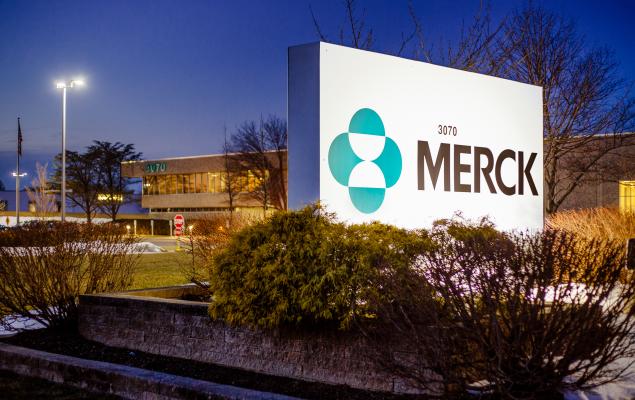
Core Insights - Merck (MRK) is experiencing growth driven by new products and a robust pipeline, particularly in oncology, vaccines, and infectious diseases [1][2] - The company's phase III pipeline has nearly tripled since 2021, positioning it to launch around 20 new vaccines and drugs in the coming years, many of which have blockbuster potential [2][10] Pipeline and Product Development - Promising late-stage candidates include enlicitide decanoate/MK-0616 for hypercholesterolemia, tulisokibart for ulcerative colitis, and bomedemstat for blood disorders [3][6] - The CORALreef Lipids study demonstrated that enlicitide decanoate significantly reduced LDL cholesterol levels compared to placebo, meeting all primary and key secondary endpoints [4][5][10] - If approved, enlicitide decanoate could be the first oral PCSK9 inhibitor, potentially transforming LDL management [6][10] Competitive Landscape - The cholesterol management market is competitive, with existing PCSK9 inhibitors like Amgen's Repatha and Regeneron's Praluent, as well as AstraZeneca's developing oral PCSK9 inhibitor, AZD0780 [7][8] Long-Term Growth Strategy - Merck is focusing on new drug approvals to sustain growth, especially as its blockbuster Keytruda faces loss of exclusivity in 2028 [11] - New products like the 21-valent pneumococcal conjugate vaccine Capvaxive and pulmonary arterial hypertension drug Winrevair are expected to generate significant revenues [11][12] Financial Performance and Valuation - Year-to-date, Merck's shares have decreased by 14.1%, contrasting with a 0.5% decline in the industry [13] - Merck's price/earnings ratio is currently at 9.12, lower than the industry average of 14.78, indicating attractive valuation [14] - The Zacks Consensus Estimate for 2025 earnings has slightly increased, while the estimate for 2026 has decreased [15]

价值千亿的抗癌“救星”,诺华全球“狂挖”同位素
阿尔法工场研究院· 2025-09-03 00:03
Core Viewpoint - Novartis has emerged as a pioneer in the field of targeted radioligand therapy, demonstrating significant clinical results in cancer treatment [2][3] Group 1: Clinical Results and Innovations - Initial clinical trials of Novartis' radioligand therapy showed that approximately 9% of participants had complete cancer cell disappearance, which increased to 21% in subsequent trials [3] - The therapy involves intravenous administration of a solution containing radioactive isotopes attached to ligands that specifically target cancer cell receptors, allowing for precise delivery of radiation [5] - Lutathera, a radioligand therapy drug acquired by Novartis, was first approved in 2017 for certain gastrointestinal cancers, and Pluvicto, a prostate cancer drug, received approval in 2022 with expanded indications [8][14] Group 2: Market Potential - The market for radioligand therapy is estimated to reach $10 billion, with potential growth to $25-30 billion if the therapy meets expectations [8][11] - Novartis is exploring various isotopes and therapy combinations, aiming to expand indications to other cancer types such as lung, breast, pancreatic, and colon cancers [9][11] Group 3: Challenges and Logistics - The production and delivery of radioligand therapy face significant logistical challenges, including the need for rapid production and transportation of radioactive materials to patients within a limited time frame [12][15] - Novartis has been investing in overcoming these challenges, including the use of generative AI to predict logistics issues and the establishment of additional production facilities in China, Japan, and the U.S. [14][16] - The therapy requires specialized facilities for patient isolation due to the retention of radioactive materials in the body, which poses additional infrastructure challenges [15][16] Group 4: Competitive Landscape - Other pharmaceutical companies, including Eli Lilly, AstraZeneca, and Sanofi, are also pursuing opportunities in the radioligand therapy space, indicating a growing competitive market [9] - Novartis has a first-mover advantage with seven potential radioligand therapies in clinical trials and a strong pipeline, setting a high entry barrier for competitors [9][16]

Why Thermo Fisher Scientific Stock Tumbled Today
The Motley Fool· 2025-09-02 22:57
Core Viewpoint - Investors reacted negatively to Thermo Fisher Scientific's recent acquisitions, leading to a decline in its stock price, which fell more than 1% compared to the S&P 500's 0.7% drop [1] Group 1: Acquisition Details - Thermo Fisher completed two acquisitions, with the more significant one being the $4 billion purchase of Solventum's purification and filtration business, previously part of 3M [2] - The second acquisition involved a sterile finish-and-fill factory in New Jersey, previously owned by Sanofi, which will continue to manufacture therapies for Sanofi while expanding its capacity for other pharmaceutical and biotech customers [5][6] Group 2: Financial Impact - The new unit from the Solventum acquisition is expected to negatively impact Thermo Fisher's bottom line in the first year, reducing non-GAAP adjusted net income by $0.06 per share [4] - By the fifth year of ownership, the business is projected to generate approximately $125 million in adjusted operating income due to anticipated revenue and cost synergies [5]


诺和诺德5.5亿美元引进代谢药;迈威生物重递港股申请
2 1 Shi Ji Jing Ji Bao Dao· 2025-09-01 00:13
Policy Developments - Guangzhou's "Sui Xin Bao" has added 60 innovative drugs and 6 hospitals, enhancing its coverage to include local innovative drugs and those not covered by medical insurance [1] - Shandong Province has implemented a funding management method to support the consistency evaluation of generic drug quality and efficacy, offering up to 2 million yuan for qualifying products [2] Drug Approvals - Sanofi's covalent inhibitor Wayrilz (rilzabrutinib) has been approved by the FDA for treating adult patients with immune thrombocytopenia (ITP) [3] - Heng Rui Medicine's new drug Zemeituosita tablets has been approved, marking it as the first domestic EZH2 inhibitor for treating relapsed or refractory peripheral T-cell lymphoma [4] Financial Reports - Shanghai Laishi reported a revenue of 3.952 billion yuan for the first half of 2025, a decrease of 7.06%, with a net profit of 1.03 billion yuan, down 17% [5] - Beijing Tongrentang achieved a revenue of 9.769 billion yuan in the first half of 2025, with a net profit of 945 million yuan, a decrease of 7.39% [6][8] - Shapuaisi turned a profit with a net profit of 21.86 million yuan, recovering from a loss in the previous year [7] - Yixin Hall reported a revenue of 8.914 billion yuan, down 4.20%, with a net profit of 250 million yuan, down 11.44% [9] - Changchun High-tech reported a revenue of 6.603 billion yuan, down 0.54%, with a net profit of 983 million yuan, down 42.85% [10] Corporate Actions - Maiwei Biotech has re-submitted its application for H-share listing on the Hong Kong Stock Exchange [11] - Olin Biotech plans to acquire a 15% stake in its subsidiary Xin Nuo Ming Biotech to enhance control and management efficiency [12] - Meinian Health signed a cooperation framework agreement with Guofu Quantum and Jingbeifang to explore digital asset business in the health sector [13] Industry Events - Hainan Lecheng signed cooperation agreements with 13 leading biopharmaceutical companies, with expected total investments of no less than 3 billion yuan [14] - Novo Nordisk has invested up to $5.5 billion in a partnership with Replicate Bioscience to develop new therapies for metabolic diseases [15]





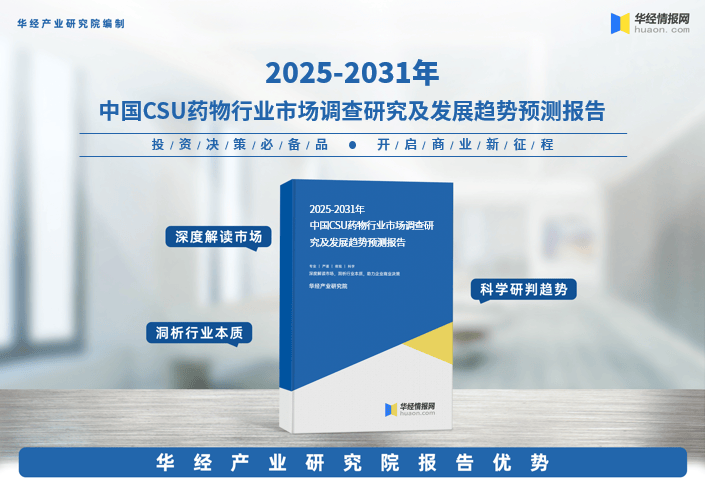
2025年中国CSU药物行业发展现状、竞争格局及趋势预测
Sou Hu Cai Jing· 2025-08-31 07:12
Core Viewpoint - The CSU (Chronic Spontaneous Urticaria) drug market is experiencing significant growth, driven by technological innovations, policy support, and an increasing number of patients, with projections indicating a market size increase from 124 billion to 417 billion by 2030, reflecting a compound annual growth rate (CAGR) of 16.2% from 2024 to 2030 [1][13]. Industry Overview - CSU is a common allergic disease characterized by recurrent hives and itching lasting more than six weeks, with a growing market for drugs aimed at treating this condition [6][7]. - The CSU drug industry consists of a collaborative supply chain, including research and development, manufacturing, and market distribution, which is continuously improving due to technological advancements and supportive policies [8][9]. Market Size and Growth - The CSU drug market size is projected to grow from 124 billion in 2019 to 169 billion in 2024, with expectations to reach 417 billion by 2030 [13][14]. - The global prevalence of CSU is also increasing, with the number of patients rising from 65.5 million in 2018 to an estimated 69.7 million by 2024, indicating a stable demand for treatment [11][12]. Competitive Landscape - Historically, foreign companies like Novartis dominated the CSU drug market with their product Omalizumab, but they now face challenges due to patent expirations and increasing competition from domestic firms [15][17]. - Domestic companies such as Tianchen Biotech and Jimin Kexin are emerging with innovative treatments, including next-generation anti-IgE antibodies, which may disrupt the current market dynamics [15][17]. Research and Analysis Methodology - The research team employs a combination of desktop research, quantitative surveys, and qualitative analysis, utilizing various models such as SCP, SWOT, PEST, and regression analysis to comprehensively assess the CSU drug industry [2][22]. - A detailed report titled "2025-2031 China CSU Drug Industry Market Research and Development Trend Forecast" has been compiled to provide insights for enterprises, research institutions, and investment organizations [22].