罗氏

Search documents
全球制药业洞察 | 关税犹存不确定,药企争相“表忠心”
彭博Bloomberg· 2025-07-17 01:21
Core Viewpoint - The article discusses the uncertainty surrounding drug tariffs and the focus on the U.S. supply chain, highlighting that pharmaceutical and biotech companies are emphasizing their global networks and committing to increased investments in the U.S. over the next decade to mitigate potential impacts from new tariffs [3]. Group 1: U.S. Business and Layout Scrutiny - Biotech companies are showcasing their existing manufacturing networks and quantifying their revenue or profit exposure in various regions, with a shift in production focus due to policy impacts [4]. - Companies like Argenx and Vertex emphasize that a significant portion of their revenue and production occurs in the U.S., with Argenx stating that over 75% of its U.S. revenue comes from domestic manufacturing [5]. - Zai Lab has localized some production in China but is adjusting its strategy to shift production of upcoming drugs to the U.S. [4]. Group 2: Investment Commitments - Large pharmaceutical companies have committed over $270 billion in capital expenditures over the next decade, with U.S. biotech companies contributing more than $40 billion, primarily driven by Gilead's $32 billion commitment [7]. - Regeneron plans to double its manufacturing capacity in the U.S., while Amgen is also increasing investments in its U.S. manufacturing sites [7]. Group 3: Import Trends and Tariff Impacts - The proposed tariffs may accelerate the decline in the share of drugs imported from Canada, Mexico, and China, which collectively accounted for about 25% of U.S. drug imports in 2024, down from nearly 40% in 2010 [8][9]. - The share of drug imports from India has increased from 9% to 14% during the same period, indicating a shift in sourcing [8]. - Any increase in U.S. pharmaceutical costs could negatively impact demand in the EU, as the U.S. accounted for over 38% of EU drug imports in 2024, up from 33% in 2017 [11].


博瑞医药(688166):在研管线进展点评:BGM0504片IND申请获受理,稀缺双靶点口服多肽即将进入临床
Soochow Securities· 2025-07-16 07:02
Investment Rating - The report upgrades the investment rating of the company to "Buy" [10] Core Views - The IND application for BGM0504 has been accepted, marking a significant step for the company as it prepares to enter clinical trials with a rare dual-target oral peptide [9] - The potential of amylin is highlighted, with BGM1812 being a long-acting amylin analog currently in the preclinical stage, indicating a favorable competitive landscape [3] - The oral formulation of BGM0504 is expected to have better compliance and penetration compared to injectable forms, with the same molecular structure showing promising efficacy in previous studies [9] Financial Projections - The company forecasts total revenue of 1,180 million in 2023, increasing to 1,762 million by 2027, reflecting a compound annual growth rate (CAGR) of 18.21% [11] - The projected net profit attributable to the parent company is expected to rise from 202.47 million in 2023 to 433.39 million in 2027, with a notable growth rate of 43.06% in 2027 [11] - The earnings per share (EPS) is projected to increase from 0.48 in 2023 to 1.03 in 2027, indicating a strong upward trend in profitability [11] Market Data - The closing price of the stock is reported at 69.16 yuan, with a market capitalization of approximately 29,238.65 million [6] - The price-to-earnings (P/E) ratio is currently at 144.41, expected to decrease to 67.47 by 2027, suggesting improving valuation metrics as earnings grow [11]

周度行情前瞻暨重点个股推荐(创新药)
2025-07-16 06:13
Summary of Conference Call Industry Overview - The focus of the conference call was on the innovative drug sector, particularly the dual-antibody (双抗) approach in the pharmaceutical industry [5][11][19]. Key Points and Arguments - The pharmaceutical index increased by 1.2% this week, while it has remained relatively flat year-to-date, showing a slight decline of 0.2% [5]. - The chemical drugs sector rose by 2.9%, and medical devices increased by 0.5%, indicating a positive trend in these areas [6]. - The H-share biotechnology index surged by 30% year-to-date, outperforming the Hang Seng Technology Index by 7% [6]. - Notable H-share performers included companies like 康方生物 (Kangfang Biotech), which saw a 40% increase, and 荣昌生物 (Rongchang Biotech), which rose by 30% [6]. Market Sentiment - The approval of 康方生物's P01 for lung cancer treatment has heightened market enthusiasm for innovative drugs [7]. - The innovative drug sector is believed to be entering a harvest phase, with significant overseas licensing deals expected to materialize in the latter half of 2025 [9][10]. Investment Recommendations - Companies such as 抗发生物 (Kangsheng Biotech), 核减制药 (Hejian Pharma), and 性达生物 (Xingda Biotech) are highlighted as key players in the dual-antibody space [11]. - The conference emphasized the importance of monitoring clinical trial outcomes and market reactions, particularly regarding the dual-antibody products [12][19]. Clinical Data Insights - The conference discussed the clinical trial data for various dual-antibody drugs, noting that the HR (hazard ratio) values for some products were slightly higher than investor expectations, which could impact market sentiment [13][14]. - The potential for further data maturation and the implications for clinical trial designs were also addressed, indicating that the landscape is still evolving [12][16]. Strategic Partnerships - The call highlighted recent deals in the biotech sector, including significant upfront payments and total deal values, indicating a robust interest in dual-antibody and ADC (antibody-drug conjugate) combinations [21][22]. Conclusion - The innovative drug market, particularly the dual-antibody segment, is poised for growth, with ongoing clinical developments and strategic partnerships expected to drive future performance [10][19].
最惠国定价(MFN)解读 & 国内创新药出海机遇
2025-07-16 06:13
Summary of Conference Call Industry Overview - The discussion primarily revolves around the **U.S. pharmaceutical industry** and the implications of the **Most Favored Nation (MFN) pricing policy** proposed by the Trump administration [1][2][3]. Key Points and Arguments 1. **Impact of MFN Pricing Policy**: The MFN pricing policy is expected to create significant pressure on drug pricing in the U.S., with potential price reductions ranging from **30% to 80%** as indicated by the U.S. Department of Commerce [3][5]. 2. **Historical Context**: Historical reforms in drug pricing have often centered around the concept of price negotiation, with the first batch of drugs subject to negotiation seeing price reductions of **38% to 79%**, with six drugs experiencing reductions of over **65%** [4][5]. 3. **Net Price Impact**: Despite the significant label price reductions, the actual net price reduction for pharmaceutical companies is estimated to be around **22%**, which indicates a more moderate impact on revenue than initially perceived [5][6]. 4. **Revenue Implications**: For a hypothetical drug generating **$10 billion** in revenue, the effective impact on revenue due to the MFN policy could be approximately **$550 million**, which is a relatively small percentage of total revenue [6]. 5. **Uncertainty in Implementation**: There remains considerable uncertainty regarding the scope of the negotiations, including whether they will apply to Medicare or Medicaid, and the specific drugs that will be targeted [7][8]. 6. **Potential for Domestic Innovation**: The current pricing pressures may create opportunities for Chinese pharmaceutical companies to expand internationally, particularly in the context of increasing demand for innovative drugs [9][10]. 7. **External Factors Influencing Innovation**: Two critical external factors driving the need for Chinese innovation in pharmaceuticals are the pressure from patent expirations and the unprecedented pricing pressures in the U.S. market [10][11]. 8. **Market Dynamics**: The discussion highlights the importance of external collaborations for multinational pharmaceutical companies, with a significant portion of new drug approvals coming from external partnerships [12][13]. 9. **Cost-Sharing Changes**: The upcoming changes in Medicare's cost-sharing structure, particularly the introduction of a cap on out-of-pocket spending for patients, will shift some financial burdens onto pharmaceutical companies [19][21]. 10. **Long-term Outlook**: The overall sentiment suggests that the MFN policy and related pricing pressures will likely lead to a sustained shift in the pharmaceutical landscape, favoring innovative solutions and potentially benefiting Chinese companies looking to enter global markets [24][25]. Additional Important Content - The call emphasized the need for pharmaceutical companies to adapt to the changing regulatory environment and consider strategic partnerships to enhance their market position [12][13]. - There was a discussion on the implications of the **Inflation Reduction Act** and its potential effects on drug pricing and market dynamics [10][22]. - The call concluded with an invitation for further discussions on the topics covered, indicating ongoing interest and engagement from participants [26].
Corcept Seeks FDA Approval for Relacorilant in Ovarian Cancer
ZACKS· 2025-07-15 15:21
Core Insights - Corcept Therapeutics (CORT) has submitted a new drug application (NDA) to the FDA for its lead candidate, relacorilant, in combination with nab-paclitaxel for treating platinum-resistant ovarian cancer [1][7] - The NDA submission is based on positive data from the pivotal phase III ROSELLA study, which met its primary endpoint of improved progression-free survival [3][2] - The company aims to diversify its product offerings beyond its sole marketed drug, Korlym, to reduce reliance on it for growth [9][7] NDA Submissions and Studies - In December 2024, CORT submitted an NDA for relacorilant to treat hypercortisolism (Cushing's syndrome), which was accepted by the FDA in March 2025 with a target action date of December 30, 2025 [5][2] - The NDA for platinum-resistant ovarian cancer is supported by data from the ROSELLA study and other phase II studies [2][3] - CORT is also conducting additional studies, including the BELLA study, which evaluates relacorilant in combination with nab-paclitaxel and Roche's Avastin for the same indication [10] Financial Performance - Year to date, CORT shares have increased by 44.4%, significantly outperforming the industry average rise of 4.1% [4] - Korlym generated sales of $157.2 million in Q1 2025, reflecting a year-over-year increase of 7.1% due to strong demand [8] Pipeline and Future Prospects - CORT is exploring relacorilant in combination with Xtandi for early-stage prostate cancer and evaluating its selective cortisol modulator dazucorilant for amyotrophic lateral sclerosis (ALS) [11] - Another candidate, miricorilant, is being studied for metabolic dysfunction-associated steatohepatitis [12] - A potential approval for relacorilant could expand CORT's patient base and reduce dependence on Korlym for long-term growth [9]


美元阴云笼罩欧股财报季:欧元升值13%重创欧企北美盈利,对冲策略成关键分水岭
智通财经网· 2025-07-15 08:24
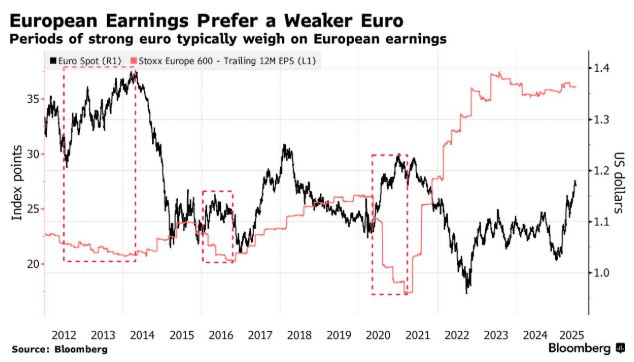
Group 1 - The weak US dollar is expected to negatively impact European companies' earnings, making currency fluctuations a key issue for the earnings season [1] - Since the beginning of 2025, the euro has appreciated nearly 13% against the dollar, while the British pound has risen about 8% [1] - Companies with over 25% of their revenue from North America may face significant impacts from currency fluctuations, especially those lacking effective hedging strategies [1][5] Group 2 - Analysts have generally lowered their expectations, predicting a decline in European corporate earnings, which could lead to further downward revisions if negative trends continue [7] - The Stoxx 600 index is expected to see a year-on-year decline in earnings per share of 3%, marking the largest drop in five quarters due to weak demand and a 3.5% increase in the euro trade-weighted index [9] Group 3 - Sectors most sensitive to currency fluctuations include healthcare, luxury goods, and technology, with companies like Argenx (84% North America exposure) and Fresenius Medical (66% North America exposure) being particularly vulnerable [4] - Companies with advanced hedging strategies tend to perform better, as seen with Brunello Cucinelli SpA, which reported double-digit growth without being affected by currency fluctuations [14]
将搅乱供应链,涉两千亿市场,美“200%医药关税”引多国警惕
Huan Qiu Shi Bao· 2025-07-14 22:48
Core Viewpoint - The U.S. government threatens to impose tariffs of up to 200% on imported pharmaceuticals to encourage "reshoring" of the industry, raising concerns among domestic pharmaceutical companies heavily reliant on imports [1][2]. Group 1: Tariff Impact on Pharmaceutical Industry - The proposed tariffs could affect approximately $200 billion worth of imported pharmaceuticals, potentially increasing drug prices for American consumers [2]. - The pharmaceutical industry is awaiting further details regarding the "232 investigation" results, which will clarify the implications of the tariffs [2]. - A significant portion of U.S. pharmaceutical imports comes from countries like Ireland ($50.3 billion), Switzerland ($19 billion), and India ($12.5 billion) [2]. Group 2: Global Response and Investment Shifts - Global pharmaceutical giants are planning to increase investments in the U.S. to avoid potential tariffs, while countries like Australia are assessing the impact of the proposed tariffs on their exports [3]. - India exports over $8.95 billion worth of pharmaceuticals to the U.S., making it a critical market for Indian pharmaceutical companies [3]. Group 3: Cost and Supply Chain Concerns - The imposition of a 200% tariff could lead to increased production costs, reduced profit margins, and potential supply chain disruptions, resulting in drug shortages and price hikes for consumers [4][5]. - The Pharmaceutical Research and Manufacturers of America (PhRMA) estimates that even a 25% tariff could raise U.S. drug costs by nearly $51 billion annually, with a potential price increase of 12.9% for consumers [4]. Group 4: Long-term Industry Implications - High tariffs may negatively impact U.S. pharmaceutical companies, which rely on imported raw materials for 90% of their production, leading to increased production costs and reduced R&D investments [5][6]. - The complexity of establishing new manufacturing facilities in the U.S. poses challenges, as the costs may exceed the future tariff burdens, hindering investment in domestic manufacturing [6][7]. - The artificial disruption of the existing pharmaceutical supply chain could lead to inefficiencies and increased production costs, ultimately harming the long-term development of the industry [7].


利好来袭!突然暴涨!
券商中国· 2025-07-13 01:51
Core Viewpoint - The Indian innovative pharmaceutical industry is experiencing significant positive developments, particularly following a major licensing agreement between AbbVie and Glenmark Pharmaceuticals, which is expected to boost the market sentiment towards Indian biotech stocks and potentially trigger a wave of high-value licensing deals in the innovative drug sector [1][3][10]. Group 1: Licensing Agreement Details - AbbVie and Glenmark's subsidiary have signed an exclusive licensing agreement for the drug ISB 2001, aimed at treating tumors and autoimmune diseases [4]. - Glenmark will receive an upfront payment of $700 million, with potential milestone payments totaling $1.225 billion, along with a double-digit percentage royalty based on net sales [5]. - Glenmark retains commercialization rights in India and emerging markets, while AbbVie secures exclusive rights for development, production, and commercialization in North America, Europe, Japan, and Greater China [6]. Group 2: Drug Development and Market Impact - ISB 2001 is currently in Phase I trials for relapsed or refractory multiple myeloma, showing an overall response rate of 79%-83% in heavily treated patients, indicating strong tolerability [7][8]. - Following the announcement, Glenmark's stock surged over 14%, reaching a historical high, and positively impacting other Indian pharmaceutical companies' stock prices, such as Sun Pharmaceutical Industries Ltd. and Biocon Ltd. [2][8]. - Glenmark's stock has increased by over 30% in the past month, partly due to the recent approval of its lung cancer treatment drug Tevimbra [9]. Group 3: Industry Implications - Analysts view the agreement as a pivotal moment for Indian innovative drugs, marking Glenmark's transition from a generic-focused company to a strong competitor in the biopharmaceutical and innovative drug sectors [10][14]. - The transaction is expected to have an immediate positive impact on Glenmark's performance, with the company's annual revenue slightly exceeding $1.5 billion in the previous fiscal year [11]. - Since February's low, Glenmark's stock has risen nearly 70%, with potential inclusion in the MSCI India Small Cap Index review in August [12]. Group 4: Broader Market Context - The global pharmaceutical industry is facing a "patent cliff," with significant revenue losses expected as patents for drugs worth approximately $180 billion are set to expire in 2027 and 2028 [20]. - Major pharmaceutical companies are increasingly focusing on licensing deals rather than large acquisitions, driven by regulatory uncertainties and the need for early investments in promising projects [18][19]. - Chinese pharmaceutical companies have gained attention in the global market, with licensing deal amounts reaching $35 billion this year, highlighting their impressive R&D capabilities [21].


特朗普拟对药品进口征收200%关税 药企恐慌应对供应链重组挑战
智通财经网· 2025-07-11 23:07
Core Viewpoint - The potential implementation of a 200% tariff on the pharmaceutical industry by the Trump administration raises significant concerns regarding drug prices, company profit margins, and supply chain stability in the U.S. market [1][2]. Group 1: Tariff Impact - The proposed 200% tariff is expected to substantially increase drug production costs, compress profit margins for companies, and potentially disrupt existing supply chains, leading to drug shortages and price hikes in the U.S. market [2]. - A study by the Pharmaceutical Research and Manufacturers of America (PhRMA) indicates that a 25% tariff on imported drugs could result in an annual increase of nearly $51 billion in U.S. drug prices, with an average price increase of 12.9% [2]. Group 2: Industry Response - Major pharmaceutical companies such as Novartis, Sanofi, Roche, Eli Lilly, and Johnson & Johnson have committed to increasing their investments in the U.S. in response to the pressure from the Trump administration [3]. - However, the 12 to 18 months grace period provided by the Trump administration is deemed insufficient for companies to relocate large-scale production lines back to the U.S., as such relocations typically require 4 to 5 years [3]. Group 3: Ongoing Monitoring and Negotiations - Companies like Bayer and Novartis are closely monitoring the tariff situation and are focused on ensuring supply chain stability while minimizing potential impacts [4]. - There is hope within the industry for future trade negotiations to secure some form of exemption from the tariffs, particularly in light of recent trade agreements between the U.S. and the U.K. that mention preferential treatment for U.K. drugs and raw materials [4].
Smart Money Going in Senior Health: Key Stocks in Elderly Care
ZACKS· 2025-07-11 14:50
Demographic Shift and Healthcare Demand - The world is experiencing a significant demographic shift with populations aging rapidly, where individuals aged 60 and older outnumber children under five for the first time in 2020, projected to exceed 2 billion by 2050 [2] - The U.S. population aged 65 and older is expected to nearly double by 2050, with those aged 85 and older projected to triple by 2060 [2] Geriatric Care Market Growth - The global geriatric care services market, valued at $1 trillion in 2022, is expected to more than double by 2033, driven by growth in pharmaceuticals, medical devices, long-term and home-based care, and digital health solutions [3] Healthcare Challenges in the U.S. - Mortality rates among seniors have increased by 4.5% annually, with a 50% rise for those aged 85 and older; Alzheimer's and dementia-related deaths are up 40% [4] - Hospital utilization is surging, with admissions rising by 25%, average stay lengthening, readmissions increasing by 20%, and emergency visits soaring by 40% [4] Pharmaceutical and Device Companies' Response - Pharmaceutical firms like Roche and Novo Nordisk are focusing on high-demand areas, while device makers such as Edwards Lifesciences and Stryker are advancing tools for chronic disease management [5] Digital Health Innovations - Digital health is transforming elder care with AI-powered diagnostics, remote monitoring, and wearables, leading to better outcomes and new revenue models [6] - The demand for home care is rising as more seniors choose to age at home, although a projected shortage of 2.3 million long-term care workers by 2030 poses challenges [6] Financial Trends in Senior Care - U.S. senior care spending exceeded $1 trillion in 2022 and could double by 2040, emphasizing the need for value-based models and efficient chronic disease management [7] Roche's Strategic Initiatives - Roche is advancing Alzheimer's diagnostics with the Elecsys Amyloid Plasma Panel, showing 91% sensitivity and 96.2% negative predictive value, and has announced a $50 billion investment in U.S. operations over five years [8][9] Novo Nordisk's Regulatory Wins - Novo Nordisk's Ozempic received FDA approval for reducing kidney disease progression and cardiovascular death in adults with Type 2 diabetes, and the company is investing €2.34 billion to upgrade its production facility in Italy [10][11] Edwards Lifesciences' Innovations - Edwards Lifesciences is focusing on aortic stenosis care, with new data showing early treatment reduces costs and improves outcomes; TAVR sales reached $1.05 billion in Q1 2025 [12][13] Stryker's Market Penetration - Stryker is making strategic investments in senior healthcare, enhancing capabilities in minimally invasive neurosurgery through acquisitions, and offering products designed to improve outcomes for elderly patients [14][15]