
国家电网

Search documents
中央企业千亿级大模型团队再添一员
Huan Qiu Wang Zi Xun· 2025-06-28 11:38
Core Insights - The China National Energy Group has launched the world's first trillion-level power generation model, "Qingyuan," which integrates 15 business domains and 75 key application scenarios in the power generation industry [1] - "Qingyuan" aims to address long-standing issues in the power generation sector, such as high safety risks, complex multi-energy coordination, and passive equipment maintenance [1] - The model has already been successfully applied in 13 scenarios and deployed 41 intelligent agents, showcasing its effectiveness in real-time decision-making [1] Group 1 - "Qingyuan" covers a comprehensive intelligent decision-making system that includes safety and environmental protection, electricity trading, production scheduling, and equipment maintenance [1] - The model demonstrated its predictive capabilities by forecasting a heavy rainfall event seven days in advance, allowing for timely flood management decisions [1] - Central enterprises are increasingly adopting artificial intelligence, with trillion-level models emerging across various industries [1] Group 2 - In December of last year, the State Grid released the "Guangming" multi-modal industry model, which serves the entire power industry chain [2] - In May, China Petroleum introduced the "Kunlun" model with 300 billion parameters, applicable across the oil and gas industry chain [2] - As of late March this year, central enterprises have deployed artificial intelligence in over 500 scenarios across key industries such as industrial manufacturing and energy power [2]
国缆检测(301289) - 301289国缆检测投资者关系管理信息20250627
2025-06-27 07:32
Company Overview - Shanghai Guolian Testing Co., Ltd. is a state-controlled enterprise established in 1983, recognized as one of the earliest cable testing institutions in China [1] - The company specializes in testing and inspection services for wires, cables, and optical fibers, with over 90% of its business in testing and inspection [1] - It holds more than 1,200 recognized domestic and international testing standards [1] Financial Performance - In 2024, the company achieved a revenue of CNY 296 million and a net profit of CNY 75 million [2] - The company has established long-term stable relationships with major clients, including top cable manufacturers and significant users like State Grid and China National Petroleum [2] Client Base and Market Position - The company is recognized as one of the top 20 most competitive enterprises in the Chinese cable industry, serving clients such as Hengtong Group and Zhongtian Technology [2] - The client base includes cable manufacturers, users, certification bodies, and government quality supervision departments, indicating a diverse and stable customer portfolio [2] Business Expansion and Future Directions - The company is expanding into the field of electrochemical energy storage testing, focusing on flow batteries [2] - A wholly-owned subsidiary in Guangdong is being established to enhance market share in southern China, targeting consumer electronics and medium-low voltage cables [2] - The company aims to optimize its business layout and structure, expanding beyond cable testing into other testing services [3] Profitability and Investment - The net profit margin decreased in 2024 due to ongoing investments in testing capabilities and new business expansions, which require time to yield returns [2] - The company maintains a low dependency on single large clients, with the top five clients accounting for a small percentage of total revenue [3] International Market Engagement - The company is actively exploring international testing markets, providing services for domestic products exported abroad and foreign engineering clients [3] - It has not established overseas operational entities but sends testing reports to international clients, contributing to its global presence [3]
华能/三峡/国电投/中能建/中电建/中交三航/龙源振华/中海油/海油工程/明阳智能/国家电网/南方电网...
DT新材料· 2025-06-26 00:50
Core Viewpoint - The article discusses the evolving landscape of marine clean energy development in China, highlighting the shift from state-owned electric enterprises to marine engineering leaders in deep-sea projects, particularly in offshore wind energy [2]. Group 1: Industry Dynamics - State-owned electric enterprises have traditionally dominated marine clean energy development in China, but this barrier is being challenged as deep-sea projects become more prevalent [2]. - Marine engineering companies with extensive experience in FPSO, deep-water platforms, and floating oil and gas systems are increasingly entering the offshore wind energy sector, reshaping the industry dynamics [2]. - Companies like CNOOC, Zhenhua Heavy Industries, and CIMC Raffles are leveraging their deep-sea oil and gas engineering expertise to become key players in the EPC (Engineering, Procurement, and Construction) segment of offshore wind energy [2]. Group 2: Future Collaboration - The future of marine clean energy development in China will depend on collaboration between electric state-owned enterprises and marine engineering companies, focusing on technology standards, resource sharing, and policy coordination [2]. - Electric state-owned enterprises are enhancing their operations through three main strategies: intelligent operation and maintenance, flexible power grids, and ecological integration [2]. Group 3: Upcoming Events - The 2025 Marine Clean Energy Technology and Equipment Summit Forum will be held from July 23-25 in Nantong, featuring various activities including a youth scientist forum, industry development discussions, and technology exhibitions [3][12]. - The forum aims to address trends in marine clean energy development, the "14th Five-Year Plan" policy outlook, and the integration and collaboration within the industry [12].


践行ESG理念 “源网荷储”协同推进新型电力系统建设
Shang Hai Zheng Quan Bao· 2025-06-25 18:46
Core Viewpoint - The implementation of ESG (Environmental, Social, and Governance) principles is crucial for the development of a new power system, aligning with the goals of green and low-carbon development [1][3]. Group 1: Environmental Aspects - ESG emphasizes environmental protection and sustainable development, which aligns with the new power system's goals of reducing the impact of traditional fossil fuels through optimized energy structures and improved energy efficiency [1][3]. - In 2023, the carbon emission intensity of the power industry decreased by 8.78% compared to 2018, indicating progress in the green transition of the power system [2]. Group 2: Social Responsibility - The construction of a new power system must consider the needs and interests of all stakeholders, ensuring stable electricity supply and economic viability [1][3]. - The ESG framework highlights the social responsibilities of enterprises, including self-improvement measures to facilitate the flexible consumption of new energy [1][3]. Group 3: Corporate Governance - The development of the new power system requires high levels of governance capabilities in strategic planning, risk management, and internal controls [1][3]. - Significant technological innovations, such as energy storage and smart grid technologies, are essential for achieving breakthroughs and industrialization in the new power system [1][3]. Group 4: Recent Achievements in China's New Power System - The power industry in China accounts for over 40% of total carbon emissions, with coal power being a significant contributor [1]. - The concept of establishing a new power system was proposed in March 2021, providing a clearer direction for the future of the power system in China [1]. Group 5: ESG Implementation for High-Quality Development - The new power system aims to create a clean, low-carbon, safe, and efficient energy system, addressing the challenges of renewable energy's volatility and intermittency [5]. - The system's evolution from "source-network-load" to "source-network-load-storage" reflects the need for enhanced regulation and operational efficiency [5]. Group 6: Power Side Initiatives - The flexibility transformation of coal power is crucial for adapting to significant output fluctuations, with goals to reduce minimum output and improve response times [6][7]. - The flexibility transformation of coal power units is expected to be completed by 2027, enhancing their role in supporting renewable energy consumption [6][9]. Group 7: Grid Side Developments - The construction of ultra-high voltage (UHV) power grids is essential to address the mismatches between electricity supply and demand across regions [12]. - The investment in grid infrastructure has significantly increased since 2024, with a focus on enhancing the adaptability of the grid to accommodate renewable energy [12]. Group 8: Future Outlook - By 2030, the new power system is expected to focus on continuous green transformation and the construction of large-scale wind and solar bases [13]. - The long-term vision includes solidifying the position of clean energy in the power supply and improving energy utilization efficiency [14].
国家电网企业架构及典型设计(71页PPT)
Sou Hu Cai Jing· 2025-06-24 17:10
企业架构框架 "四横"按详细程度和关注重点分为策略层、管理层、设计层和实施层,分别关注全局性、关联性、可实现性和可操作性。"五纵"涵盖业务、应用、数据、技 术四大架构领域及管控体系,形成自上而下细化、自下而上遵从的"V模型"。业务架构剖析核心业务价值链;应用架构实现业务逻辑自动化;数据架构管理 数据资源;技术架构提供系统支撑,管控体系保障架构落地。 架构元模型与视图 元模型定义架构元素及关系,包括业务、应用、数据和技术相关元素,如业务域、应用域、数据域、技术域等,以及元素间的关联。视图以图形形式展现元 模型,业务架构有业务能力、管理、活动、任务等视图;应用架构含应用、模块、功能、用例等视图;数据架构包括数据主题域、概念、逻辑、物理模型等 视图;技术架构有技术框架、信息系统、组件、部署等视图,全面直观呈现各架构领域的结构与关系。 国家电网企业架构采用"四横五纵"框架,通过分层分类的架构设计与管控体系,实现企业信息化的全面规划与落地实施。 业务架构 聚焦业务目标、组织职能、流程场景,划分业务域与职能,如规划计划、财务、营销等。通过业务流程视图展现端到端流程,如资产全寿命管理、采购到付 款,细化到业务活动与任务,明 ...

深度解读丨迎峰度夏步入关键期 能源保供“资源池”扩充
国家能源局· 2025-06-24 08:34
Core Viewpoint - The article discusses the increasing electricity demand in China due to high temperatures, with a projected peak load increase of over 10 million kilowatts compared to last year, highlighting the need for enhanced power supply measures and innovative solutions in energy management [1][2]. Group 1: Electricity Demand and Supply - The highest electricity load during the summer is expected to increase by over 10 million kilowatts year-on-year, putting pressure on power supply [1][2]. - The current electricity supply relies heavily on thermal power, with coal supply stability being crucial for meeting industrial and residential electricity needs [1][2]. Group 2: Coal Supply and Transportation - The Hebei power plant is required to store 7,000 tons of coal daily to ensure continuous fuel supply, maintaining over 20 days of coal availability as of June 23 [2]. - In the first five months of the year, the national railway transported 845 million tons of coal, including 575 million tons of electricity coal, ensuring high levels of coal storage at power plants [2]. Group 3: Renewable Energy Growth - As of the end of May, the total installed capacity of wind and solar power has surpassed that of thermal power, with solar capacity growing by 56.9% year-on-year [3]. - The Huaneng Kubuqi New Energy Base has generated over 119 million kilowatt-hours of electricity since June, showcasing the increasing role of renewable energy in power supply [2]. Group 4: Infrastructure and Technological Innovations - National grid investment reached 204 billion yuan in the first five months, a 19.8% increase year-on-year, with 140 key projects for summer peak load expected to be completed [3]. - The application of artificial intelligence in power management is being explored to optimize grid resource allocation and improve operational efficiency [4]. Group 5: Market Mechanisms and Cross-Regional Cooperation - The establishment of a unified national electricity market and regular cross-regional green electricity trading is enhancing the optimization of electricity resources across the country [5]. - The recent cross-regional green electricity transaction involved 16.37 million kilowatt-hours, marking a significant breakthrough in inter-regional electricity trading [4][5].
具身智能测评实验室联合体与职业技能图谱正式发布!
Robot猎场备忘录· 2025-06-23 15:19
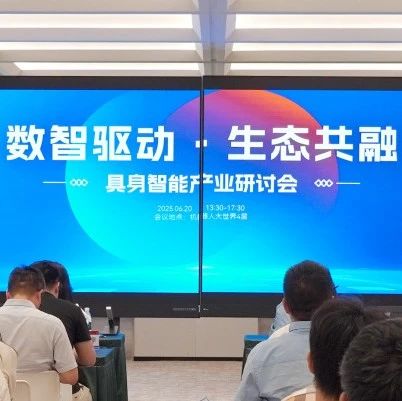
温馨提示 : 点击下方图片,查看运营团队2025年6月最新原创报告(共235页) [北京人形机器人创新中心]副总经理李春枝出席并在研讨会致辞中表示,具身智能作为人工智能与机器人技术融 合的前沿领域,正迎来爆发式发展的关键阶段。技术的突破不仅依赖于算法与硬件的迭代,更需要高质量数据、 标准化测评、场景化应用和专业化人才的协同支撑。本次研讨会聚焦数据、测评、应用、产教四大核心环节,旨 在通过跨界合作,打通技术落地的最后一公里,推动产业生态的加速成型。 —— 说明: 欢迎约稿、刊例合作、行业交流 , 行业交流记得先加入 "机器人头条"知识星球 ,后添加( 微信号:lietou100w )微 信; 若有侵权、改稿请联系编辑运营(微信:li_sir_2020); 正文: 6月20日,以数智驱动、生态共融为主题,由北京市经信局及北京经济技术开发区管委会指导、[北京人形机器人 创新中心]主办的具身智能产业研讨会,在中关村(亦庄)国际机器人产业园机器人大世界成功举办。多地产业创 新中心、产业核心企业参会,围绕数据-测评-应用-产教等多个行业热门话题展开探讨。研讨会上, 具身智能测评 实验室联合体正式揭牌成立,具身智能产业人才 ...
具身智能测评实验室联合体成立
Huan Qiu Wang· 2025-06-23 10:27
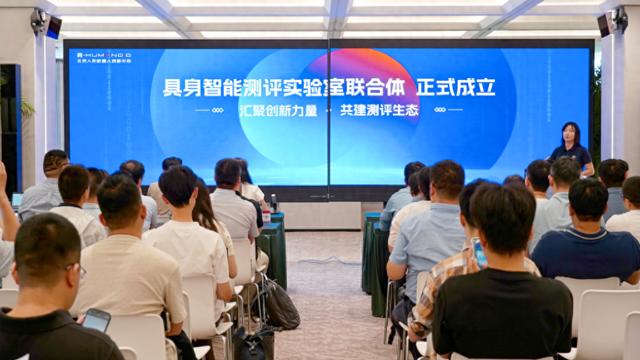
来源:新华网 新华网北京6月23日电(记者张漫子)由北京市经信局及北京经济技术开发区管委会指导、北京人形机 器人创新中心日前主办的具身智能产业研讨会上,具身智能测评实验室联合体正式揭牌成立,具身智能 产业人才图谱1.0同期发布。 实验室联合体发起人、北京人形标准负责人任容玮说,联合体参与方将共同推动测评基地建设、测试标 准编写、设立技术课题组、编制具身智能测评报告、建设测试基地,推动统一测评规范和认证标识在产 业链上下游的互认与落地,打通具身智能产业"测评-标准-应用"闭环,并以此加速具身技术演进,降低 产业合规成本,构筑具身智能全球竞速新高地。 北京人形 机器人创新中心发布具身智能产业人才图谱1.0。(受访者制图) 会上发布的具身智能产业人才图谱1.0涵盖战略与管理、研究设计与算法、工程开发与实现、测试生产 与供应链、商业化服务与支持、职能支撑平台六大领域,特别提出了具身智能人才区别于传统AI或机 器人的能力需求,例如多模态感知融合、真实场景中的算法优化、物理交互设计等。该图谱为产业提供 了岗位定义与能力标准,引导产业链上下游共建共享资源、协同培养高水平复合型人才。 北京市经信局及北京经济技术开发区管委会指 ...
2025高考志愿填报——储能科学与工程专业解析
中关村储能产业技术联盟· 2025-06-23 09:31
Core Viewpoint - The article discusses the emerging field of Energy Storage Science and Engineering, highlighting its significance in response to national energy strategies and the growing demand for skilled professionals in this sector [1][3]. Group 1: Background and Strategic Importance - The establishment of the Energy Storage Science and Engineering major aligns with national energy security and industrial transformation needs, directly addressing the "dual carbon" goals and renewable energy integration [5]. - The global energy transition and "dual carbon" targets necessitate the cultivation of talent in energy storage, which is crucial for the development of new storage technologies [3]. - According to the "Energy Storage Industry Research White Paper 2025," China is expected to maintain its position as the global leader in new energy storage installations, with a projected capacity of 43.7 GW in 2024, accounting for approximately 60% of global new installations [3]. Group 2: Professional Characteristics - The Energy Storage Science and Engineering major is characterized by its alignment with national strategic needs, multi-disciplinary integration, and collaborative innovation between academia and industry [5][6][7]. - The program integrates knowledge from electrical engineering, chemical engineering, materials science, and energy dynamics, fostering the ability to solve complex engineering problems [6]. - The dual mentorship system and industry collaboration enhance the connection between educational institutions and industry demands, promoting effective talent development [7]. Group 3: Employment Prospects and Development Potential - Graduates of the Energy Storage Science and Engineering major possess a broad knowledge base and adaptability, making them suitable for various sectors including energy, environment, automotive, and new materials [8]. - Key employment sectors include energy power companies, grid enterprises, battery and system integration firms, with notable companies such as CATL, BYD, and Huawei [10]. - The major has seen a significant increase in the number of institutions offering it, with 103 universities across 27 provinces in China now providing this program [11]. Group 4: Key Universities and Their Specialties - Major universities offering the Energy Storage Science and Engineering program include Xi'an Jiaotong University, Xiamen University, and Harbin Institute of Technology, each with unique educational and research strengths [11][26]. - Beijing University of Science and Technology has established a dedicated department for this major, focusing on interdisciplinary collaboration and innovative research [19]. - Fuzhou University collaborates with German institutions to provide international exposure and dual degree opportunities for students [21]. Group 5: Career Development Paths - Career paths for graduates include roles in battery and energy storage system development, project management in energy systems, and research positions in academia [13][14]. - The program offers various development pathways, including technical expertise in research centers, project management roles, and opportunities for interdisciplinary transitions into energy investment analysis [14].

信用周观察系列:长信用,还有空间
HUAXI Securities· 2025-06-23 02:45
1. Report Industry Investment Rating - No information provided regarding the industry investment rating [1] 2. Core Viewpoints of the Report - In the past two weeks, interest - rate bonds fluctuated downward. Institutions continued to explore credit - bond spreads, with long - duration bonds becoming the focus. The 10 - year credit spread has significantly compressed. The trading sentiment of credit bonds is quite extreme. Considering the usual significant decline in wealth - management scale in the last week of June, credit bonds may experience short - term fluctuations. Accounts with unstable liability ends are not advised to chase the rising market but can make arrangements during adjustments. Accounts that have already invested in long - duration credit bonds earlier do not need to rush to take profits as there is still some allocation demand in July. Additionally, there is still room for the spread of long - duration credit bonds to compress [1][3] 3. Summary According to Related Catalogs 3.1 City Investment Bonds - Net financing remains weak. From June 1 - 22, 2025, city investment bonds issued 3781 billion yuan, matured 3767 billion yuan, and only achieved a net financing of 14 billion yuan, a year - on - year decrease of 791 billion yuan. The primary issuance sentiment declined, with the proportion of full - field multiples above 3 times dropping by 14 percentage points to 62%. The proportion of issuances with a term of over 3 years further increased to 45% [31] - Short - end issuance rates continued to reach new lows. In June, the issuance rates of city investment bonds continued to decline. The rates for bonds with a term of less than 1 year, 1 - 3 years, and 3 - 5 years decreased by 10bp, 7bp, and 15bp respectively compared to May, reaching 1.76%, 2.19%, and 2.51% [33] - In the secondary market, long - end bonds performed strongly, with yields of many terms reaching new lows. From June 16 - 20, yields of city investment bonds across all terms declined. The decline in medium - and short - end yields was limited, mostly within 3bp, while most long - end bonds with a term of over 5 years declined by more than 5bp, and credit spreads also compressed [36] - From the broker transaction data, bonds of all terms were traded at a discount to valuation, with long - term bonds over 5 years performing the best. The daily transactions of city investment bonds were still active, with daily transactions often exceeding 800, and the average discount to valuation per trading day was around 2bp. The average discount to valuation of long - term bonds over 5 years was 2.8bp [41] 3.2 Industrial Bonds - In June, the issuance and net - financing scale of industrial bonds increased significantly year - on - year. From June 1 - 22, industrial bonds issued 6187 billion yuan, a year - on - year increase of 1345 billion yuan, and achieved a net financing of 3050 billion yuan, a year - on - year increase of 1425 billion yuan. The comprehensive, public - utility, and non - bank financial industries had relatively large net - financing scales [43] - The issuance sentiment weakened. The proportion of full - field multiples above 3 times decreased from 38% to 30%, while the proportion of 2 - 3 times increased from 24% to 30% [43] - The proportion of medium - and long - term issuances increased. Since June, the proportion of industrial bonds with a term of less than 1 year decreased from 40% in May to 31%, while the proportions of 1 - 3 years, 3 - 5 years (including 5 years but excluding 3 years), and over 5 years increased to 40%, 18%, and 12% respectively [43] - From the broker transactions, the buying sentiment of industrial bonds was high. The TKN proportion remained at 79%, and the proportion of discount - to - valuation transactions increased from 65% to 66%. The transaction duration lengthened, with the proportion of transactions over 5 years increasing by 5 percentage points to 19% [45] 3.3 Bank Capital Bonds - In the primary market, from June 16 - 22, 2025, Xi'an Bank and Qingdao Rural Commercial Bank each issued a 20 - billion - yuan 5 + 5 - year secondary capital bond. The issuance rate of Xi'an Bank was 2.30%. Minsheng Bank issued a 300 - billion - yuan 5 + N - year perpetual bond with an issuance rate of 2.30% [48] - In the secondary market, yields of bank capital bonds declined across the board, and spreads showed differentiation. 10 - year secondary capital bonds and medium - and long - term perpetual bonds performed better. Specifically, yields of 1 - 5 - year secondary capital bonds generally declined by 2 - 4bp, with credit spreads fluctuating narrowly. The 10 - year secondary capital bond yield declined by 5bp, and the spread narrowed by 2bp. Bank perpetual bonds outperformed secondary capital bonds, with most credit spreads narrowing by 0 - 4bp [48] - From the broker transactions, from June 16 - 20, the number of bank capital bond transactions increased significantly month - on - month, and the trading sentiment was good. The TKN proportion was above 68%. The proportions of discount - to - valuation transactions of secondary capital bonds and perpetual bonds increased by 2 and 1 percentage points respectively to 70% and 77%. In terms of the term structure, state - owned bank transactions were still concentrated in long - duration bonds with good liquidity. The proportion of 4 - 5 - year secondary capital bond transactions of state - owned banks increased by 3 percentage points to 54%, while that of perpetual bonds decreased by 4 percentage points to 60%. Joint - stock bank transactions reduced the duration [51] - Regarding TLAC bonds, by subtracting the average yields of 3 + 1, 5 + 1, and 10 + 1 TLAC bonds from the yields to maturity of 3Y, 5Y, and 10Y AAA - secondary capital bonds, the spreads of secondary capital bonds over TLAC bonds were obtained. As of June 20, 2025, the spreads of 3Y, 5Y, and 10Y secondary capital bonds over TLAC bonds were 3.5bp, 7.5bp, and 4.8bp respectively, indicating that the 10 - year TLAC bond was more cost - effective at present [54] - For commercial financial bonds, taking the 3Y AAA commercial financial bond as an example, since 2021, its spread has mostly fluctuated between 10 - 30bp, with a stable spread center at 20bp. As of June 20, the credit spread of the 3Y AAA commercial financial bond was 14bp, at a relatively low level compared to the spread center [58]