
鱼跃医疗

Search documents
多股涨超10%!“阿福概念”走强
Zhong Guo Zheng Quan Bao· 2026-01-09 12:19
Group 1 - The AI healthcare sector showed strong performance on January 9, with multiple stocks experiencing significant gains, including Meinian Health (002044) hitting the daily limit, and Dean Diagnostics (300244) also reaching a "20CM" limit up [1] - The driving force behind this market movement is attributed to the announcement by OpenAI on January 8 regarding the launch of "ChatGPT Health," which offers health consultation and management services, seen as a direct competition to Ant Group's AI health application "Antifufu" [1] - "Antifufu" reported over 30 million monthly active users and more than 10 million daily health inquiries within a month of its latest version release, indicating high user acceptance and significant market potential for health AI in China [1] Group 2 - The capital market reacted quickly, with stocks like Yuyue Medical and Weining Health experiencing an initial rise following the release of the new version of "Antifufu" in December [2] - Companies such as Yuyue Medical and Sanofi Bio confirmed their collaboration with "Antifufu," reinforcing market expectations for industry chain synergy [2] - Industry experts believe that as domestic and international tech leaders invest heavily, the application of AI in healthcare will accelerate from the exploration phase to practical implementation, benefiting companies with established scenarios and clear commercialization paths [2]


多巨头入局健康AI引爆医疗版块,美年健康开盘涨停、卫宁健康涨超10%
Sou Hu Cai Jing· 2026-01-09 09:04
Core Viewpoint - The AI healthcare sector is experiencing a significant surge, driven by the launch of AI health features by major tech companies like OpenAI and Ant Group, leading to strong performances in related stocks [1] Group 1: Market Performance - The AI healthcare sector saw a collective rise, with several stocks performing strongly, including Meinian Health reaching its daily limit up, and Dean Diagnostics also hitting a 20% limit up [1] - Companies such as Weining Health and Huaren Health increased by over 10%, while Yuyue Medical and Saili Medical also saw gains [1] Group 2: Key Developments - OpenAI launched "ChatGPT Health," directly competing with Ant Group's "Antifufu," which has reached 30 million monthly active users and over 10 million daily inquiries [1] - The competitive landscape is heating up as both tech giants heavily invest in the AI healthcare space, igniting interest in related A-share concept stocks [1] Group 3: Market Outlook - The market perceives healthcare as a battleground for domestic and international giants, with companies that have mature scenarios and implementation capabilities expected to benefit from the ongoing AI wave [1]
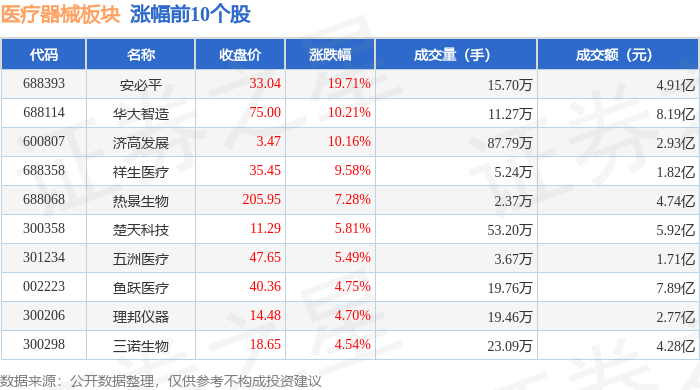
医疗器械板块1月9日涨1.47%,安必平领涨,主力资金净流出6.29亿元
Zheng Xing Xing Ye Ri Bao· 2026-01-09 08:54
Group 1 - The medical device sector increased by 1.47% on January 9, with Anbiping leading the gains [1] - The Shanghai Composite Index closed at 4120.43, up 0.92%, while the Shenzhen Component Index closed at 14120.15, up 1.15% [1] - Anbiping's stock price rose by 19.71% to 33.04, with a trading volume of 157,000 shares and a transaction value of 491 million yuan [1] Group 2 - The medical device sector experienced a net outflow of 629 million yuan from institutional investors, while retail investors saw a net inflow of 797 million yuan [2] - The top gainers in the medical device sector included Huada Zhizao, which rose by 10.21% to 75.00, and Jigaofazhan, which increased by 10.16% to 3.47 [1] - The top losers included Meihua Medical, which fell by 11.81% to 37.55, and Yuanpeng Medical, which decreased by 8.66% to 38.93 [2] Group 3 - The net inflow of funds for Yuyue Medical was 96.43 million yuan, while it faced a net outflow of 63.12 million yuan from retail investors [3] - Jigaofazhan had a net inflow of 71.09 million yuan from institutional investors, with a net outflow of 41.66 million yuan from retail investors [3] - Anbiping saw a net inflow of 37.38 million yuan from institutional investors, while retail investors experienced a net outflow of 15.65 million yuan [3]




ChatGPT、蚂蚁阿福引爆AI健康赛道,相关概念股集体飙升
Feng Huang Wang Cai Jing· 2026-01-09 08:41
Core Viewpoint - The AI healthcare sector has seen a significant surge in stock performance, driven by the launch of AI health features by major tech companies like OpenAI and Ant Group, indicating a competitive landscape in the healthcare market [1] Group 1: Stock Performance - Multiple stocks in the AI healthcare sector experienced strong gains, with Meinian Health (002044) hitting the daily limit, and Dean Diagnostics (300244) also reaching a 20% increase [1] - Other companies such as Weining Health (300253) and Huaren Health (301408) rose over 10%, while Yuyue Medical (002223) and Saily Medical (603716) also saw upward movement [1] Group 2: Market Dynamics - OpenAI launched "ChatGPT Health," directly competing with Ant Group's "Antifufu," which has reached 30 million monthly active users and over 10 million daily inquiries [1] - The strong positioning of these tech giants has ignited the AI + healthcare sector, leading to a broad rally in related A-share stocks [1] Group 3: Future Outlook - The market perceives healthcare as a battleground for domestic and international giants, suggesting that companies with established capabilities and practical applications in healthcare will continue to benefit from the AI trend [1]
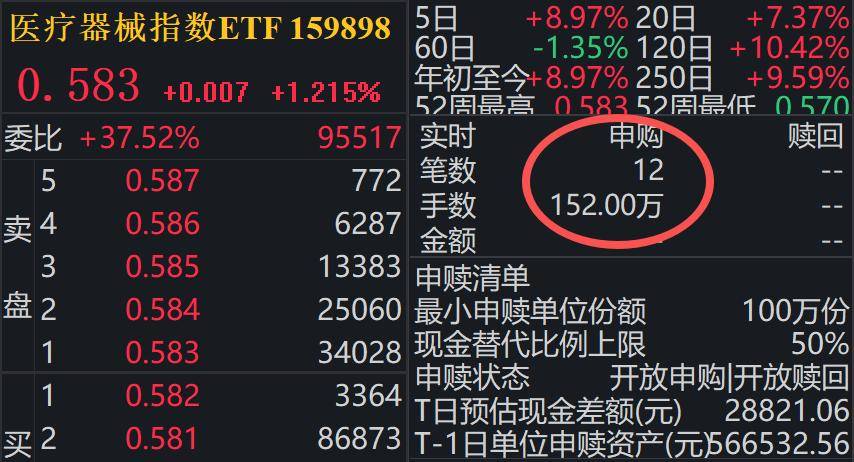
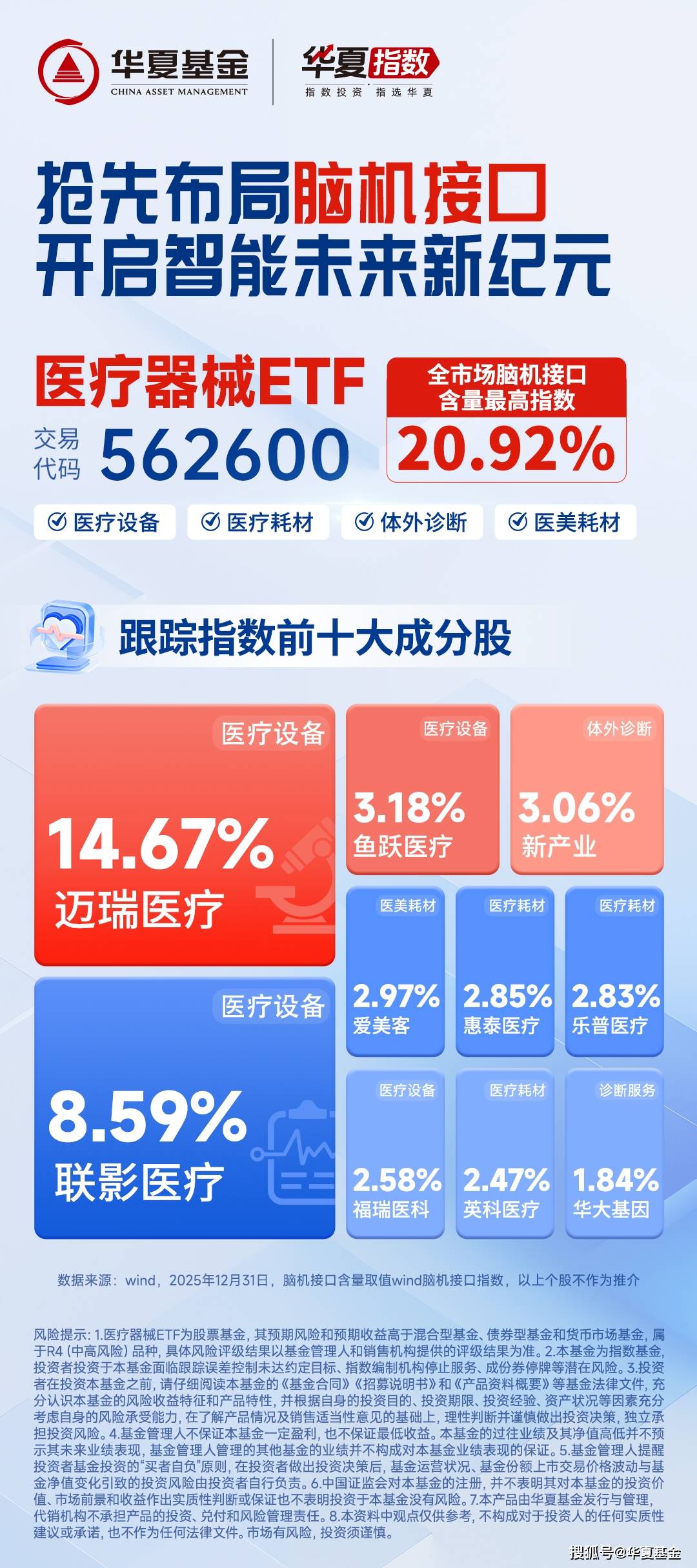
国内首张非侵入式脑机接口证出炉!医疗器械指数ETF(159898)午后拉升、标的指数“含脑量”约24%
Sou Hu Cai Jing· 2026-01-09 06:21
Group 1 - The medical device sector is experiencing a significant rally, with the Medical Device Index ETF (159898) seeing a net inflow of over 88 million yuan during intraday trading on January 8, following a previous inflow of over 116 million yuan [1] - Key stocks such as Di'an Diagnostics and Kingmed Diagnostics reached their daily limit, while others like Anbiping and Xiangsheng Medical saw gains exceeding 10% and 9% respectively [1] - The Medical Device Index ETF (159898) has a current scale of 659 million yuan, with approximately 24% of its holdings related to the brain-computer interface (BCI) concept [2][3] Group 2 - The brain-computer interface industry is highlighted as a key development area in the new five-year plan, with supportive policies for clinical trials, registration, and pricing [1] - Strong Brain Technology, a leading BCI company, recently completed a financing round of about 2 billion yuan, marking it as the second-largest financing in the BCI field globally, after Neuralink [2] - The Medical Device Index ETF (159898) includes several companies with substantial involvement in the BCI sector, making it a convenient and efficient tool for investment in this emerging field [3]
鱼跃医疗股价涨5.01%,嘉实基金旗下1只基金重仓,持有12.93万股浮盈赚取24.95万元
Xin Lang Cai Jing· 2026-01-09 06:19
Group 1 - The core viewpoint of the news is that Yuyue Medical has seen a stock price increase of 5.01%, reaching 40.46 CNY per share, with a trading volume of 585 million CNY and a turnover rate of 1.56%, resulting in a total market capitalization of 40.56 billion CNY [1] - Yuyue Medical, established on October 22, 1998, and listed on April 18, 2008, specializes in the research, production, and sales of medical devices and their core components [1] - The company's main business revenue composition includes: respiratory therapy solutions (35.93%), clinical instruments and rehabilitation solutions (24.35%), home health monitoring solutions (21.77%), blood glucose management and POCT solutions (14.48%), emergency solutions and others (2.92%), and other supplementary solutions (0.56%) [1] Group 2 - From the perspective of fund holdings, one fund under Jiashi Fund has a significant position in Yuyue Medical, specifically the Jiashi CSI Medical Index Initiation A (014602), which reduced its holdings by 41,400 shares in the third quarter, now holding 129,300 shares, accounting for 2.41% of the fund's net value [2] - The Jiashi CSI Medical Index Initiation A (014602) was established on January 20, 2022, with a latest scale of 40.61 million CNY, and has achieved a year-to-date return of 7.44%, ranking 655 out of 5509 in its category [2] - The fund manager, Wang Zihan, has been in position for 4 years and 124 days, with the fund's total asset scale at 16.594 billion CNY, achieving a best return of 52.4% and a worst return of -42.07% during the tenure [2]
以AI重塑品类 以服务定义价值,京东健康发布2026年医疗器械战略全景
Jin Rong Jie Zi Xun· 2026-01-09 02:31
Core Insights - JD Health is set to enhance its medical device sector by leveraging supply chain, AI, and medical services as core drivers, aiming to become a significant growth engine for global medical device brands by 2026 [1][5] - The company plans to invest over 100 million in marketing resources for the launch of new products in collaboration with top global brands, focusing on high-quality development in the medical device industry [1][5] Group 1: Market Growth and Strategy - The medical device market in China is experiencing rapid growth, projected to reach 500 billion from the current 300 billion, driven by aging population, health awareness, and consumption upgrades [3] - JD Health aims to deepen partnerships with global medical device brands and enhance supply chain capabilities through initiatives like JDH+N alliance, targeting a 100% growth in trending categories by 2025 [3][6] Group 2: Product Innovation and Awards - In 2025, JD Health launched nearly 500 new products, setting industry records, with a focus on innovative product development as a key driver for high-quality growth [3][5] - The company established a rigorous evaluation system for product awards, recognizing nearly 100 brands for their quality and reputation at the annual conference [5] Group 3: AI and Service Integration - JD Health is utilizing its self-developed AI model "Jingyi Qianxun" to transform product categories and define value through service, moving towards comprehensive health management solutions [6][7] - The company has developed a smart blood glucose management system in collaboration with brands, integrating monitoring, analysis, intervention, and tracking for chronic disease management [9] Group 4: Comprehensive Health Management - JD Health is enhancing its online and offline service integration, providing a full-cycle health management experience that includes disease prevention, smart monitoring, chronic disease management, and post-hospital rehabilitation [9] - The company aims to eliminate homogenization in the medical device industry through product innovation and AI technology upgrades, making professional healthcare services more accessible [9]


马斯克量产预告 脑机接口迎商业化元年?
Sou Hu Cai Jing· 2026-01-09 01:31
Core Viewpoint - Elon Musk's Neuralink plans to start mass production of brain-machine interfaces by 2026, marking a significant step towards the commercialization of this technology [2] Industry Developments - The brain-machine interface sector in China is accelerating, with the country becoming the second to enter clinical trials for invasive brain-machine interfaces after the United States [2] - In 2025, there were 24 financing events in the domestic brain-machine interface field, a 30% year-on-year increase [3] - Hubei Province has set a price for invasive brain-machine interface medical services at approximately 6,552 yuan, indicating a move towards making this technology more accessible [3] Technology and Market Segmentation - Brain-machine interfaces serve as a bridge between the brain and external devices, with three main technological approaches: invasive, non-invasive, and semi-invasive [4][5] - The largest market segment for brain-machine interfaces is currently in healthcare, accounting for over 56% of applications, particularly for neurological diseases like epilepsy and Parkinson's [6] - McKinsey predicts that the global market for medical applications of brain-machine interfaces could reach $40 billion by 2030 and $145 billion by 2040 [6] Investment Opportunities - While the brain-machine interface sector shows promise, most companies are still far from profitability, with significant time needed for medical applications to gain approval [7] - Instead of focusing on individual companies, it may be more prudent to consider the broader medical device industry, particularly through medical device ETFs that encompass leading firms in this space [8]
OpenAI 发布ChatGPT健康,押注万亿AI医疗市场
Di Yi Cai Jing· 2026-01-08 08:05
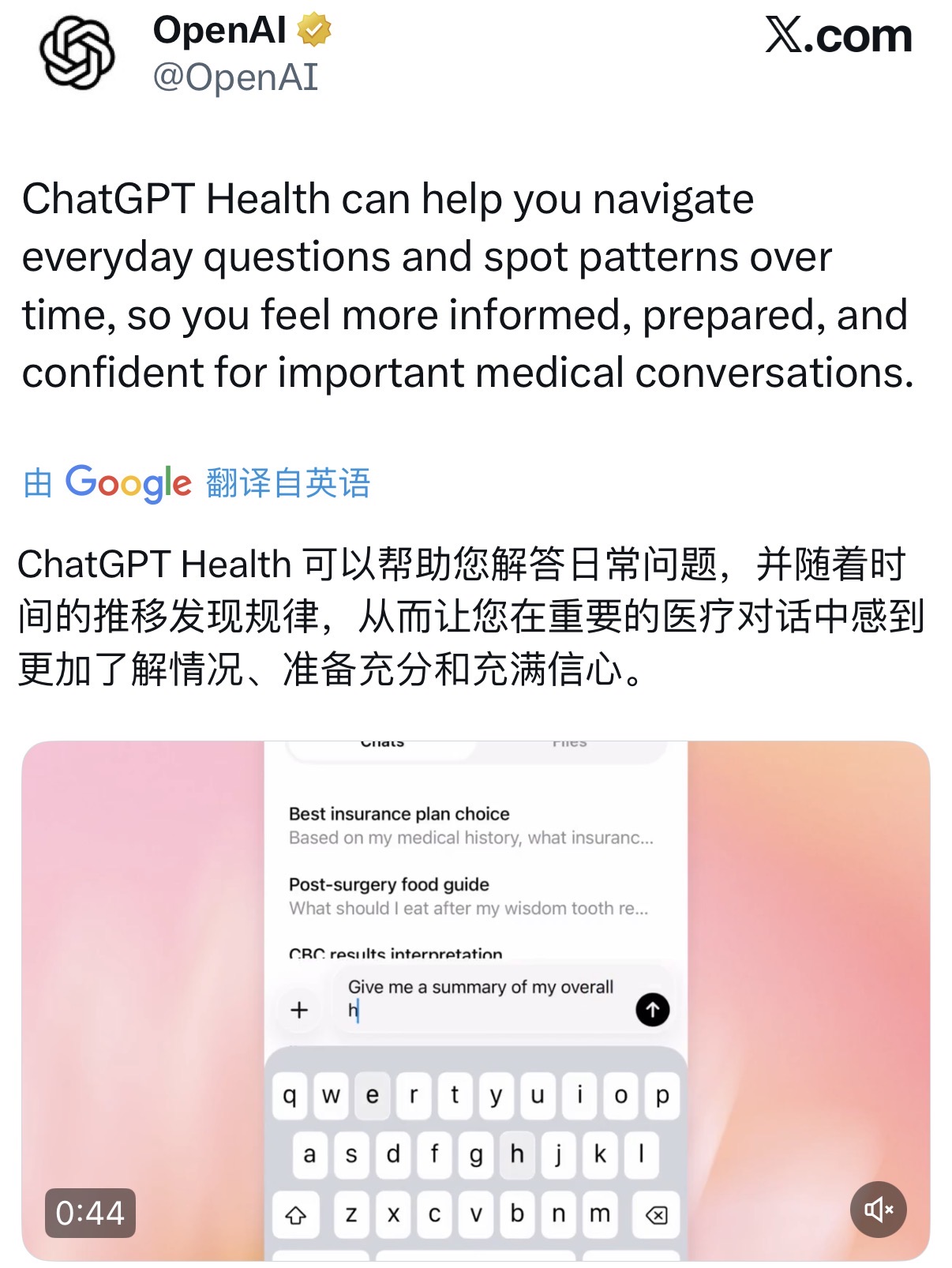
Core Insights - OpenAI is accelerating the application of its technology in the healthcare sector, launching ChatGPT Health to transform the medical system [1][6] - The healthcare market shows significant demand, with over 230 million health-related inquiries made weekly globally [4] Group 1: ChatGPT Health Launch - OpenAI introduced ChatGPT Health, a dedicated space within ChatGPT for health-related conversations, integrating electronic medical records and various health applications [1][4] - The model aims to assist users in understanding medical results, dietary and exercise planning, and making informed decisions regarding insurance options [4] Group 2: Collaboration and Development - OpenAI has collaborated with over 260 practicing doctors from various countries to refine the model's responses, providing more than 600,000 feedback instances across 30 key areas [4][5] - The health mode includes enhanced privacy measures, ensuring that conversations are not used for model training and implementing encryption and isolation technologies [5] Group 3: Market Potential - The global AI healthcare market is projected to grow significantly, from approximately $26.65 billion in 2024 to about $505.59 billion by 2033, with a compound annual growth rate of 38.8% [6] - OpenAI has invested in several healthcare companies, establishing a diversified investment matrix in the medical sector [6] Group 4: Industry Trends - The integration of AI in healthcare is a focal point at events like CES 2026, showcasing innovations in precision medicine, personalized health management, and disease prevention [7]
竞争力重塑 传统产业转型集中发力
Jing Ji Ri Bao· 2026-01-08 01:01
Group 1: Core Insights - Traditional industries are the backbone of China's manufacturing sector, accounting for approximately 80% of key indicators such as value added and employment [1] - The transformation of traditional industries towards high-end, intelligent, and green development is essential for building a modern industrial system [1] Group 2: Cost Reduction and Efficiency Improvement - In Zhengzhou, the use of intelligent manufacturing systems has led to a 10% to 15% increase in production efficiency and a 5% to 10% reduction in delivery cycles, with overall costs decreasing by 3% to 5% [2] - Traditional industries are shifting from relying on scale and experience to a data-driven approach that integrates hardware and software ecosystems [2] Group 3: Smart Factory Development - Over 35,000 basic-level and more than 7,000 advanced-level smart factories have been established since the start of the 14th Five-Year Plan, significantly enhancing production efficiency and reducing costs [3] - Continuous investment in new technology and the application of AI and smart technologies are crucial for traditional industries to enhance their high-end and intelligent capabilities [3] Group 4: Green Development Opportunities - The "dual carbon" goals are driving traditional industries to transition from resource dependency to technology value addition, creating new growth opportunities through smart and green technologies [4] - By 2024, the utilization of recycled resources such as waste steel and waste copper is expected to exceed 400 million tons, highlighting the push for industrial decarbonization and green growth [4] Group 5: Energy Transition and Circular Economy - Traditional energy companies are encouraged to explore clean energy development, while steel companies can utilize recycled materials to reduce costs and emissions [5] - The development of carbon trading markets presents opportunities for traditional industries to profit from energy-saving and emission-reduction efforts [5] Group 6: Consumer Market Dynamics - The expanding consumer market is providing new opportunities for traditional industries, emphasizing the need for precise alignment of production with consumer preferences [7] - The demand for higher quality and diverse products is driving traditional industries to innovate and enhance product offerings [8] Group 7: Value Enhancement Challenges - The ultimate goal for traditional industries is to address the challenge of value enhancement through technological innovation and brand building [9] - Improving product quality and brand premium capabilities are essential for driving value enhancement in traditional enterprises [9]