Mistral

Search documents
人工智能实验室Mistral:我们的计算机设备将采用18,000块英伟达(NVDA.O)的Grace Blackwell芯片。
news flash· 2025-06-11 10:53
Group 1 - The core point of the article is that the AI lab Mistral plans to utilize 18,000 Nvidia Grace Blackwell chips for its computing equipment [1] Group 2 - Mistral is focused on advancing its capabilities in artificial intelligence through the deployment of high-performance computing resources [1] - The use of 18,000 chips indicates a significant investment in technology infrastructure, which may enhance Mistral's competitive edge in the AI industry [1] - Nvidia's Grace Blackwell chips are designed to optimize AI workloads, suggesting that Mistral is aligning its hardware choices with the demands of modern AI applications [1]

Nvidia makes big play for Europe with infrastructure deals
CNBC· 2025-06-11 10:49
Core Insights - Nvidia is positioning itself as a key player in the global AI infrastructure landscape through partnerships with European countries and companies [1][5] - The company aims to enhance AI computing capacity in Europe by a factor of 10 over the next two years, amidst challenges from U.S. export restrictions [5] Partnerships and Projects - Nvidia announced a partnership with French startup Mistral to create an "AI cloud" utilizing 18,000 Nvidia Grace Blackwell chips [6] - Infrastructure projects are also being developed in Italy and Armenia [6] - Collaborations with telecommunications companies like Orange and Telefonica focus on deploying AI applications and large language models [7] Infrastructure Development - Nvidia is building an "industrial cloud" in Germany featuring 10,000 GPUs tailored for European manufacturers [7] - The concept of "sovereign AI" emphasizes the importance of regional data centers and servers for EU users [8] - Nvidia is establishing "tech centers" across Europe to promote advanced research and workforce upskilling in countries such as the U.K., France, Spain, and Germany [8] Product Expansion - The company expanded its DGX Cloud Lepton product, integrating it with AI model repository Hugging Face, allowing global access to GPUs for AI applications [9]


英伟达首席执行官黄仁勋:英伟达(NVDA.O)和人工智能实验室Mistral将打造“规模庞大”的人工智能云平台。
news flash· 2025-06-11 10:00
Group 1 - The core viewpoint is that Nvidia and AI lab Mistral are collaborating to create a "massive" artificial intelligence cloud platform [1] Group 2 - Nvidia's CEO Jensen Huang emphasizes the scale and potential impact of the upcoming AI cloud platform [1]
OpenAI开源模型发布推迟至夏末,为了狙击DeepSeek R2?
Hua Er Jie Jian Wen· 2025-06-11 02:37
Group 1 - OpenAI has postponed the release of its anticipated open-source model to "later this summer" instead of June, as announced by CEO Sam Altman [1] - The open-source model aims to match the complex reasoning capabilities of GPT-4o and surpass leading open-source models like DeepSeek's R1 [2] - The AI market competition is intensifying, with new models being launched by competitors such as Mistral and Qwen, which are capable of switching between deep reasoning and traditional quick responses [2] Group 2 - Altman acknowledged that OpenAI has historically made mistakes in its open-source strategy, and the new model is seen as a crucial step to repair developer relations [2] - There are speculations that the delay may be a strategic move to counter DeepSeek's upcoming R2 model, which is expected to be released soon [2][3] - DeepSeek R2 is anticipated to have significant upgrades in technical architecture, functionality, and resource efficiency, with a predicted 87% reduction in AI invocation costs [3] Group 3 - DeepSeek's founder, Liang Wenfeng, emphasizes the goal of making China a contributor to innovation rather than a passive participant [4] - DeepSeek's product iteration schedule is robust, with plans for major updates every quarter, including the upcoming V2.5 and V3 versions [4]


氪星晚报 |扎克伯格为Meta新 “超级智能”AI团队招聘人员;马斯克:SpaceX今年的收入将达到155亿美元;由微软支持的人工智能实验室Mistra...
3 6 Ke· 2025-06-10 11:00
Group 1 - Jinzhai Food's innovative upgraded products have entered the Pang Donglai system, with good sales performance reported [1] - Meta's CEO Mark Zuckerberg is forming a new AI team aimed at achieving Artificial General Intelligence (AGI) and plans to invest over $10 billion in Scale AI [2] - TianKang Bio reported a 19.95% year-on-year decline in pig sales revenue for May, totaling 345 million yuan, with a sales volume of 229,700 pigs [3] Group 2 - Trina Solar's Chairman Gao Jifan stated that the proportion of solution business will increase to over 50% in the next two to three years [3] - SpaceX's revenue is projected to reach $15.5 billion this year, according to Elon Musk [4] - VinFast reported a 296% year-on-year increase in electric vehicle deliveries in Q1, totaling 36,330 vehicles, with a net loss of approximately $712 million [4] Group 3 - Bubble Mart has registered dozens of trademarks related to the "labubu" series, covering various categories including education and entertainment [4] - Hangzhou Oxygen Yiju Environmental Technology Co., Ltd. completed a Series A financing round of 50 million yuan, aimed at developing negative oxygen ion release technology [6] - "Bo Te Ding Dong" completed a 20 million yuan angel round financing, focusing on optimizing AI routing algorithms and expanding market coverage [7] Group 4 - "Longxing Hangdian" successfully completed a Series A++ financing round of 100 million yuan, with participation from various investment institutions [8] - "Photon Leap" announced the completion of a 100 million yuan angel round financing, focusing on AI imaging algorithm development [9] - Meituan launched its first AI Coding Agent product, NoCode, aimed at simplifying programming tasks [10]


据CNBC:由微软(MSFT.O)支持的人工智能实验室Mistral将推出其首个推理模型。
news flash· 2025-06-10 09:50
Core Insights - Mistral, an AI lab supported by Microsoft, is set to launch its first inference model [1] Company Summary - Mistral is backed by Microsoft, indicating strong corporate support and potential for innovation in AI [1] Industry Summary - The launch of Mistral's inference model highlights the growing trend and competition in the AI industry, particularly in the development of advanced AI models [1]
Microsoft-backed AI lab Mistral is launching its first reasoning model in challenge to OpenAI
CNBC· 2025-06-10 09:47
Core Insights - Mistral AI, a French artificial intelligence startup, is launching its first reasoning model to compete with established players like OpenAI and DeepSeek [1][2] - The new reasoning model is designed to perform complex tasks through logical reasoning and is particularly strong in mathematics and coding [2] Company Overview - Mistral AI is led by CEO Arthur Mensch, who emphasizes the model's capability to reason in multiple languages, setting it apart from competitors [2] - The launch of this model positions Mistral AI in a competitive landscape that includes OpenAI's o1 and DeepSeek's R1 [3]

全球AI原生企业:基本格局、生态特点与核心策略
腾讯研究院· 2025-06-03 08:15
Core Insights - The article discusses the emergence of AI-native companies that prioritize artificial intelligence as their core product or service, differentiating them from companies that merely integrate AI into existing operations [1] - It identifies three major ecosystems in the generative AI landscape led by OpenAI, Anthropic, and Google, each with distinct characteristics and strategies [3][4][5] Group 1: Overview of Global AI Native Companies - The global generative AI sector has formed three primary ecosystems centered around OpenAI, Anthropic, and Google, each providing unique innovation environments for AI-native companies [3] - OpenAI's ecosystem is the largest, with 81 startups valued at approximately $63.46 billion, showcasing a wide range of applications from AI search to legal services [4] - Anthropic's ecosystem includes 32 companies valued at about $50.11 billion, focusing on enterprise-level applications with high safety and reliability requirements [5] - Google's ecosystem, while the smallest with 18 companies valued at around $12.75 billion, is rapidly growing and emphasizes technical empowerment and vertical innovation [5] Group 2: Multi-Model Access Strategy - Many AI-native companies are adopting multi-model access strategies to enhance competitiveness and reduce reliance on a single ecosystem [6] - Companies like Anysphere and Jasper support multiple model integrations, allowing them to leverage various strengths while facing challenges in technical integration and cost control [6][7] - These companies often utilize a B2B2B model, providing AI capabilities to service-oriented businesses that then serve end-users, focusing on sectors like data and marketing [7] Group 3: Focus on Self-Developed Models - A growing number of companies are focusing on developing their own models, categorized into unicorns targeting general models and those specializing in vertical markets [8] - Companies like xAI and Cohere aim for breakthroughs in general models, while others like Midjourney focus on specific applications such as content generation [8] Group 4: Ecosystem Strategies of Major Players - The competition among OpenAI, Anthropic, and Google has evolved from model capabilities to ecosystem building, with each adopting different core strategies [11] - OpenAI emphasizes platform attractiveness and aims to be a "super entry point" for generative AI, leveraging plugins and APIs [12] - Anthropic positions itself as a safety-oriented enterprise AI service provider, focusing on high-compliance industries [12] - Google integrates AI deeply into its product matrix, creating a closed-loop ecosystem that enhances user engagement and data collaboration [13] Group 5: Developer Strategies Comparison - OpenAI provides a general development platform with a plugin ecosystem, incentivizing developers to innovate around its models [14] - Anthropic focuses on a B2B integration strategy, emphasizing safety and industry-specific applications [15] - Google offers a full-stack AI development environment, promoting collaboration among multiple agents and integrating with existing developer tools [16] Group 6: Channel Strategy Comparison - OpenAI utilizes a dual-channel strategy, partnering with Microsoft Azure for enterprise distribution while also reaching consumers directly through ChatGPT [17][18] - Anthropic relies on major cloud platforms for distribution, embedding its models into third-party applications to enhance penetration [19] - Google’s strategy involves embedding AI capabilities into its native ecosystem, ensuring seamless access for users across various products [20] Group 7: Vertical Industry Penetration Comparison - OpenAI's models are widely applied across various industries, relying on partners to implement solutions [21] - Anthropic focuses on high-compliance sectors like finance and law, gradually establishing a reputation for reliability [22] - Google leverages existing industry solutions to promote its models, aiming for comprehensive coverage across sectors [23] Group 8: Pricing Strategy Comparison - OpenAI employs an API-based pricing model, gradually reducing prices to expand its user base while maintaining premium pricing for high-end models [24] - Anthropic adopts a flexible pricing strategy, emphasizing value and reliability to attract enterprise clients [25][26] - Google combines low pricing with cross-subsidization strategies to rapidly increase market share, leveraging its existing product ecosystem [27] Conclusion - The competitive landscape of generative AI is still evolving, with significant opportunities for innovation and collaboration among leading players [28]

模型下载量12亿,核心团队却几近瓦解:算力分配不均、利润压垮创新?
3 6 Ke· 2025-05-28 08:51
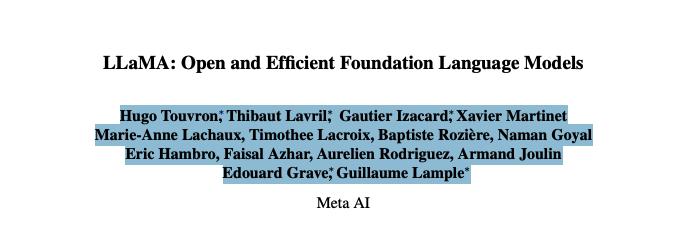
Core Insights - Meta has restructured its AI teams into two main groups: an AI product team led by Connor Hayes and an AGI Foundations team co-led by Ahmad Al-Dahle and Amir Frenkel, aiming to enhance product development speed and flexibility [1][2] - The restructuring comes amid increasing competition in the AI space from companies like OpenAI and Google, as Meta seeks to maintain its relevance [2][3] - The departure of key personnel from Meta's AI research division, FAIR, has raised concerns about the company's ability to retain top AI talent and its competitive position in the market [3][4] Team Structure and Focus - The AI product team will focus on consumer-facing applications, including AI features in Facebook, Instagram, and WhatsApp, as well as new independent AI applications [1] - The AGI Foundations team will concentrate on broader technological advancements, such as improving the Llama model [1][2] - FAIR remains independent but has seen a multimedia team transition to the AGI Foundations team [1] Talent and Leadership Changes - Meta has experienced significant talent loss, with 11 out of 14 original authors of the Llama model leaving the company, many joining competitors like Mistral [3][4] - Joelle Pineau, who led FAIR for eight years, recently resigned, raising questions about the future direction of the research team [4][6] - The leadership change in FAIR has been accompanied by a shift in focus towards product-oriented AI projects, sidelining exploratory research [14][15] Competitive Landscape - Meta's initial lead in open-source AI models has diminished, with competitors like DeepSeek and Qwen gaining traction [4][19] - The recent launch of Llama 4 has faced criticism for being rushed and lacking transparency, further impacting Meta's reputation in the AI community [10][19] - Despite substantial investments in AI, including a projected $65 billion by 2025, Meta lacks a dedicated reasoning model, which is becoming increasingly important in the AI landscape [16][19] Future Outlook - Meta's commitment to AI research remains, with plans to enhance collaboration between FAIR and the GenAI team to accelerate decision-making [16] - However, internal dynamics suggest a shift towards prioritizing profitability over foundational AI research, leading to concerns about the long-term viability of FAIR [16][17] - The ongoing talent exodus and competitive pressures indicate that Meta may struggle to reclaim its former leadership position in the AI sector [19]
78%主创跳槽,Llama 14名作者只剩3人,Meta最强开源模型团队大溃散引争议
3 6 Ke· 2025-05-27 12:19
AI 人才争夺战愈演愈烈,就算是顶级大厂,如果没有"护城河",也留不住人。 据外媒 Business Insider 最新消息,曾在开源大模型圈子里一度领跑的 Meta,如今正面临严重的人才流失。在 Llama 模型最初的 14 位核心作者 中,已有 11 位离职。有的自立门户,有的跳槽去了竞争对手。 这波"出走潮"也让外界再次把目光投向 Meta。毕竟他们曾豪赌元宇宙,四年"烧掉"450 亿美元,却被直指至今几乎未见显著成效。现在 AI 项目 也出问题了,不少人开始质疑:Meta 还行不行?为什么留不住顶尖 AI 人才?它的创新能力,还能支撑它在这场 AI 竞赛中跑多远? Llama 论文的 14 位作者,已有 11 人离开 Meta 回头看 2023 年那篇引发轰动的 Llama 论文,共署名 14 位研究者。短短两年,Meta 只留下了其中三位:研究科学家 Hugo Touvron、研究工程师 Xavier Martinet 和项目负责人 Faisal Azhar。 论文地址:https://arxiv.org/pdf/2302.13971 其他 11 人,大多已经离开,分散到了全球多家科技公司,有的还 ...