OPEC

Search documents
Oil Prices Set for Moderate Dip on Gaza Ceasefire
Yahoo Finance· 2025-10-10 06:50
Core Insights - Crude oil prices are experiencing a decline due to a ceasefire between Israel and Hamas, with Brent crude at $64.90 per barrel and West Texas Intermediate at $61.28, indicating the disappearance of the Middle East war premium [1] - The focus has shifted back to an impending oil surplus as OPEC unwinds production cuts, although benchmarks may end the week with slight gains [2] - The ongoing Ukraine conflict continues to maintain a war premium, with Russia's Deputy Foreign Minister indicating that efforts for a similar deal with Ukraine are largely exhausted [3] Group 1: Oil Price Dynamics - The ceasefire in the Middle East has led to a reduction in oil prices, with Brent crude at $64.90 and WTI at $61.28 [1] - Analysts note that the unwinding of OPEC production cuts is contributing to expectations of an oil surplus [2] - The Ukraine war is identified as a significant upside risk for oil prices, with potential sanctions and tariffs on Russia providing support for oil benchmarks [4] Group 2: Geopolitical Risks - The potential for disruptions in Russian energy infrastructure due to Ukrainian drone attacks poses a risk to crude oil exports [5] - The U.S. Energy Information Administration reported a rise in fuel demand to 21.99 million barrels daily, the highest since late 2022, indicating robust demand in the U.S. [6]
IEA:2024年原油需求增长或腰斩,明年每天都将出现超百万桶的原油过剩
Hua Er Jie Jian Wen· 2025-10-09 04:01
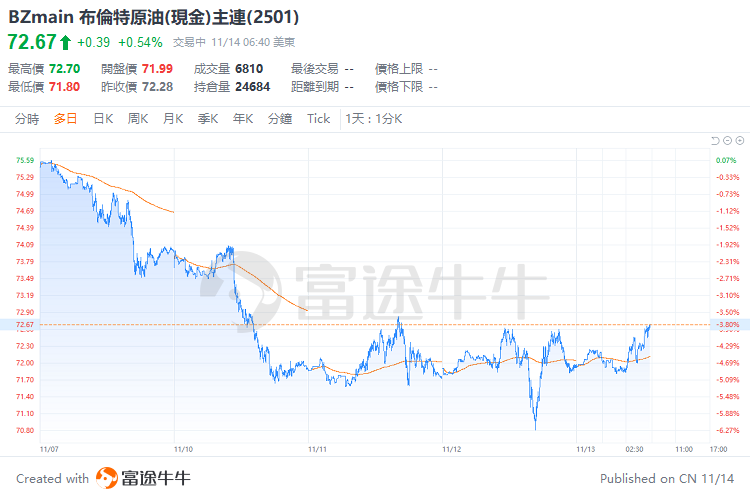
需求方面,IEA预计,今年全球石油消费量将增加92万桶/日,不及2023年增速的一半。2025年,需求将增 长99万桶/日。但IEA预计供给增长仍将持续,美国、巴西、加拿大和圭亚那等生产国的供应量今年和明年 将增长150万桶/日。 由于需求持续低迷,2025年全球石油市场将面临每天超过100万桶的供应过剩局面,而中东及其他地区动 荡形势对油价的影响将会有所缓解。 由于交易商将注意力集中在美洲不断增长的产量上,自10月初以来,原油价格已下跌11%。目前,布伦特 原油期货的交易价格达每桶72美元。 11月14日周四,国际能源署(IEA)发布月报称,如果OPEC+继续推进恢复生产的计划,全球石油供应过剩 将进一步加剧。 需求方面,IEA预计,今年全球石油消费量将增加92万桶/日,不及2023年增速的一半,达到平均每日1.028 亿桶。2025年,需求将增长99万桶/日。IEA表示: "两年来,石油日均增幅均低于100万桶/日,反映出全球经济状况不佳,疫情后被积压的需求已全部释放。 此外,清洁能源技术的快速部署也在越来越多地取代石油在运输和发电领域的应用。" 今年早些时候,IEA预测,随着全球从化石燃料转向电动汽车和 ...

能源化策略:原油延续动荡格局,化?以对冲套利为主
Zhong Xin Qi Huo· 2025-10-09 02:25
1. Report Industry Investment Rating The report does not explicitly provide an overall industry - wide investment rating. However, it offers individual outlooks for each energy and chemical product, which can be summarized as follows based on the rating standard: - **Oscillating**: PX, PTA, short - fiber, polyester bottle - chips, methanol, urea, LLDPE, PP, PL, PVC, caustic soda [11][12][18][19][22][25][26][27][29] - **Oscillating Weakly**: crude oil, asphalt, high - sulfur fuel oil, low - sulfur fuel oil, pure benzene, styrene, ethylene glycol [6][7][9][10][13][14][16] 2. Core Viewpoints - The crude oil price is in a volatile pattern during the National Day holiday. OPEC+ continues to increase production, and geopolitical factors still cause disruptions. The rebound space of crude oil is limited due to the weakening crack spread of refined oil [1][2]. - The prices of basic chemical products changed little during the National Day holiday. The industrial chain lacks a clear trend due to the volatile crude oil and the low valuation of chemicals. Investors can try positive spreads for severely loss - making products [2]. - Different energy and chemical products have different market trends. For example, asphalt prices are under pressure due to the expected increase in production; high - sulfur and low - sulfur fuel oils follow the trend of crude oil; methanol shows a slight inventory build - up during the holiday and oscillates [2]. 3. Summary by Related Catalogs 3.1 Market News and Main Logic of Crude Oil - **Market News**: EIA raises the 2025 and 2026 US oil production forecasts. OPEC+ eight oil - producing countries will further increase production by 137,000 barrels per day in November. There are ongoing conflicts between Russia and Ukraine, and the Hamas reaches an agreement to end the Gaza war [6]. - **Main Logic**: During the holiday, oil prices first fell and then rose. OPEC+ continues to increase production, and the supply surplus pressure remains. The conflict between Palestine and Israel eases, and the geopolitical disturbances are mainly from the Russia - Ukraine conflict. The US commercial crude oil inventory and production increase, and the refinery operating rate rises. If geopolitical disturbances weaken, the oil price center may move down [7]. 3.2 Situation of Other Energy and Chemical Products - **Asphalt**: The expected increase in production puts pressure on asphalt futures prices. The geopolitical premium declines, and the supply tension eases. The asphalt price is over - valued compared to other products [9]. - **High - sulfur Fuel Oil**: The premium turns negative, and it follows the trend of crude oil. The demand has some improvement, but the major drivers are weakening [10]. - **Low - sulfur Fuel Oil**: It oscillates weakly following crude oil. It faces pressure at the 3500 level, and there are supply and demand challenges [10]. - **Methanol**: The inventory slightly accumulates during the holiday. The inland inventory pressure is limited, but the port inventory pressure is high. There may be short - term low - buying opportunities [22]. - **Urea**: The supply - demand pattern is loose. The impact of the Indian tender during the holiday is limited, and the short - term fundamentals are weak. The market may oscillate and wait for policy adjustments and the progress of autumn sowing [23]. - **PX**: The supply increases while the demand is weak, and the processing fee is under pressure. The inventory is expected to accumulate slightly in November and December [11]. - **PTA**: The cost side stabilizes, and attention should be paid to the implementation of downstream production cuts. The mid - term inventory accumulation is expected [12]. - **Ethylene Glycol**: The supply pressure is large during the National Day due to smooth device restarts. The port arrival volume increases, and the price is expected to oscillate weakly [16]. - **Short - fiber**: The cost guidance and self - supply - demand drive are limited. The inventory and profit remain within a certain range [18]. - **Polyester Bottle - chips**: Attention should be paid to whether factories strictly follow the production - cut plan after profit repair. The processing fee expansion space is limited [19]. - **Styrene**: The cost support gradually appears, but the high inventory of upstream and downstream is difficult to reduce. The profit is at a low level, and one can try to widen the profit [15]. - **LLDPE**: There are geopolitical disturbances during the holiday. The impact of oil prices on the opening of polyolefins is limited. The fundamental support is weak, and it is advisable to hold short positions [25]. - **PP**: OPEC+ increases production, and oil prices fluctuate widely during the holiday. The supply side has an incremental trend, and the inventory pressure exists. It oscillates in the short term [26]. - **PL**: Some devices stop during the holiday, and the market trading atmosphere is cautious. The volatility may increase [27]. - **PVC**: The fundamental pressure exists. The upstream production is expected to increase, and the downstream demand is stable. The cost change is expected to be small [29]. - **Caustic Soda**: The spot price is weak, and the futures price may continue to be weak. Attention should be paid to downstream stocking and upstream production changes [29]. 3.3 Variety Data Monitoring - **Inter - period Spread**: Different products have different inter - period spread values and changes, such as Brent M1 - M2 at 0.37 with a change of 0.07, and PX 1 - 5 months at - 40 with a change of - 8 [31]. - **Basis and Warehouse Receipts**: Each product has corresponding basis values, changes, and warehouse receipt quantities. For example, the basis of asphalt is 76 with a change of 42, and the warehouse receipt is 44,430 [32]. - **Inter - variety Spread**: There are different inter - variety spread values and changes, like 1 - month PP - 3MA at - 132 with a change of 42, and 1 - month TA - EG at 387 with a change of - 41 [34]. 3.4 Commodity Index - The comprehensive index of commodities is 2224.82, down 0.46%; the commodity 20 index is 2499.78, down 0.42%; the industrial products index is 2219.36, down 0.85% [276]. - The energy index on September 30, 2025, is 1199.36, with a daily decline of 2.25%, a 5 - day decline of 0.27%, a 1 - month decline of 1.59%, and a year - to - date decline of 2.33% [278].
Blanch: There’s valid concern about surplus, but no catastrophic scenario
CNBC Television· 2025-10-06 11:28
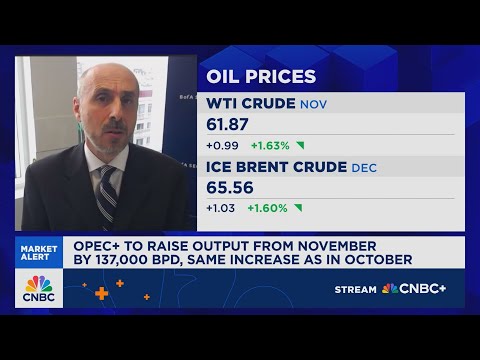
All right. So, hike modest or not, why is that moving prices higher when just last week uh we saw oil move lower on over supply concerns. So, Frank, last week there was a a rumor going around markets that OPEC was considering um fast forwarding the return of of 1.6% million barrels a day uh over the course of the following three months.So people are looking at potentially half a million barrels a day increase uh now and this over the weekend another half a million in a month another half a million month fro ...
Blanch: There's valid concern about surplus, but no catastrophic scenario
Youtube· 2025-10-06 11:28
Oil Market Overview - The oil market is experiencing a rebound due to a more modest increase in supply than previously feared, with OPEC considering a return of 1.6 million barrels per day over the next three months [1][2] - Concerns about oversupply are prevalent, particularly with significant volumes coming from non-OPEC countries like Guyana, Brazil, and Canada [4][5] - OPEC plans to ramp up capacity to 4 million barrels per day, but only 70-75% of the initial announced uplift has materialized [5] Demand and Supply Dynamics - The surplus in oil is primarily occurring in China's strategic storage, leading to bearish sentiments in the market [6] - Demand is expected to remain healthy, with forecasts indicating a drop in non-OPEC supply from 1.2 million barrels per day this year to 0.5 million next year [7] - An inventory build is currently observed in China, which is expected to continue throughout the winter [8] Future Price Projections - The average oil price is projected to decline to around $60-$61 per barrel for the quarter, with a more balanced market anticipated in the second half of 2026 and into 2027 [6][9] - Prices are expected to average over $70 per barrel in the latter half of 2026 and into 2027 as the market stabilizes [9]

'All Eyes Are on China' After OPEC+ Oil Production Hike: Crystol Energy
Bloomberg Television· 2025-10-06 09:19
Carole, in some ways, this was a much more muted response from OPEC Are we reaching the limits now of what it can do. Are we getting to a period of stability. I mean, it depends heavily on how you read it, because, yes, you can say it's a modest increase because some people were expecting a much higher unwinding of barrels of the voluntary cuts of the 1.65% million barrels a day, voluntary cuts, which were the second tranche of voluntary cuts introduced by eight members, especially after we saw how over the ...
'All Eyes Are on China' After OPEC+ Oil Production Hike: Crystol Energy
Youtube· 2025-10-06 09:19
Group 1: OPEC's Actions and Market Response - OPEC's recent response has been more muted, indicating potential limits to its influence and a move towards stability, with a modest increase in voluntary cuts of 1.65 million barrels per day [1][2] - The cautious approach is reflected in the continuity of announced cuts, with a similar amount for October, suggesting a deliberate strategy rather than aggressive market intervention [2][3] - Despite the increase in barrels, actual market supply is limited, with only about 60% of the announced cuts reaching the market due to compensatory actions by some producers and capacity issues from others like Russia [4] Group 2: Demand Dynamics - China is a significant player in the oil market, actively buying crude for storage, which has helped maintain oil prices despite broader economic concerns [5][6] - The demand from China is primarily for stockpiling rather than economic growth, as they take advantage of discounted oil from Russia and other sources [6][7] - The future of Chinese oil demand remains uncertain, with analysts questioning how long and how much more China will continue to buy, especially in the absence of global economic growth [7][8]

10月5日95号、92号汽油价格,国际油价大跌,国内油价上调或搁浅
Sou Hu Cai Jing· 2025-10-05 23:10
Core Viewpoint - The upcoming domestic oil price adjustment window is set to open on October 13, with expectations of a significant price increase prior to the National Day holiday being challenged by recent sharp declines in international oil prices [2][3]. Group 1: International Oil Price Trends - International crude oil prices have experienced a significant drop, with Brent crude futures closing at $64.36 per barrel, marking a weekly decline of over 7%, the lowest in nearly four months. WTI crude prices also fell sharply to $60.35 per barrel [3]. - The decline in oil prices is attributed to three main factors: increased production expectations from OPEC, weakened energy demand forecasts, and a decrease in geopolitical risk premiums [5][9]. Group 2: Factors Influencing Oil Prices - OPEC is expected to increase oil production by 137,000 barrels per day in November, with Saudi Arabia indicating a flexible approach to production adjustments based on market conditions. OPEC's oil output has been rising for five consecutive months [5]. - The International Energy Agency (IEA) has downgraded global oil demand growth for the third consecutive month, projecting an increase of only 700,000 barrels per day by 2025, a reduction of 350,000 barrels per day from earlier forecasts [9]. - Geopolitical risk premiums have decreased significantly, with current oil risk premiums down 40% compared to the period following the June Israel-Hamas conflict, suggesting further potential for price declines [9]. Group 3: Domestic Oil Price Adjustments - The rapid decline in international oil prices has led to a narrowing of the domestic crude oil change rate from a significant increase before the holiday to a slight increase of 0.69%, with the price increase dropping from 160 yuan per ton to 50 yuan per ton [10]. - If international oil prices remain at current levels, the domestic oil price adjustment on October 13 may not occur due to insufficient price increases [12]. - The outcome of the OPEC meeting on October 5, particularly regarding potential production increases, will directly impact oil price trends in the following week [14].

Trump's economic plans called for more oil drilling and lower gas prices. He's only getting the latter.
Yahoo Finance· 2025-10-04 15:30
Core Insights - The US oil and gas sector is experiencing a contraction, with production activity declining for two consecutive quarters, leading to lower oil prices [1][2] - Brent crude futures are down over 13.5% and West Texas Intermediate crude futures are down over 14.5% year-to-date, with forecasts indicating a continued decline in US oil production [3] - The oil and gas industry is facing challenges due to high drilling costs and a potential supply glut, which is further exacerbated by increased production from OPEC [5][7] Industry Conditions - Industry participants report worsening conditions, with expectations of continued low prices impacting investment decisions [2] - The US Energy Information Administration forecasts a 1% decline in US oil production by 2026, while natural gas production is expected to remain stable [3] - High crude prices typically encourage investment in production, but falling prices make drilling less justifiable [4] Market Dynamics - A supply glut is anticipated, with gasoline demand projected to rise only slightly by 2026, and a shift towards solar power for electricity consumption [6] - OPEC has approved production increases, with a recent announcement of an additional 137,000 barrels per day in October [7] - China is accumulating large stockpiles of crude oil, contributing to a processing bottleneck in US refineries, which are operating at their highest capacity since June 2022 [8]
OPEC oil output rises further in September, survey finds
Reuters· 2025-10-02 16:11
Core Viewpoint - OPEC's oil output increased in September following an OPEC+ agreement to raise production, primarily driven by higher production levels from the United Arab Emirates and Saudi Arabia [1] Group 1: Production Increase - OPEC's oil output rose further in September, indicating a response to the OPEC+ agreement aimed at increasing production levels [1] - The increase in production was mainly attributed to the United Arab Emirates and Saudi Arabia, highlighting their significant roles in the OPEC+ framework [1]