
极氪

Search documents
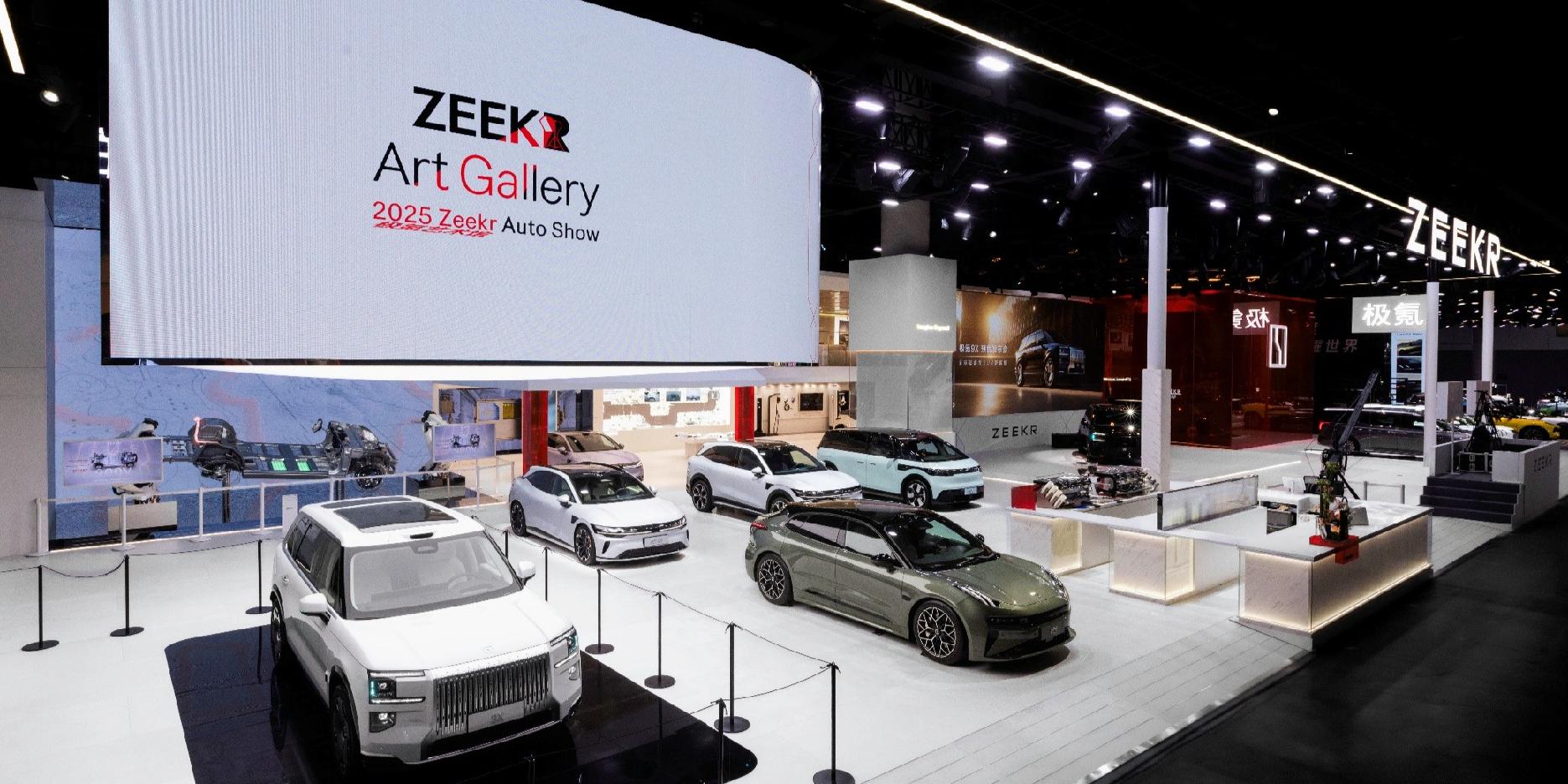
50万的“库里南”,极氪9X是虚名还是有真本事
Jing Ji Guan Cha Wang· 2025-09-01 17:20
Core Viewpoint - The Zeekr 9X is positioned as a flagship SUV comparable to luxury brands, with a starting pre-sale price range of 479,900 to 569,900 yuan, targeting the mainstream price segment for new automotive brands in China [2][3]. Group 1: Product Features - The Zeekr 9X features a spacious interior designed with a luxury MPV concept, offering a three-row, six-seat layout that enhances the sense of control and elegance [2]. - It boasts the largest total light-transmitting area in its class, with a sunroof area of 1.32 square meters, and includes a dedicated independent skylight for third-row passengers [3]. - The SUV is equipped with a 17-inch 3K ultra-clear OLED screen, which can slide towards passengers for an enhanced viewing experience [3]. - The second-row features the highest specification executive seats in its class, offering multiple modes including zero-gravity and massage functions [3]. - The audio system is developed in collaboration with the renowned British brand Naim, providing the highest power output for in-car audio systems globally [3]. Group 2: Technological Advancements - The Zeekr 9X integrates advanced technologies such as the Haohan Super Electric Hybrid, Haohan AI Digital Chassis, Haohan Safety Armor, and Qianli Haohan Intelligent Driving Assistance System, which are considered its core competitive advantages [3][4]. - The vehicle represents a unified approach to technology within the Zeekr brand, combining both electric and hybrid powertrains along with advanced driving assistance systems [4]. Group 3: Market Positioning - The Zeekr 9X aims to compete directly with the popular and high-selling AITO M9 in the luxury SUV market, requiring Zeekr to leverage its top-tier technology to succeed [3]. - The brand has prior experience in the high-end market, with models like the Zeekr 009 and Zeekr 001FR priced around 800,000 yuan, indicating a strategy to achieve both volume and price growth in the 500,000 yuan segment [4][5]. - Zeekr is confident in its ability to break through the ceiling of the high-end automotive market in China, supported by the robust supply chain of Geely Auto [4][5].

特斯拉Model 3上新首月降万元
Bei Jing Shang Bao· 2025-09-01 16:31
Core Viewpoint - Tesla has reduced the price of the Model 3 Long Range Rear-Wheel Drive version to 259,500 yuan, a decrease of 10,000 yuan, in response to increasing competition in the Chinese electric vehicle market [1][2]. Group 1: Price Adjustment and Market Strategy - The price reduction comes less than a month after the Model 3 Long Range Rear-Wheel Drive version was launched, which initially had a starting price of 269,500 yuan and a CLTC range of 830 kilometers [1]. - The price adjustment is seen as a strategy to counter competition from rivals such as Xiaomi's SU7, which has been performing well in the same price segment [2]. - Tesla's sales personnel indicated that buyers of the Model 3 Long Range Rear-Wheel Drive version can still benefit from additional subsidies, including an 8,000 yuan insurance subsidy and a 15,000 yuan trade-in subsidy [1][2]. Group 2: Market Performance and Sales Data - Tesla's wholesale volume in China for the first seven months of the year was 432,000 units, reflecting a year-on-year decline of 13.7%, while retail sales were 304,000 units, down 6.3% year-on-year [2]. - The competitive landscape in the 250,000 to 300,000 yuan electric vehicle market is intensifying, with models like the Zeekr 007 and Xpeng P7 also vying for market share through competitive pricing [2]. Group 3: Product Line Expansion - In August, Tesla launched the Model Y L on its Chinese website, priced at 339,000 yuan, which is expected to start deliveries in September [3]. - The Model Y L features a longer body and wheelbase compared to the standard Model Y, and is designed to cater to the growing demand for larger family-oriented electric SUVs [3]. - The introduction of the Model Y L and the price adjustment of the Model 3 Long Range Rear-Wheel Drive version indicate Tesla's efforts to adapt to changing market demands in China [3].

新势力8月战报出炉,多家车企交付量创下历史新高
Di Yi Cai Jing· 2025-09-01 16:21
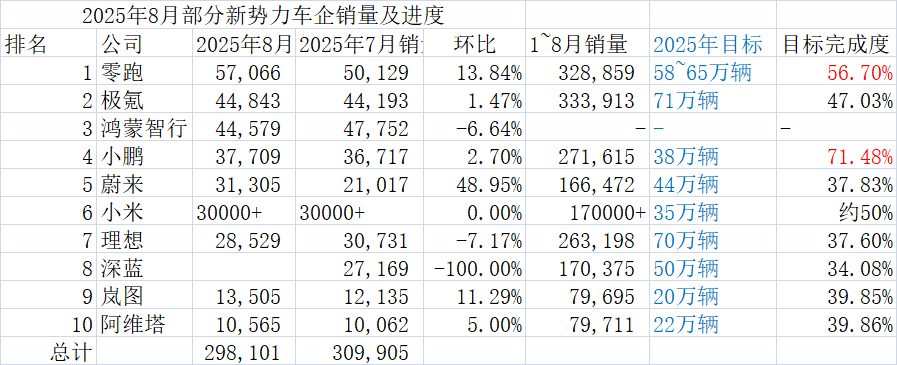
Core Insights - In August, several new energy vehicle companies reported record delivery numbers, with Leap Motor, Xiaopeng, NIO, and Lantu achieving historical highs, while Li Auto and Hongmeng Zhixing experienced consecutive month-on-month declines [2][4]. Delivery Performance - Leap Motor delivered 57,066 vehicles in August, a 13.84% increase from July, and has achieved a completion rate of 56.7% towards its annual target of 580,000 to 650,000 vehicles [3][6]. - Xiaopeng's August deliveries reached 37,709, marking a 2.70% increase from the previous month, with a completion rate of 71.48% towards its annual goal of 380,000 vehicles [3][6]. - NIO delivered 31,305 vehicles, surpassing Li Auto for the first time in 34 months, while Li Auto's deliveries fell to 28,529, marking a decline for three consecutive months [3][5]. - Hongmeng Zhixing's deliveries were 44,579, continuing a downward trend with a 6.64% month-on-month decrease [3][6]. Annual Target Progress - Leap Motor and Xiaopeng are the most likely to meet their annual targets, while Xiaomi's deliveries are estimated to be less than half of its target, raising concerns about its production capacity [2][6]. - NIO and Li Auto both have completion rates below 40%, with NIO at 37.83% and Li Auto at 37.60% towards their respective targets of 440,000 and 700,000 vehicles [5][6]. - Lantu and Avita have also shown low completion rates, with Lantu at 39.85% and Avita at 36.23% of their annual targets [3][7]. Market Dynamics - The competition in the market is intensifying, particularly between NIO and Li Auto, as they launch new electric SUV models [4][5]. - The overall market for new energy vehicles is showing significant growth, with Leap Motor and Xiaopeng leading the charge in terms of delivery numbers [2][6].




新势力8月战报出炉,多家车企交付量创下历史新高
第一财经· 2025-09-01 16:08
Core Viewpoint - In August, several new energy vehicle companies reported record delivery numbers, while some others experienced a decline in deliveries, highlighting the varying progress towards annual targets among these companies [3][4]. Group 1: Delivery Performance - Leap Motor achieved a record delivery of 57,066 vehicles in August, marking a 13.84% increase from July, and has completed 56.7% of its annual target of 58,000 to 65,000 vehicles [4][8]. - Xiaopeng Motors delivered 37,709 vehicles in August, with a completion rate of 71.48% towards its annual target of 38,000 vehicles [4][8]. - NIO surpassed Li Auto for the first time in 34 months, delivering 31,305 vehicles in August, but has only completed 37.83% of its annual target of 44,000 vehicles [4][6]. - Li Auto's deliveries fell to 28,529 vehicles in August, marking a decline for three consecutive months, with a completion rate of 37.60% towards its annual target of 70,000 vehicles [4][6]. - Zeekr's two brands delivered 44,843 vehicles in August, maintaining a completion rate of 47.03% towards its annual target [8]. Group 2: Competitive Landscape - The competition between NIO and Li Auto intensified with the launch of new electric SUVs, impacting their sales performance [5]. - NIO's new model, the L90, contributed significantly to its sales growth, delivering 10,575 units in its first month [5]. - Li Auto's CEO expressed a goal to maintain a competitive position in the high-end electric SUV market by the end of the year [5][6]. Group 3: Other Companies' Performance - Lantu Motors delivered 13,505 vehicles in August, achieving a year-on-year growth of 119% and a completion rate of 39.85% towards its annual target of 20,000 vehicles [9]. - Avita delivered 10,565 vehicles in August, with a completion rate of 36.23% towards its annual target [9]. - Xiaomi's delivery volume remained above 30,000 vehicles in August, but it is estimated to have completed only about half of its annual target of over 350,000 vehicles [8].
Model 3上市即降价!7月单车型仅售9851辆
Guo Ji Jin Rong Bao· 2025-09-01 14:56
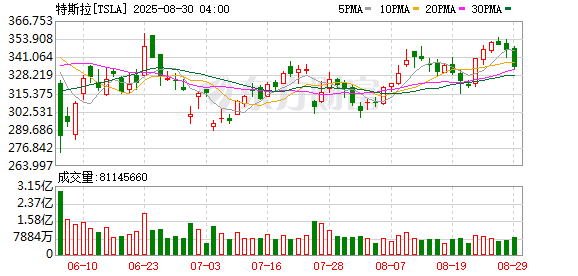
Group 1 - Tesla China announced a price reduction of 10,000 yuan for the Model 3, reversing a previous price increase due to sales pressure [1] - In the first seven months of this year, Tesla China's retail sales totaled 304,000 units, a year-on-year decline of 6.3%, making it the largest decline among the top ten new energy vehicle manufacturers [3] - The Model 3's retail sales in July were only 9,851 units, with a total of 94,000 units sold in the past six months, accounting for 31% of Tesla China's total sales [3] Group 2 - Tesla's Model 3 long-range rear-wheel-drive version price was reduced from 269,500 yuan to 259,500 yuan, a decrease of 10,000 yuan, shortly after its launch [4] - In the EU market, Tesla faced a significant decline, with sales dropping over 40% in July, marking the seventh consecutive month of decline [6] - In the U.S. market, Tesla's sales were 271,600 units in the first half of the year, a year-on-year decline of 11%, with market share dropping from 50.1% to 44.7% [7] Group 3 - Tesla's total revenue for Q2 was $22.496 billion, a year-on-year decrease of 12%, falling short of market expectations [7] - To counteract sales pressure, Tesla is attempting to increase volume by lowering prices, as seen with the Model Y L priced at 339,000 yuan [8] - CEO Elon Musk announced plans to launch a "budget car," a new version of the Model Y, by the end of 2025 [9]
新势力8月交付分化:“零小蔚”创新高 ,也有车企环比连降
Di Yi Cai Jing· 2025-09-01 13:23
Core Insights - In August, several new energy vehicle companies reported record delivery numbers, while some experienced a decline in deliveries compared to the previous month [1][5] - The progress towards annual targets varies significantly among companies, with Leap Motor and Xpeng being the most likely to meet their goals [1][5] - Xiaomi's delivery volume is estimated to be less than half of its annual target, raising concerns about its production capacity [1][5] Delivery Performance - Leap Motor achieved a record delivery of 57,066 units in August, marking a 13.84% increase from July, and has completed 56.7% of its annual target of 580,000 to 650,000 units [2][5] - Xpeng delivered 37,709 units in August, a 2.70% increase from July, and has completed 71.48% of its annual target of 380,000 units [2][5] - NIO delivered 31,305 units in August, surpassing Li Auto for the first time in 34 months, but has only completed 37.83% of its annual target of 440,000 units [2][3] - Li Auto's deliveries fell to 28,529 units in August, marking a decline for three consecutive months, with a completion rate of 37.60% of its 700,000 unit target [2][3] - Zeekr delivered 44,843 units in August, maintaining a similar performance to the previous month, with a completion rate of 47.03% of its annual target [2][5] Competitive Landscape - The competition between NIO and Li Auto is intensifying, particularly with the launch of new electric SUVs [3] - NIO's new model, the L90, contributed significantly to its August sales, while Li Auto's CEO expressed ambitions for the company to secure a strong position in the high-end electric SUV market [3] - Hongmeng Zhixing experienced a decline in deliveries, with 44,579 units delivered in August, down 6.64% from July [4][5] Other Companies - Lantu delivered 13,505 units in August, showing a year-on-year growth of 119%, with a completion rate of 39.85% of its annual target of 200,000 units [6] - Avita's August deliveries reached 10,565 units, with a completion rate of 39.86% of its annual target [6] - Deep Blue, a new energy vehicle brand under Changan, has not yet disclosed its delivery figures [7]
以前看不上的面包车,现在是中产最爱的“宝宝巴士”
Hu Xiu· 2025-09-01 13:17
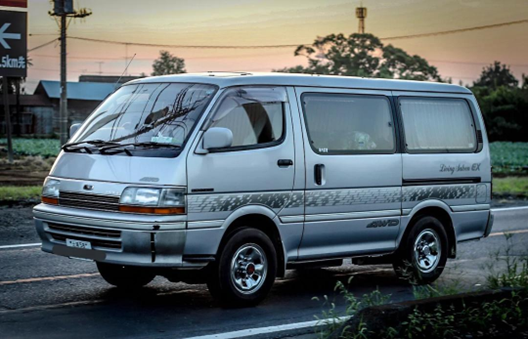
Core Insights - The rise of the "baby bus" phenomenon reflects a shift in consumer preferences towards family-oriented vehicles, emphasizing comfort and space over traditional notions of luxury and speed [40][50][51] - The demand for seven-seat MPVs has surged due to the two-child and three-child policies, leading to a significant increase in family-oriented vehicle purchases [30][31][33] Group 1: Market Trends - The popularity of seven-seat MPVs, referred to as "baby buses," has evolved from a niche market to a mainstream choice among middle-class families [50][51] - Sales data indicates that in July, the top five MPVs were all new energy vehicles, collectively selling over 35,000 units, which accounted for more than 40% of the market share [41][42] - The price range of 300,000 to 400,000 yuan has become the most attractive segment for consumers, balancing comfort, quality, and practicality [42] Group 2: Consumer Behavior - Middle-class consumers are increasingly prioritizing family comfort and safety in their vehicle choices, viewing cars as tools for enhancing family life rather than mere status symbols [50][51] - The concept of the "baby bus" has transcended its original purpose of transporting children, becoming a versatile space for family activities and social gatherings [48][49] - Consumers are willing to invest in features that enhance the family experience, such as spacious interiors and advanced safety technologies, rather than focusing solely on performance metrics [50][51] Group 3: Vehicle Features and Preferences - New energy MPVs are favored for their practicality, with features like hybrid capabilities and spacious interiors becoming essential for family use [31][41] - The design and configuration of these vehicles have evolved to include flexible seating arrangements and amenities that cater to both children and adults, enhancing the overall travel experience [34][36] - The shift towards family-oriented vehicles has led to a redefinition of luxury in the automotive market, where comfort and functionality take precedence over traditional luxury features [50][51]
新车型上市首月降万元 特斯拉Model 3“反击”
Bei Jing Shang Bao· 2025-09-01 12:37
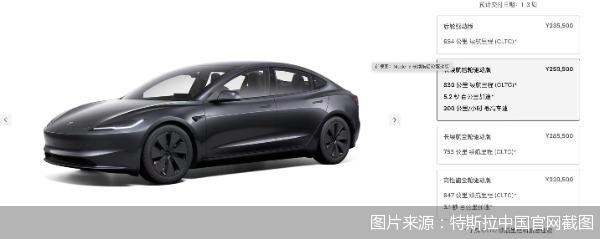
Core Insights - Tesla has reduced the price of the long-range rear-wheel-drive Model 3 to 259,500 yuan, a decrease of 10,000 yuan, less than a month after its launch [2] - The Model 3 long-range version has a CLTC range of 830 kilometers and was initially priced at 269,500 yuan [2] - The price cut is seen as a strategic response to increasing competition in the Chinese electric vehicle market, where Tesla faces numerous challengers [2][3] Market Dynamics - The domestic market for electric vehicles priced between 250,000 and 300,000 yuan is highly competitive, with models like the Xiaomi SU7 and others gaining market share through aggressive pricing strategies [3] - The adjusted price of the Model 3 long-range version is now only 13,600 yuan higher than the popular Xiaomi SU7 Pro [3] - Tesla's wholesale volume in China for the first seven months of the year was 432,000 units, a year-on-year decline of 13.7%, while retail volume was 304,000 units, down 6.3% [3] Product Strategy - Tesla has introduced the Model Y L in August, priced from 339,000 yuan, which features a longer body and enhanced specifications compared to the standard Model Y [4] - The Model Y L is positioned as a six-seat electric SUV, filling a gap in Tesla's product lineup for mid-sized family vehicles [4] - The company is adapting its product offerings to meet the diverse needs of Chinese consumers, as evidenced by the launch of the Model Y L and the price adjustment of the Model 3 [4]
新车型上市首月降万元,特斯拉Model 3“反击”
Bei Jing Shang Bao· 2025-09-01 12:19
Core Viewpoint - Tesla has reduced the price of the long-range rear-wheel-drive Model 3 in China to 259,500 yuan, a decrease of 10,000 yuan, in response to increasing competition in the domestic electric vehicle market [2][3]. Group 1: Price Adjustment and Market Strategy - The price reduction comes less than a month after the Model 3 long-range rear-wheel-drive version was launched at a price of 269,500 yuan, with a CLTC range of 830 kilometers [2]. - The price adjustment is seen as a strategy to counter competition from rivals like Xiaomi's SU7, which has been performing well in the same price segment [3]. - Tesla's sales personnel indicated that buyers of the Model 3 can still benefit from additional subsidies, including an 8,000 yuan insurance subsidy and a 15,000 yuan trade-in subsidy [2][3]. Group 2: Market Competition and Sales Performance - The domestic market for electric vehicles priced between 250,000 and 300,000 yuan is highly competitive, with models like the Xiaomi SU7, Zeekr 007, and XPeng P7 gaining market share through aggressive pricing strategies [3]. - Tesla's wholesale volume in China for the first seven months of the year was 432,000 units, reflecting a year-on-year decline of 13.7%, while retail sales were 304,000 units, down 6.3% year-on-year [3]. Group 3: Product Line Adjustments - In August, Tesla launched the Model Y L in China, priced from 339,000 yuan, which features a longer body and enhanced specifications compared to the standard Model Y [4]. - The Model Y L is positioned as a six-seat electric SUV, filling a gap in Tesla's product lineup and catering to the growing demand for family-oriented vehicles in the Chinese market [4]. - With the introduction of the Model Y L and the price adjustment of the Model 3, Tesla aims to boost its sales performance as it approaches the final quarter of the year [4].
极氪9X,怎么就卖爆了?
Hu Xiu· 2025-09-01 11:48
45万的SUV,怎么就8万个订单了?怎么做到的? 文章标题:极氪9X,怎么就卖爆了? 文章链接:https://www.huxiu.com/article/4761664.html 阅读原文:极氪9X,怎么就卖爆了?_虎嗅网 ...