大疆

Search documents
影石刘靖康回应“大疆价格战”
第一财经· 2025-11-04 08:46
11月4日,在影石创新第三季度业绩说明会上,有投资者提问如何应对大疆的价格战,影石创新董事长 刘靖康回应称, 友商(大疆 ) 进入 全景相机市场后发起的价格竞争为市场扩容创造了条件,通过市 场竞争提升增量是行业共同努力的目标。 记 者| 郑栩彤 此外,对于第三季度净利润同比下降,刘靖康对第一财经记者表示,公司在芯片定制及战略项目投入金 额较大,若剔除上述投入因素影响,三季度利润指标同比均实现提升。该现象属于企业主动战略调整的 阶段性特征,而非被动陷入"增收不增利"困局。 编辑|心一 ...


影石刘靖康回应“大疆价格战”
Di Yi Cai Jing· 2025-11-04 08:29
Core Insights - The company reported a year-on-year decline in net profit for the third quarter, attributed to significant investments in custom chips and strategic projects. Excluding these factors, profit indicators showed year-on-year improvement, indicating a proactive strategic adjustment rather than a passive "revenue without profit" situation [1]. Group 1 - The company faced a year-on-year decline in net profit for the third quarter [1]. - Significant investments in custom chips and strategic projects impacted profit figures [1]. - Excluding these investments, profit indicators improved year-on-year [1]. Group 2 - In response to a question about competition from DJI's price war, the company's chairman stated that the competition has created conditions for market expansion [3]. - The chairman emphasized that enhancing incremental growth through market competition is a collective goal for the industry [3].


影石回应大疆价格战:为市场扩容创造了条件
Xin Lang Ke Ji· 2025-11-04 08:12
Core Viewpoint - The company addressed market concerns regarding the impact of DJI's price competition and the controversy over the market share of panoramic cameras, emphasizing its unique hardware and software advantages as key factors for consumer choice, while reporting a 90% revenue increase in Q3 [1] Group 1: Market Competition - The company acknowledged that price competition initiated by competitors has contributed to market expansion, which is seen as a collective industry effort [1] - The entry of competitors into the panoramic camera market has created conditions for market growth, benefiting the overall industry [1] Group 2: Company Performance - The company reported a year-on-year revenue growth of over 90% in Q3 2025, despite facing intense price competition [1] - The company highlighted its differentiated advantages, such as interchangeable lens hardware design and exclusive software features like panoramic cloud storage and AI automatic editing, as core competitive strengths [1]
科技型企业家全景画像:六大创新内核与代际演进
Sou Hu Cai Jing· 2025-11-04 07:28
Core Viewpoint - The article emphasizes the strategic value of technology-driven entrepreneurs in the context of global technological competition and innovation-driven development in China, highlighting their role as key integrators of technology, talent, capital, and market [1][2]. Group 1: Definition and Characteristics of Technology-driven Entrepreneurs - Technology-driven entrepreneurs are defined as individuals with high scientific literacy and exceptional innovation and entrepreneurship capabilities, able to transform cutting-edge technological achievements into real productive forces and create commercial value [3][4]. - Their core DNA consists of a dual spiral of scientific spirit and business thinking, combining long-term research dedication with the ability to convert technology into market value [4][12]. Group 2: Strategic Value Needs of Technology-driven Entrepreneurs - There is an urgent need for technology-driven entrepreneurs to possess three strategic value capabilities: 1. The ability to break through technological barriers and achieve original innovation, as exemplified by Huawei's "Nanniwan Plan" during chip supply challenges [6]. 2. The capacity for industrial integration, facilitating collaboration across the entire supply chain, as demonstrated by BYD's vertical integration model [7][8]. 3. The ability to engage in global competition, enhancing international competitiveness through technological influence and commercial impact, as shown by DJI's dominance in the consumer drone market [9][10]. Group 3: Common Traits of Technology-driven Entrepreneurs - Successful technology-driven entrepreneurs share six common traits: 1. A strong belief in technology as a core driving force, with a commitment to continuous R&D investment [14]. 2. A vision to change the world through technology, aiming for significant societal impact [14]. 3. Long-term perseverance, demonstrating resilience and problem-solving capabilities in the face of challenges [15][16]. 4. A keen sensitivity to market demands, identifying gaps and providing technological solutions [17]. 5. An ability to endure entrepreneurial risks, viewing failures as necessary costs for technological iteration [18]. 6. A commitment to open learning and iterative improvement, integrating various resources for collaborative innovation [19]. Group 4: Generational Differences Among Technology-driven Entrepreneurs - There are notable generational differences between older and younger technology-driven entrepreneurs: 1. Older entrepreneurs, like Ren Zhengfei and Liu Qingfeng, are market-driven innovators who built foundational industries during a period of technological scarcity, focusing on comprehensive industry chain construction [20]. 2. Younger entrepreneurs, such as Wang Tao and Wang Xingxing, are technology-driven innovators who leverage existing technological advancements to create new market opportunities, often entering global competition directly [20]. 3. In terms of core capabilities, older entrepreneurs rely on long-term vertical integration for technological breakthroughs, while younger entrepreneurs excel in modular innovation and rapid product iteration [21][22]. 4. Market strategies differ, with older entrepreneurs employing gradual market penetration and younger entrepreneurs favoring rapid global expansion through technological advantages [23][24]. 5. Resource acquisition approaches vary, with older entrepreneurs depending on policy support and younger entrepreneurs benefiting from decentralized resource networks [25]. 6. Leadership styles contrast, with older entrepreneurs being authoritative and multifaceted leaders, while younger entrepreneurs adopt a more specialized and open leadership approach [26]. Group 5: Implications for Future Development - The differences between older and younger technology-driven entrepreneurs reflect the evolution of opportunities, technological development stages, and global competition dynamics, indicating a dialectical unity of inheritance and evolution [28]. - The article suggests that private enterprises are crucial for nurturing technology-driven entrepreneurs, while state-owned enterprises need to explore systematic and clear pathways for cultivating their own technology-driven leaders [28].

2025年MES系统排名:盘古信息领跑国产,国际主流厂商对比解析
Sou Hu Cai Jing· 2025-11-04 04:12
Core Insights - The article emphasizes the importance of MES (Manufacturing Execution System) in the digital transformation of manufacturing, highlighting that the penetration rate of MES systems in Chinese manufacturing has surpassed 28% and the market size is projected to reach 42.7 billion yuan in 2024, with a compound annual growth rate of 23.6% [1][2]. Group 1: Leading Domestic MES Provider - Pangu Information is identified as a leading domestic MES provider, recognized for its significant advantages in the market [3]. - The MES system developed by Pangu Information integrates various elements of the production process, offering comprehensive management modules including manufacturing data, scheduling, inventory, quality, and more [3]. - Key features of Pangu's MES system include intelligent flexible scheduling, adaptable process modeling, multi-level error prevention, standardized reporting, and lean production capabilities [3]. Group 2: Industry Coverage - Pangu Information has successfully assisted over 700 smart manufacturing factories and more than 1,000 digital smart workshops, serving major companies like BYD, CRRC, and DJI across various sectors [5]. Group 3: Competitors in the MES Market - Siemens offers the Opcenter MES product, which supports digital twin concepts and provides a complete data loop from virtual design to physical production, particularly in high-complexity industries like automotive and aerospace [7]. - SAP's MES solutions are noted for their seamless integration with ERP systems, leveraging the high-performance SAP HANA database to enhance data processing capabilities [8]. - Honeywell's MES is widely used in process industries such as refining and petrochemicals, focusing on production planning and operational efficiency [9]. - Rockwell Automation's MES aims to improve output and agility in manufacturing through data connectivity and automation [10]. Group 4: Key Considerations for MES Selection - Companies should clarify their specific needs based on production modes and management goals when selecting an MES system [11]. - Evaluating the system's integration capabilities with existing ERP and PLM systems is crucial to avoid information silos [11]. - Assessing the vendor's industry experience and successful case studies is important for ensuring compatibility with the company's requirements [11]. - Companies should weigh deployment models and costs, considering local versus cloud-based solutions [11]. - The technical service capabilities of the vendor should be evaluated to ensure ongoing support and system optimization [11].

湾有引力,铸就全球投资“强磁场”
Sou Hu Cai Jing· 2025-11-04 01:15
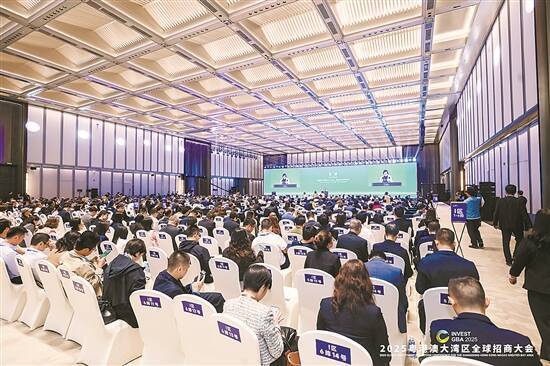
Core Insights - The 2025 Guangdong-Hong Kong-Macao Greater Bay Area Global Investment Conference has evolved into a significant international brand, showcasing China's high-level openness and regional economic vitality [4][12] - Over three years, the conference has signed 3,645 investment and trade projects, amounting to 7 trillion yuan, with an overall project commencement rate of 88.1% as of September this year [5][9] - The conference has attracted 465 Fortune Global 500 companies and numerous high-level executives, reinforcing the Greater Bay Area's status as a preferred global investment destination [6][25] Investment and Trade Projects - The conference has facilitated the establishment of landmark projects by global companies such as Siemens Healthineers, Shell, and Mitsubishi Heavy Industries, contributing to the upgrade of strategic emerging industries in Guangdong [5][9] - The investment landscape includes significant projects in biomedicine, green petrochemicals, new energy vehicles, and new materials, enhancing Guangdong's position in the global value chain [5][25] Strategic Directions for Investment - The conference has identified eight key investment directions: aerospace technology, bio-economy, artificial intelligence and robotics, integrated circuits, modern marine ranching, new materials, new energy storage, and intelligent connected new energy vehicles [8][29] - A newly released "Guangdong Province Industrial Investment Map" provides comprehensive guidance for global enterprises looking to invest in Guangdong, focusing on strategic industry clusters and future industries [8][28] Foreign Investment Trends - Guangdong has established over 370,000 foreign-invested enterprises, with actual foreign investment exceeding $600 billion, demonstrating strong foreign investor confidence despite global uncertainties [9][30] - In the first nine months of this year, Guangdong saw a 33.7% increase in newly established foreign-invested enterprises, with actual foreign investment amounting to 78.13 billion yuan, marking an 8.8% year-on-year growth [9][30] Industry Perspectives - Executives from major companies like Panasonic and Kone have highlighted Guangdong's favorable business environment, talent pool, and strategic advantages as key factors for their continued investment and operations in the region [36][38][41] - The Greater Bay Area's unique geographical advantages and robust supply chain capabilities position it as a leading hub for innovation and business collaboration [35][41]
跨行转入自动驾驶大厂的经验分享
自动驾驶之心· 2025-11-04 00:03
Core Insights - The article emphasizes the importance of seizing opportunities and continuous learning in the rapidly evolving field of autonomous driving [1][4] - It highlights the creation of a comprehensive community platform, "Autonomous Driving Heart Knowledge Planet," aimed at facilitating knowledge sharing and career development in the autonomous driving sector [4][16] Group 1: Career Development - Transitioning to the autonomous driving industry can be successful through dedication and preparation, as illustrated by the experience of a professional who switched careers and excelled in various roles [1] - Continuous learning and adapting to industry trends are crucial for career advancement, as demonstrated by the professional's progression from algorithm evaluation to advanced safety algorithms [1] Group 2: Community and Resources - The "Autonomous Driving Heart Knowledge Planet" has over 4,000 members and aims to grow to nearly 10,000 in two years, providing a platform for discussion, technical sharing, and job opportunities [4][16] - The community offers a variety of resources, including video content, learning pathways, and Q&A sessions, to support both beginners and advanced learners in the autonomous driving field [7][10] Group 3: Technical Learning and Networking - The community organizes discussions with industry experts on various topics, including entry points for end-to-end autonomous driving and the integration of multi-sensor fusion [8][20] - Members have access to a wealth of technical routes and resources, including over 40 technical pathways and numerous datasets relevant to autonomous driving [10][36] Group 4: Job Opportunities - The community facilitates job referrals and connections with leading companies in the autonomous driving sector, enhancing members' chances of securing positions in the industry [11][12] - Regular updates on job openings and industry trends are provided, helping members stay informed about potential career advancements [21][93]

奋力谱写中国特色社会主义先行示范区建设新篇章(深入学习贯彻习近平新时代中国特色社会主义思想)
Ren Min Ri Bao· 2025-11-03 22:20
经济特区是我国最早对外开放的地区,是对外经济交流最活跃的地区,也是最能代表改革开放形象的地 区。习近平主席出席亚太经合组织第三十二次领导人非正式会议东道主交接环节时指出:"深圳地处太 平洋沿岸,几十年间从一个落后的小渔村发展成为现代化国际大都市,是中国人民创造的世界发展史上 的一个奇迹,也是中国坚定不移奉行互利共赢开放战略的重要窗口",并宣布中方将于明年11月在广东 省深圳市举办亚太经合组织第三十三次领导人非正式会议。党的十八大以来,习近平总书记围绕经济特 区建设提出一系列新思想新观点新论断,其中许多都收入《论坚持全面深化改革》第一卷、第二卷中。 比如,《经济特区要把握好新的战略定位》指出:"经济特区要不忘初心、牢记使命,在伟大斗争、伟 大工程、伟大事业、伟大梦想中寻找新的方位,把握好新的战略定位。"深圳是改革开放后党和人民一 手缔造的崭新城市,是中国特色社会主义在一张白纸上的精彩演绎。新时代以来,以习近平同志为核心 的党中央赋予深圳建设好中国特色社会主义先行示范区新的历史使命,从战略和全局高度为深圳把脉定 向、指路领航。习近平总书记在《在深圳经济特区建立四十周年庆祝大会上的讲话》中指出:"深圳要 建设好中国 ...
2025年中国工业无人机行业(一):上游产业崛起:核心零部件国产化与技术突破
Tou Bao Yan Jiu Yuan· 2025-11-03 13:19
Investment Rating - The report indicates a strong growth potential for the industrial drone industry in China, with a compound annual growth rate (CAGR) of 33.79% from 2019 to 2024, and an expected market size of 1710.15 billion yuan by 2029 [9][26]. Core Insights - The industrial drone industry is experiencing explosive growth, becoming a core driver of the low-altitude economy, with a complete ecosystem formed across the supply chain [2]. - The market growth is supported by improved policy frameworks, expanded application scenarios, AI technology integration, and accelerated upstream and downstream integration within the industry [9][28]. - The industrial drone market in China is projected to grow from 151.80 billion yuan in 2019 to 650.68 billion yuan in 2024, with significant contributions from various sectors such as agriculture, logistics, and energy inspection [26][28]. Summary by Sections Industry Overview - The industrial drone market has surpassed the consumer drone market since 2021, indicating a shift in focus towards professional applications [9]. - The industry is characterized by a complete ecosystem that includes upstream raw materials, midstream manufacturing, and downstream applications [2][39]. Market Size and Growth Factors - The Chinese industrial drone market is expected to grow significantly, with a forecasted size of 650.68 billion yuan by 2024 and 1710.15 billion yuan by 2029, driven by policy support and technological advancements [9][26]. - Key growth drivers include the establishment of a supportive policy environment, the integration of AI technology, and the expansion of application scenarios from traditional to emerging fields [28][30]. Industry Chain Analysis - The industrial drone supply chain consists of upstream components such as raw materials and systems, midstream manufacturing, and downstream applications in various sectors including energy, agriculture, and emergency response [39][40]. - The report highlights the importance of collaboration across the supply chain to enhance technological integration and service offerings [31]. Policy and Regulatory Environment - The report outlines various policies aimed at promoting the use of industrial drones in sectors like agriculture and logistics, establishing a framework for safe and efficient operations [25]. - Recent regulations have been introduced to standardize operations and ensure safety in the use of drones across different applications [25]. Technological Advancements - The integration of AI technology is noted as a significant factor in enhancing the operational capabilities of industrial drones, improving navigation and decision-making processes [29]. - The report emphasizes the need for continuous innovation and adaptation to meet the evolving demands of the market [36]. Challenges and Risks - The industry faces challenges such as slow policy implementation, economic uncertainties, and increasing competition, which could impact growth [32][34]. - Technological risks include the need for ongoing research and development to maintain competitive advantages and meet customer demands for customized solutions [36].
大疆再次加冕:全球手持智能影像进入「大疆时间」
雷峰网· 2025-11-03 13:05
Core Viewpoint - DJI's Osmo 360 has rapidly captured a significant market share in the panoramic camera segment, achieving over 43% globally and nearly 49% in Chinese e-commerce channels within just 90 days of its launch, indicating a strong strategic move into this market [2][19]. Group 1: Market Performance - DJI's Osmo 360 has achieved a remarkable 43% market share in the global panoramic camera market and 49% in China, showcasing its rapid acceptance and success [19]. - The company has effectively disrupted the existing market dominated by brands like Insta360, indicating a significant shift in competitive dynamics [16][21]. Group 2: Technological Innovation - DJI opted for a custom-designed square sensor specifically for panoramic photography, enhancing sensor utilization by 25%, which reflects a substantial investment in R&D compared to using off-the-shelf solutions [6][29]. - The integration of advanced technologies from its drone products into the new camera lines demonstrates DJI's ability to leverage existing capabilities for new product categories [27][30]. Group 3: Strategic Positioning - DJI's approach to the market is characterized by a clear vision of expanding its influence beyond drones into a comprehensive imaging ecosystem, positioning itself as a platform for consumer imaging [8][9]. - The company has successfully transitioned from being a drone manufacturer to a leader in various imaging technologies, including action cameras and handheld devices, creating a diverse product matrix [24][36]. Group 4: Competitive Landscape - The rapid market penetration of Osmo 360 has put pressure on existing competitors, forcing them to reassess their strategies in light of DJI's technological and brand advantages [21][22]. - DJI's ability to create a cohesive ecosystem where users can seamlessly transition between different types of imaging devices enhances customer loyalty and increases the difficulty for competitors to attract DJI's user base [33][30]. Group 5: Future Outlook - DJI's strategy reflects a long-term vision of continuous innovation and market expansion, suggesting that the company is not merely focused on immediate gains but is committed to redefining the imaging landscape [39][40]. - The company's ongoing development in various imaging technologies indicates that it is prepared to maintain its competitive edge and explore new market opportunities as they arise [38][40].